 The Japanese-born artist Shozo Nagawa grew up in Kanazawa, a city on the northern coast of Honshu island. He studied at Kanazawa Fine Arts University during the chaotic days of occupied Japan. Nagano began showing his work in Tokyo galleries as part of the Timism group, a loose association of abstract artists whose manifesto sought to kindle a modern Japanese aesthetic. In the early 1960s he resolved to trade the relative certainties of his homeland for the life of an expatriate artist. He initially sailed across the Pacific on a tramp steamer bound for Santiago, Chile, where he could explore for the first time his vision vis-à-vis a foreign culture. In 1965 he made his way to New York City, living a threadbare existence in an East Side tenement and painting on old bed sheets when he couldn’t afford canvas.
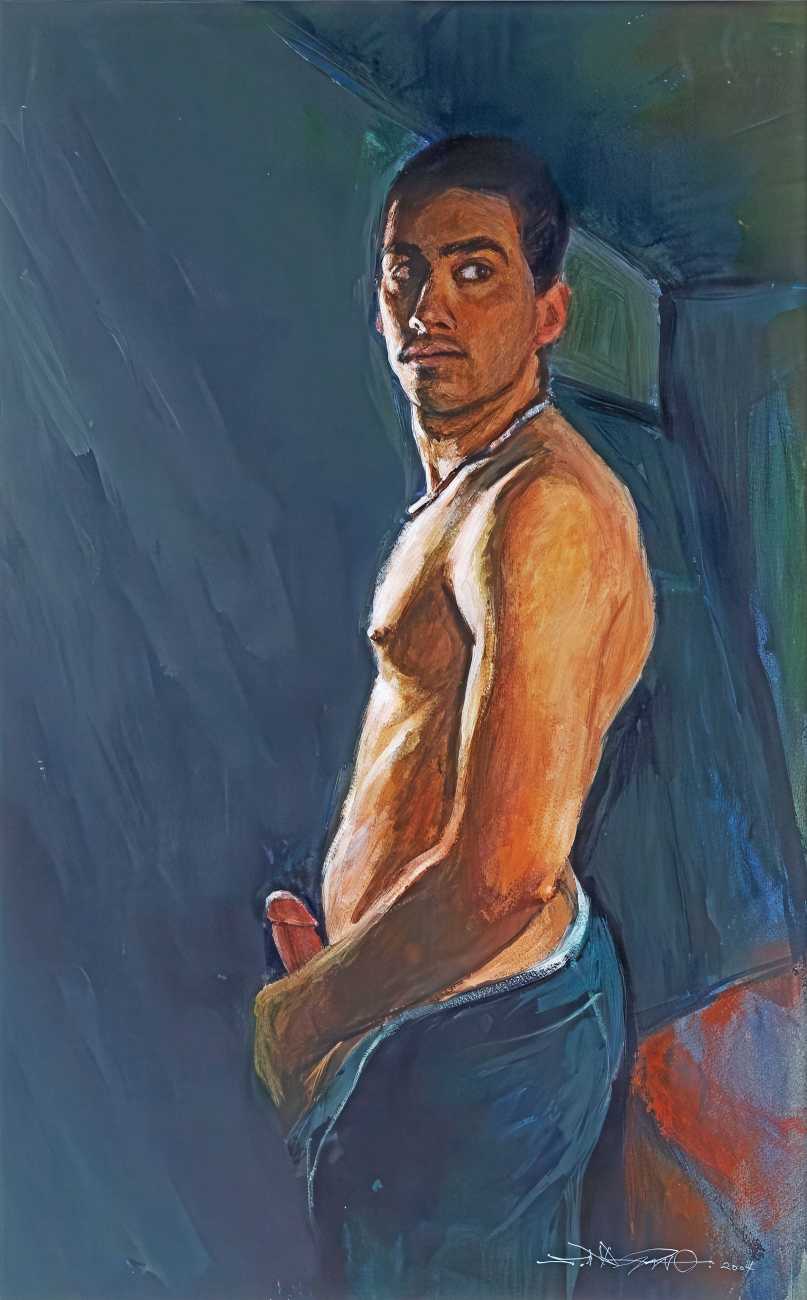
It was during his early years in New York that Nagano began experimenting with the shaped canvas format that has come to characterise his work. The unfolding tragedy of the AIDS crisis in the 1980s galvanised Shozo’s creativity into a new artistic genre, figurative painting, and he felt it important as an openly gay man to portray the power of the naked male body. In the paintings from this later period, very masculine male bodies draped in sheets or simply nude, bound and unbound, contorted in an agony of pain or in sexual bliss, populate his canvases.
Example illustration