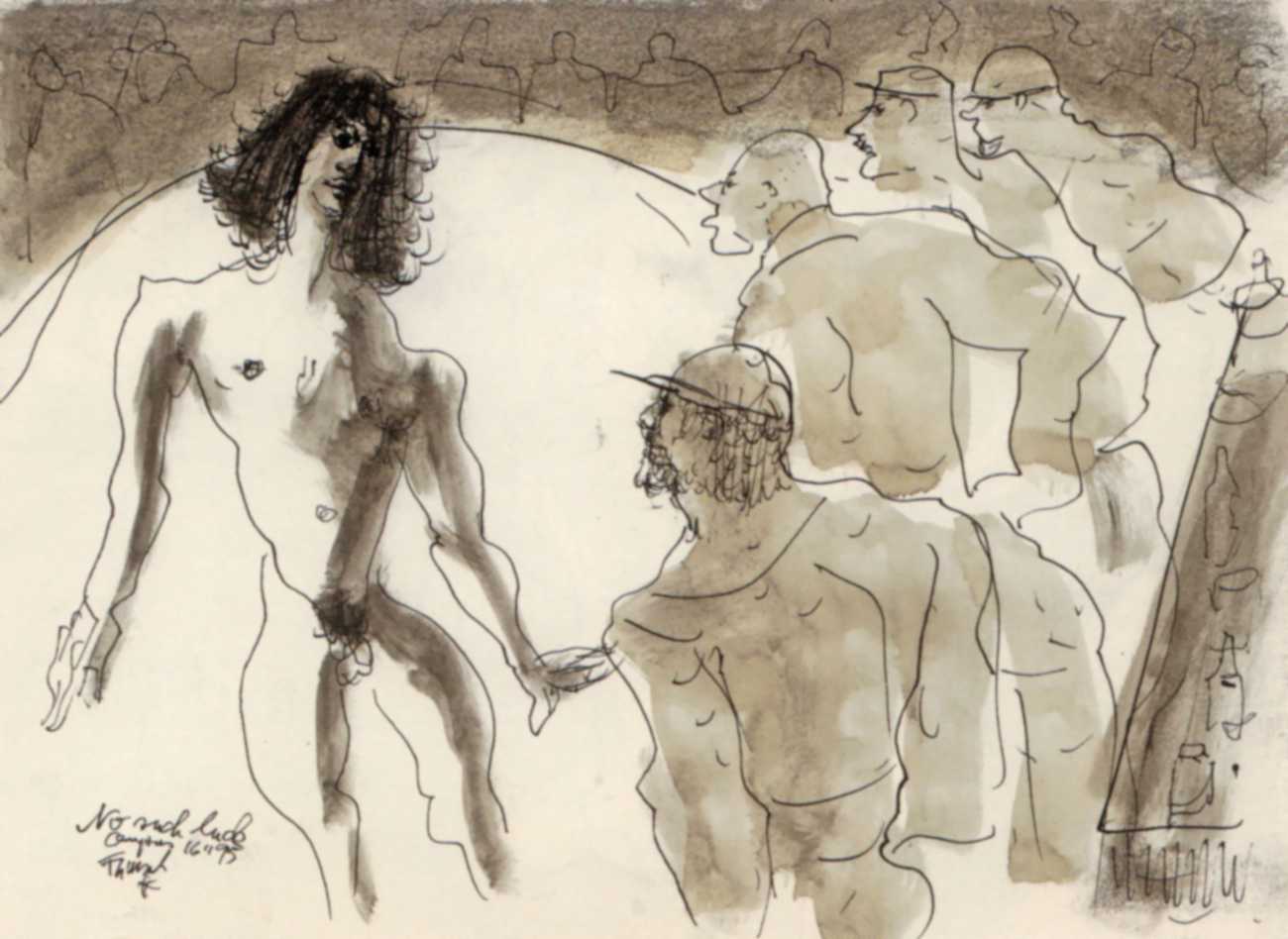
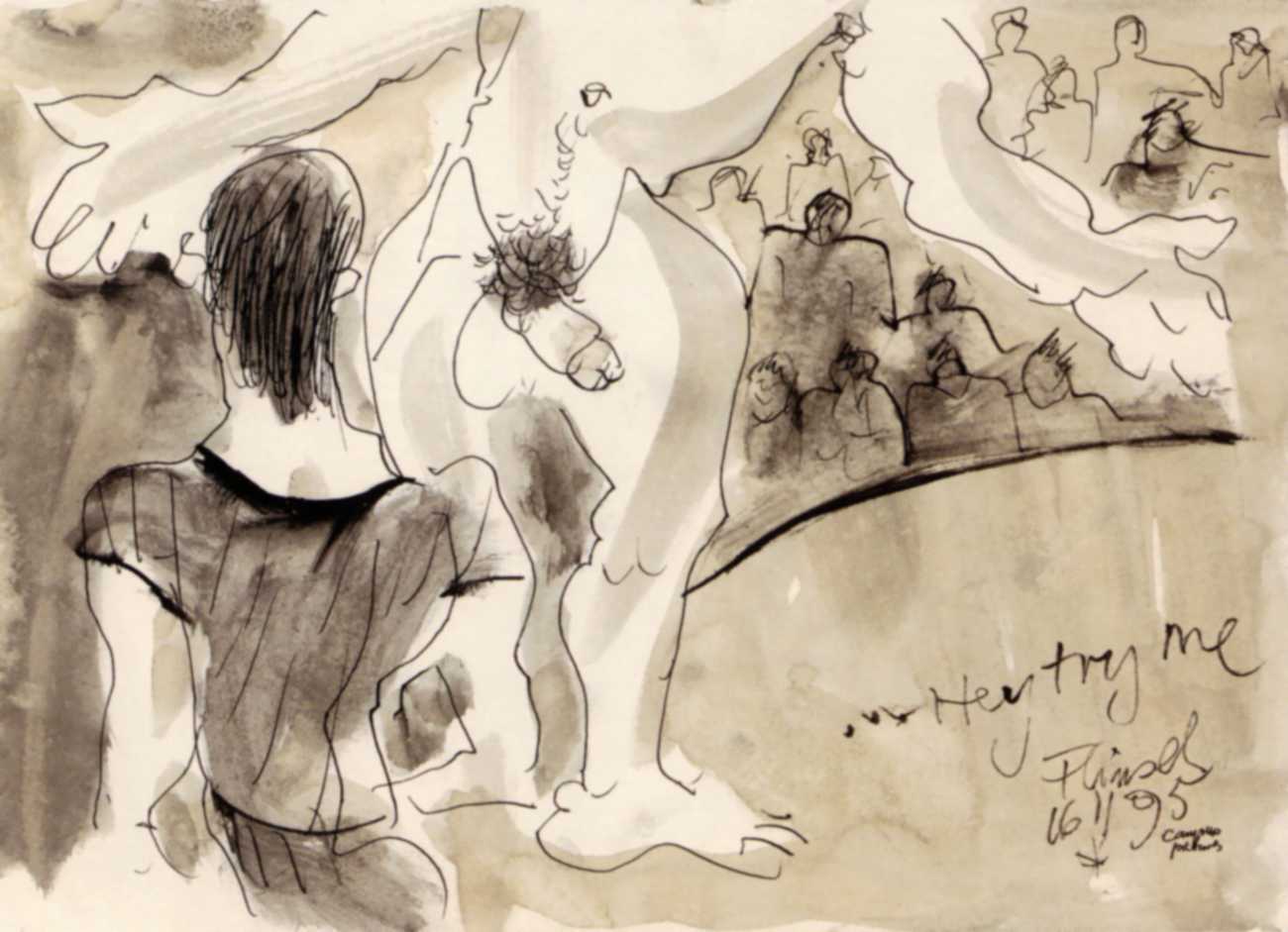
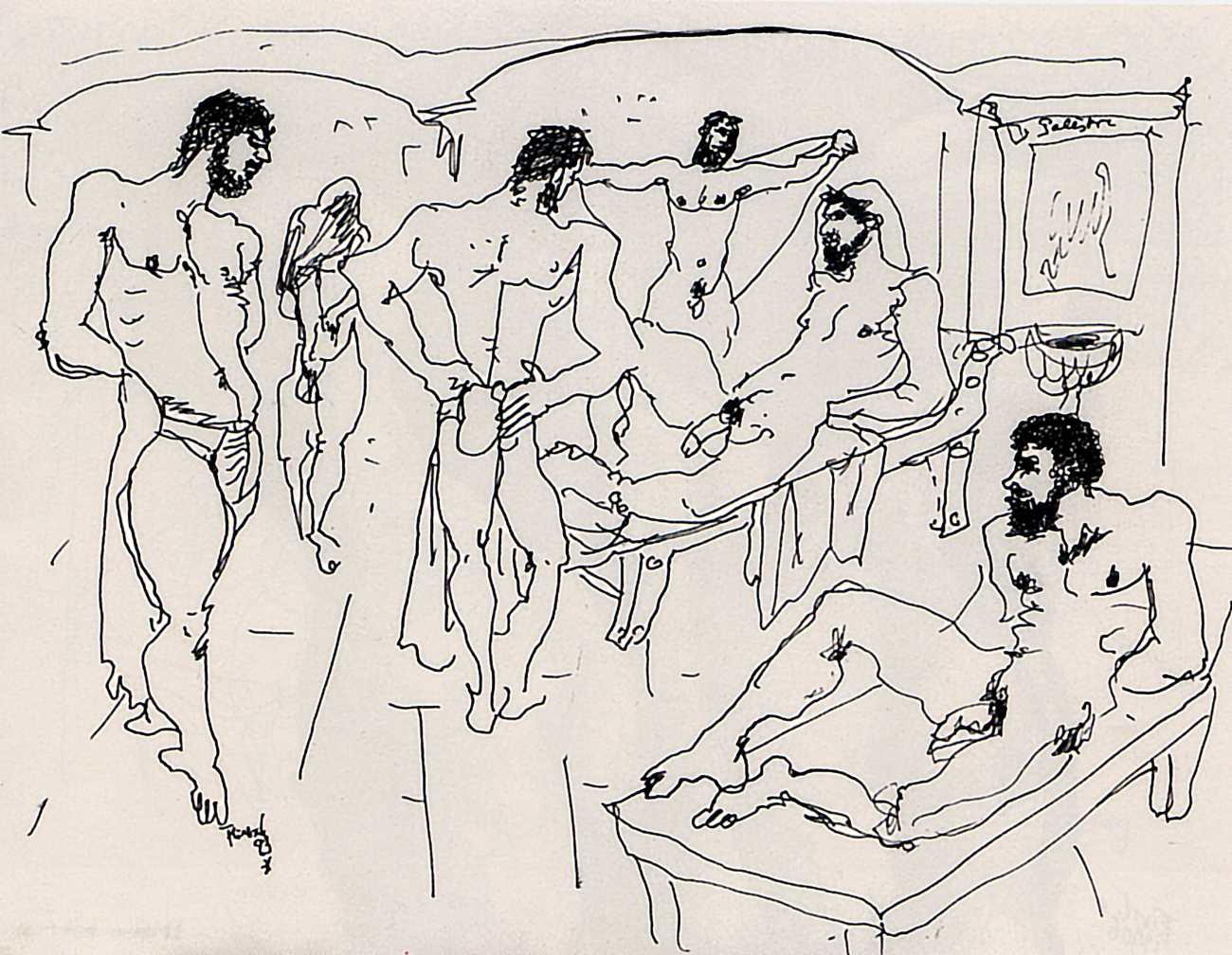
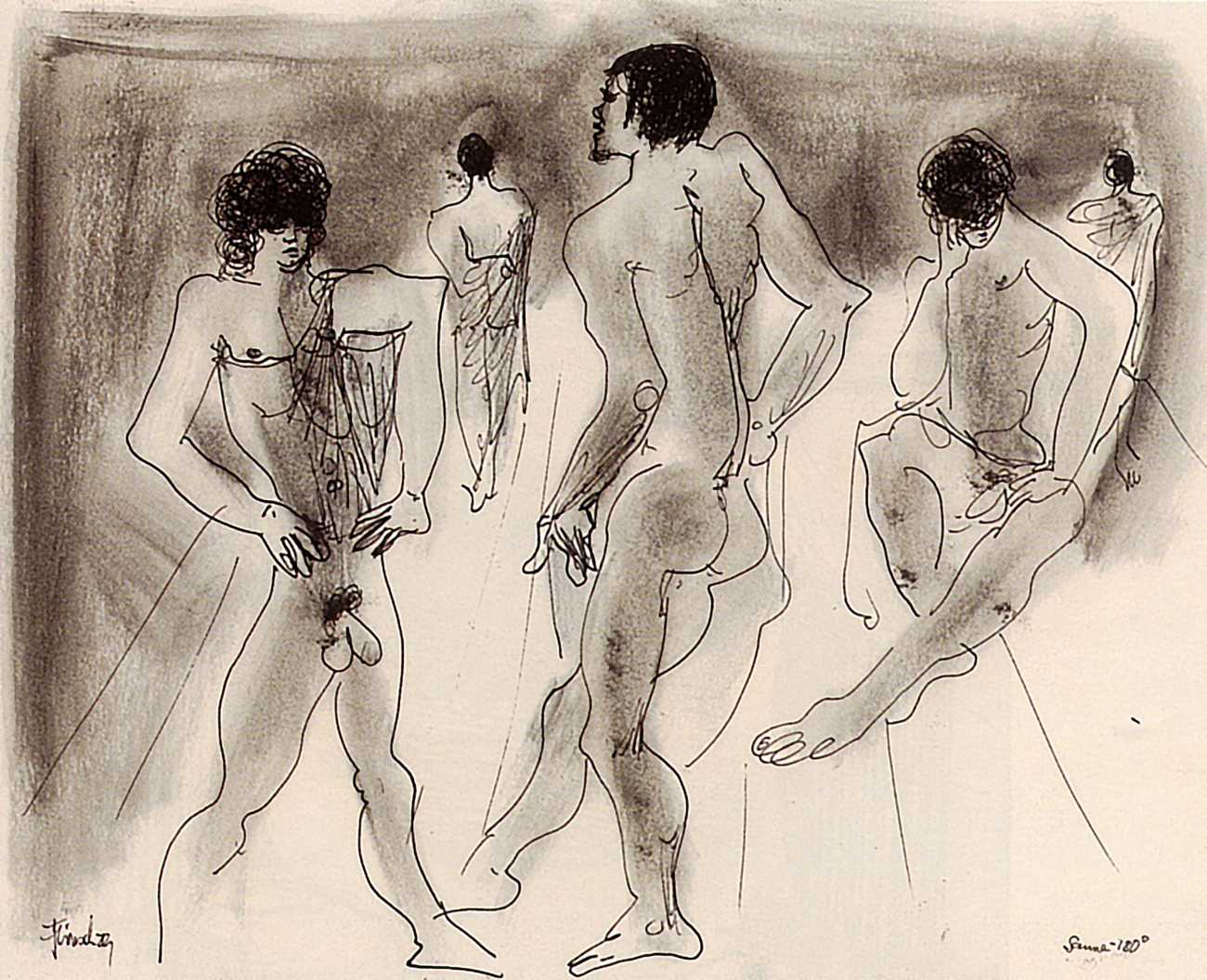
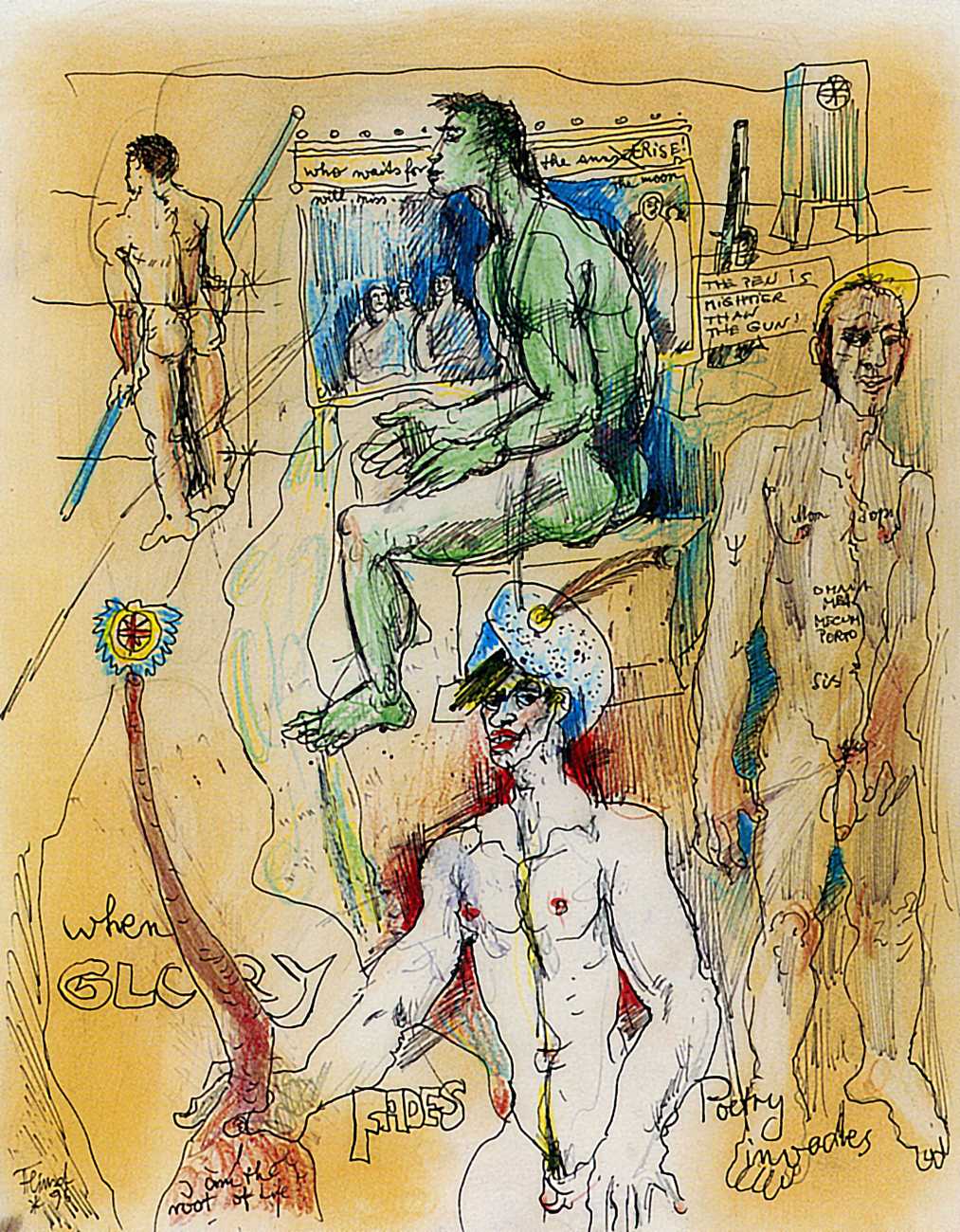
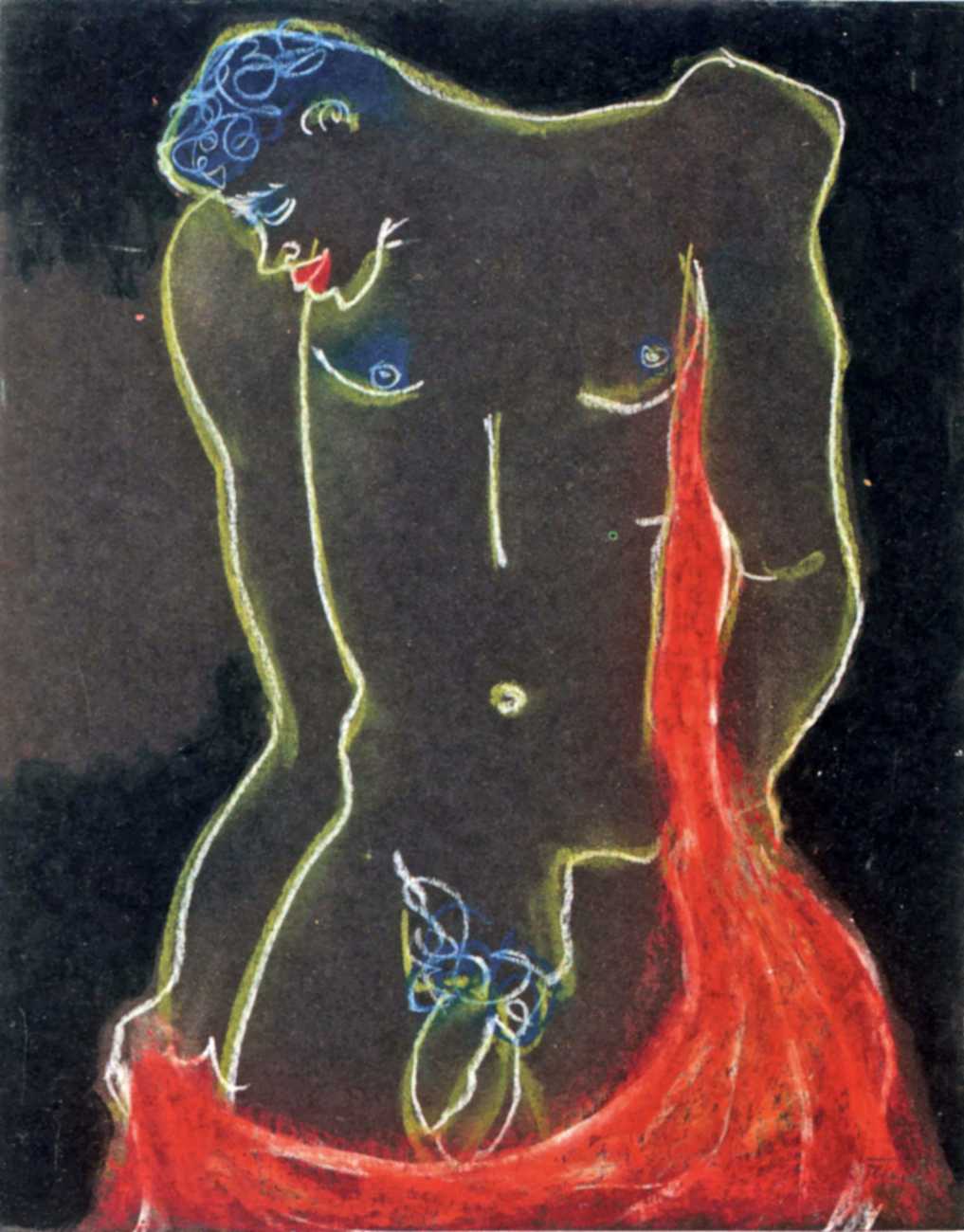
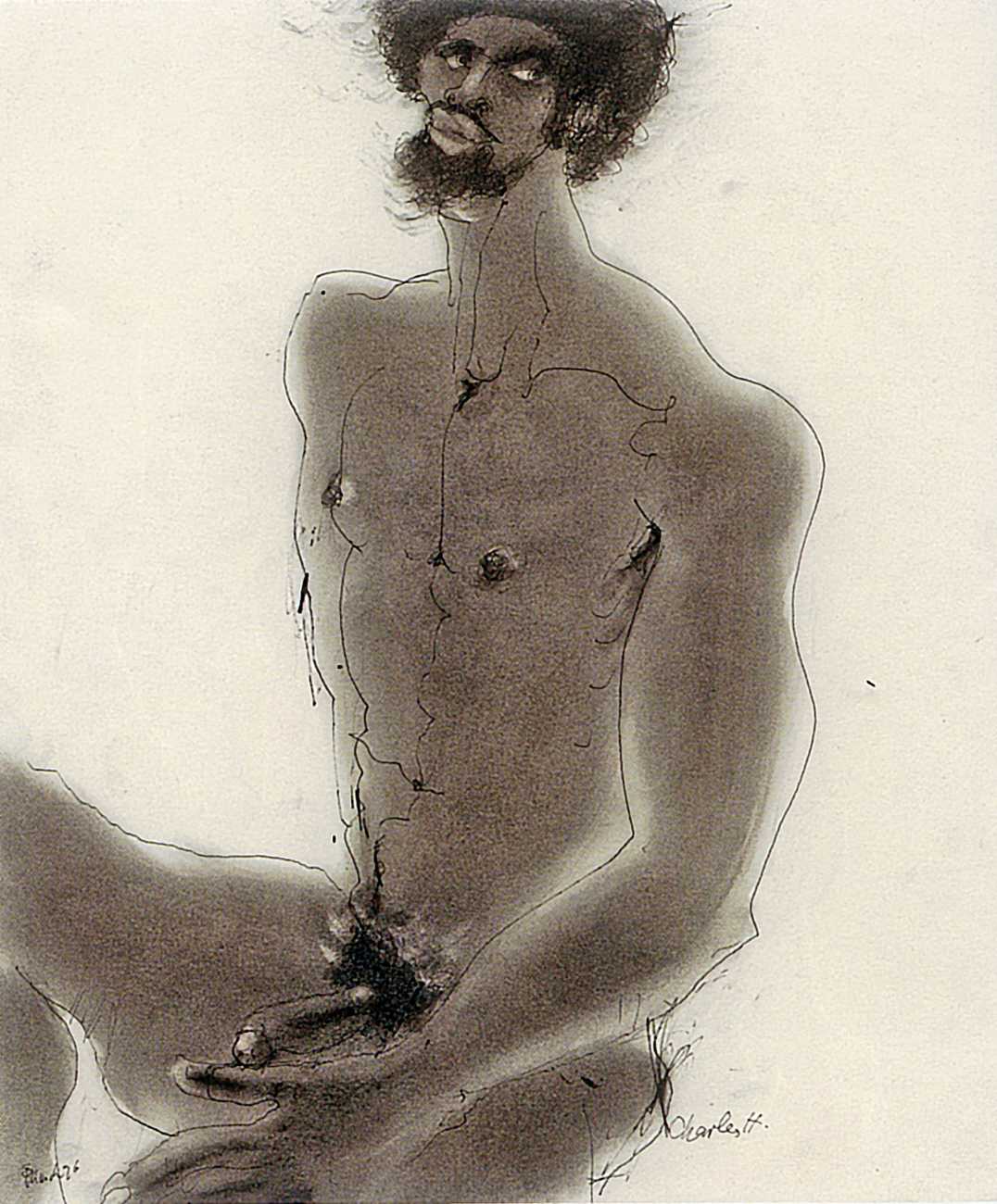
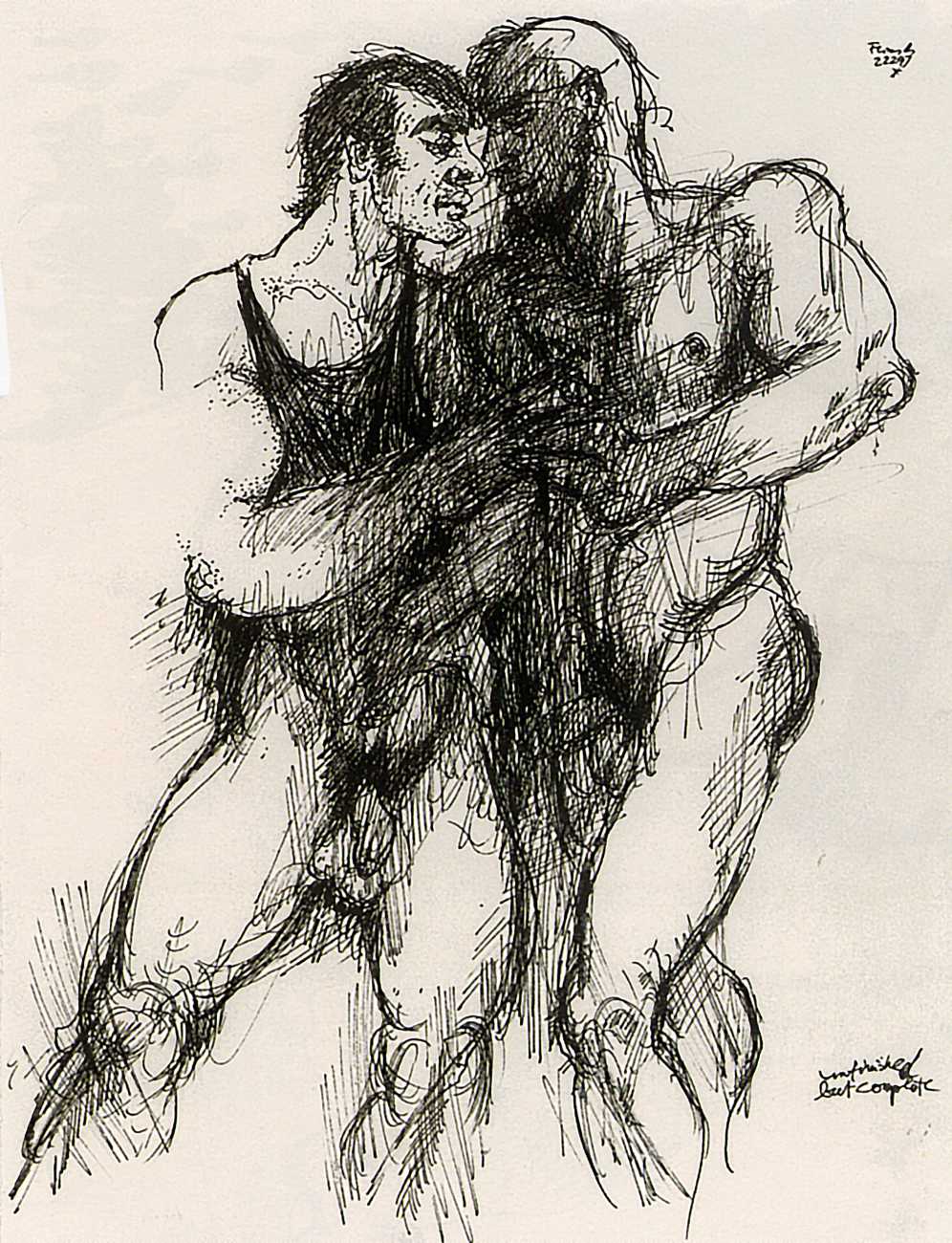
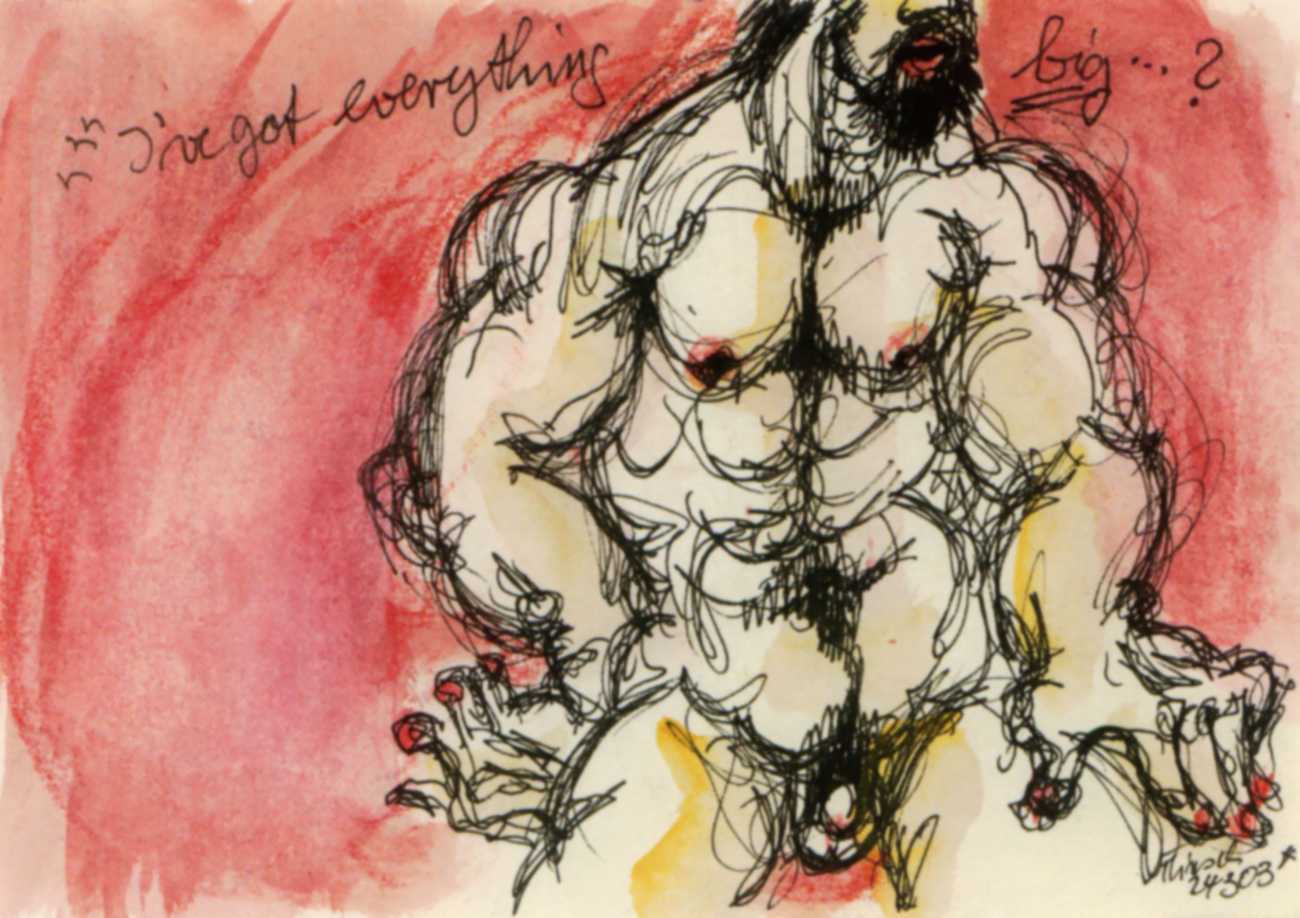
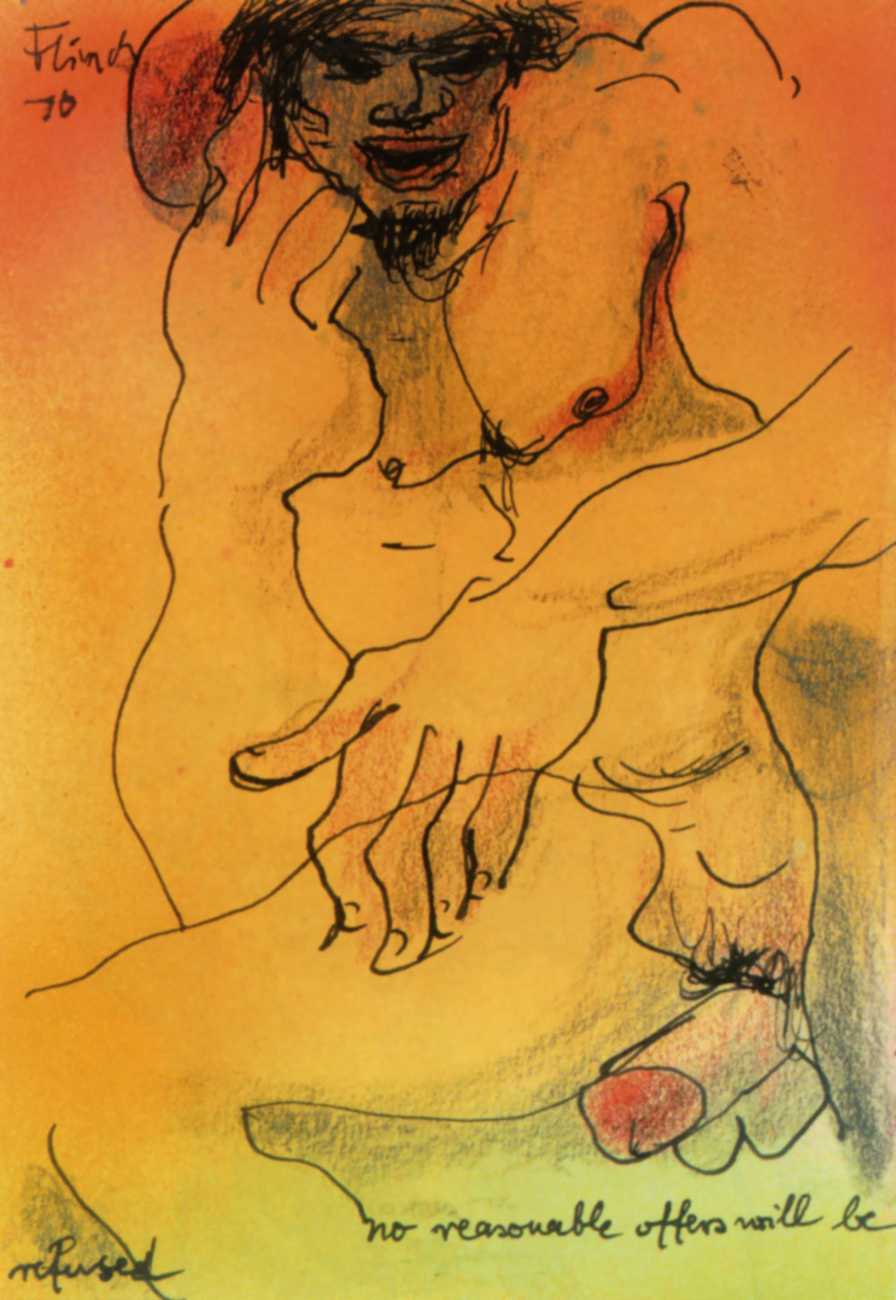
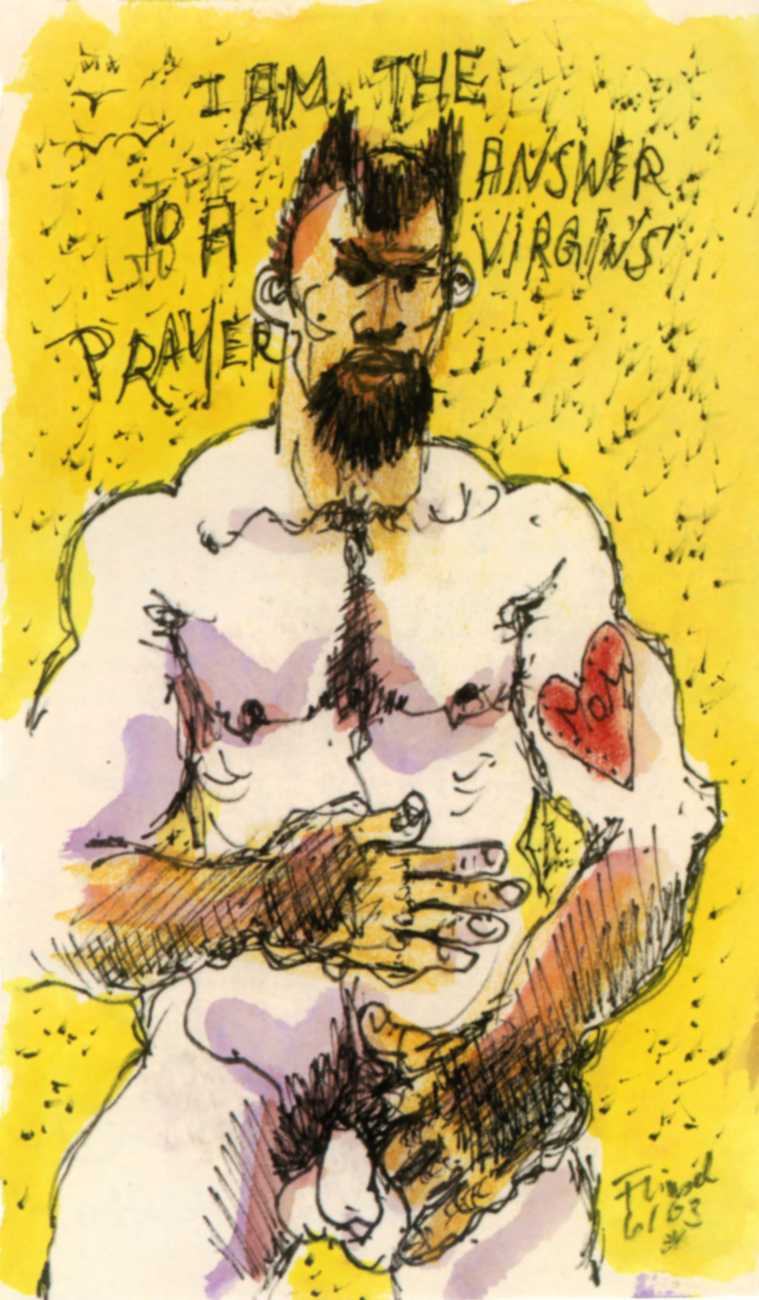
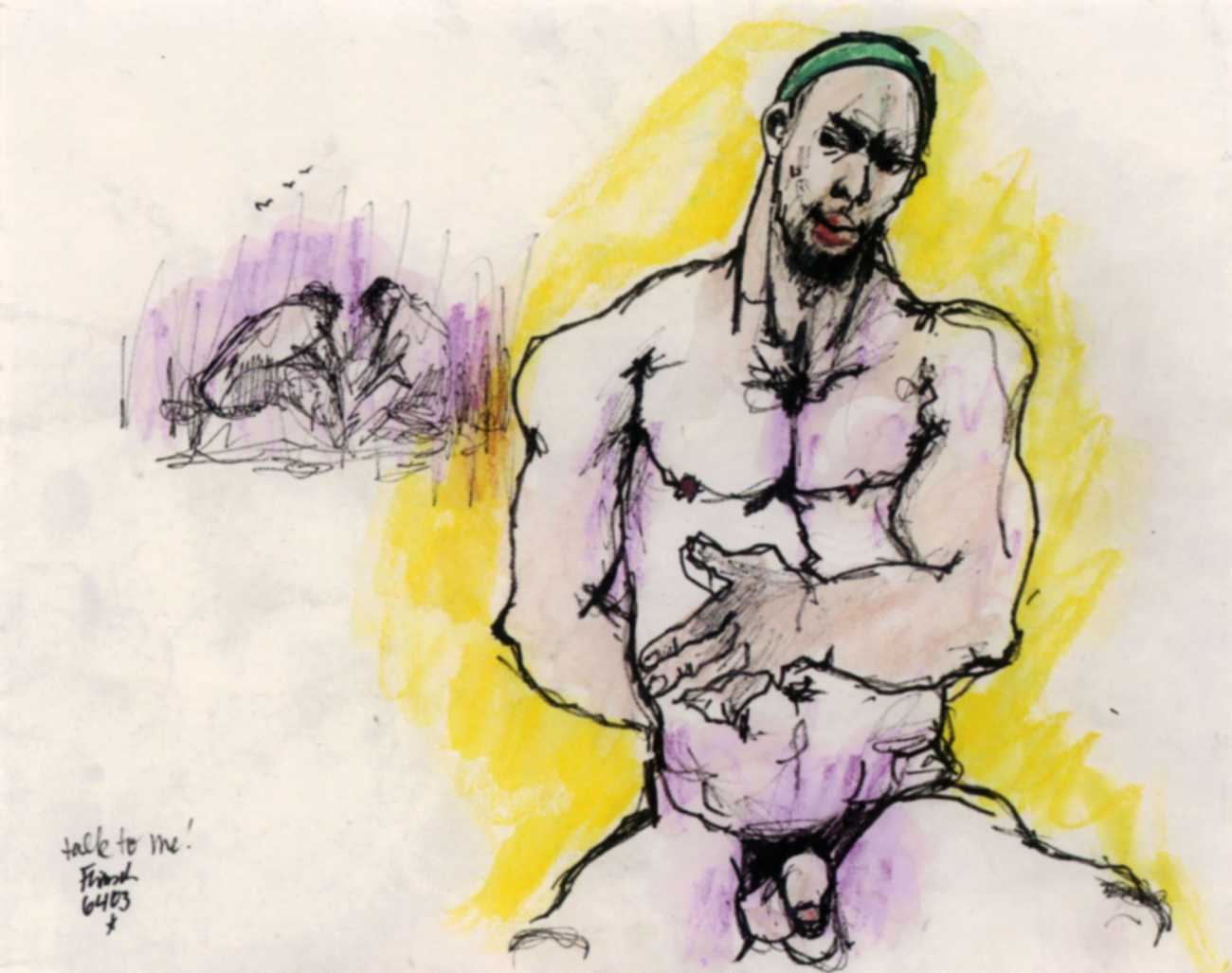
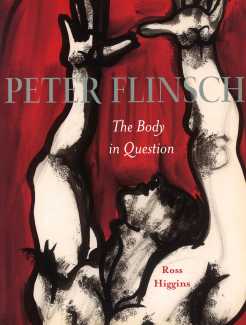
 In 2008 the Canadian publishing house Arsenal Pulp Press, which specialises in books on social issues, gender studies, and LGBTQ2S+ and BIPOC literature, published an excellent overview of Peter Flinsch’s life and work, with a preface by his friend Thomas Wough and an extensive biographical essay by Ross Higgins. The Body in Question is essential reading for anyone interested in finding out more about Peter Flinsch.
One of the early paragraphs of Ross Higgins’s introduction provide an insightful context to Flinsch and his artistic world:
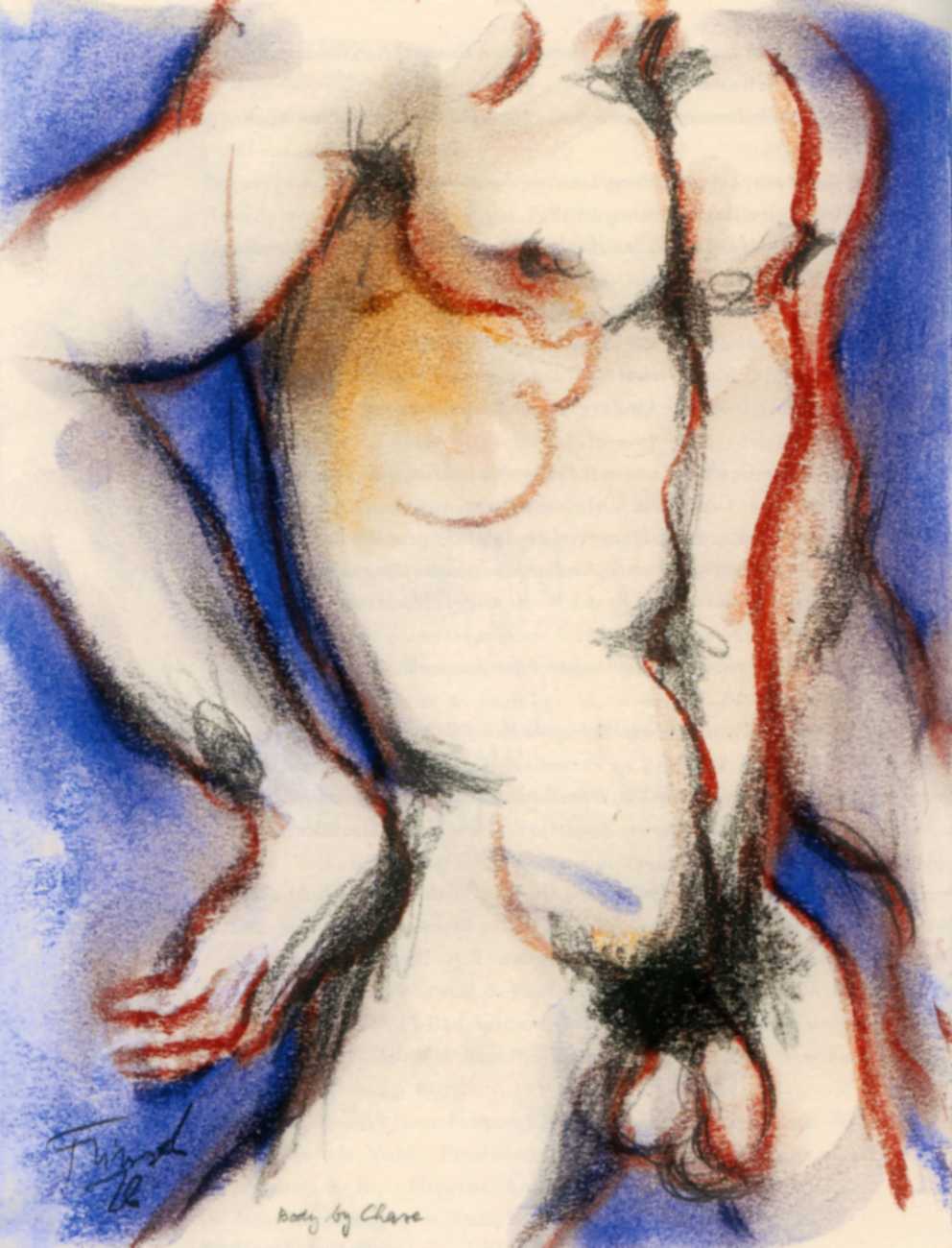
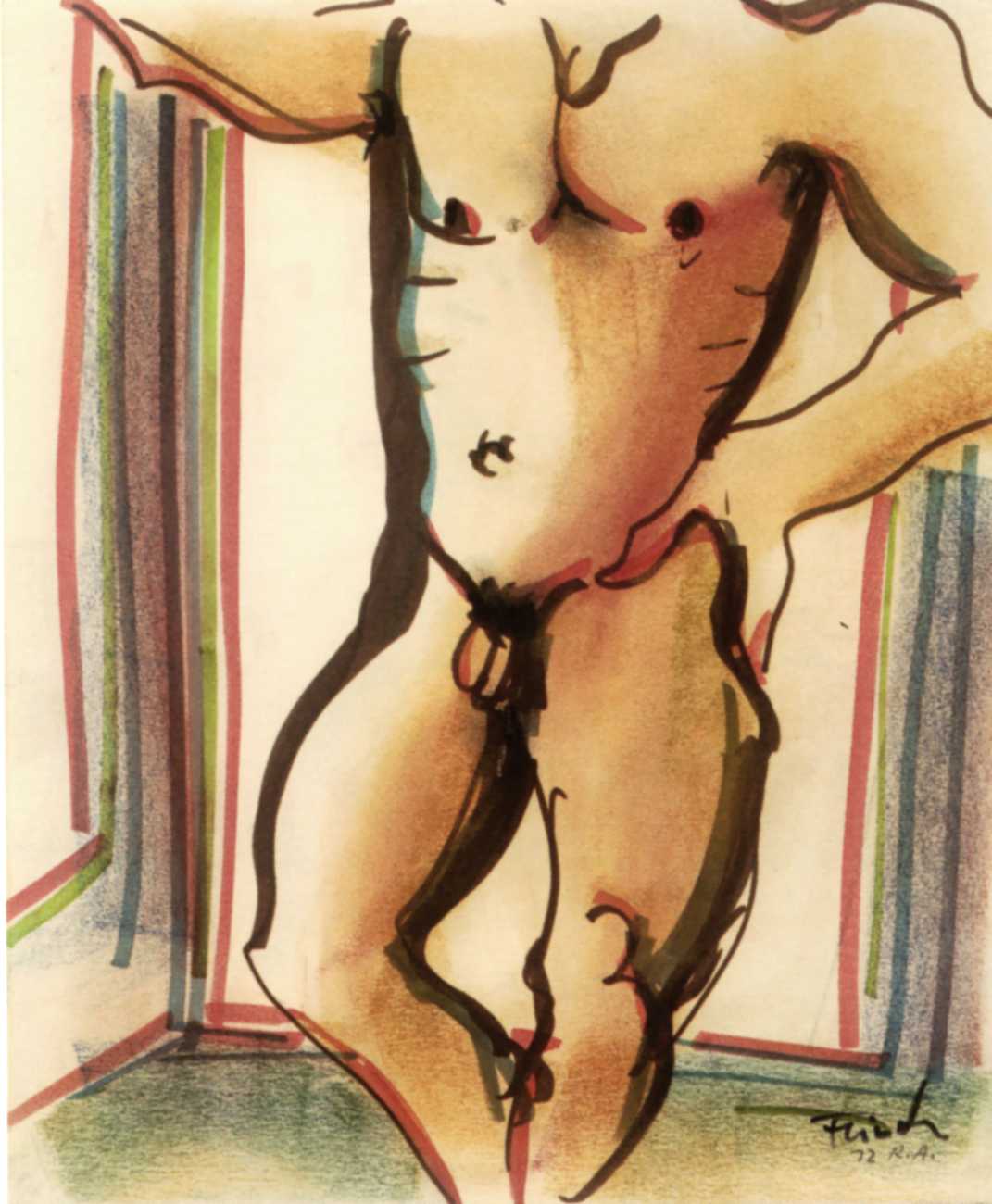
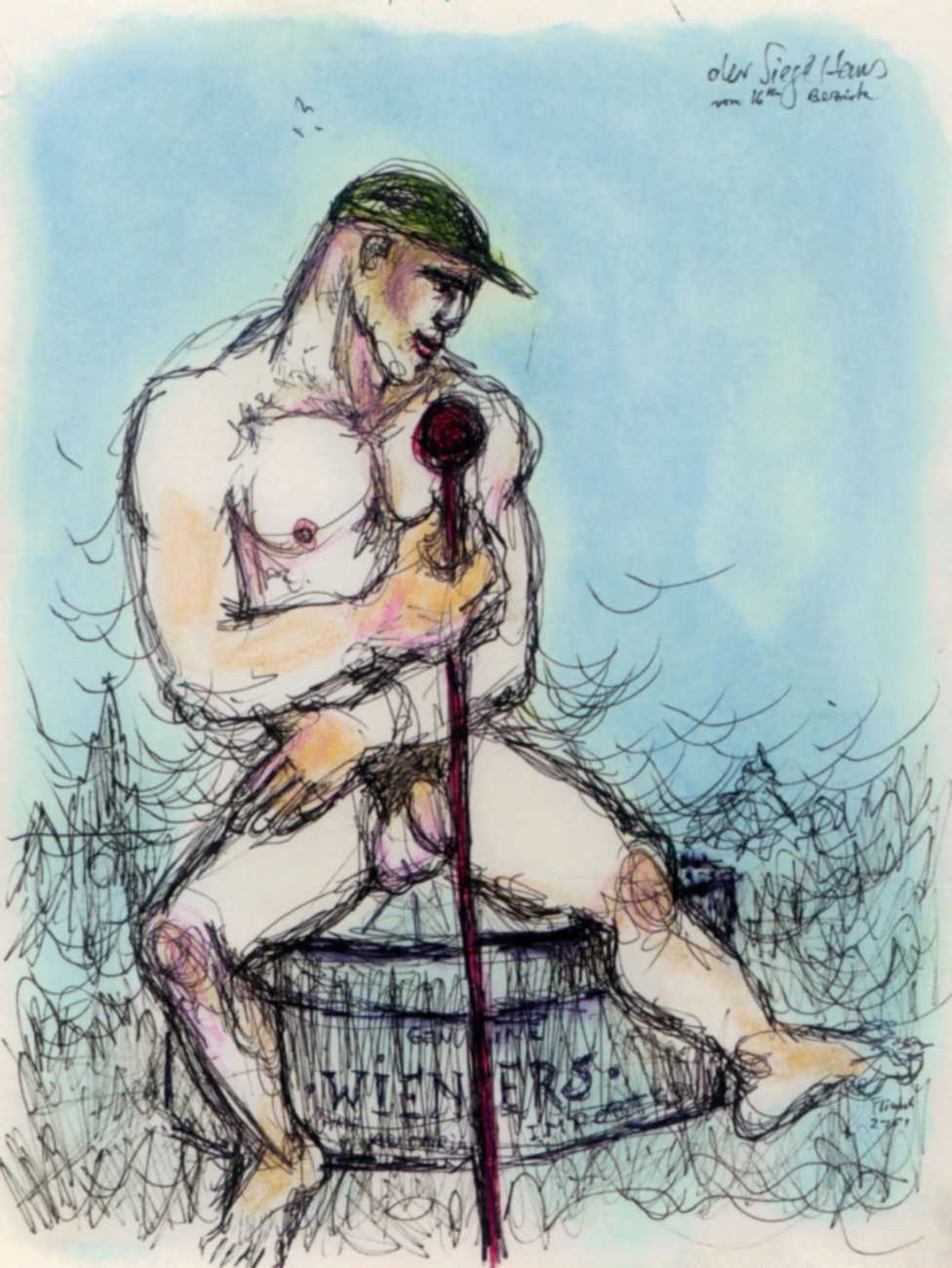
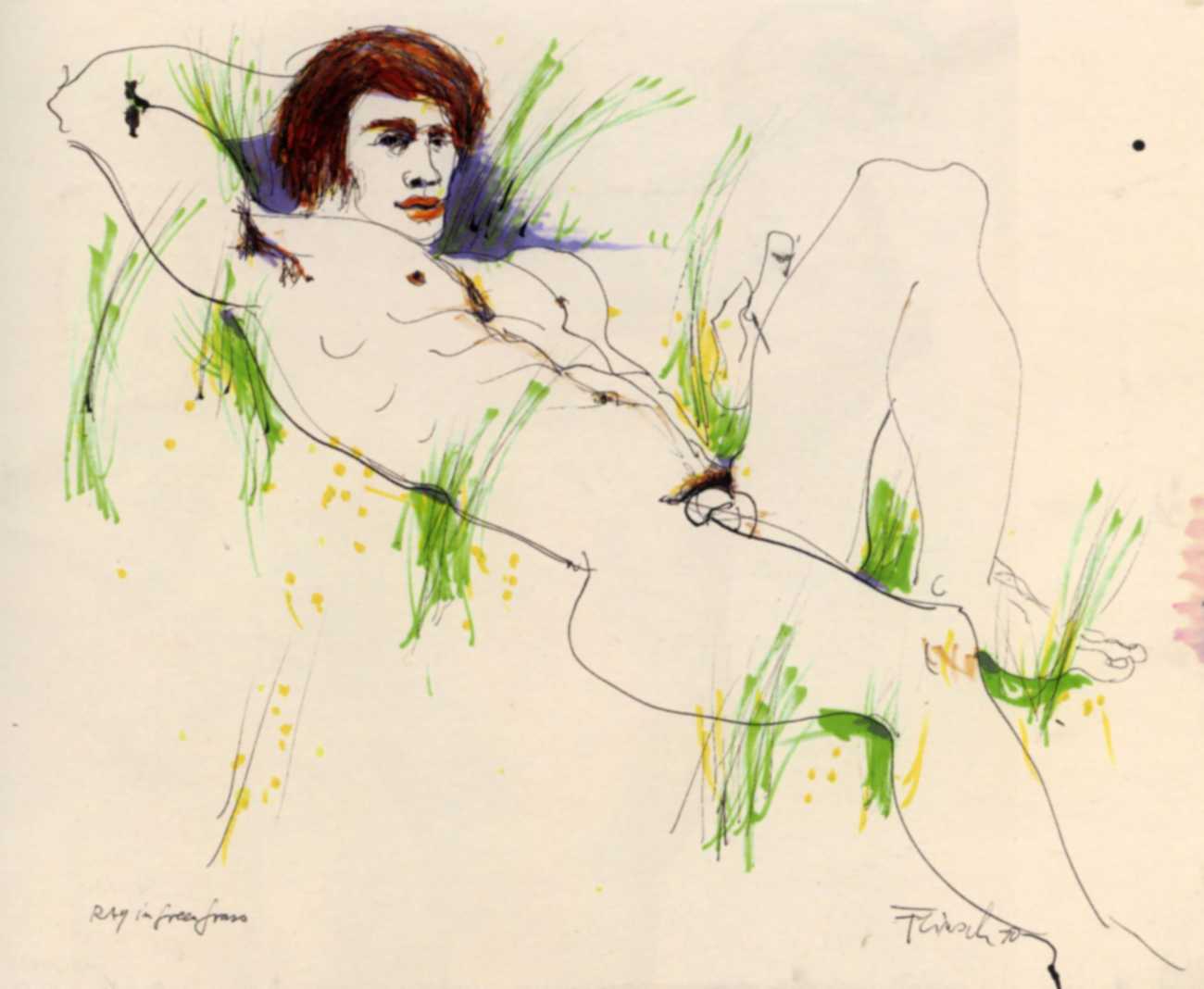
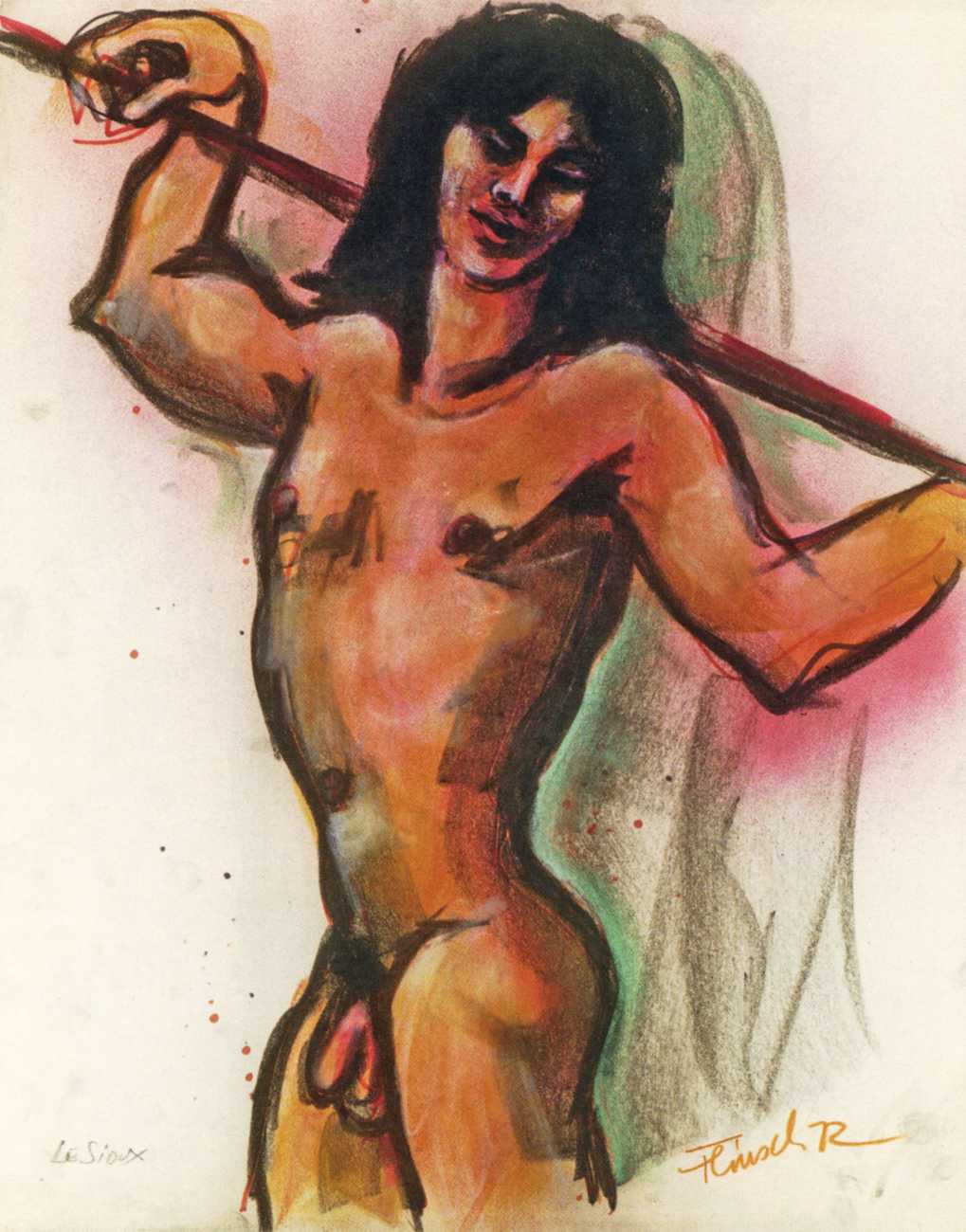
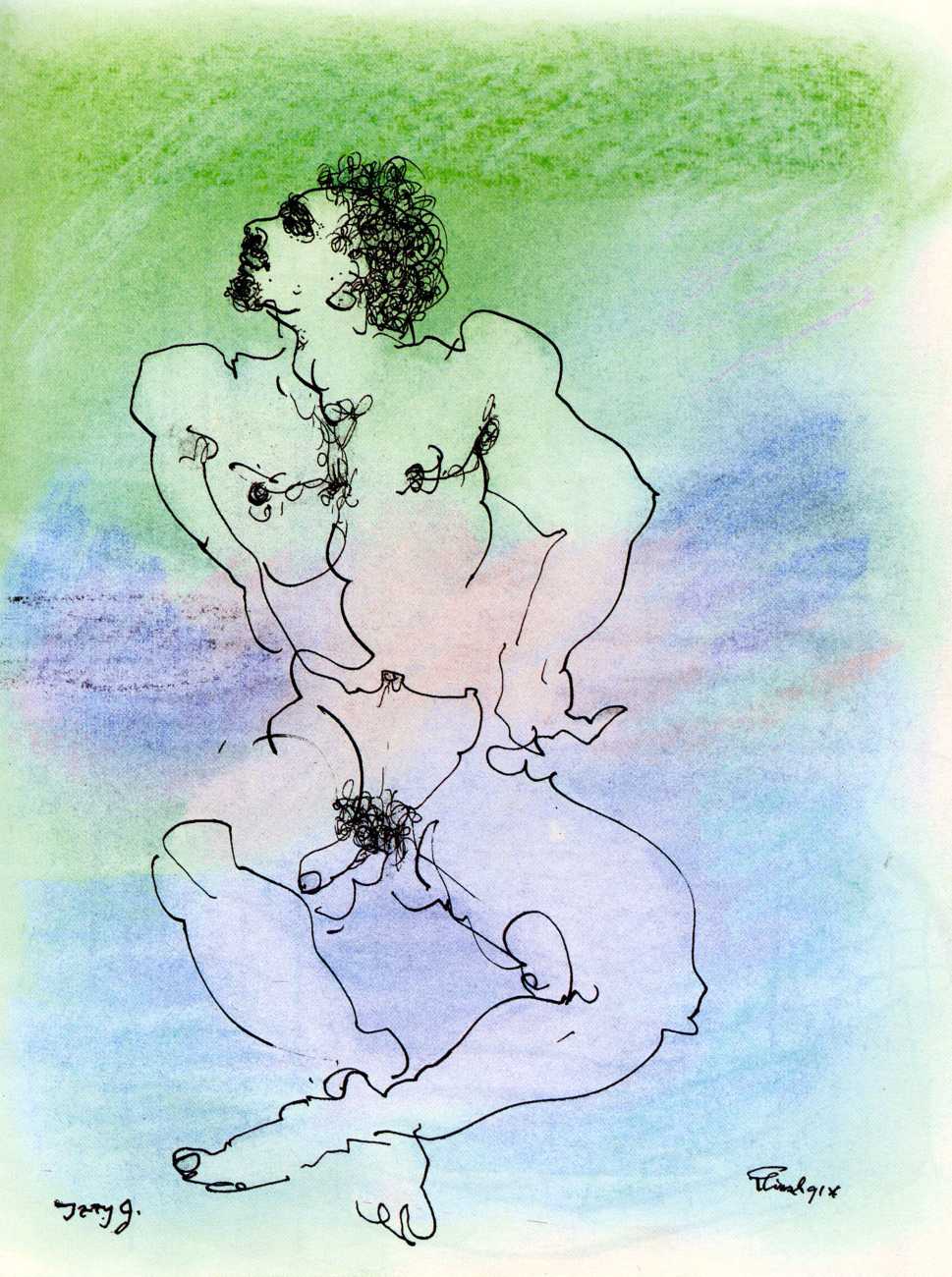
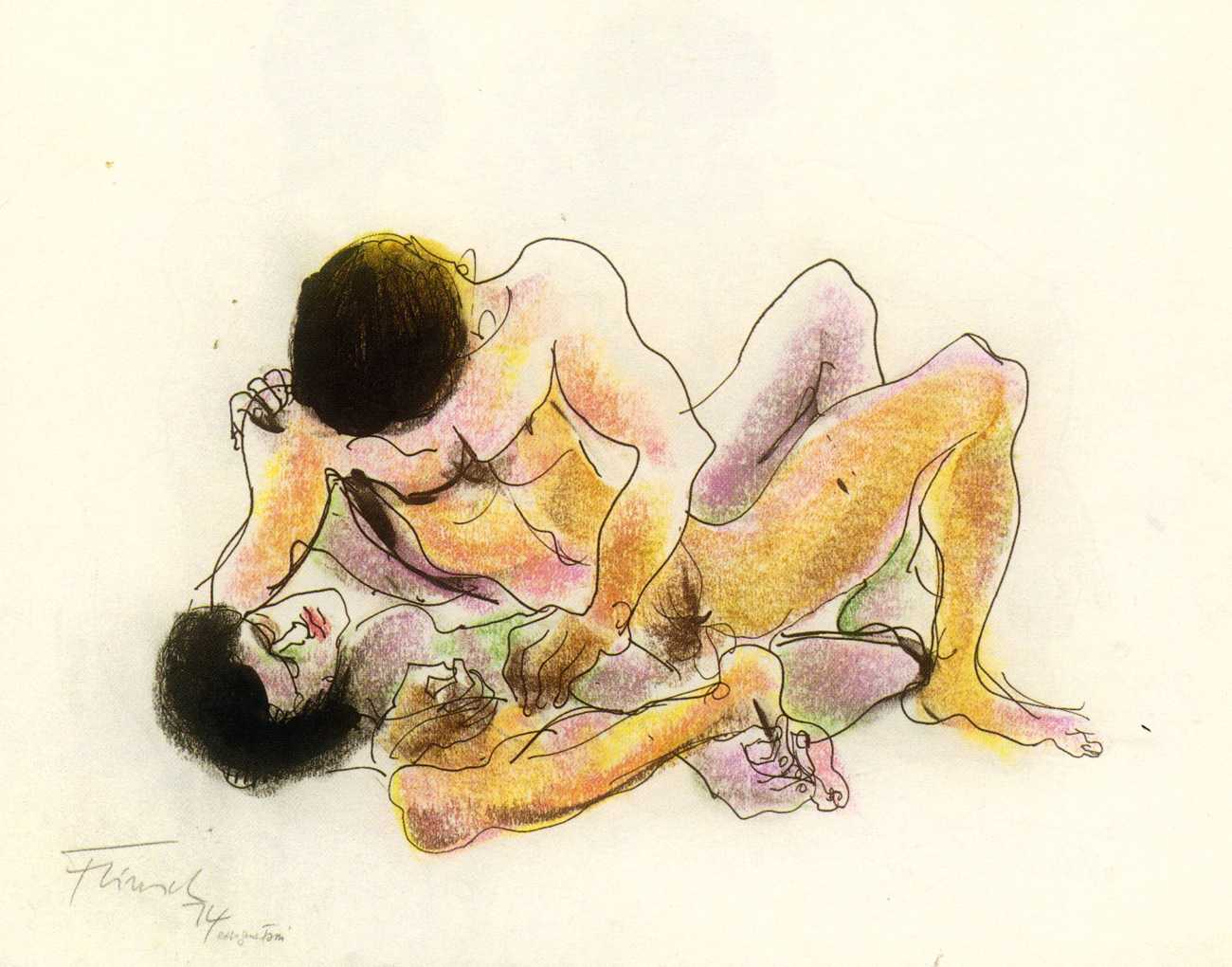
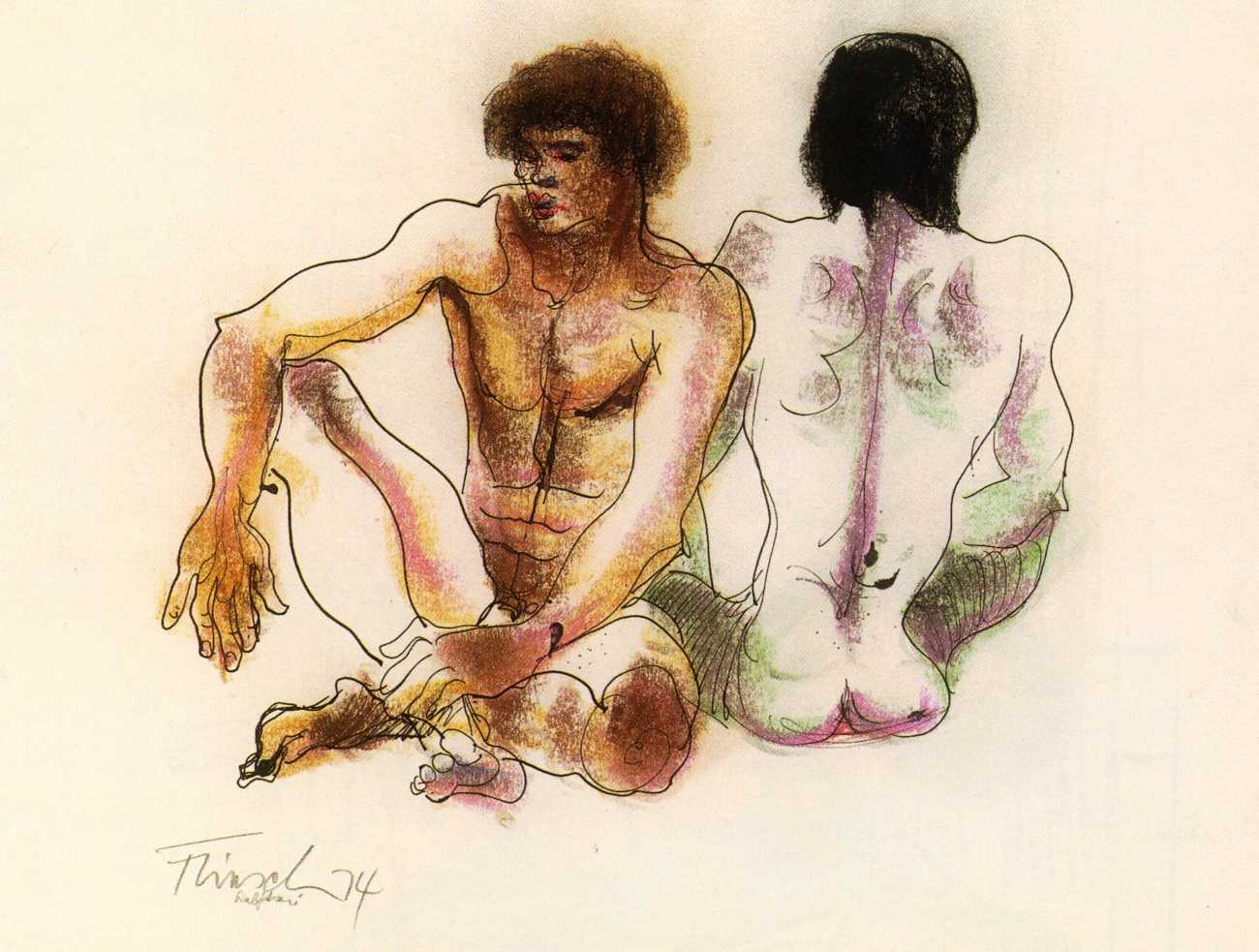
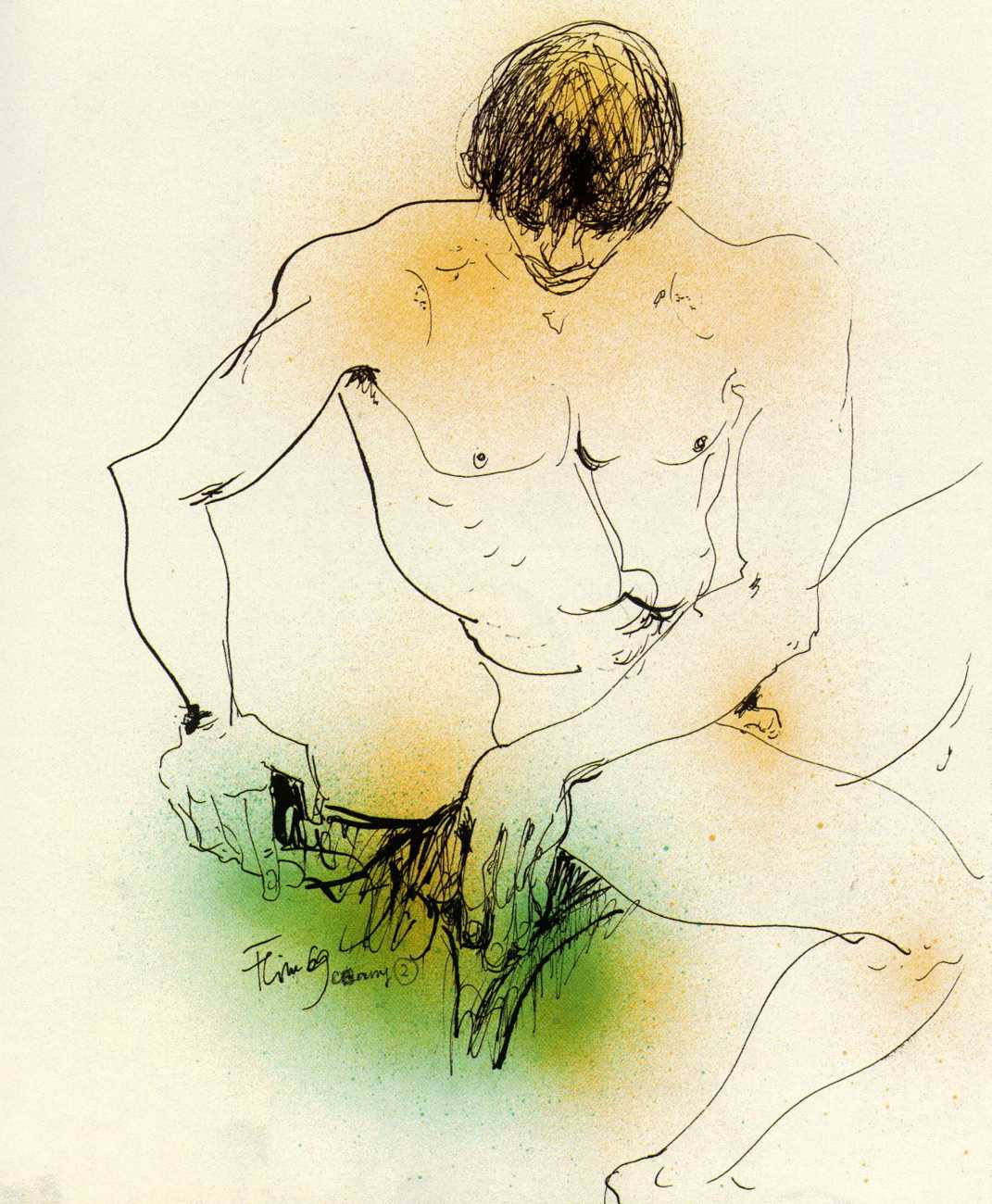
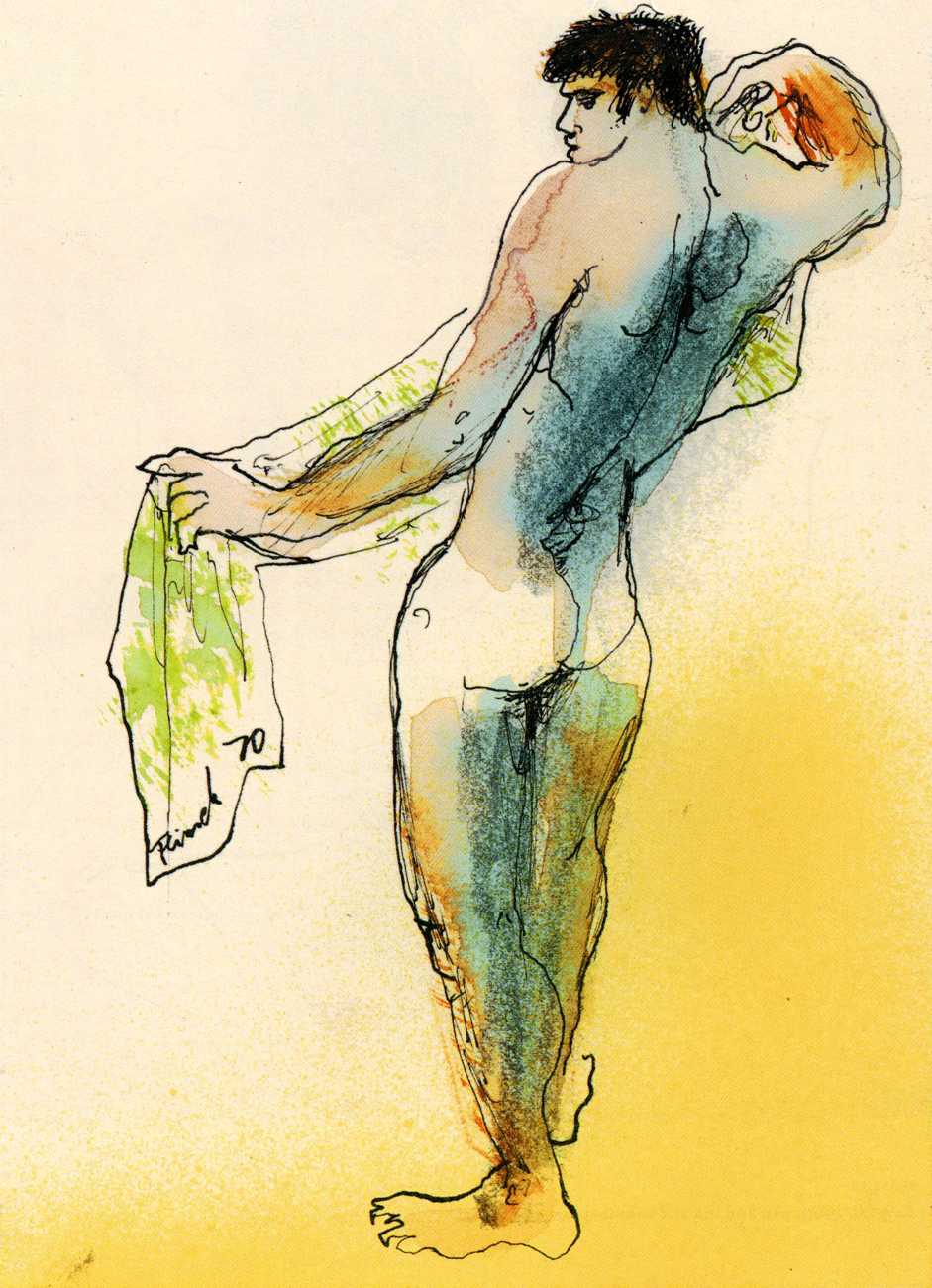
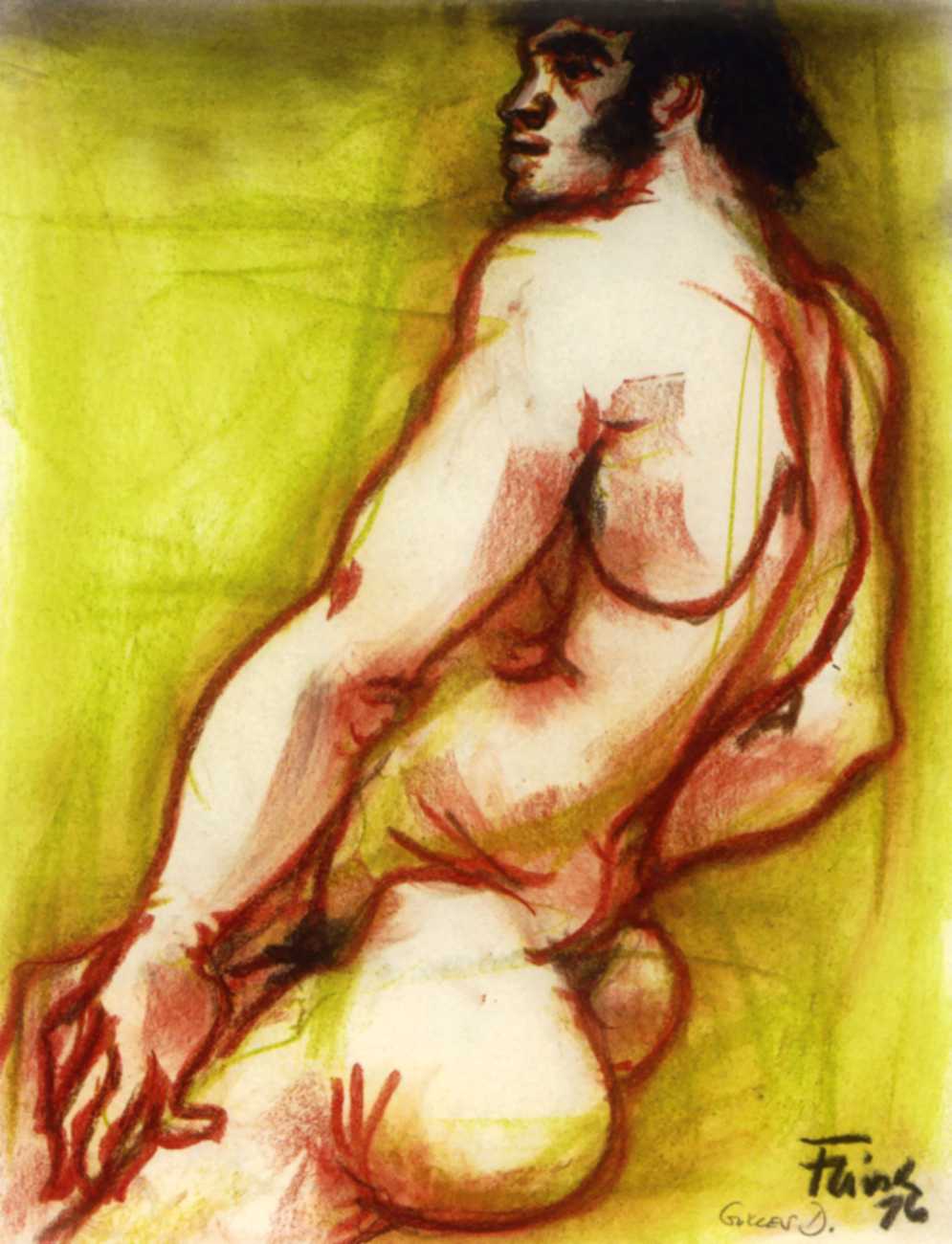
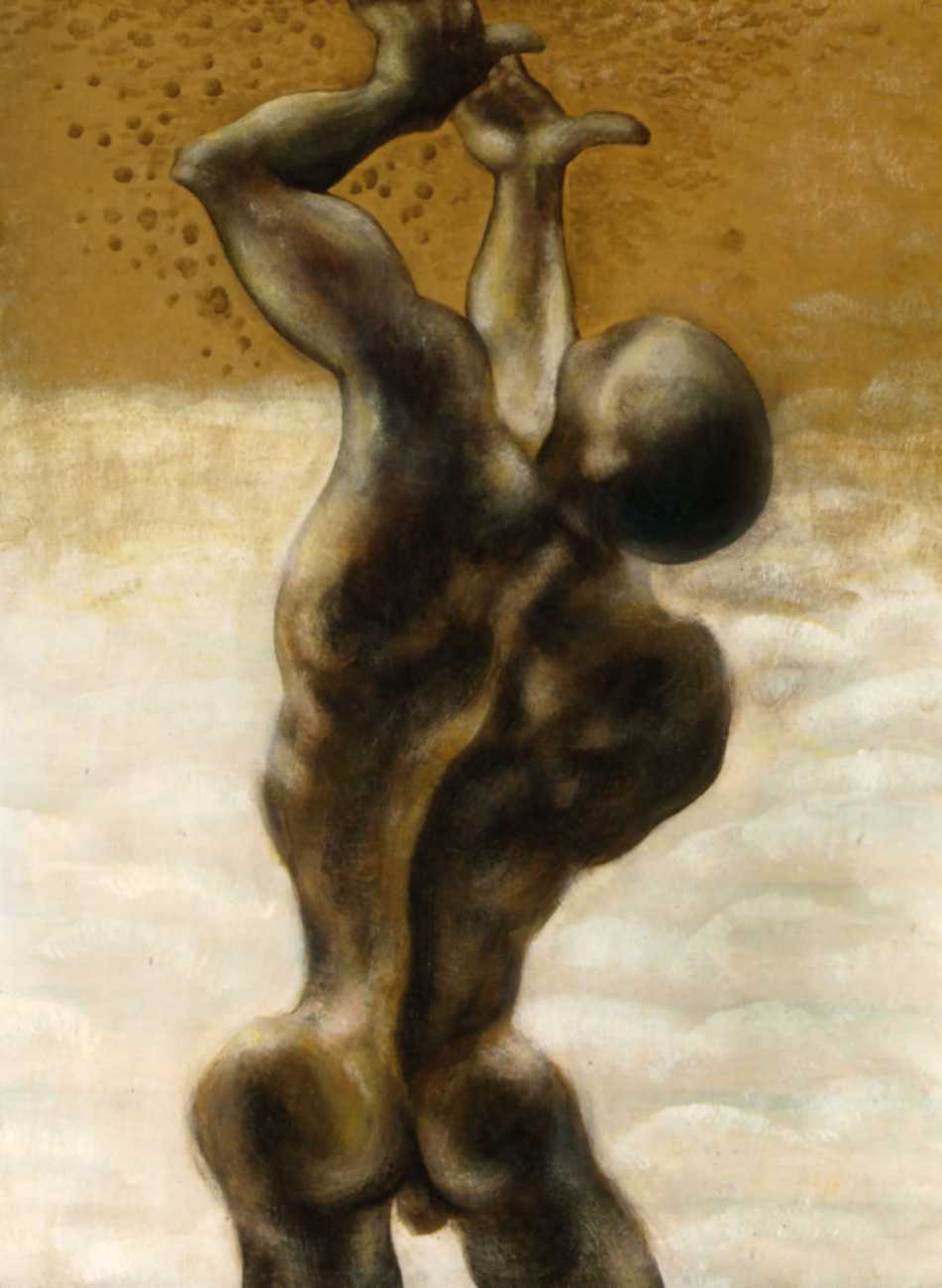
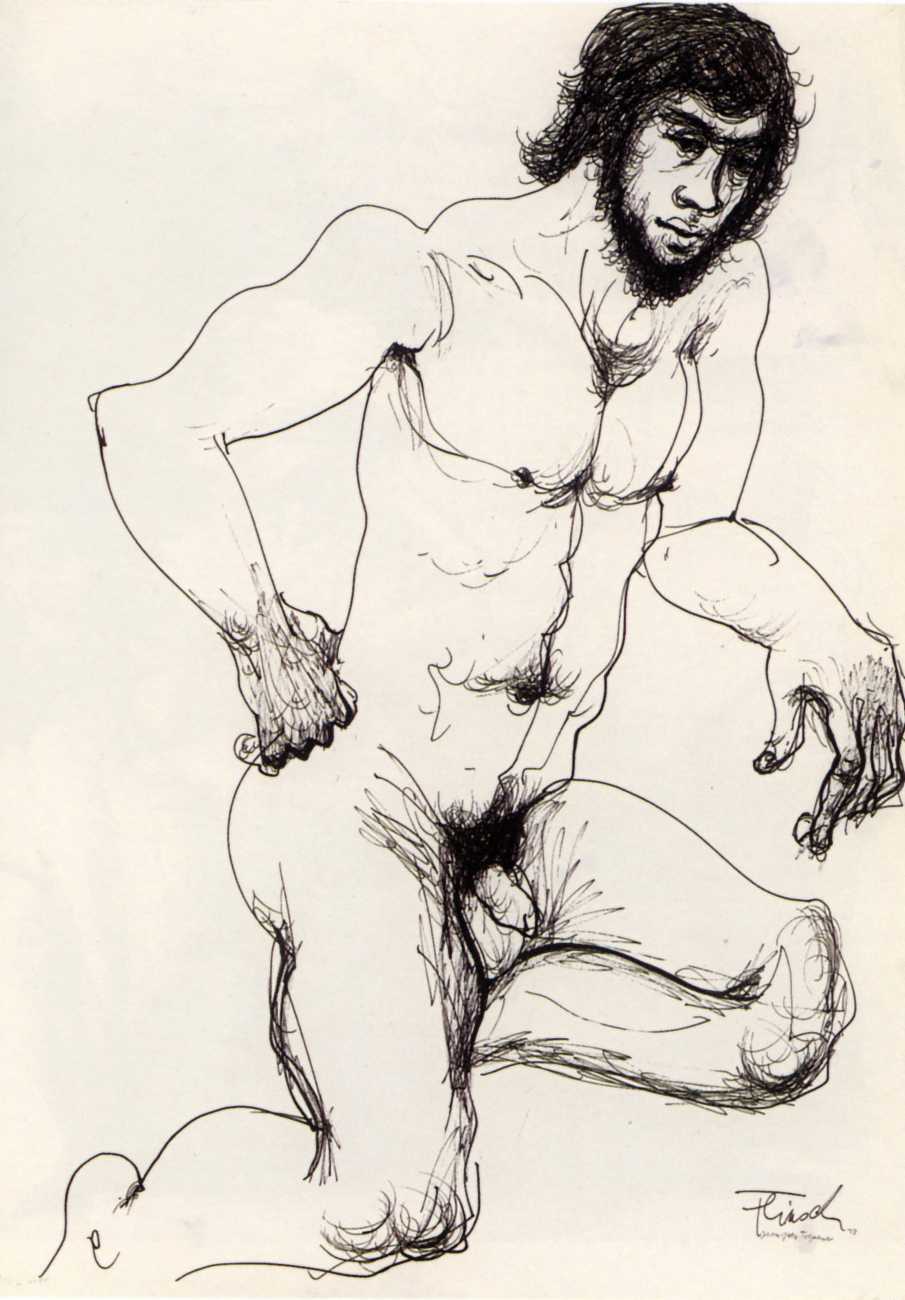
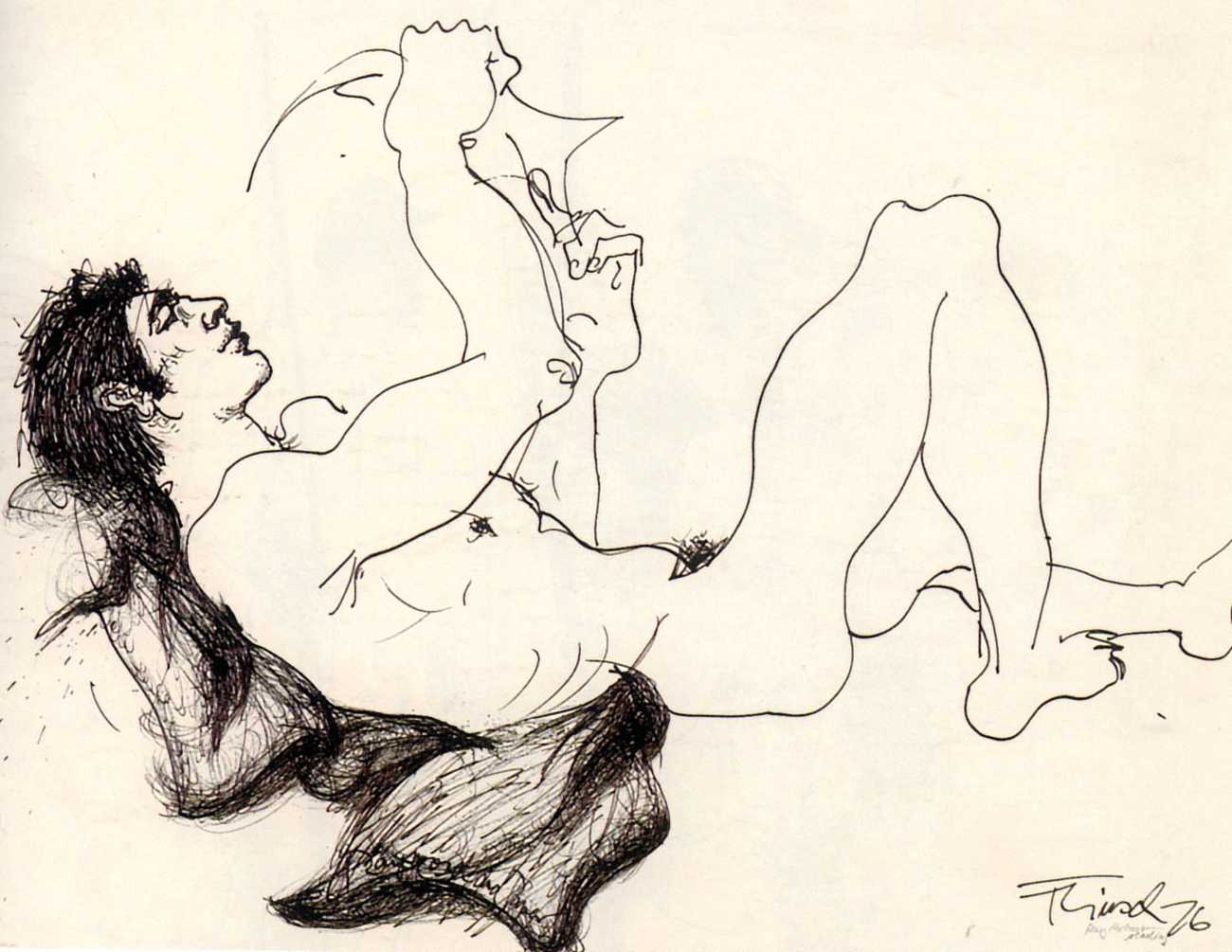
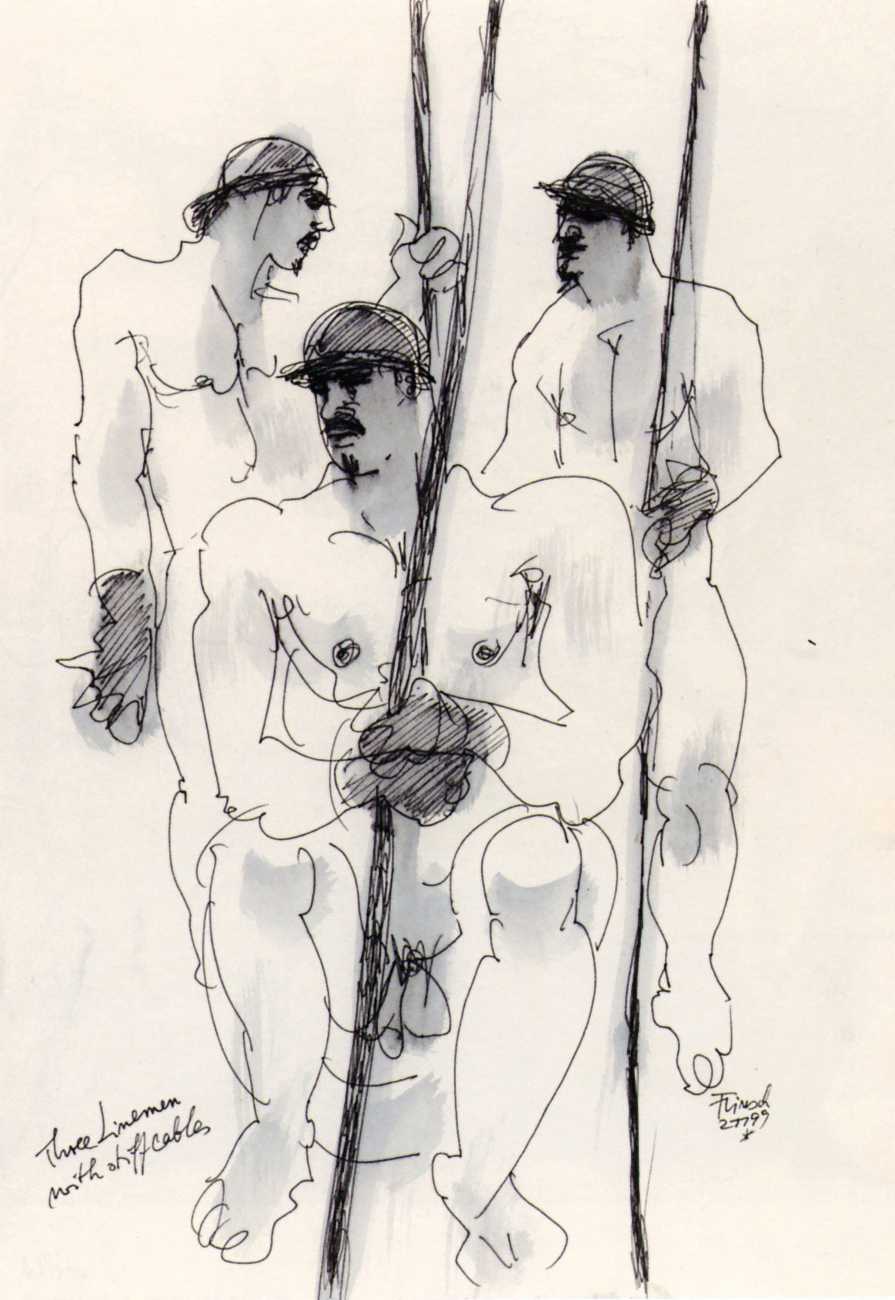
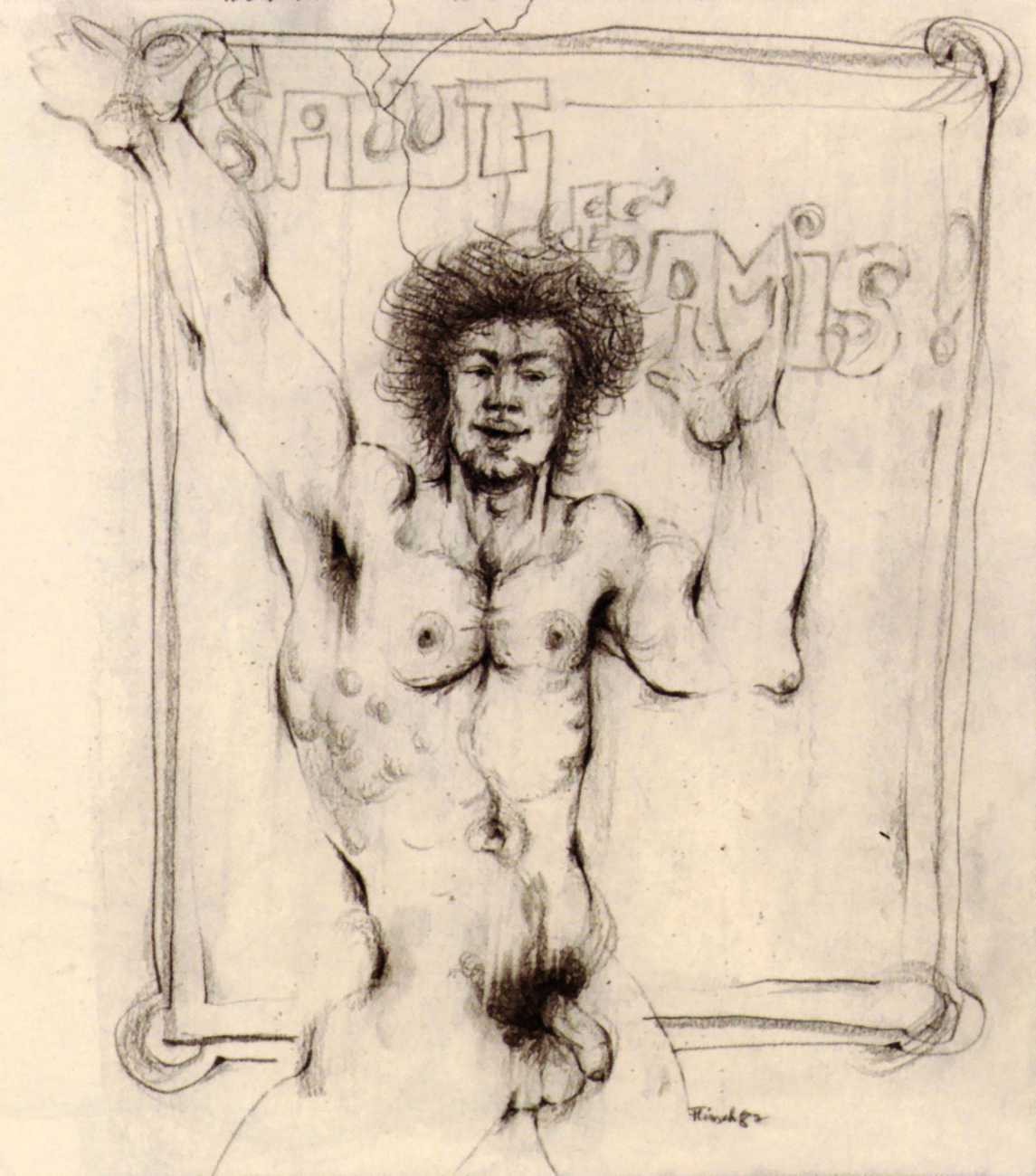
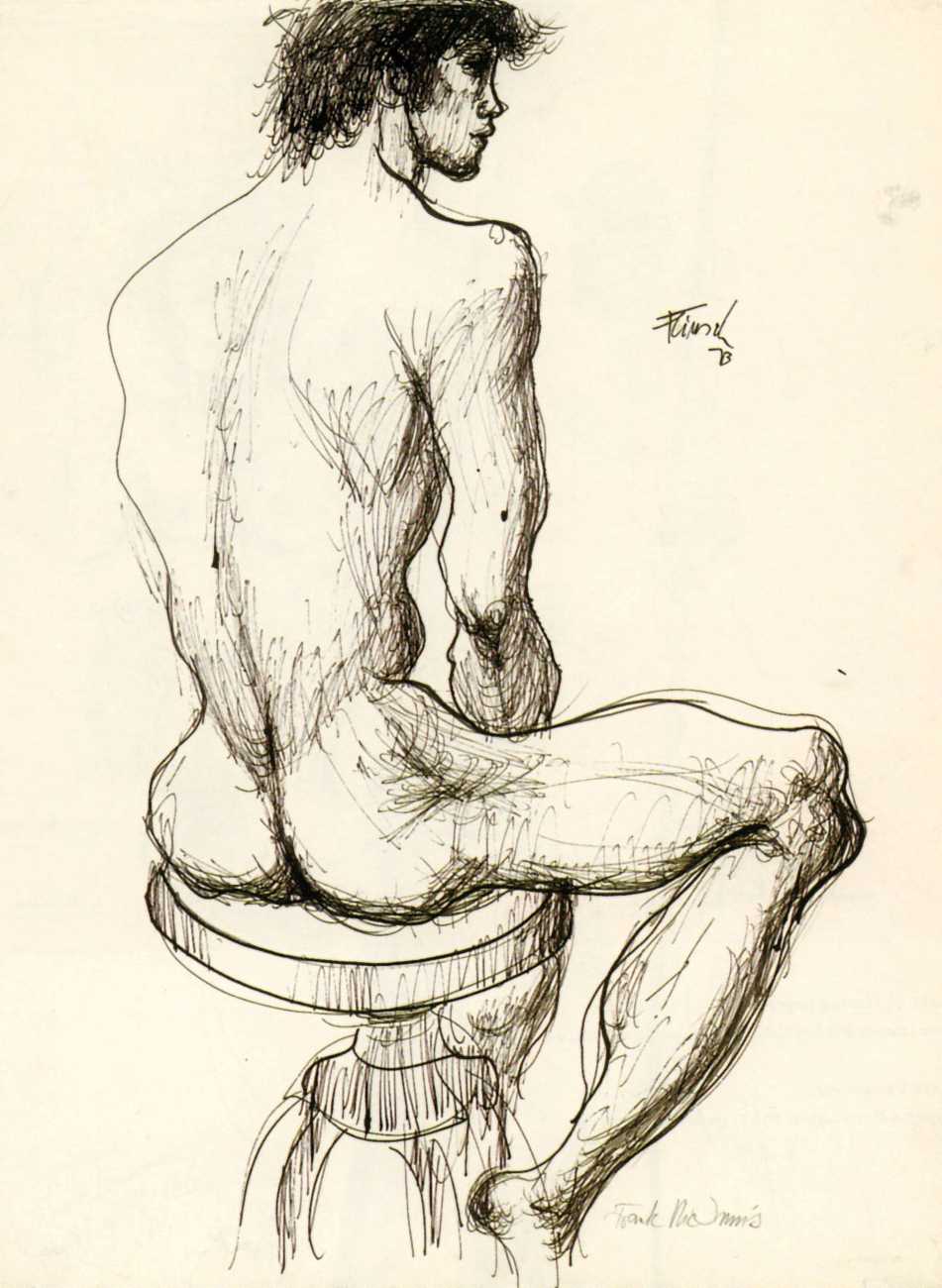
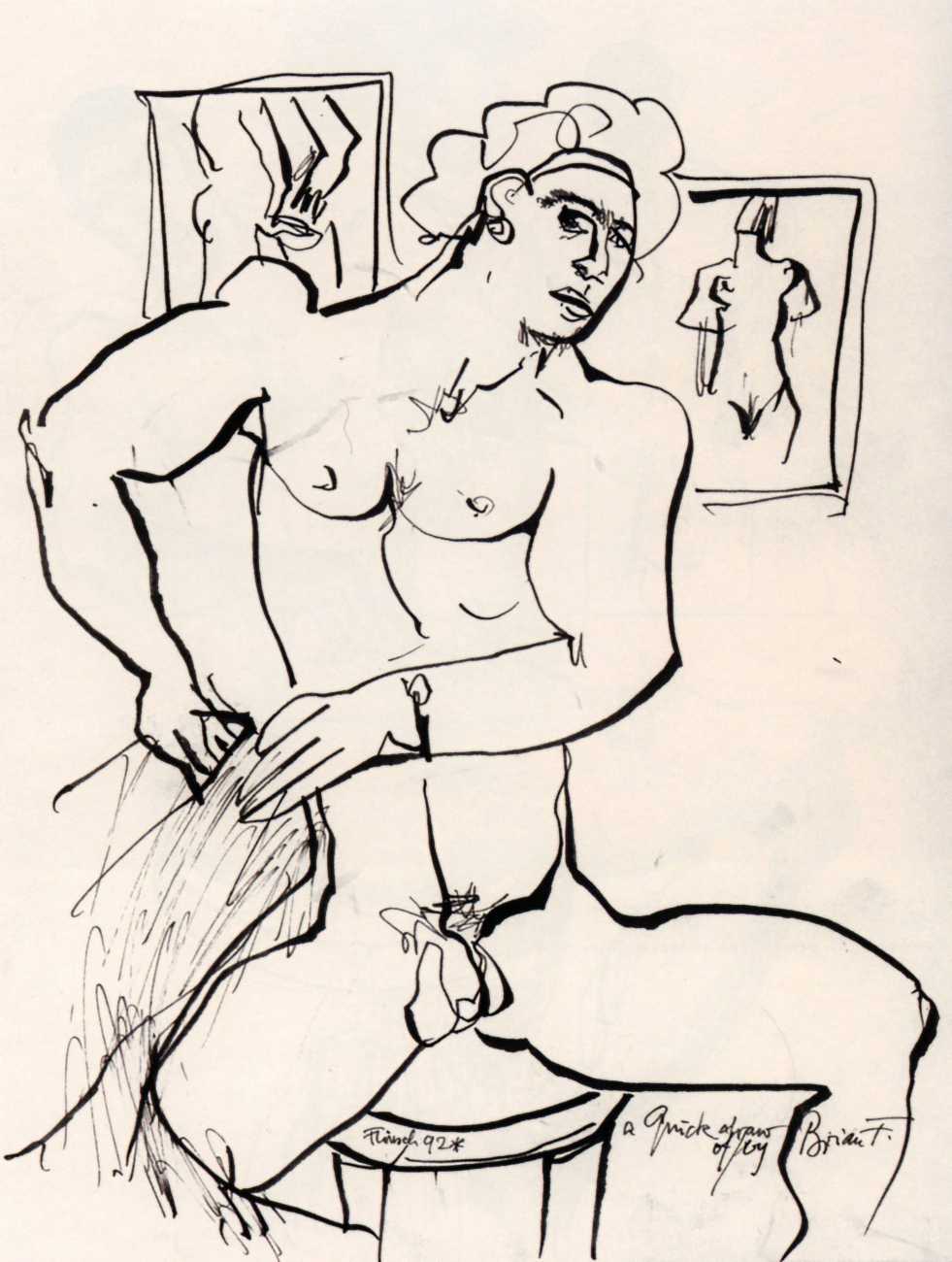
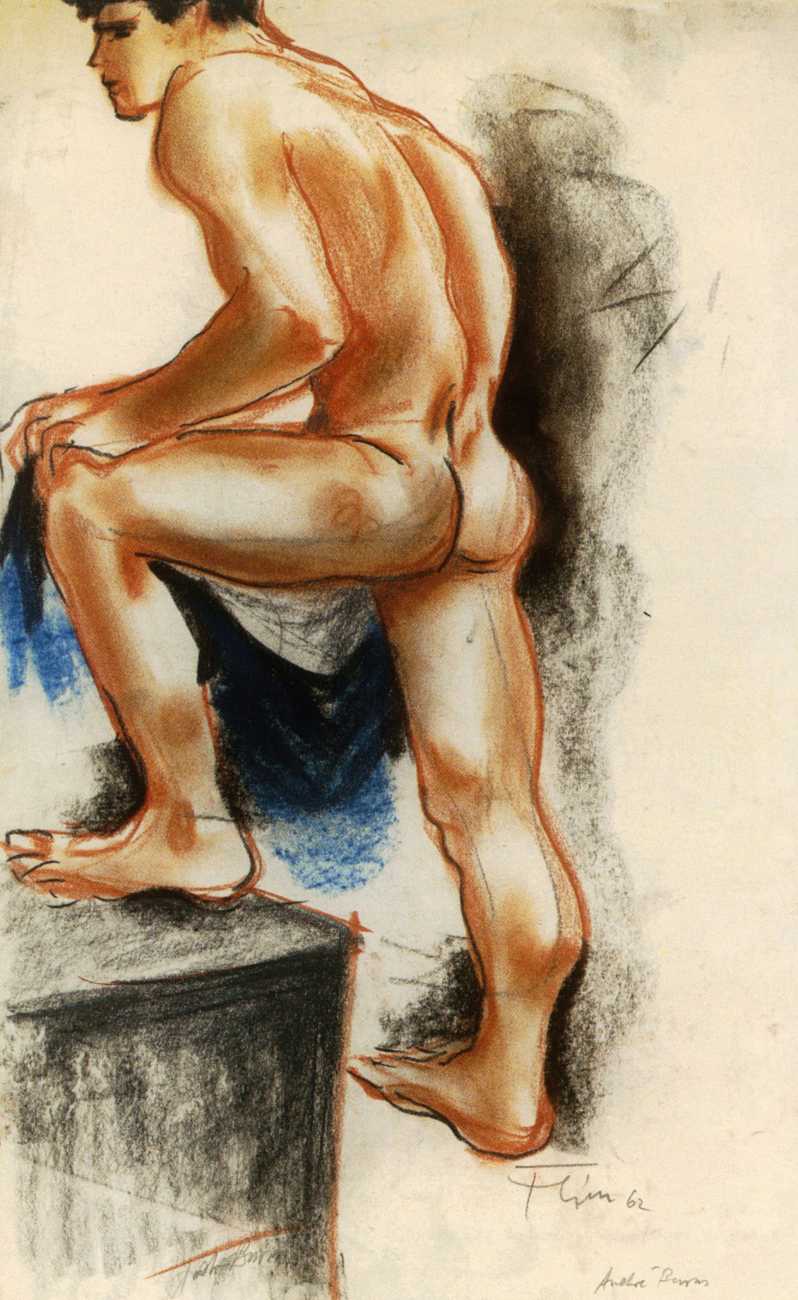
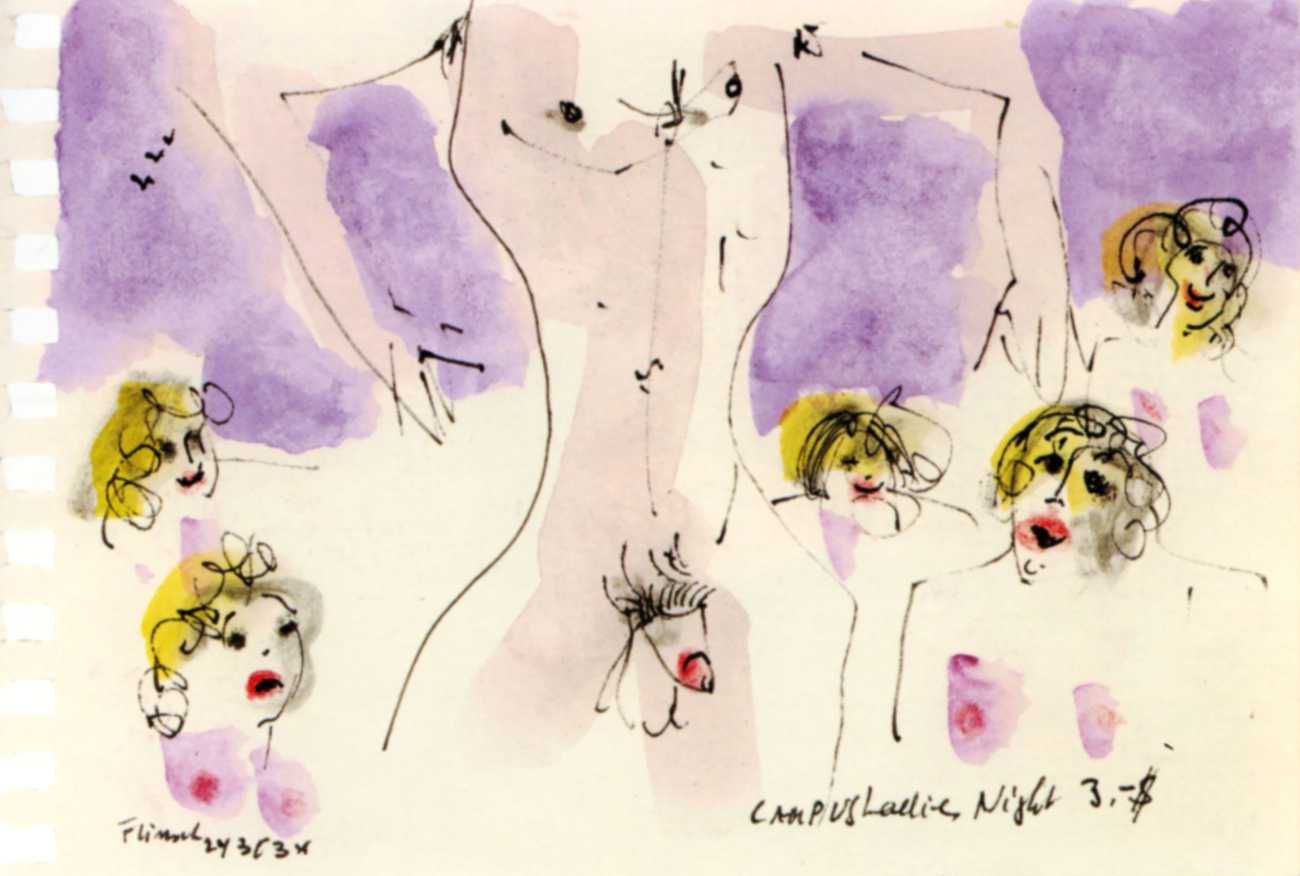
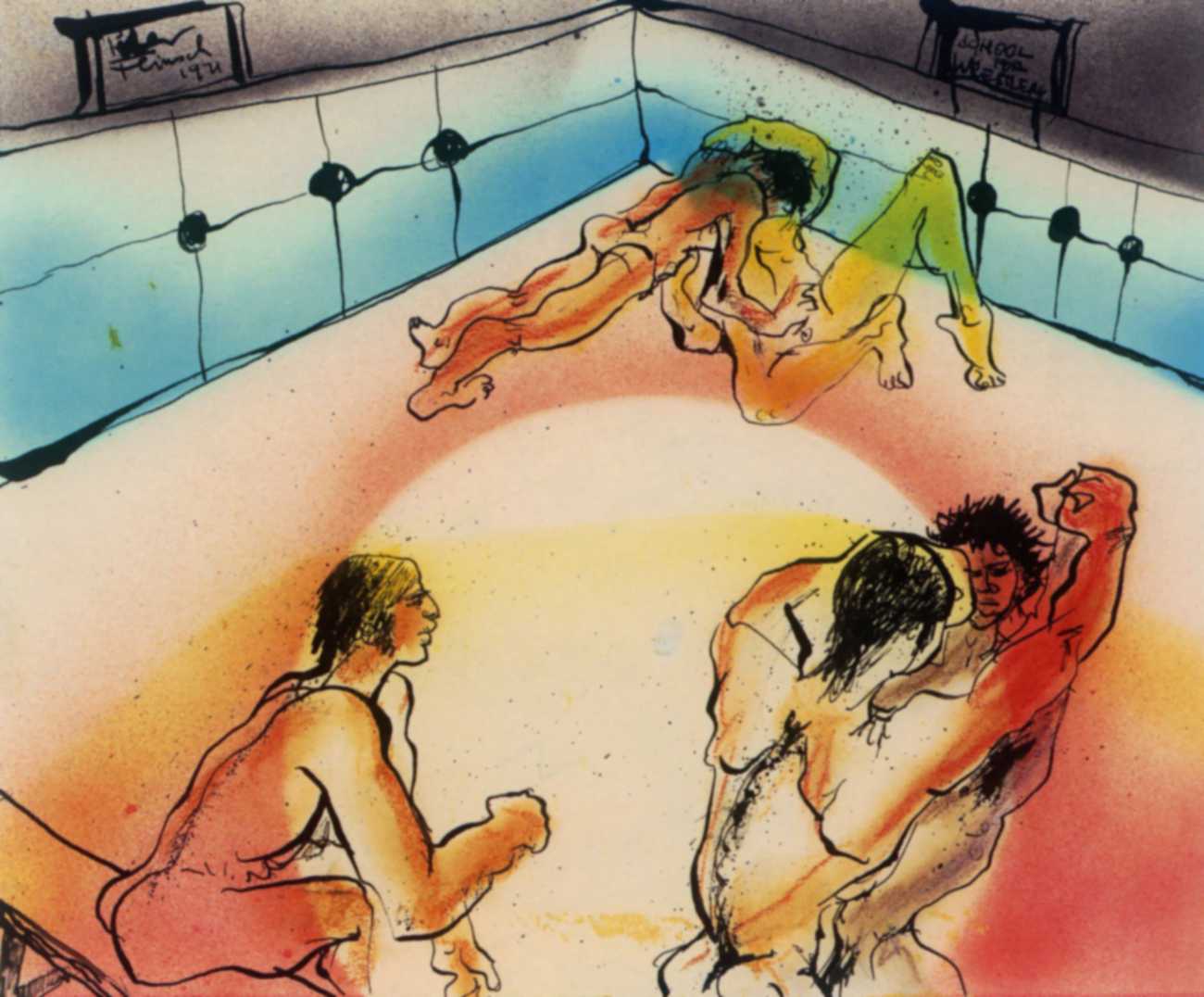
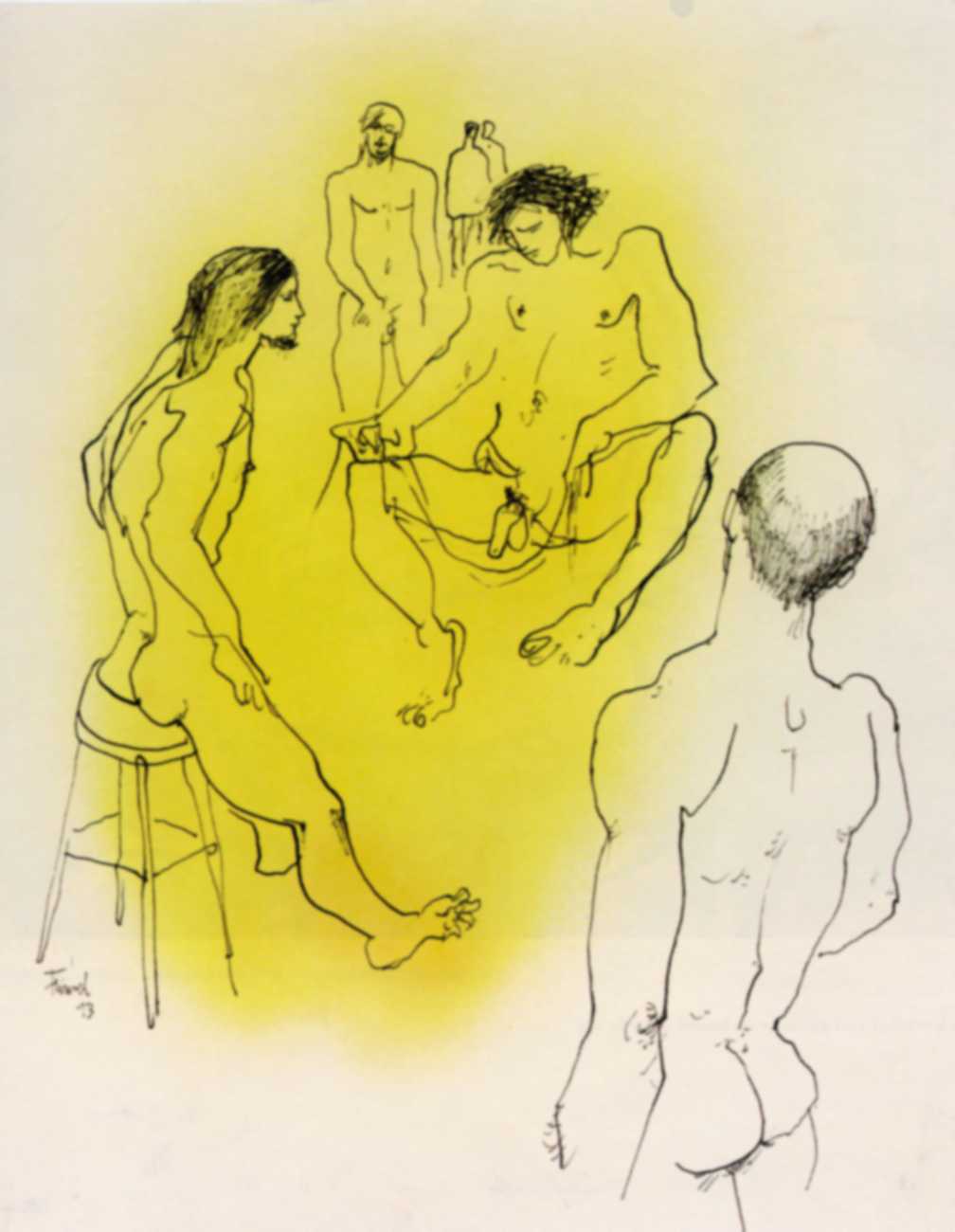
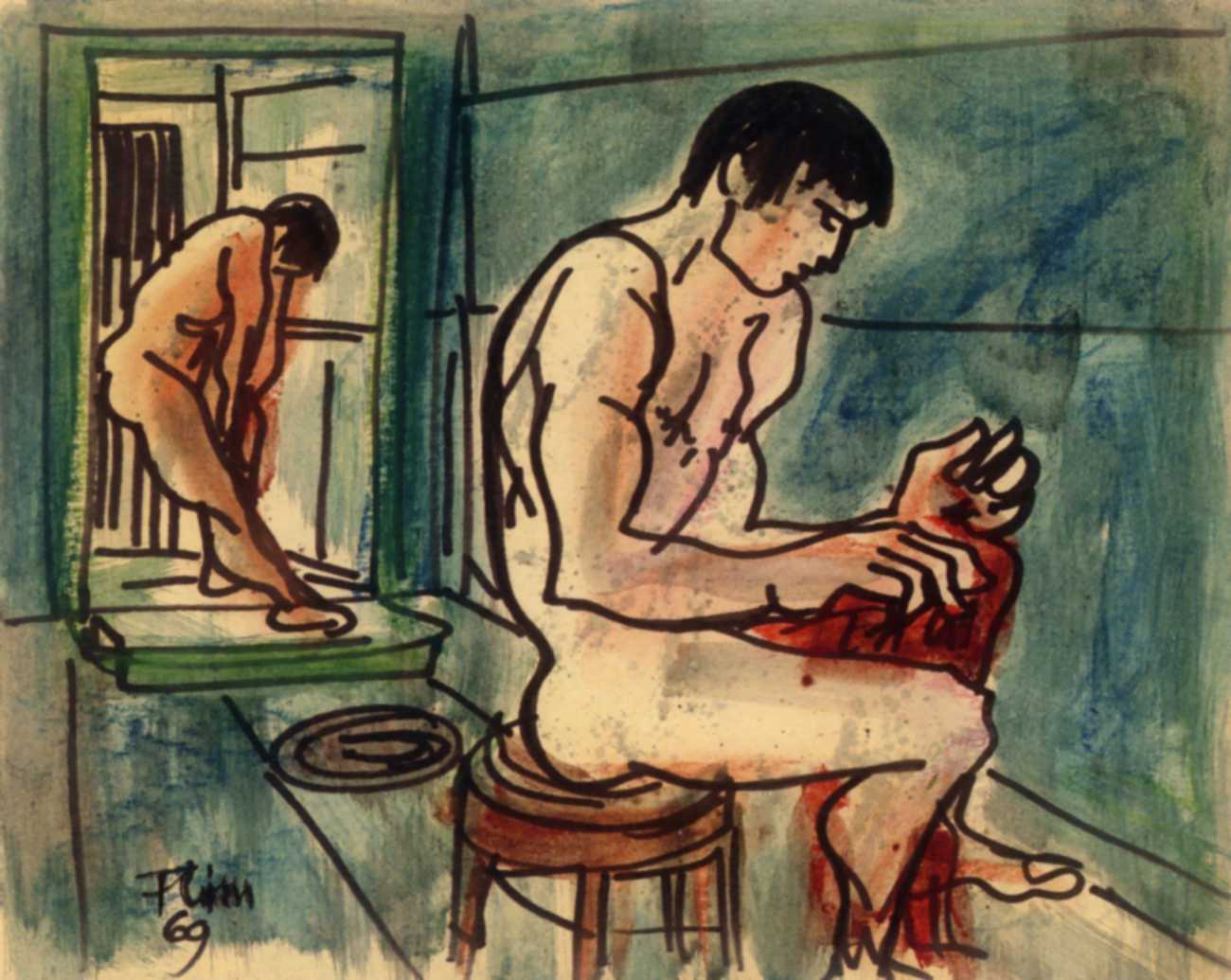
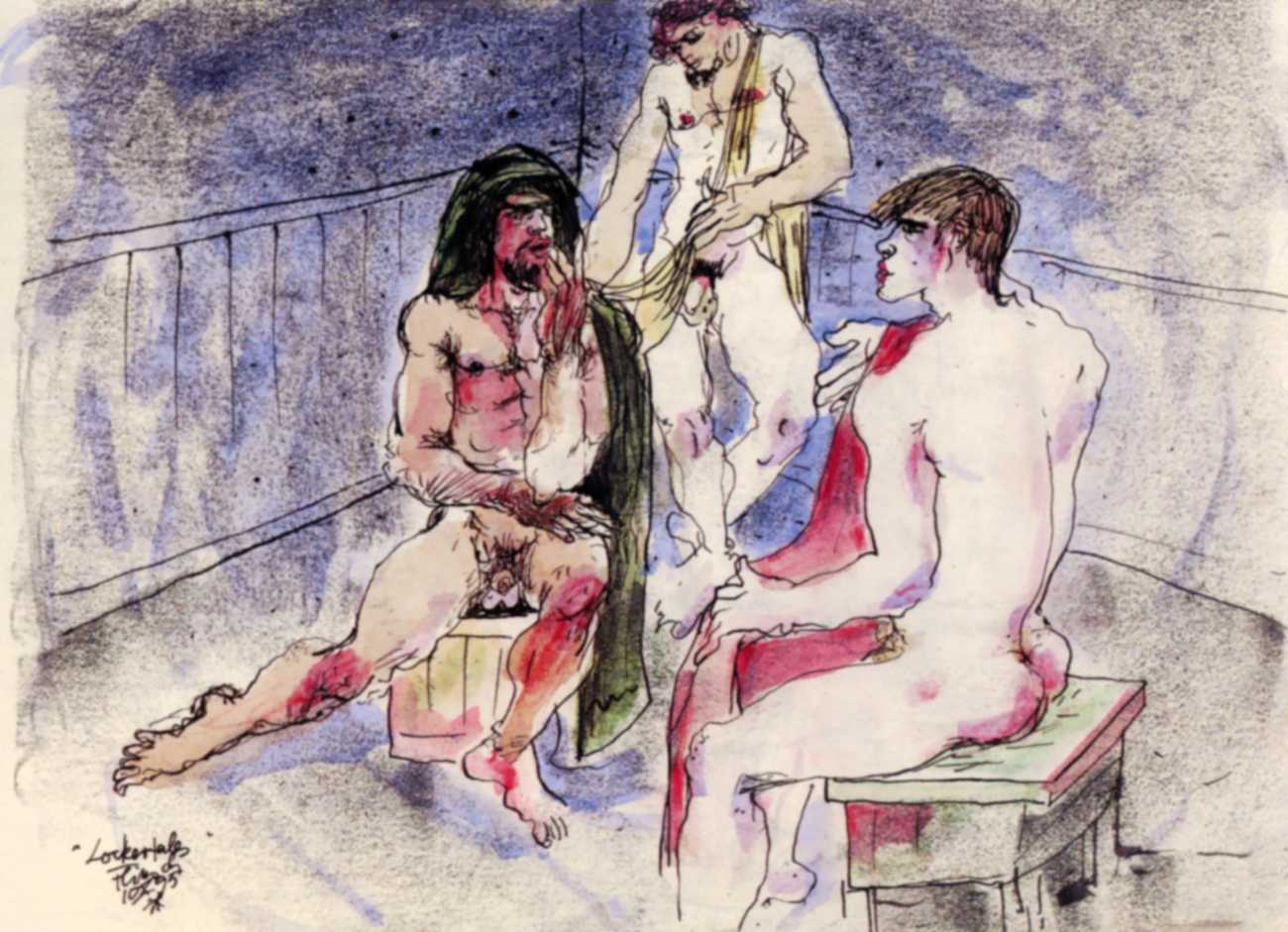
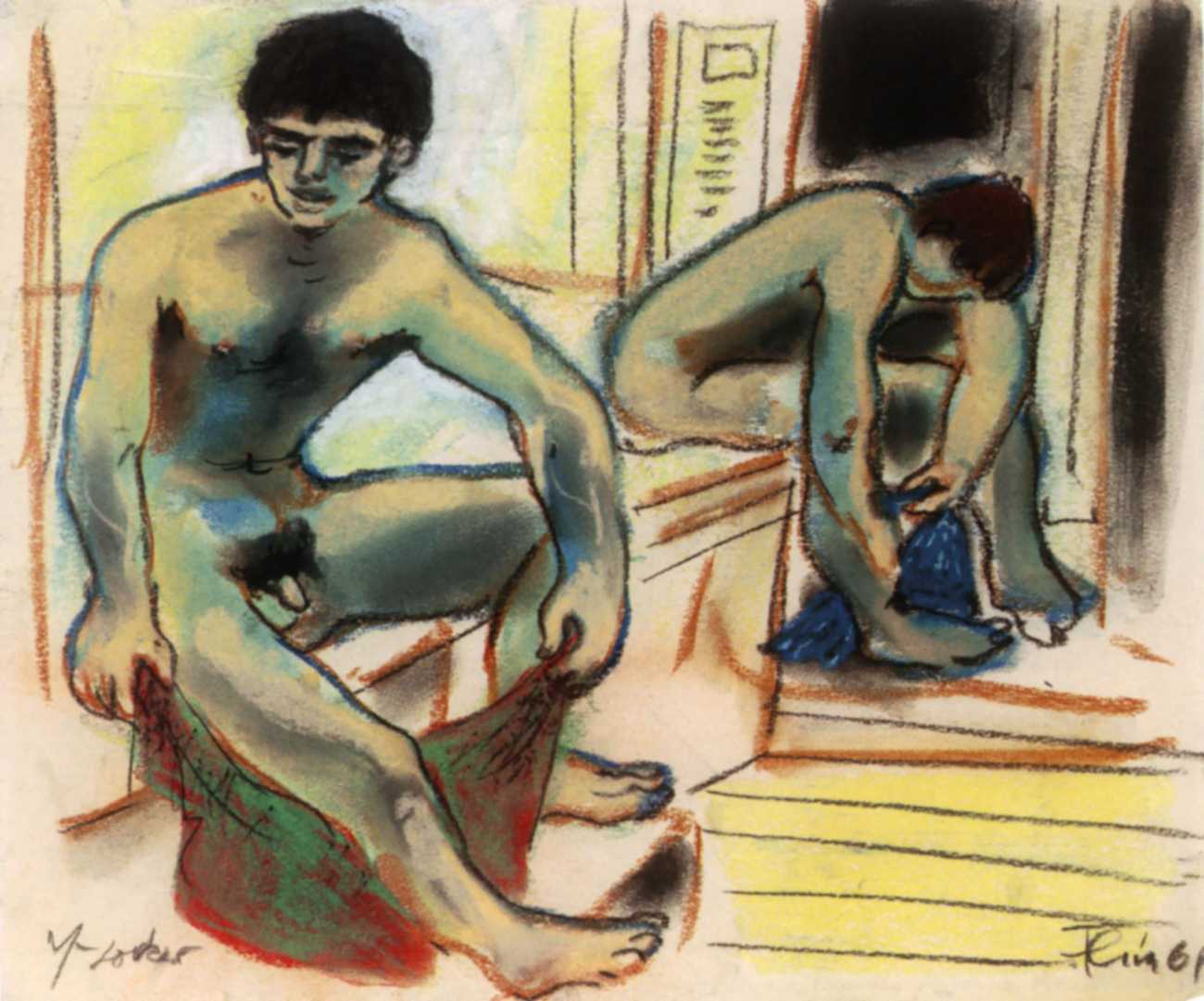
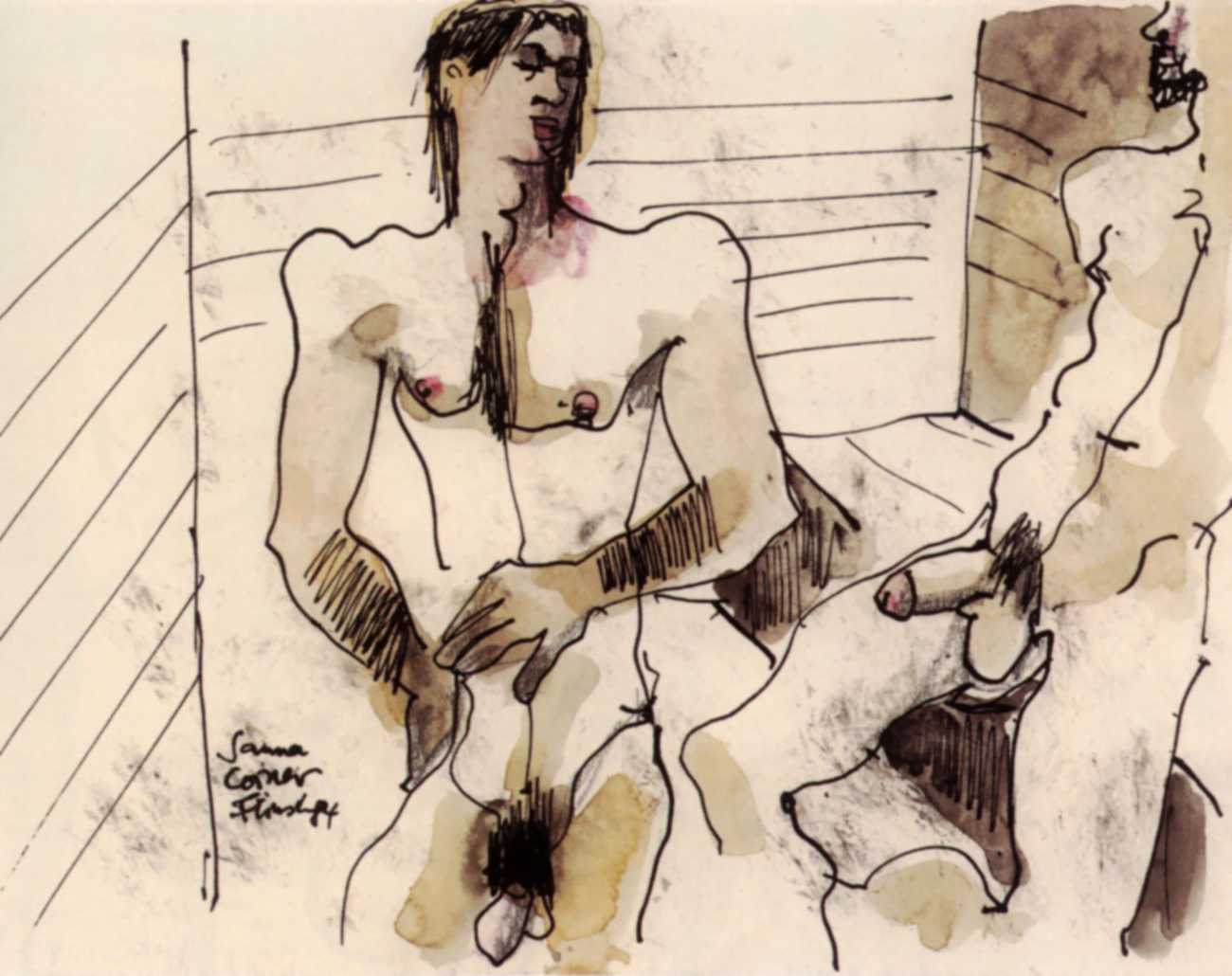
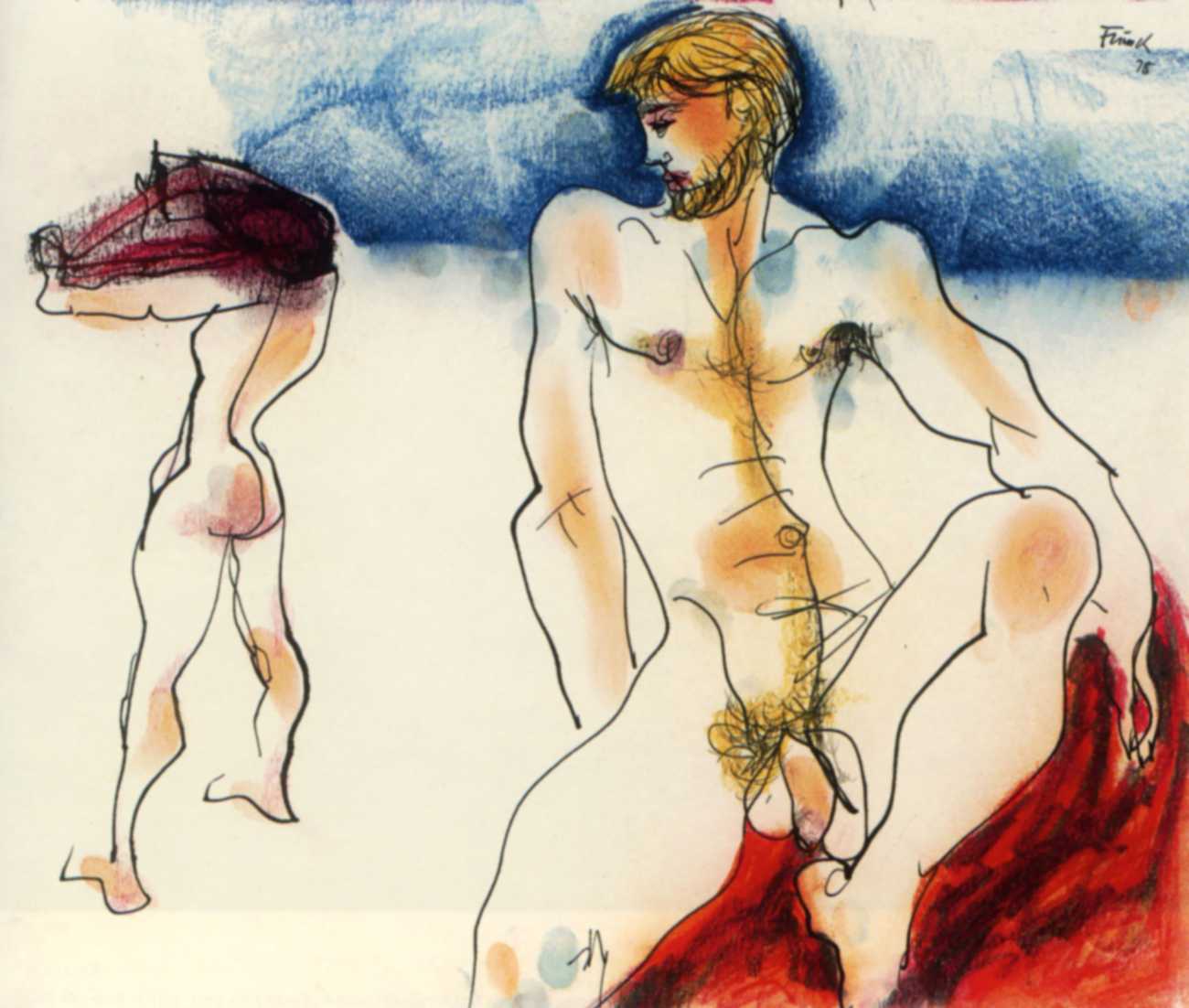
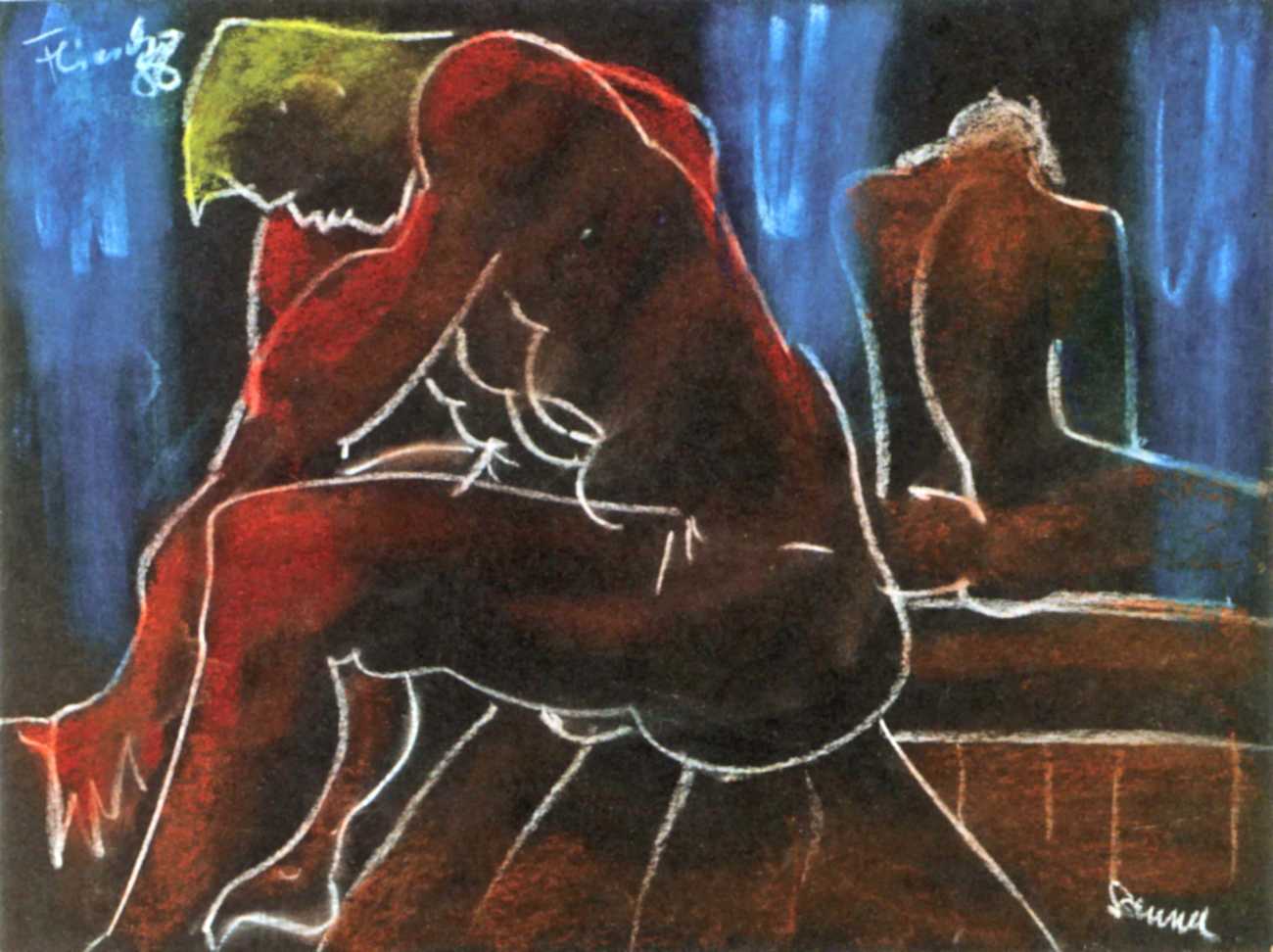
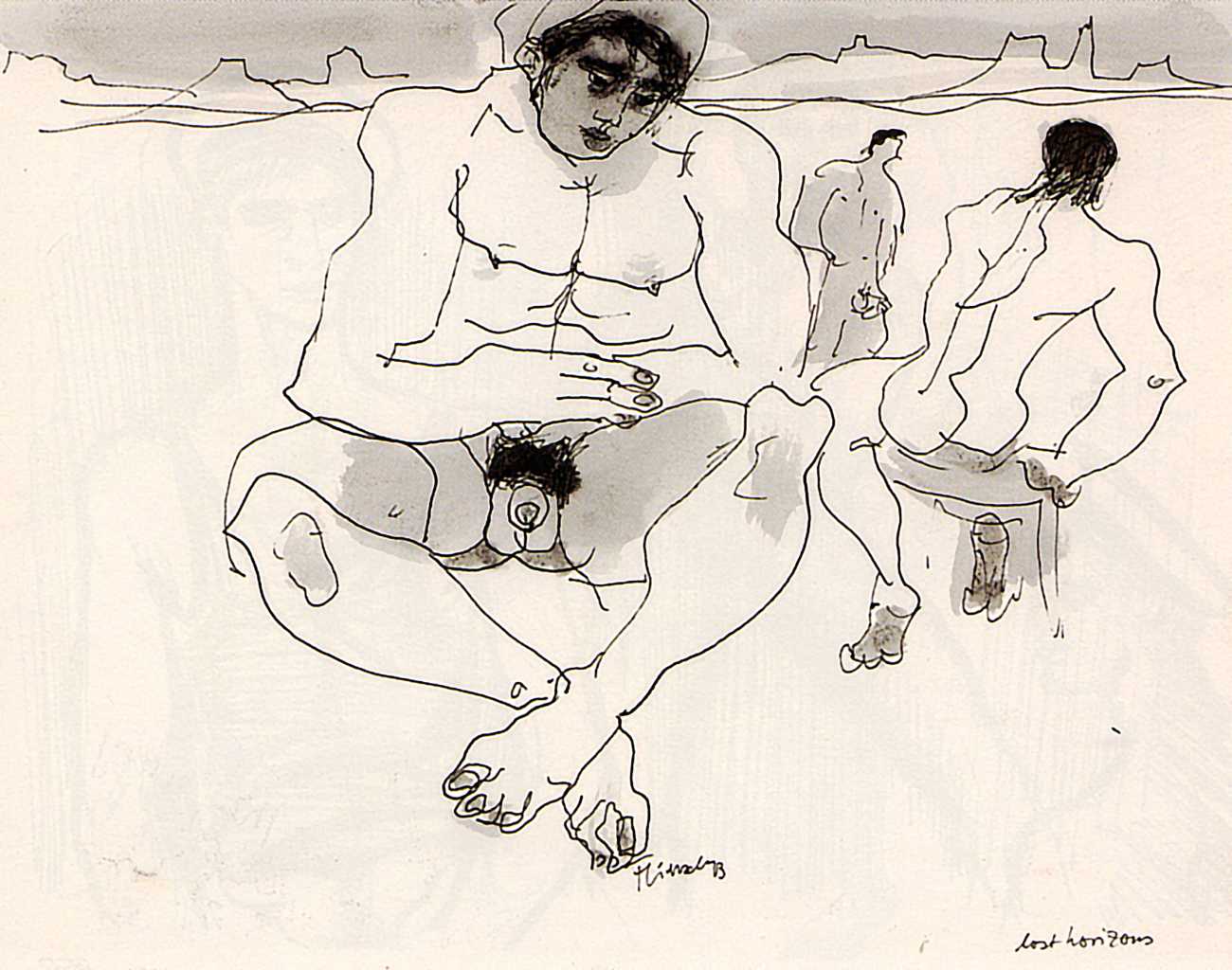
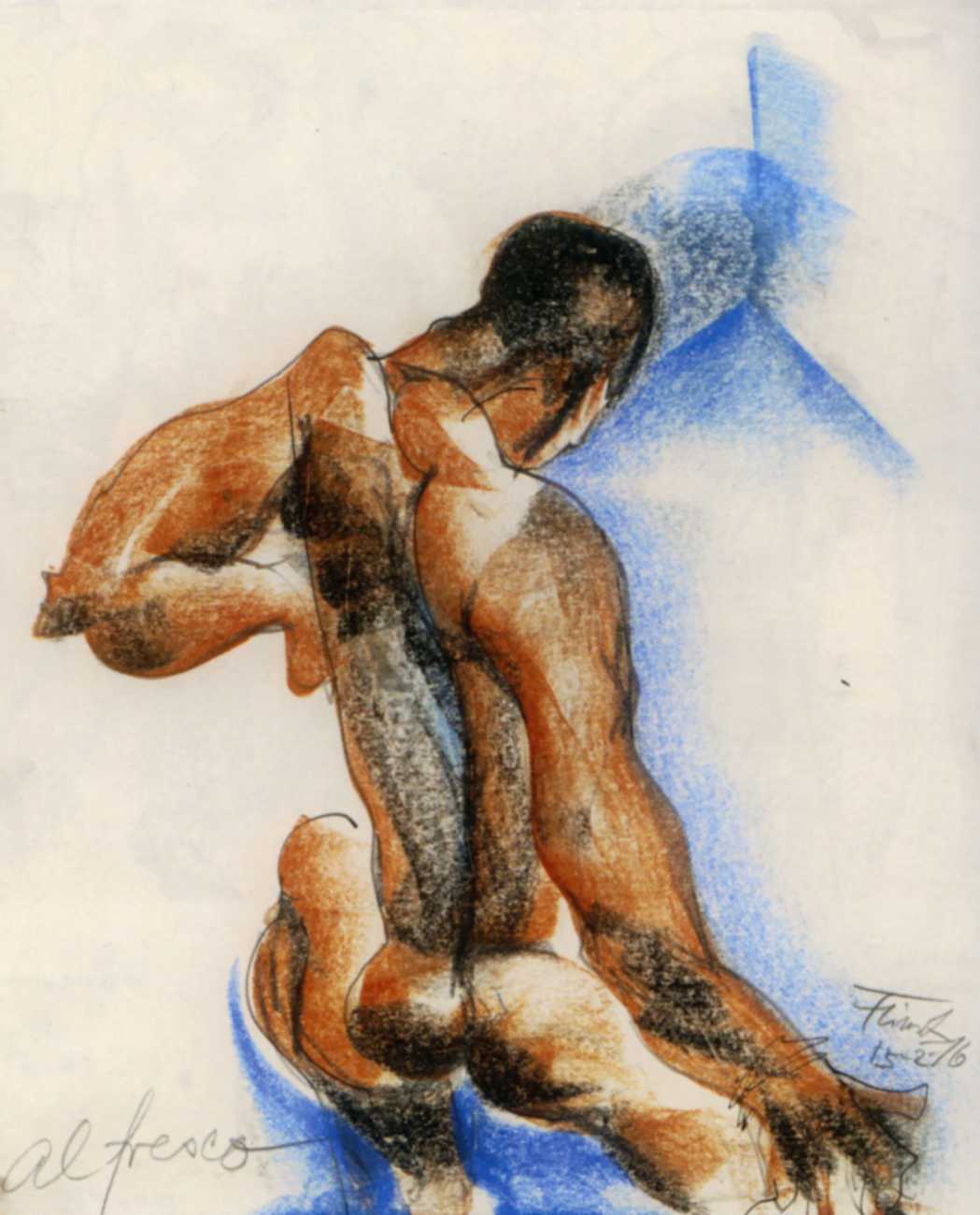
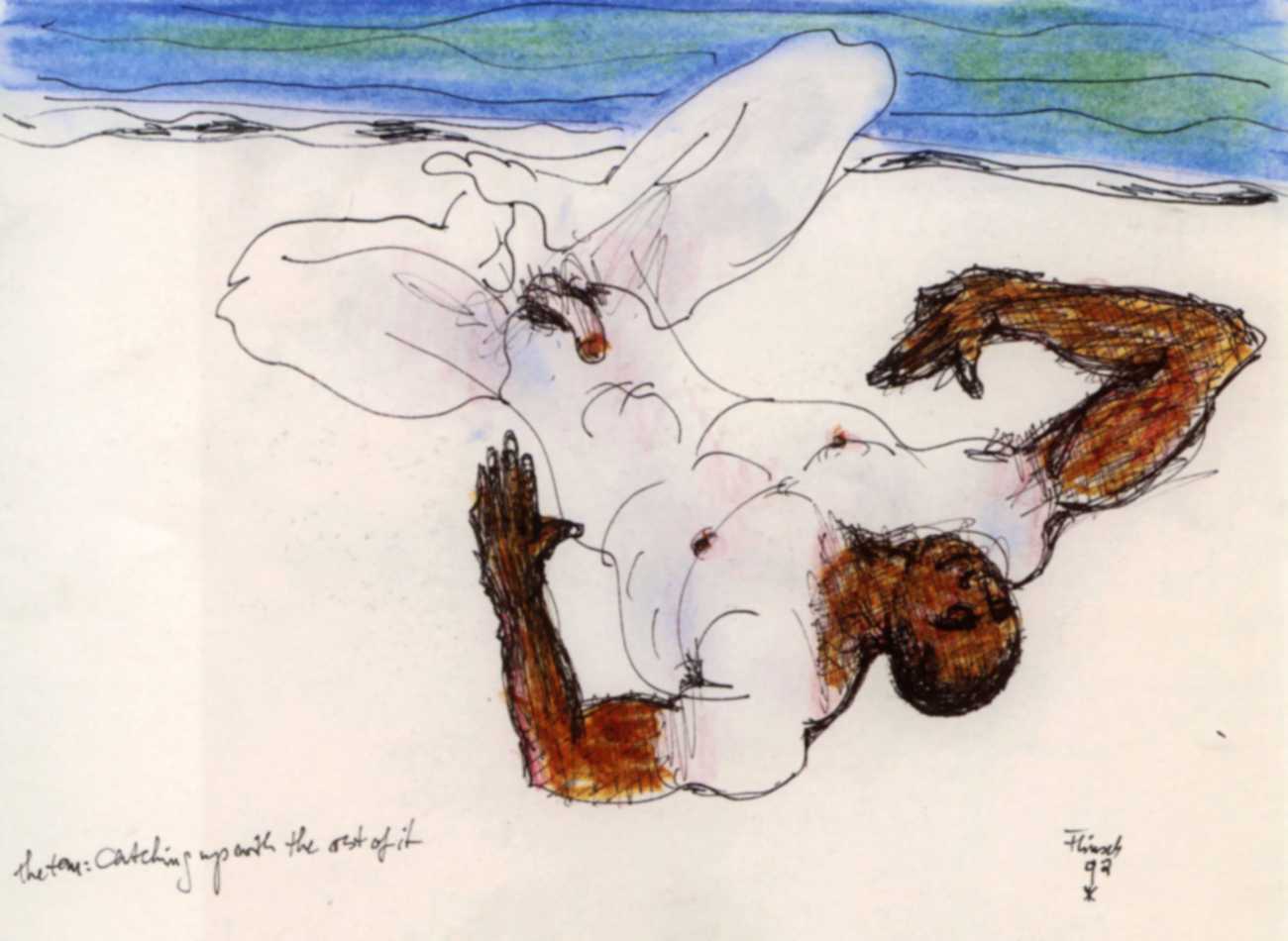
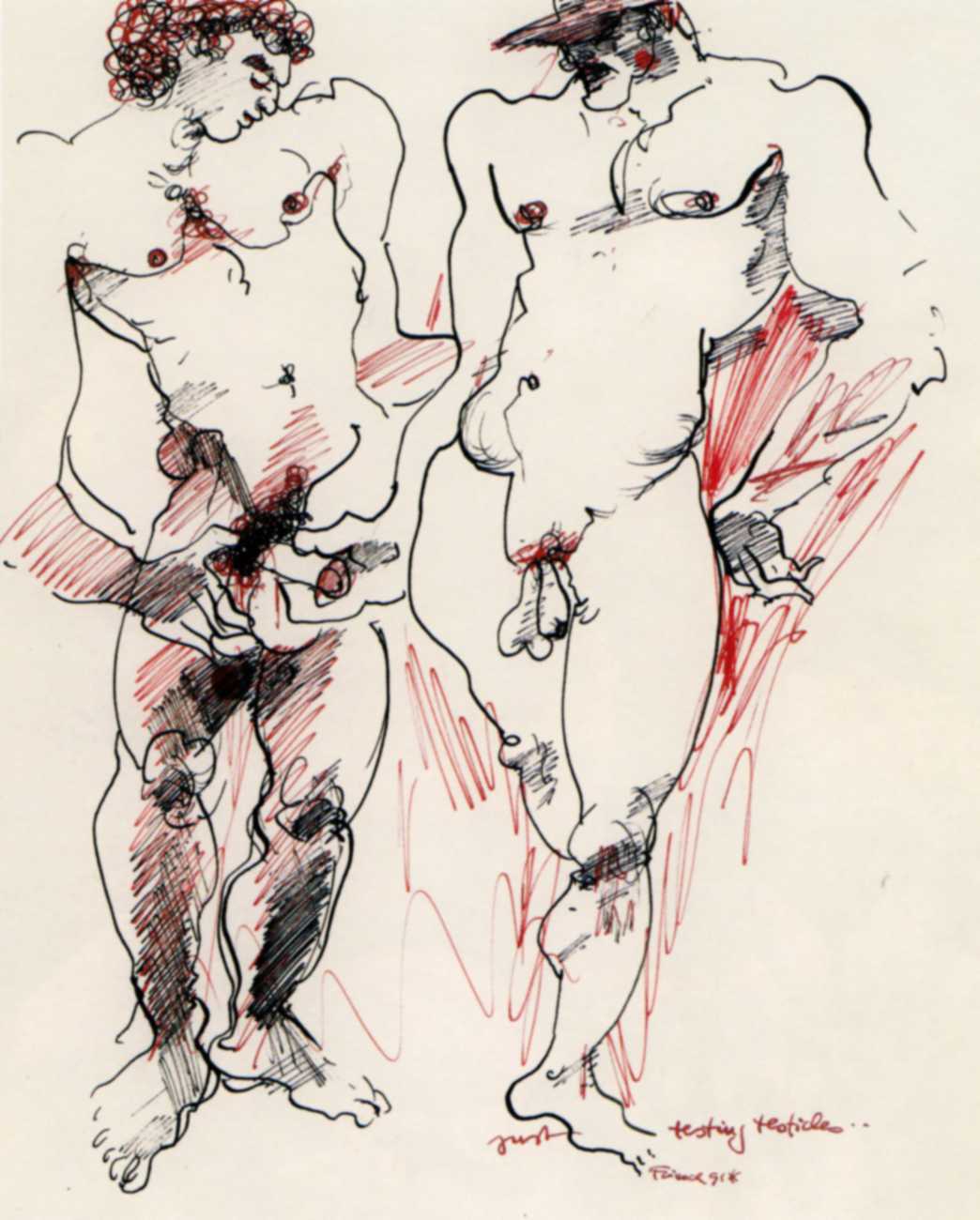
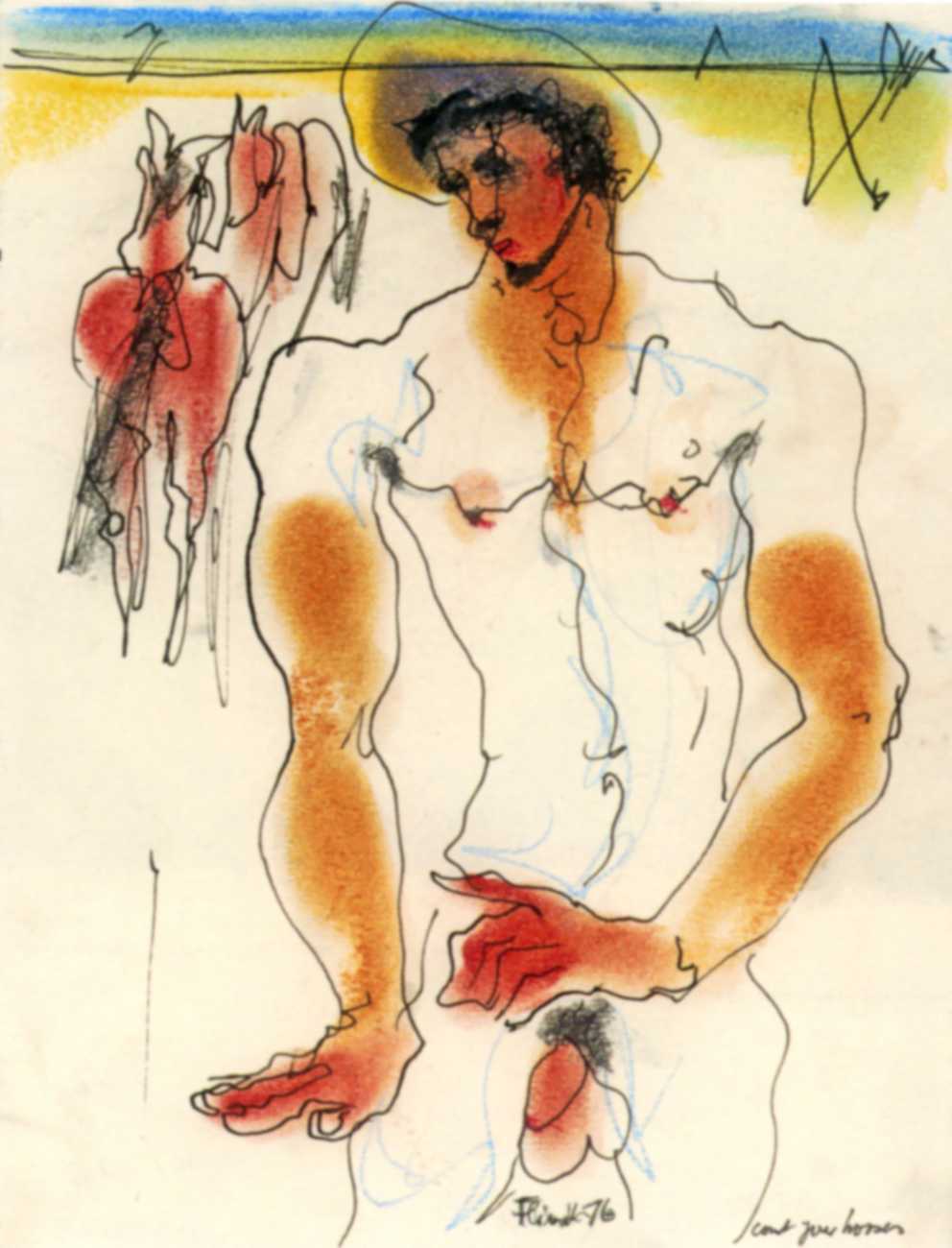
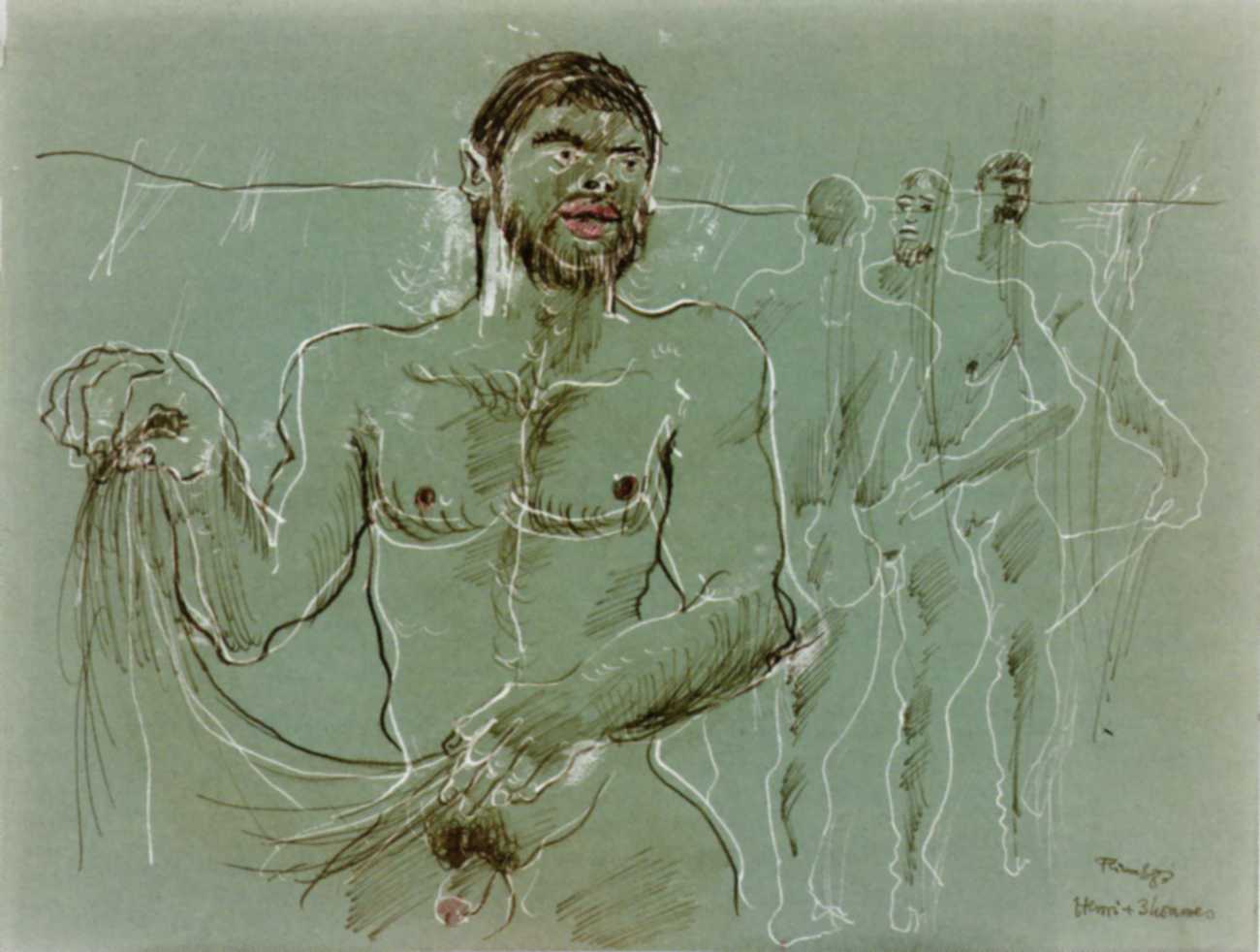
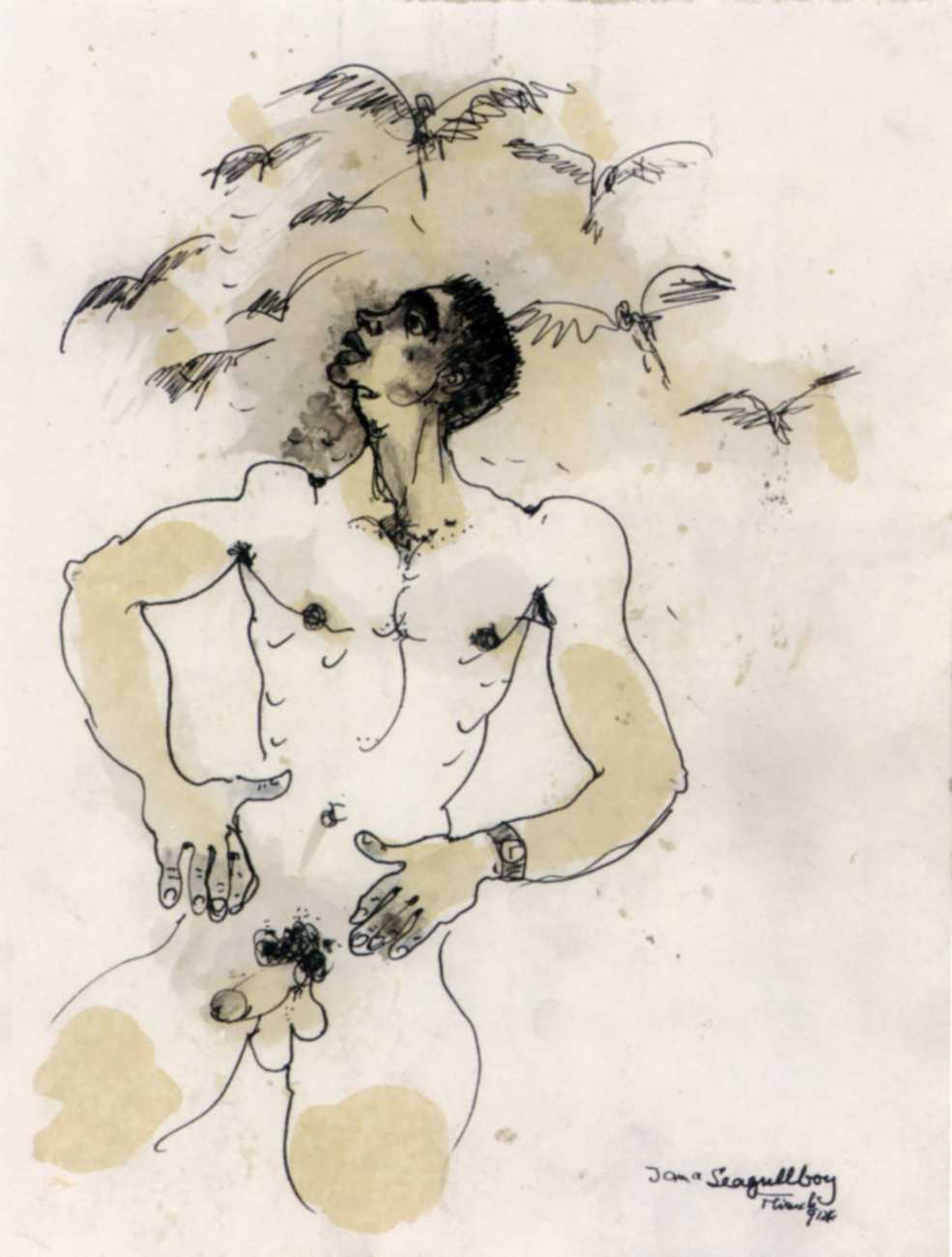
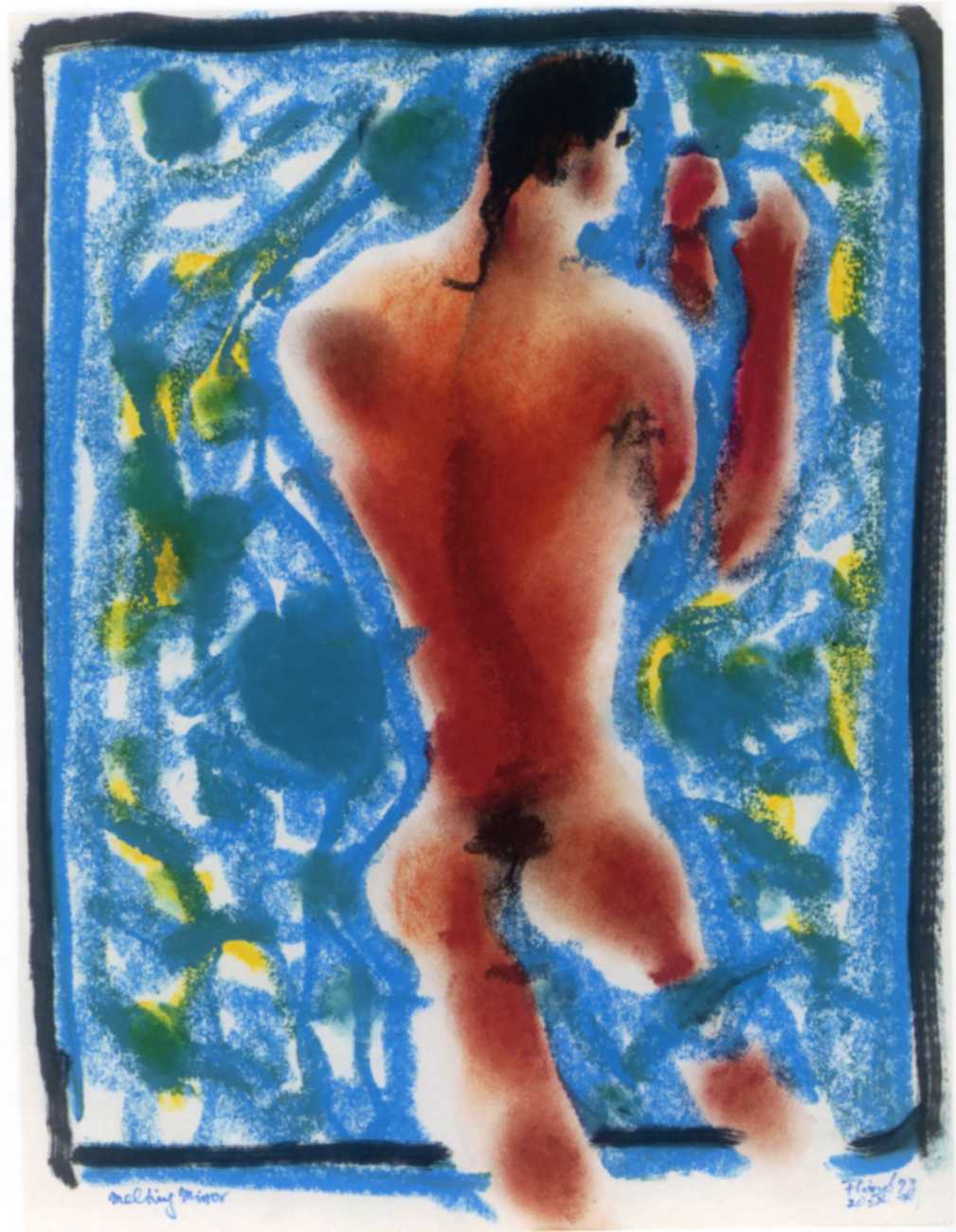
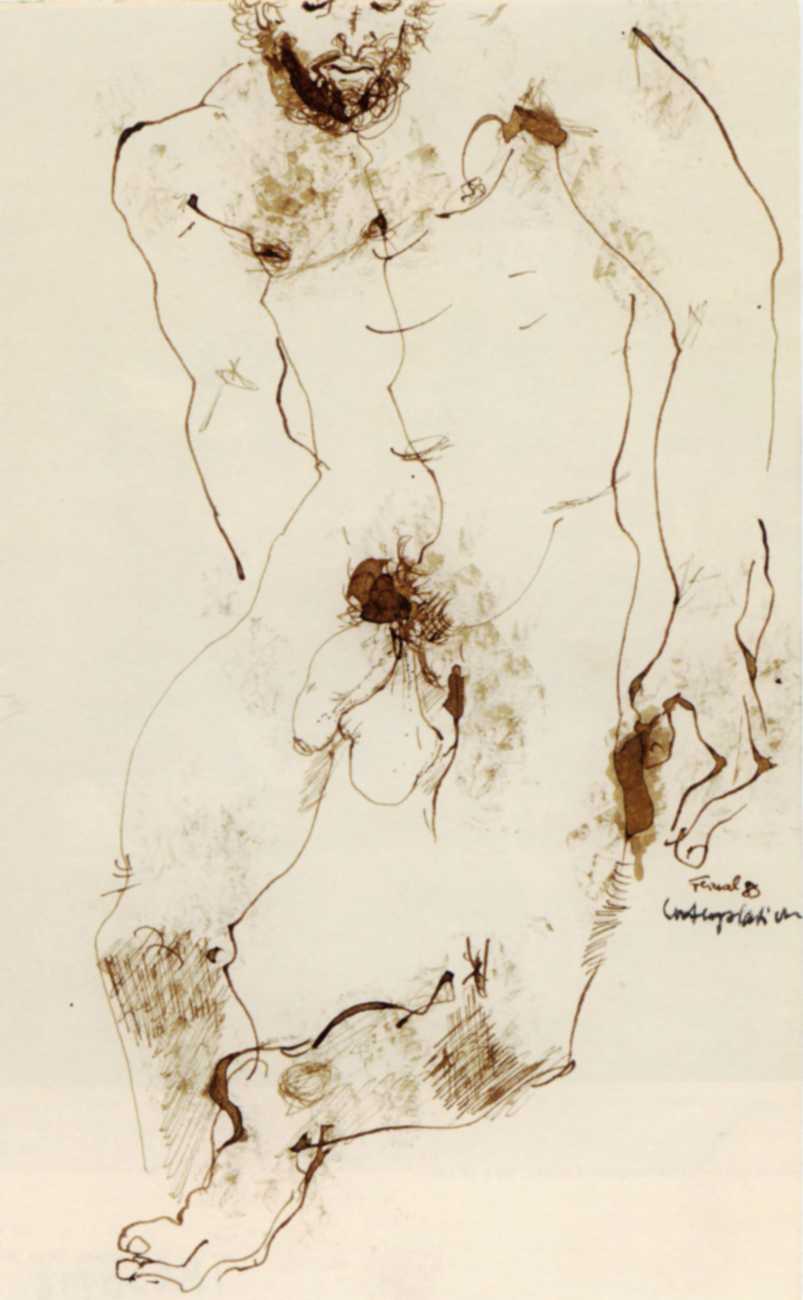
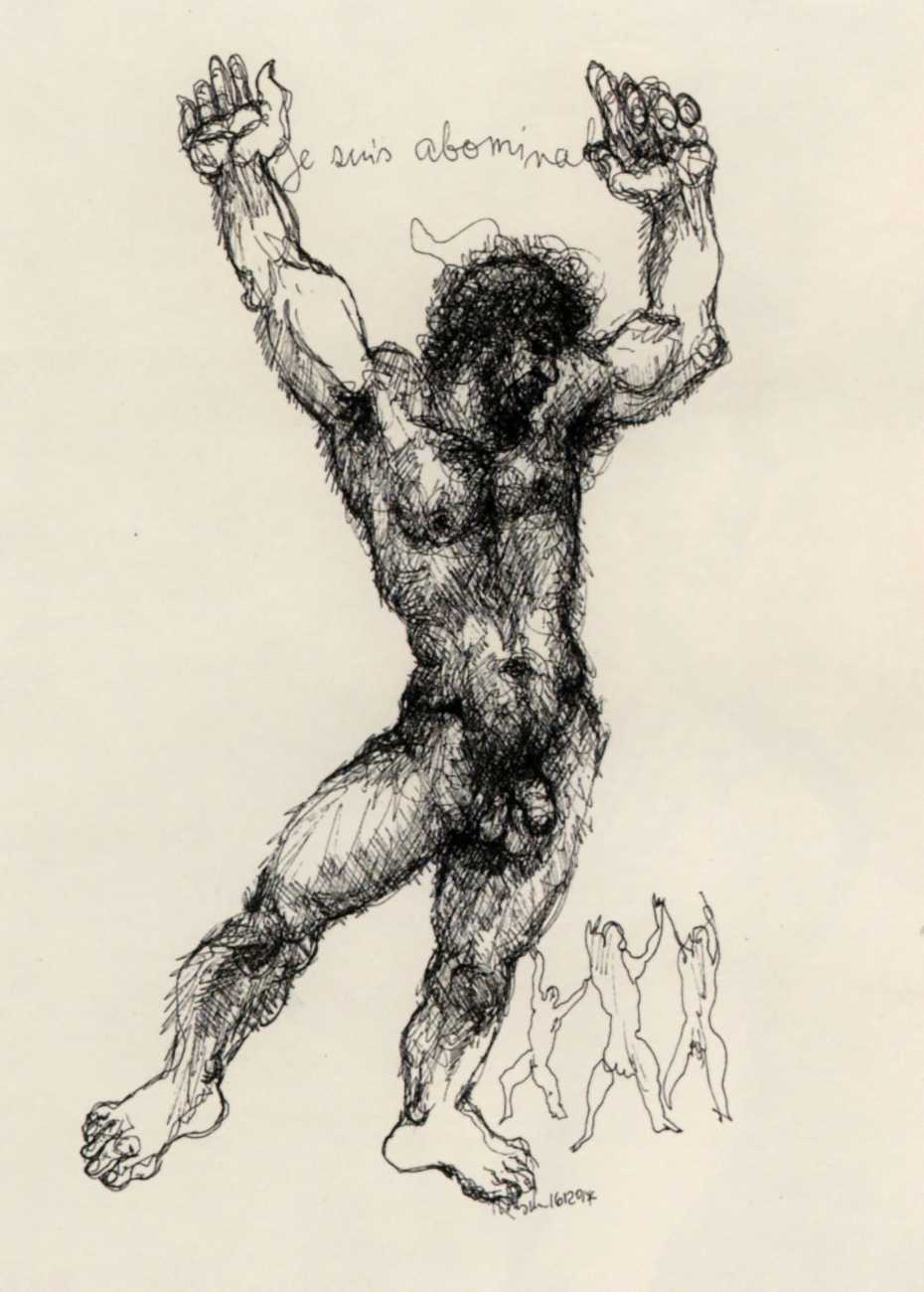
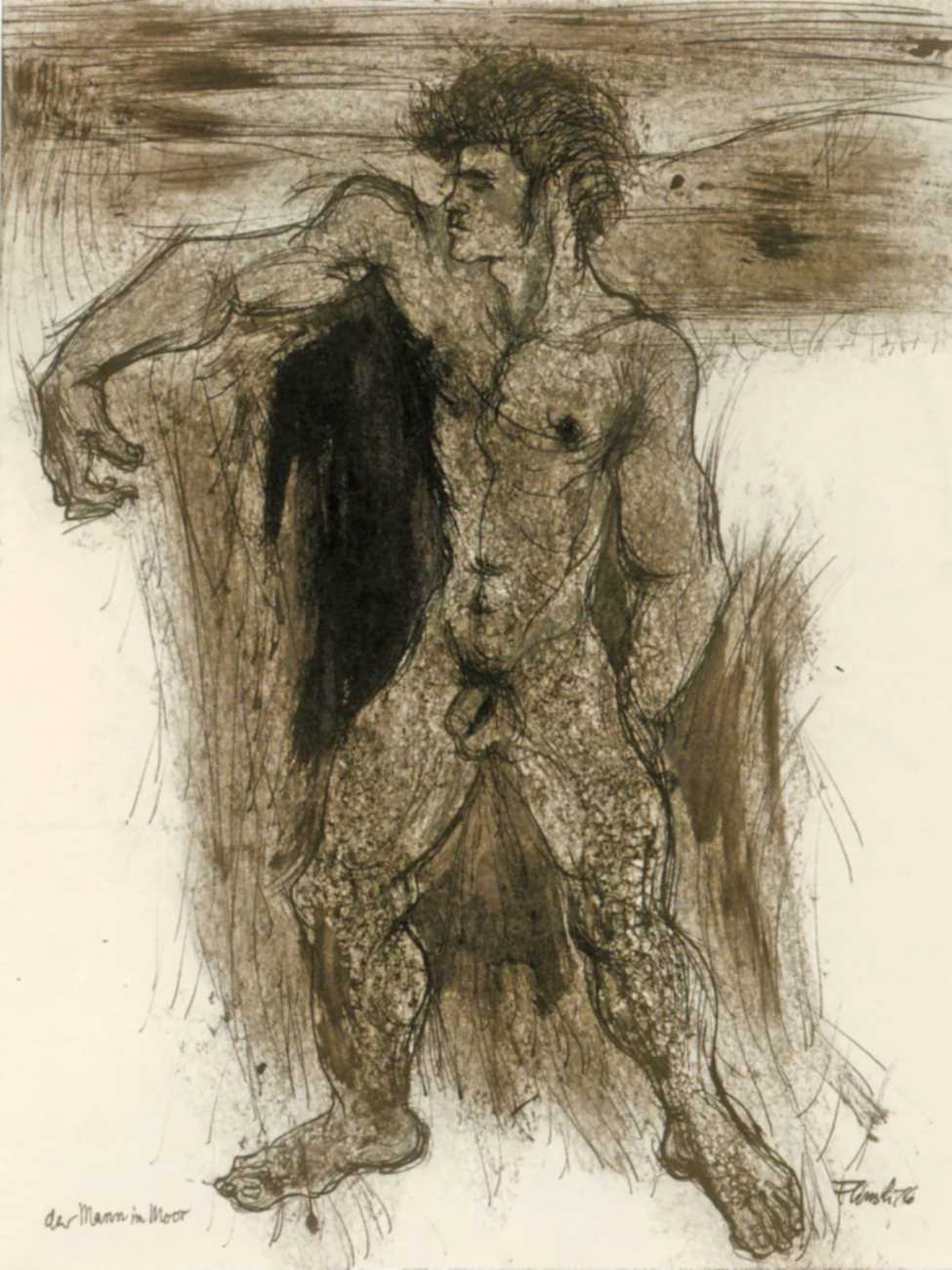
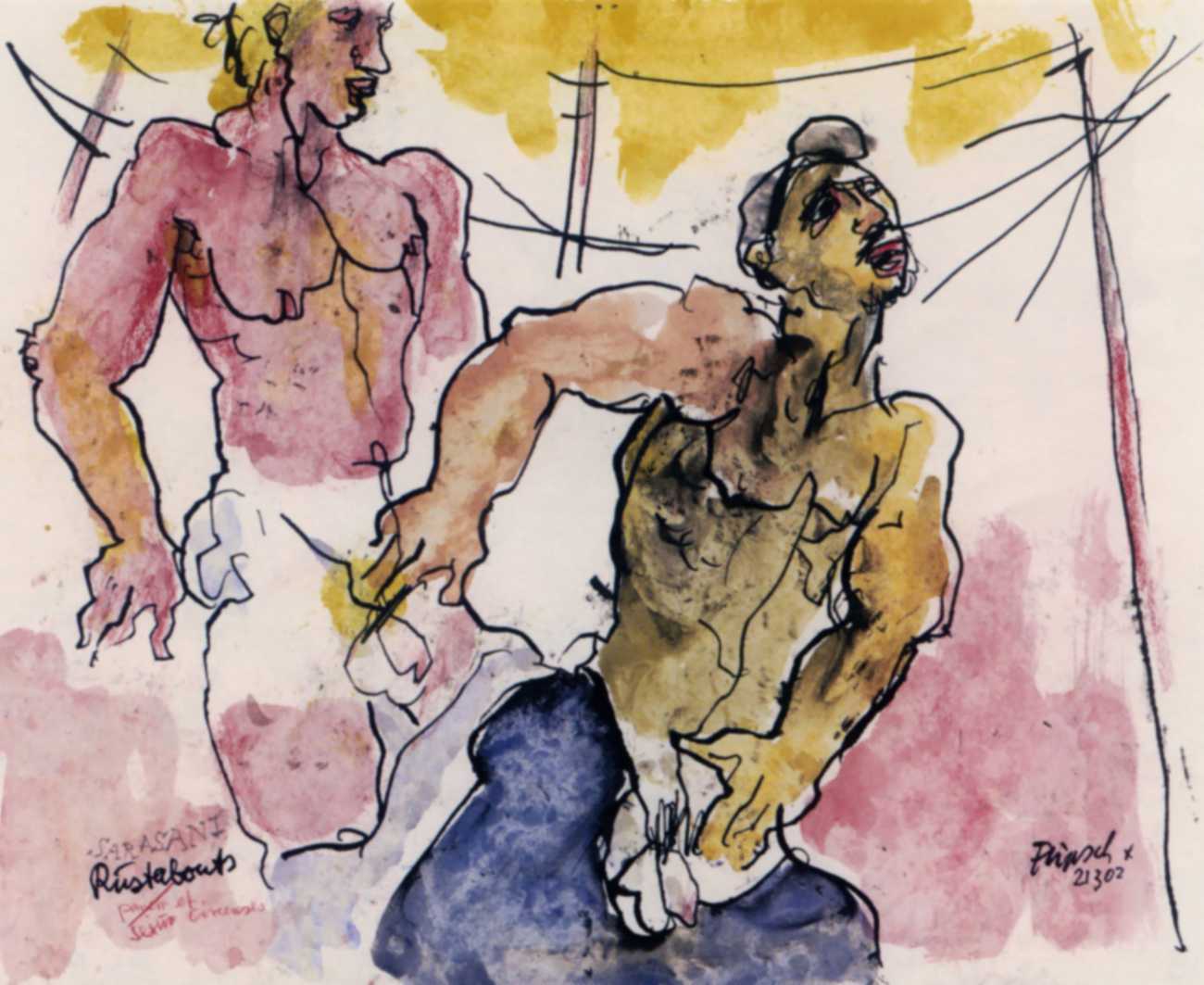
As the artwork in this book shows, Peter Flinsch’s artistic gaze fastened on a wide range of men and their masculine occupations and preoccupations. Some show men as erotic, others as foolish. They are muscular, slim, or chunky; they are sober or drunk, serious or silly. In a few elegant pen strokes on paper, an immense canvas painted with oils or acrylics, or a sculpture in bronze, Peter Flinsch pursued his lifelong commitment to representing men, male sexuality, and male sociability. Men in movement and repose, real men, men seen on the bus, and then drawn after rushing home, or men seen only in the land of dream or phantasm, all capture the attention of the artist. ‘I am a camera,’ he repeats. He draws the world around him. He gets inside the gay gaze, expresses it, develops it, and presents it to the public for approval (or at times, to confront them with it). What I especially like, having tried in my own studies to capture moments of gay past experience, to render vivid in today's language where we have come from, is the clarity and focus of his drawings. They take the viewer into the heart of the moment. Some were made in the dark old clandestine days of shame and hiding, but Peter shows in the content of his pictures that those were also days of self-discovery – intellectual, emotional, individual, and collective. The gay communities of today emerged from a long process of development. The transformation of homosexuals from taboo outsiders excluded from the culture and harassed or victimised by society to today’s vibrant, visible, full-fledged members of society took time, determination, and courage. Making pictures like these was a rare undertaking in the early 1960s and even the 1970s, yet Flinsch pursued his art with unwavering tenacity.