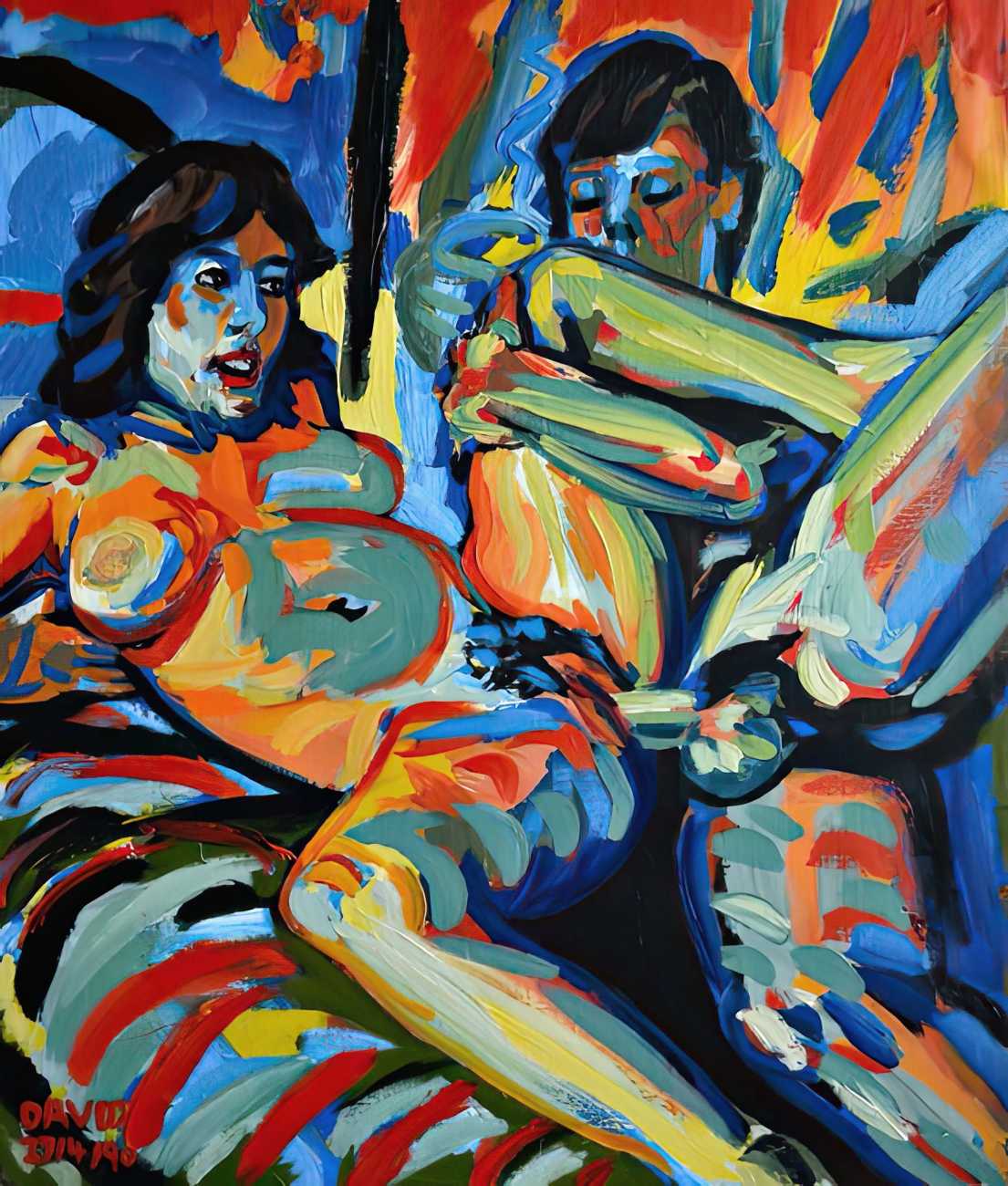
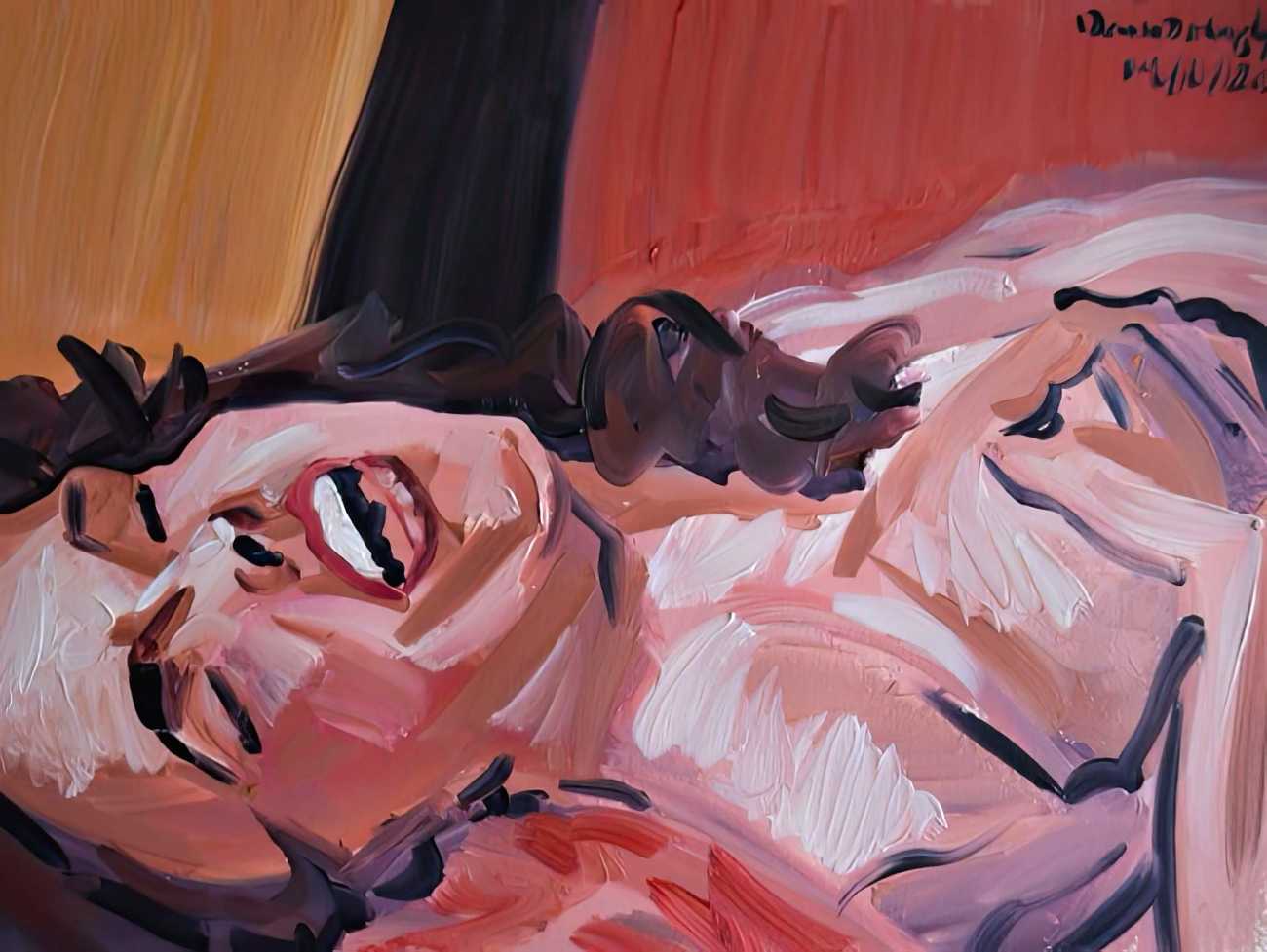
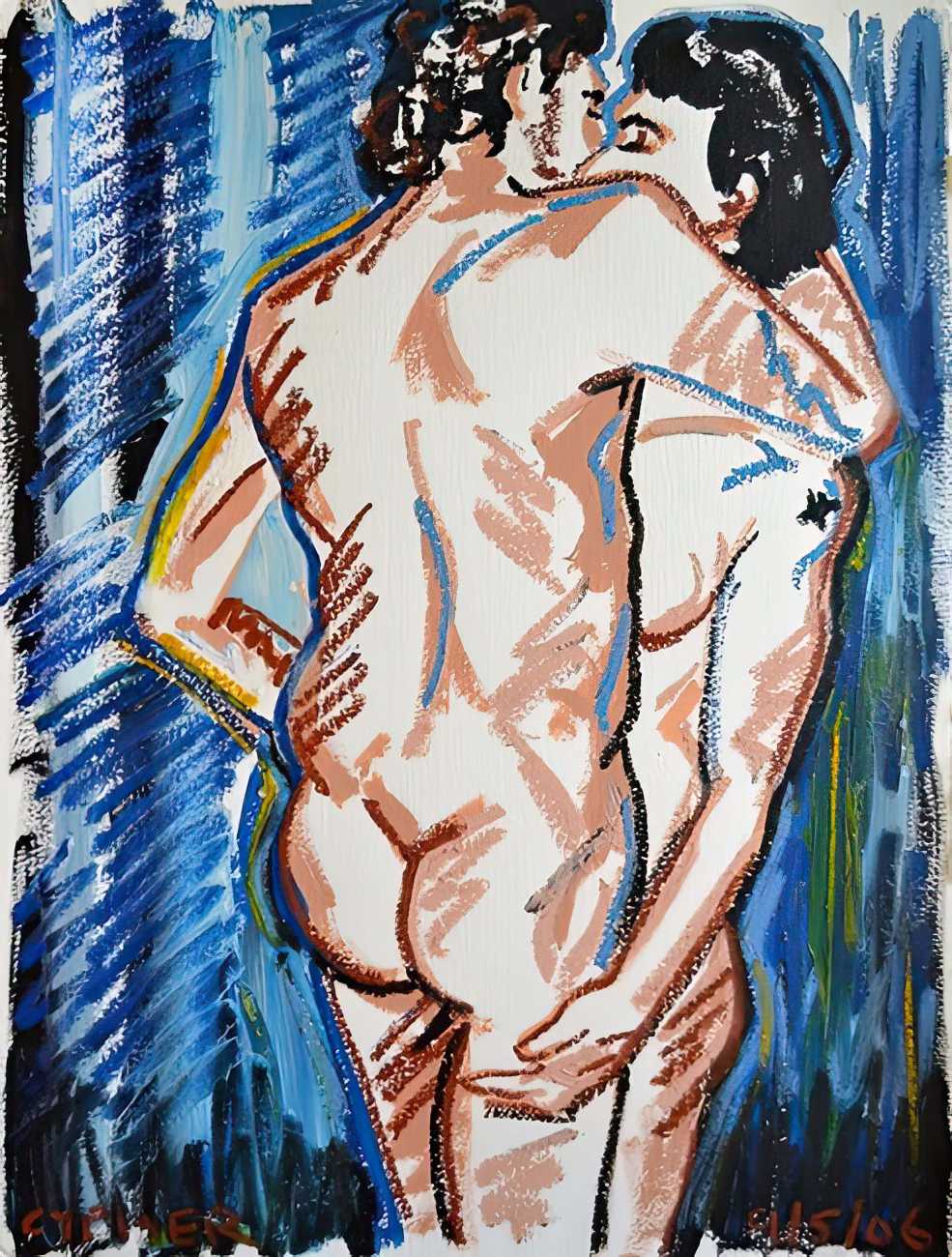
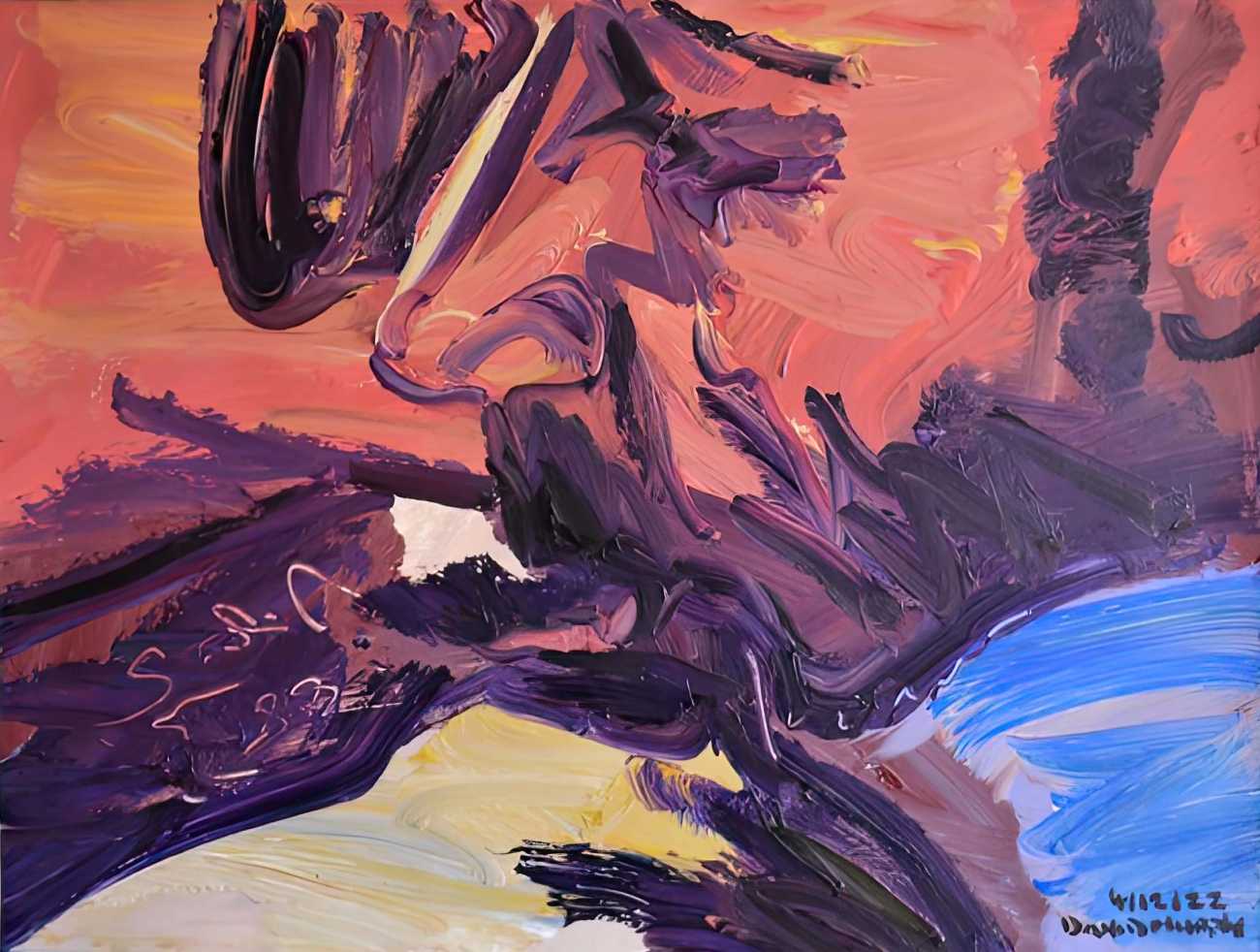
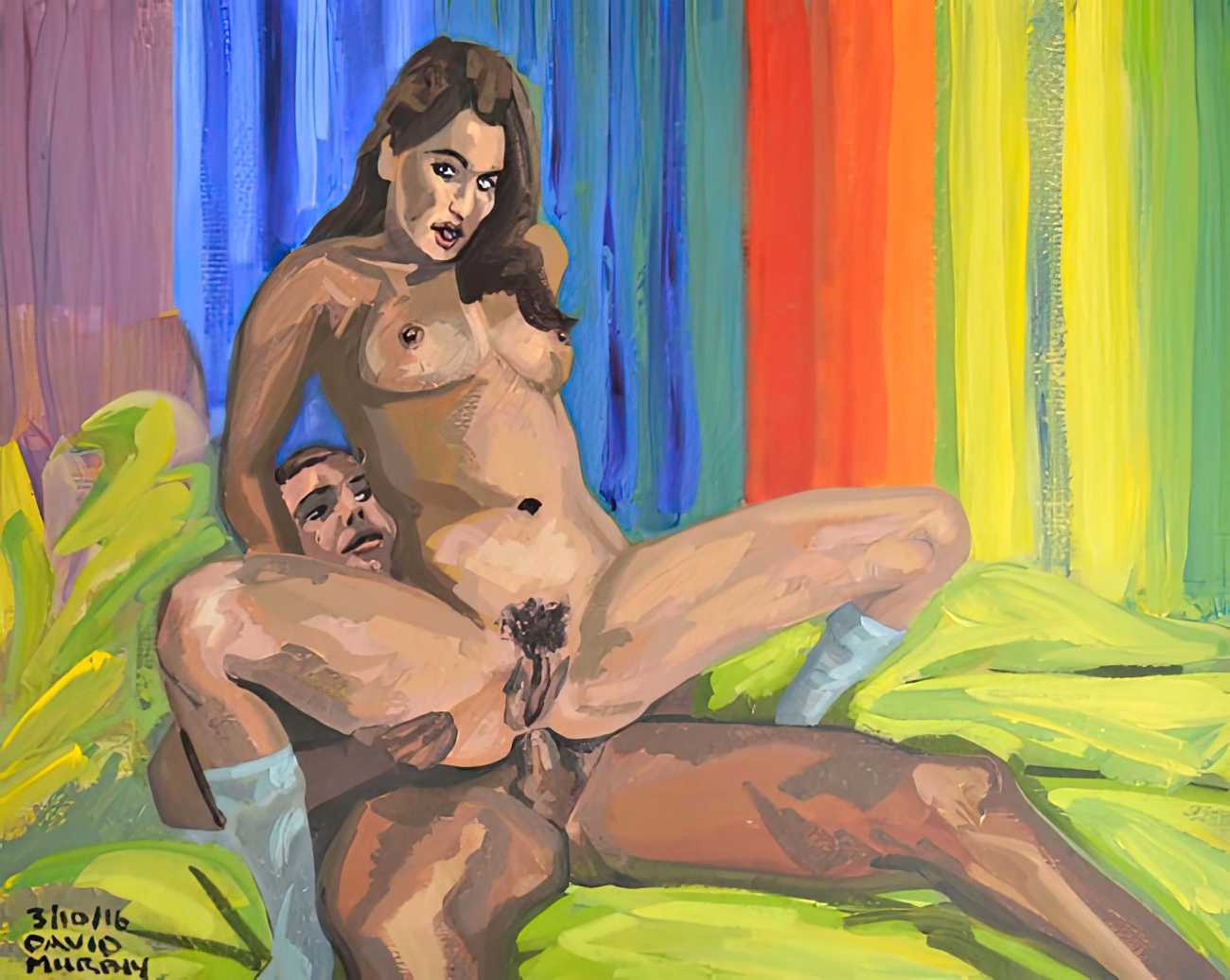
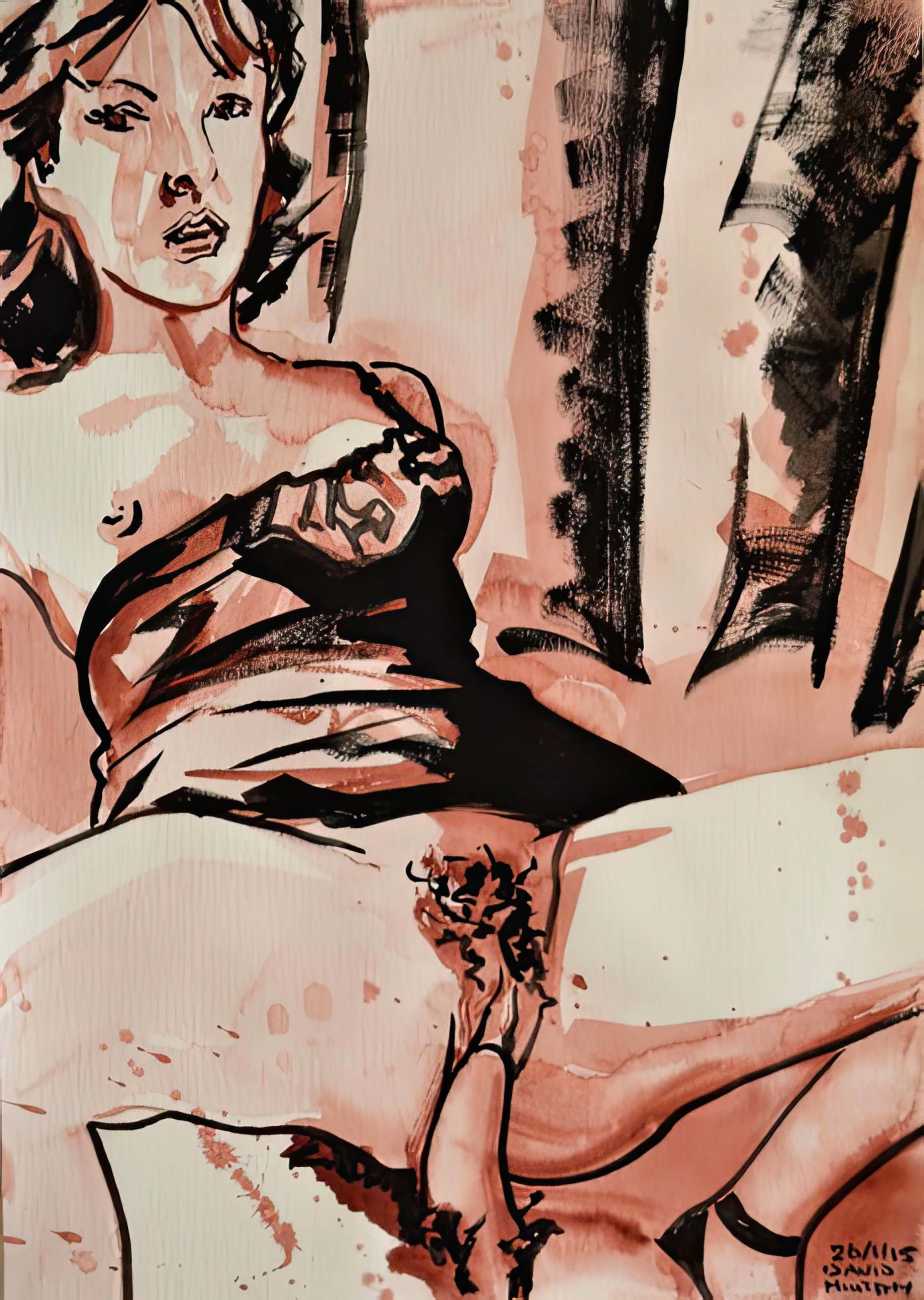
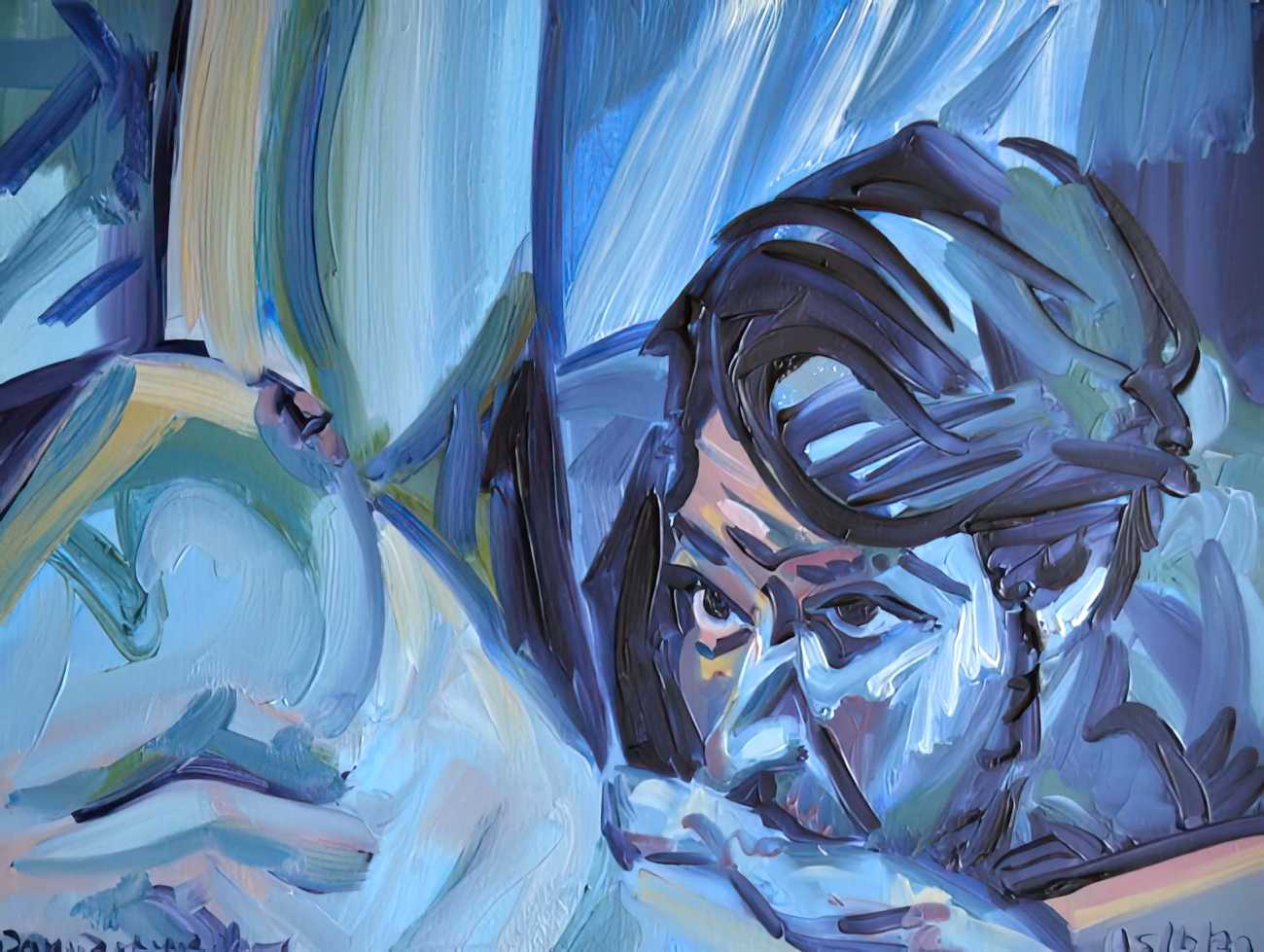
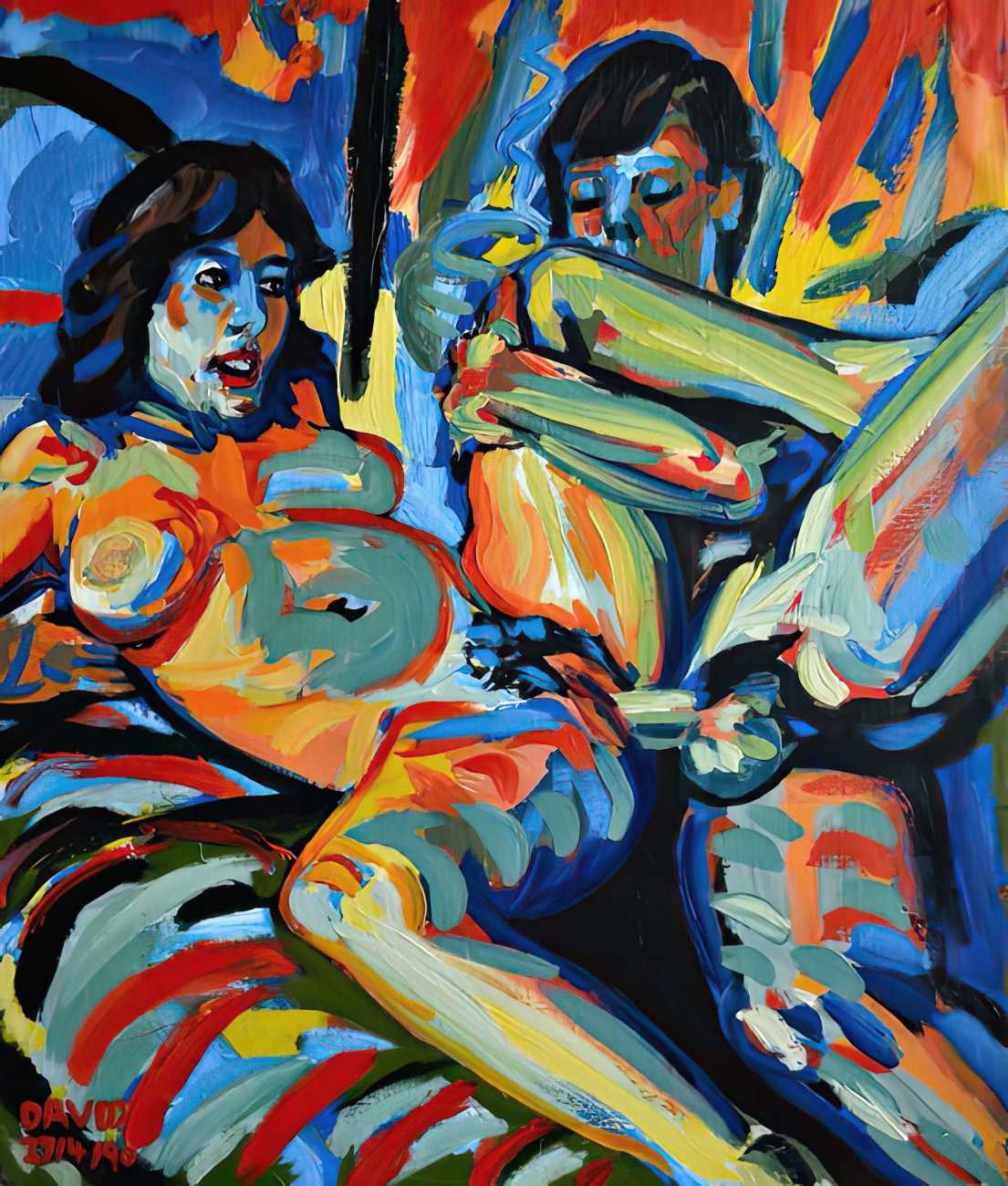
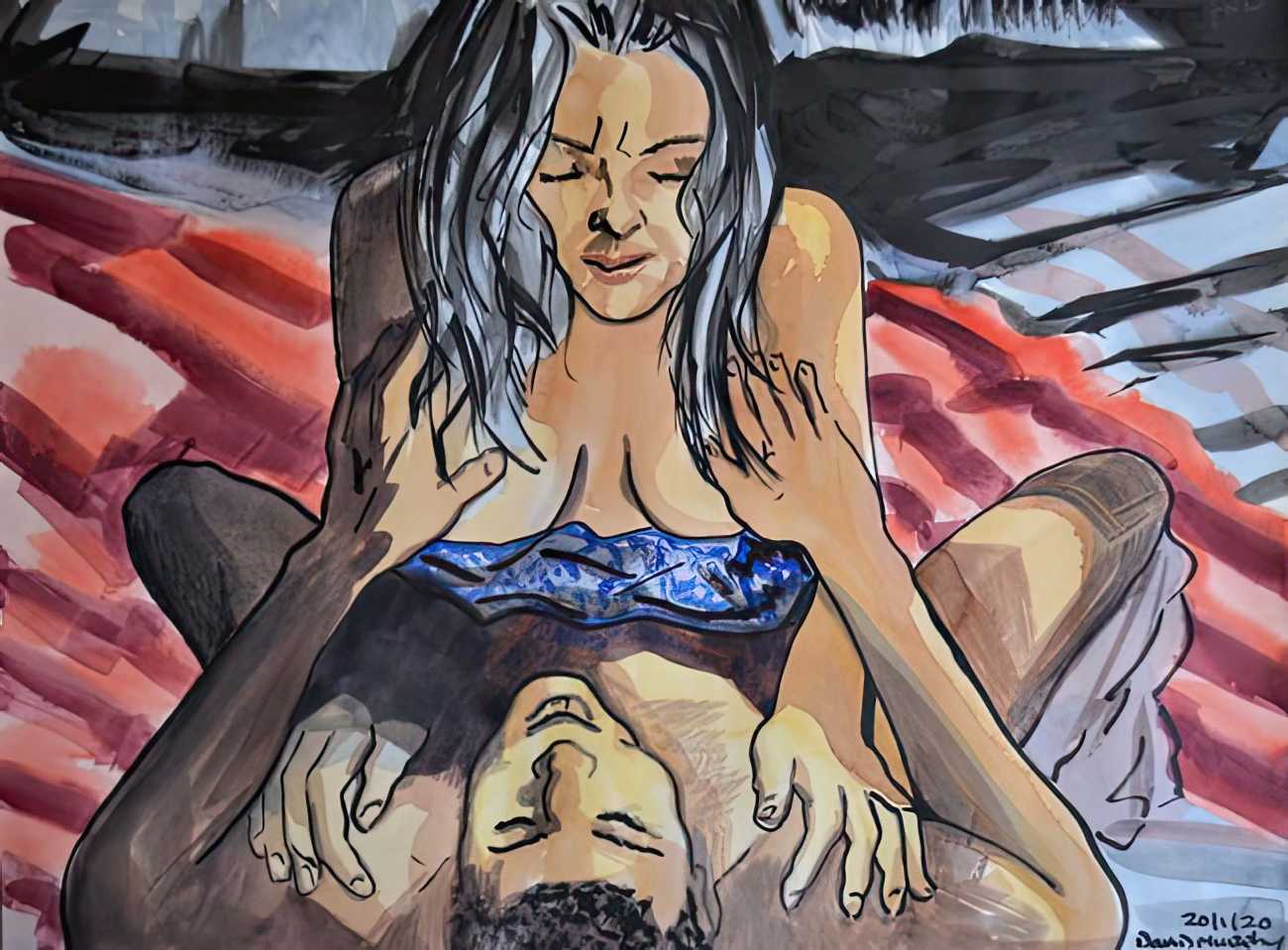
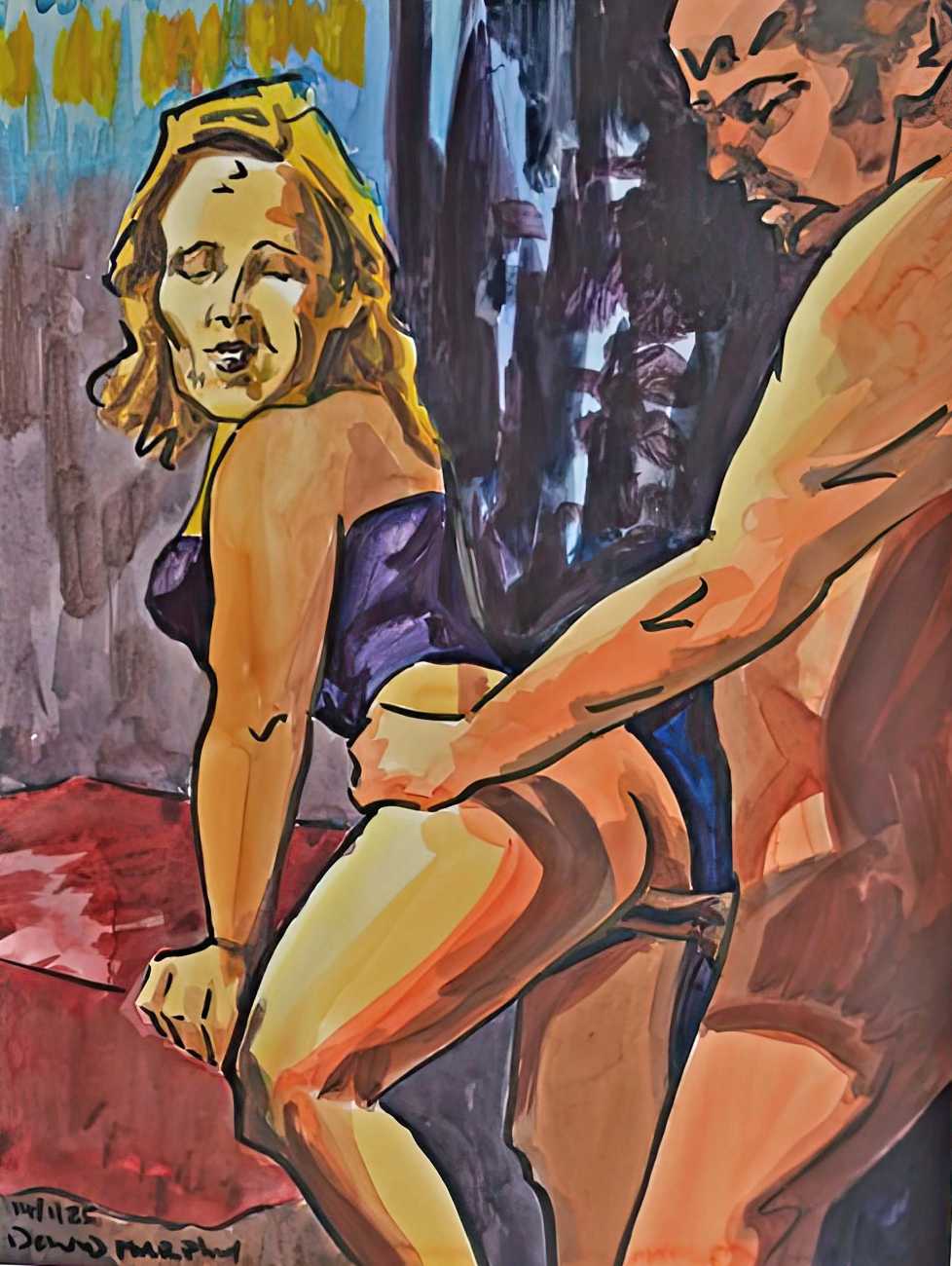
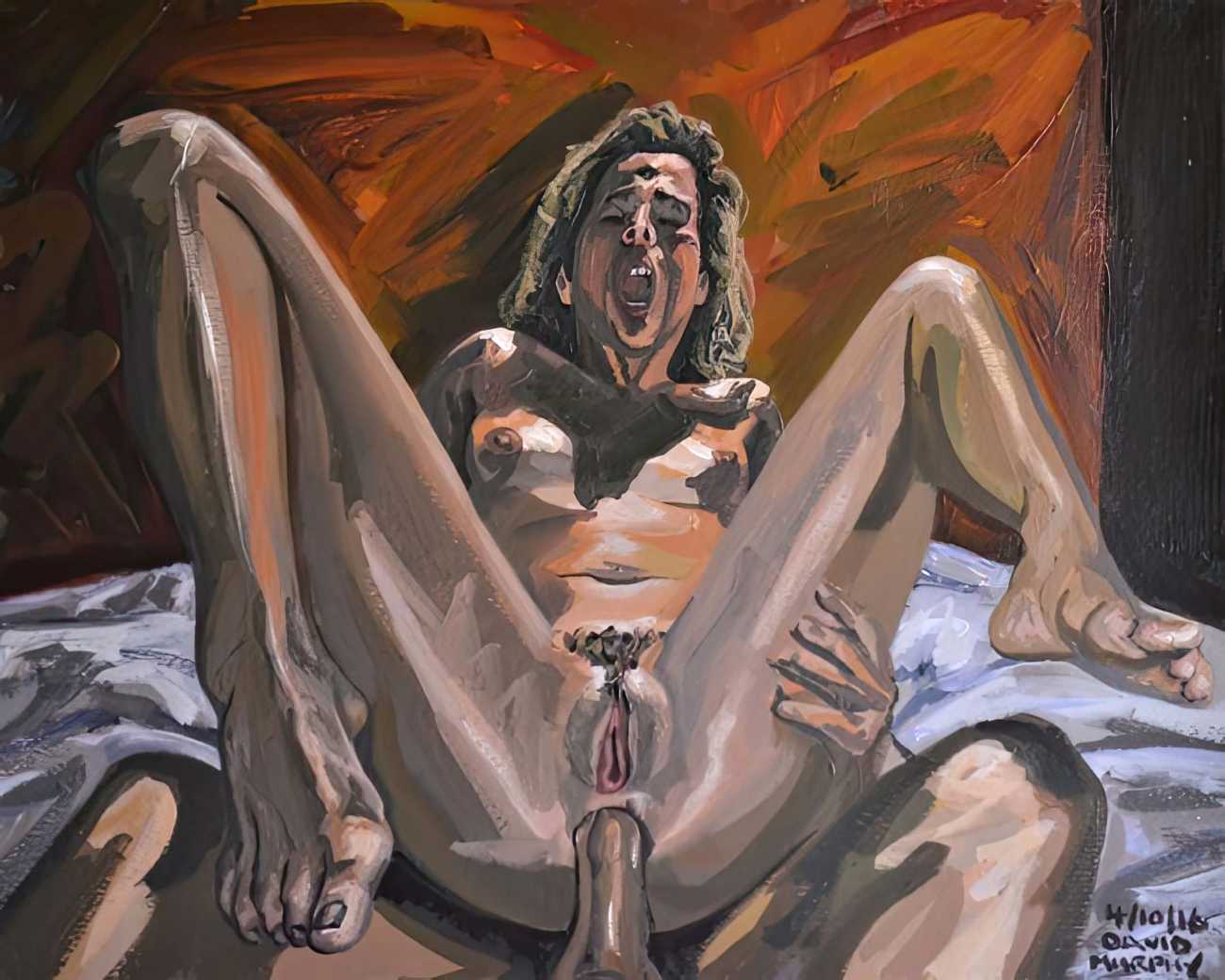
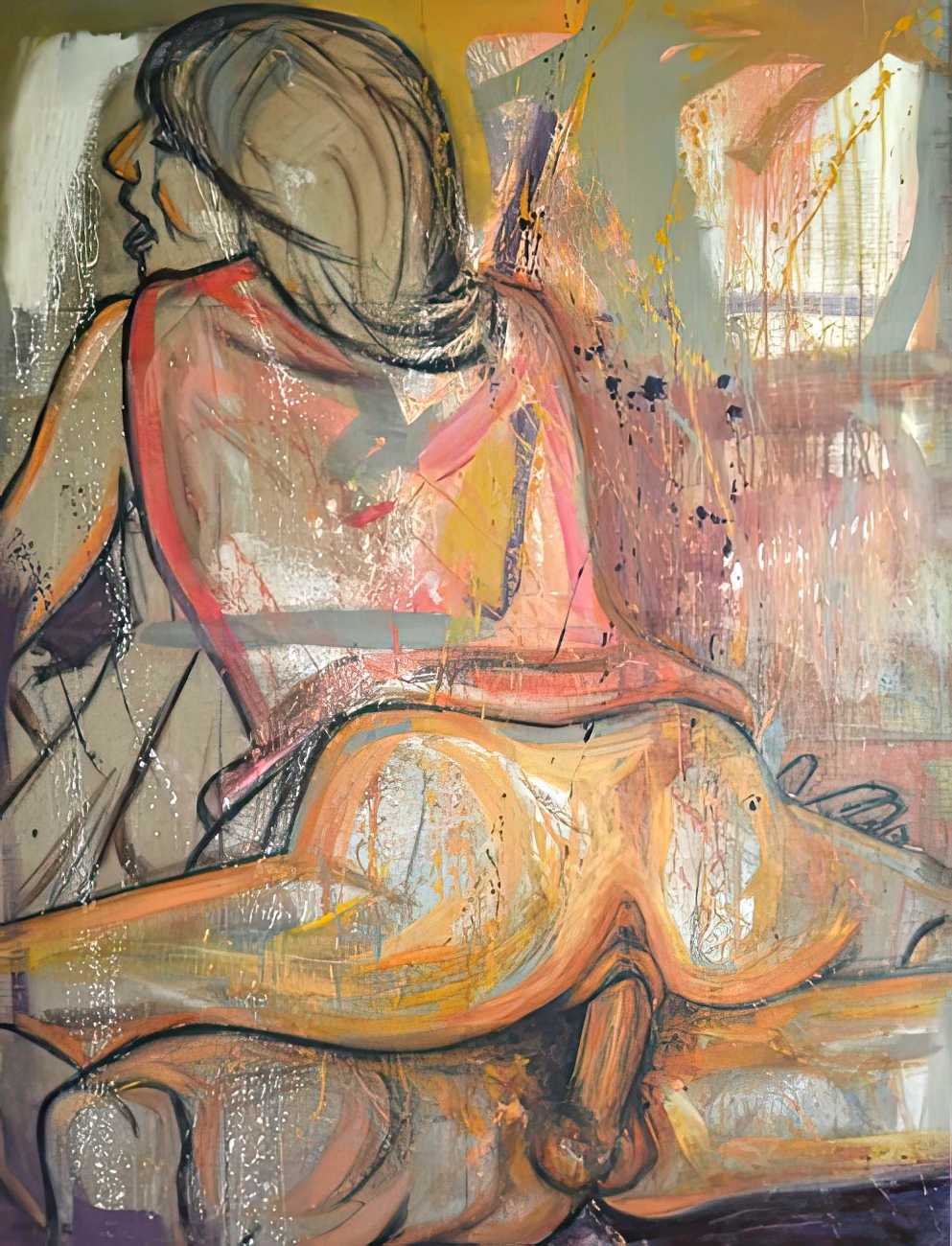
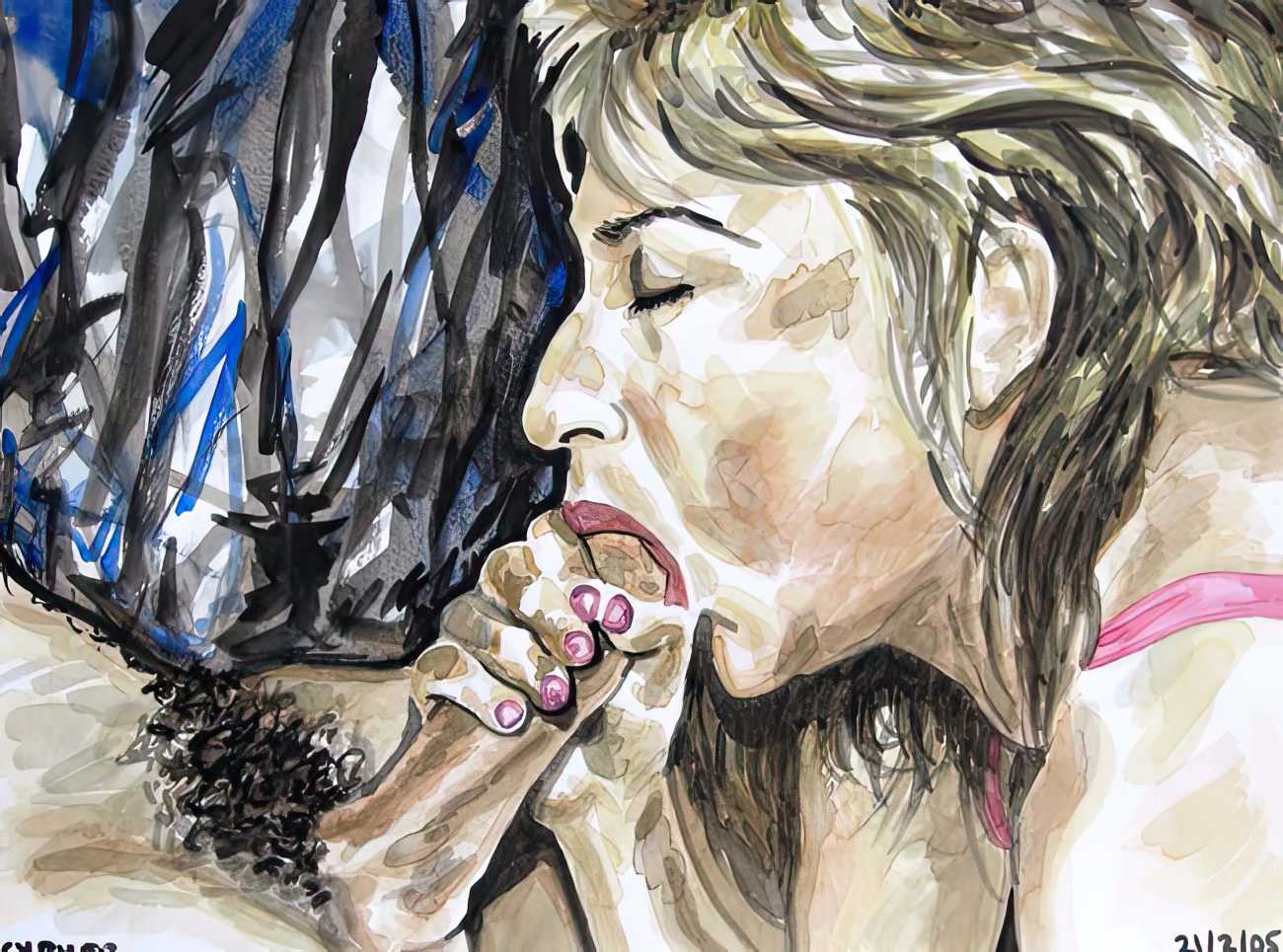
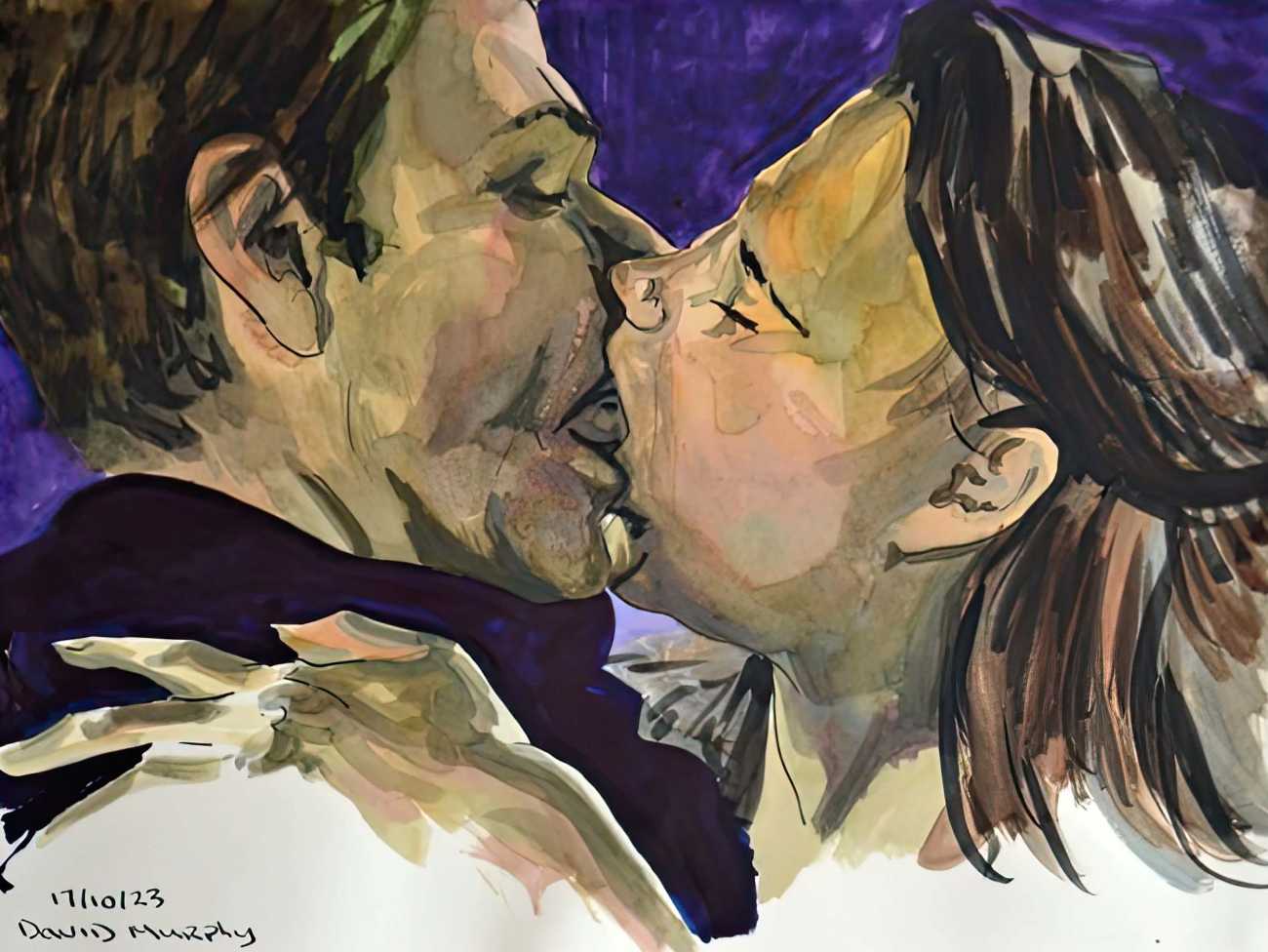
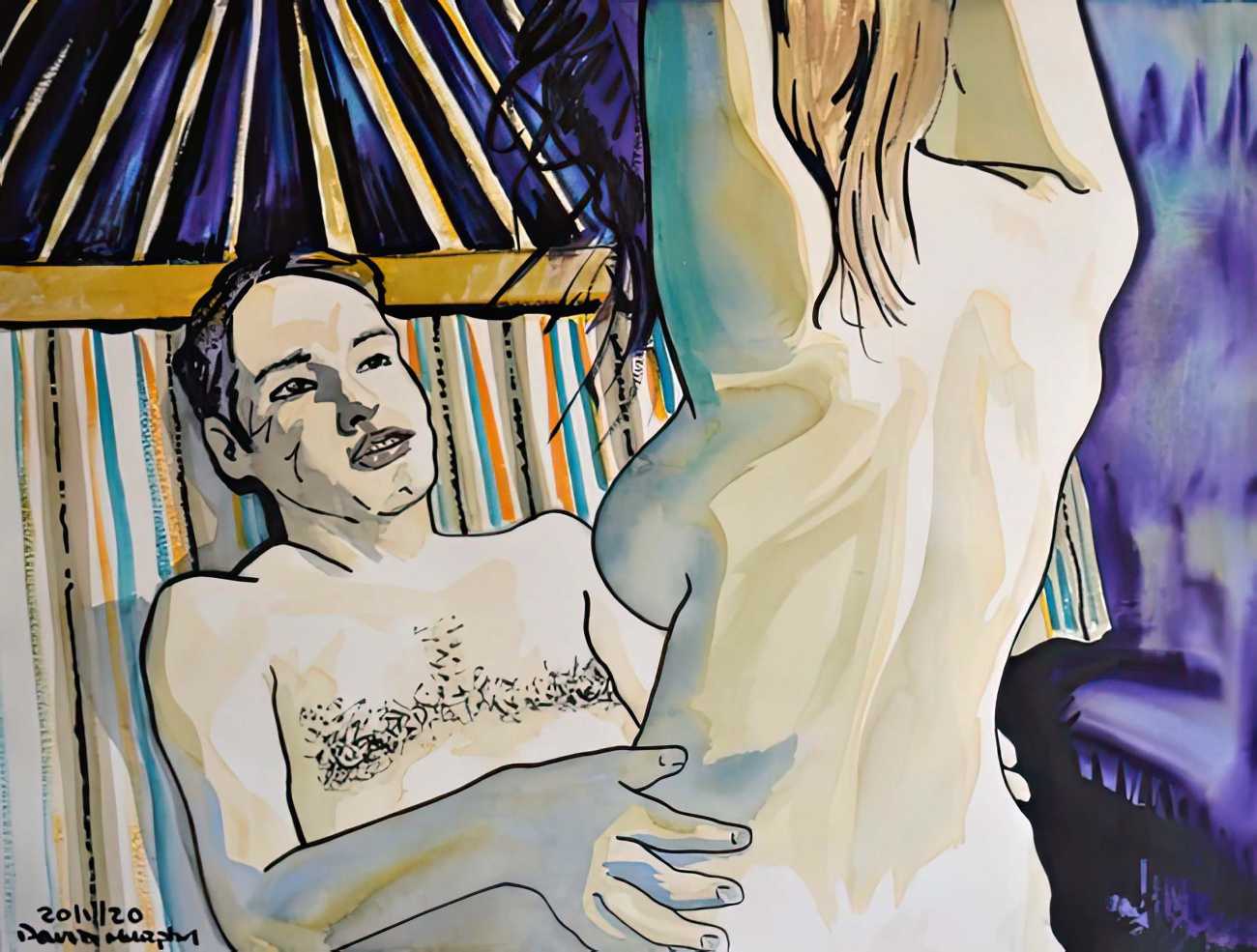
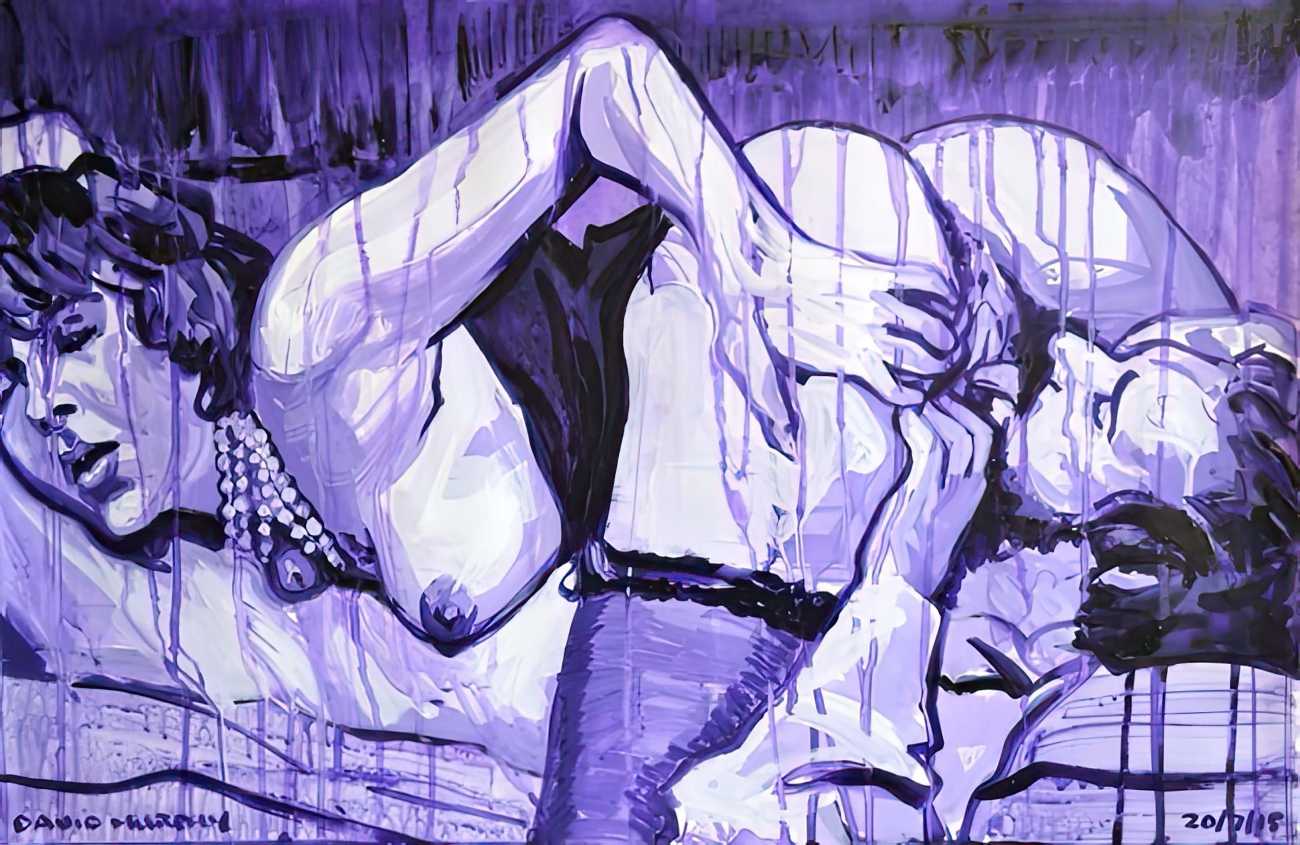
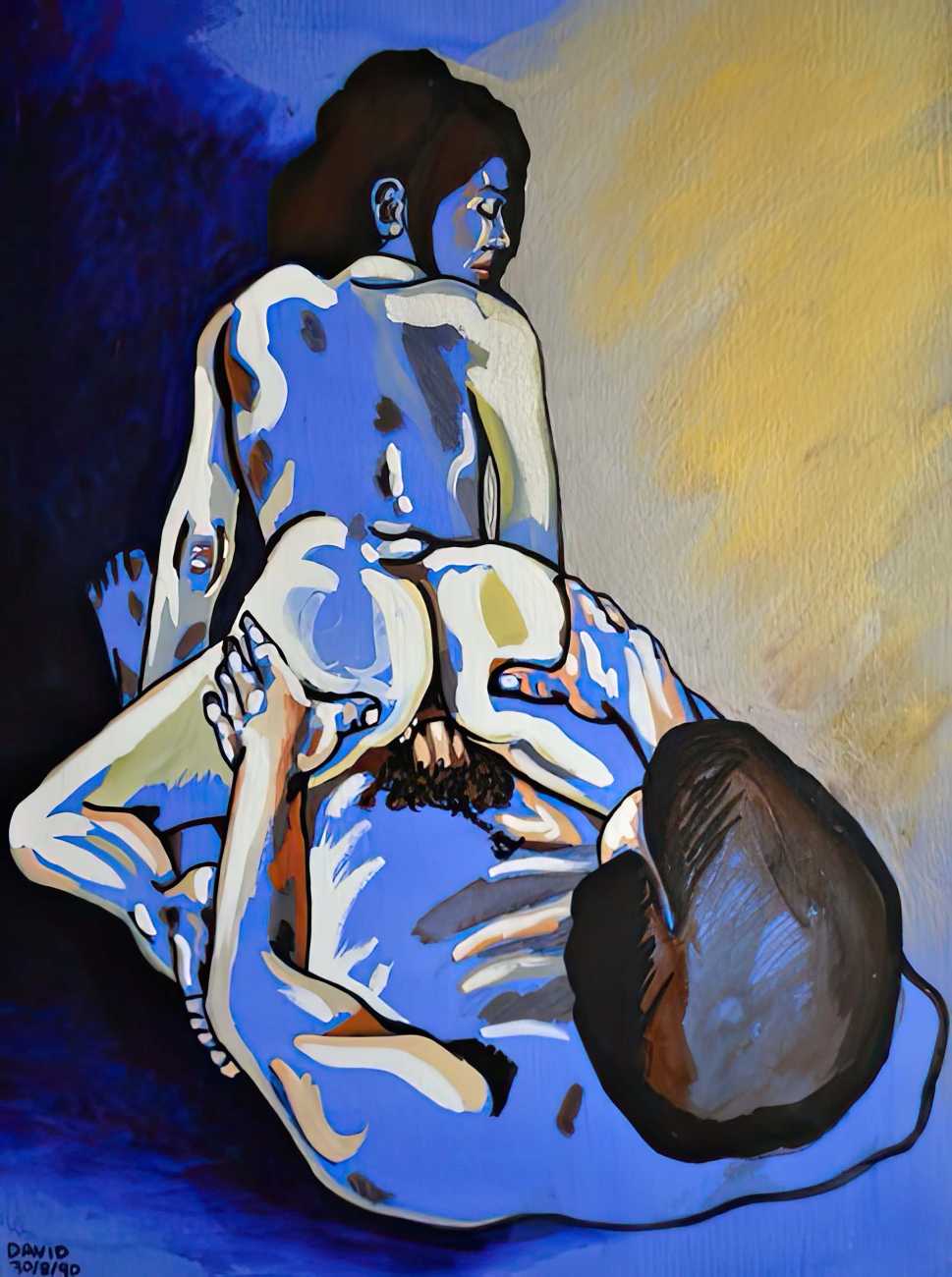
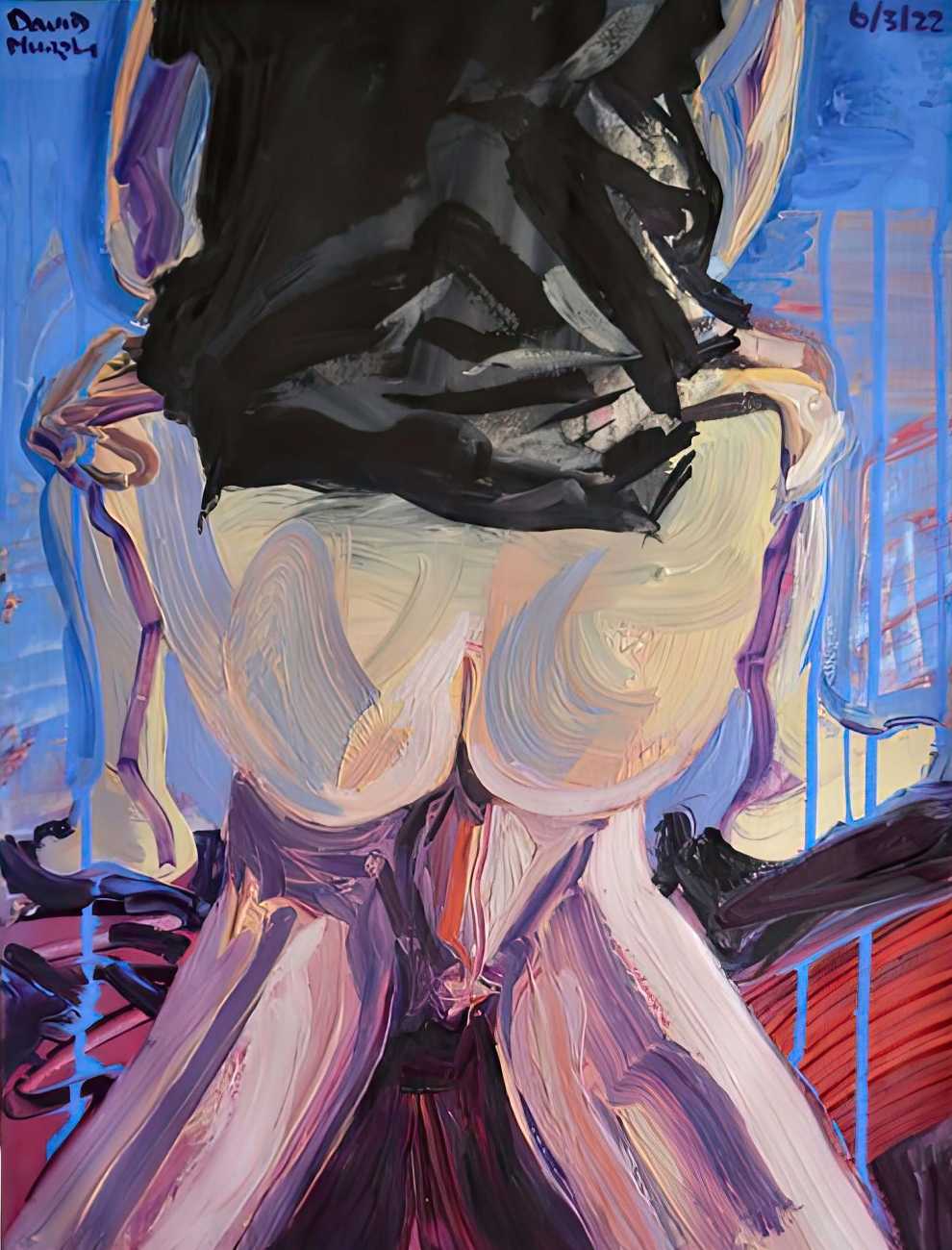
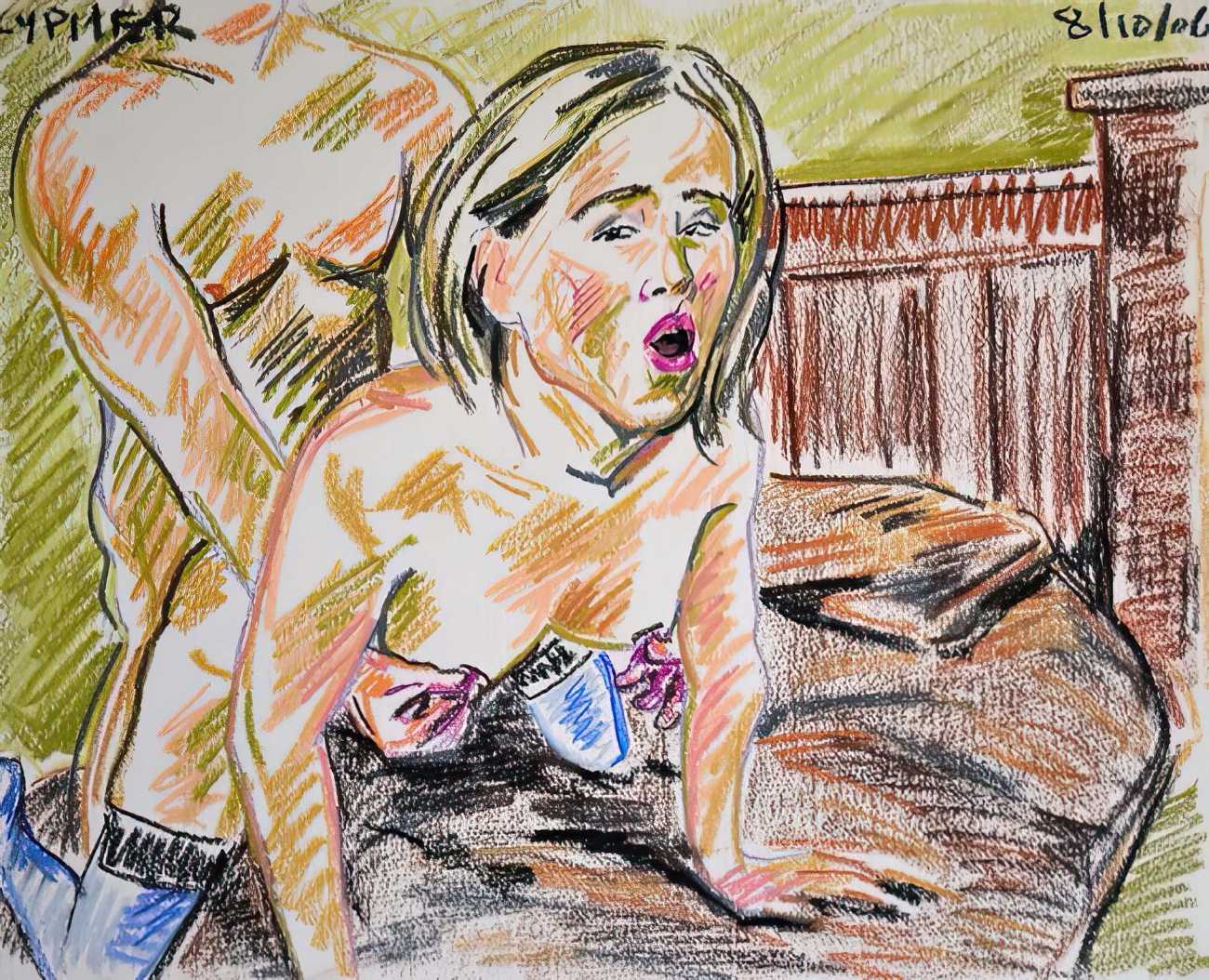
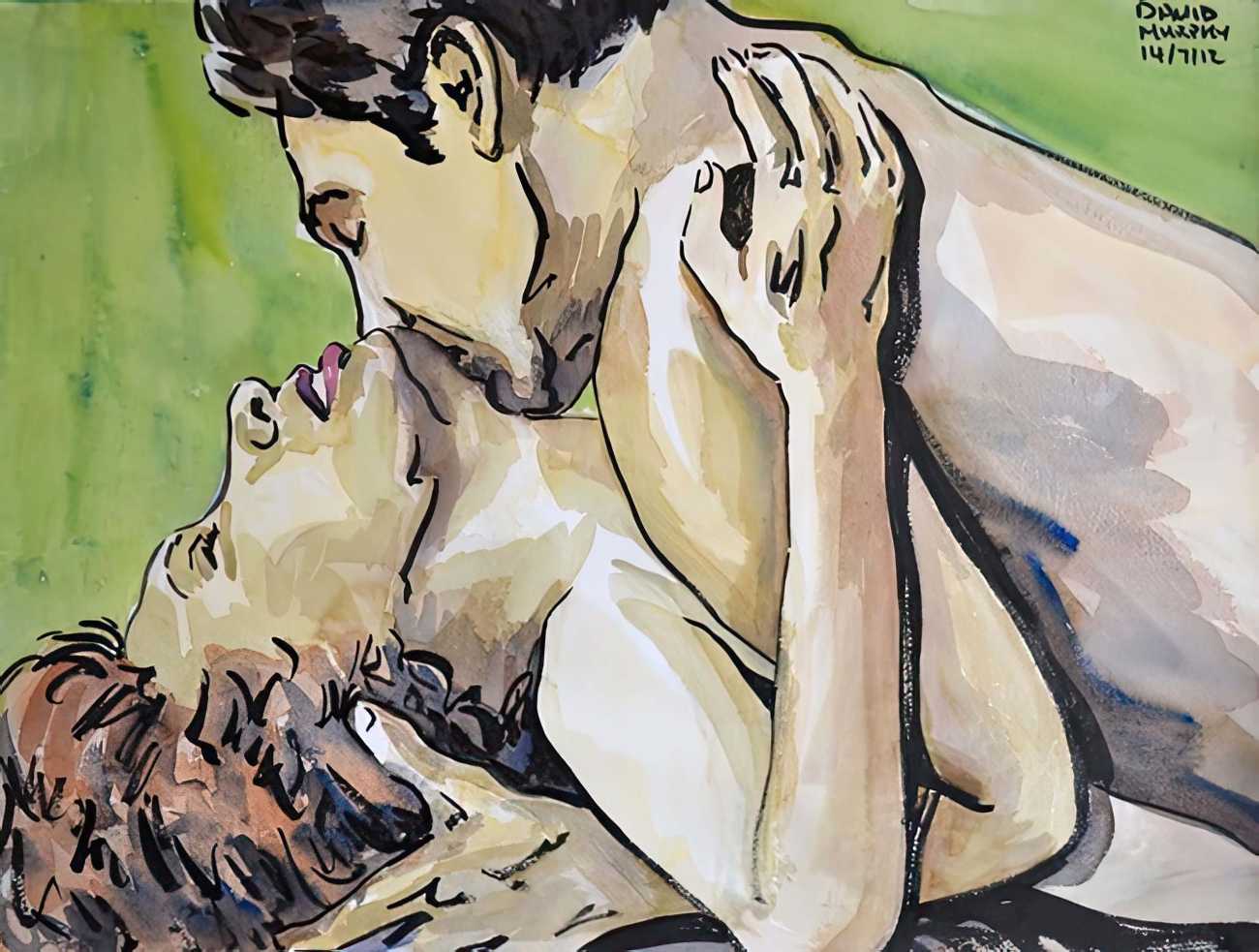
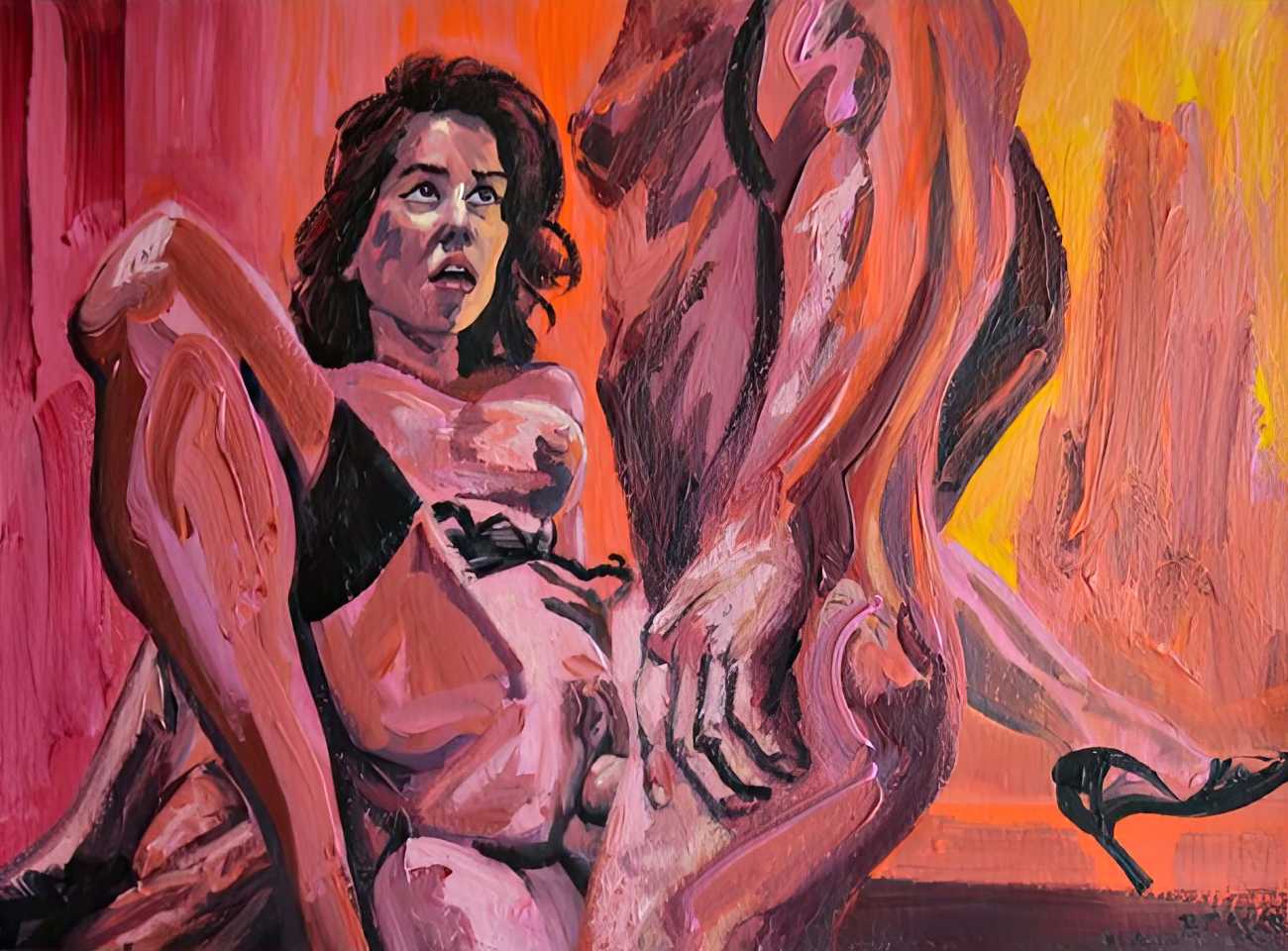
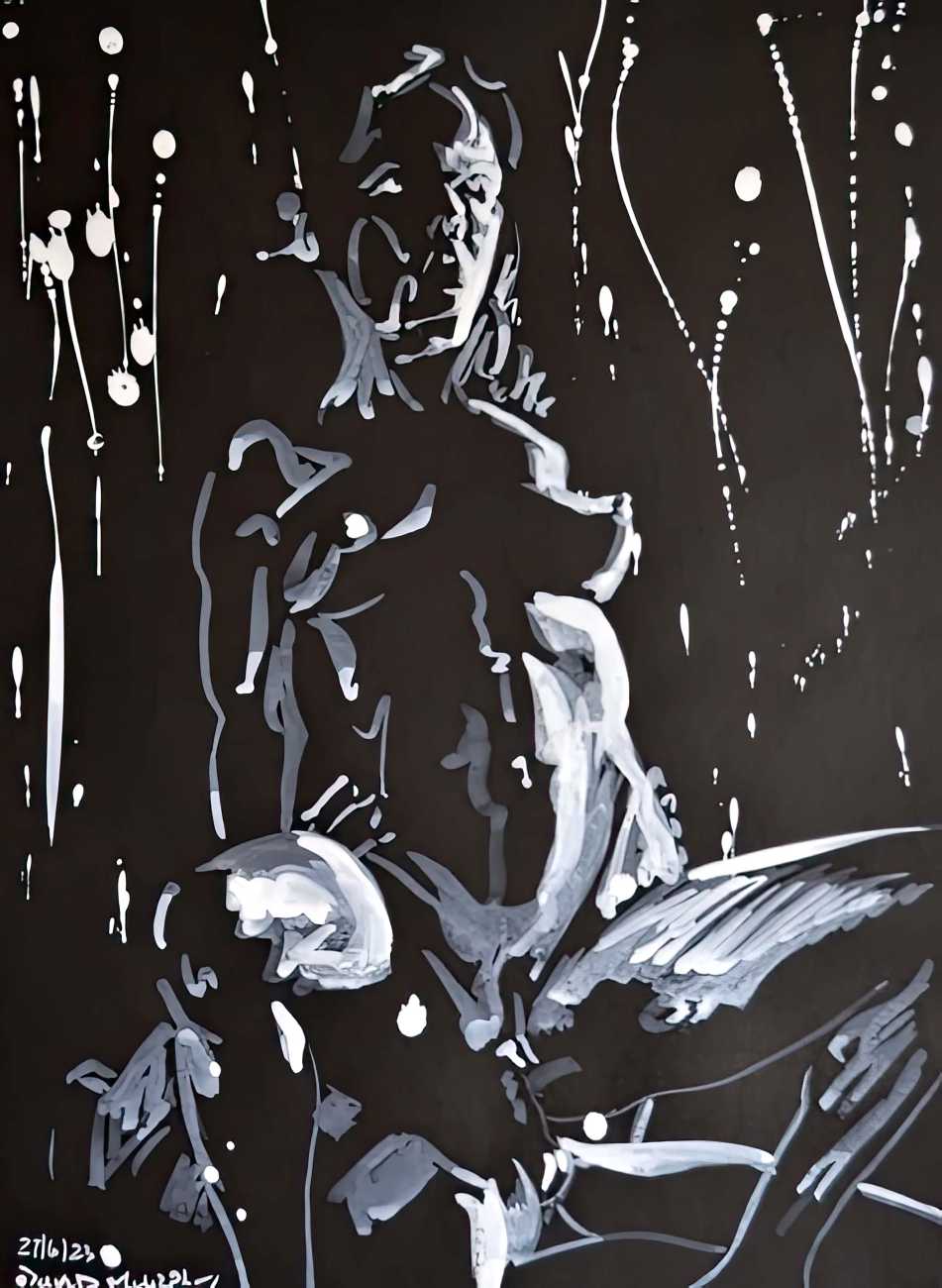
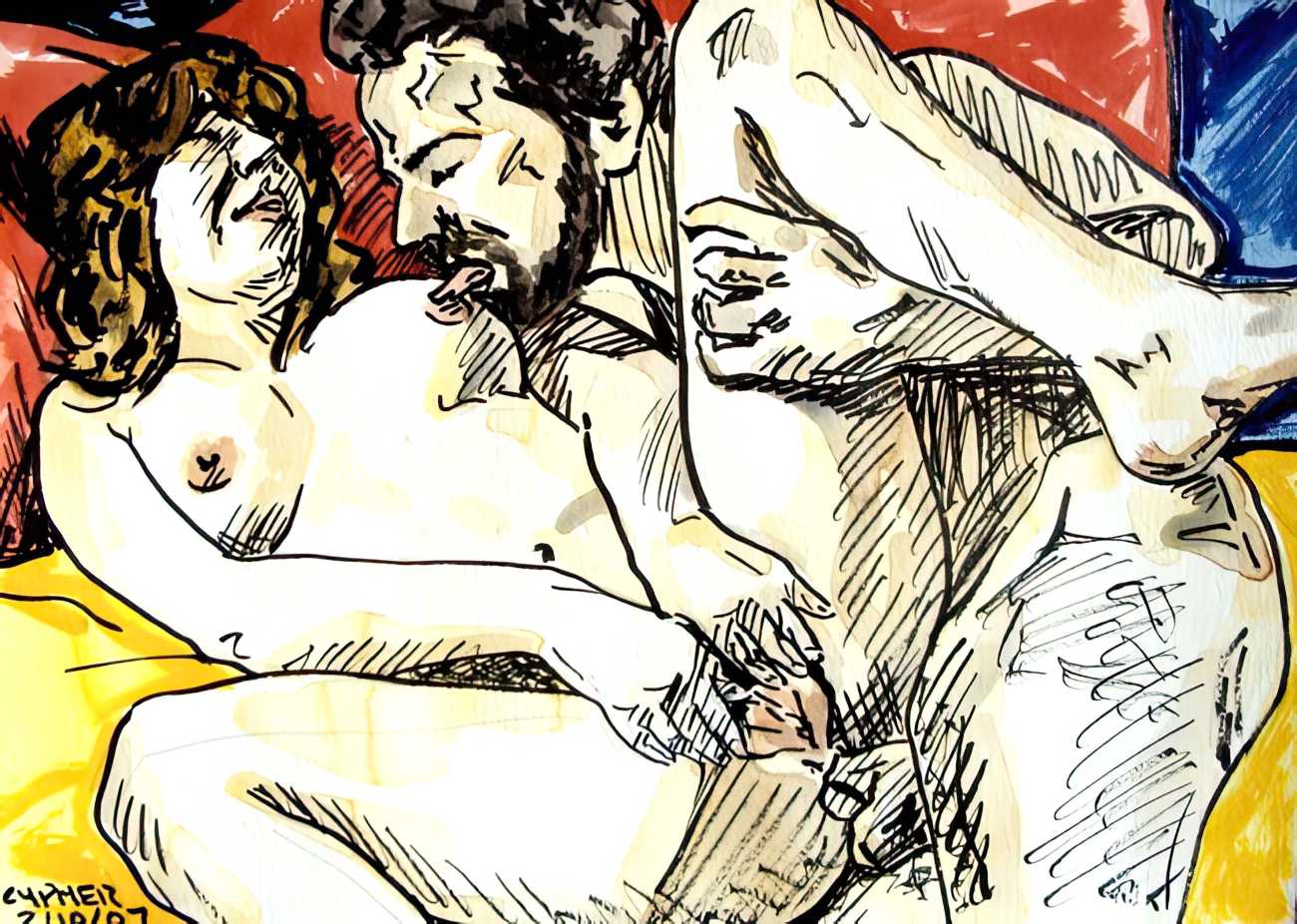
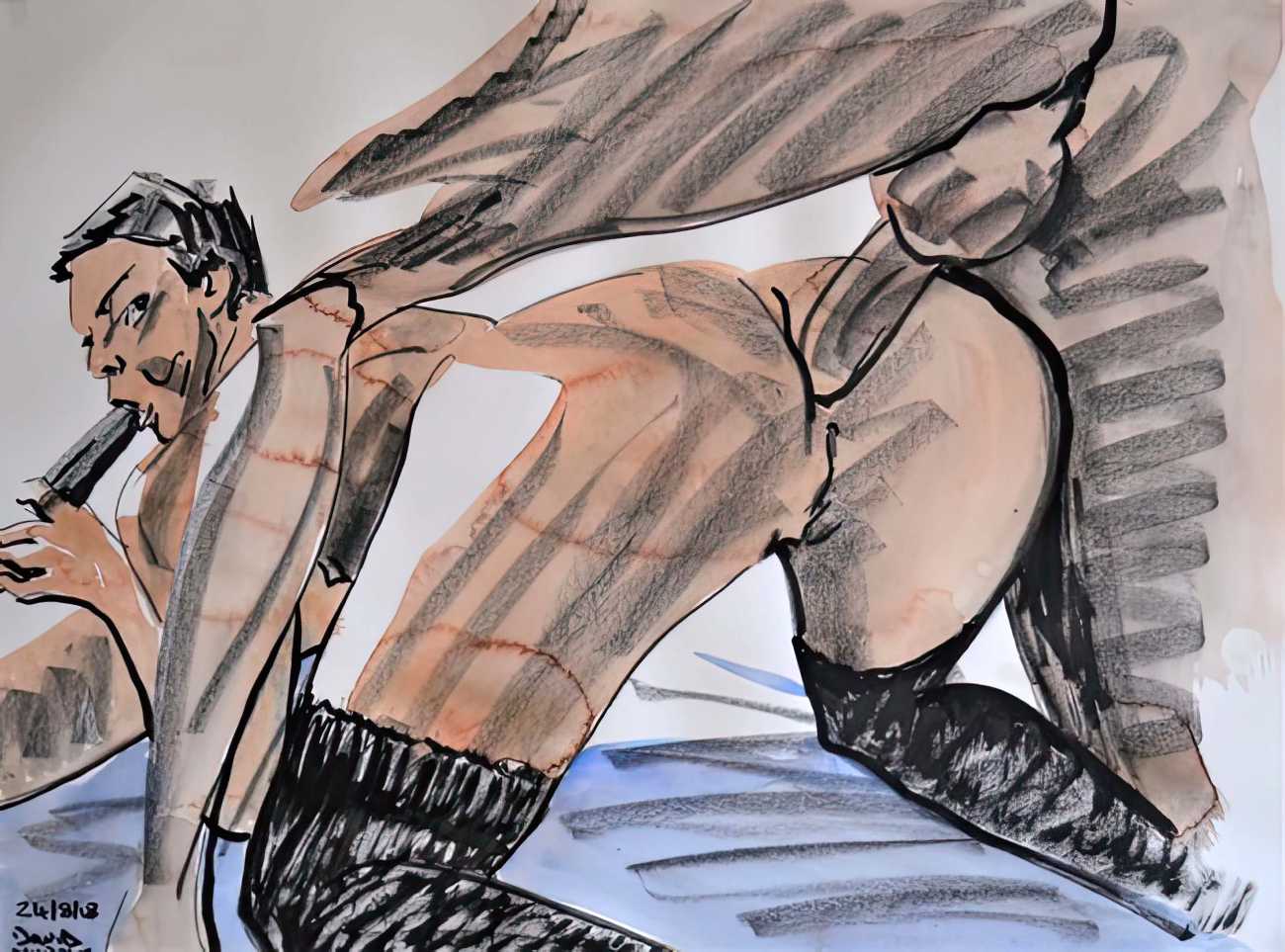
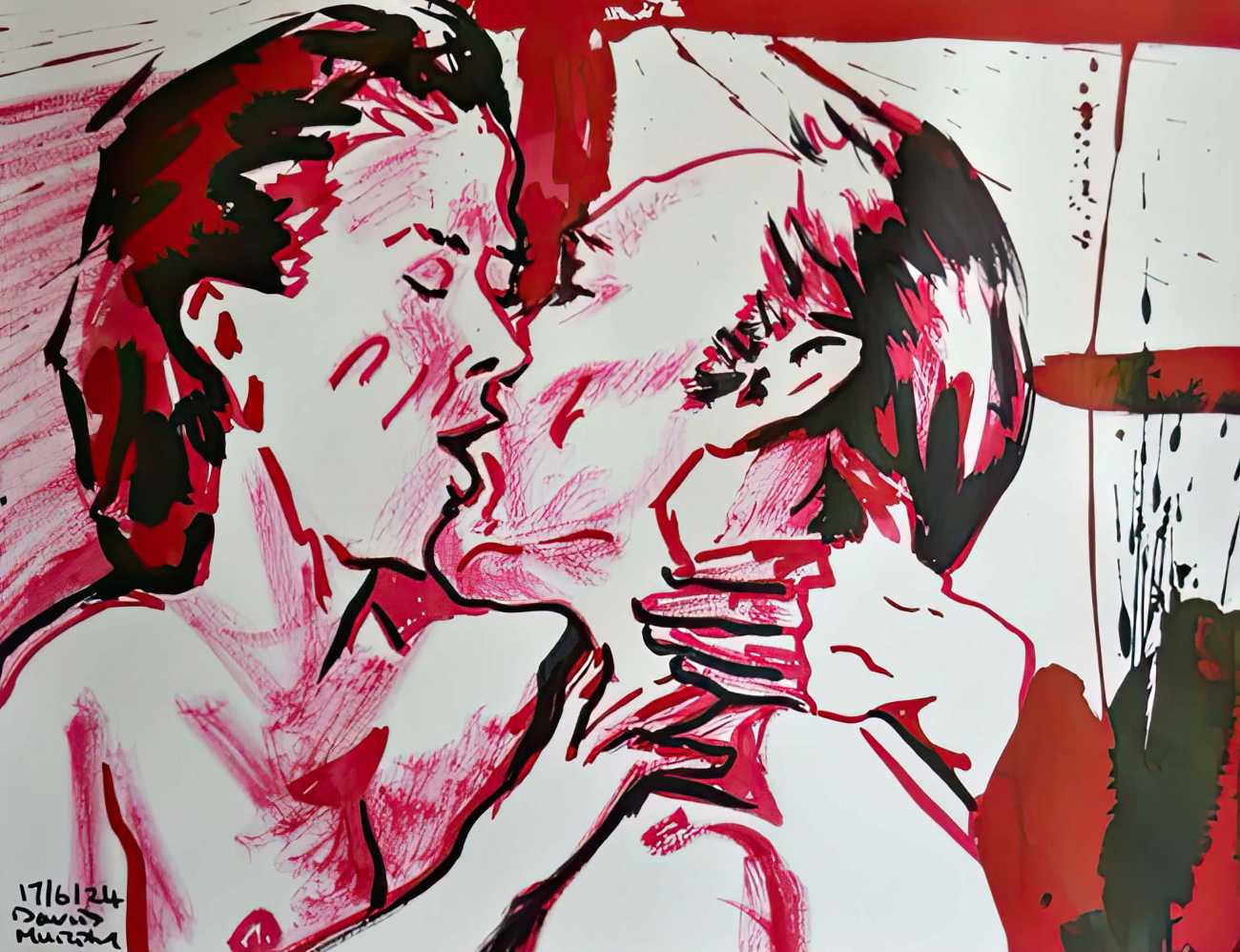
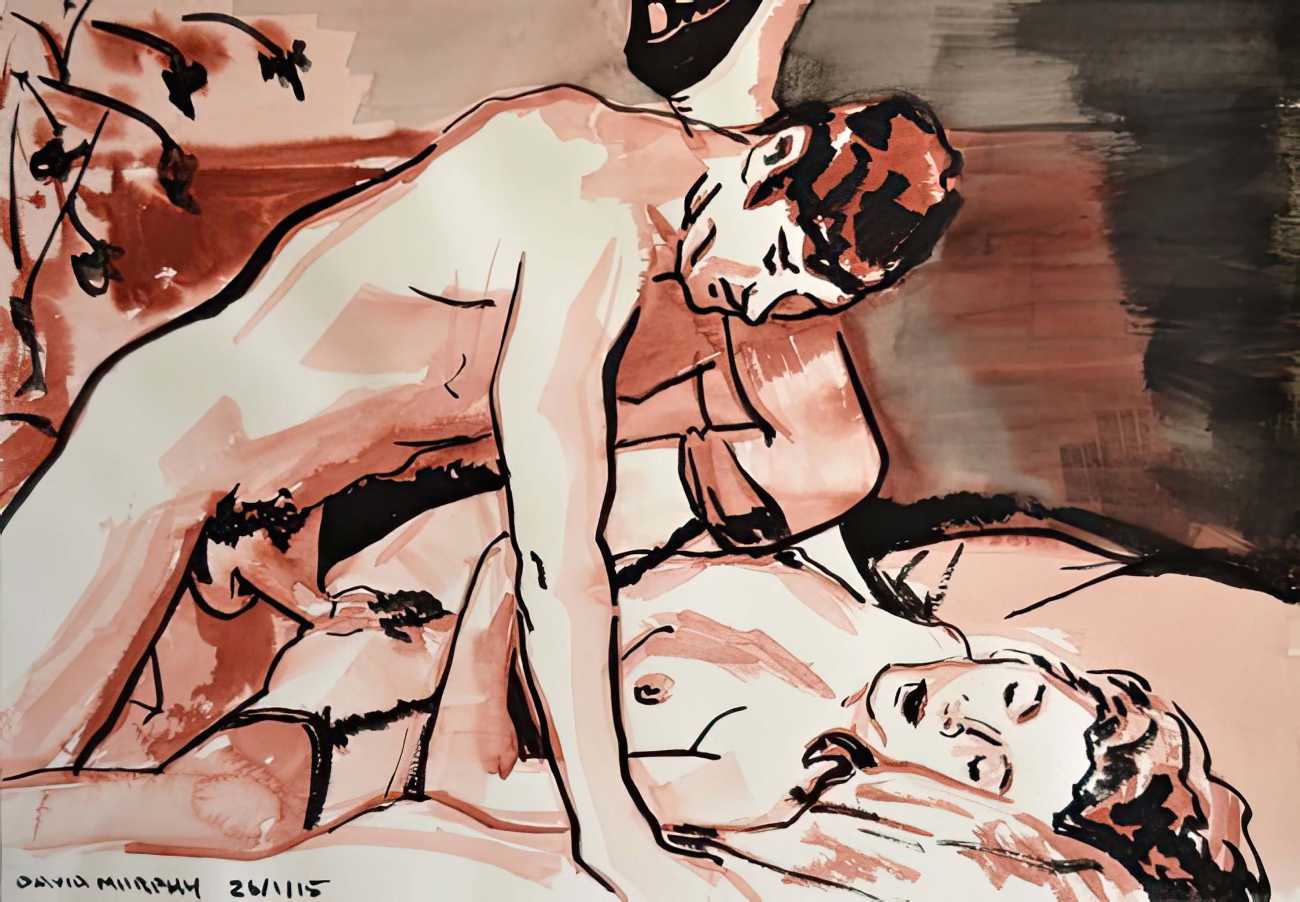
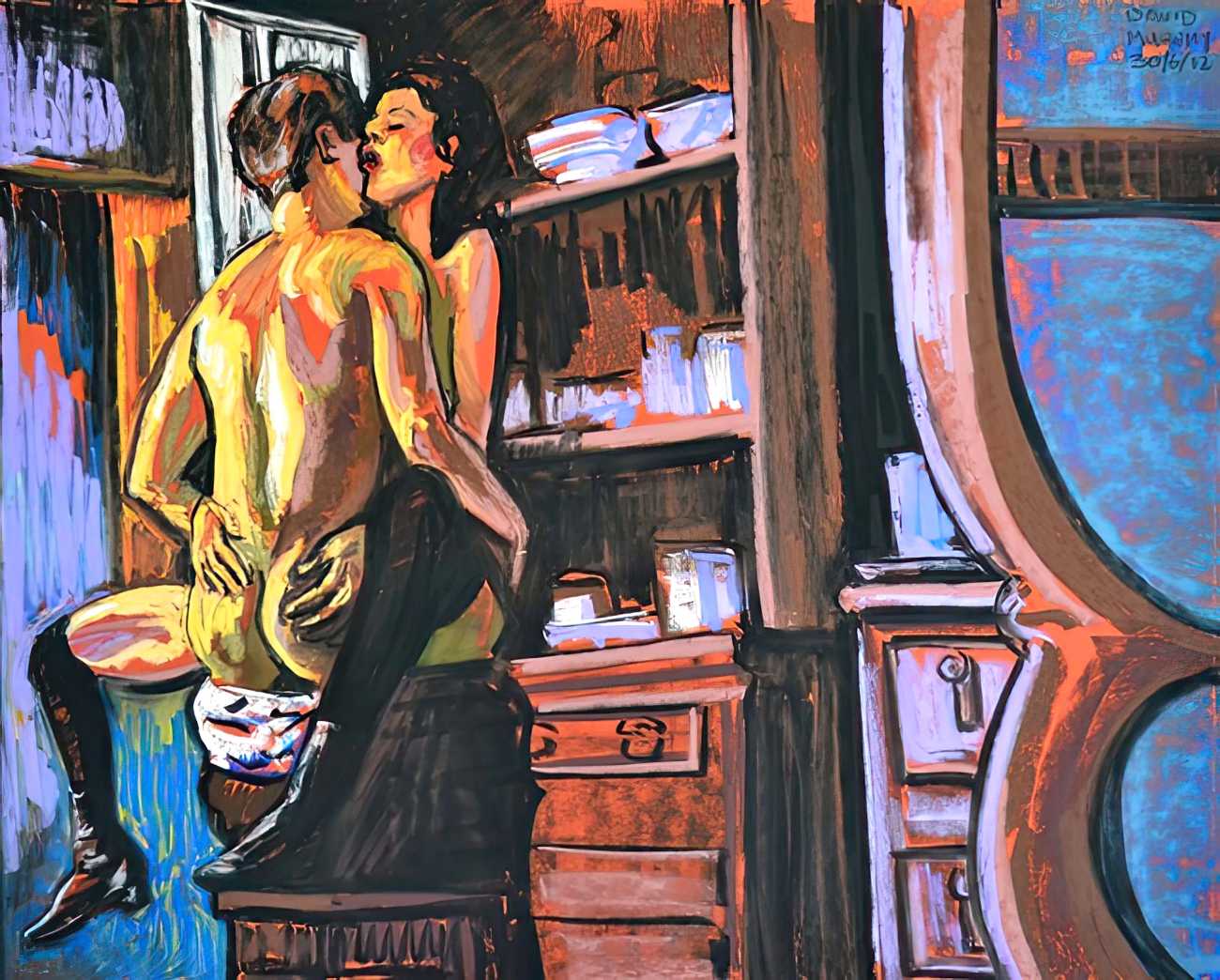
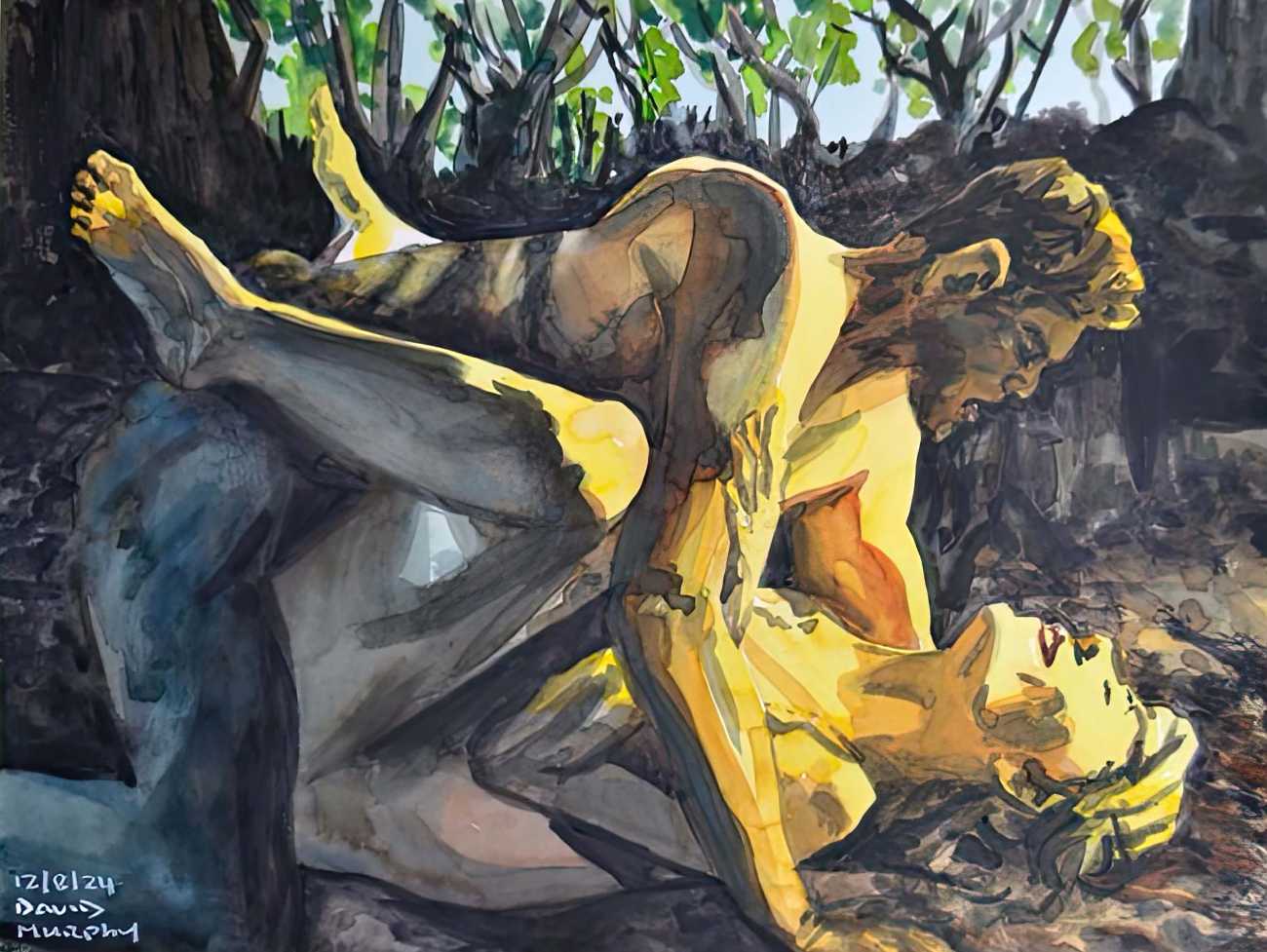
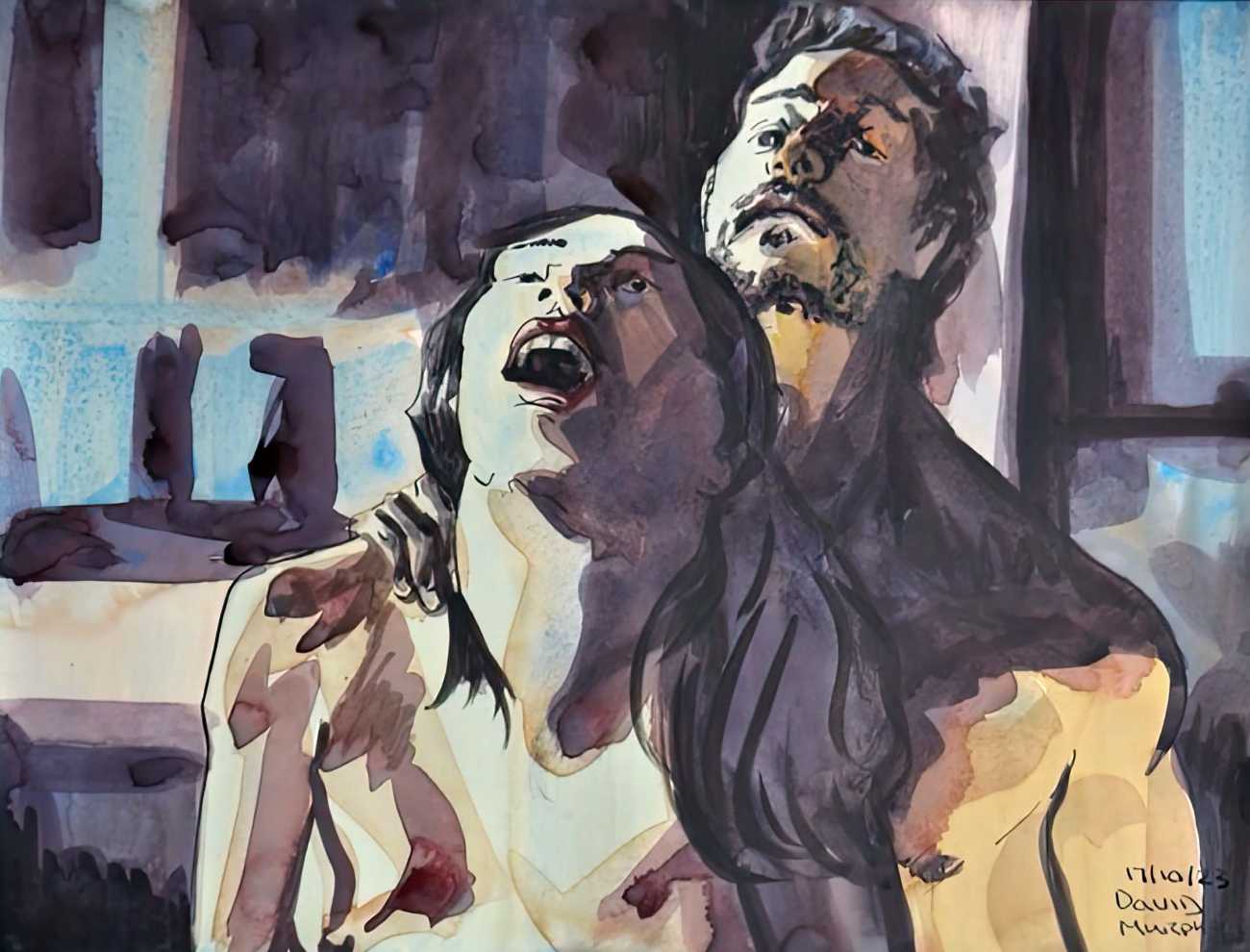
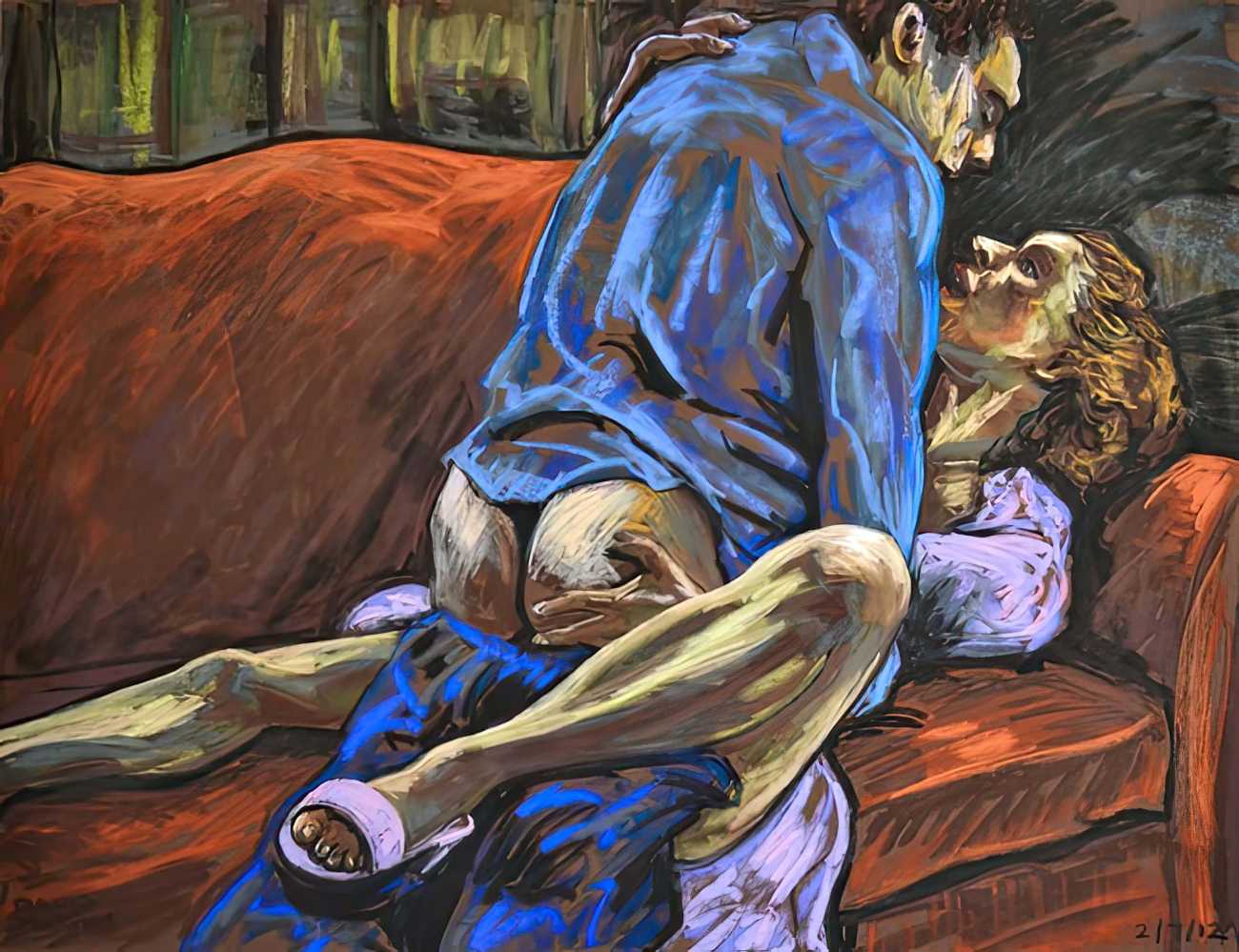
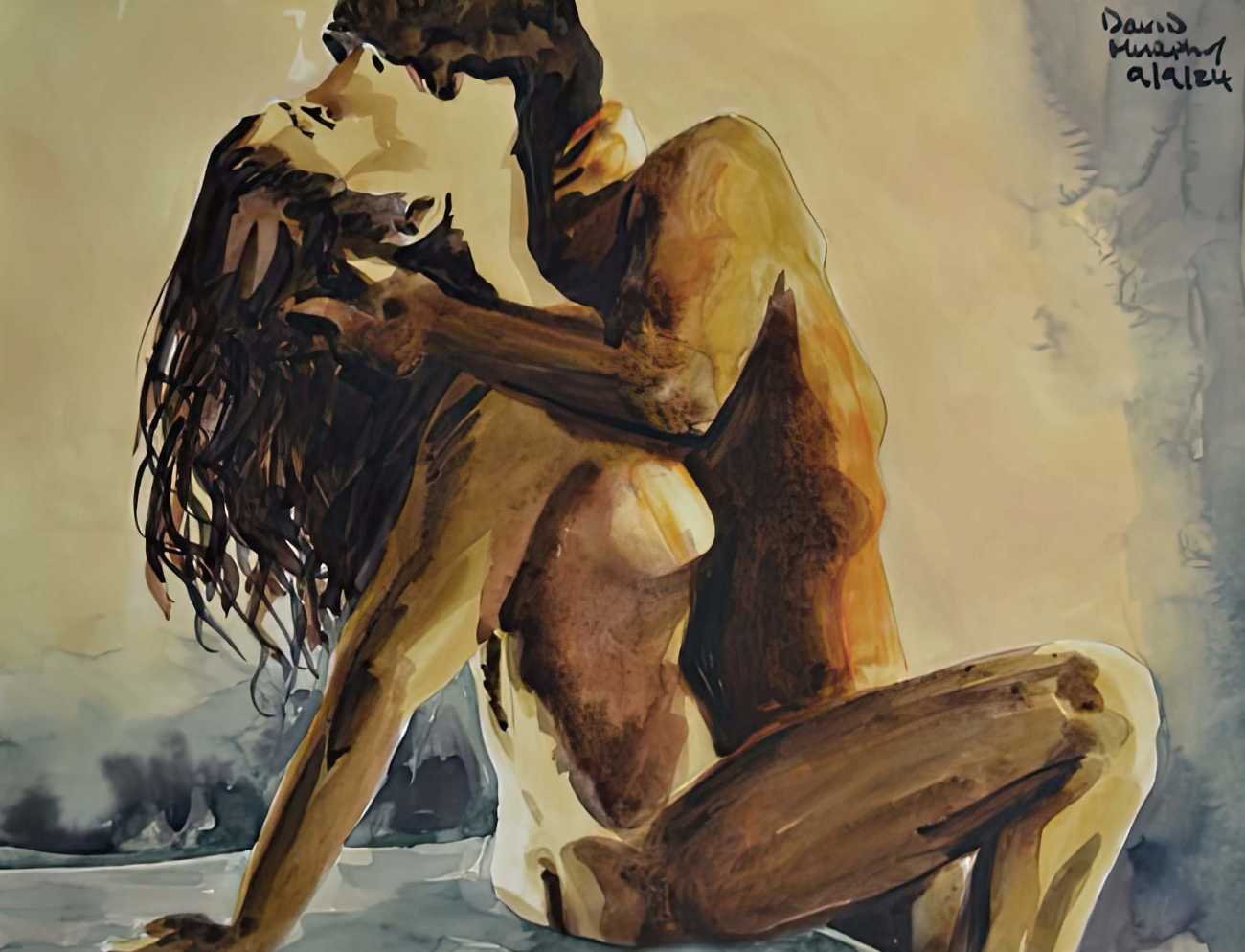
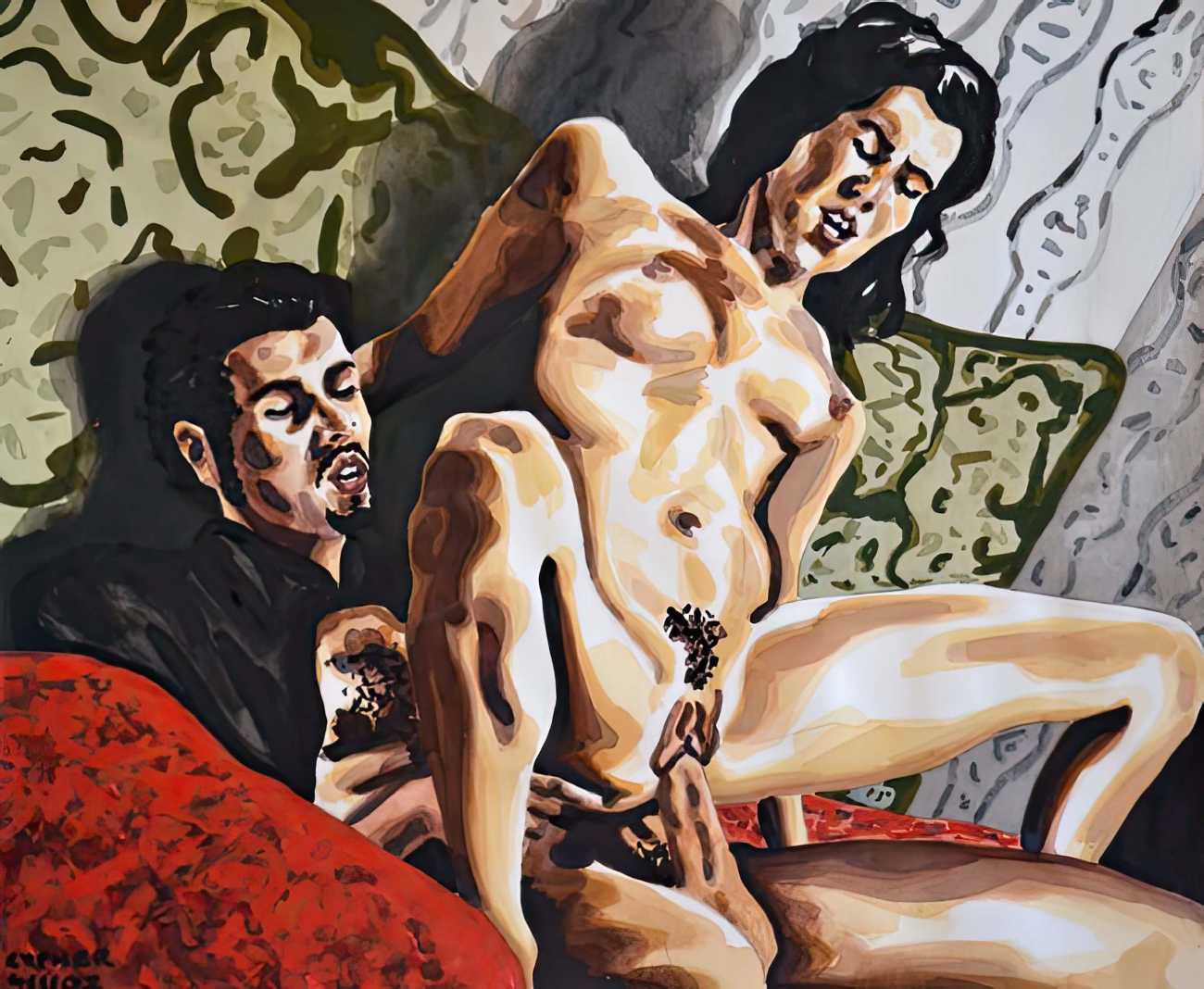
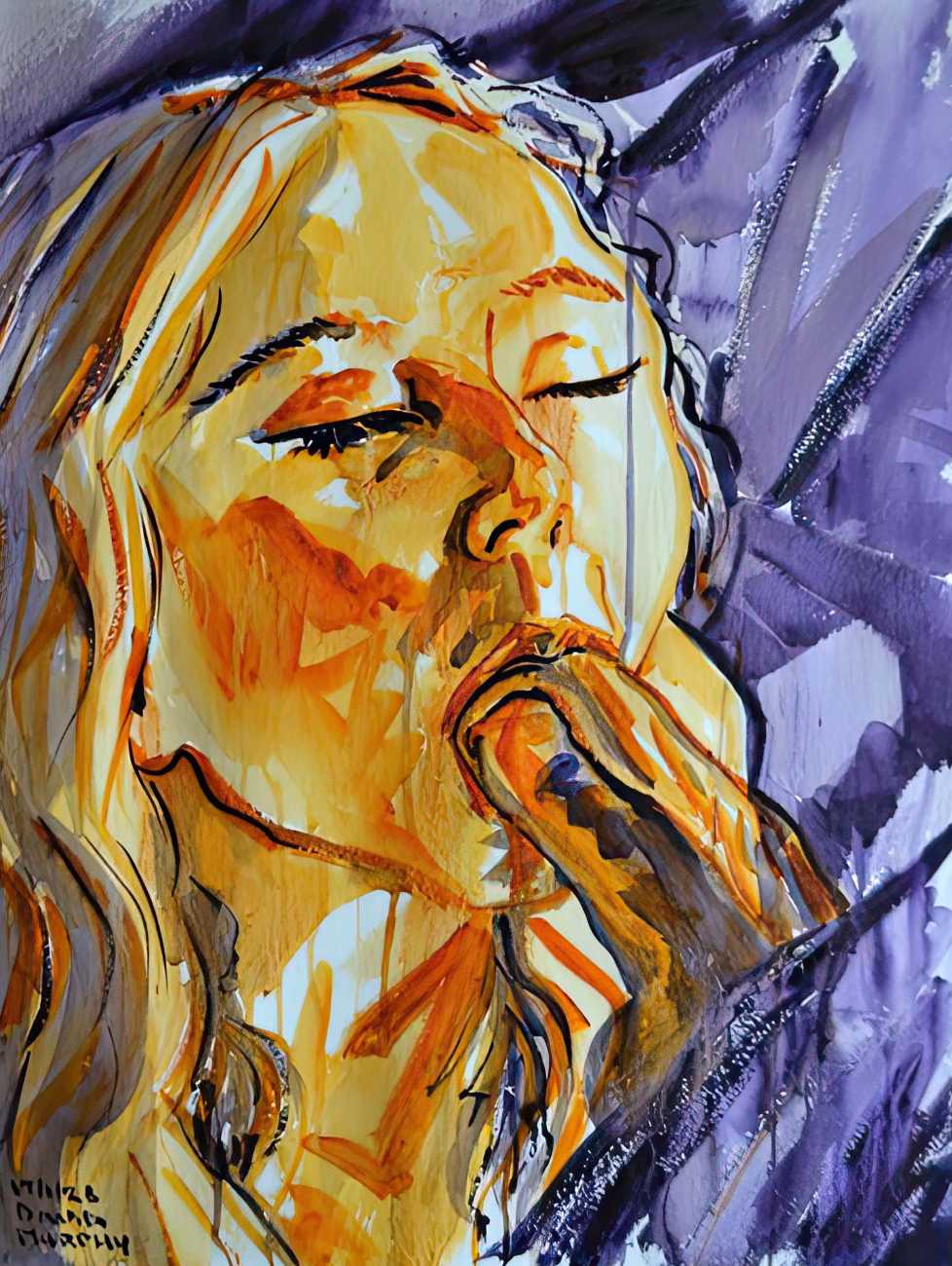
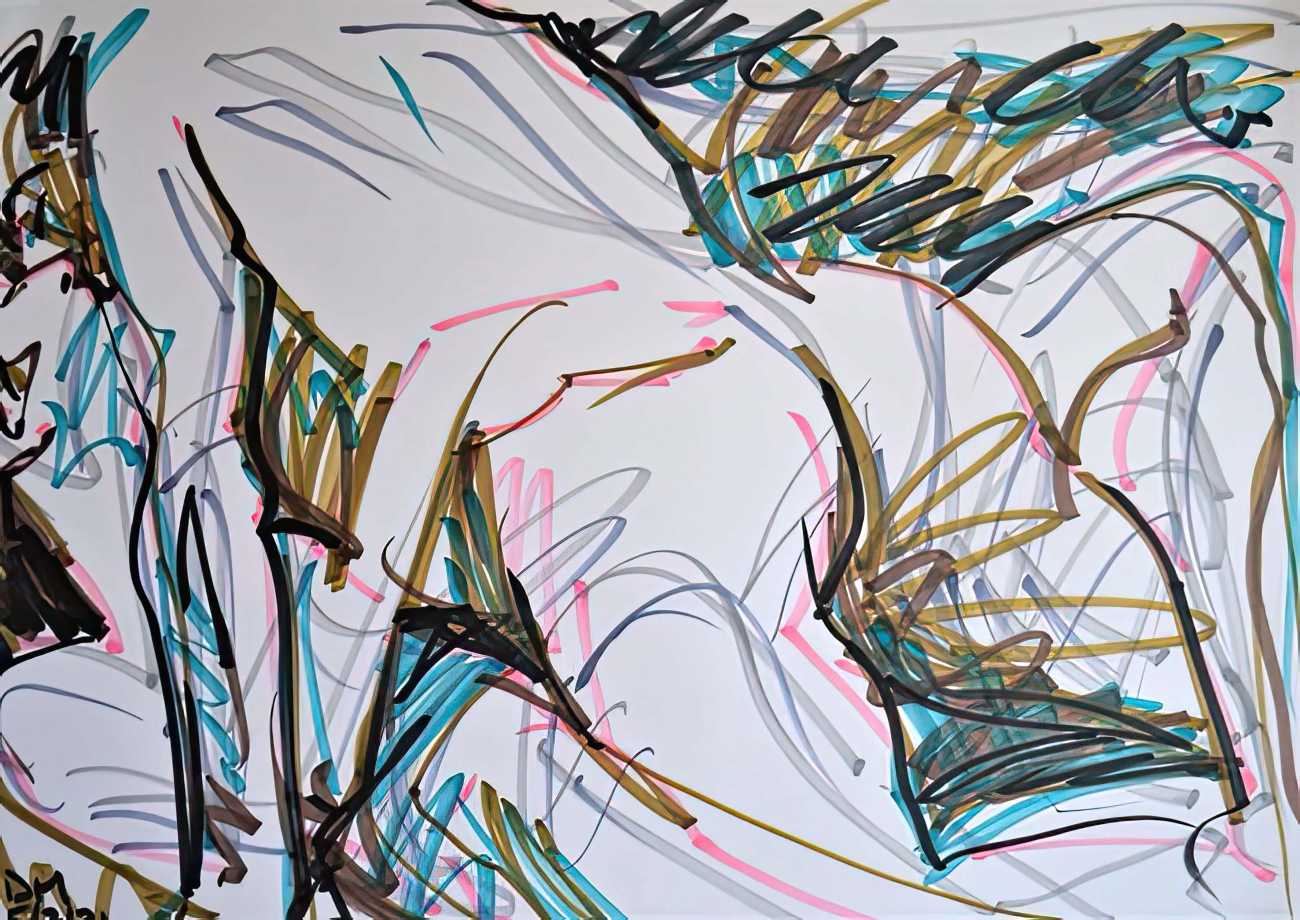
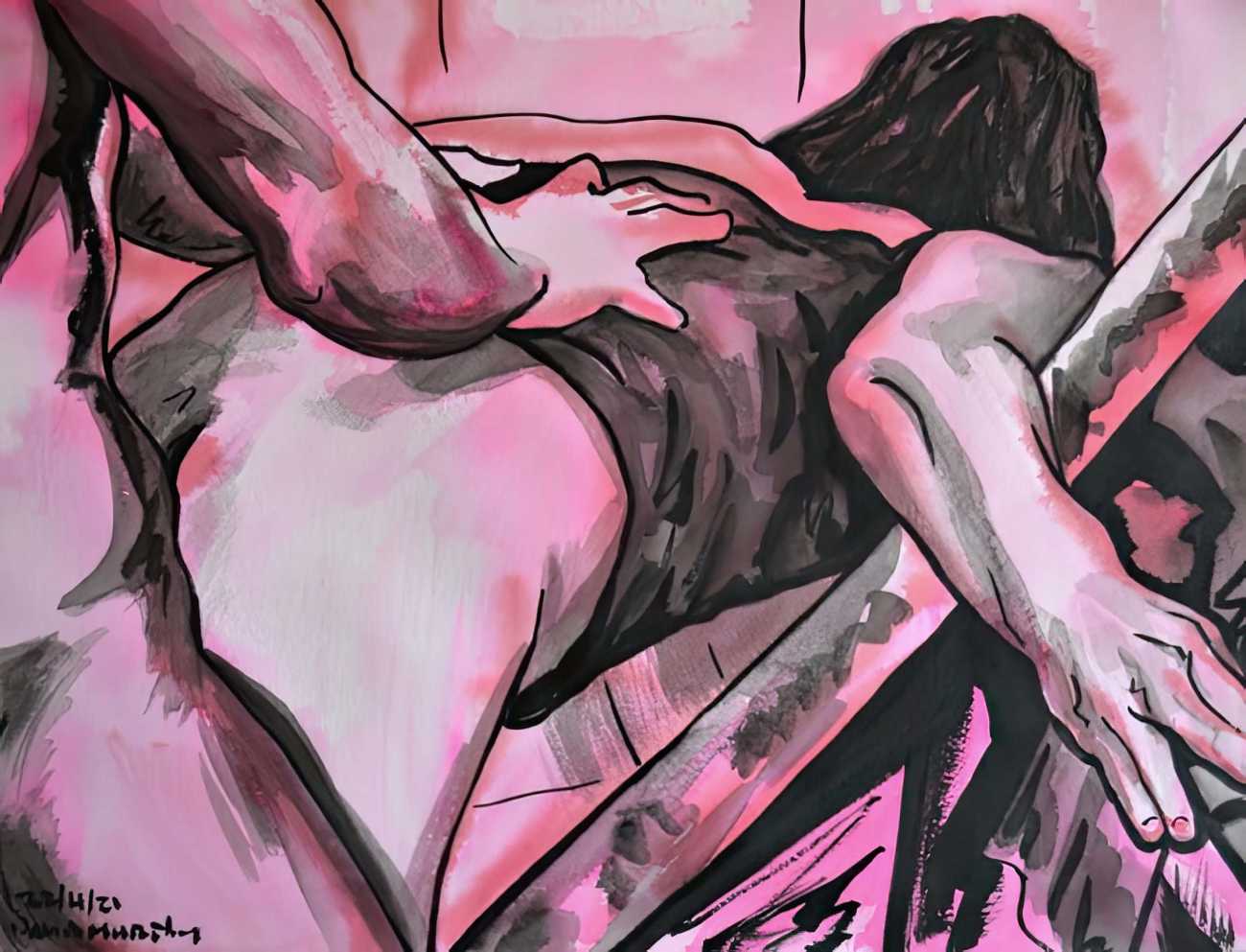
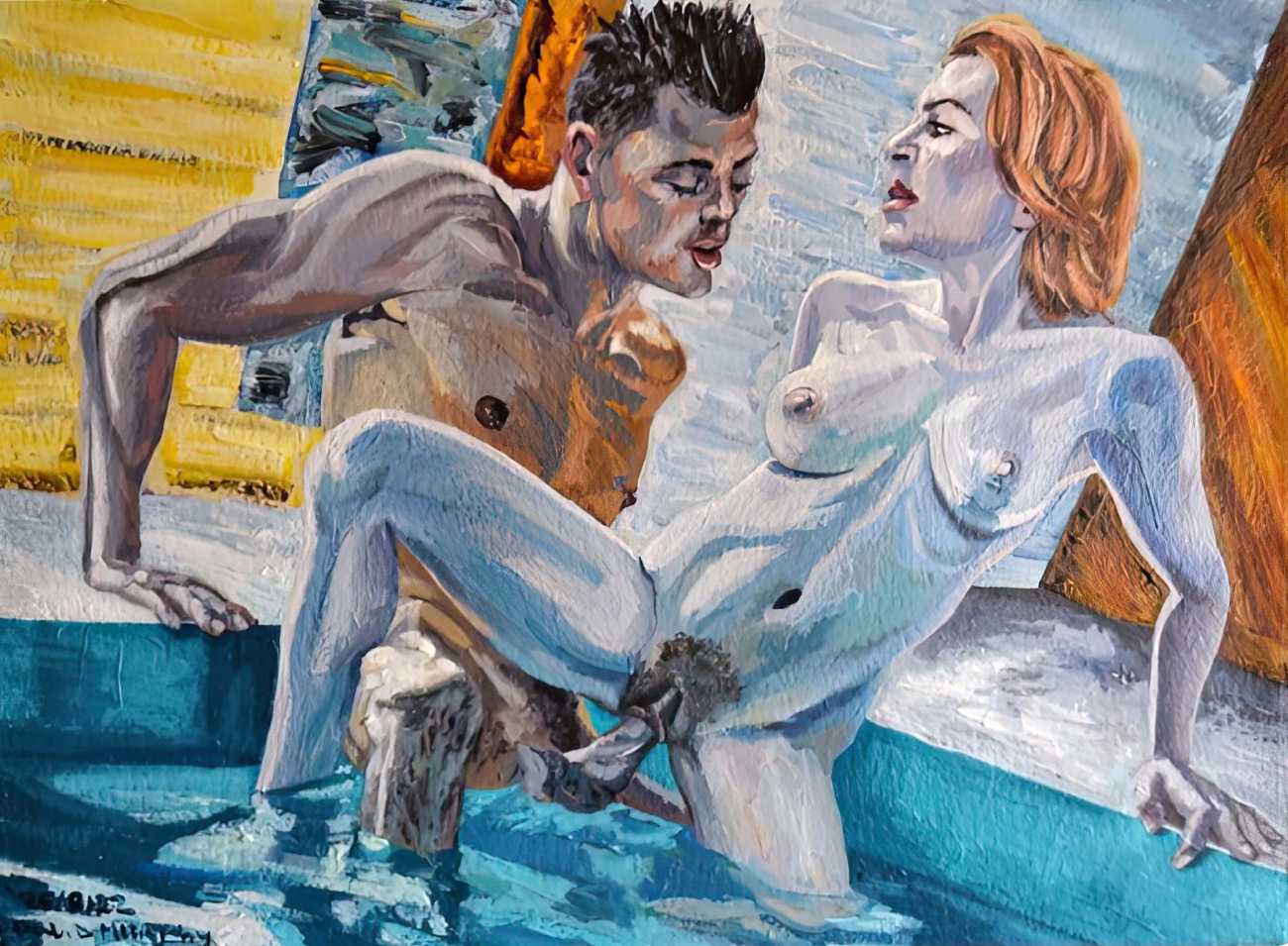
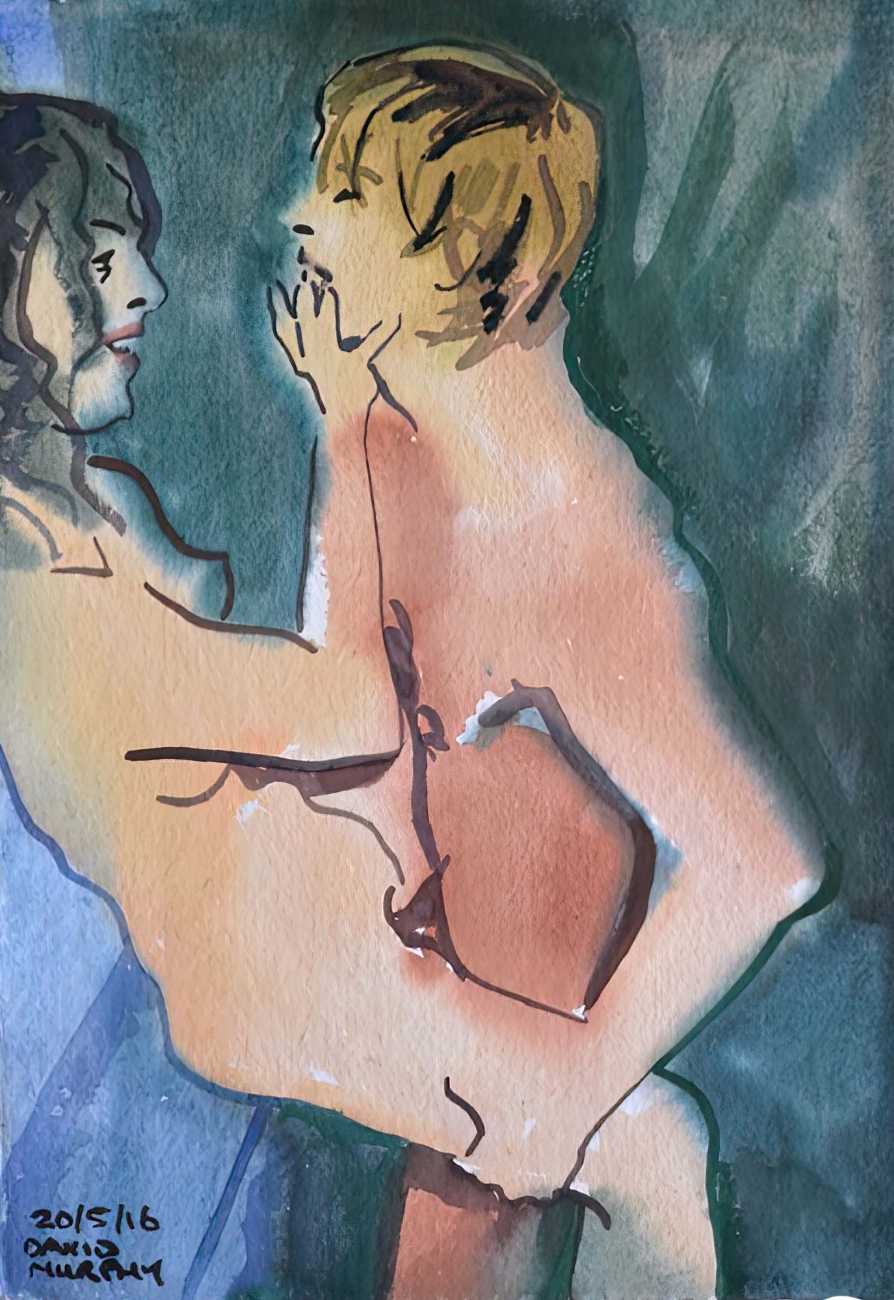
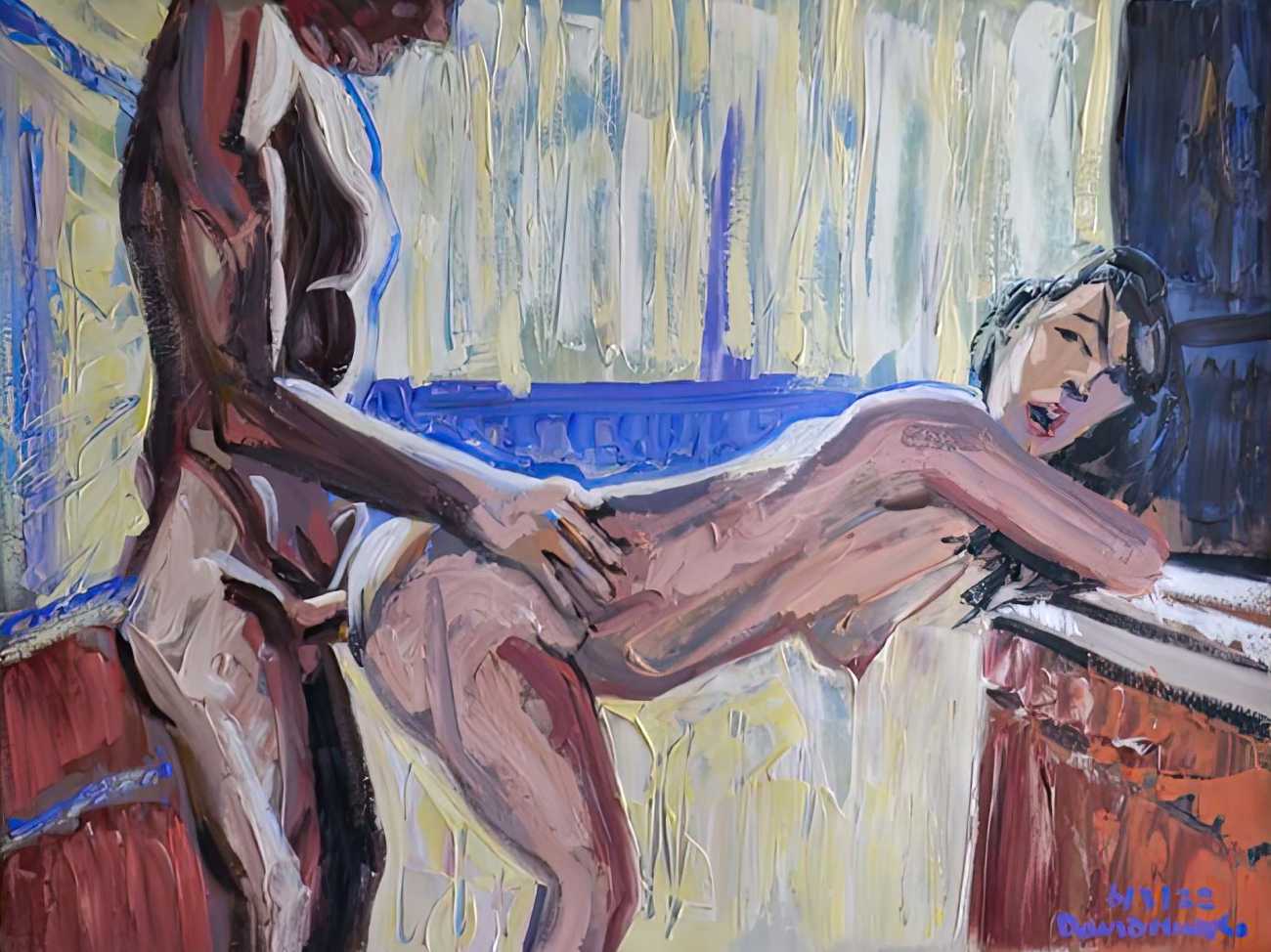
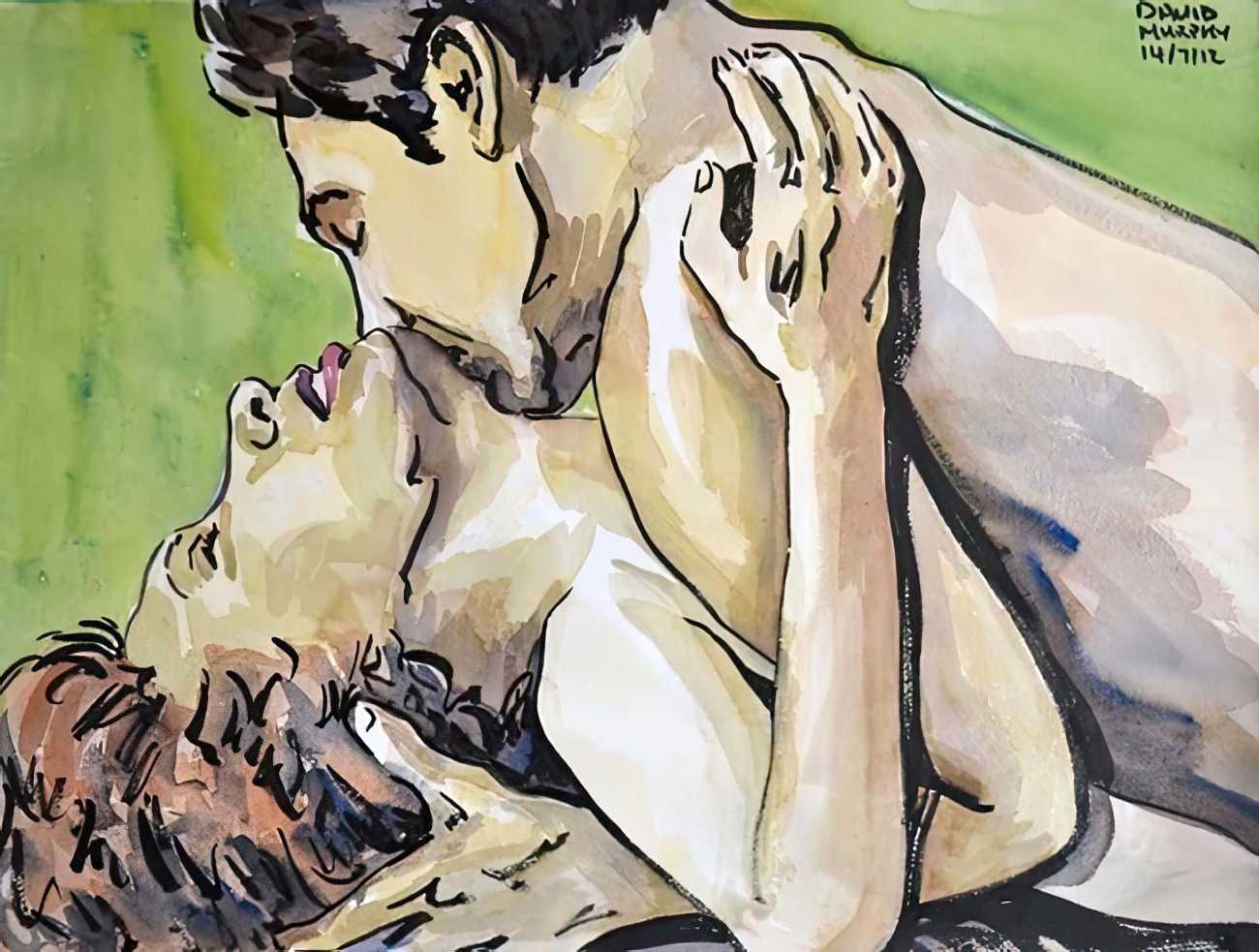
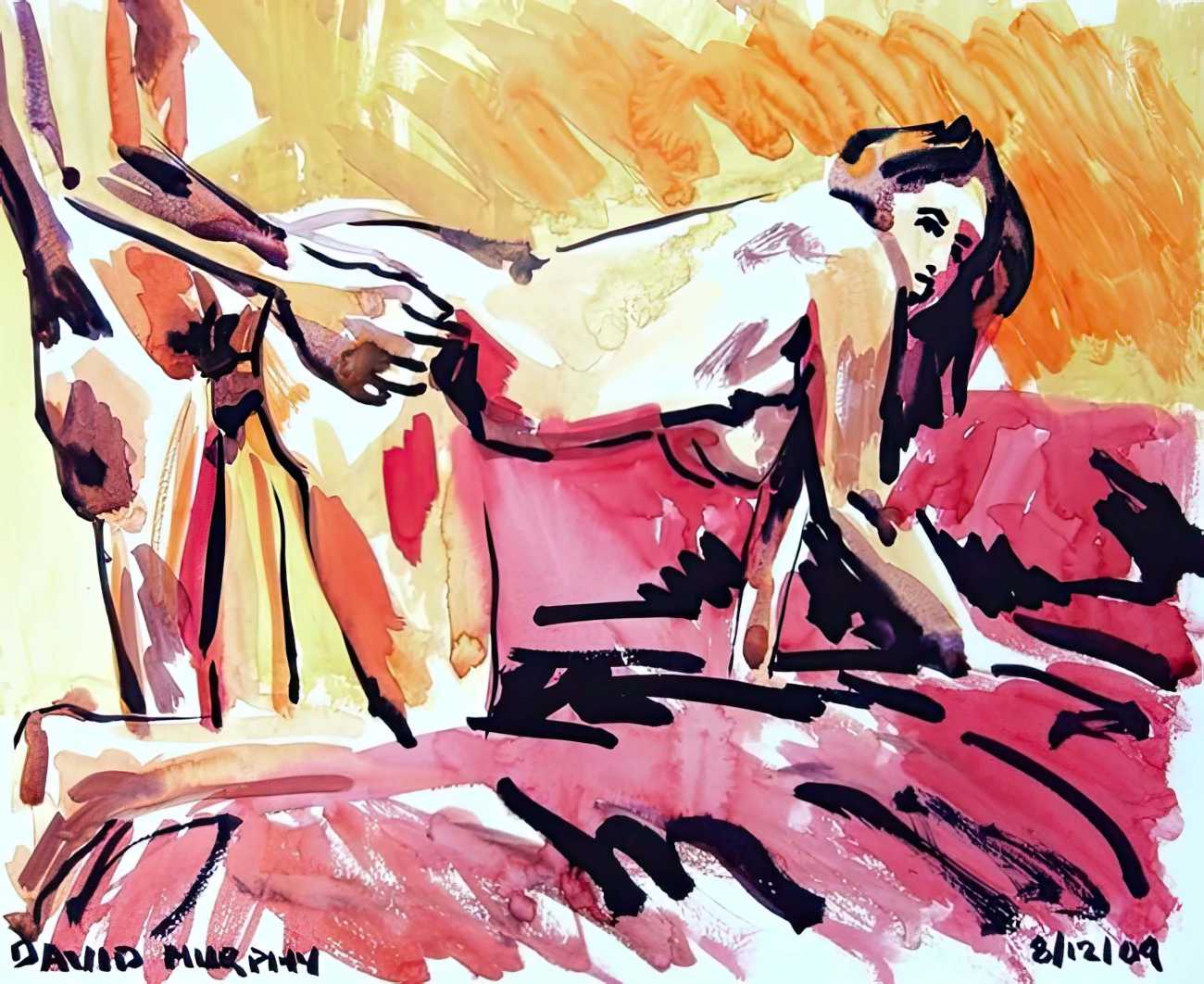
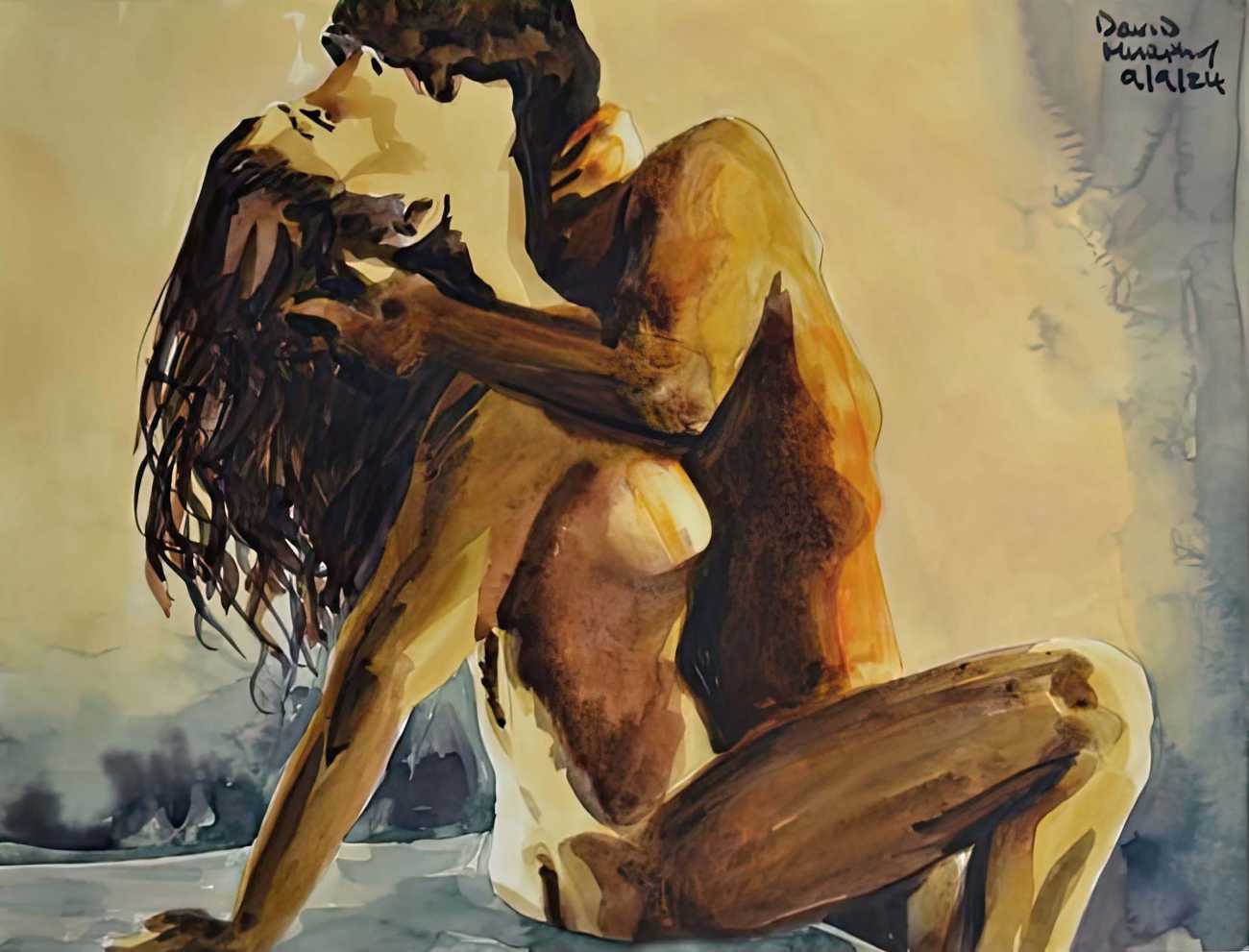
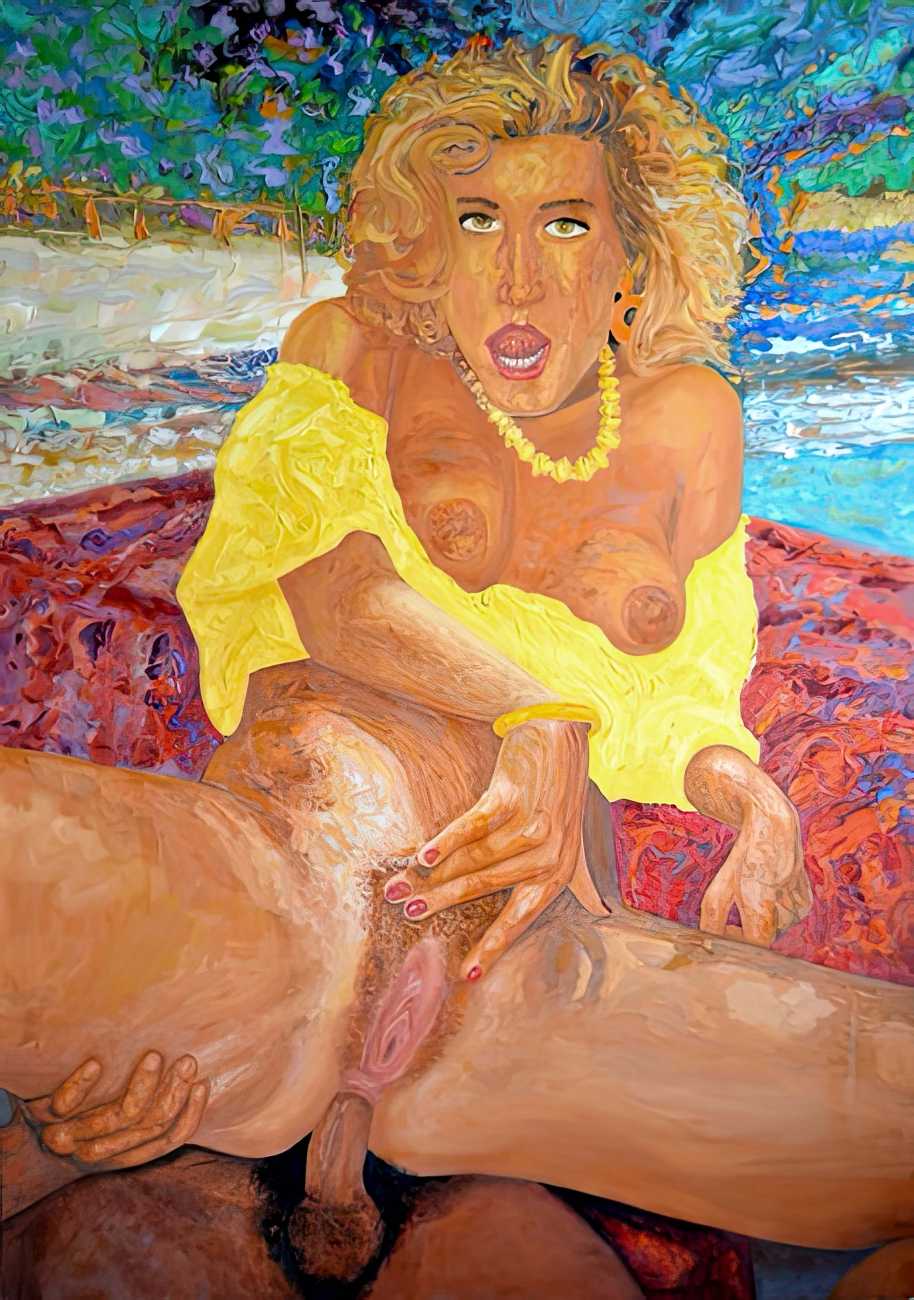
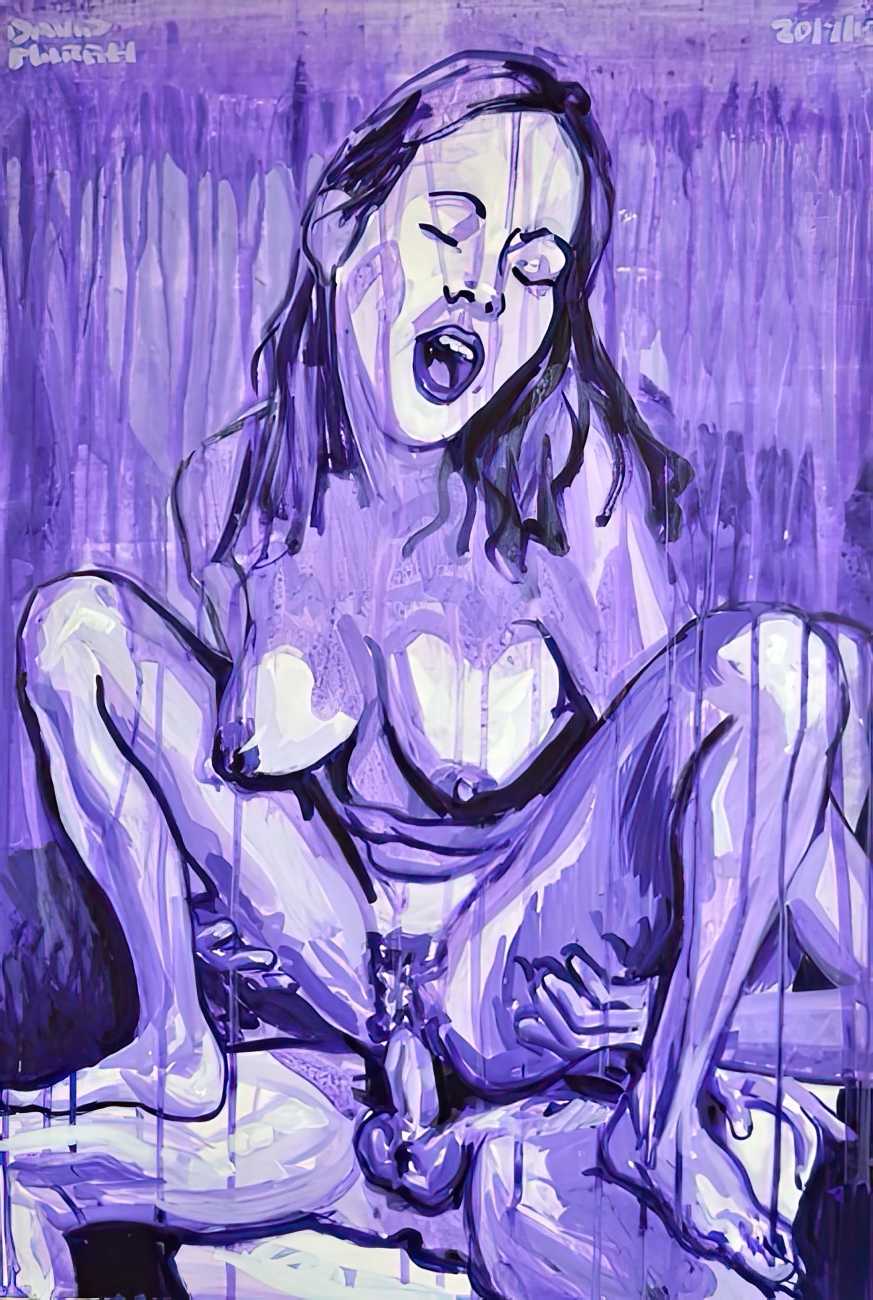
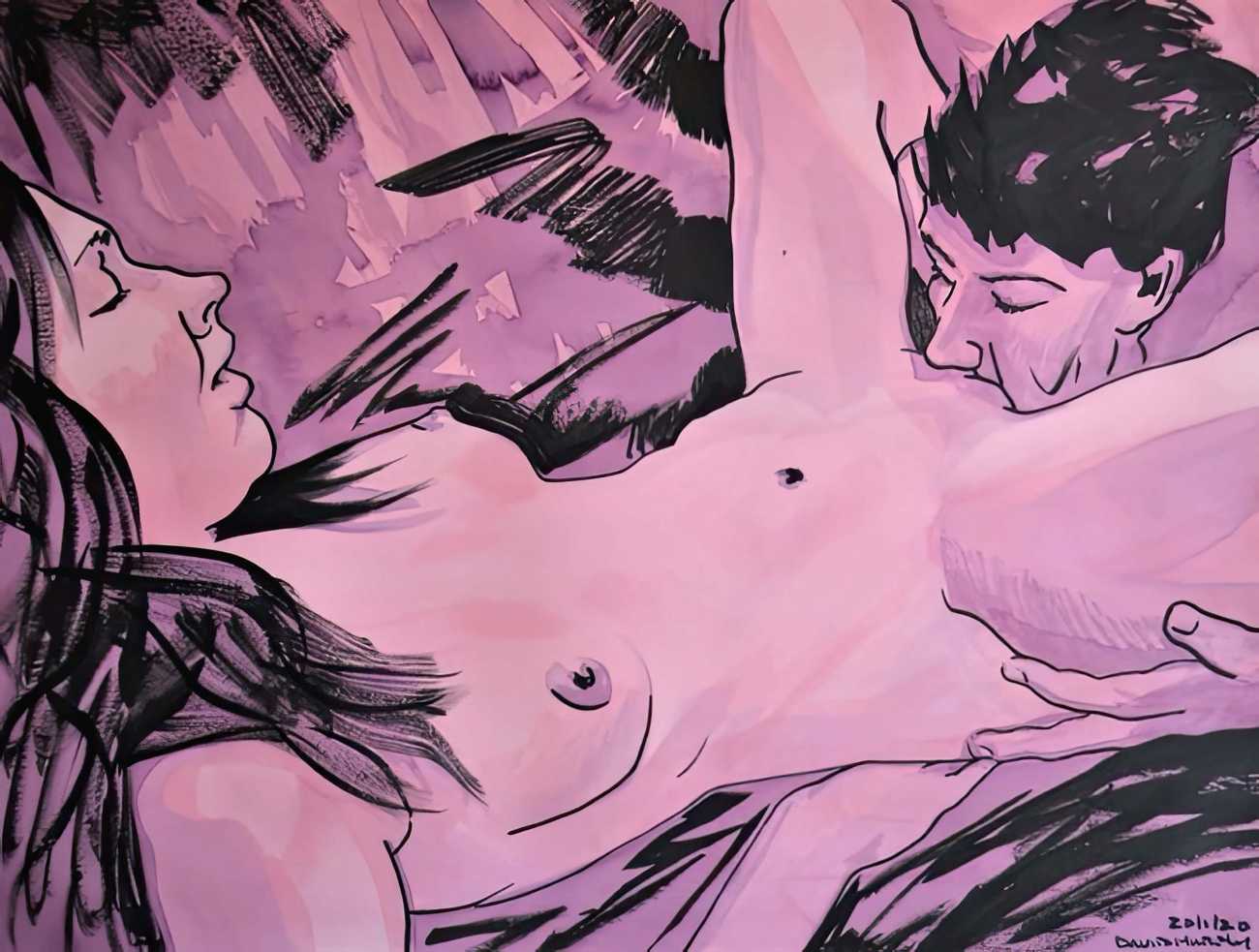
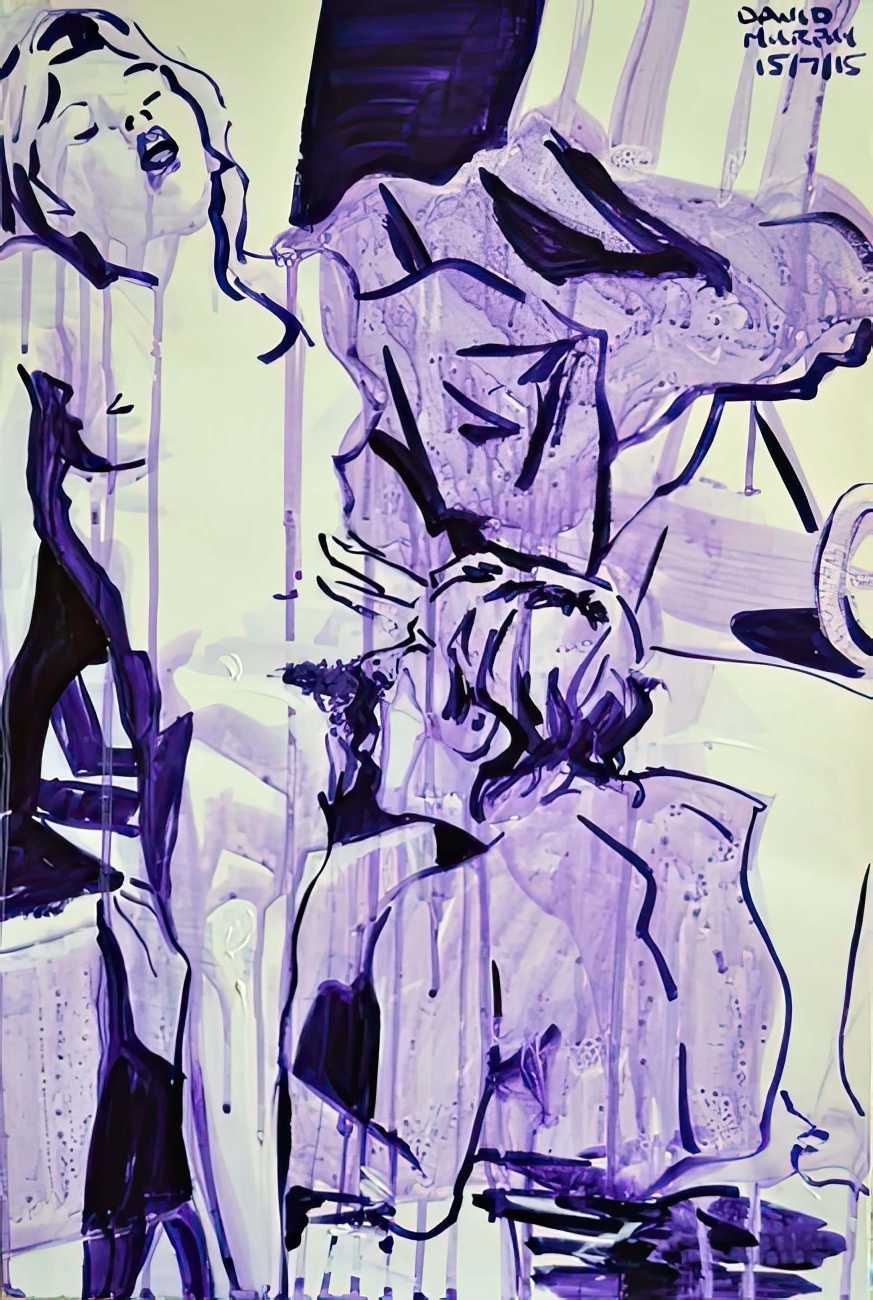
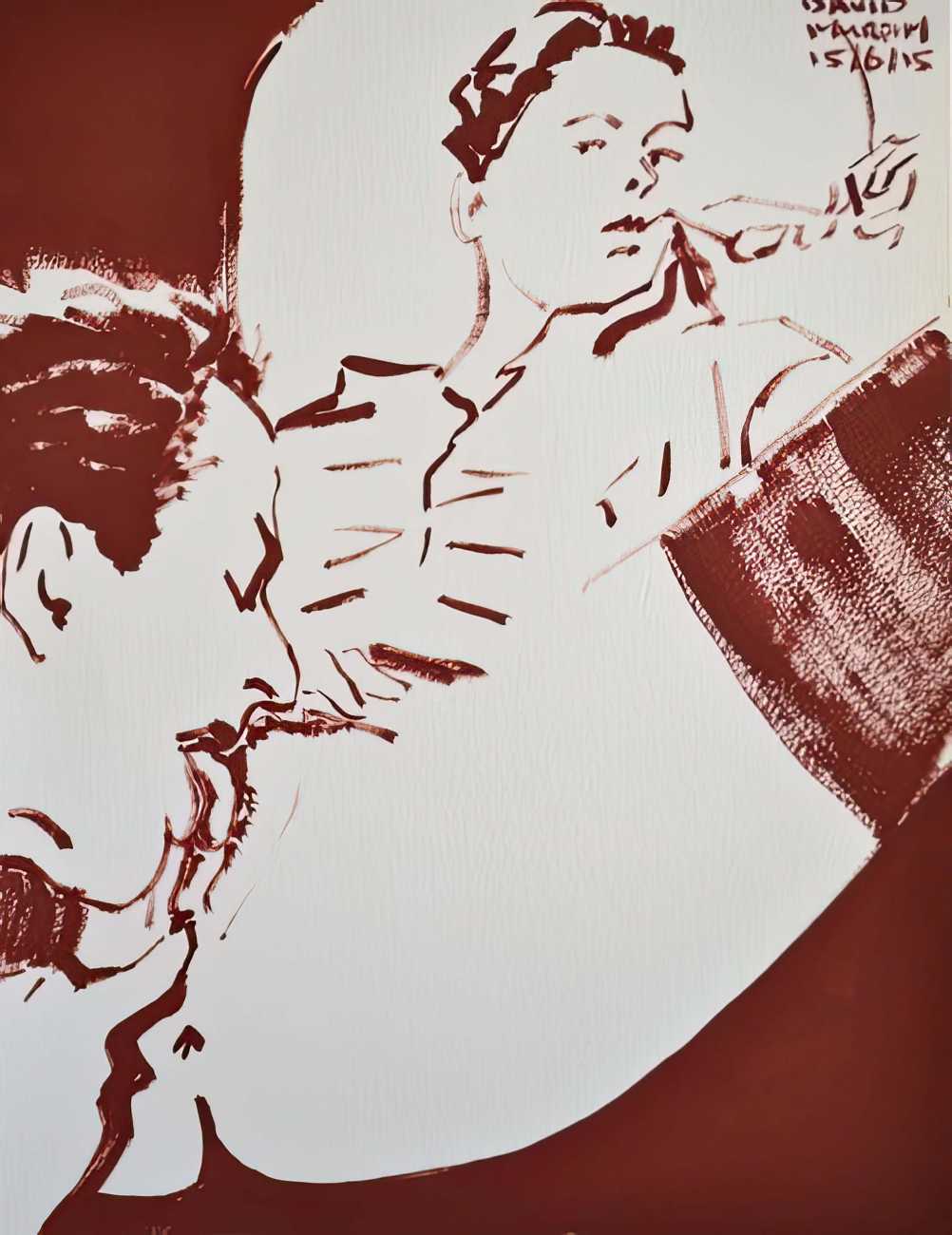
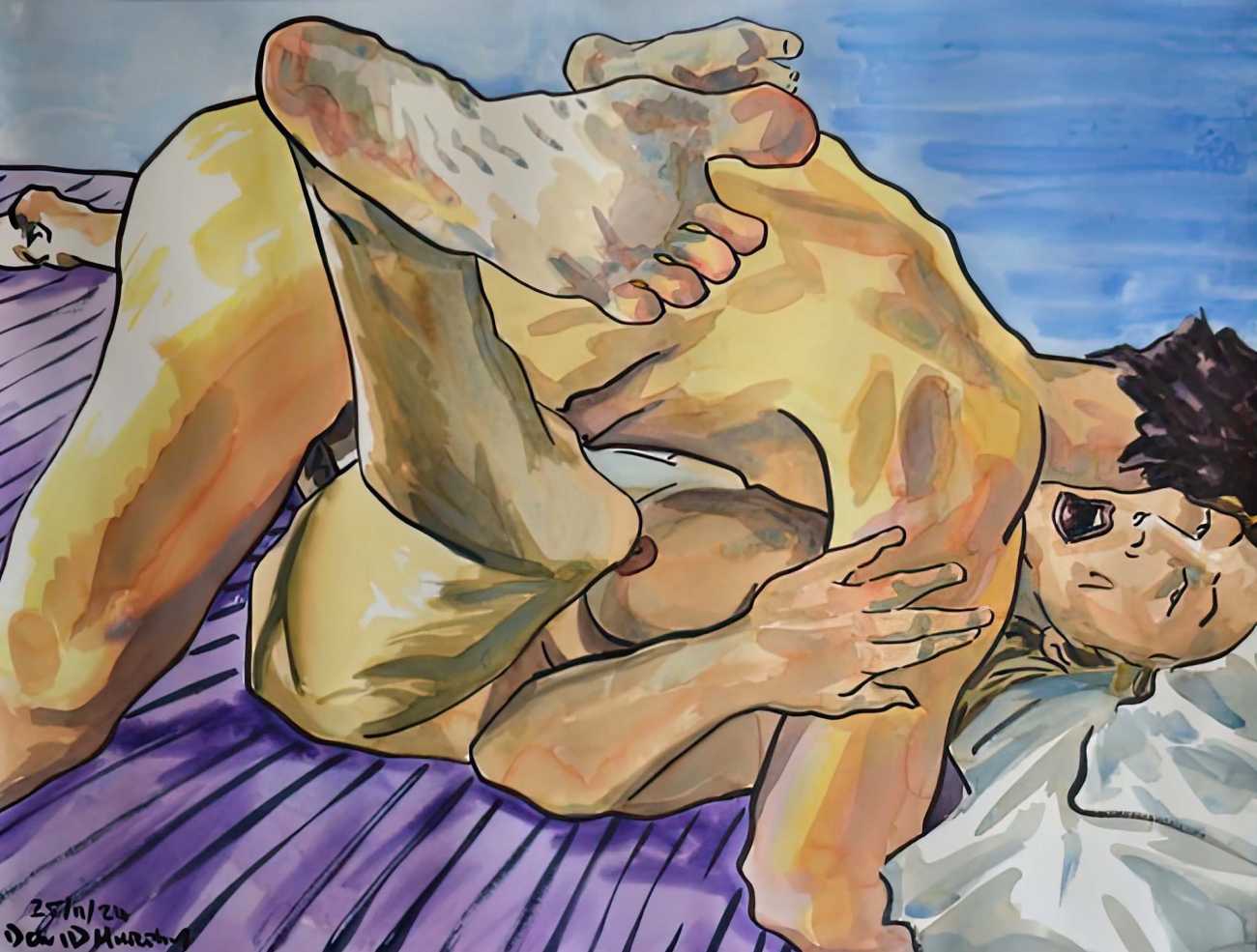
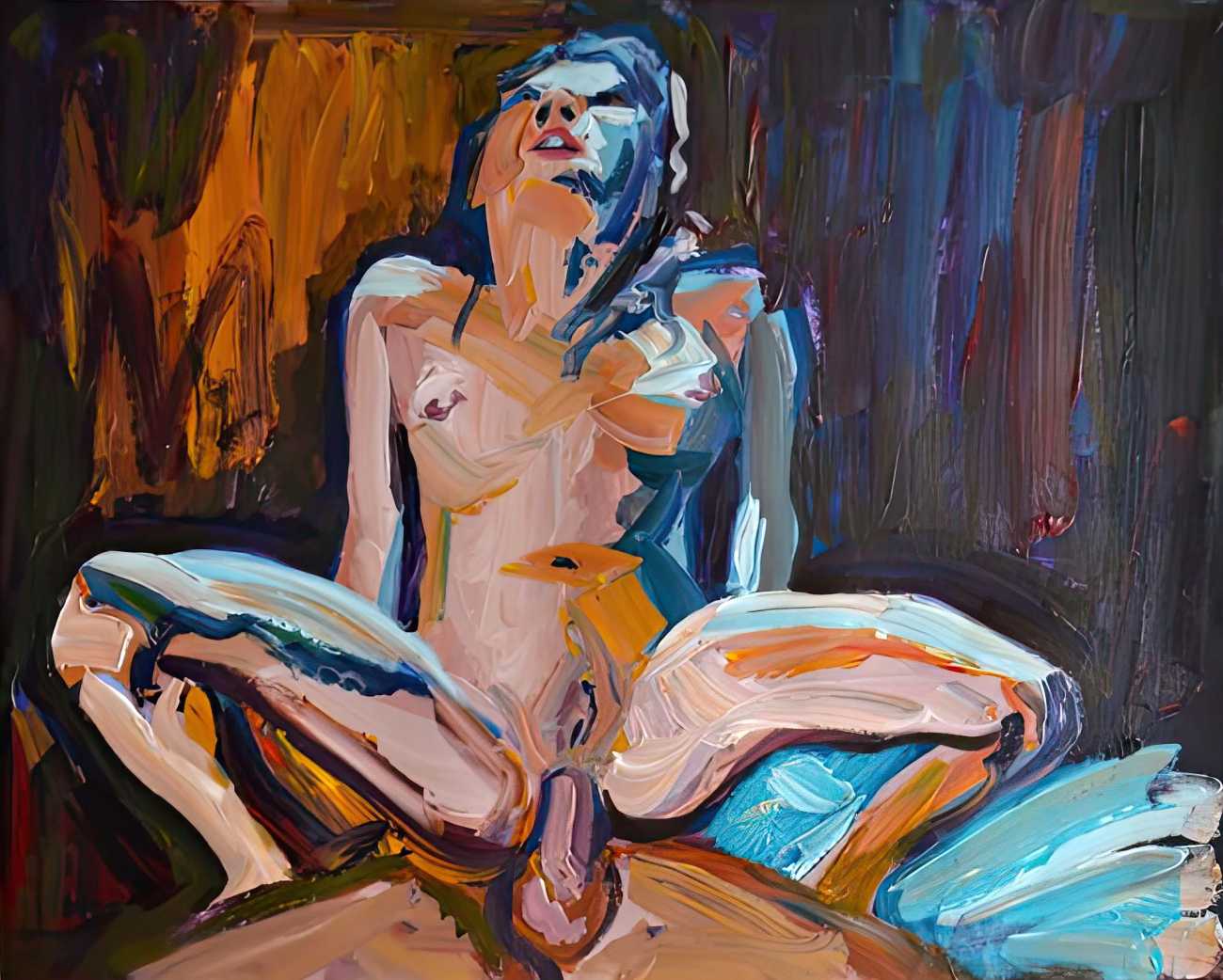
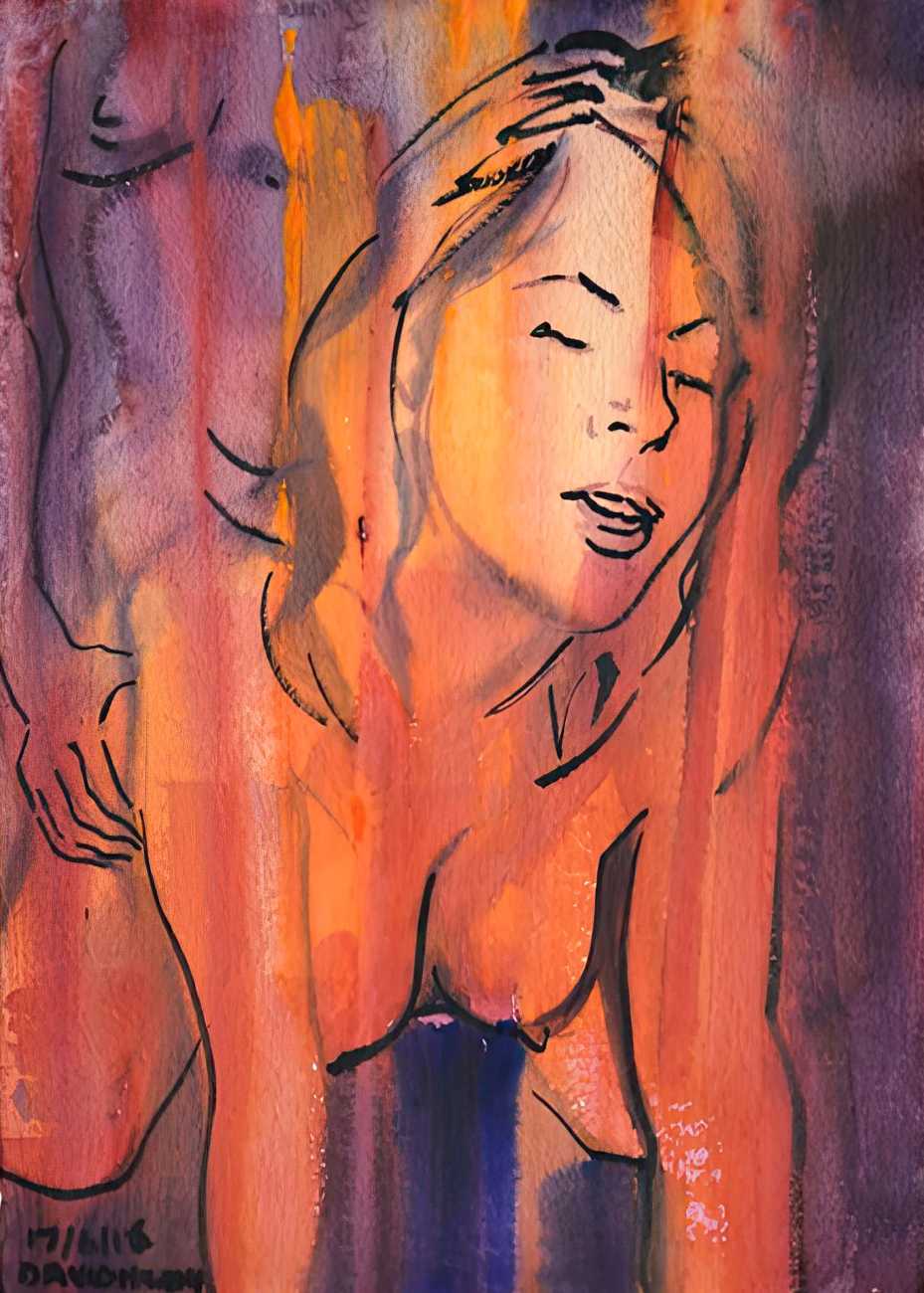
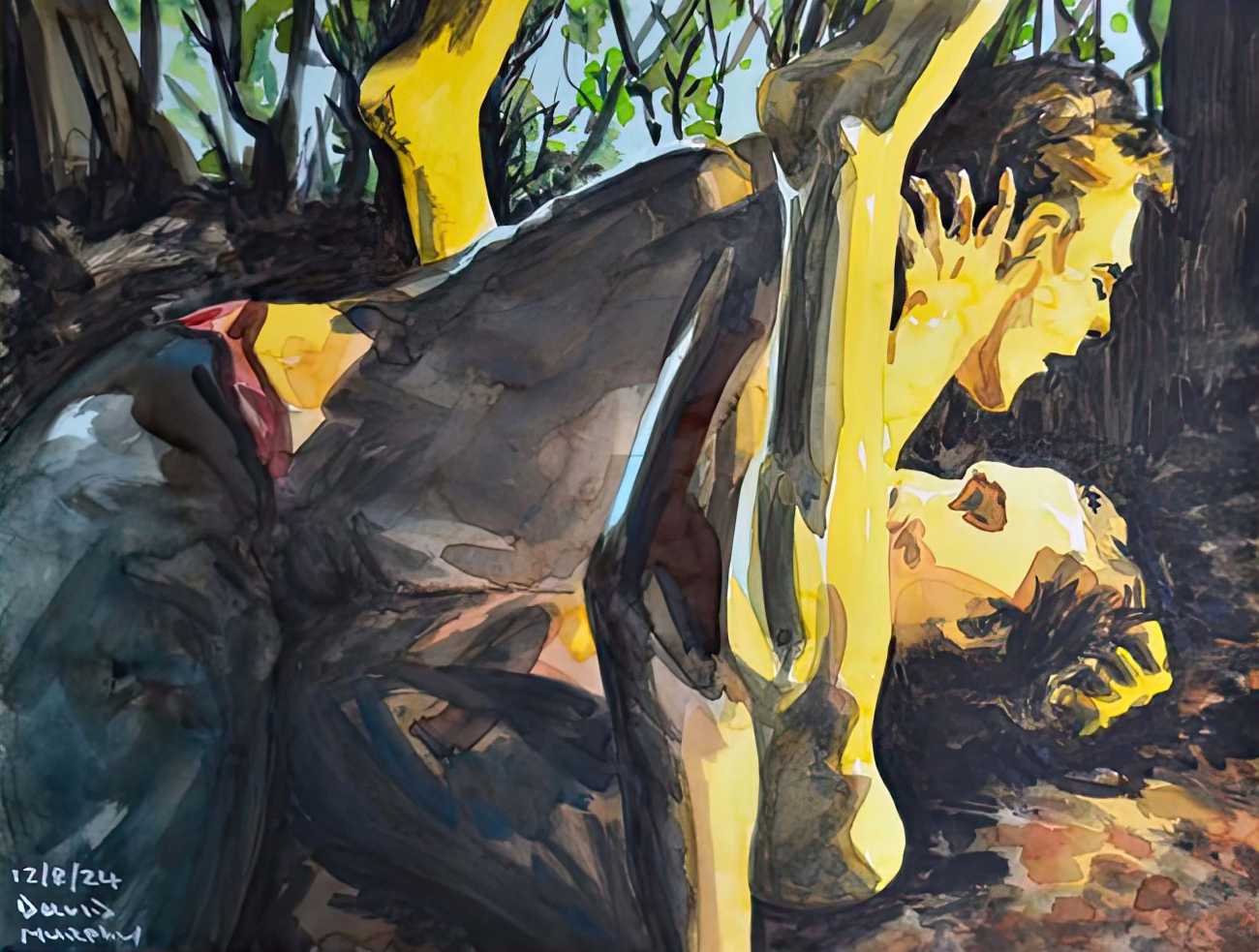
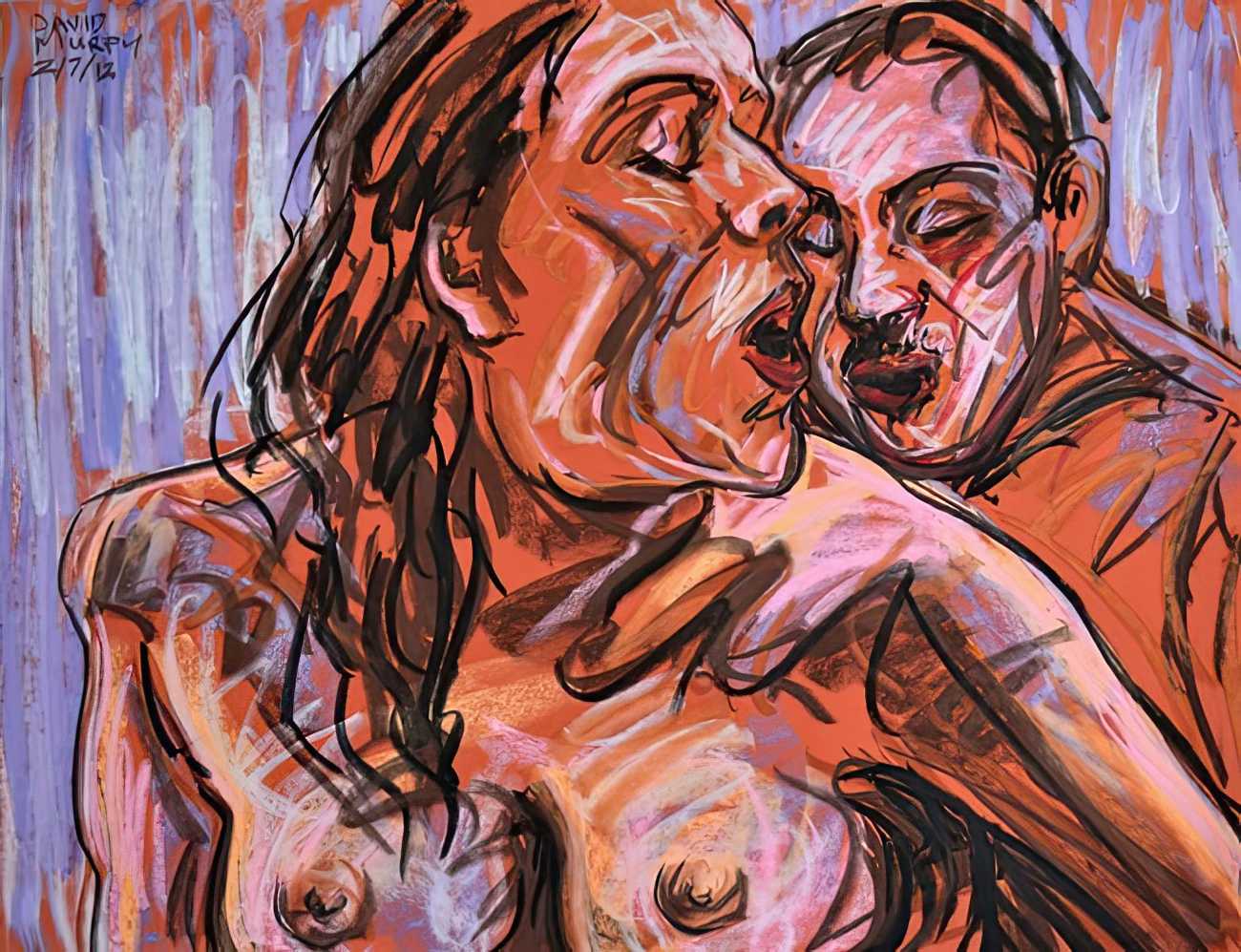
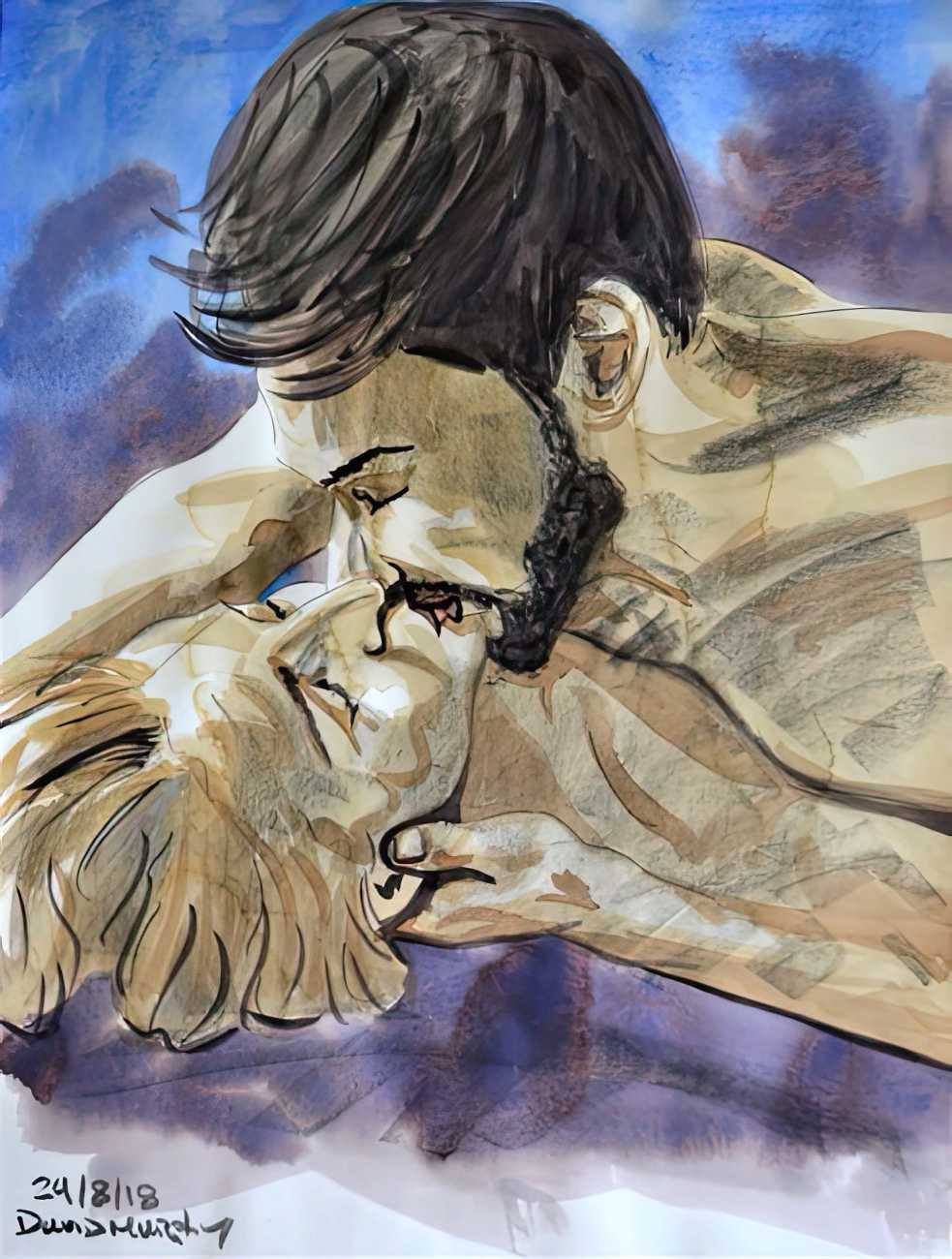
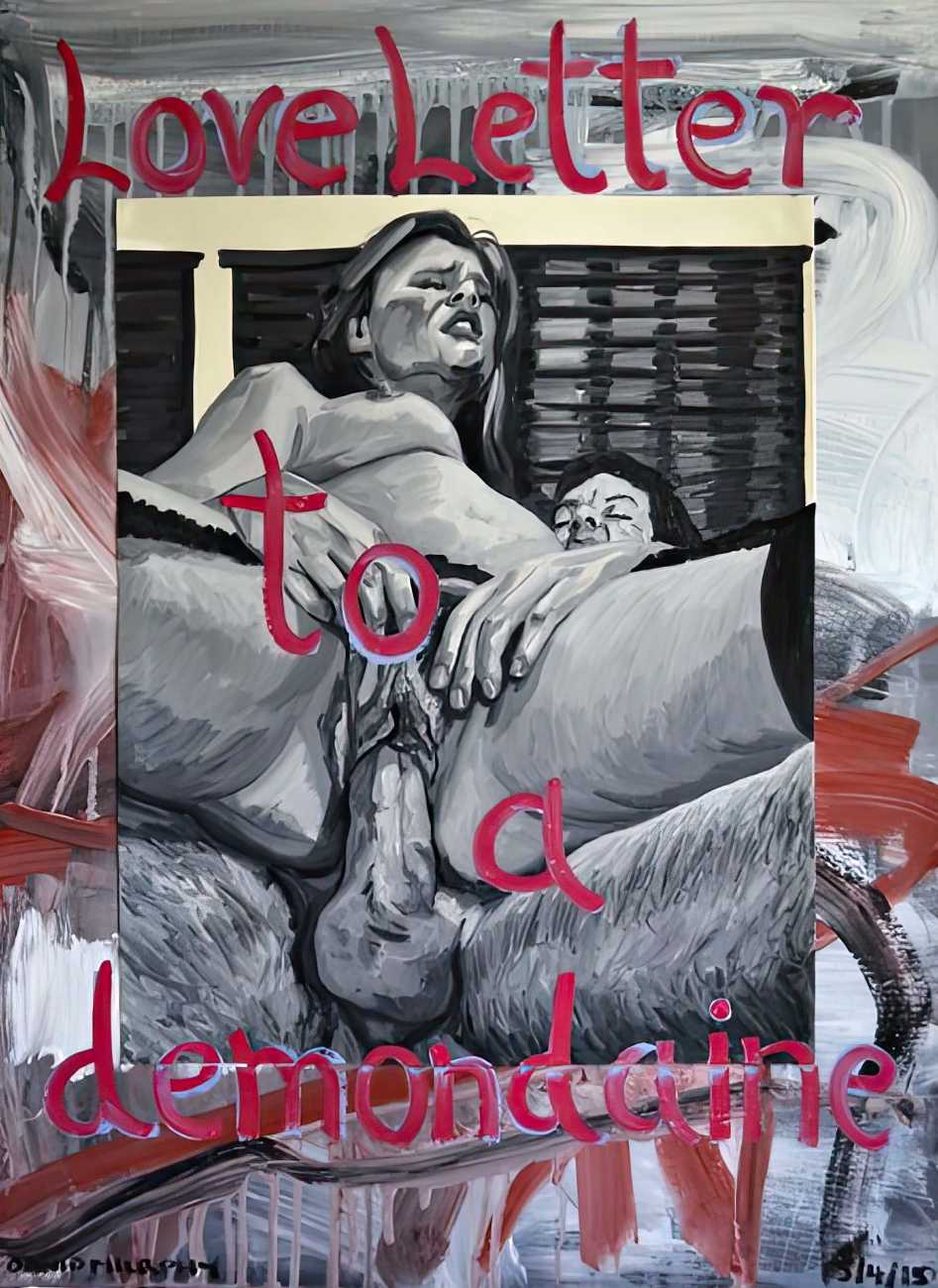
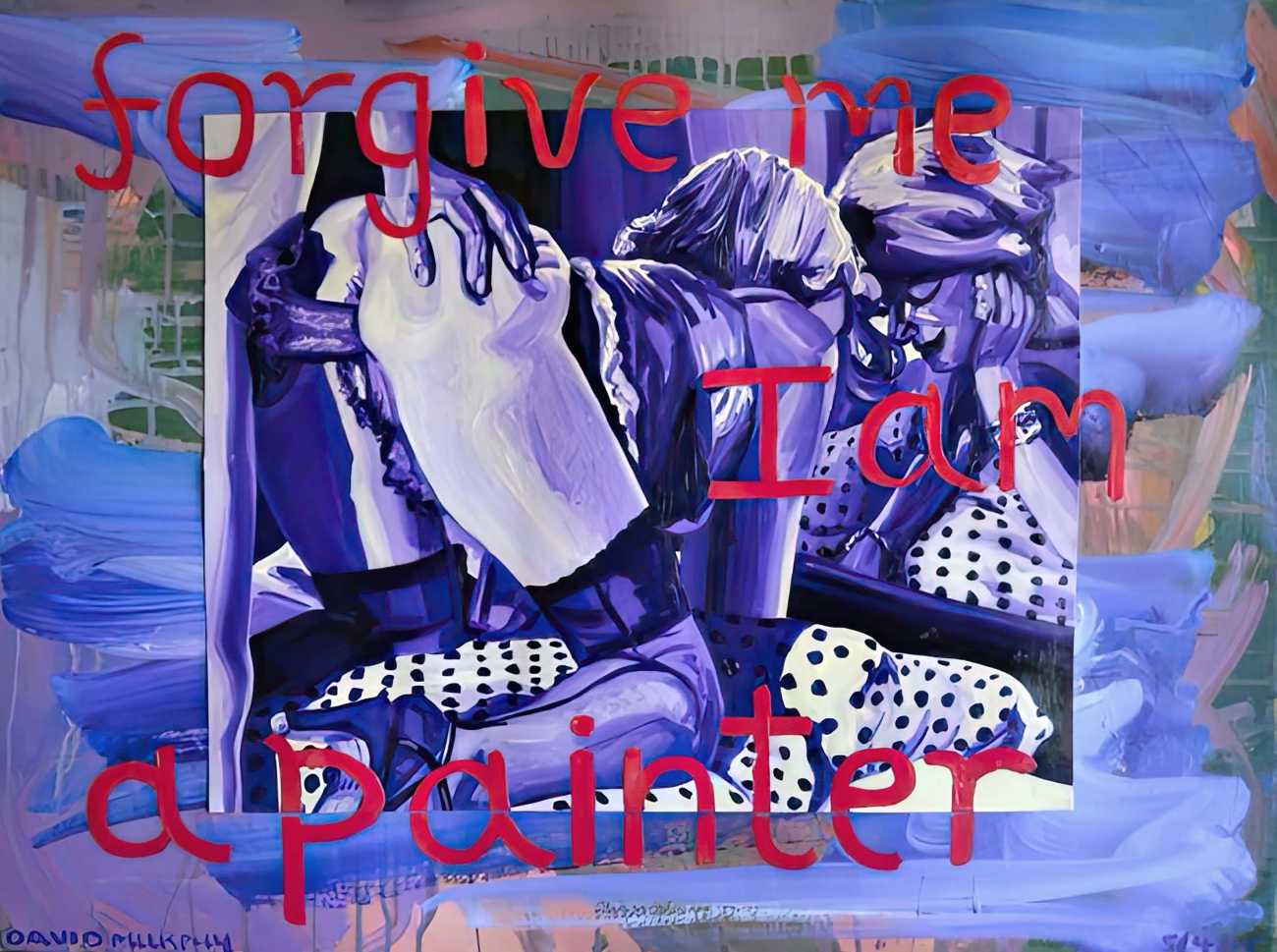
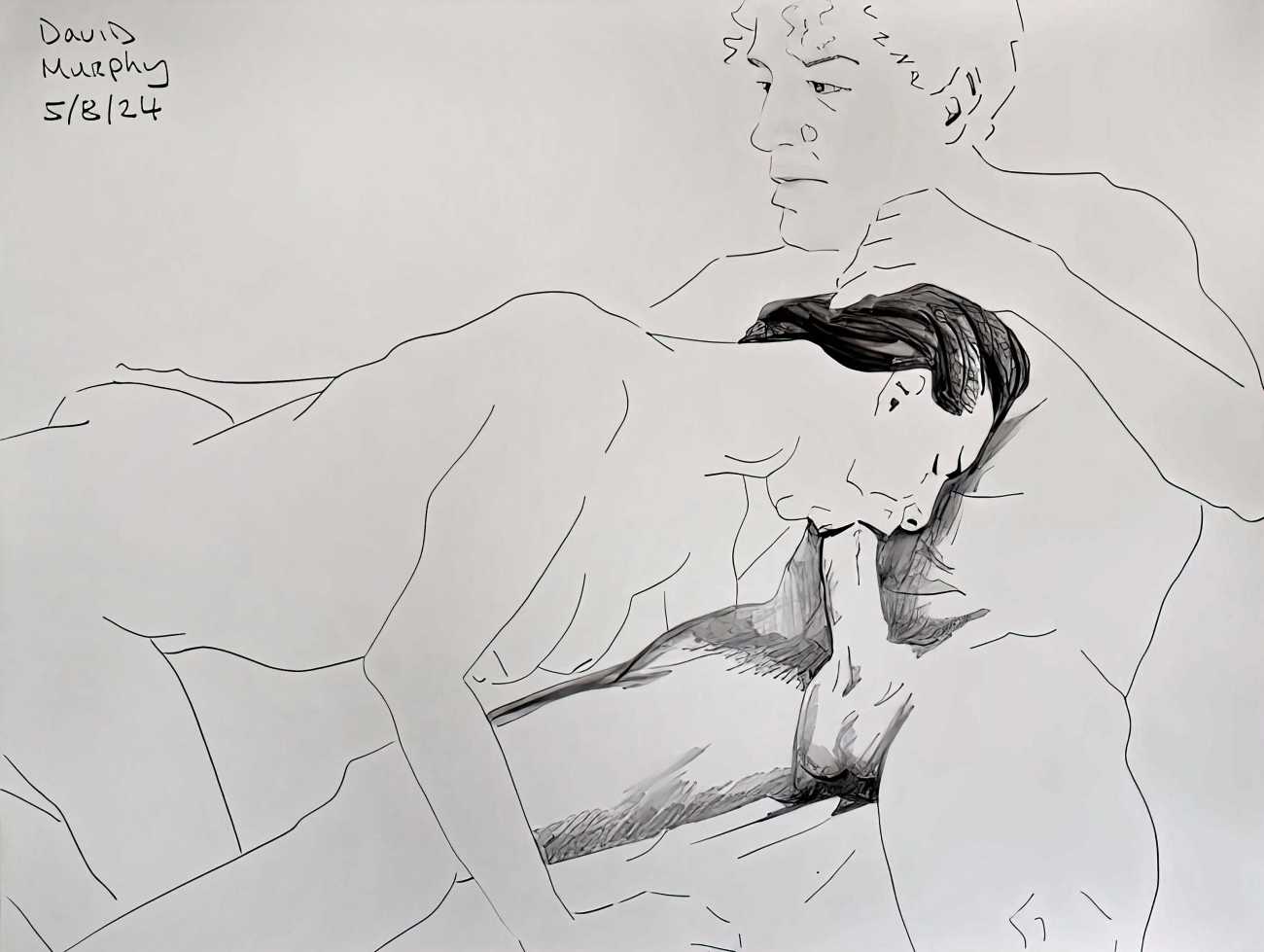
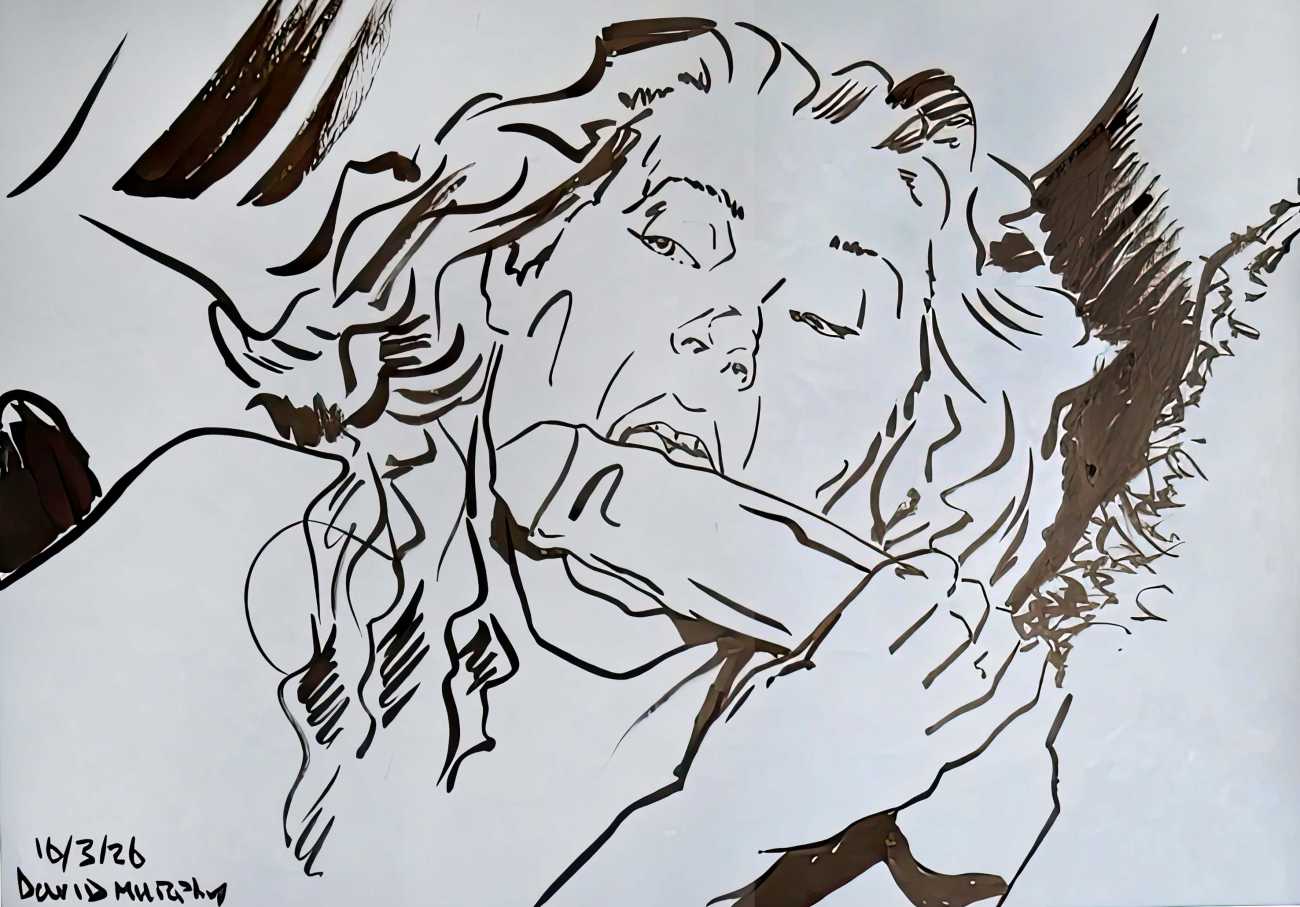
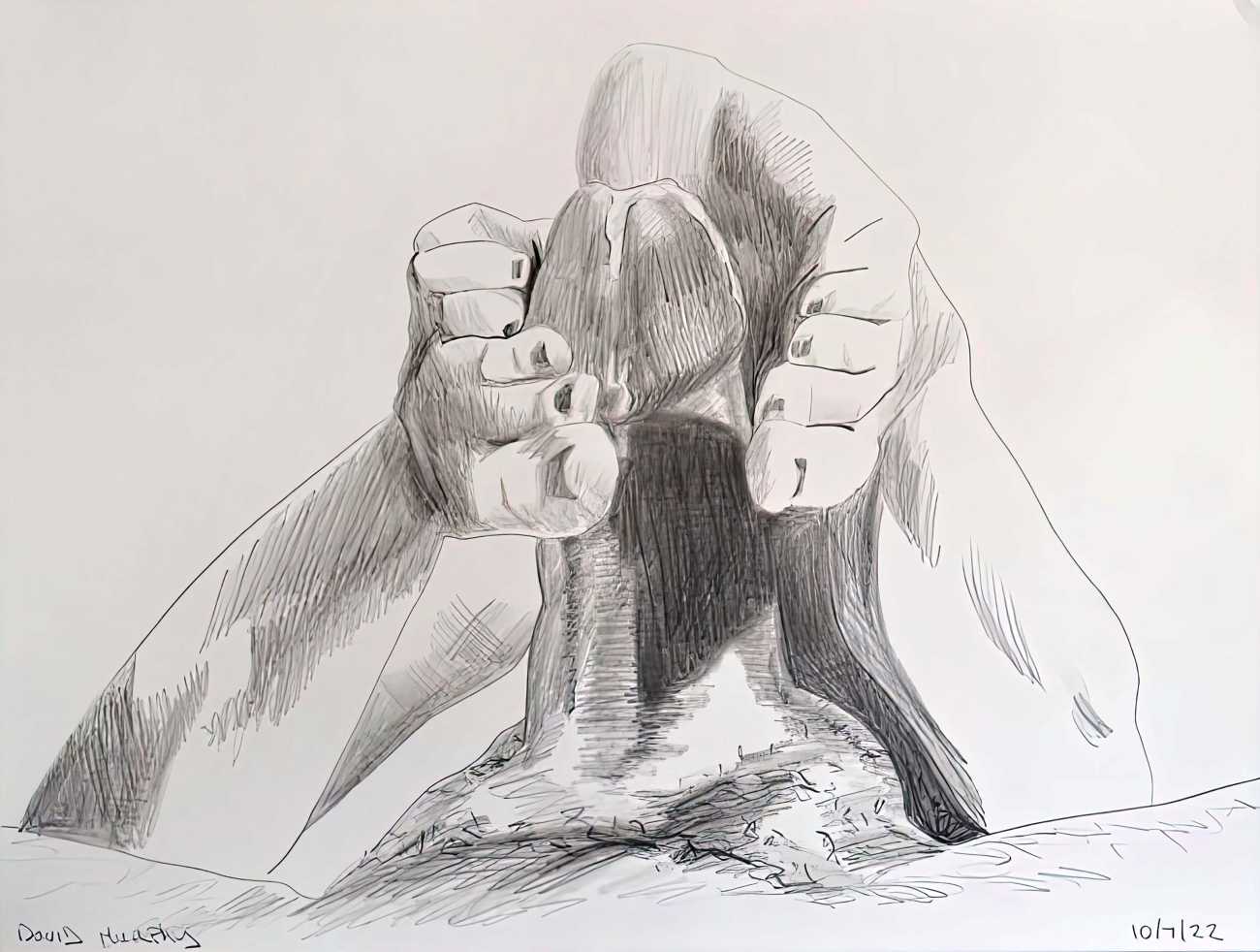
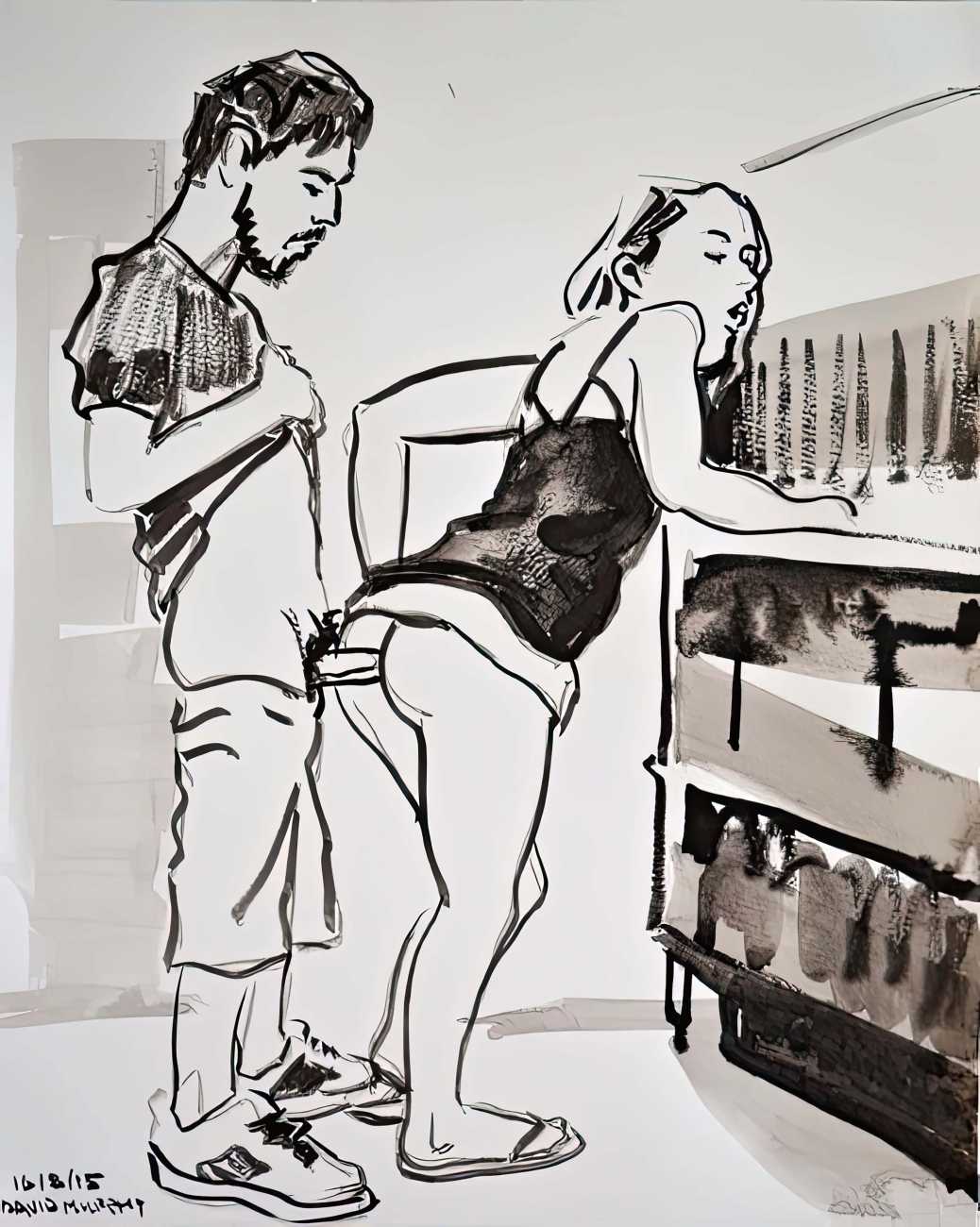
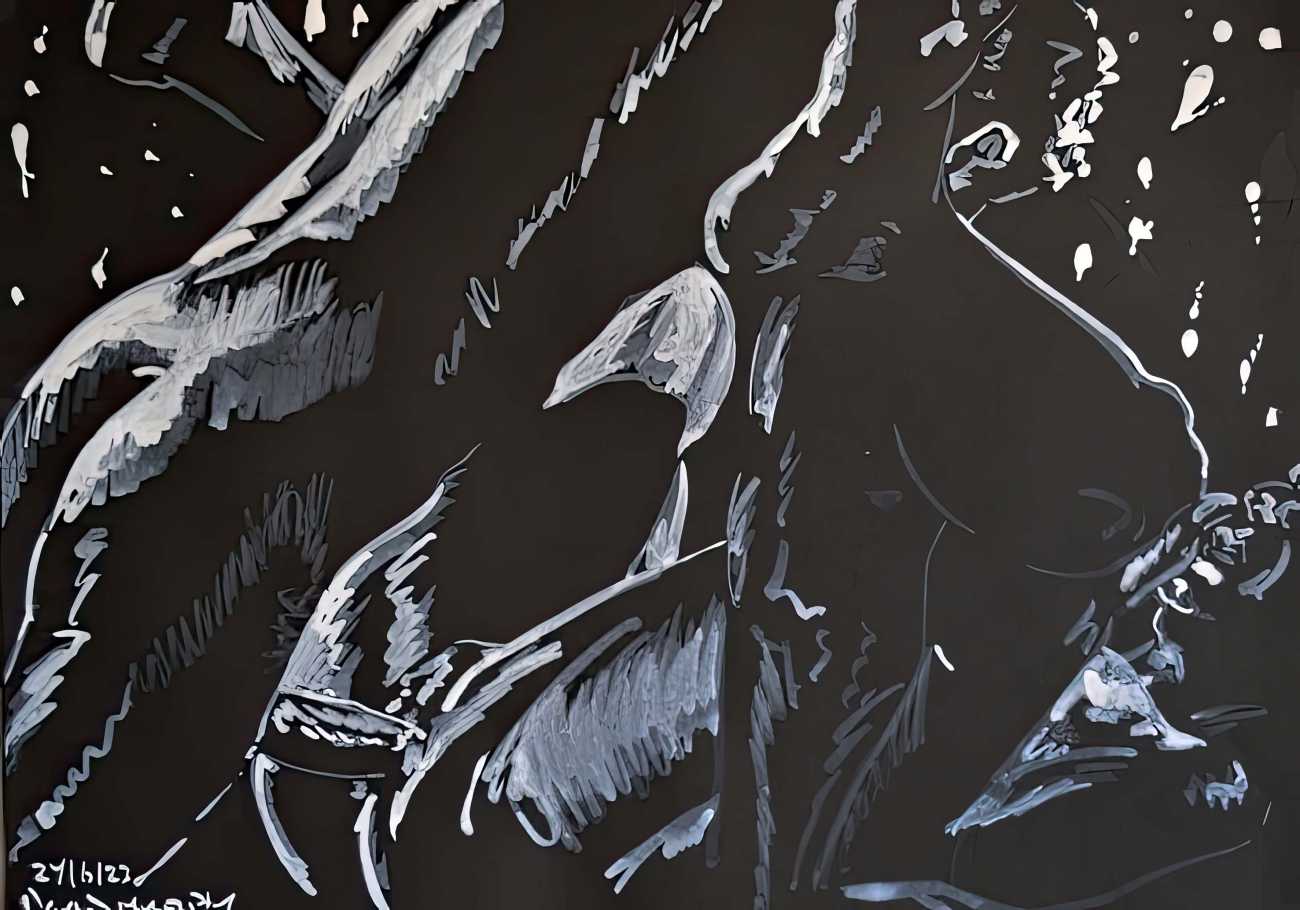
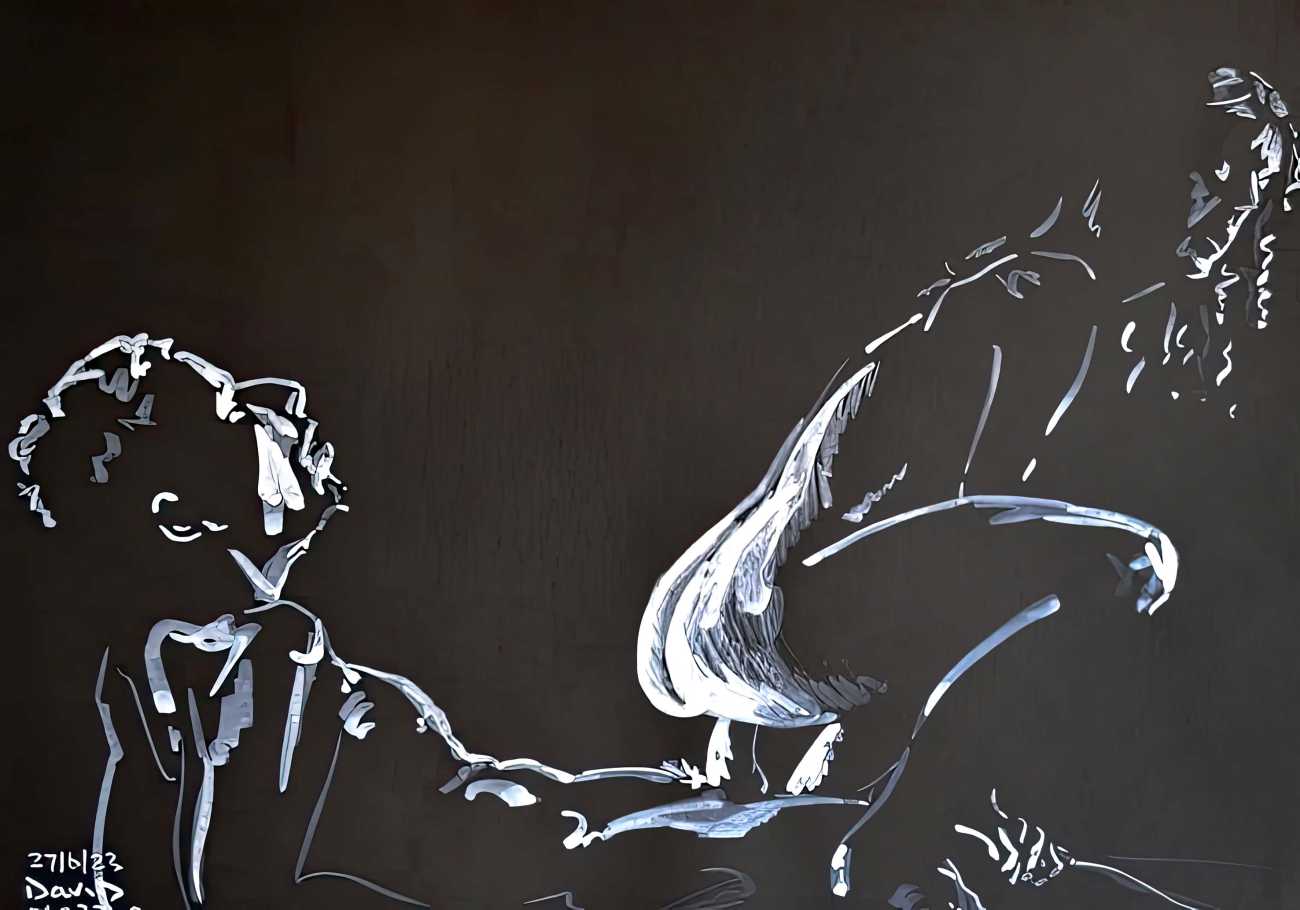
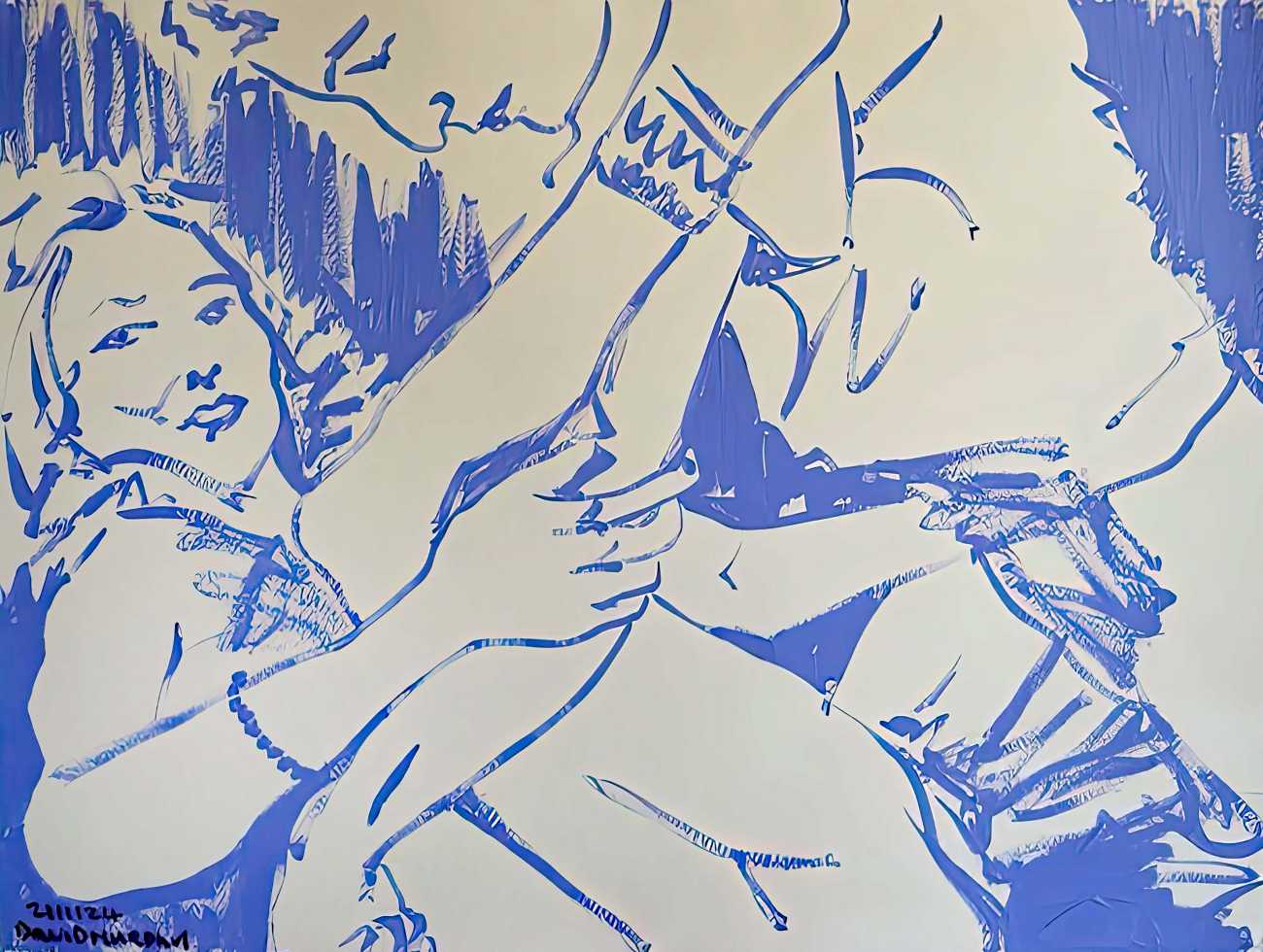
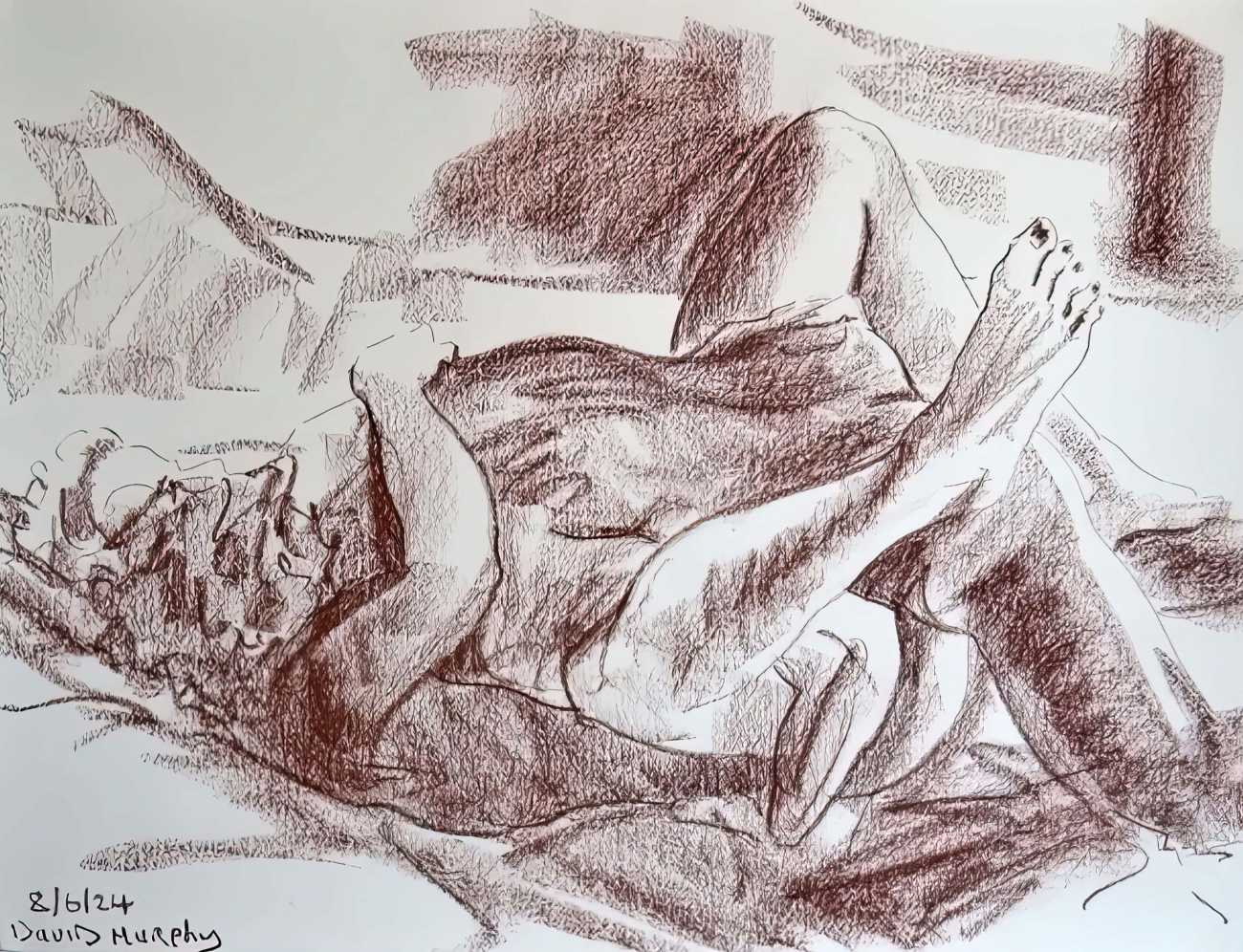
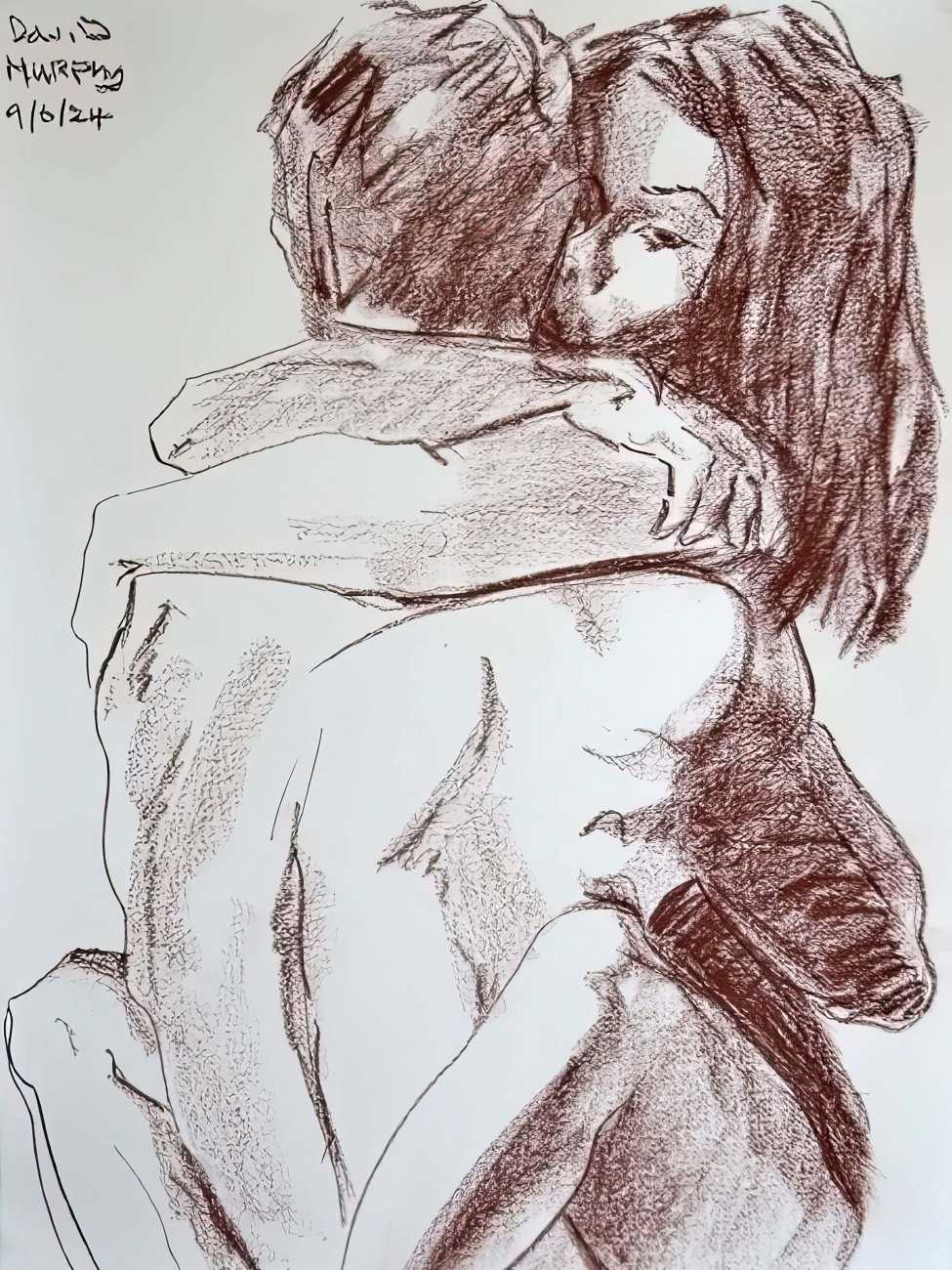
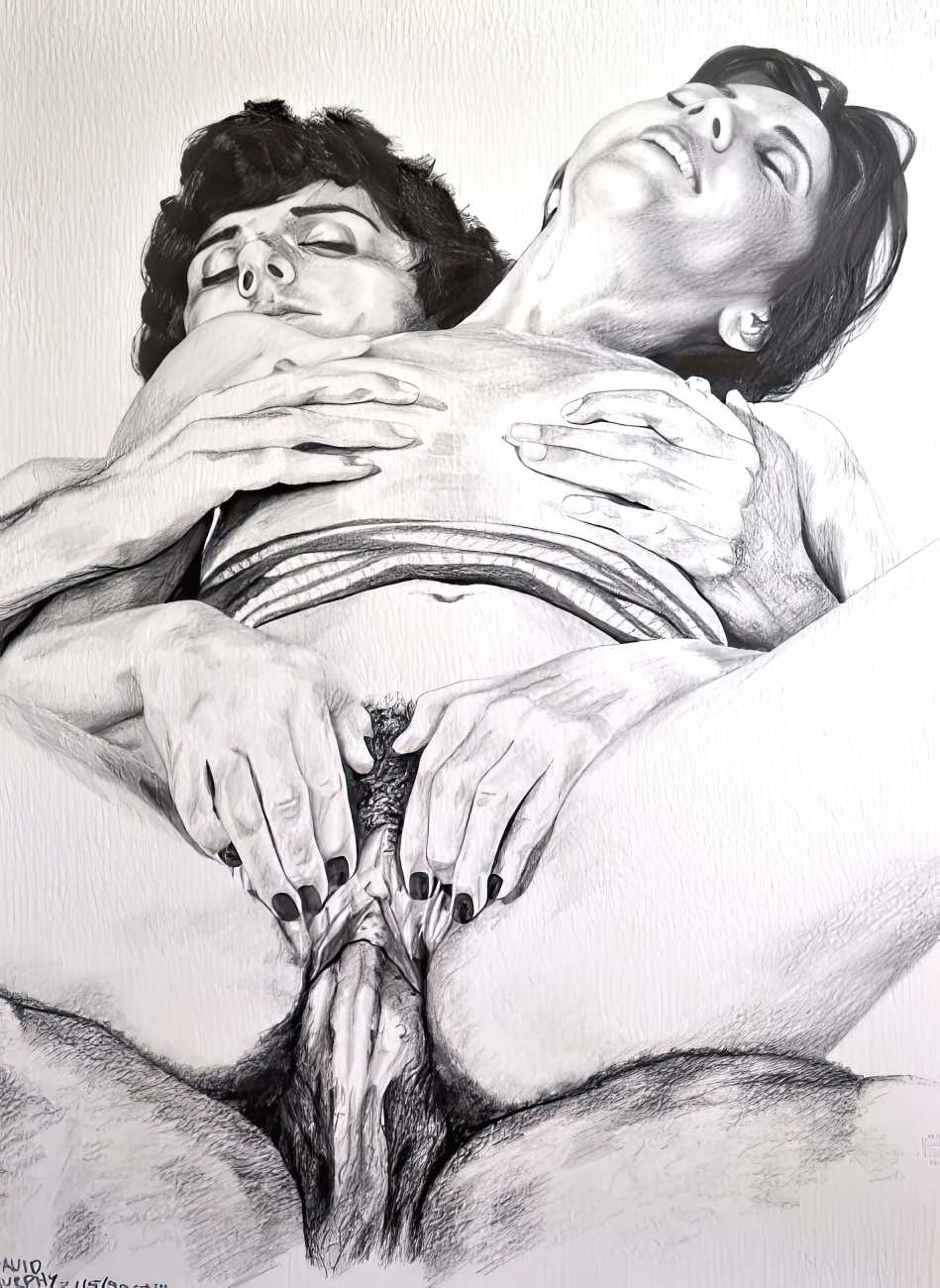
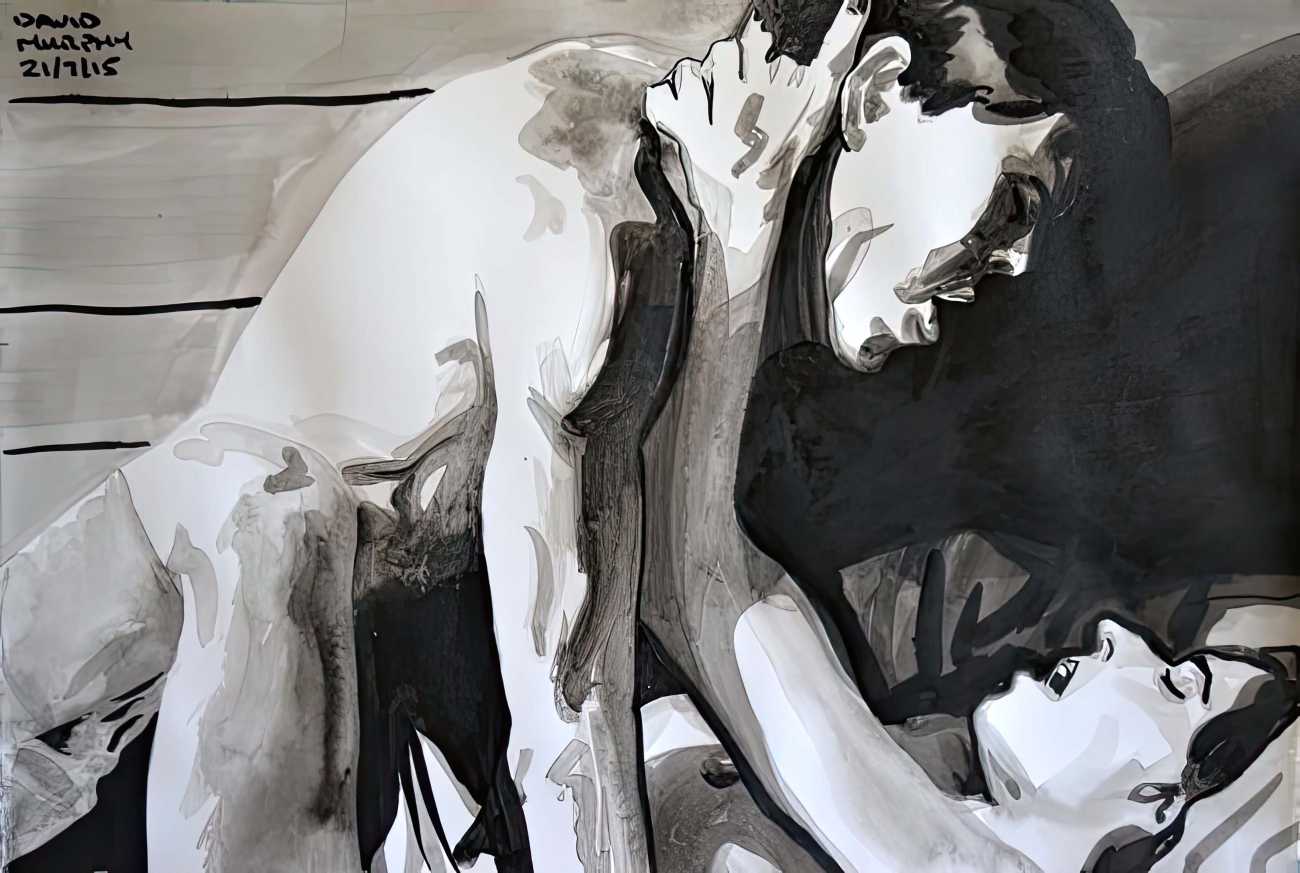
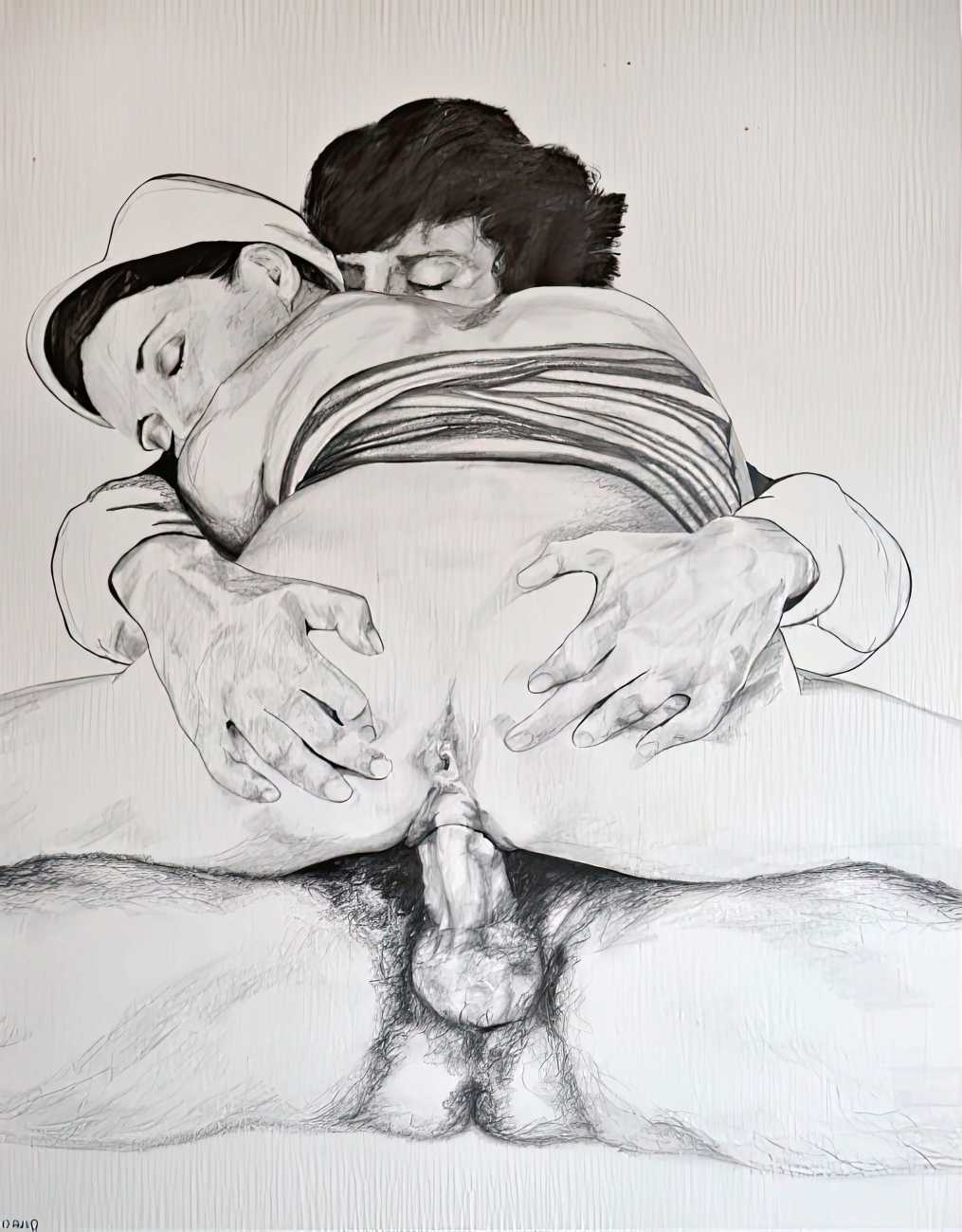
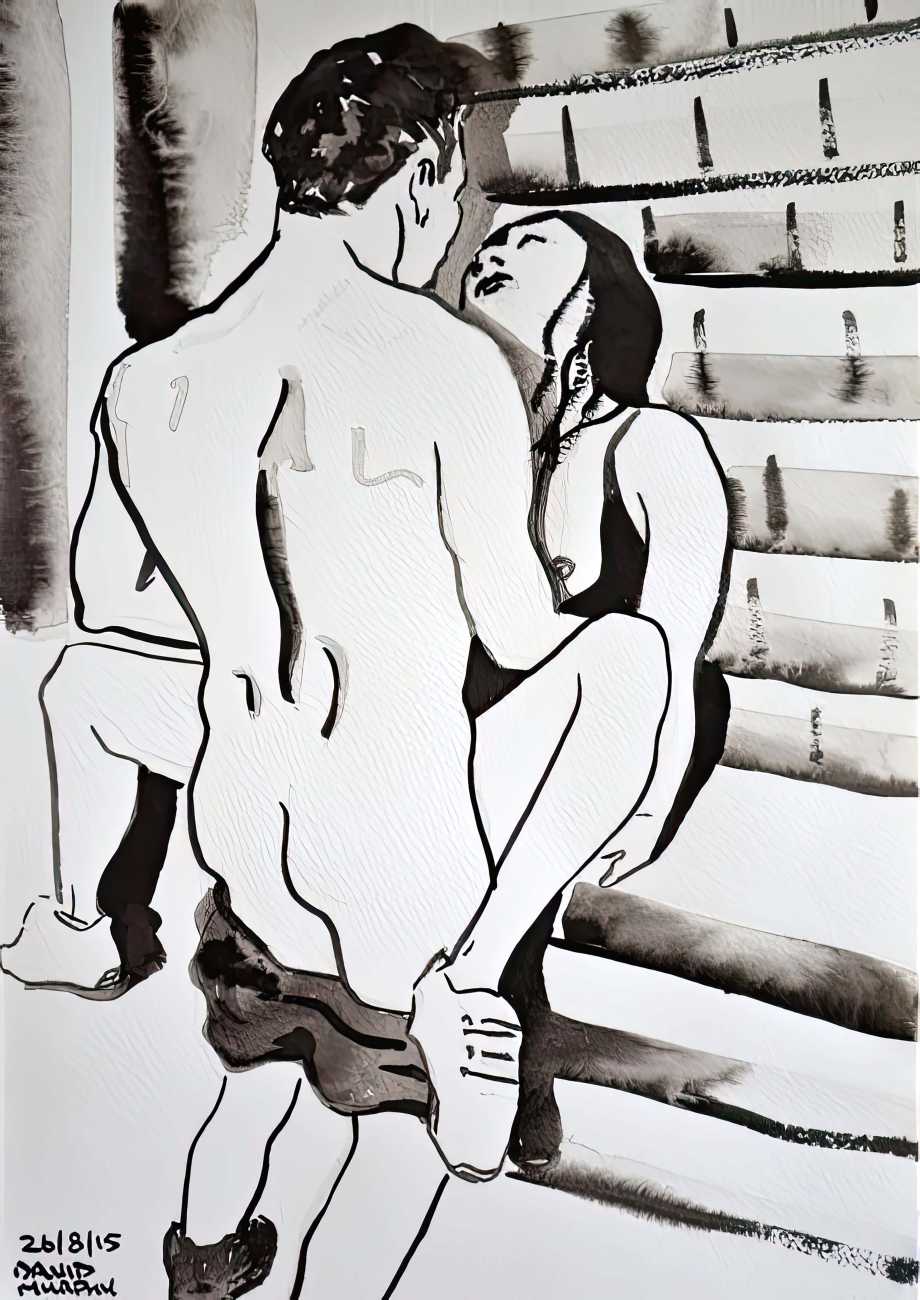
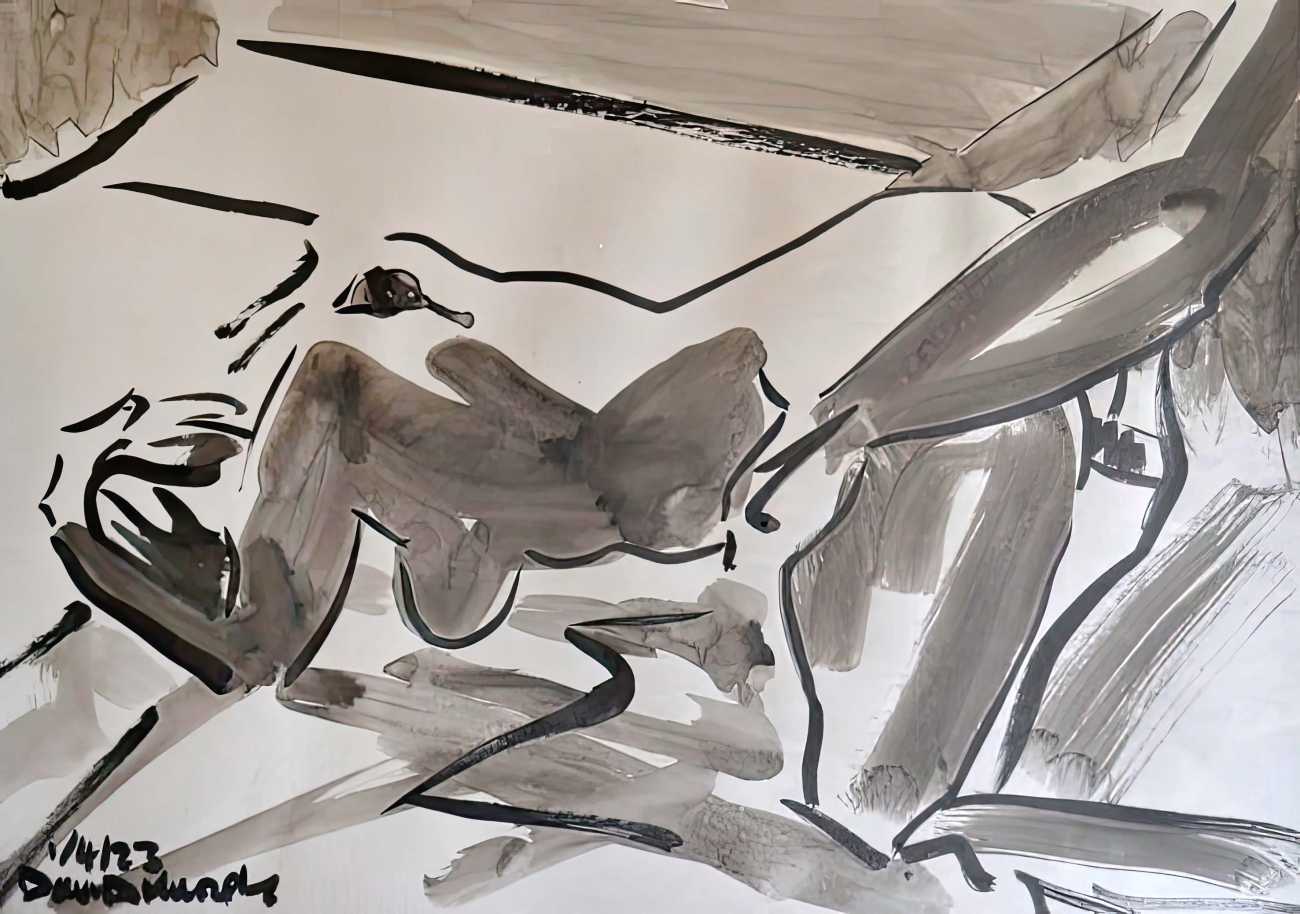
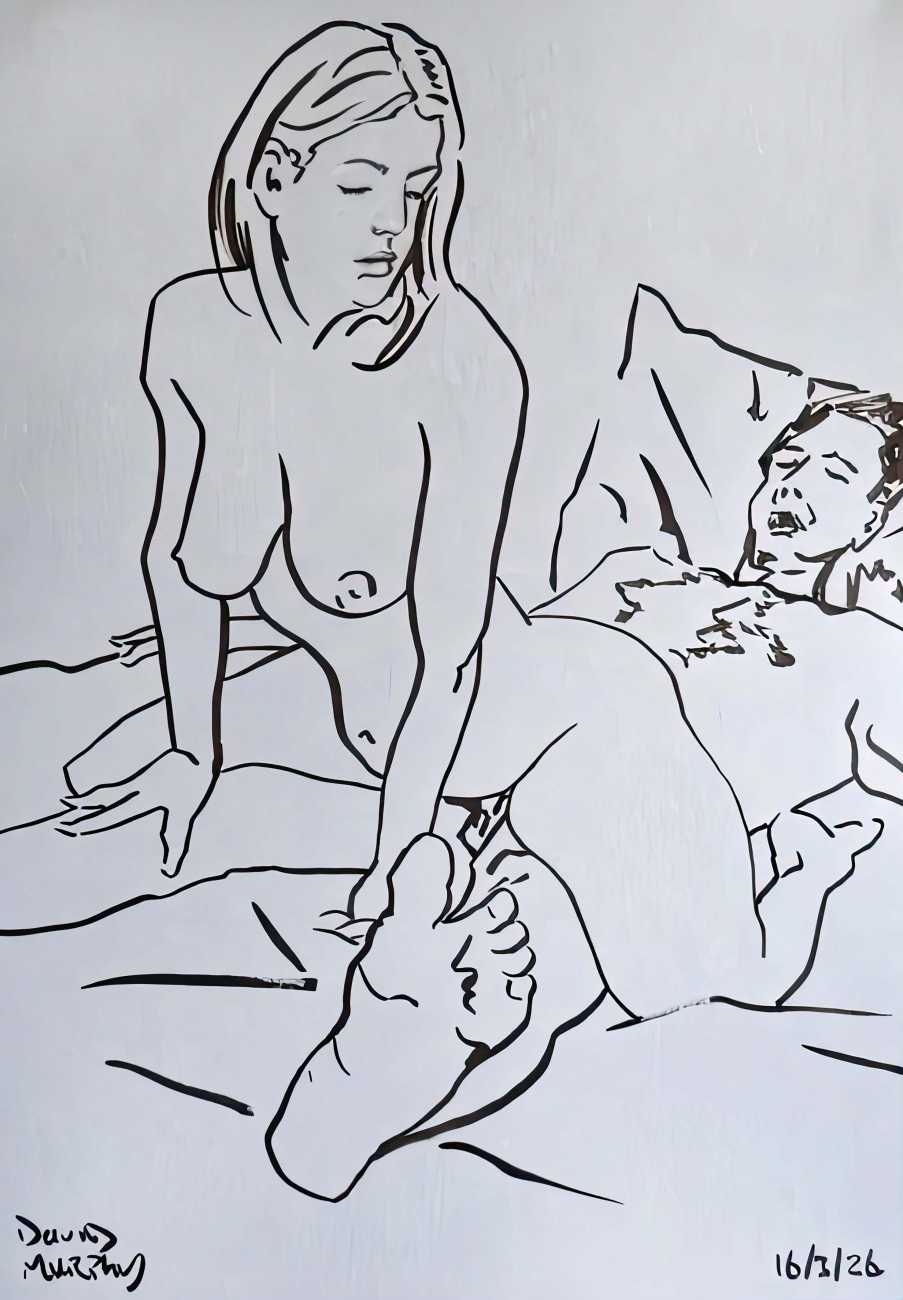
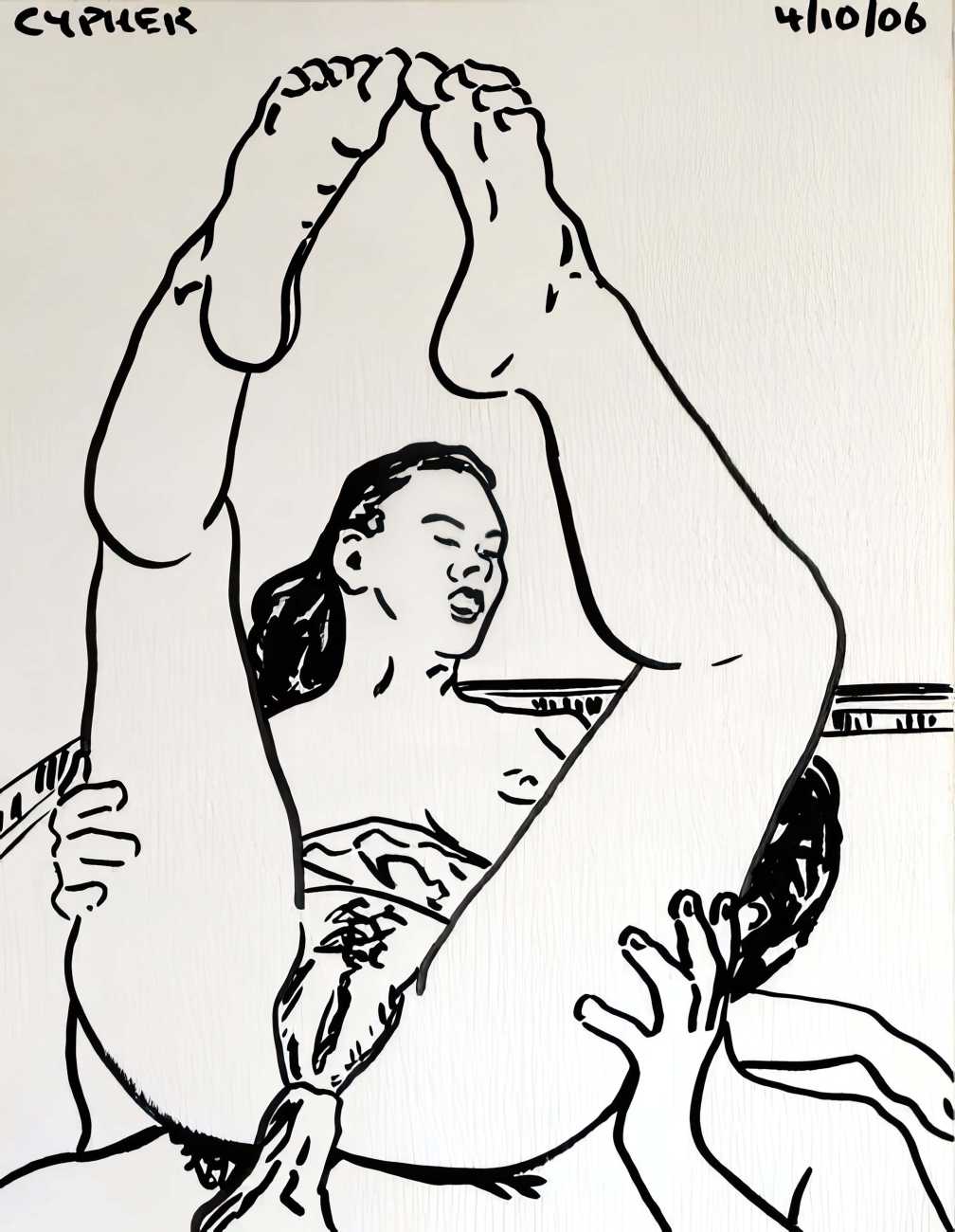
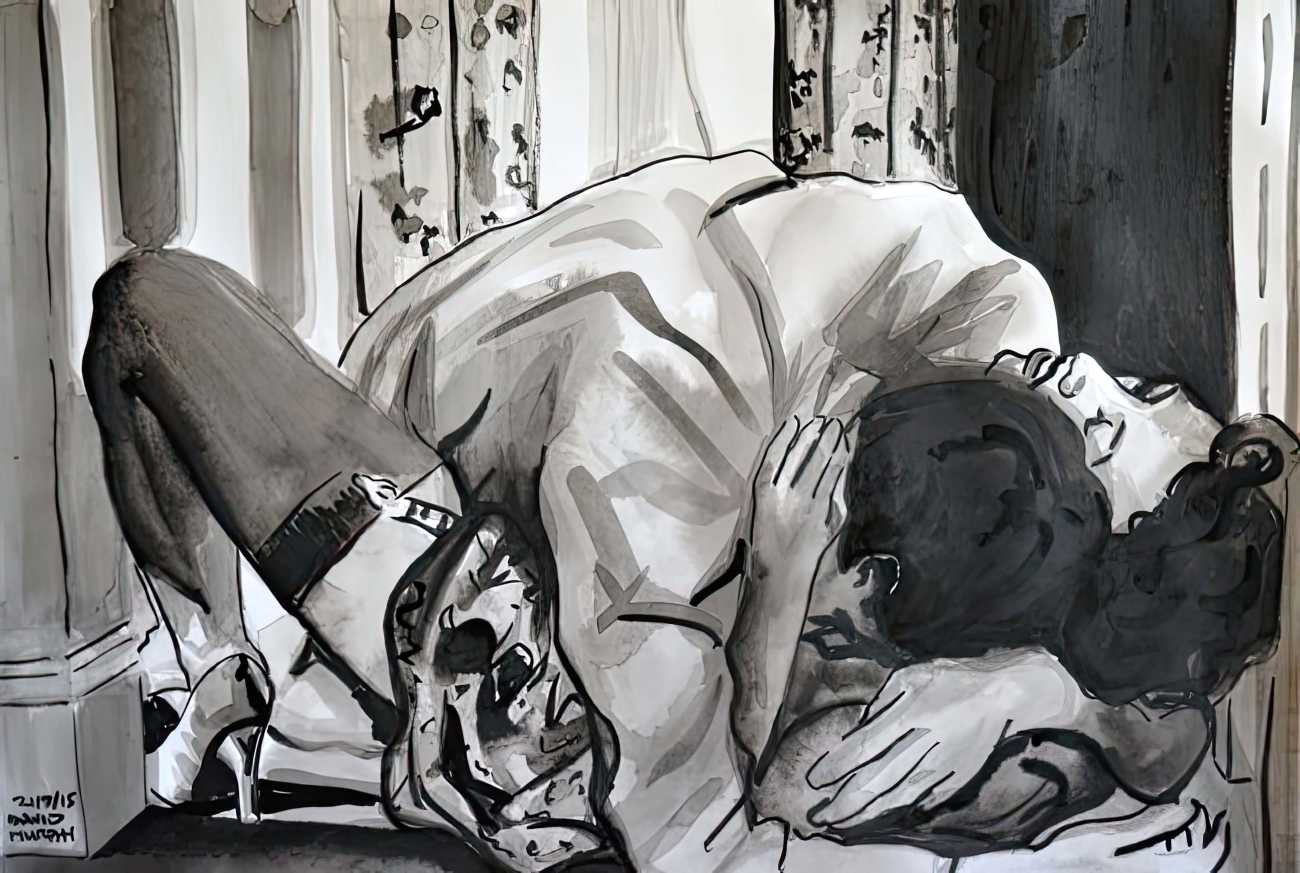
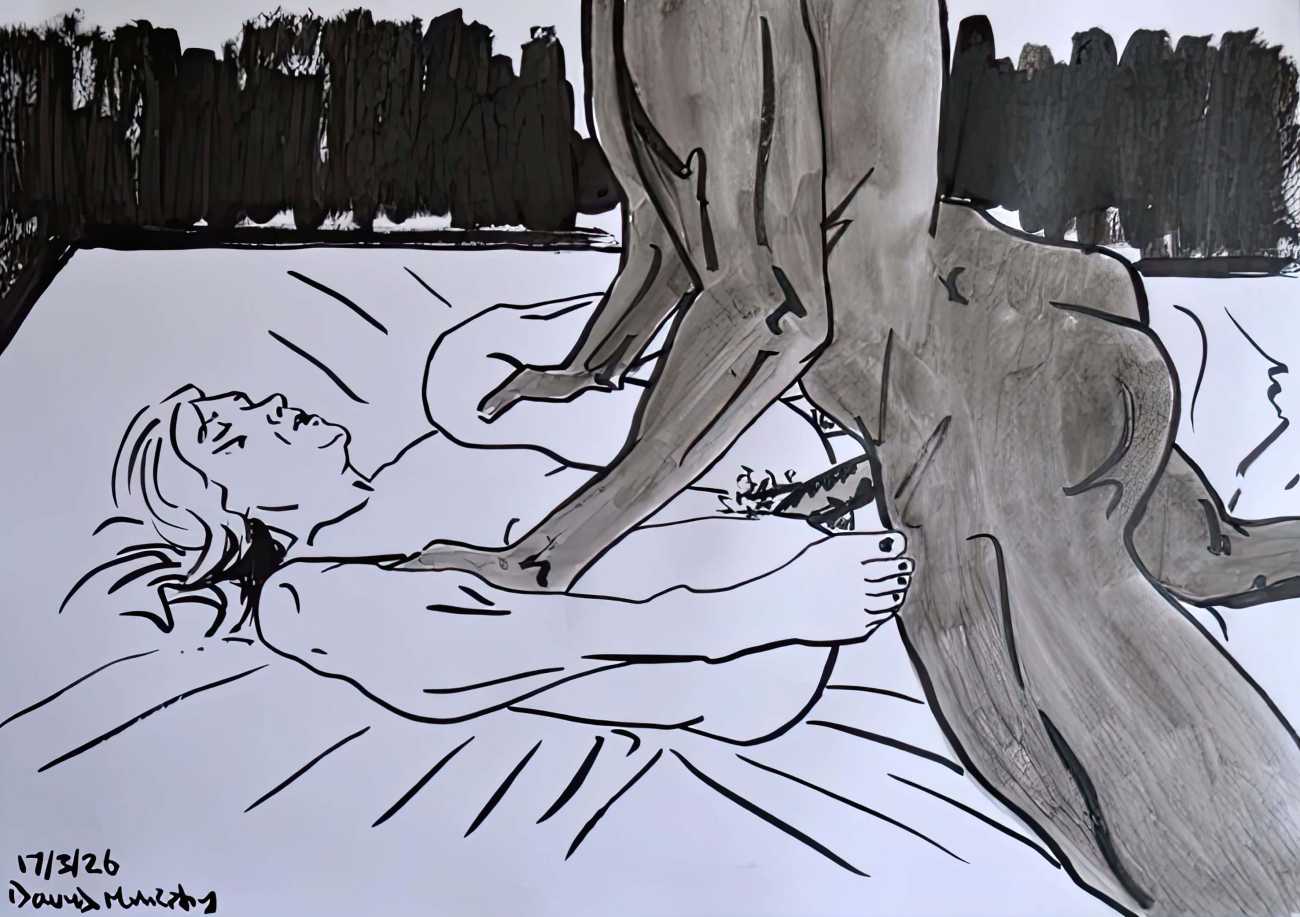
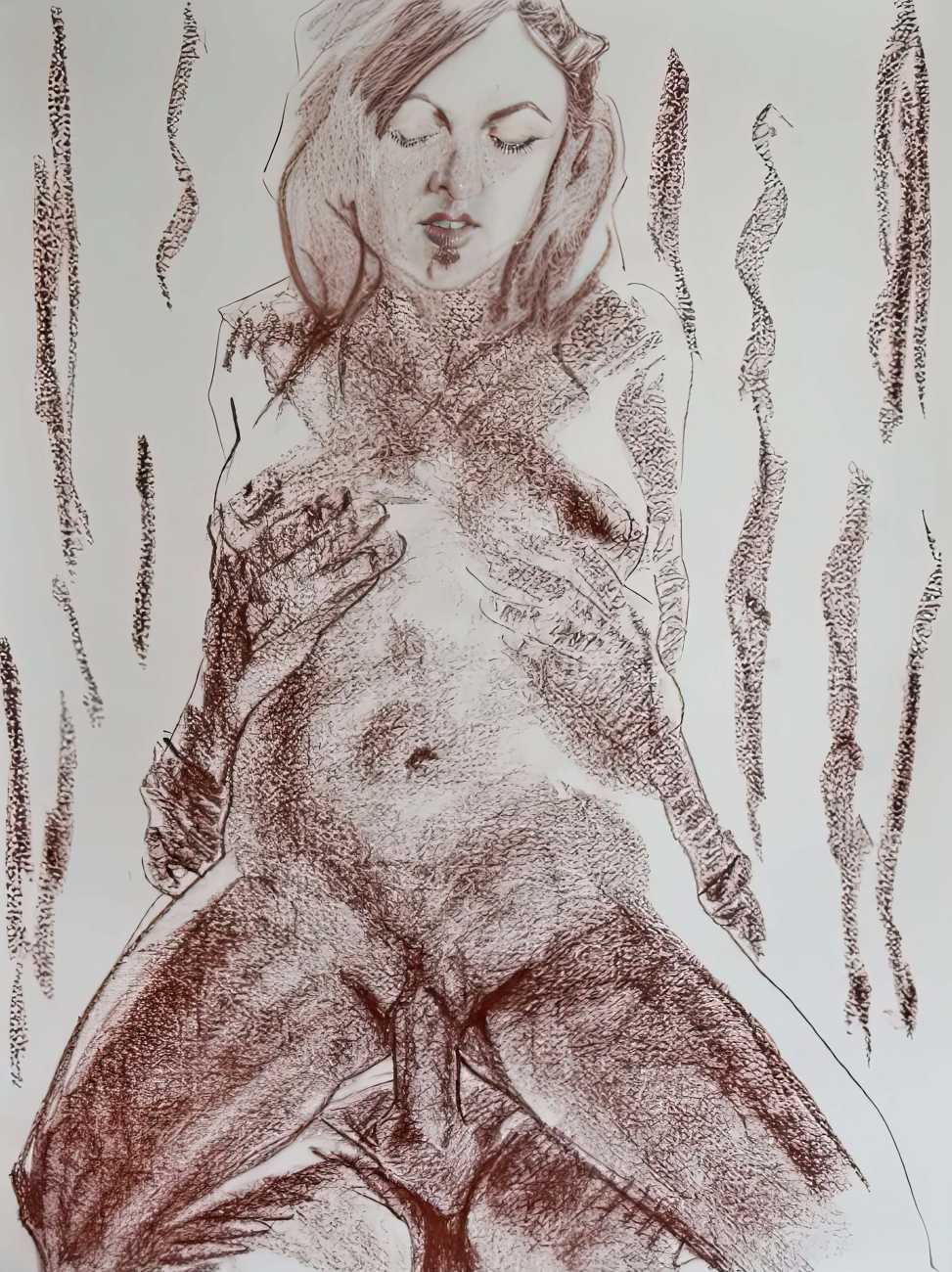
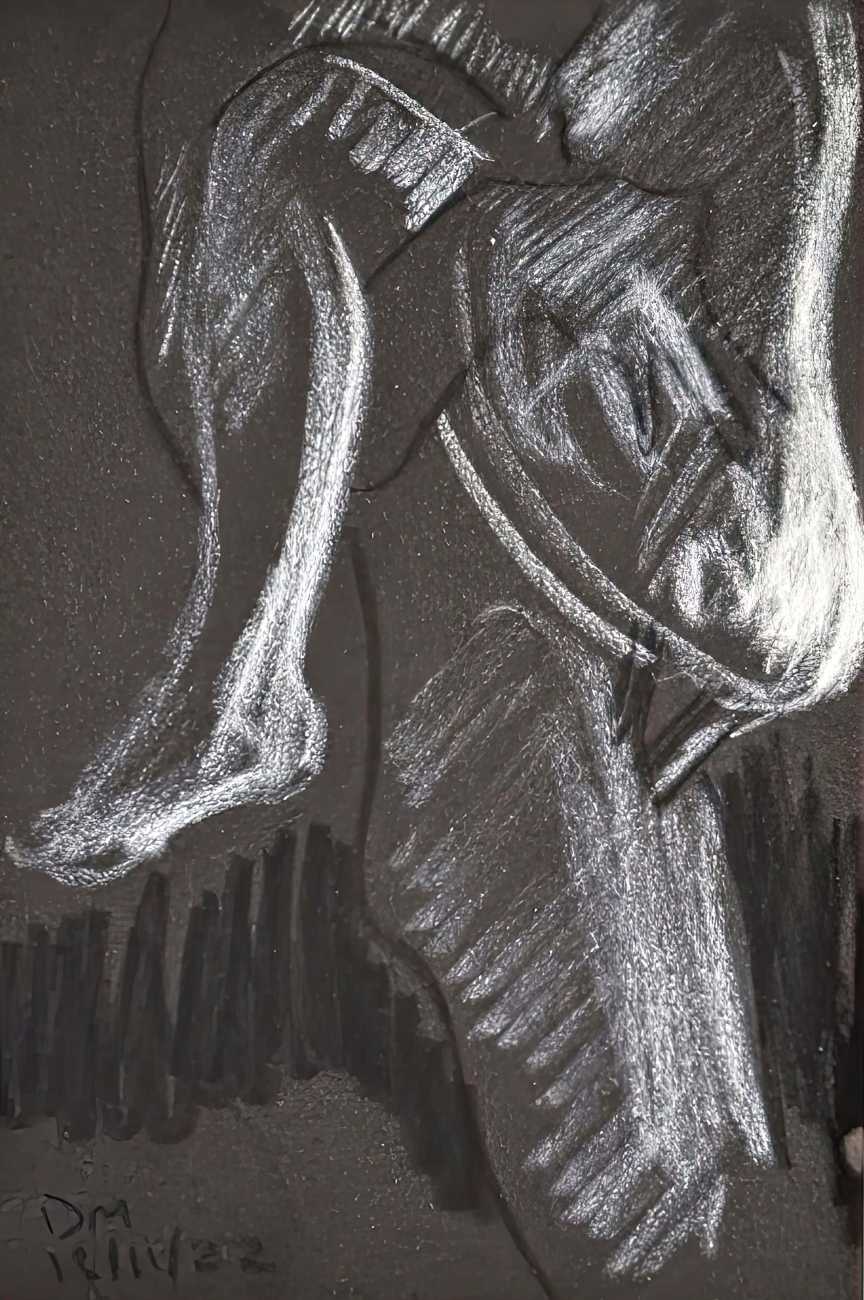
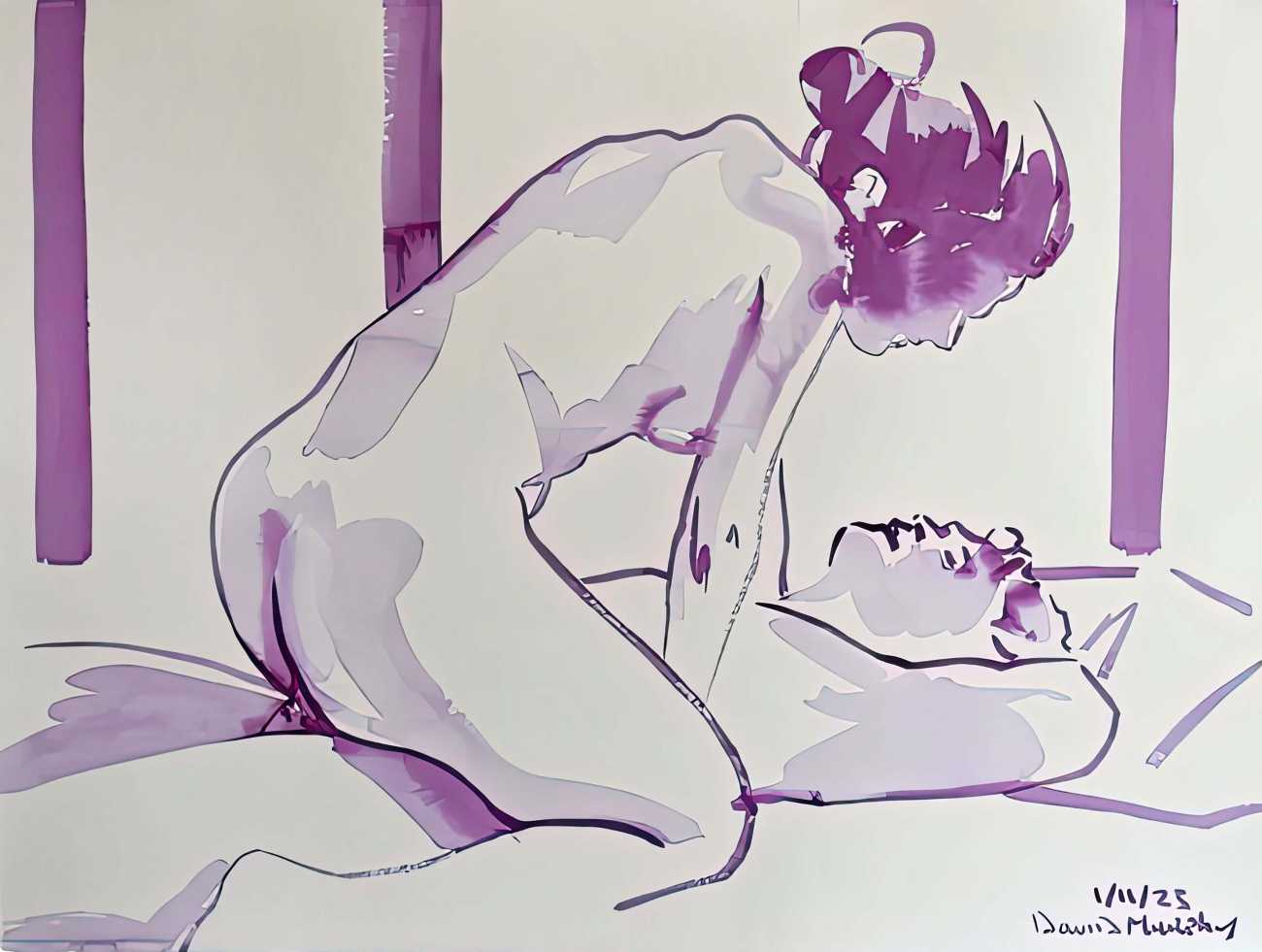
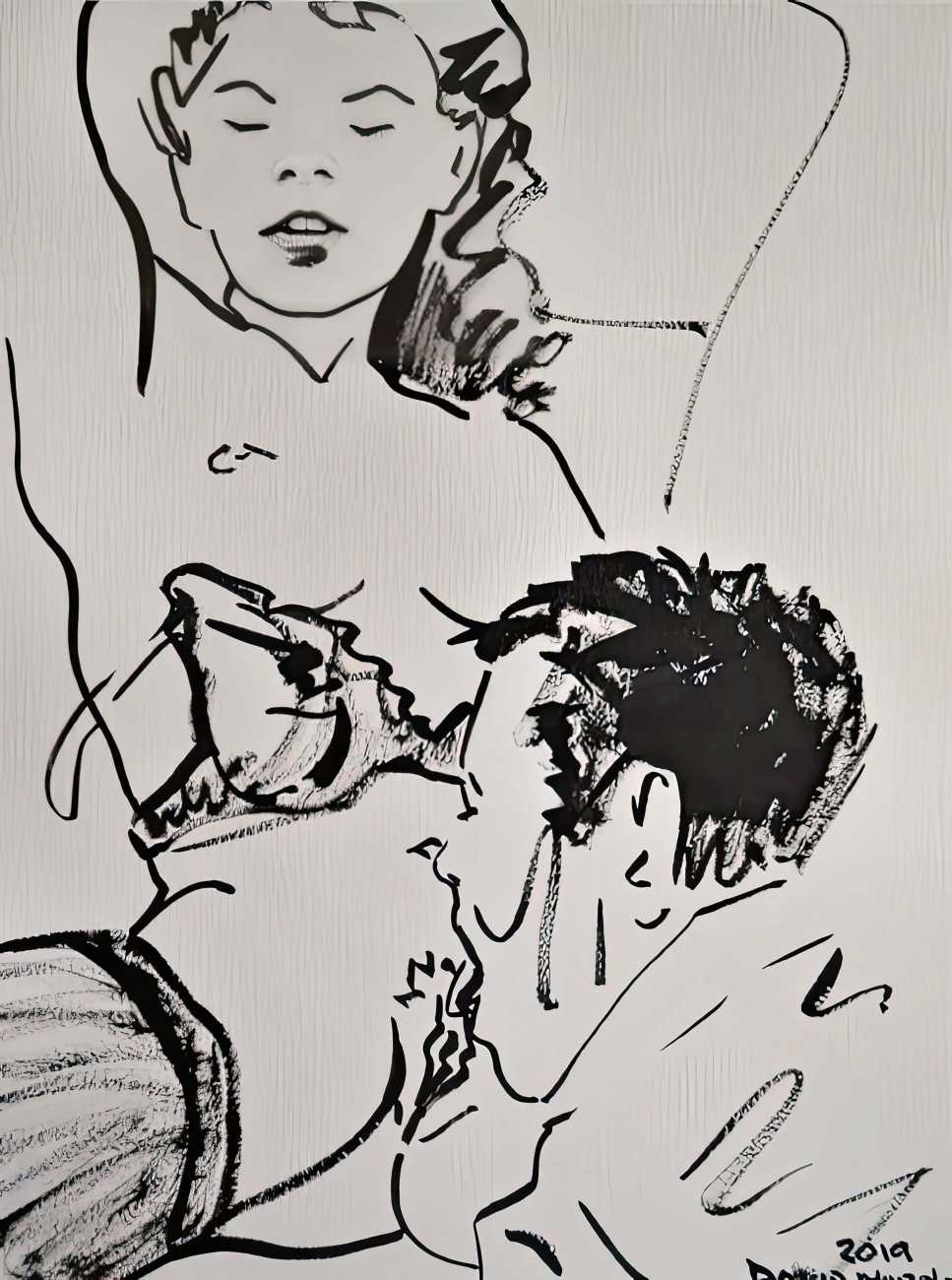
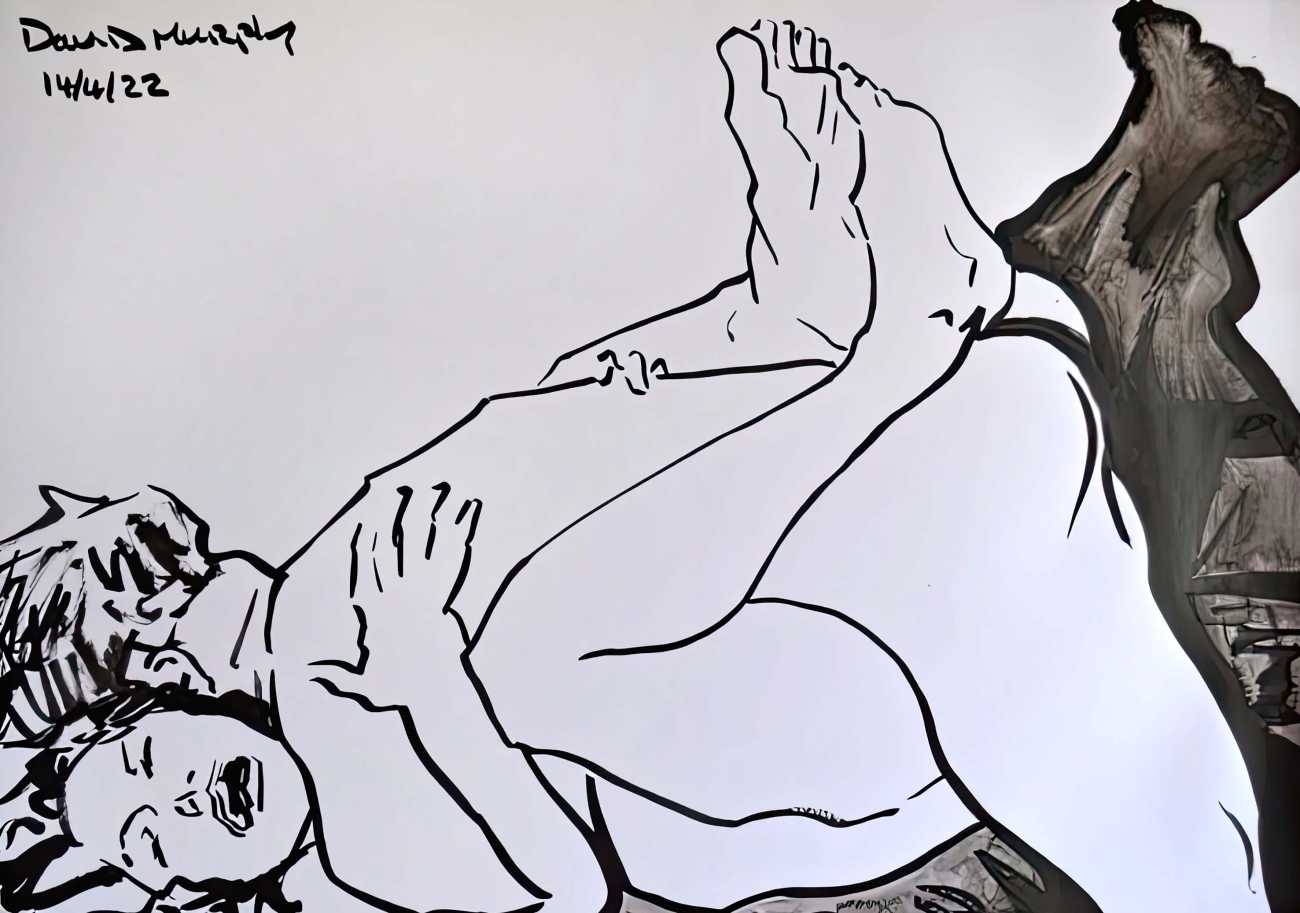
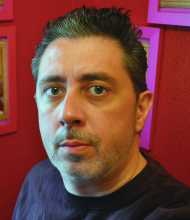
 David Brendan Murphy is an Irish expressionist painter and writer living and working in Dublin, whose intensely autobiographical work occupies an unusual position on the margins of contemporary art. Working across painting and drawing, Murphy has explored self-portraiture, the naked body, eroticism, landscape, abstraction and text, drawing on romanticism, realism, expressionism and outsider art. His artistic heroes include Picasso, van Gogh, Schiele, Kirchner, de Kooning, Lucian Freud and Rembrandt.
Murphy began painting seriously at the age of ten. His formal art education was intermittent – as a teenager he studied watercolour and oil painting with private tutors, later attending life drawing and painting classes at the National College of Art and Design and other Dublin institutions. He also spent a year at Dún Laoghaire College of Art and Design, having been accepted on the basis of his exceptional talent. Much of his subsequent development, however, took place independently.
Murphy’s art is inseparable from his experience of growing up in Ireland. He has described his work as a rebellion against the religious, socially conservative and sexually repressive culture of the Ireland of his childhood and youth. Painting became a means of addressing isolation, alienation and desire, as well as his difficult relationship with the world around him. Erotic imagery consequently forms an important strand of his practice, alongside self-portraiture and other intensely personal subjects.
Photography has also played a central role. Murphy frequently works from found photographs, magazine and newspaper imagery, film stills and other mass media sources, but treats these as starting points rather than images to be copied. He transforms them through expressive manipulation of line, colour and texture. Drawing, particularly brush and Indian ink, has remained central to his practice, while his paintings employ watercolour, acrylic, alkyd, oil, pastels, gouache, oil-stick and spray-paint alongside mixed media and collage.
Murphy’s early exhibitions included solo shows in Dublin in the 1990s, followed by two major exhibitions at the Oisín Gallery in 2000 and 2002. His work attracted attention for its sexually explicit subject matter, but his relationship with the gallery proved a painful one – constantly pressured to tone down his explicit erotic work for a more commercial audience, he underwent a prolonged identity crisis. The gallery rejected his further submissions, judging for whatever reason that there was no market for them.
By Murphy’s own reckoning, his surviving oeuvre runs to thousands of paintings and drawings. The sheer scale and variety of this body of work reflects his determination to pursue an intensely individual artistic language outside conventional expectations of style, subject and career. As he has put it, there is no separation between his art and his life – both continually feed into the other.
David Murphy’s website is here, where alongside examples of his work he includes a long and fascinating autobiography and many photographs of himself and his world.
Similar artists
Max Beckmann – German painter of distorted forms and intimate erotic scenes.
Marlene Dumas – painter probing sexuality and power with raw, gestural brushwork.
Lucian Freud – a named influence, artist of unflinching naked portraits.
Ernst Ludwig Kirchner – another named influence, a key figure of German expressionism.
Pablo Picasso – reshaped the naked body – another named influence.
Jenny Saville – British contemporary, painting the raw imperfections of naked bodies.
Egon Schiele – painter of raw, angular naked figures – a third named influence.
Example illustration