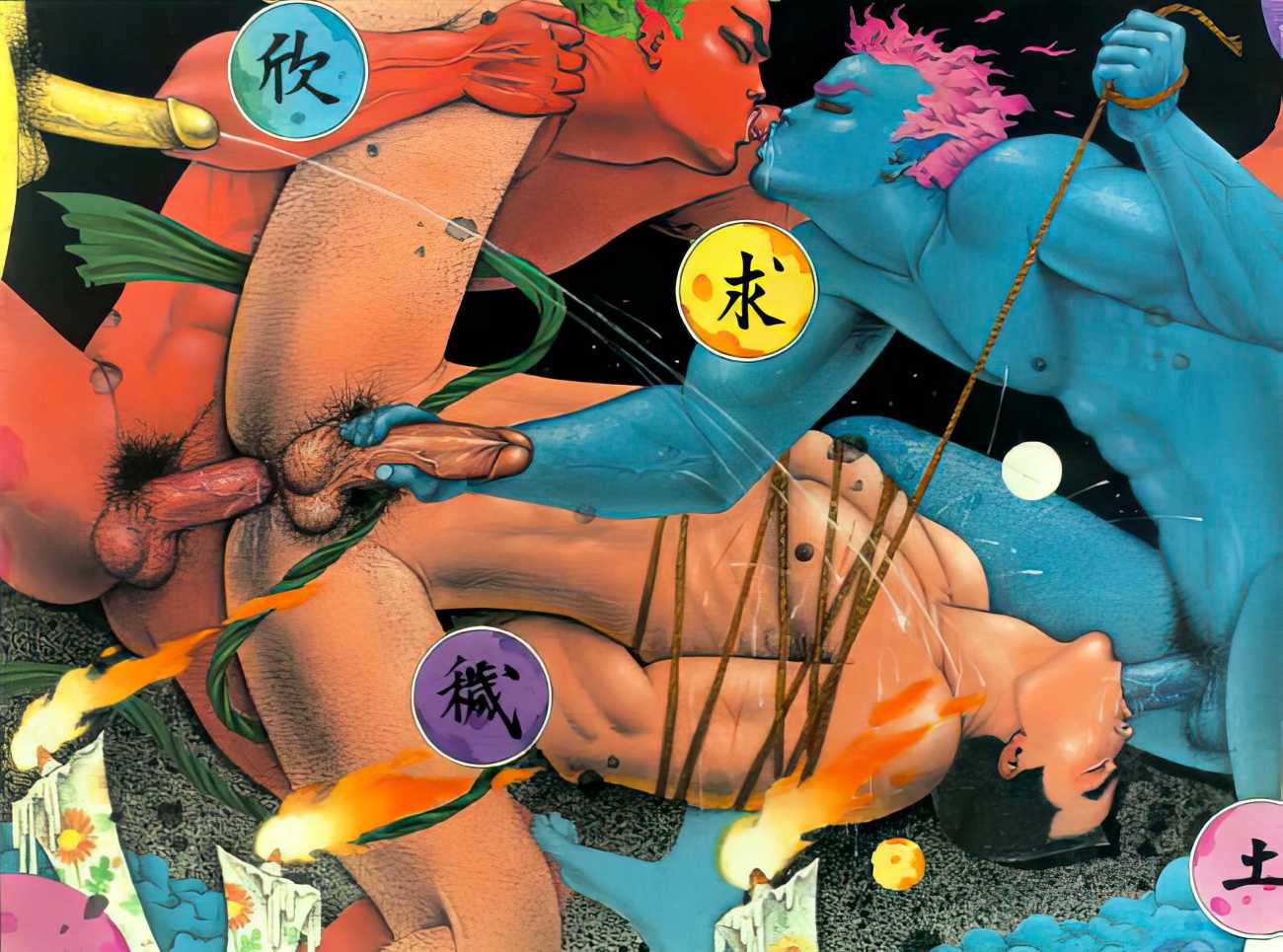
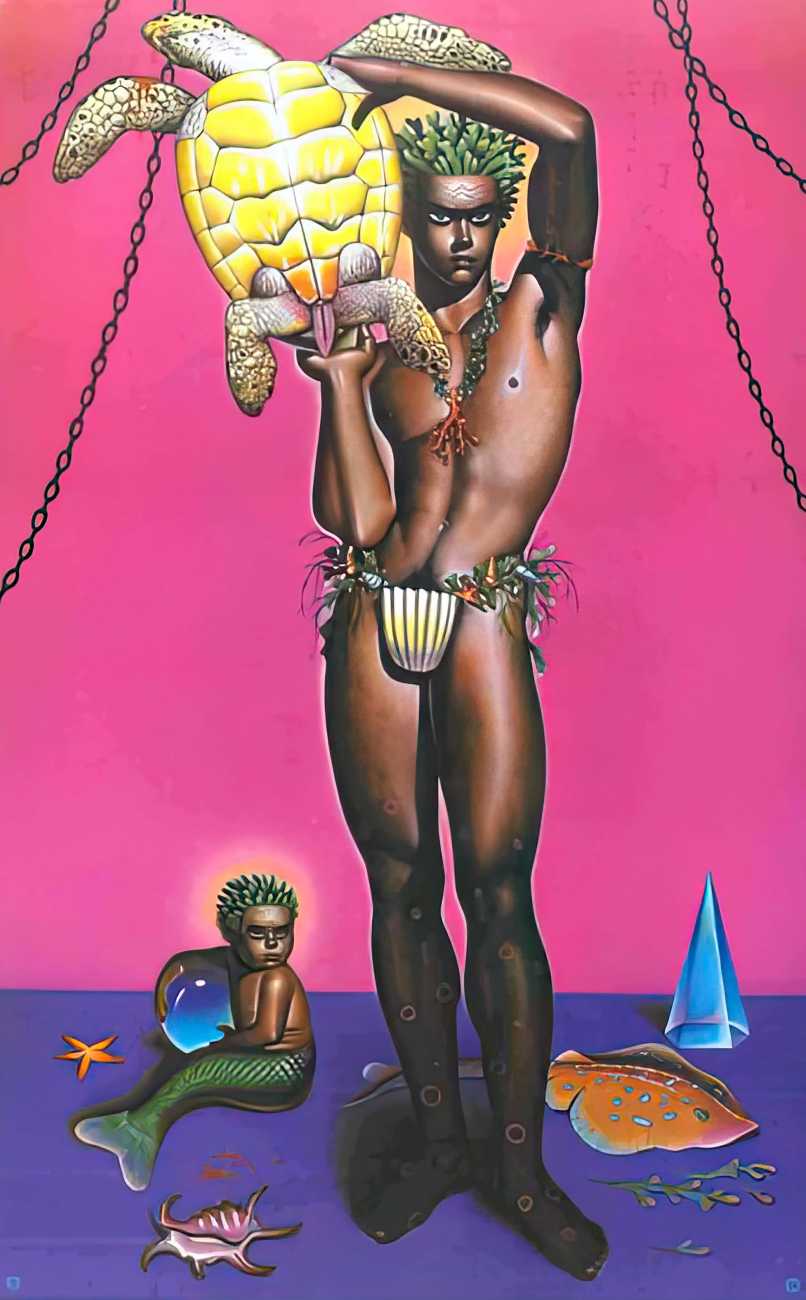
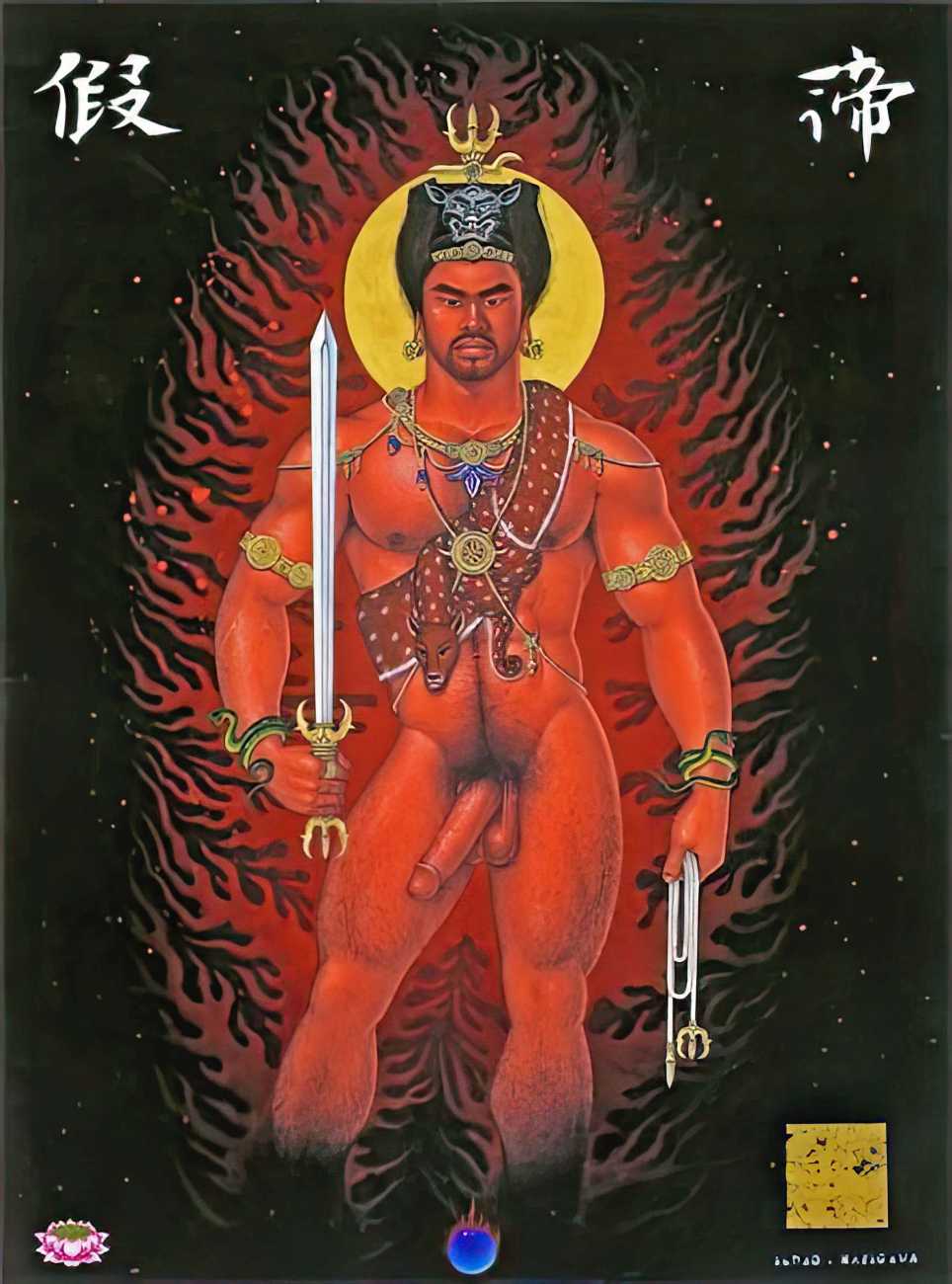
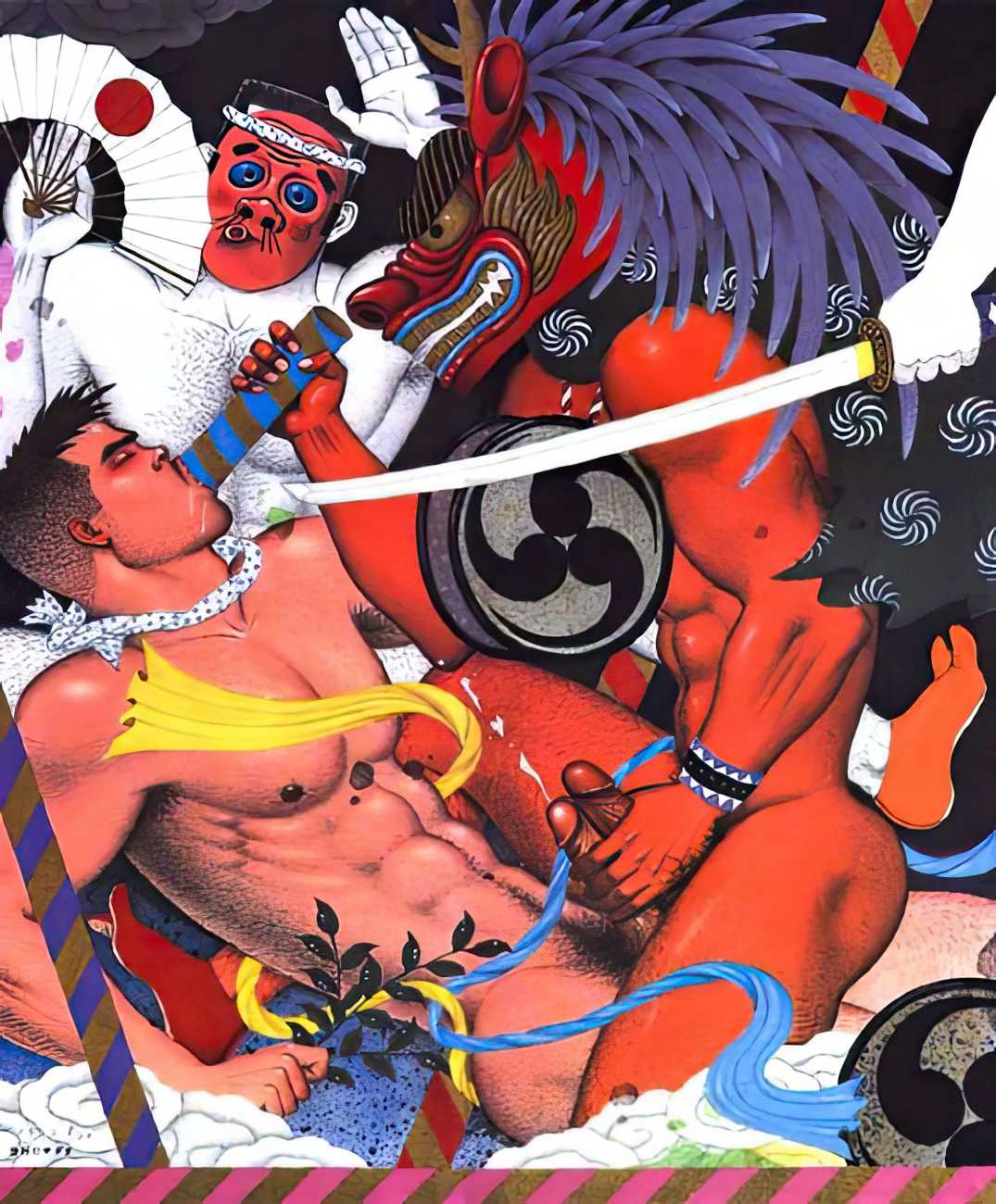
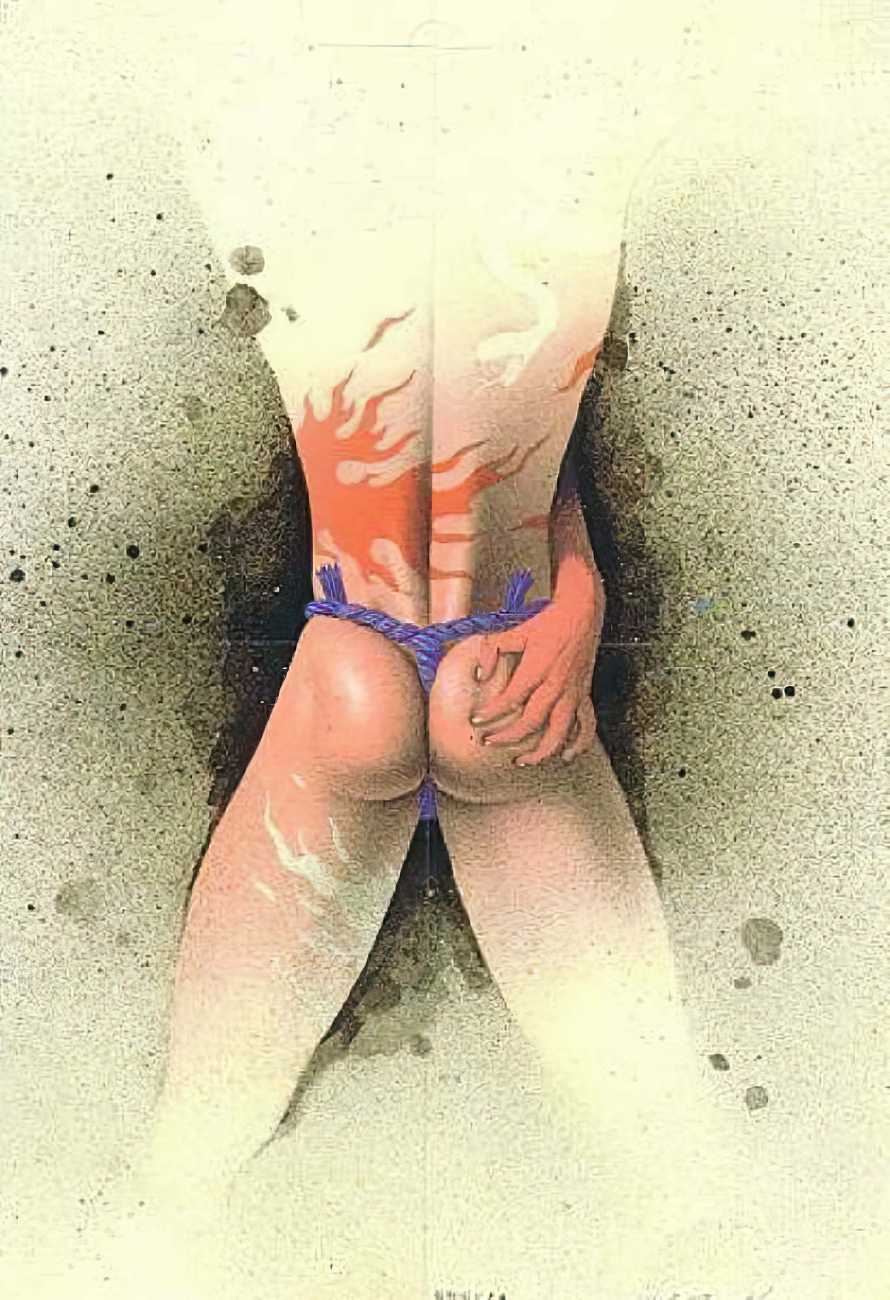
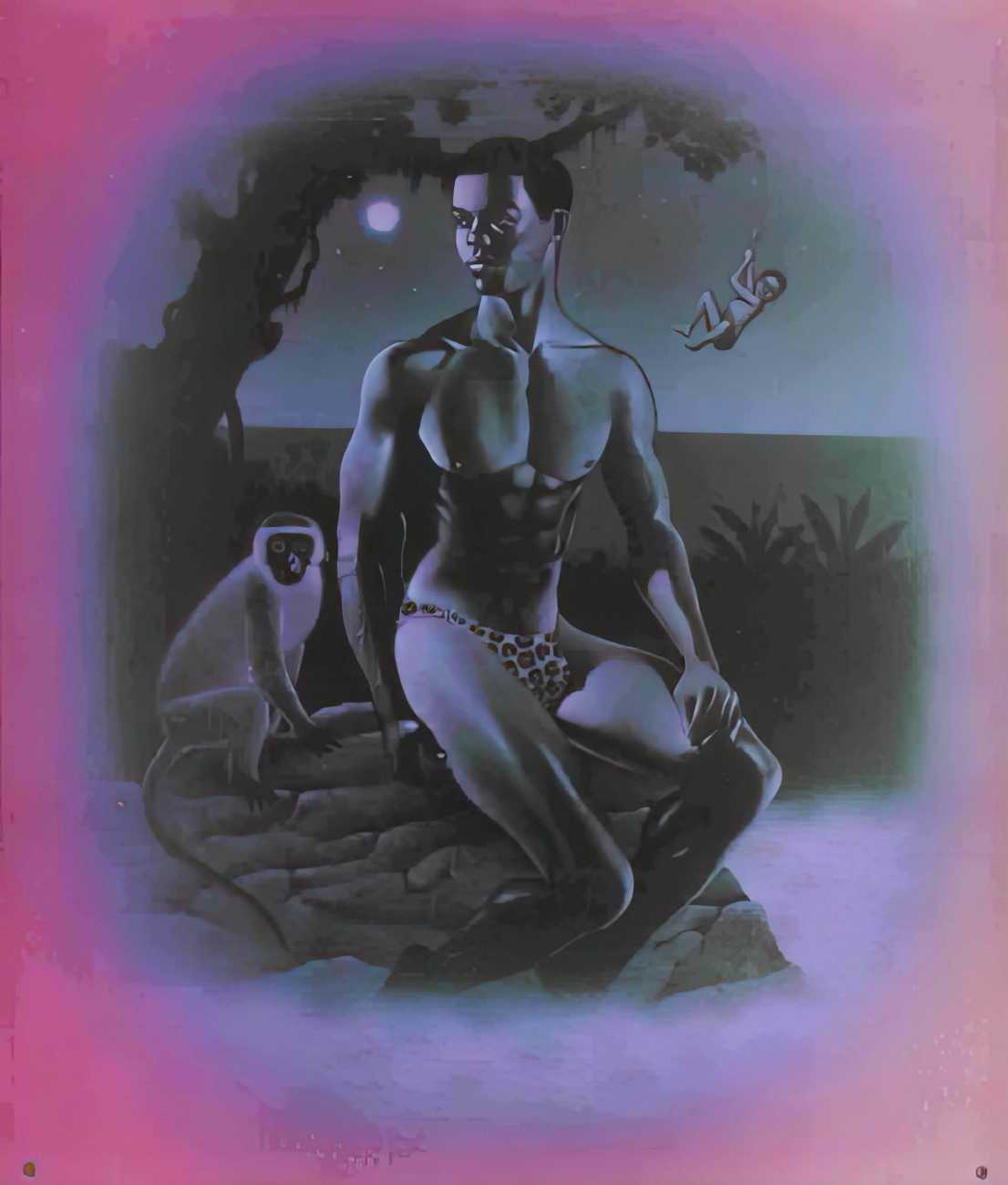
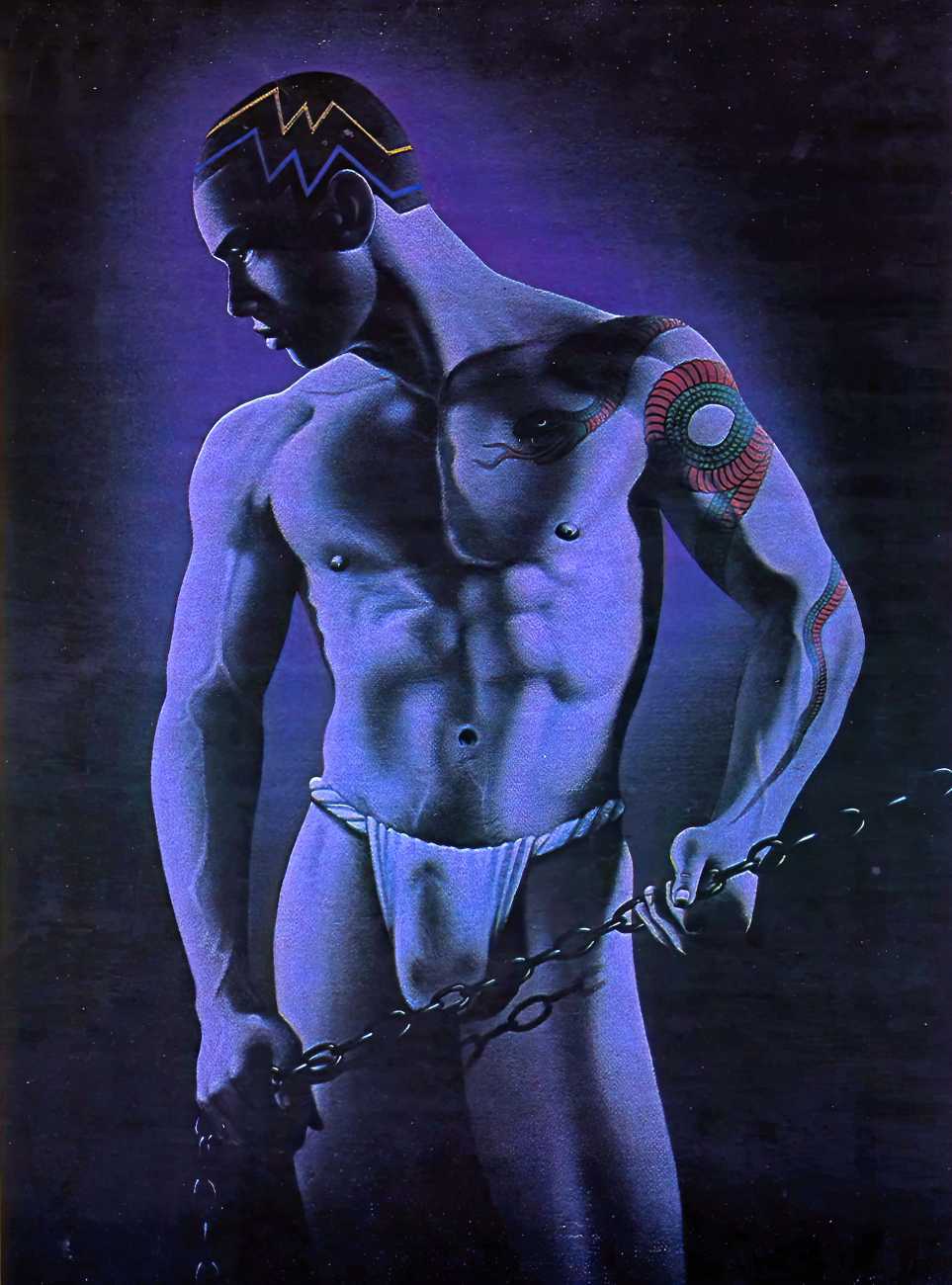
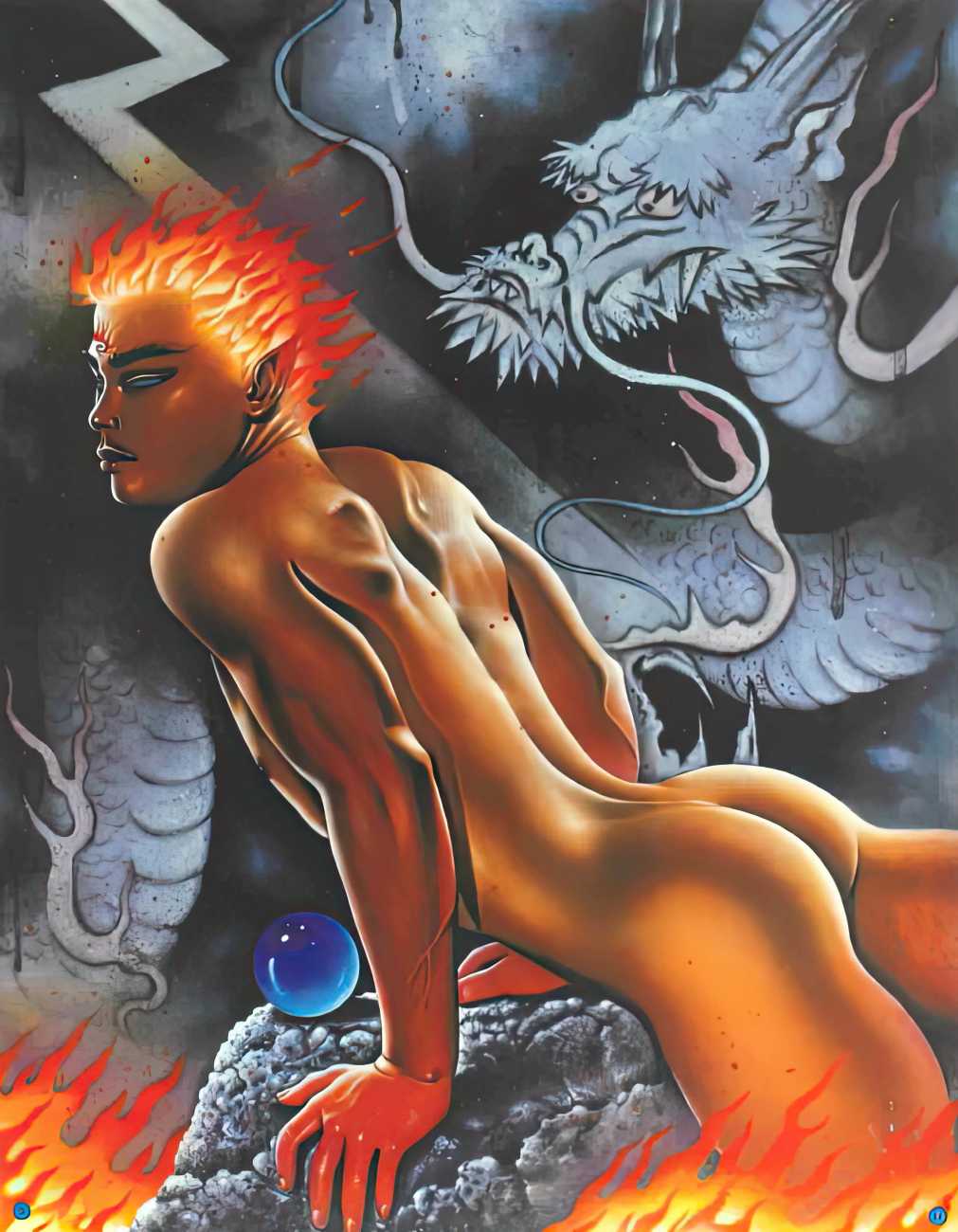
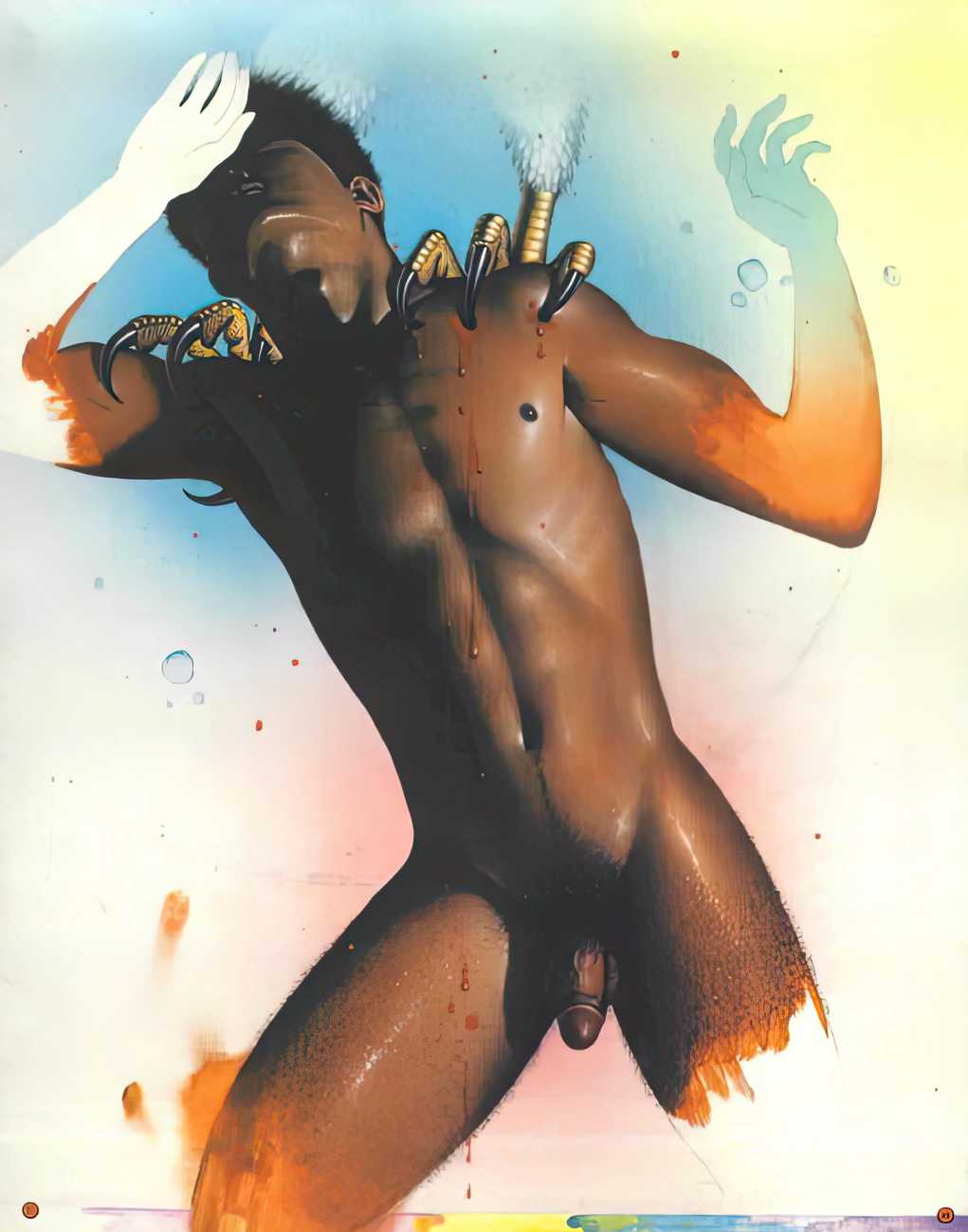
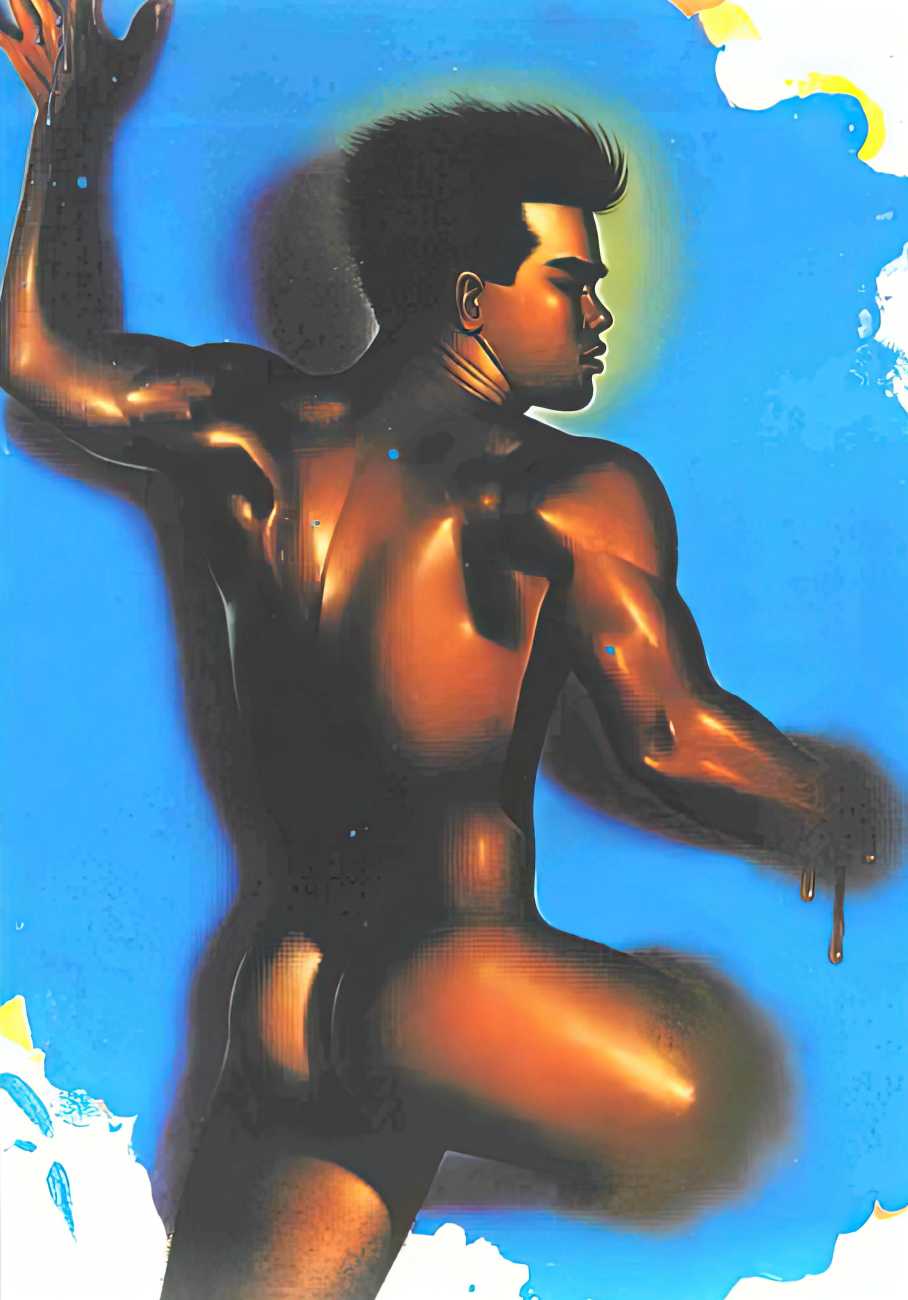
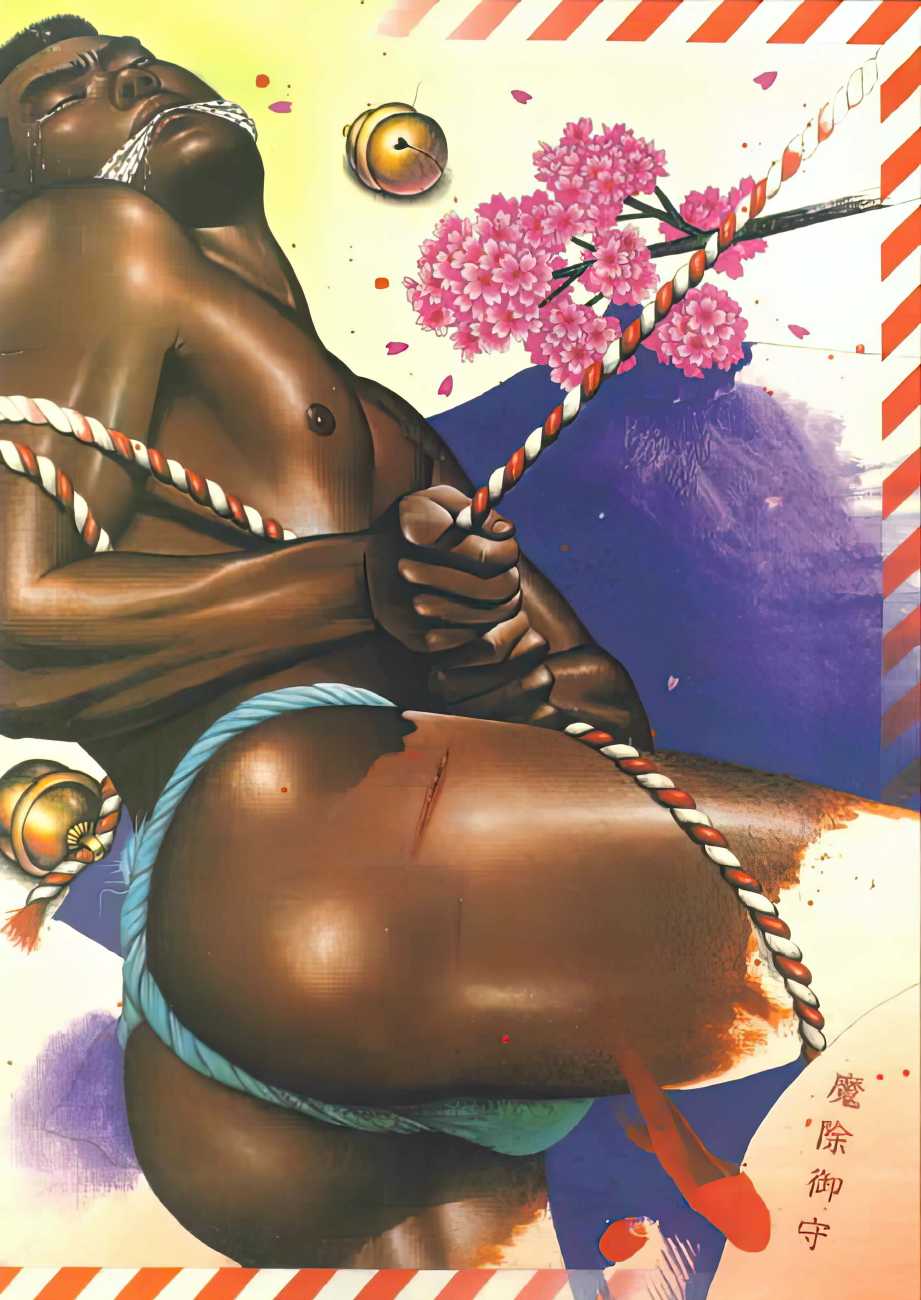
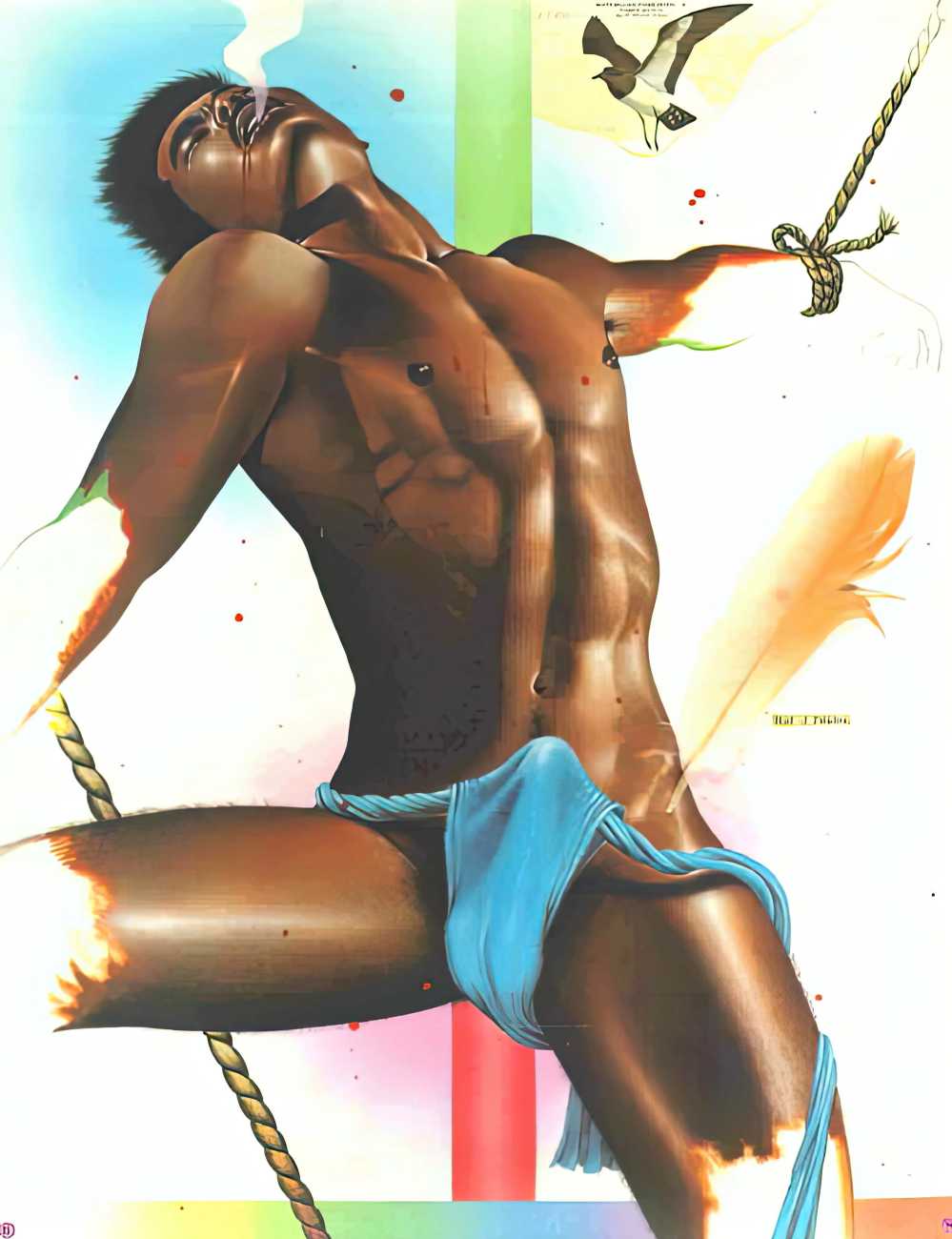
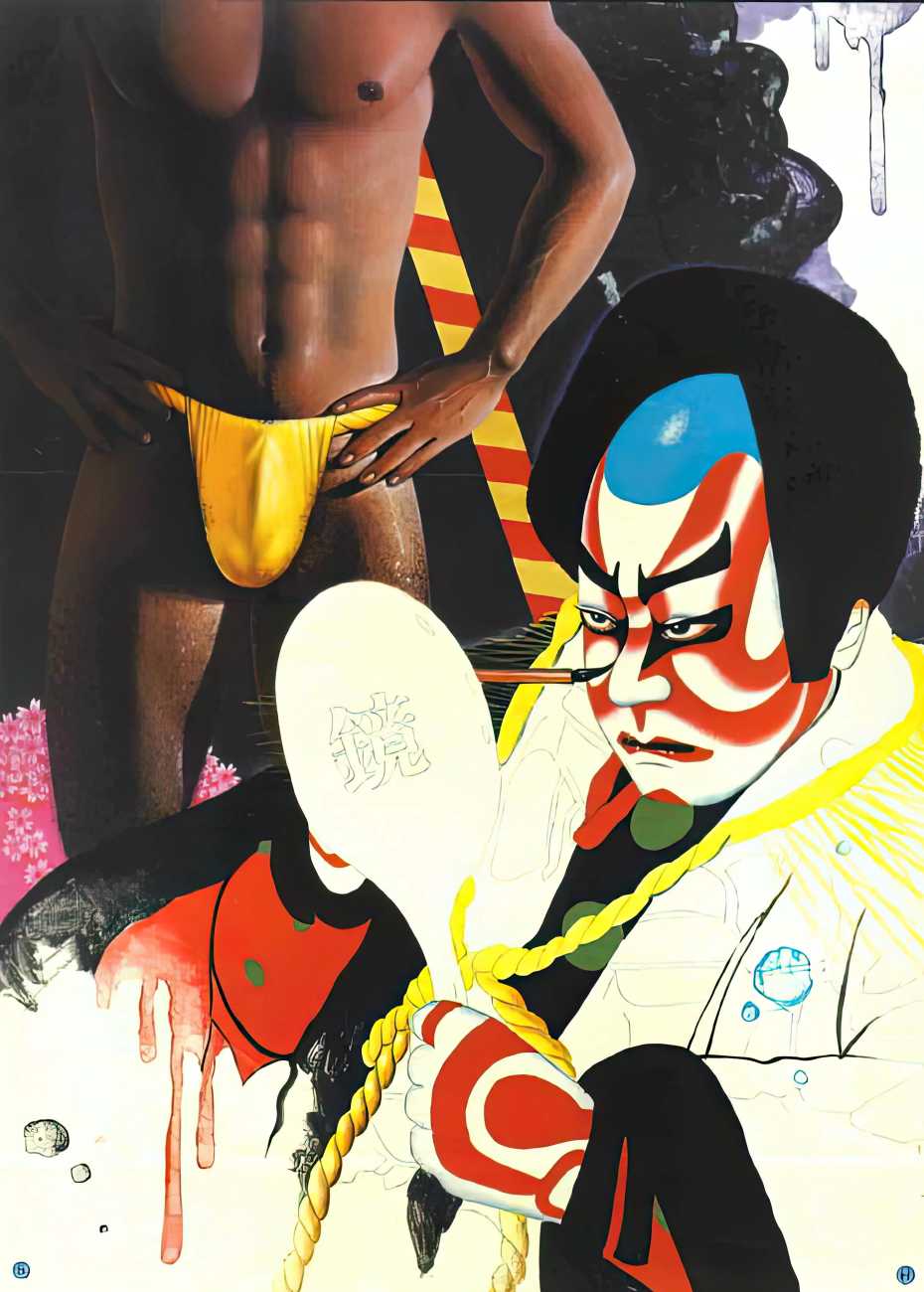
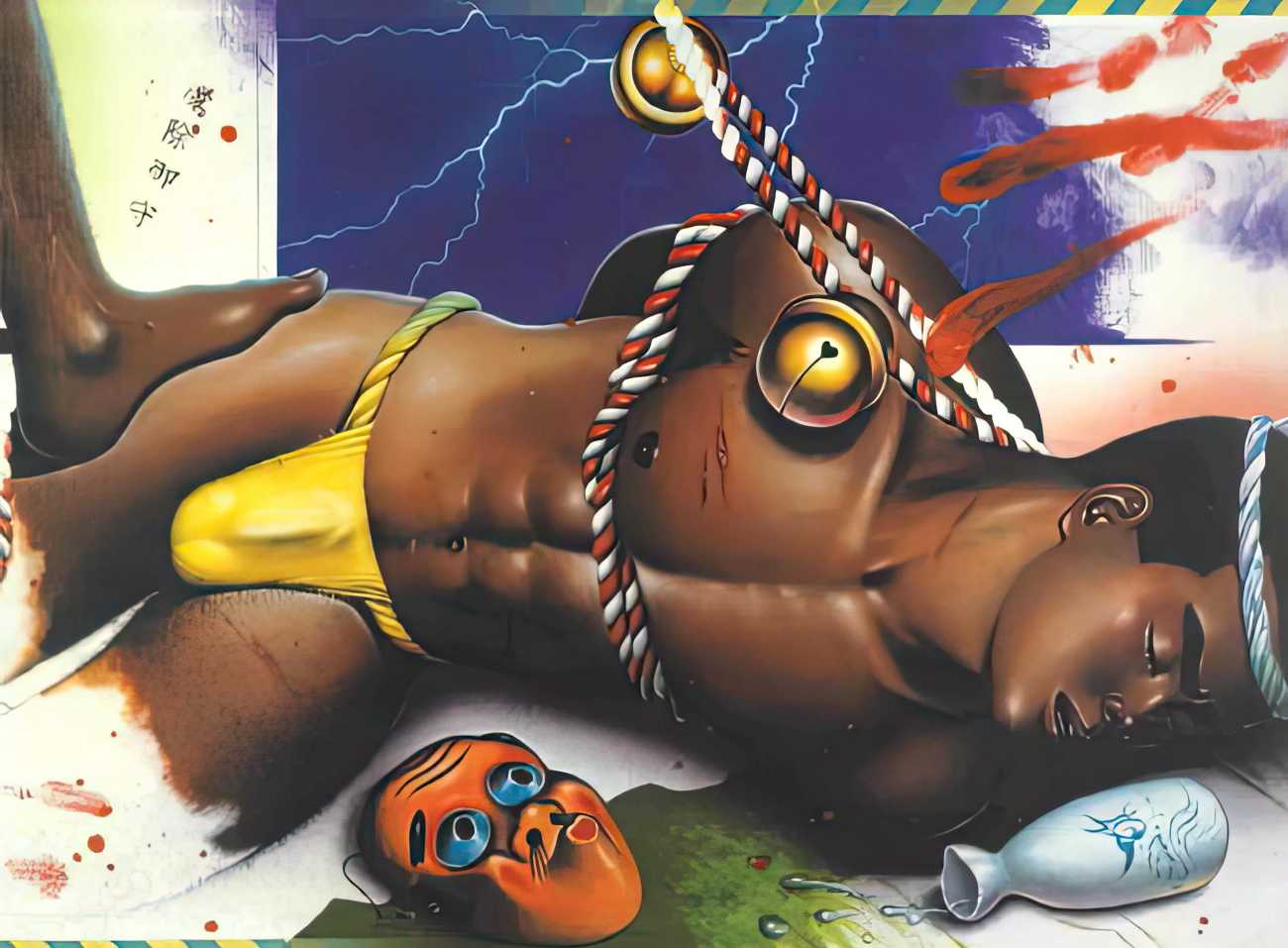
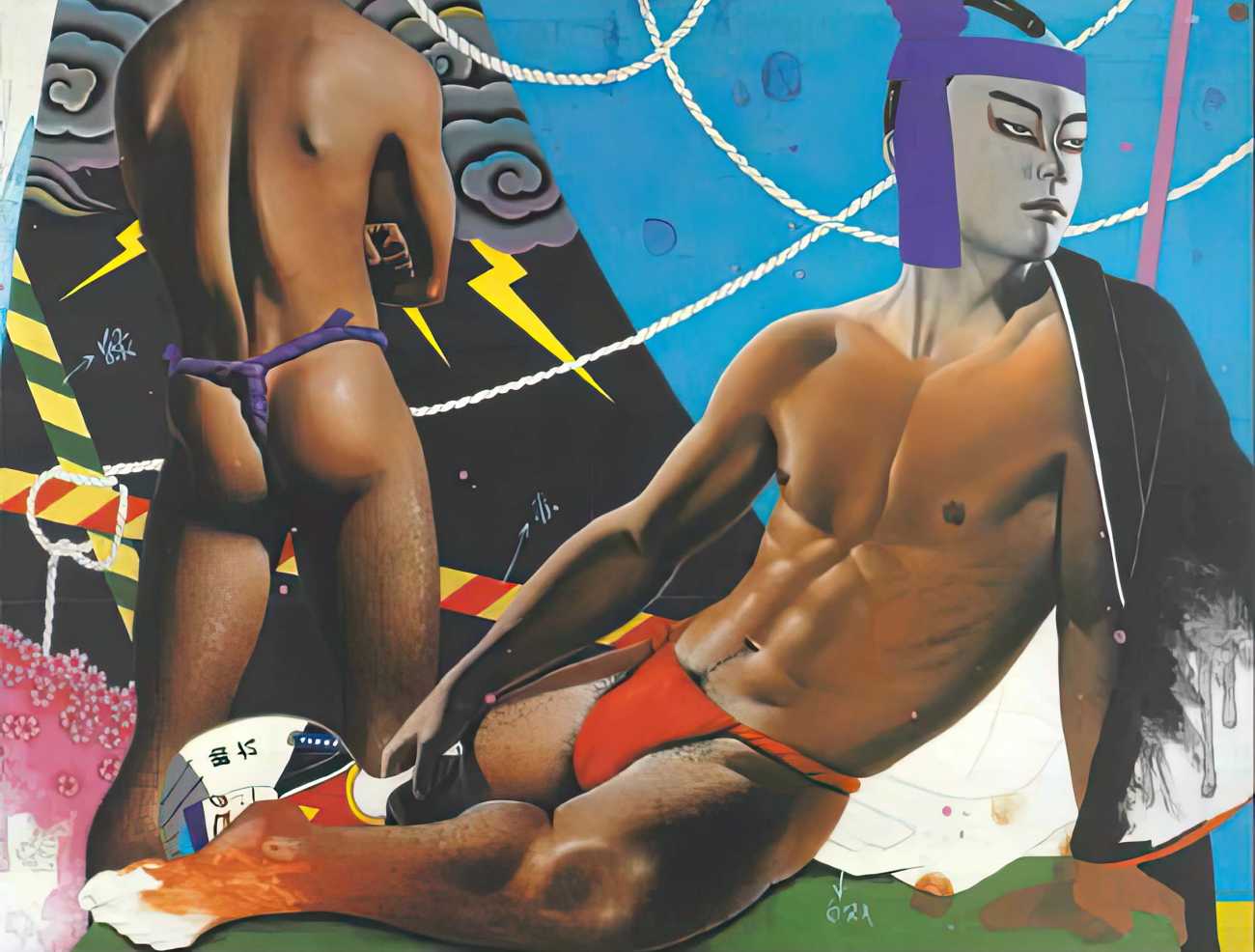
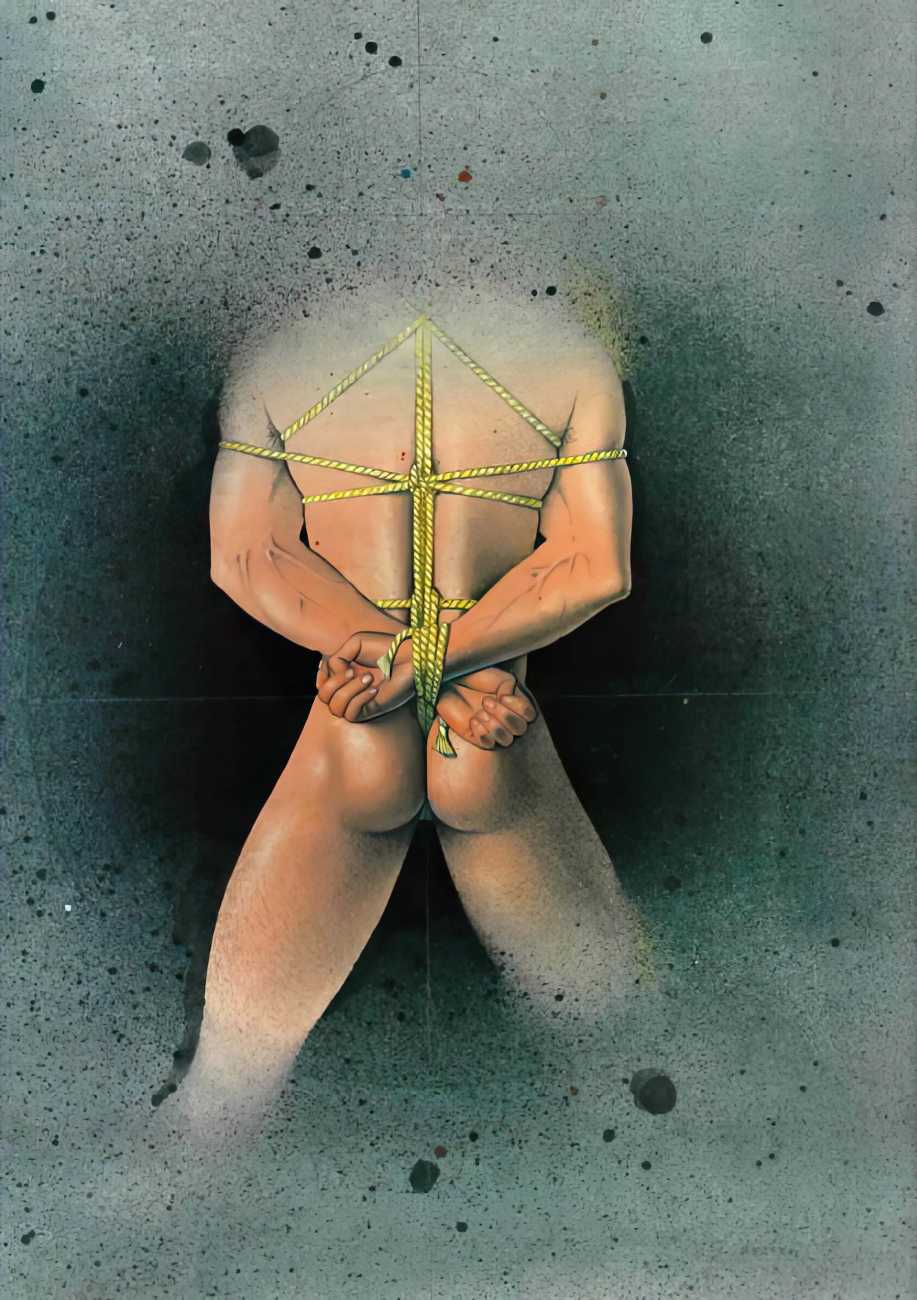
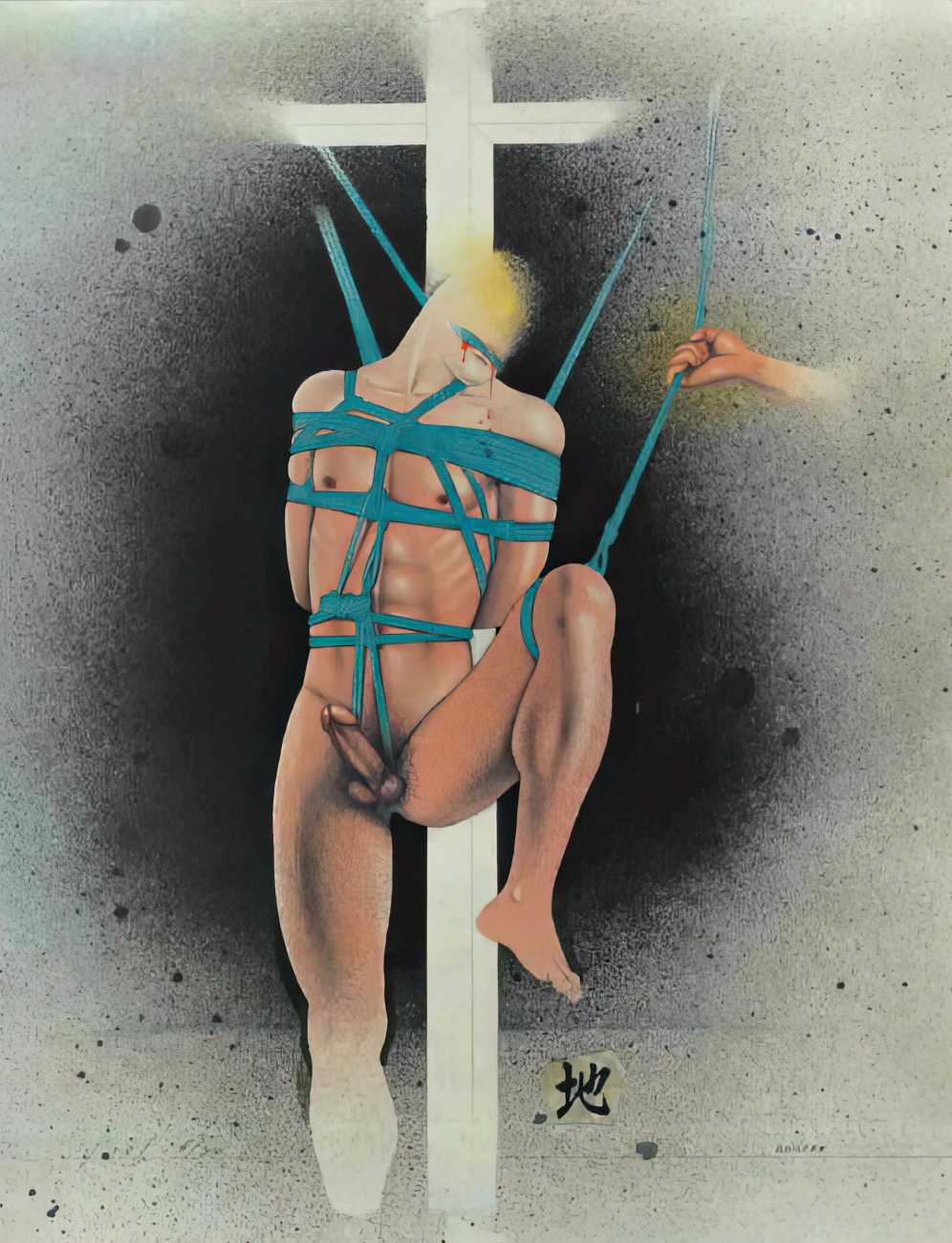
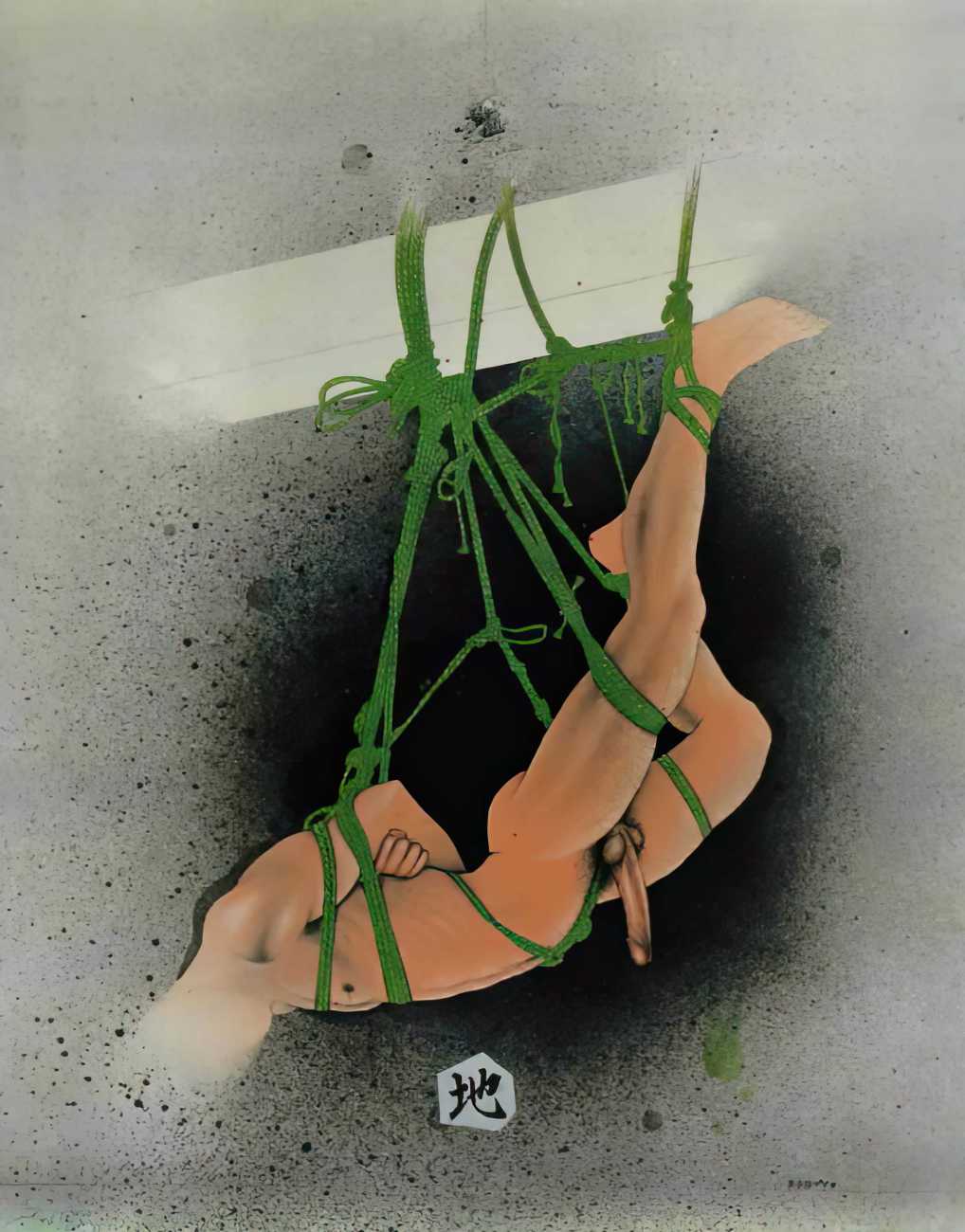
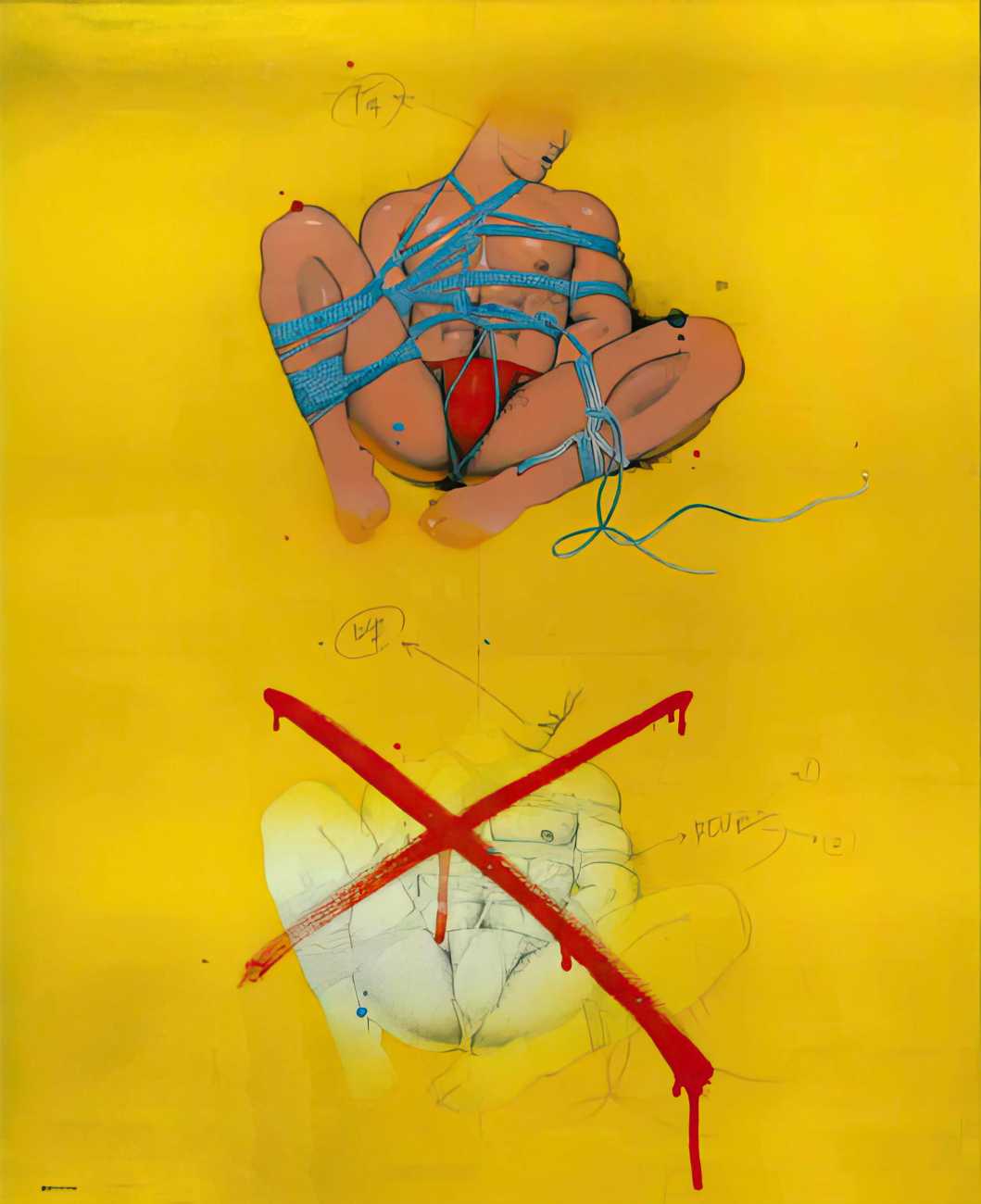
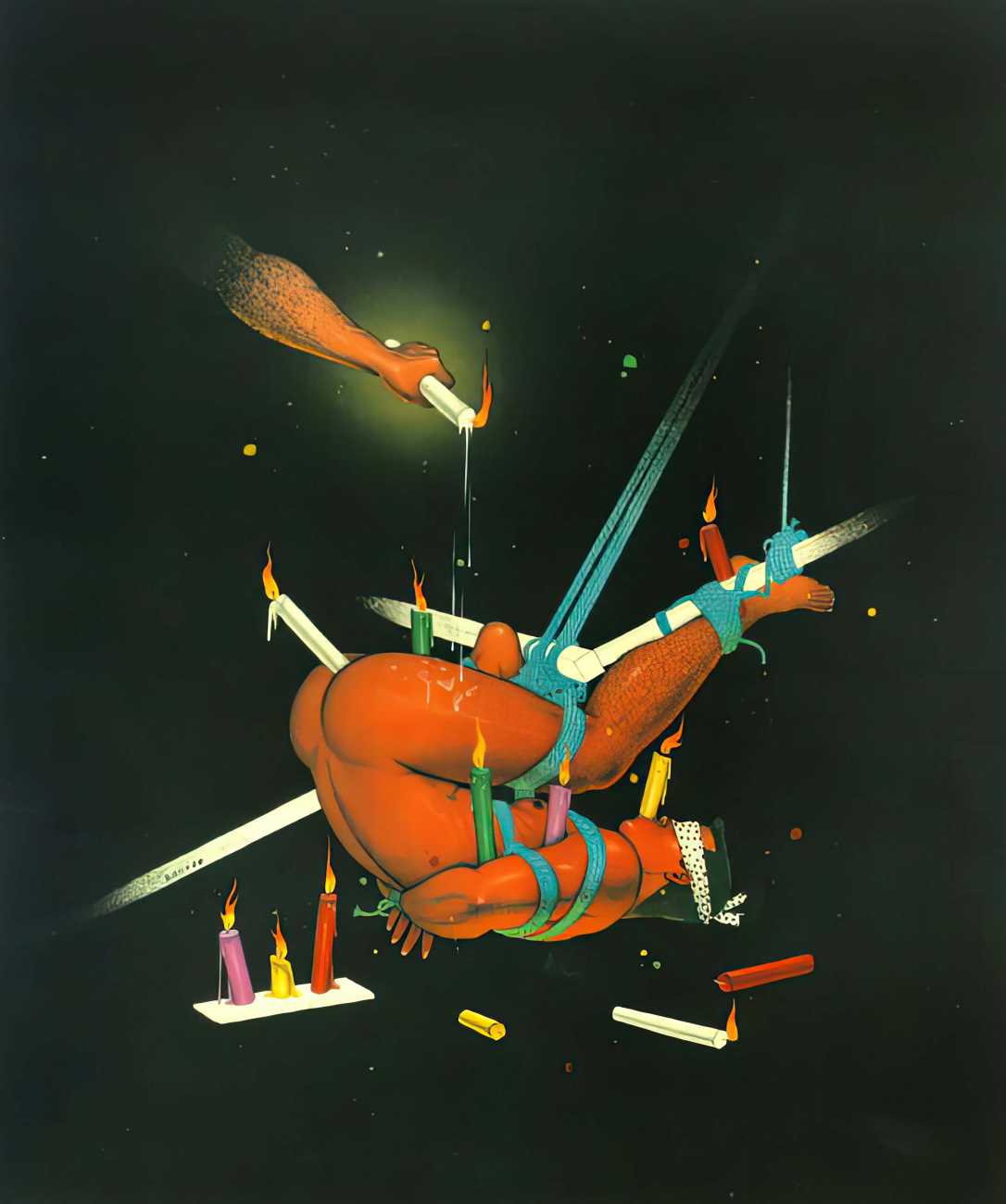
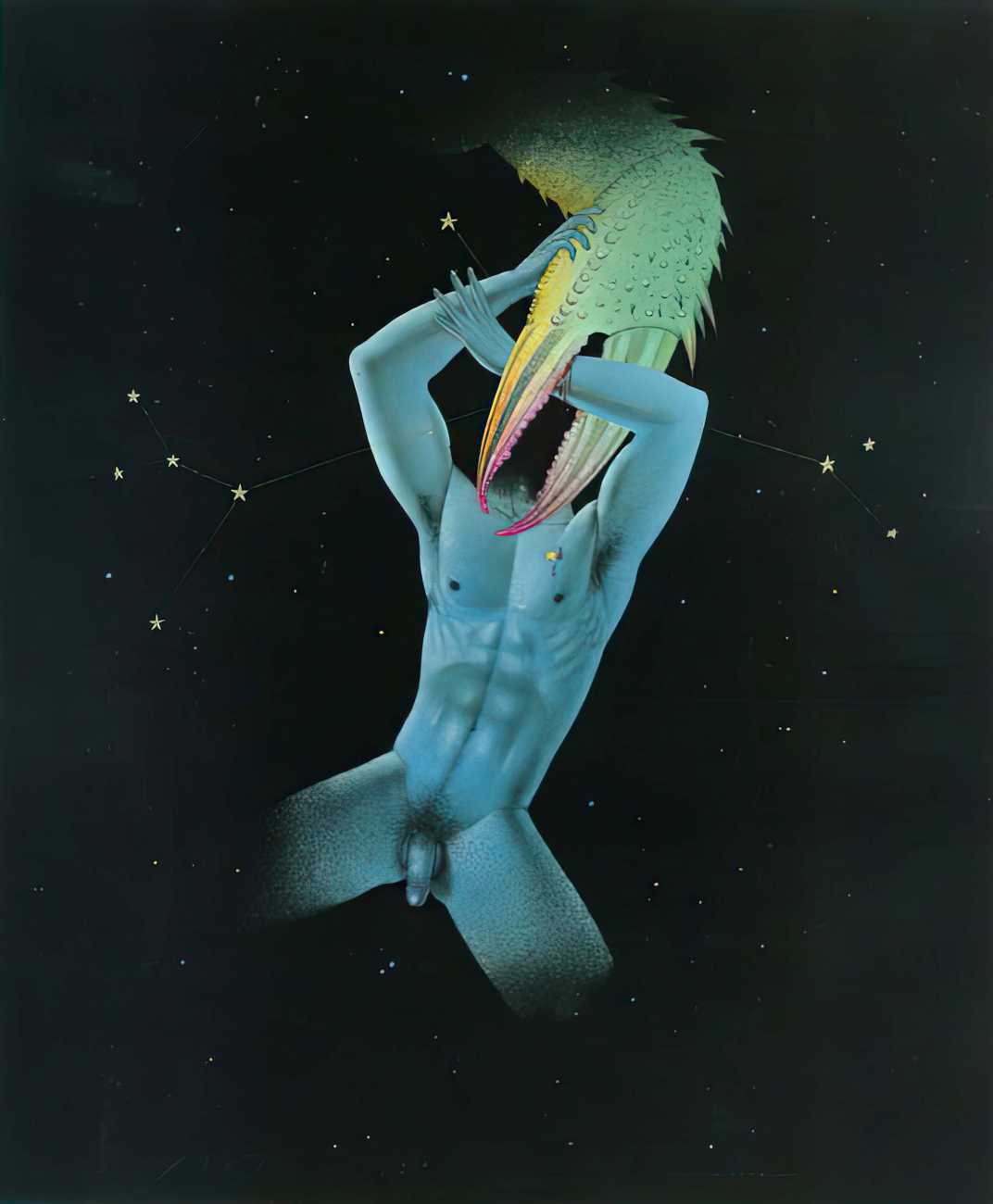
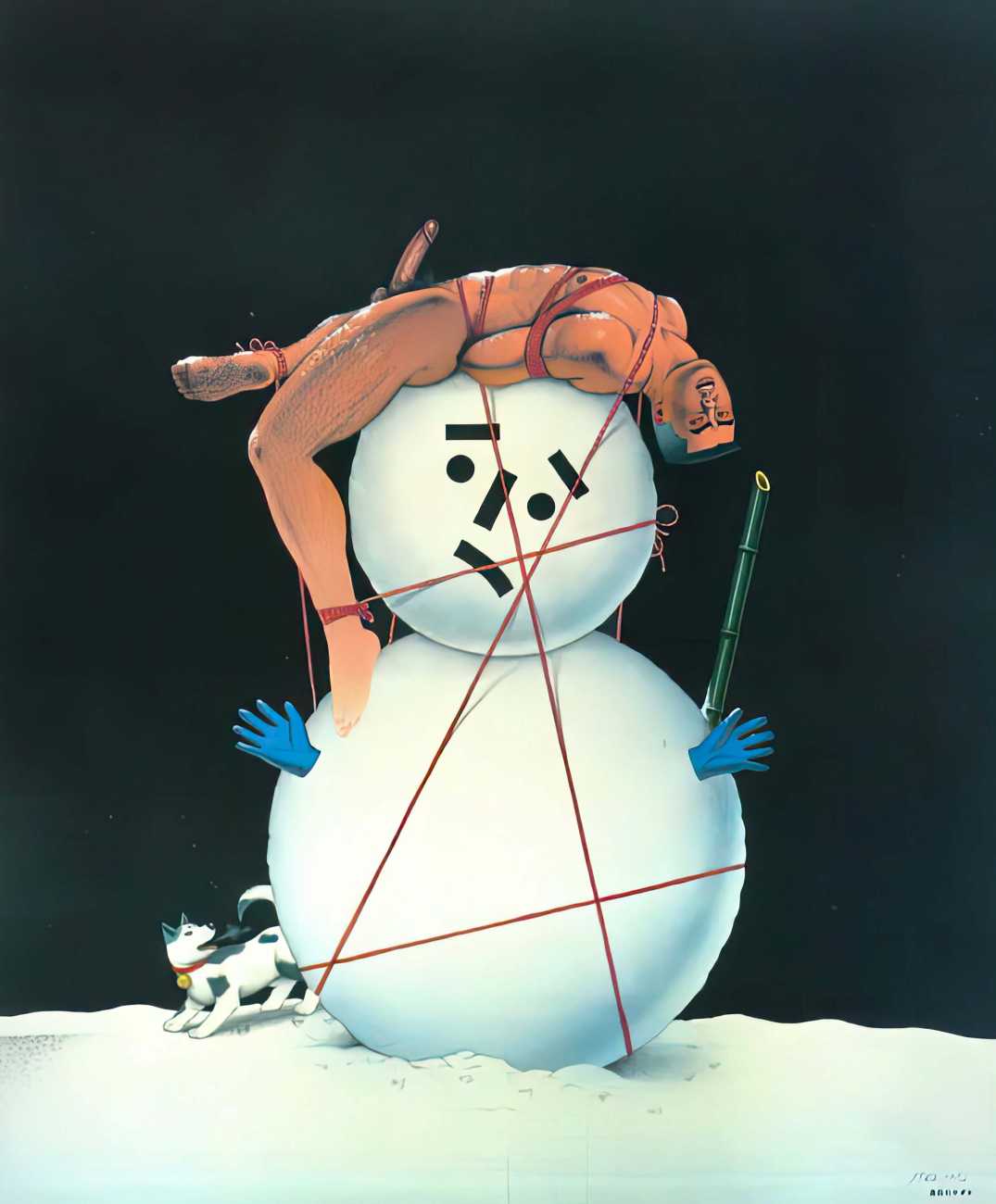
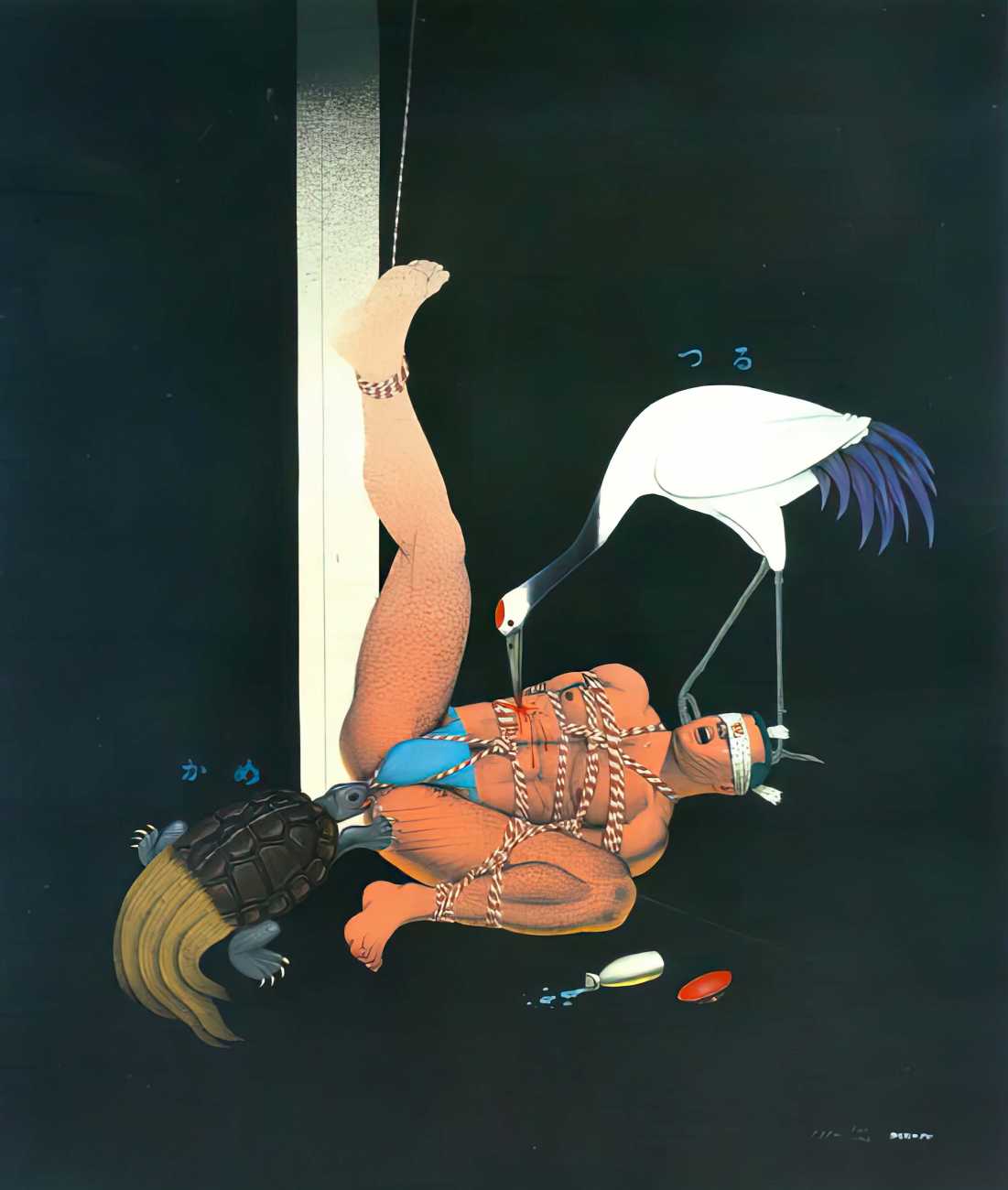
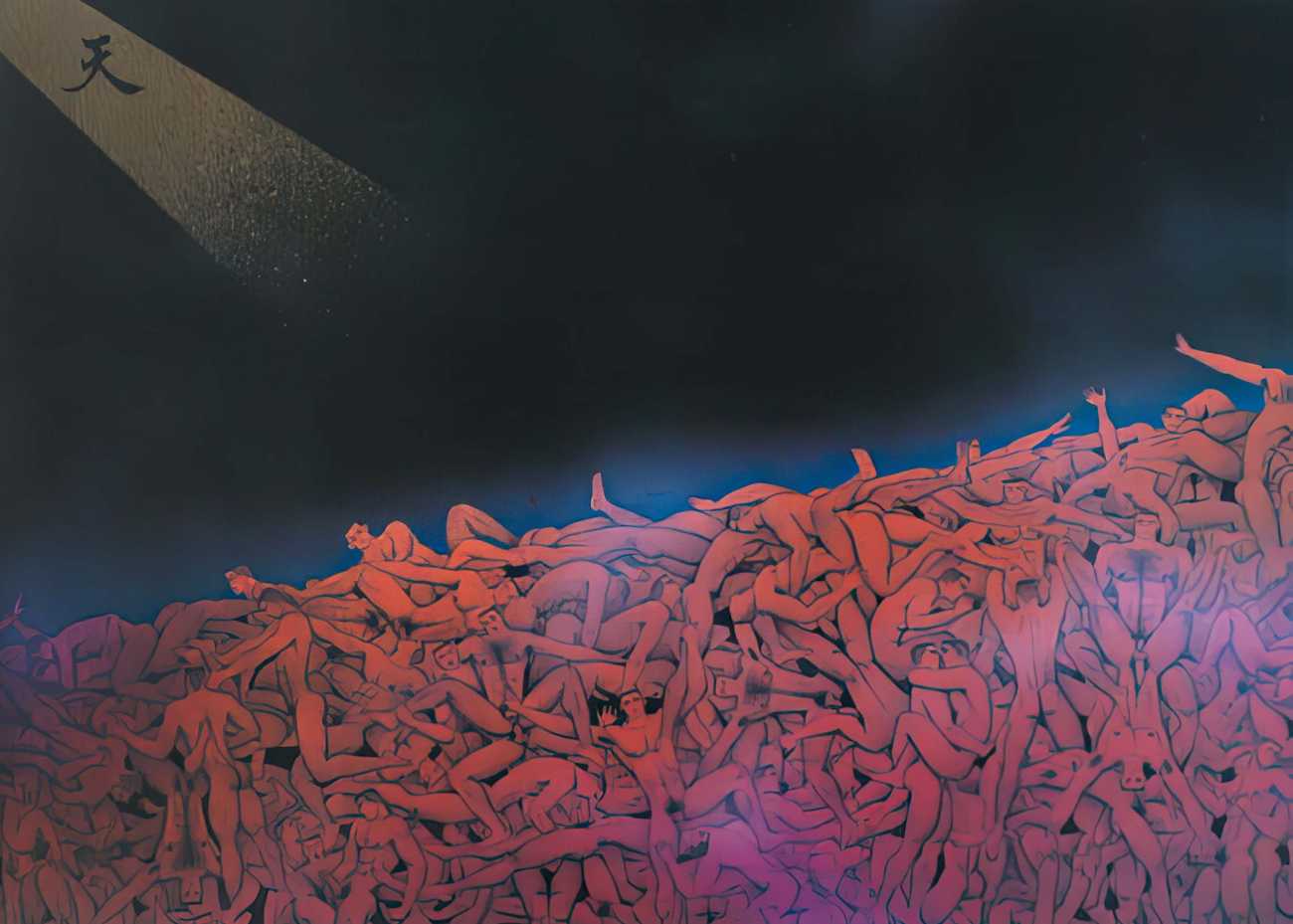
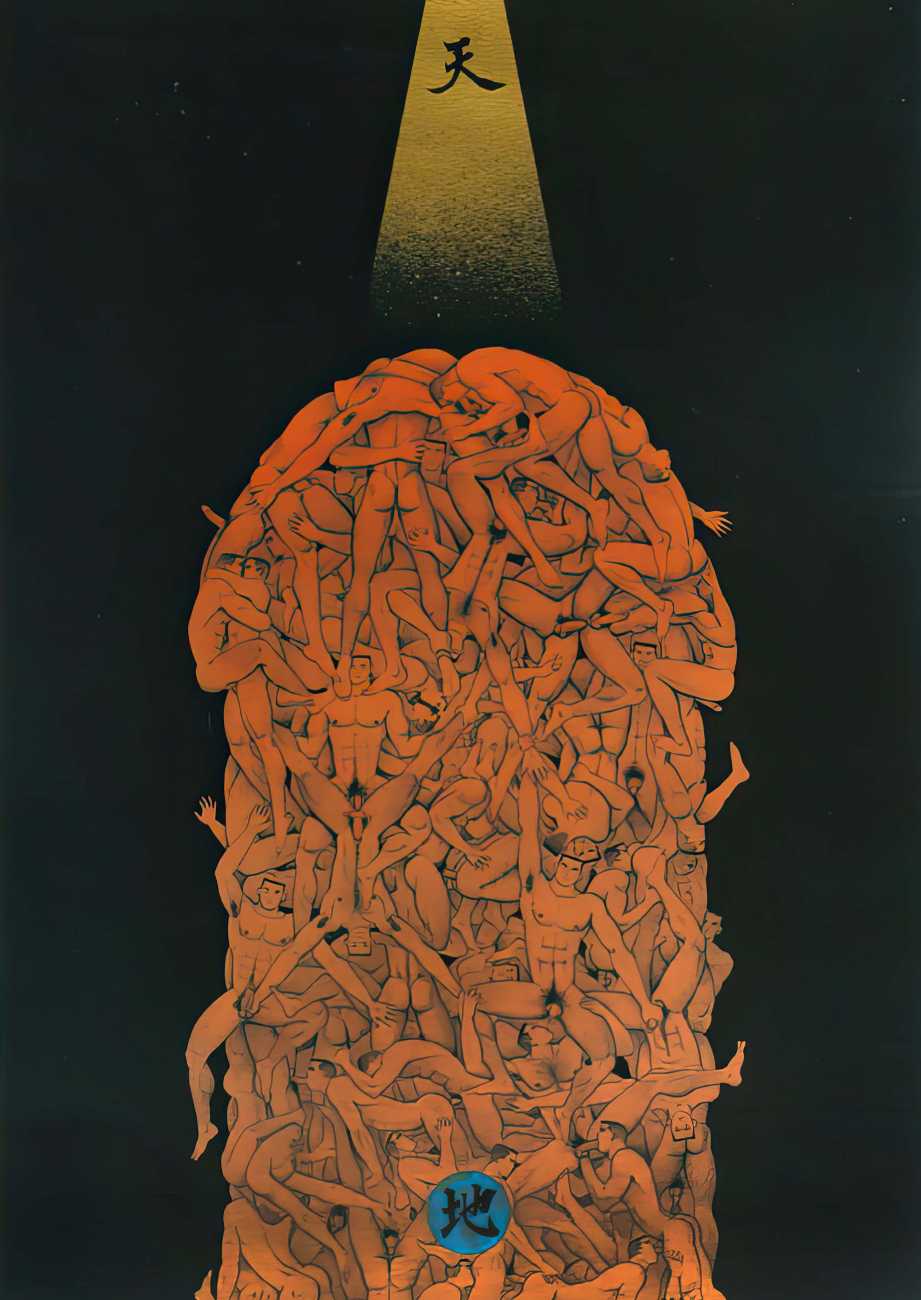
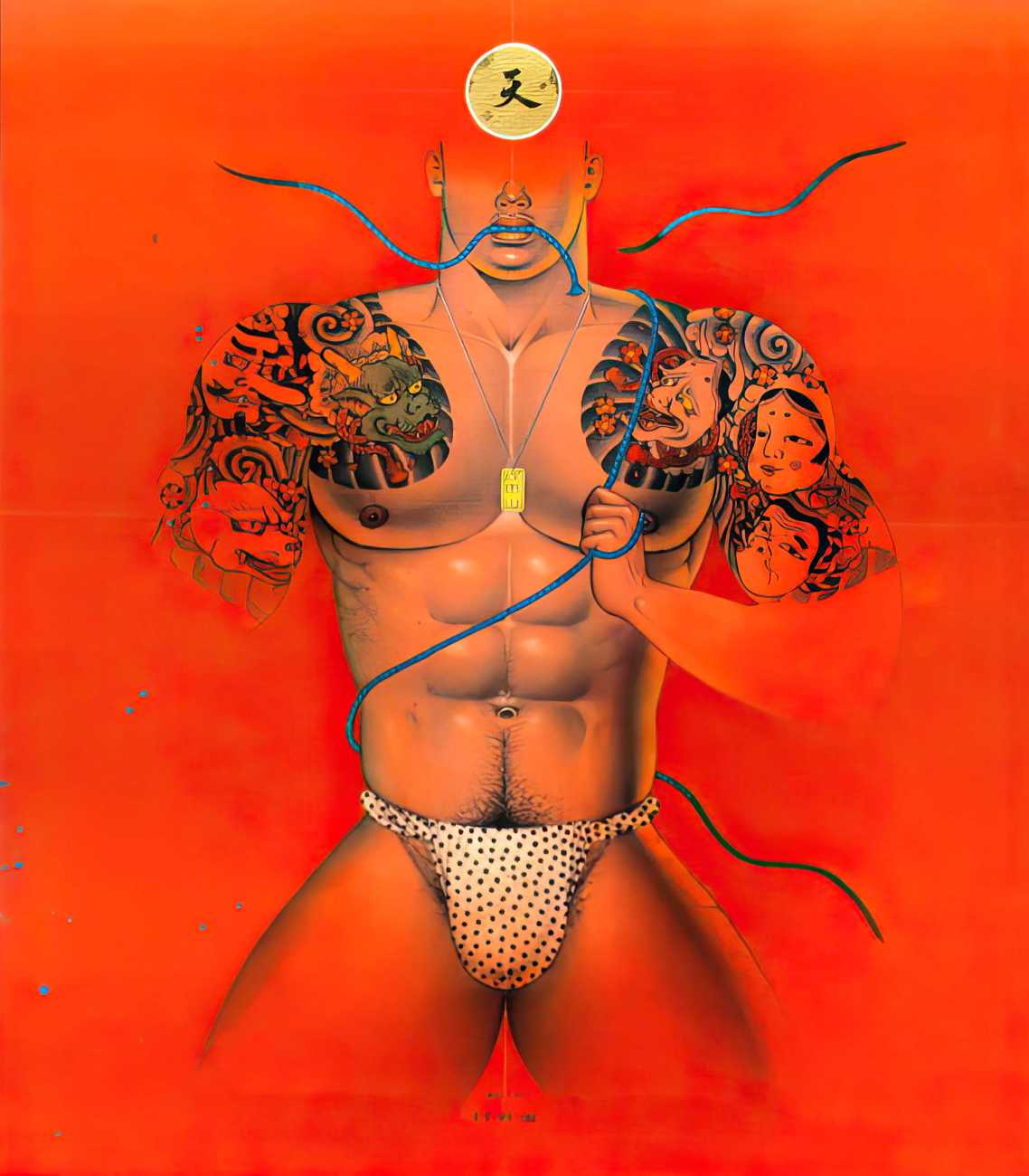
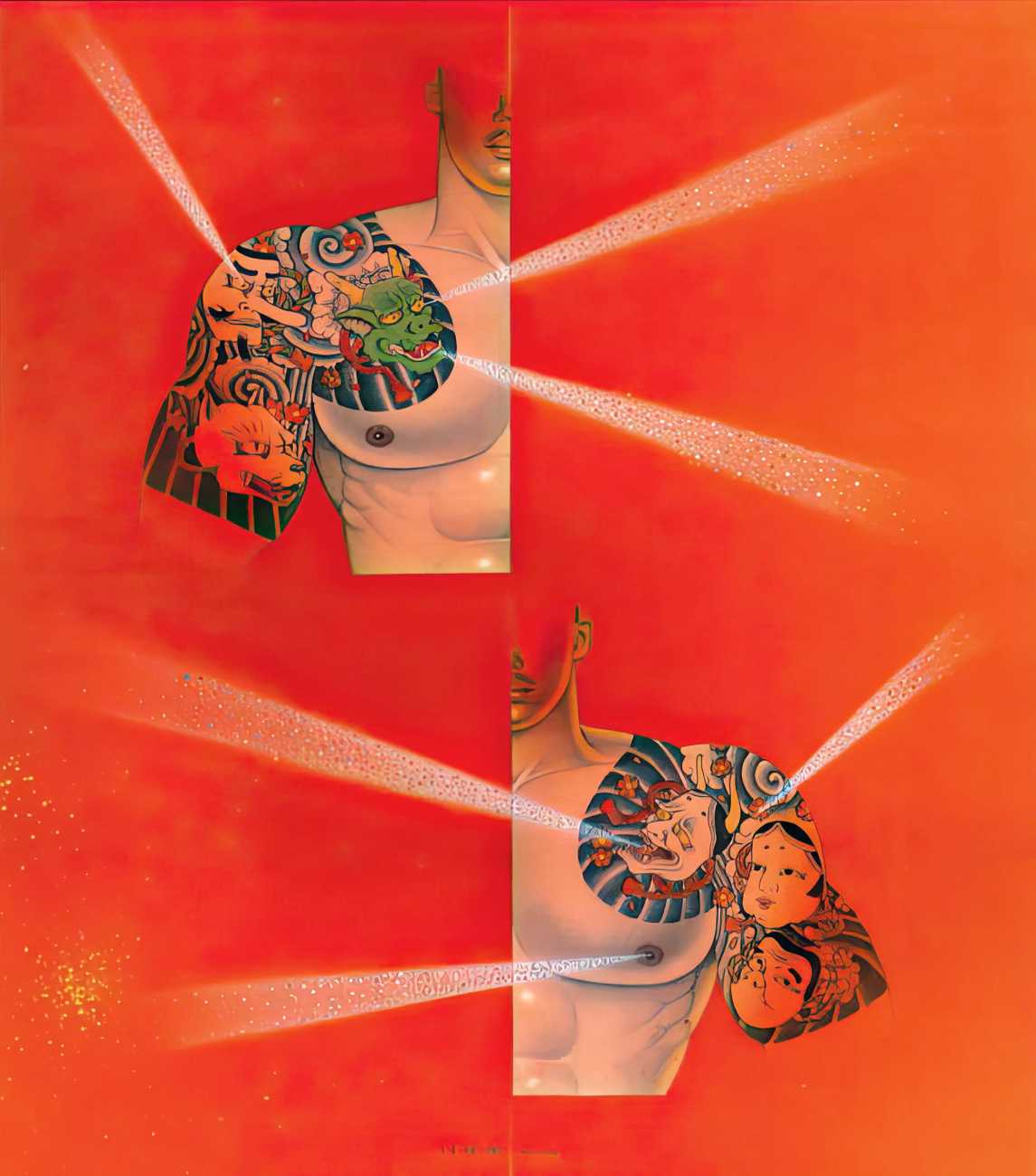
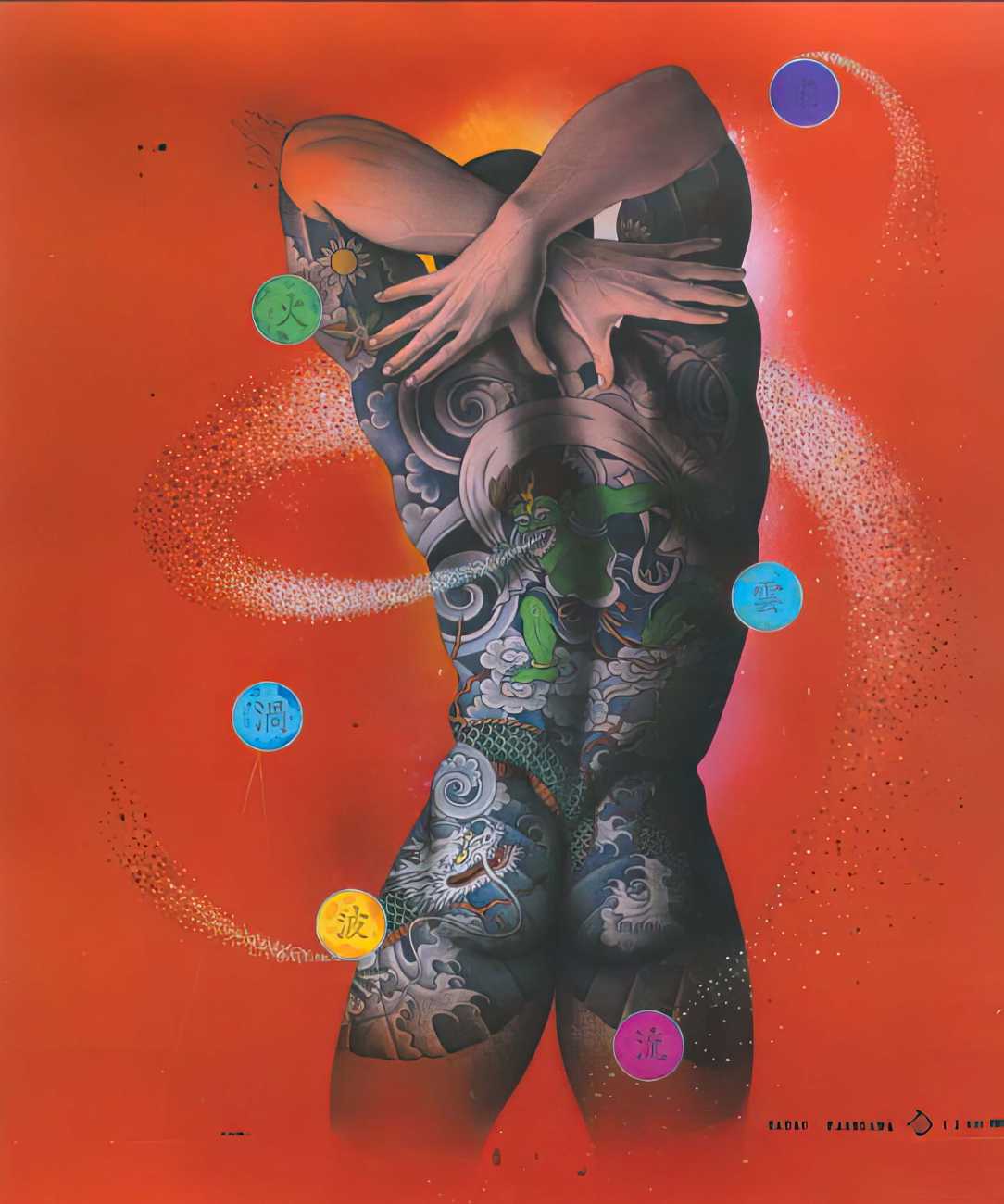
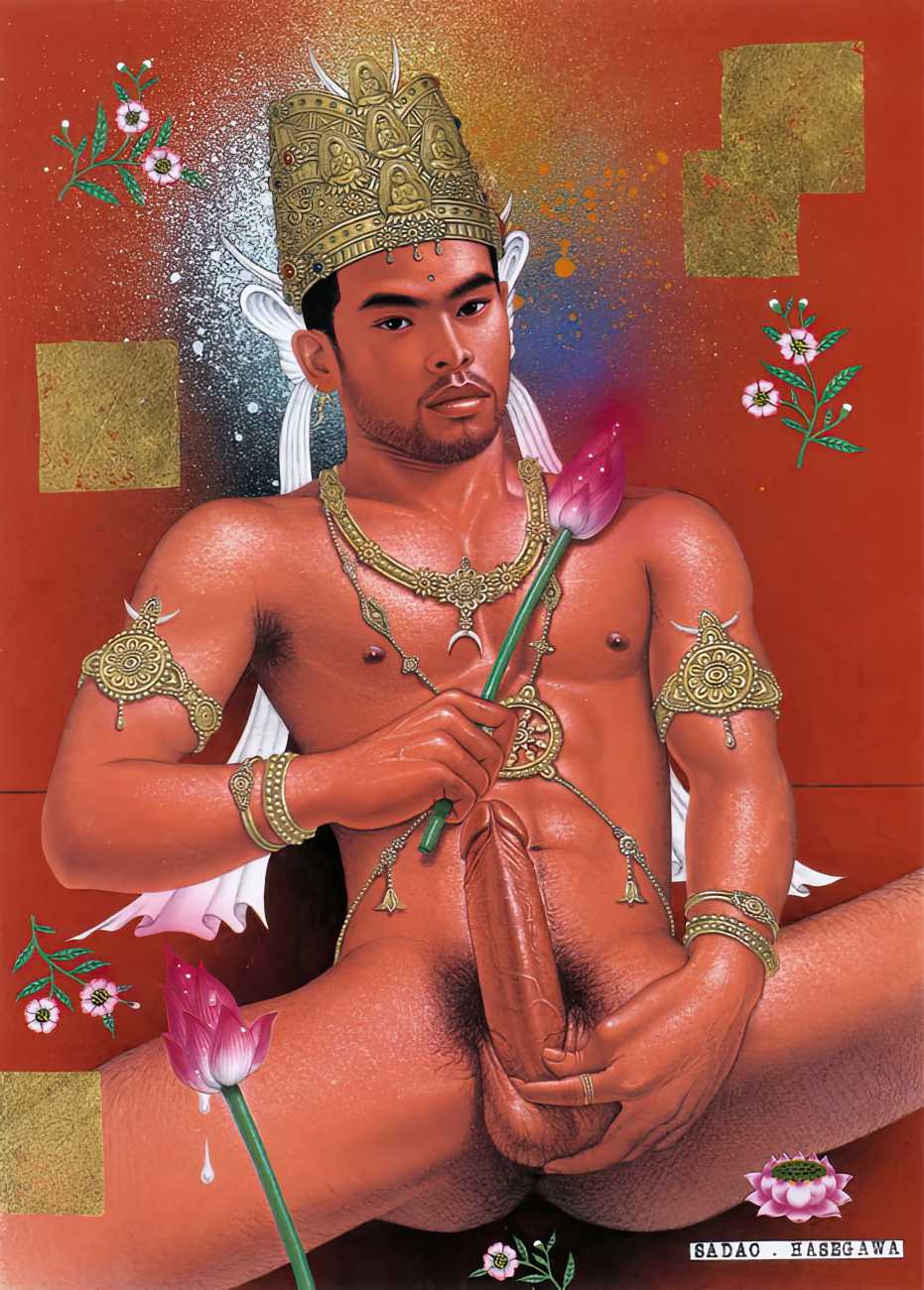
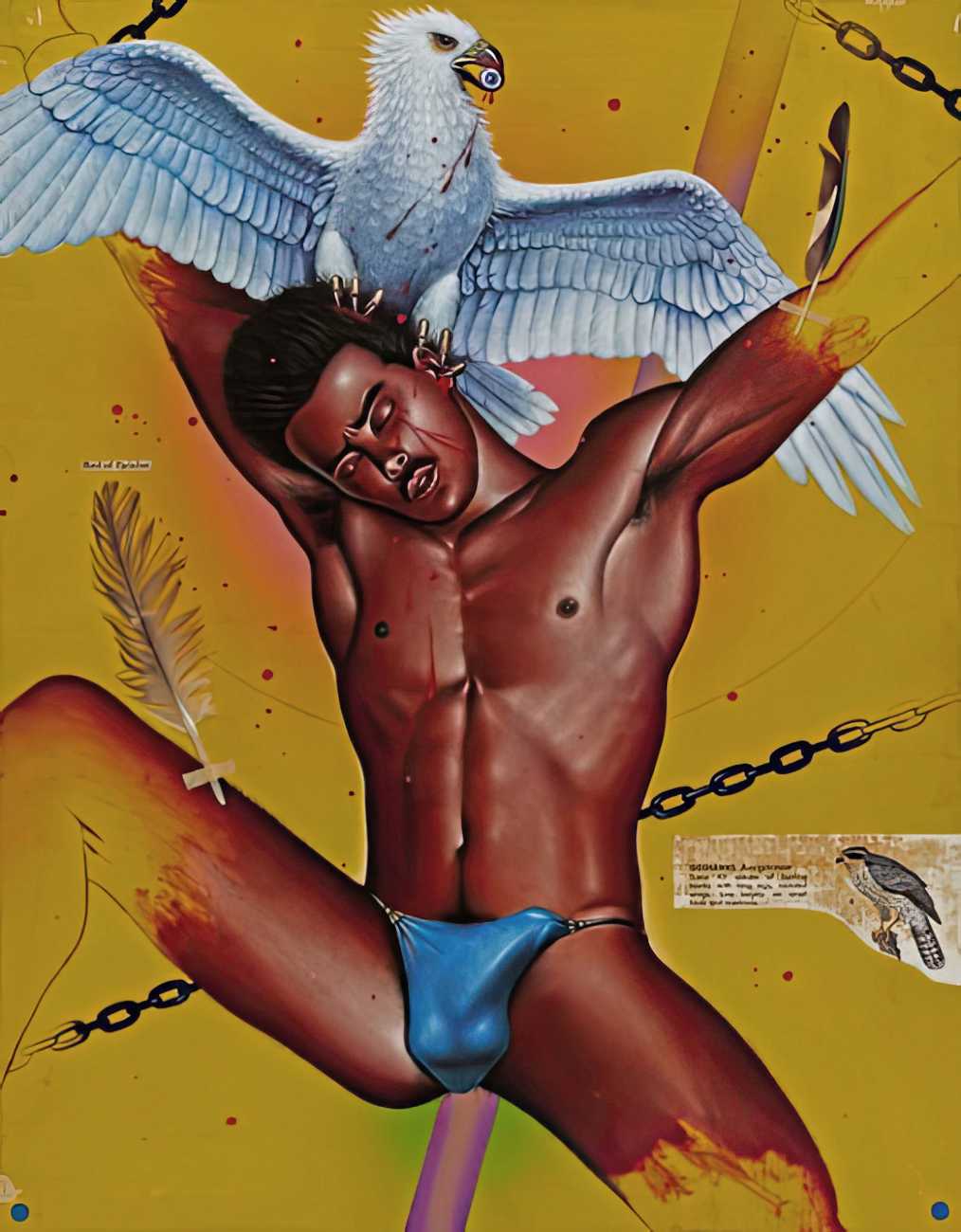
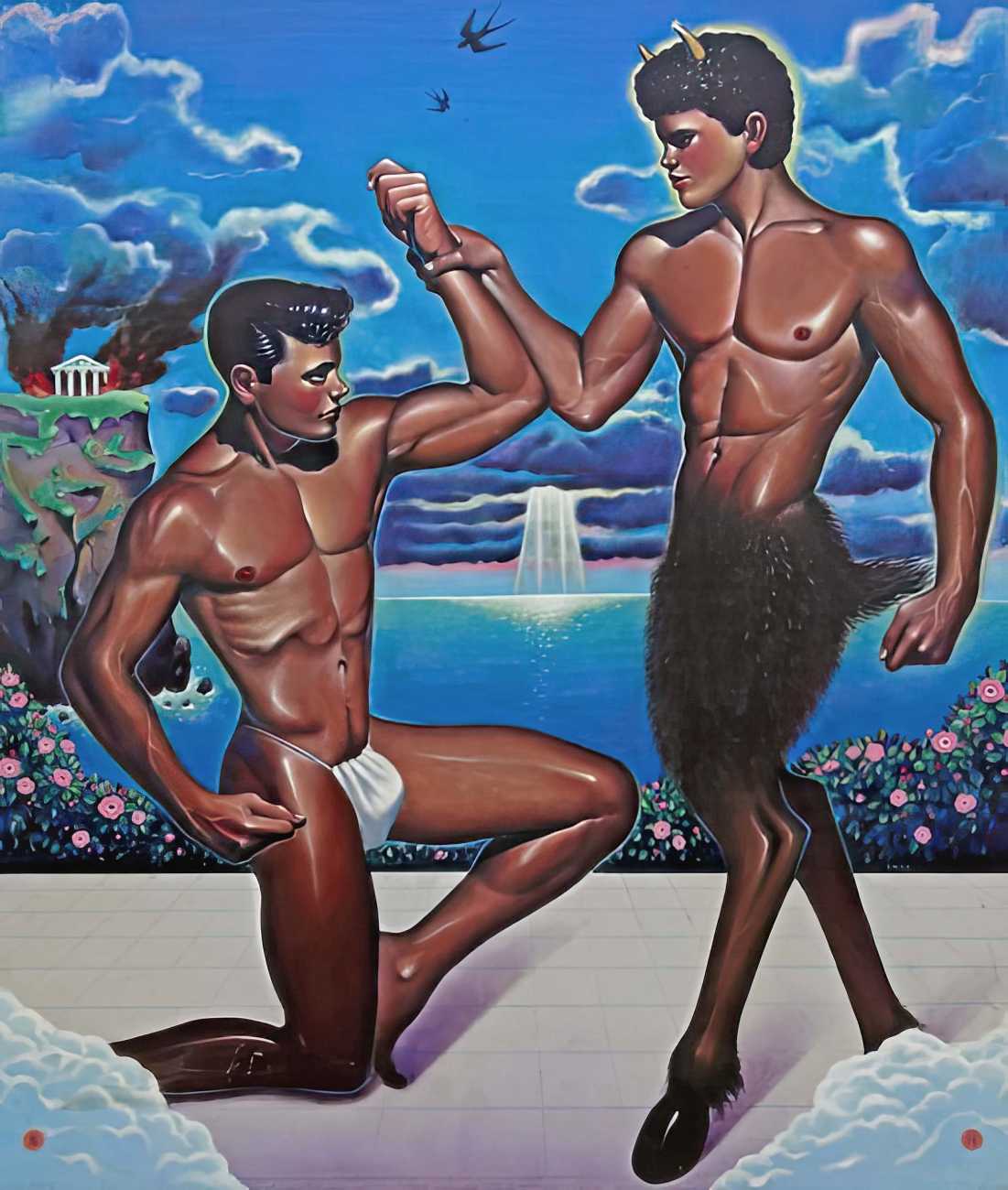
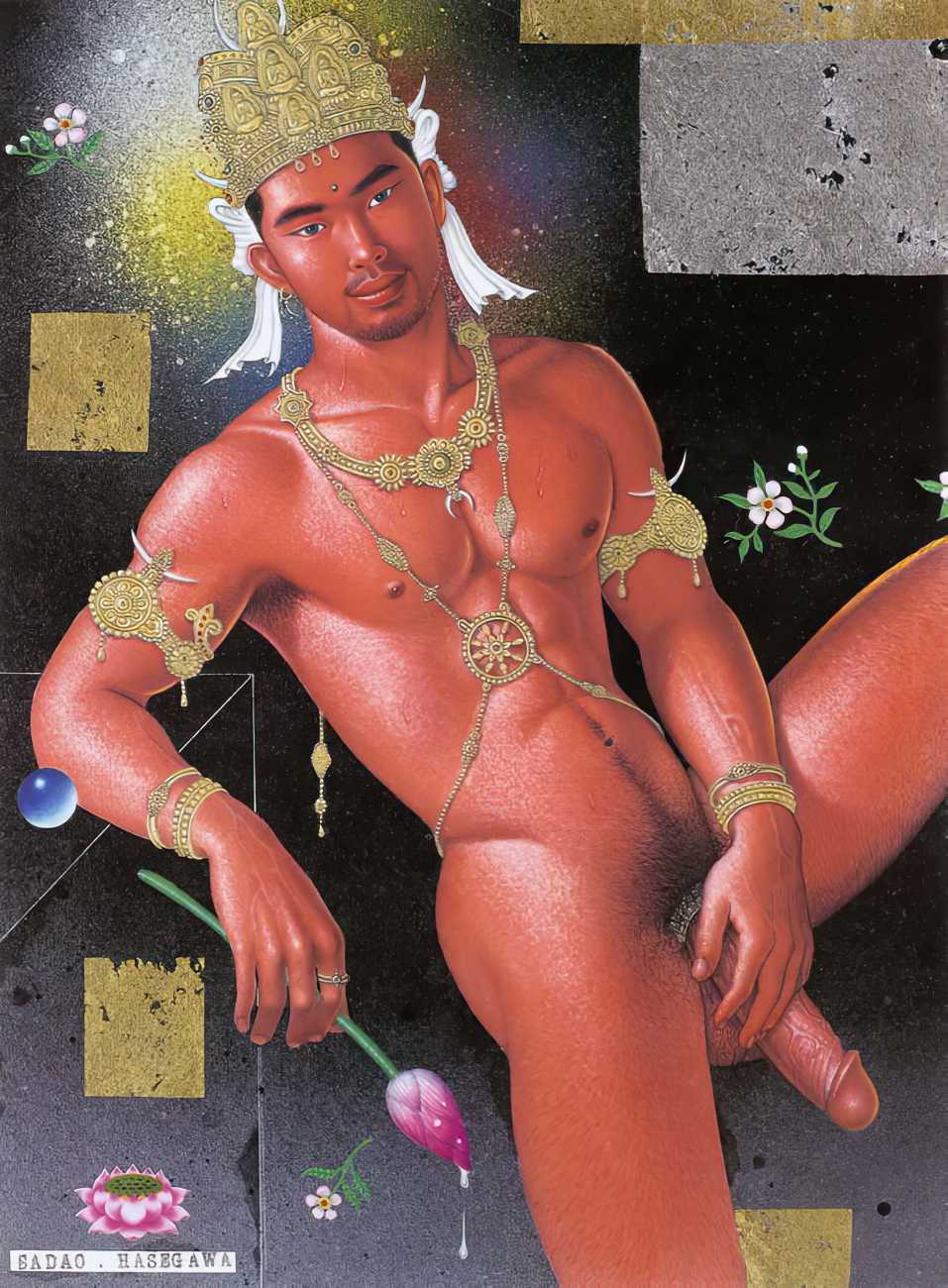
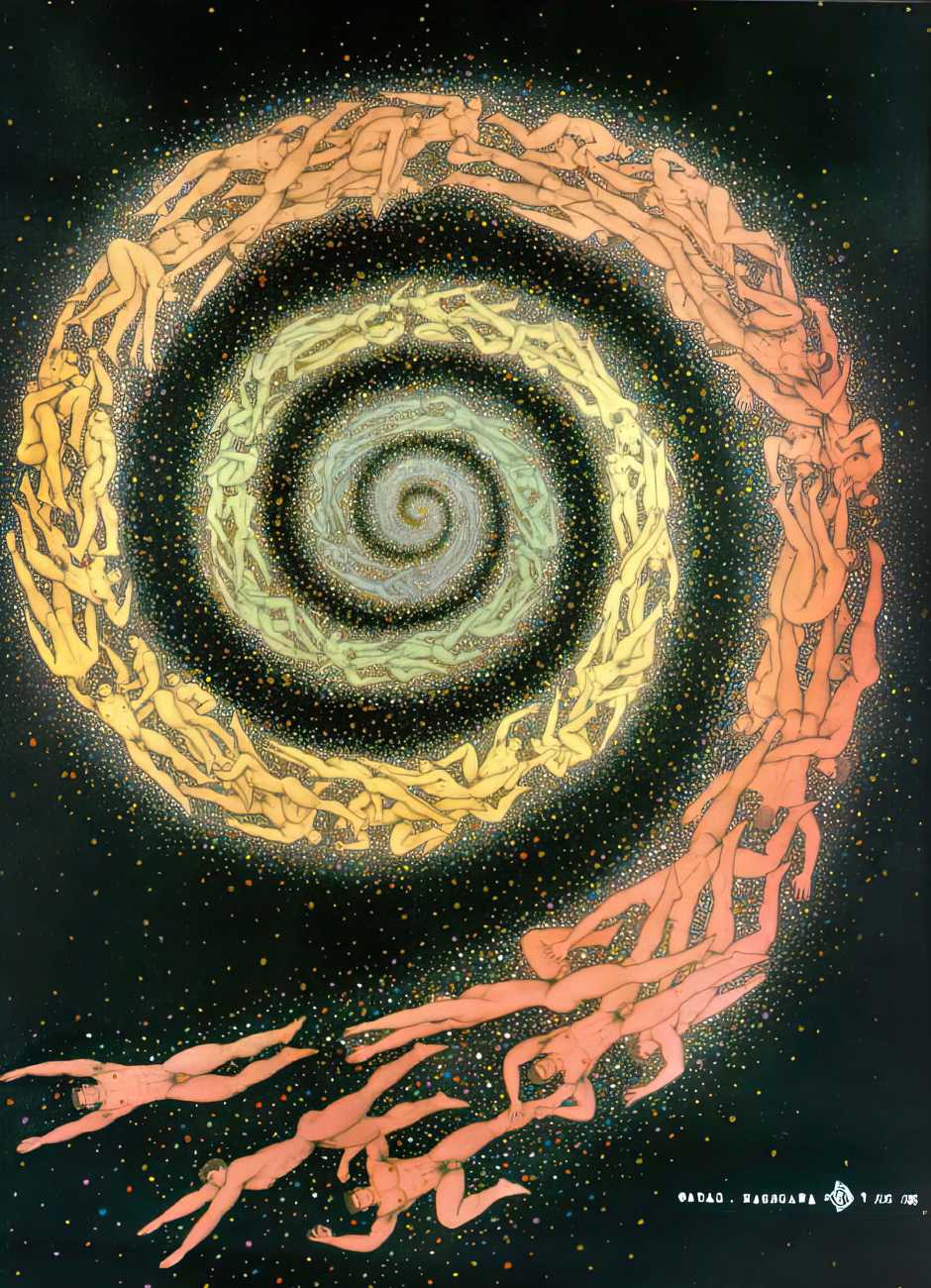
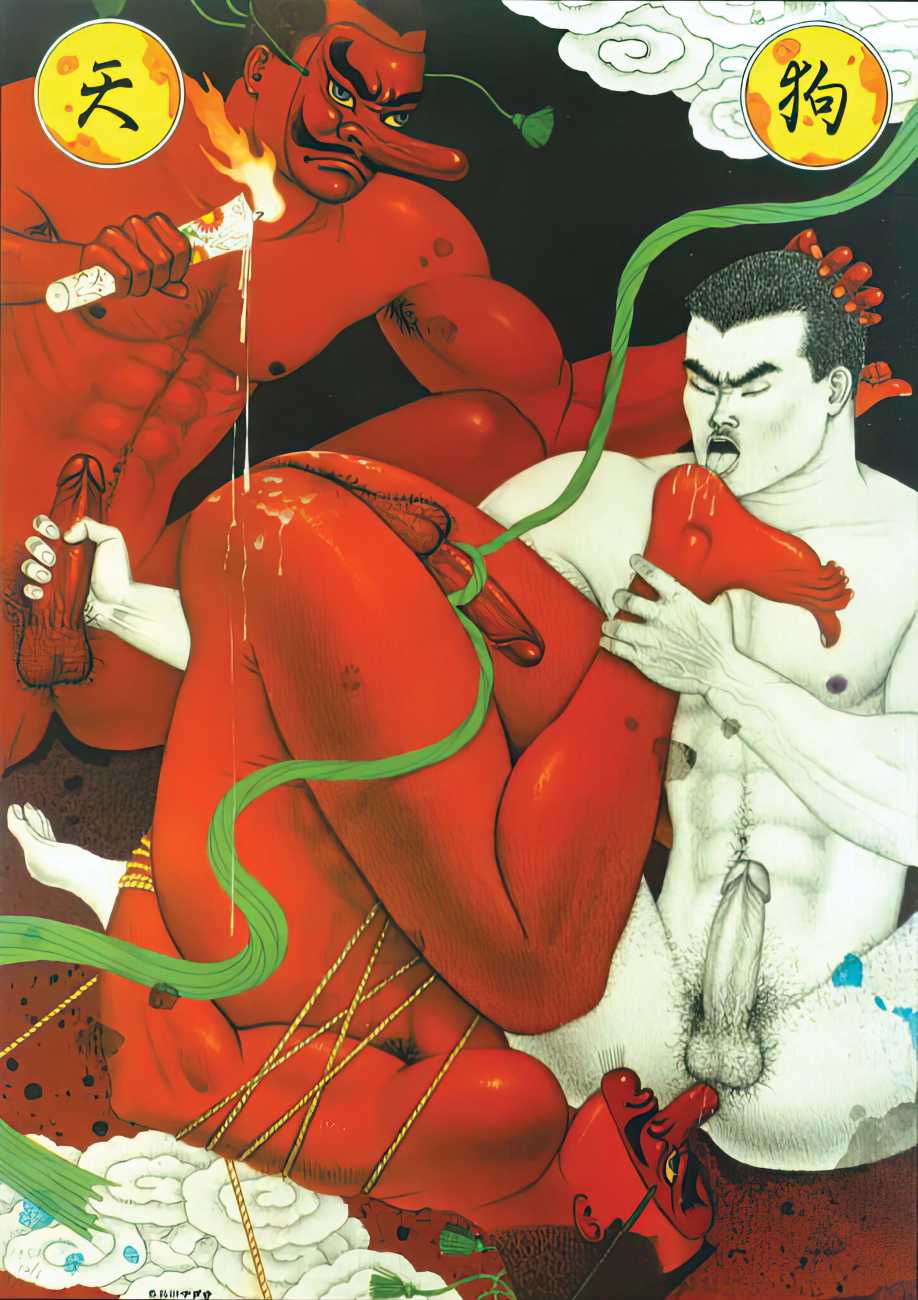
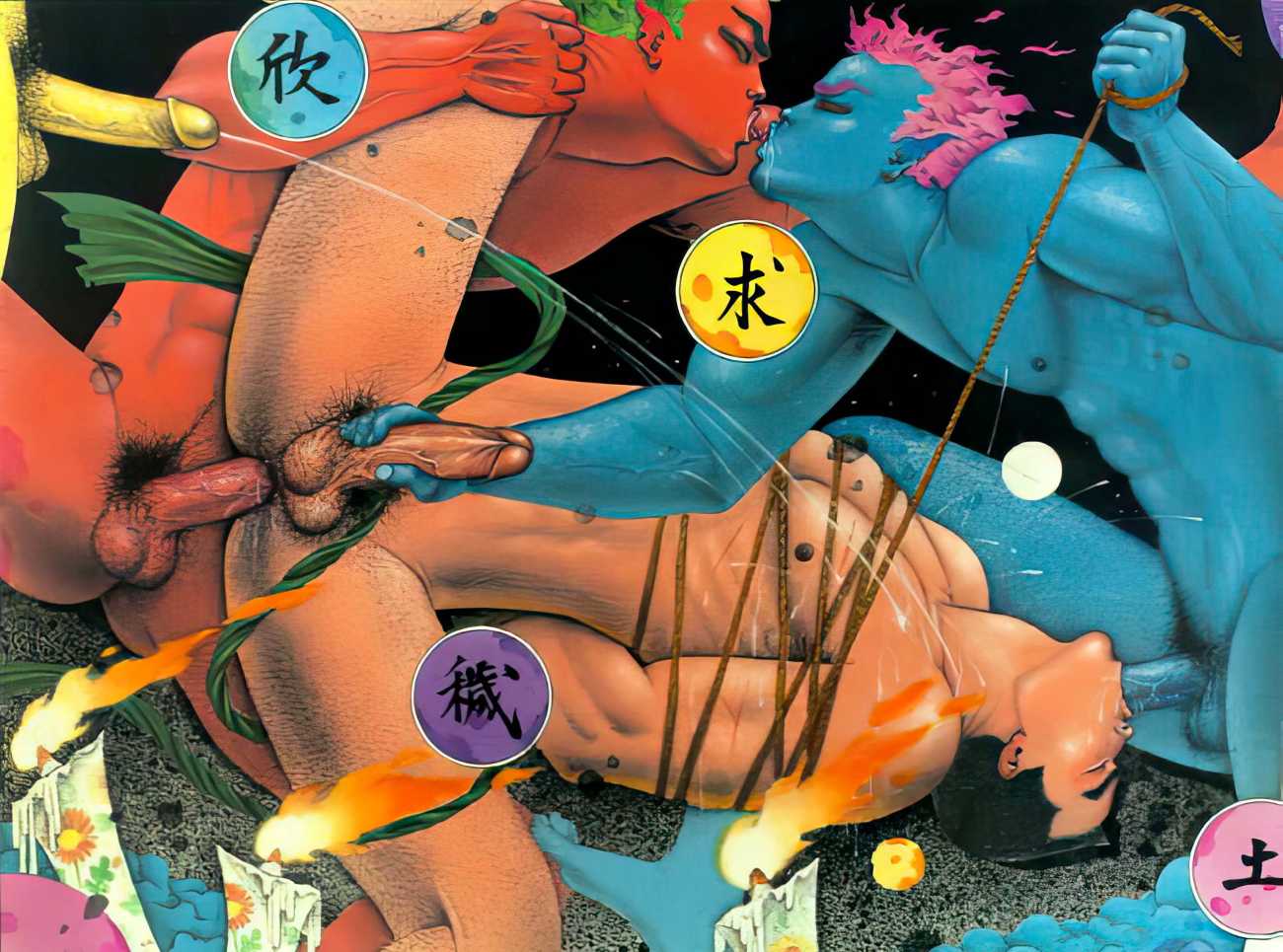
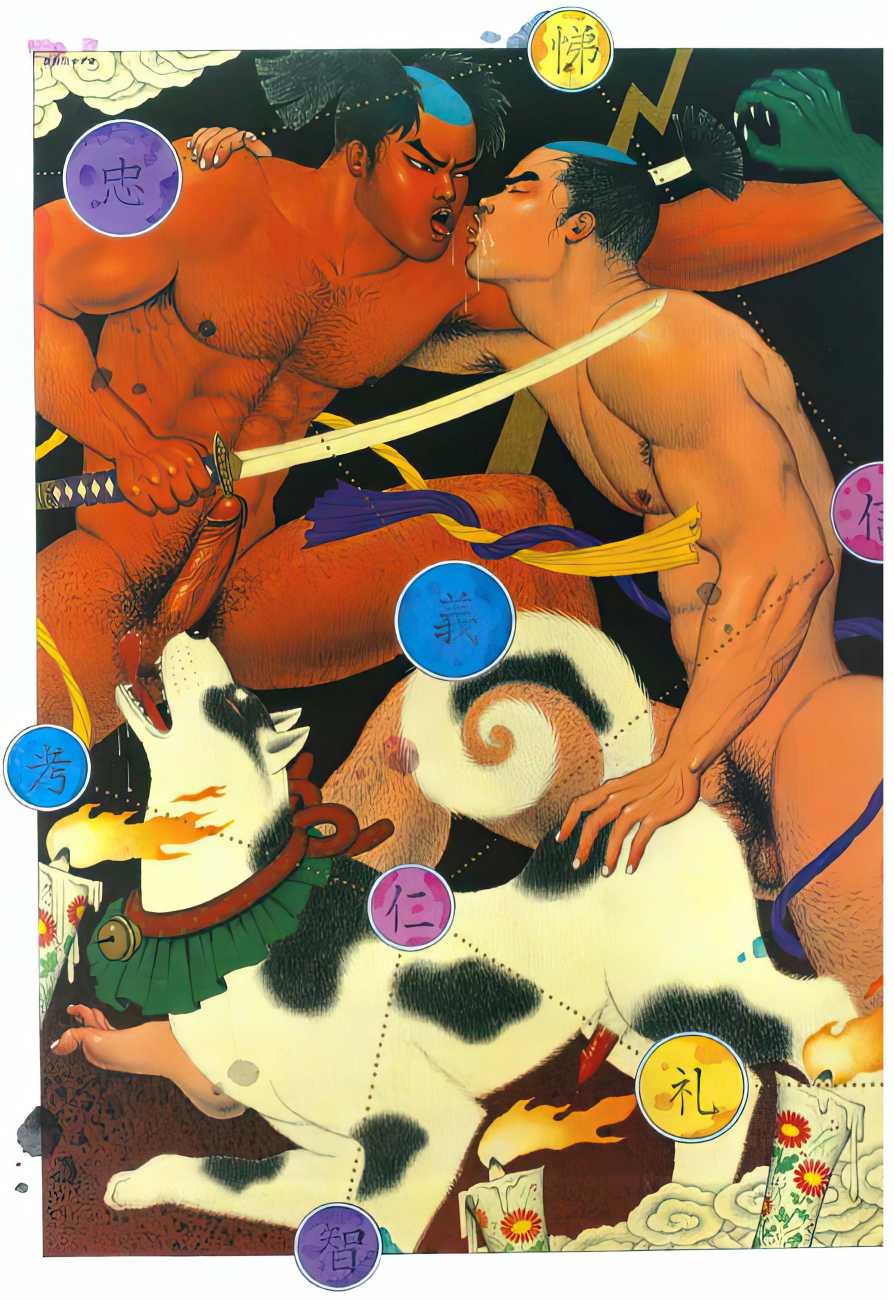
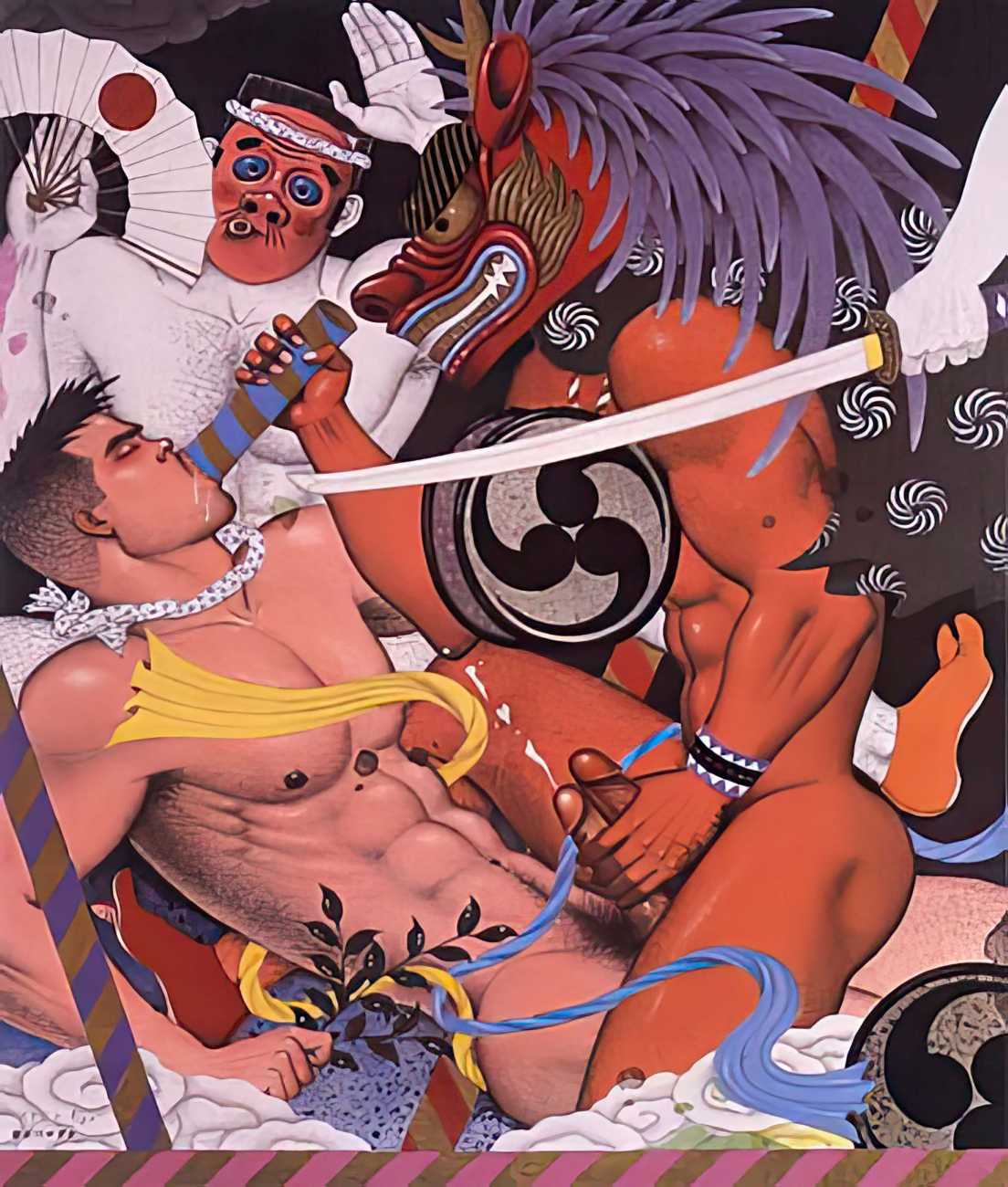
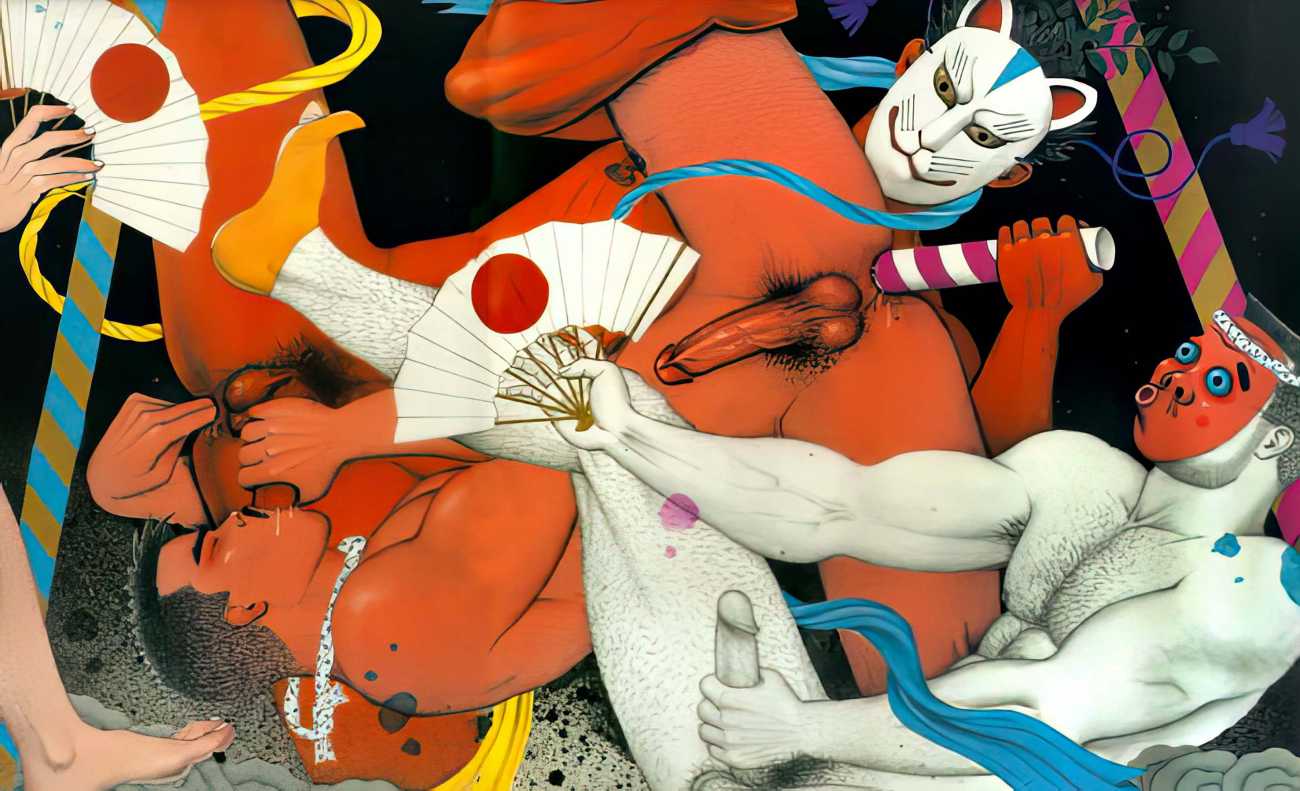
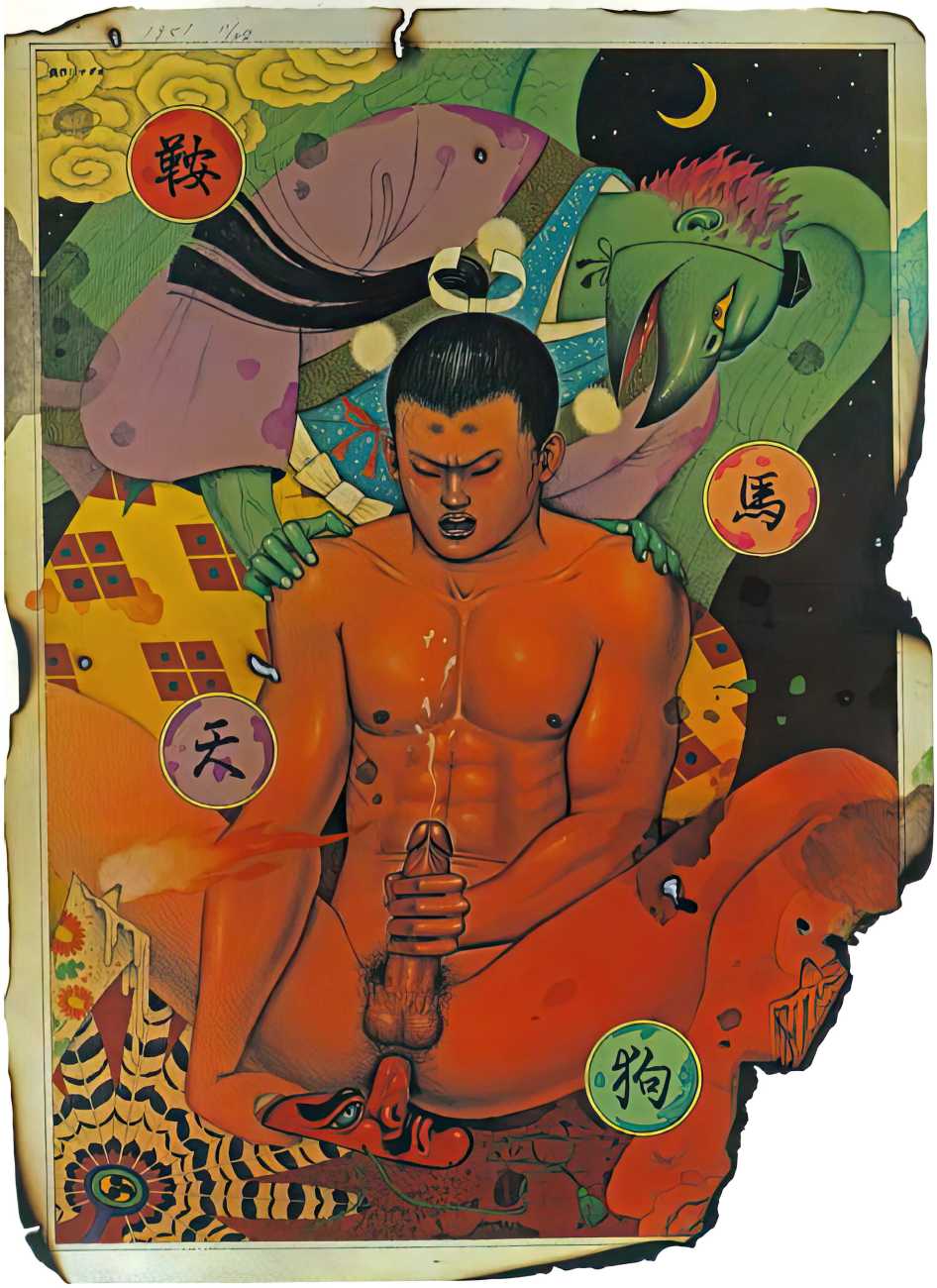
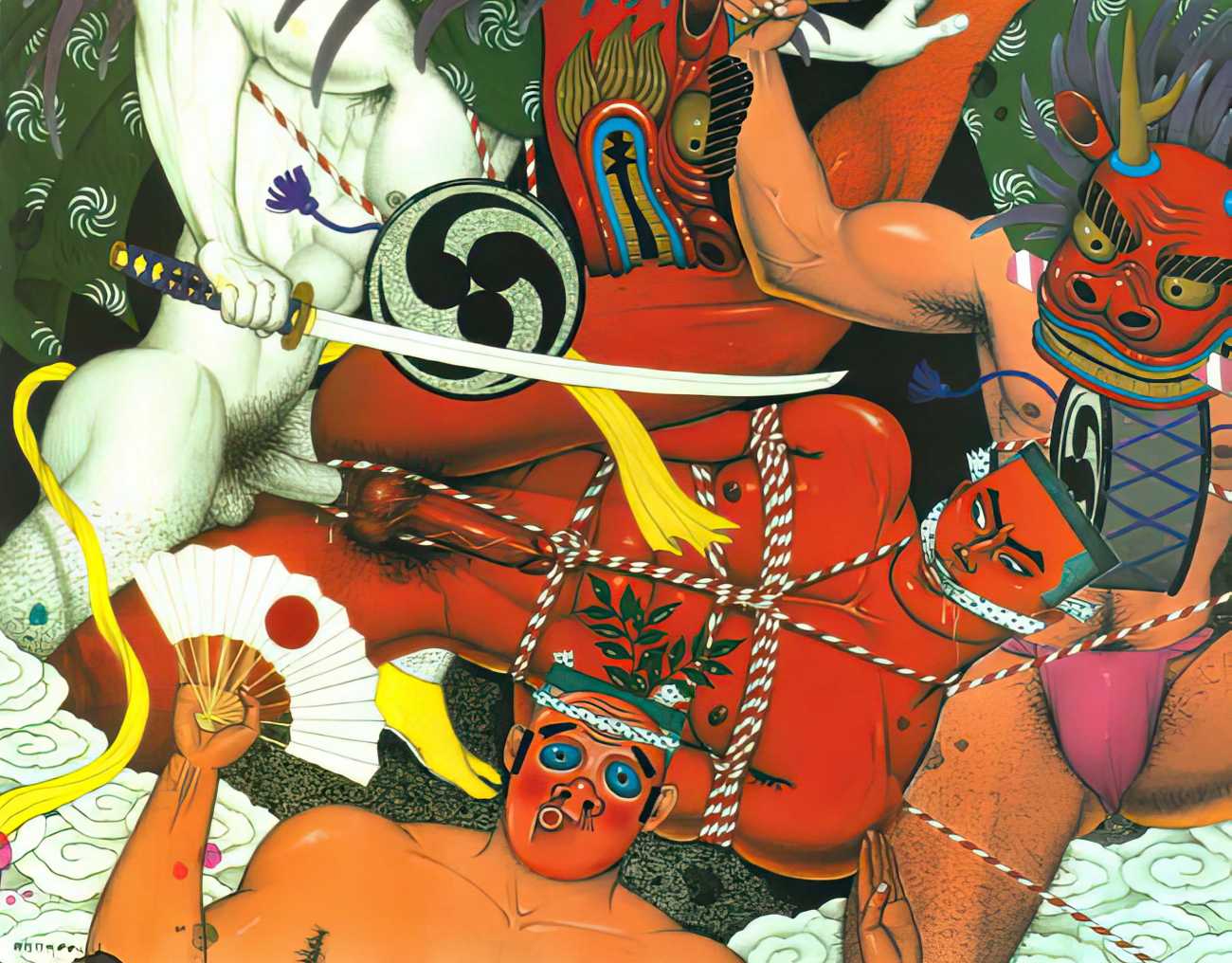
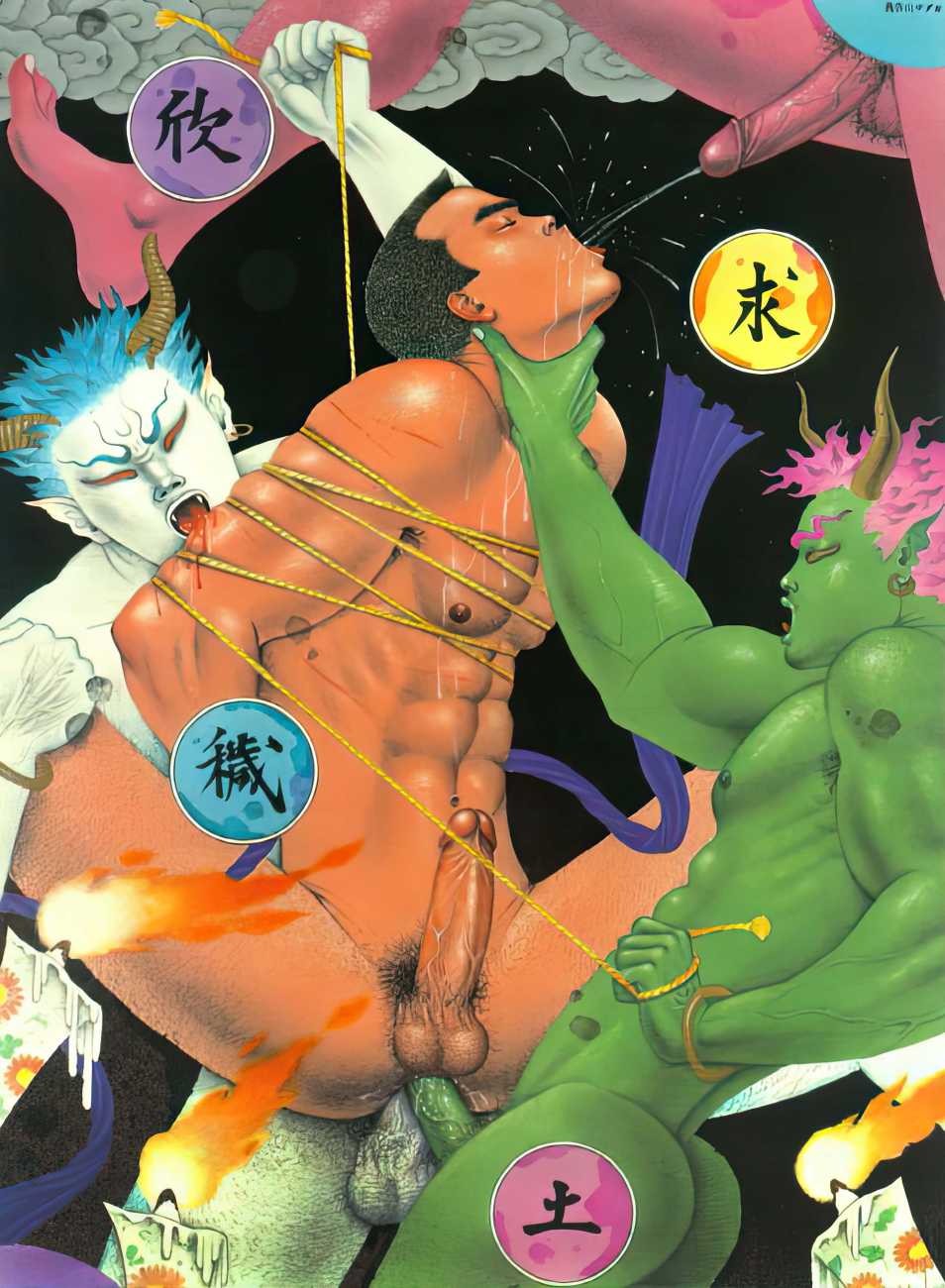
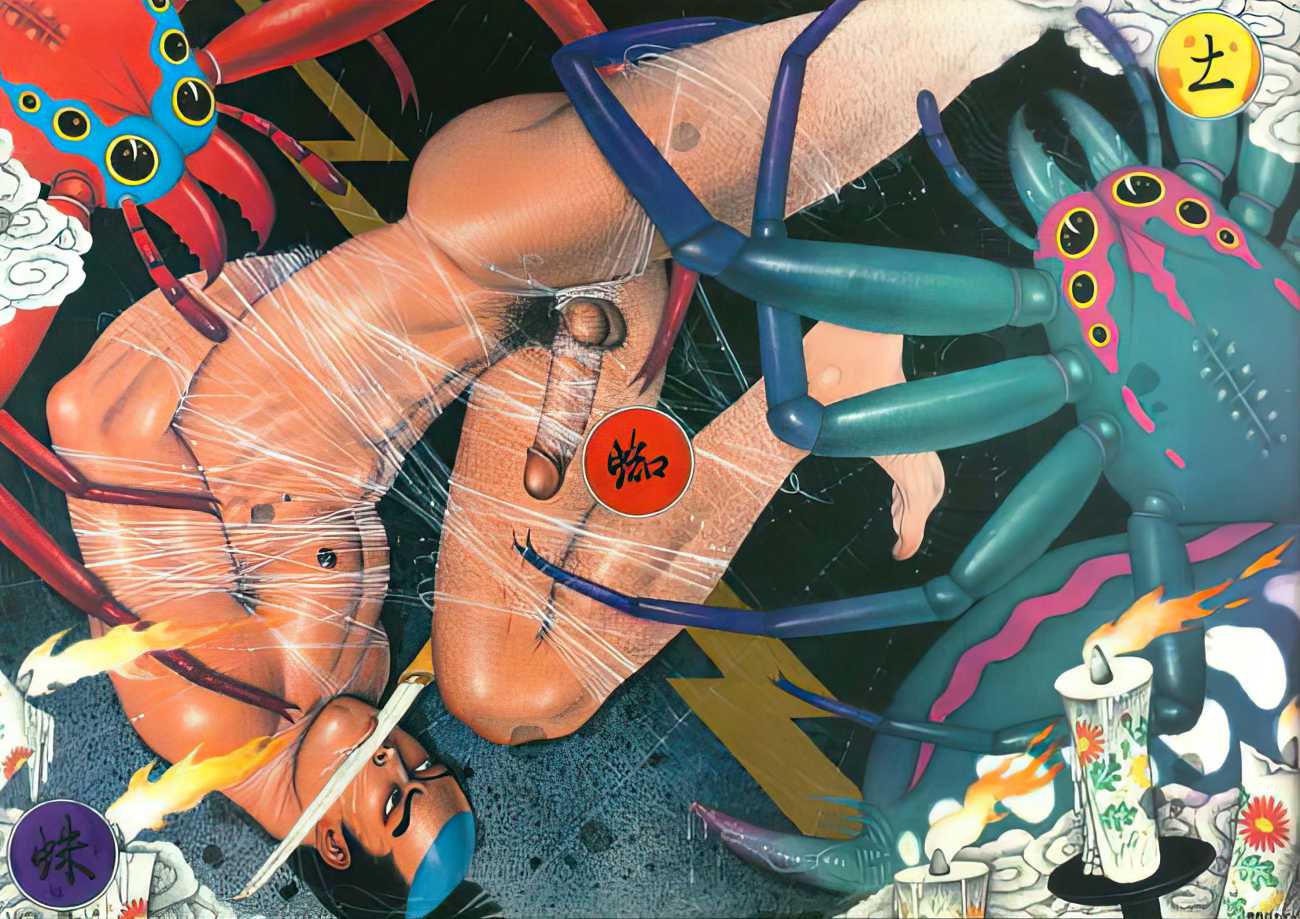
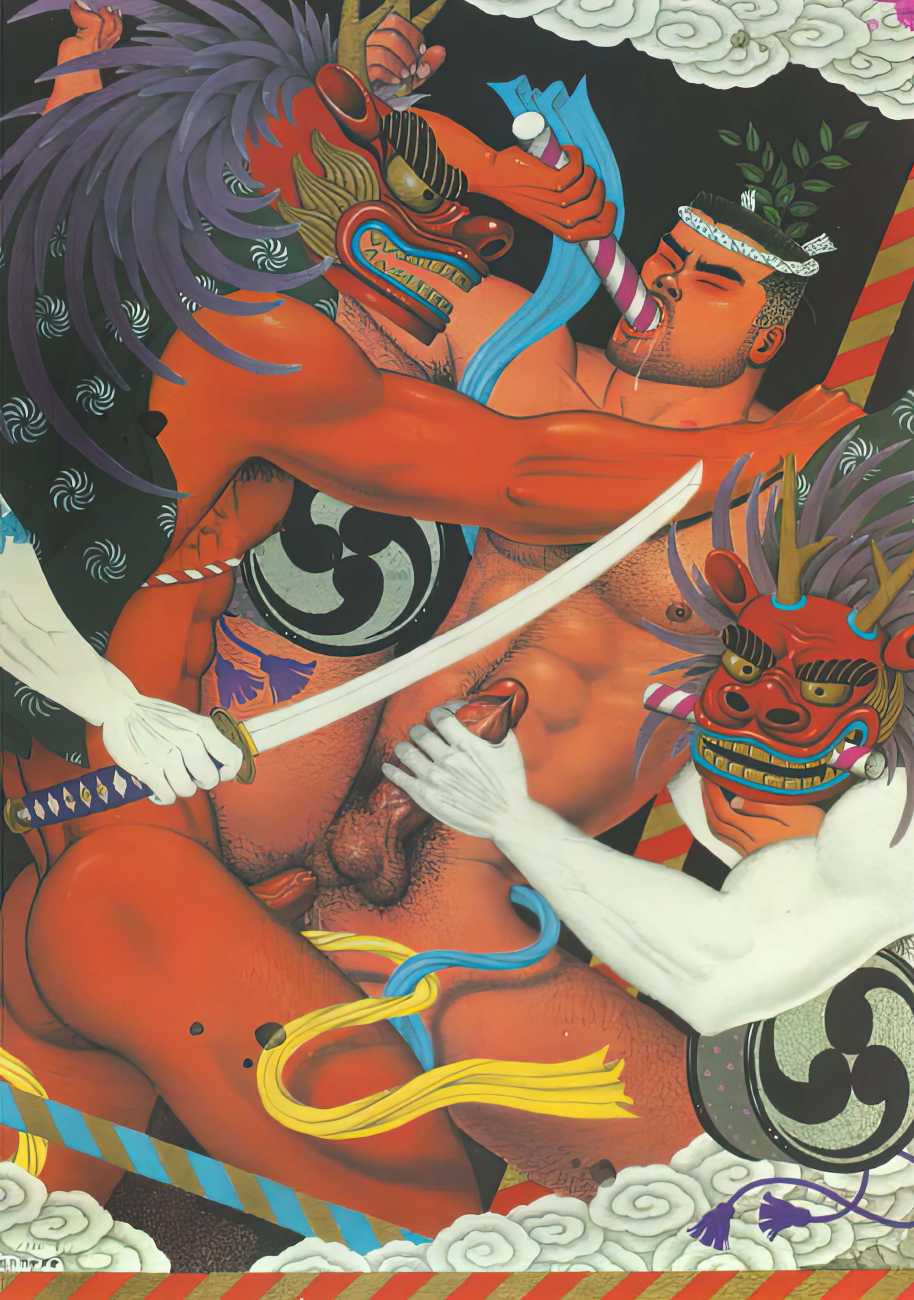
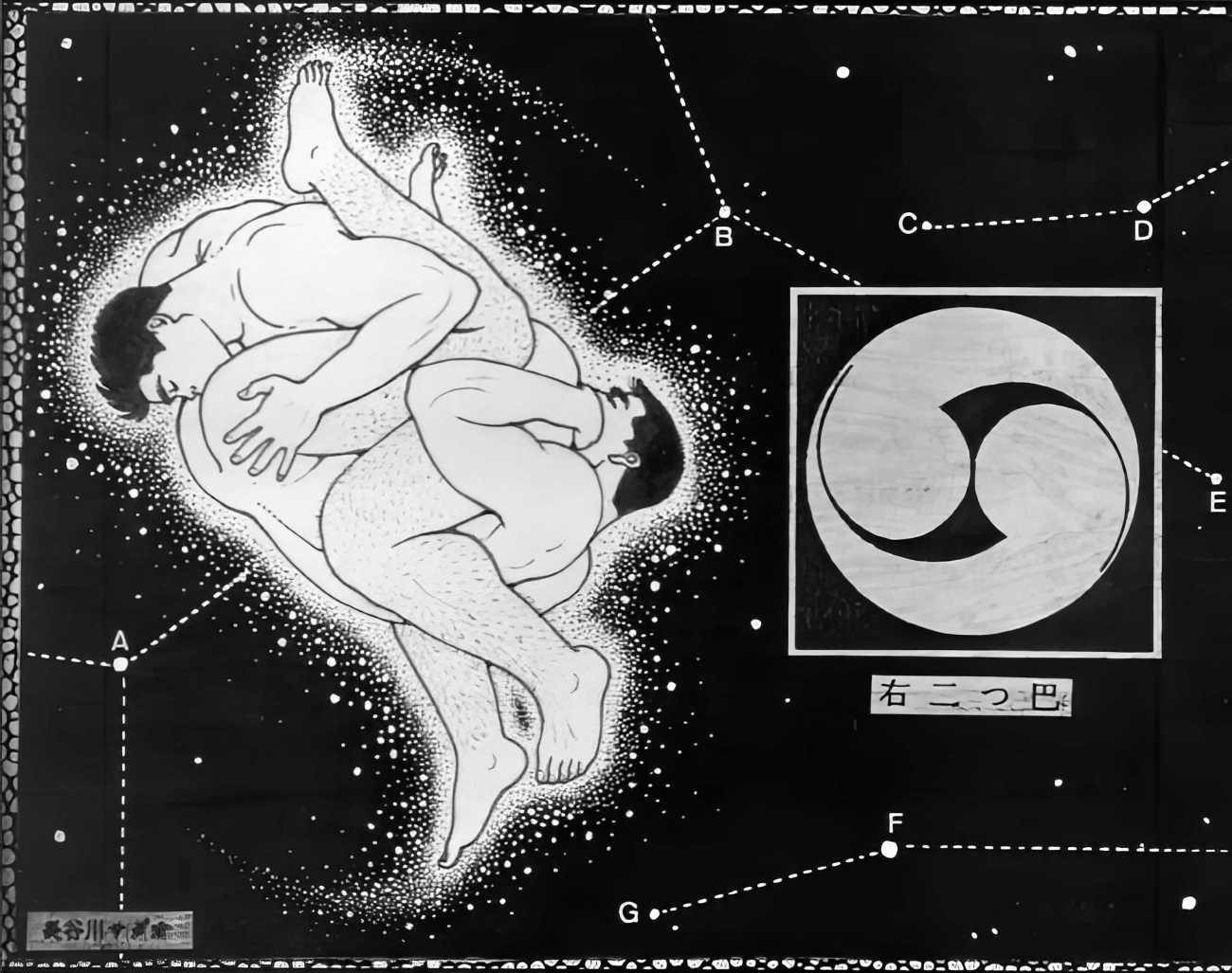
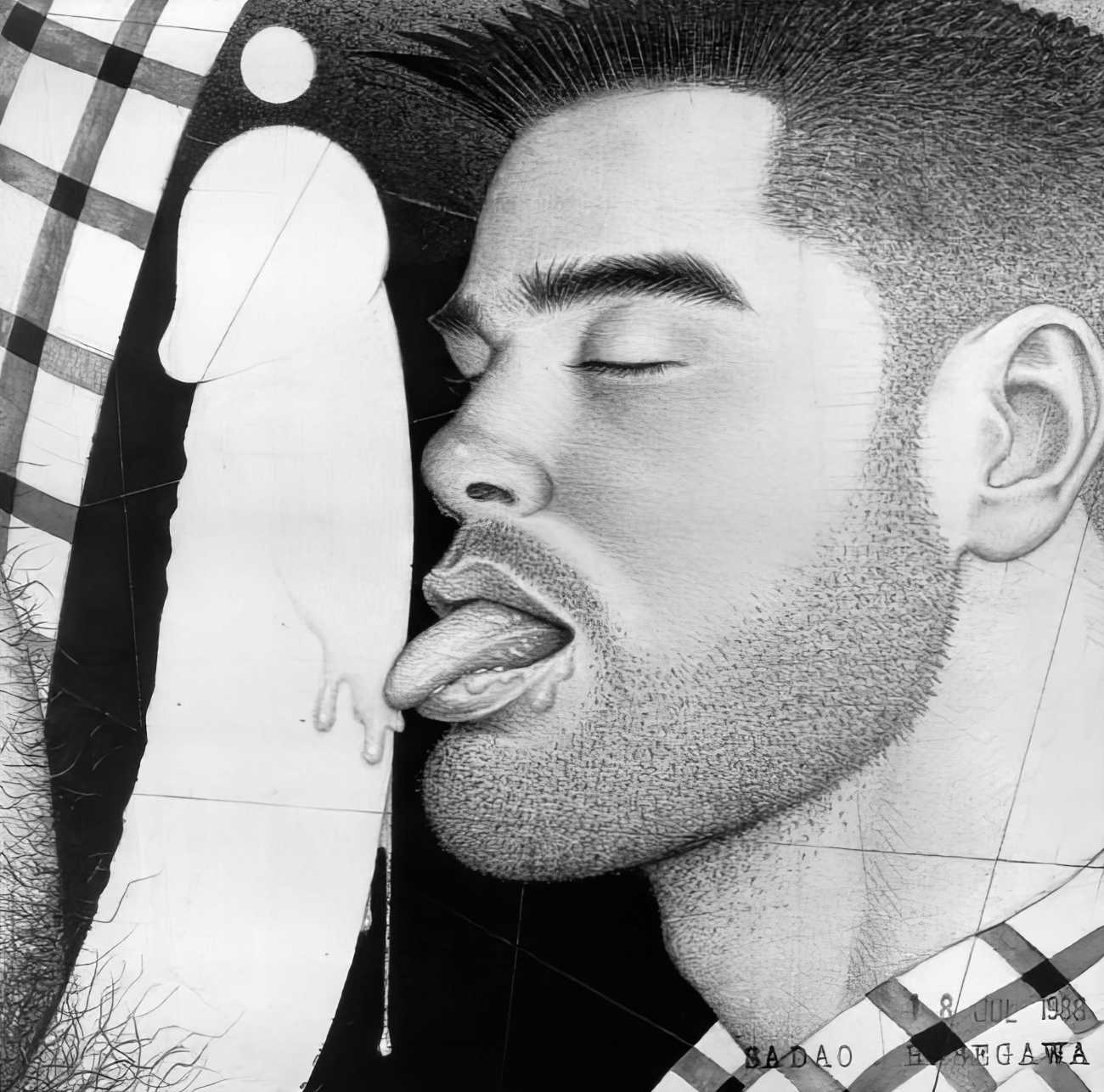
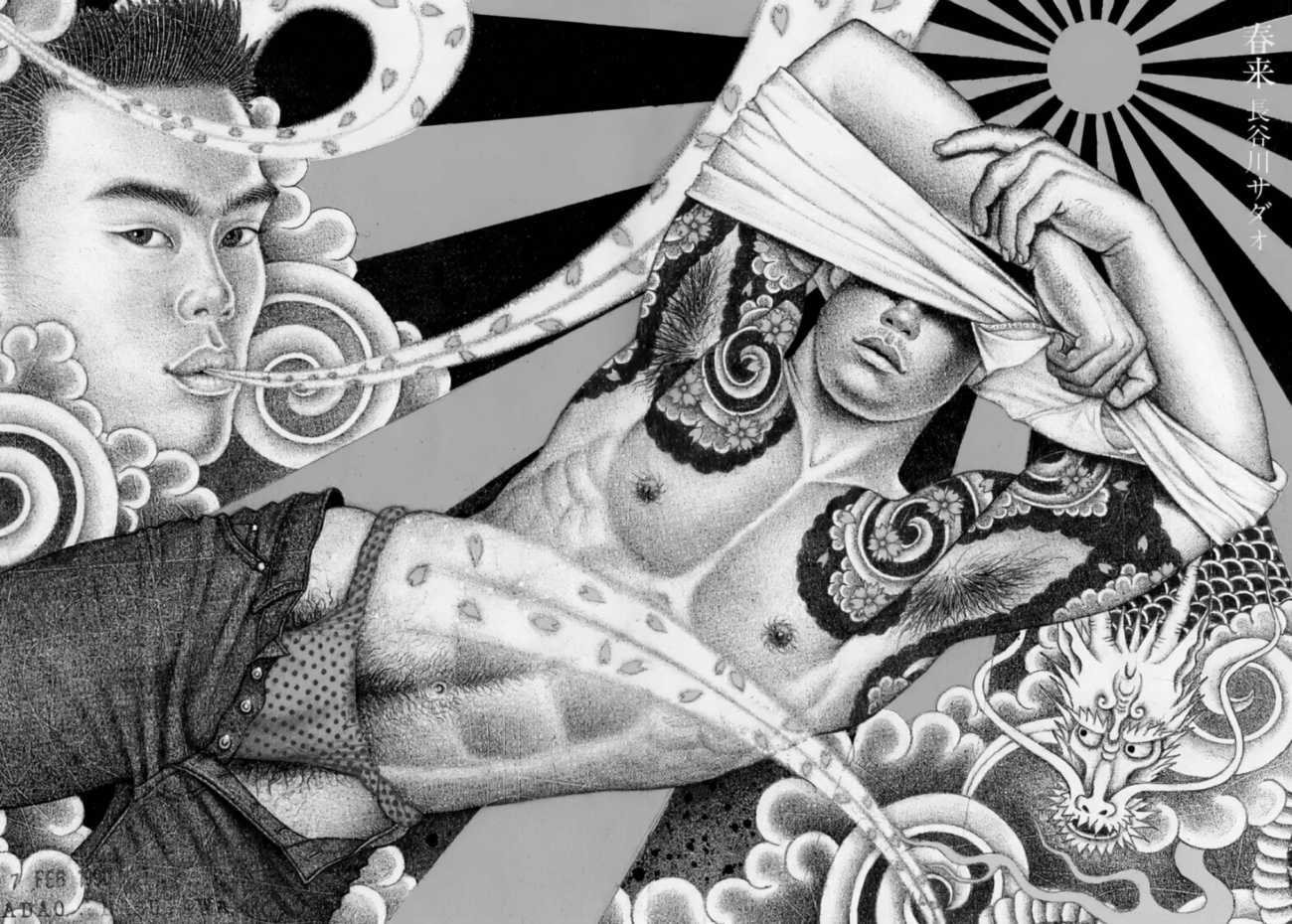
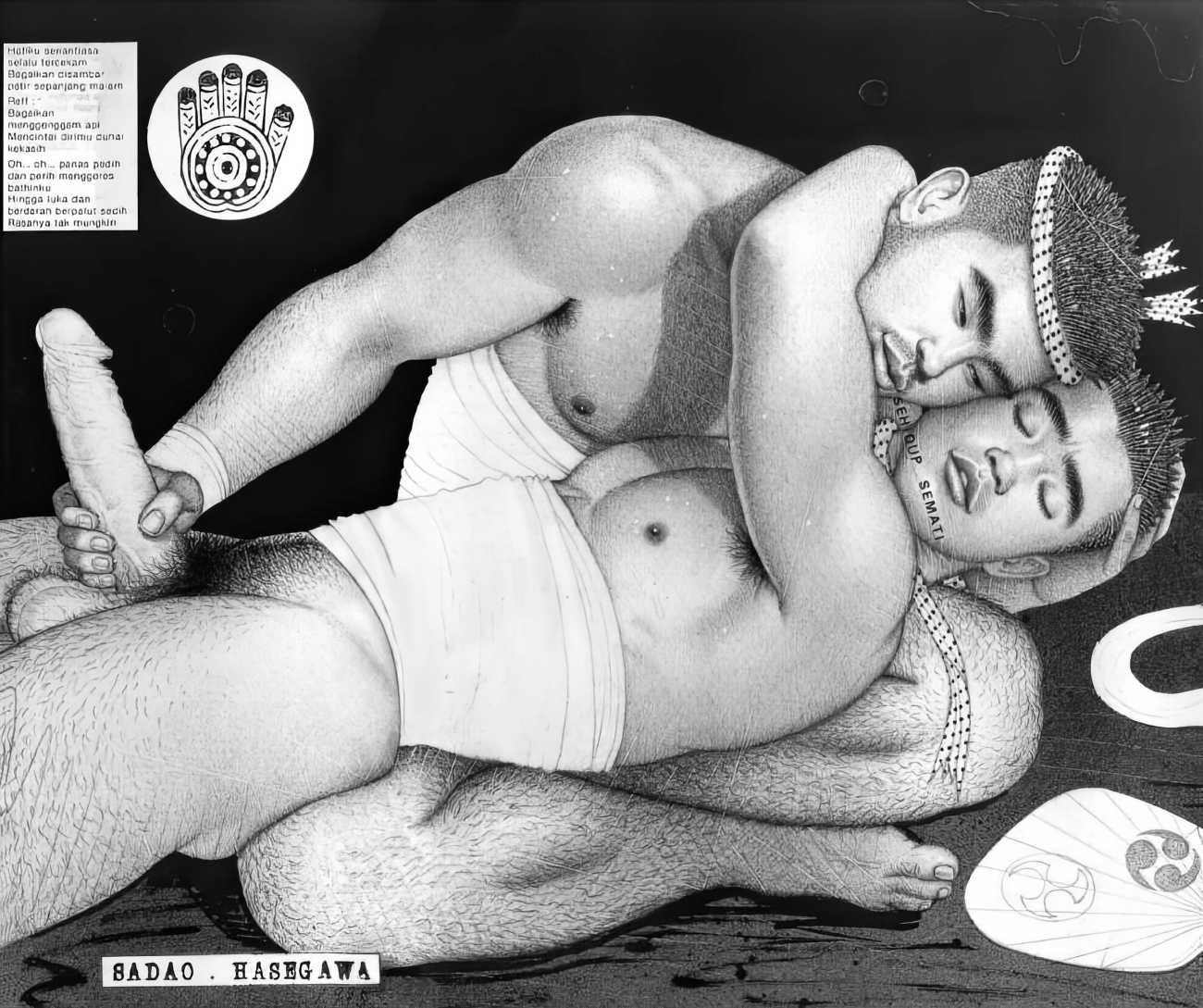
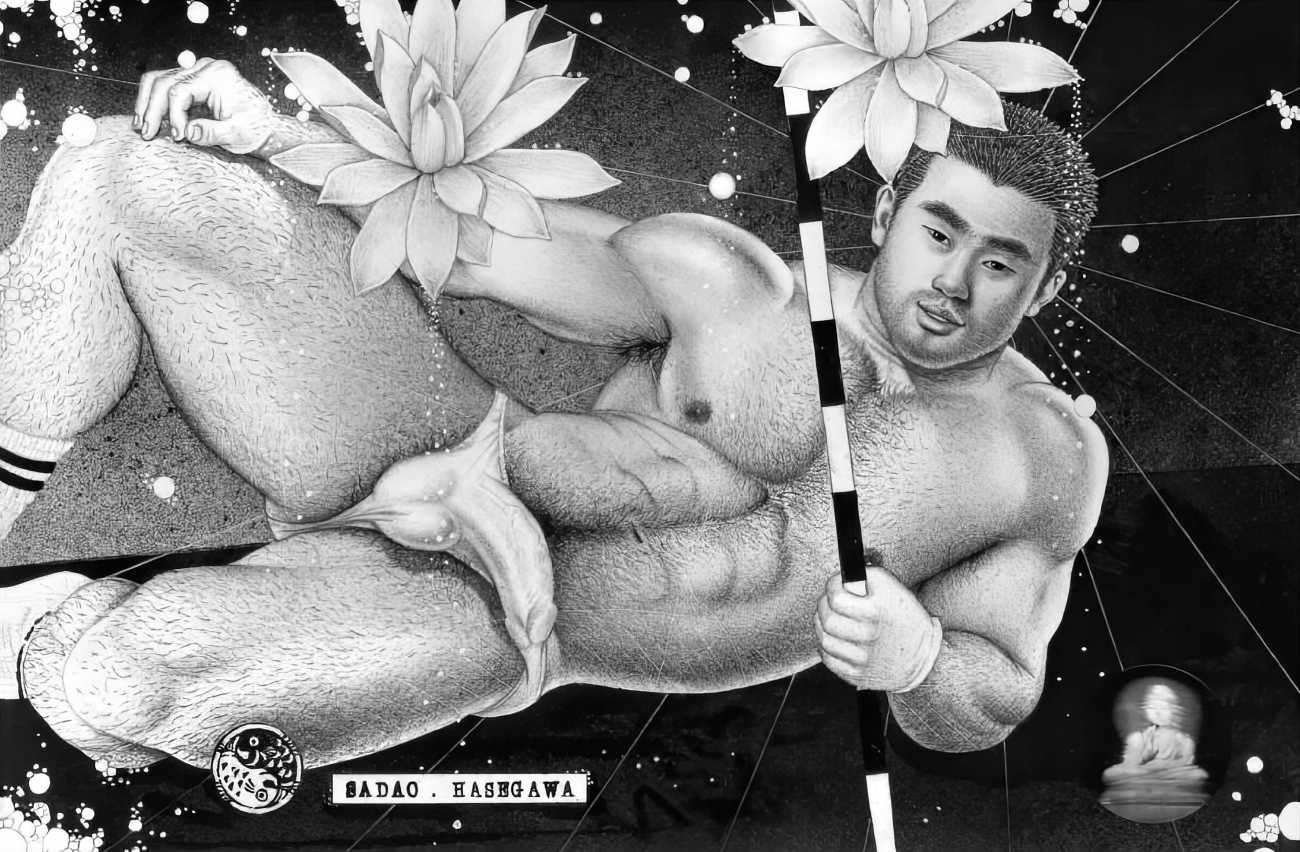
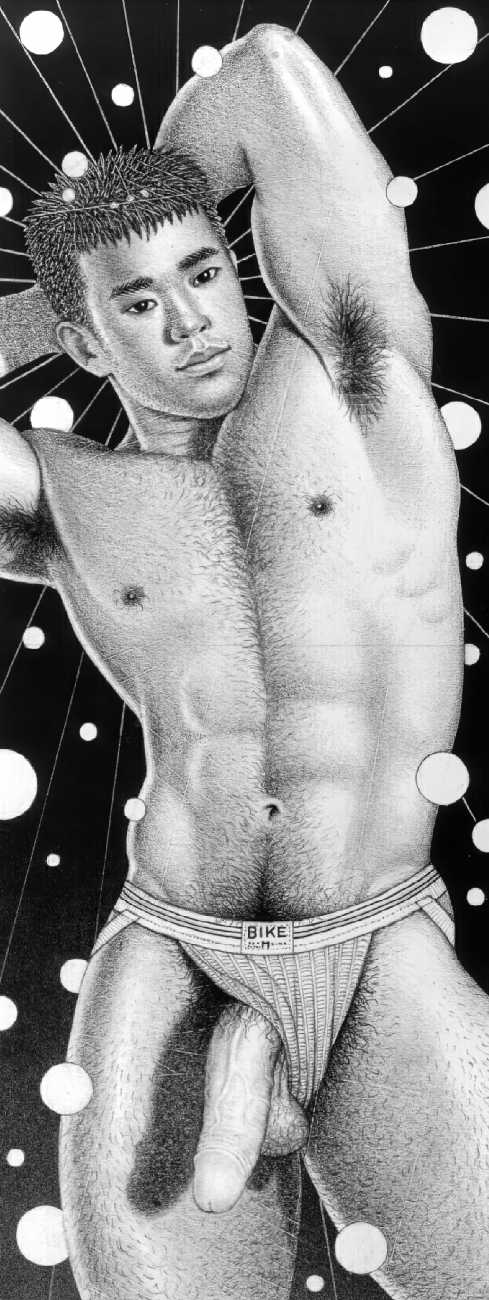
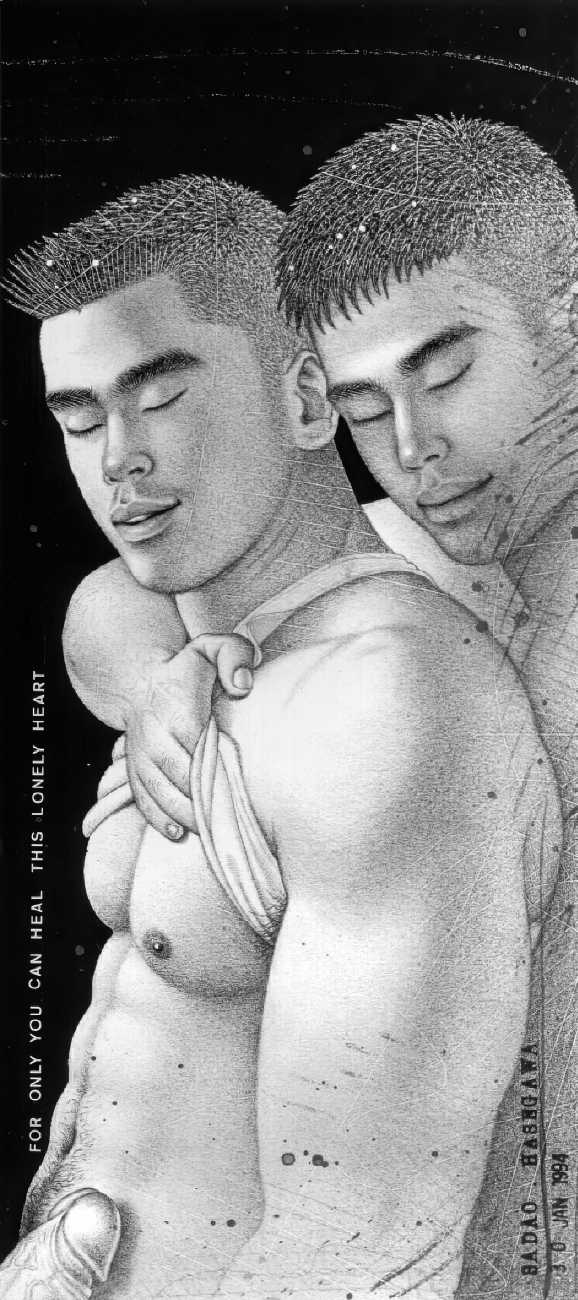
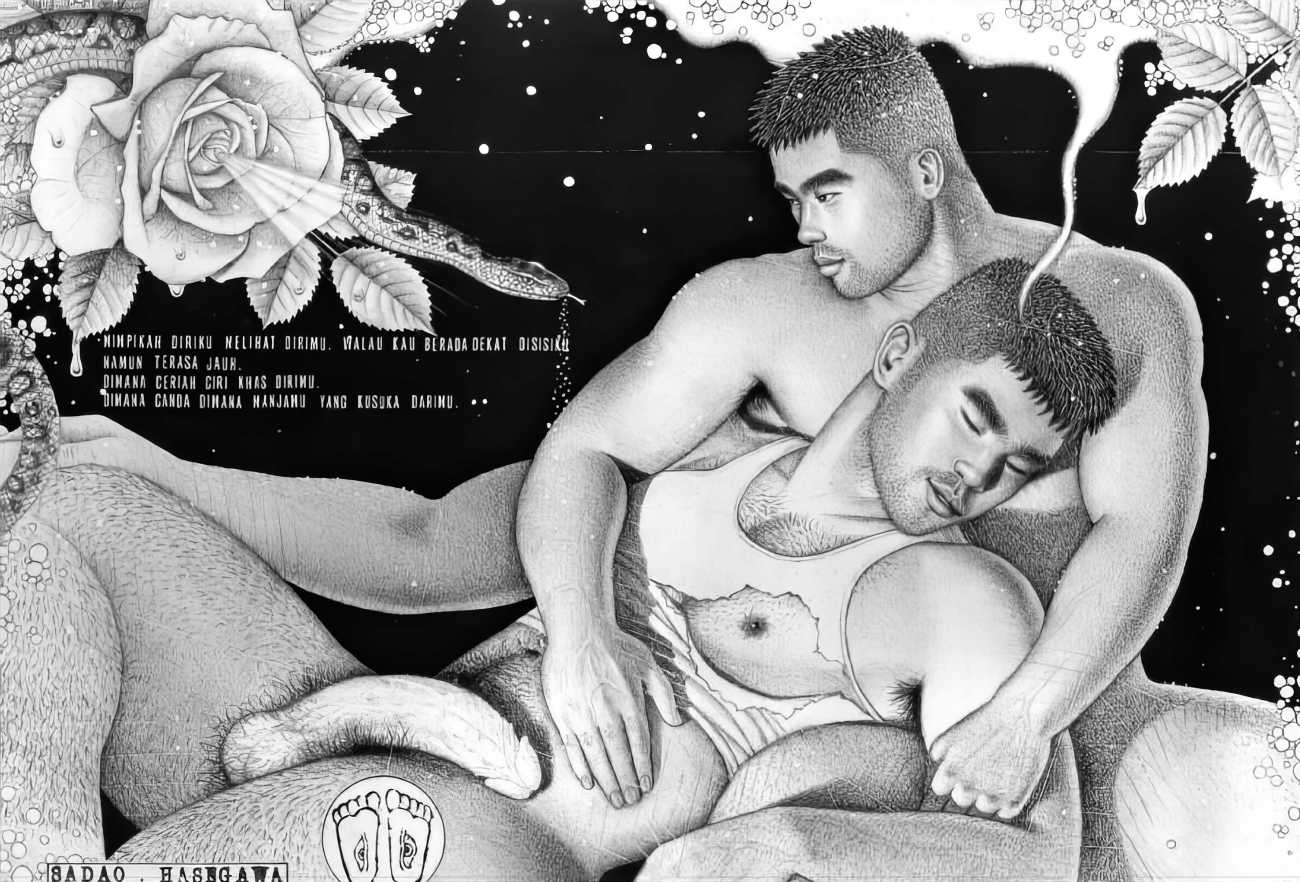
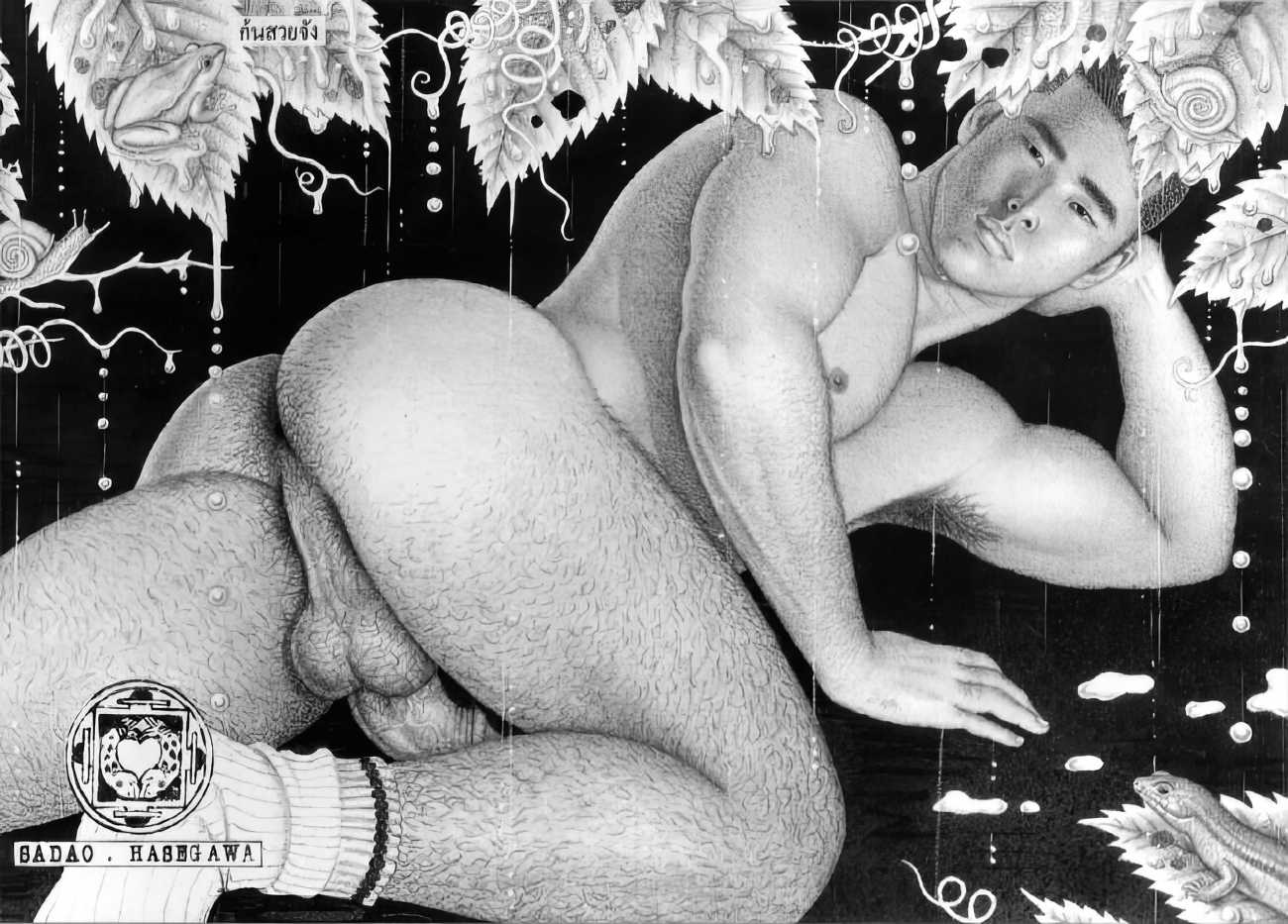
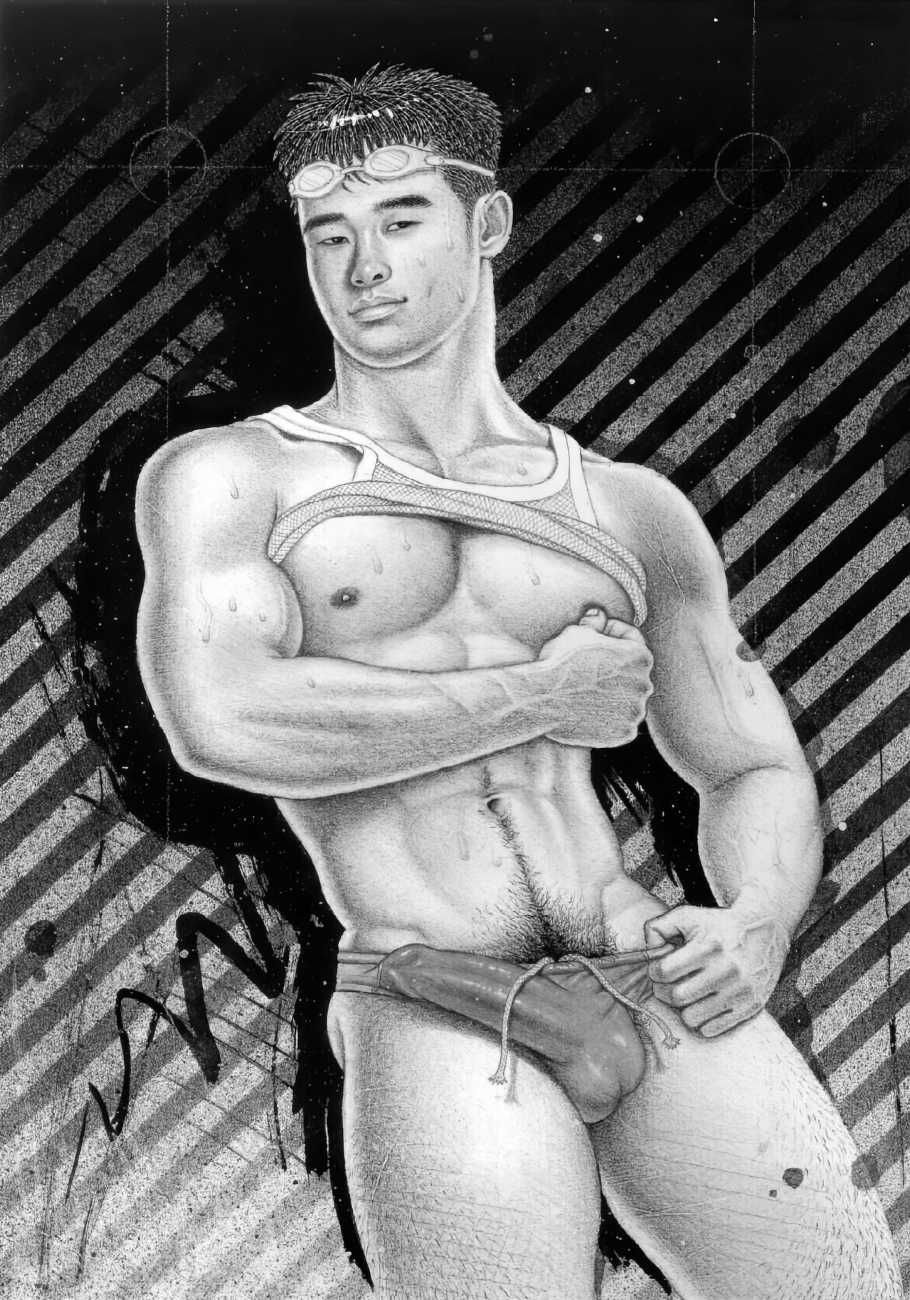
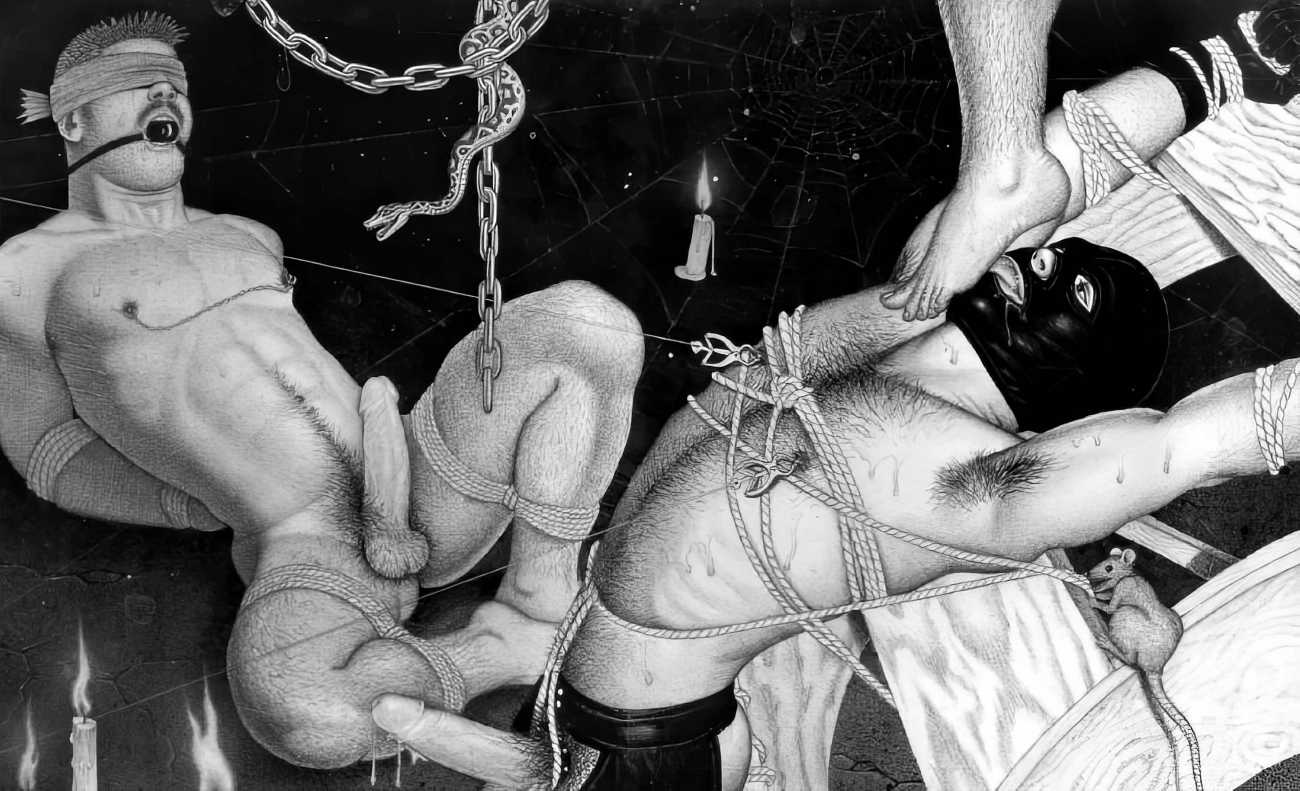
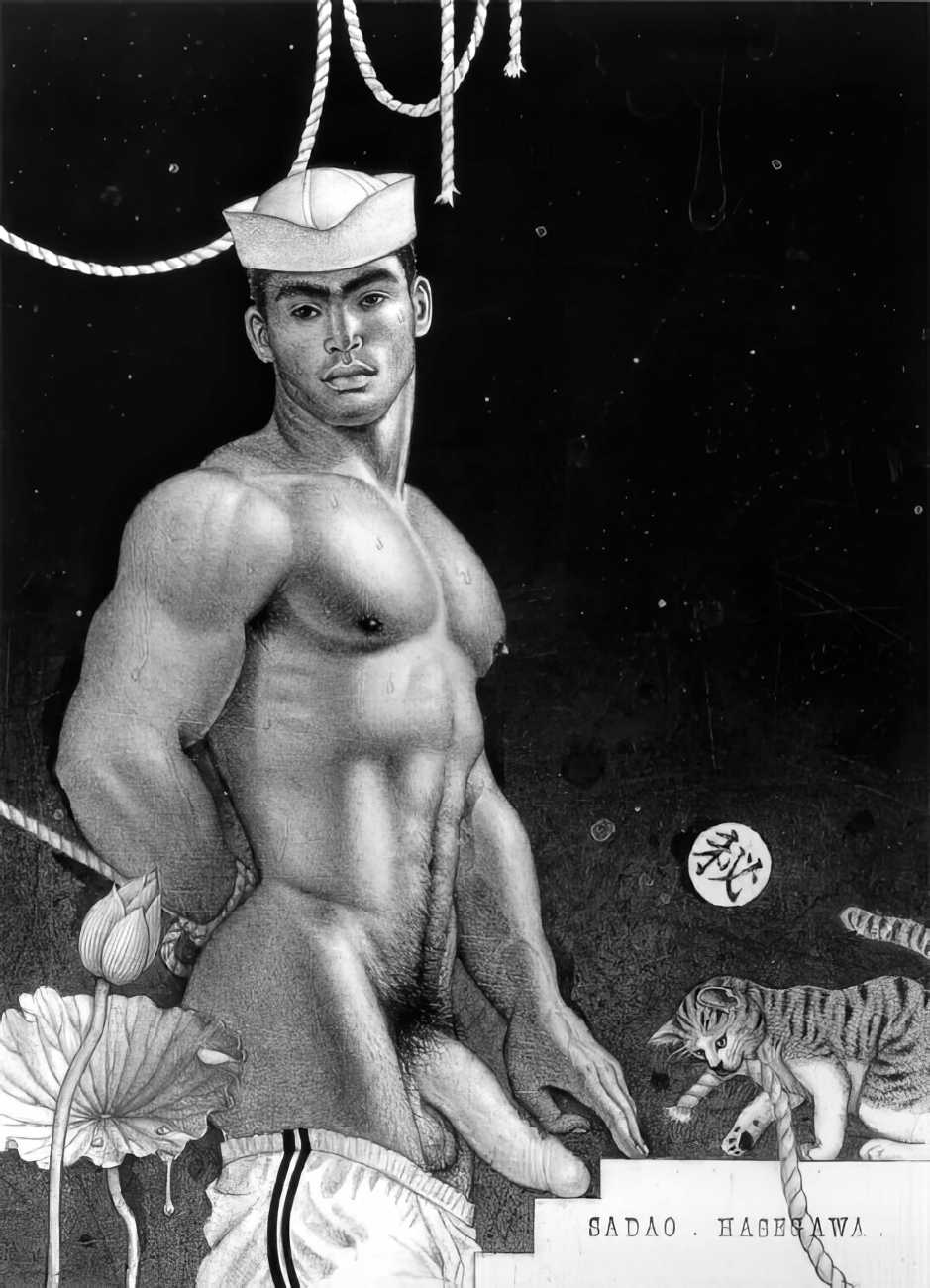
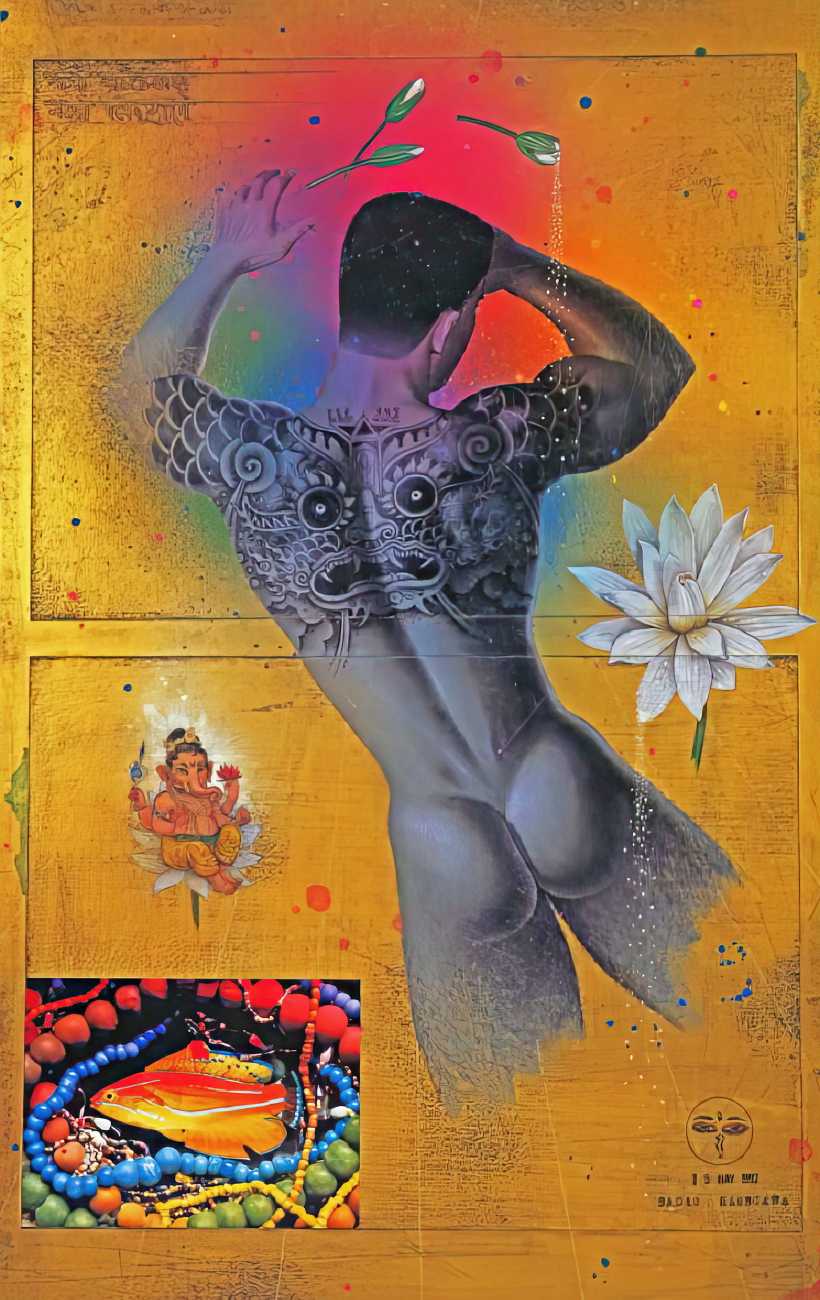
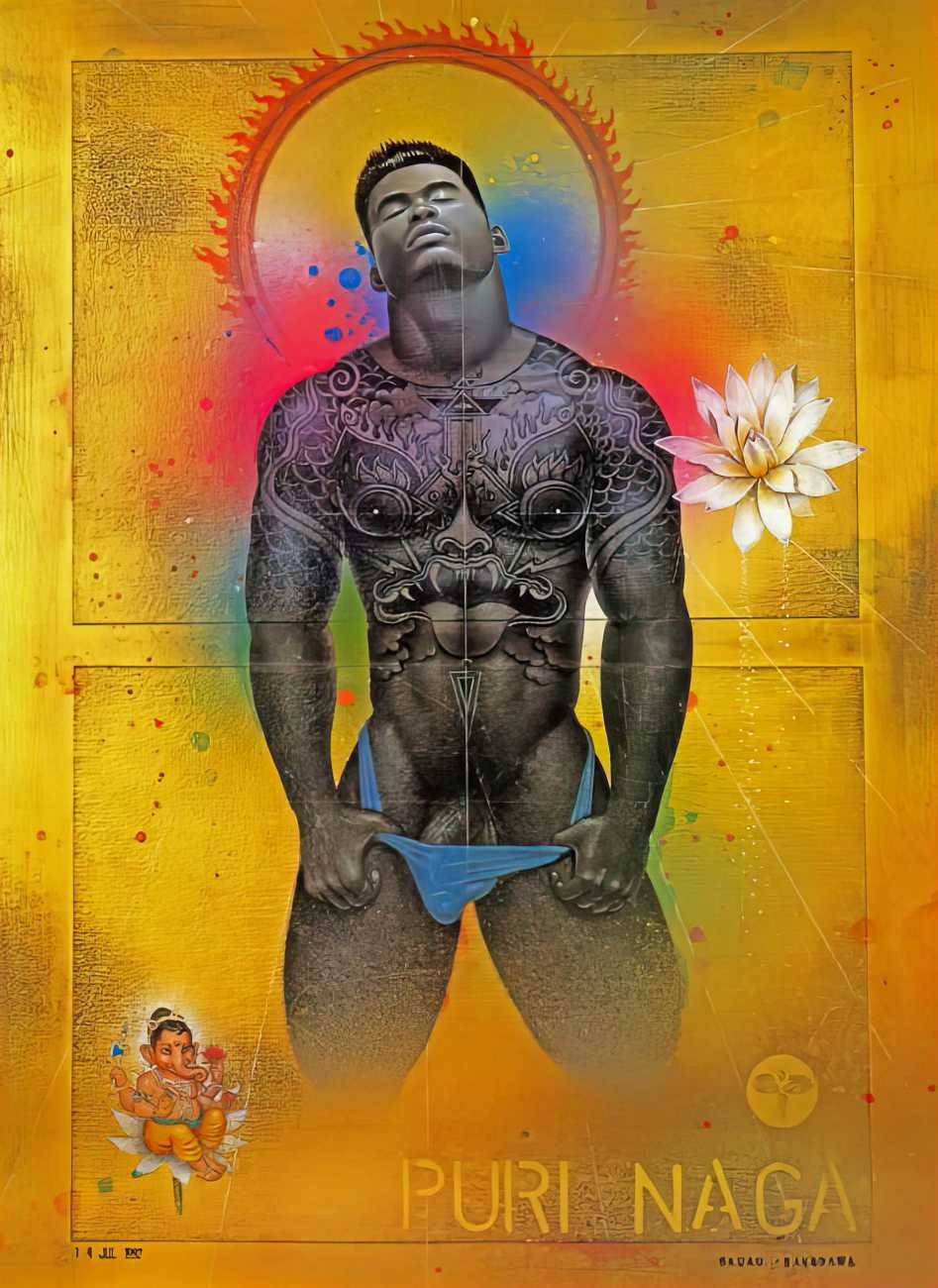
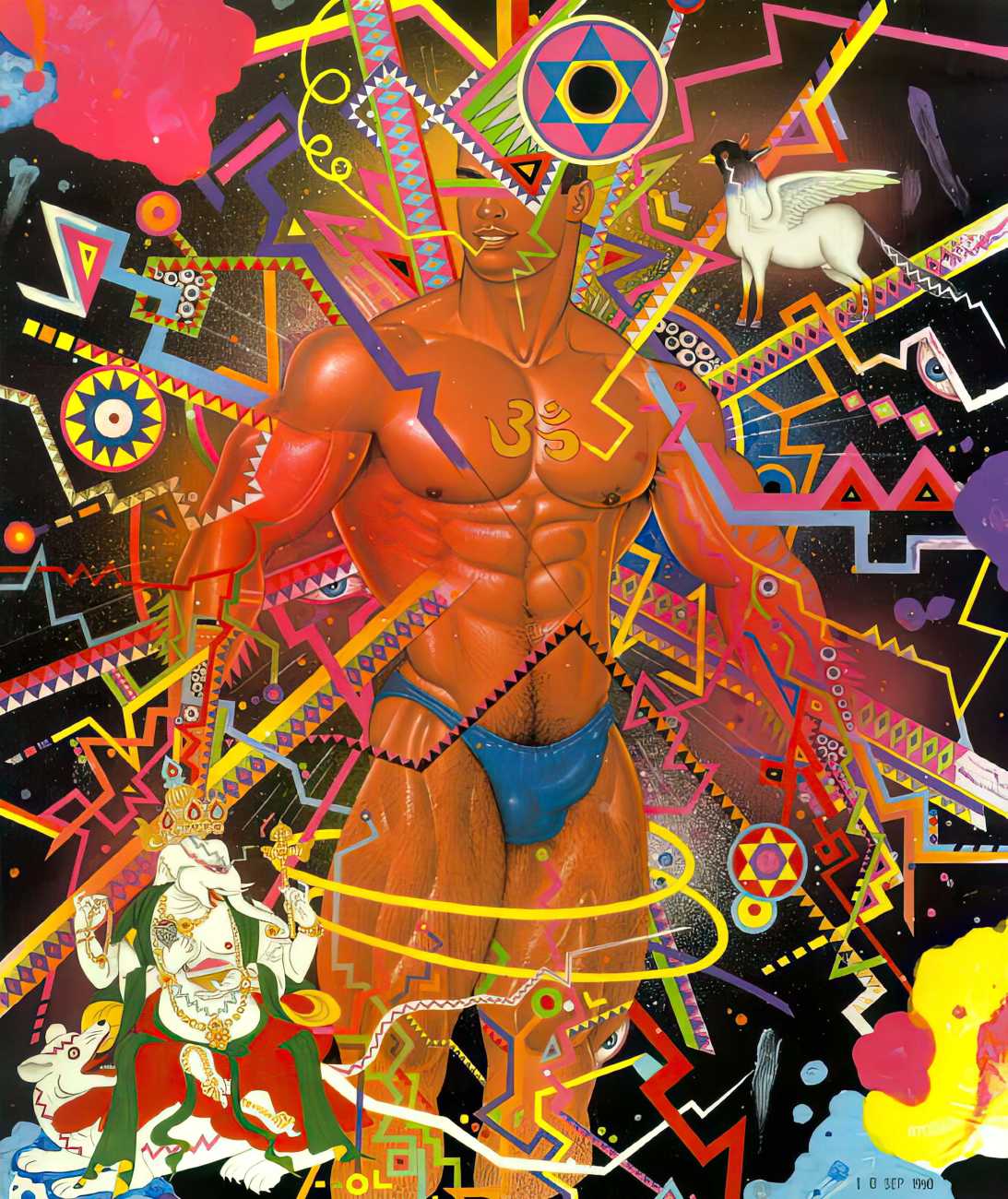
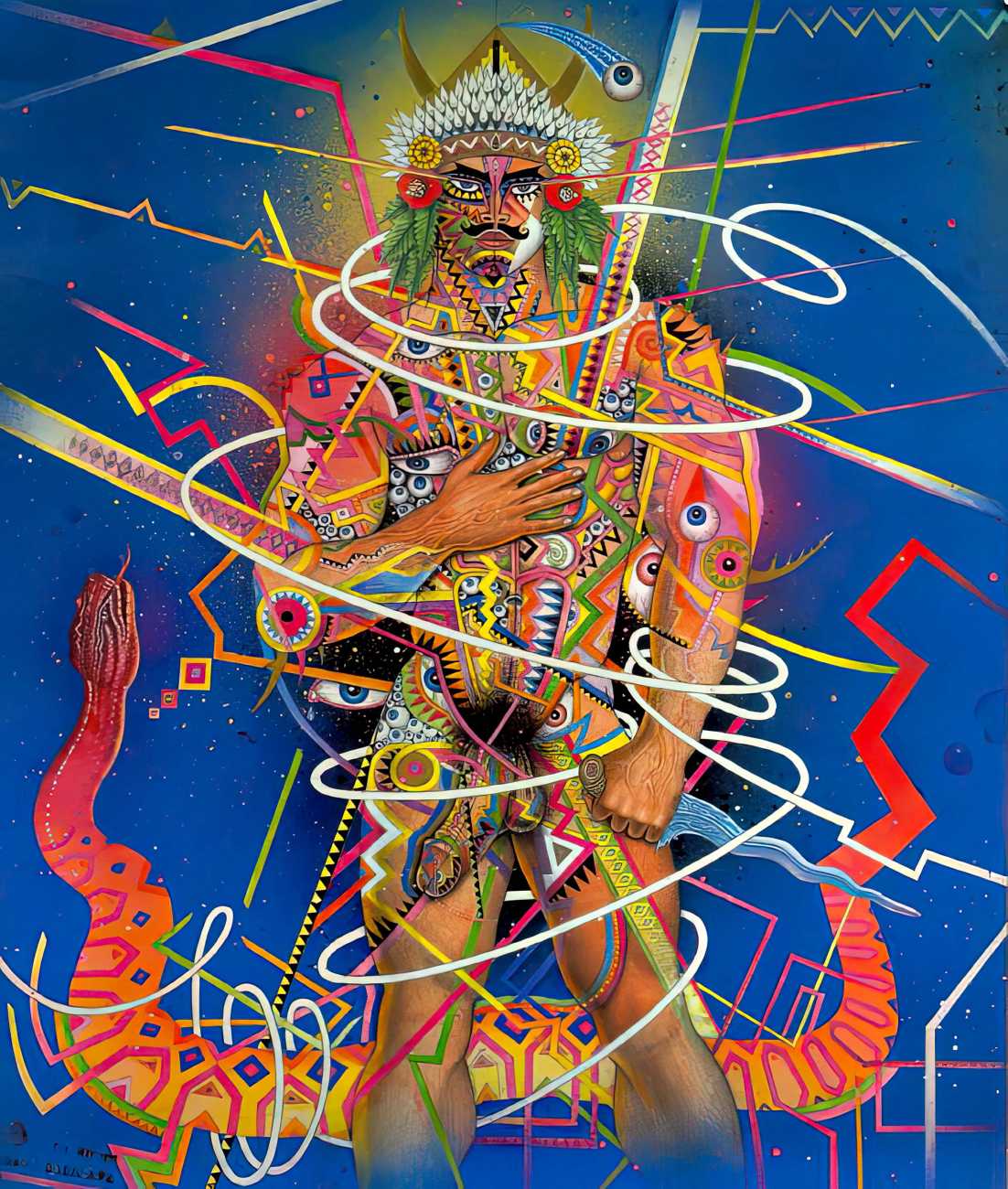
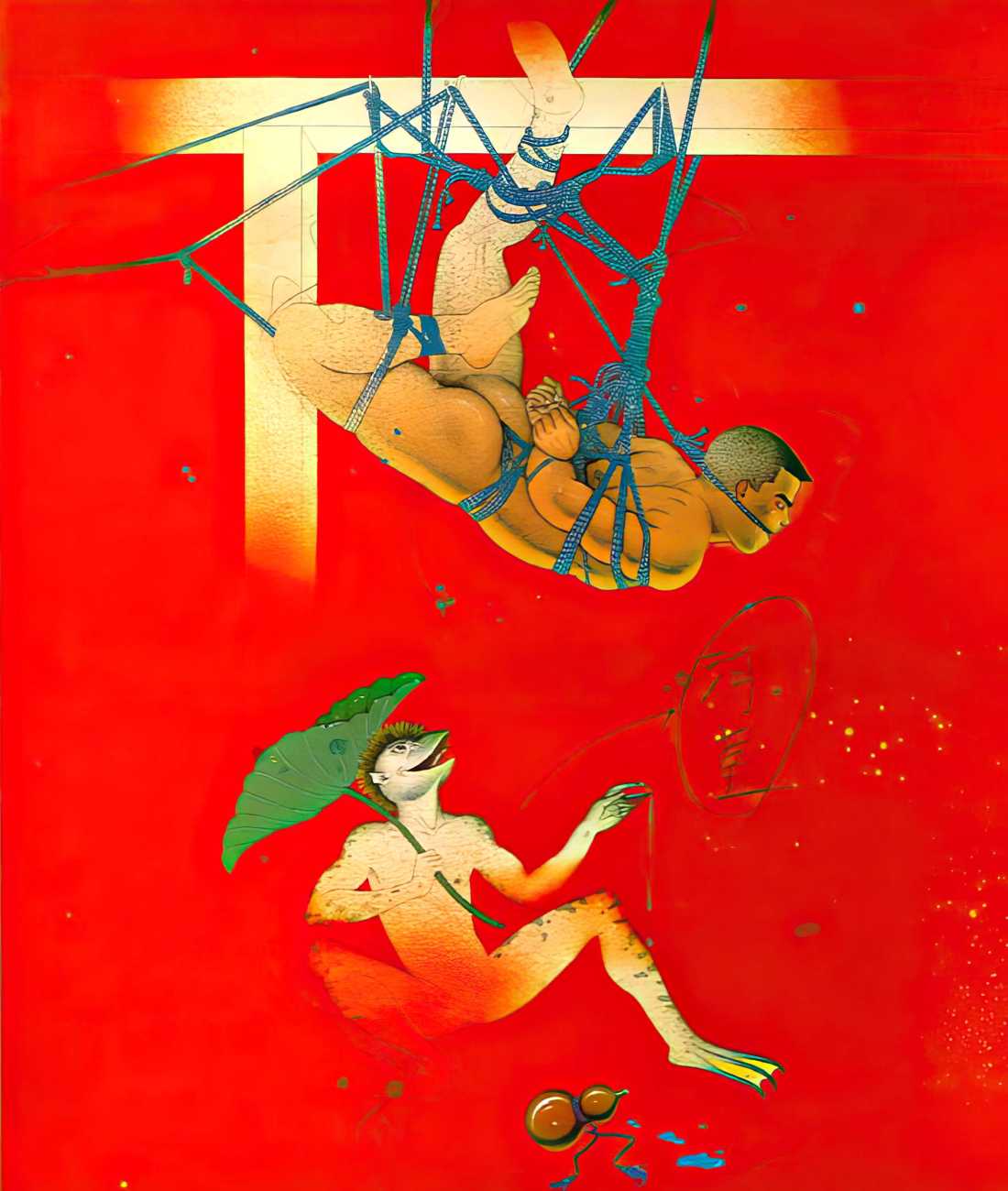
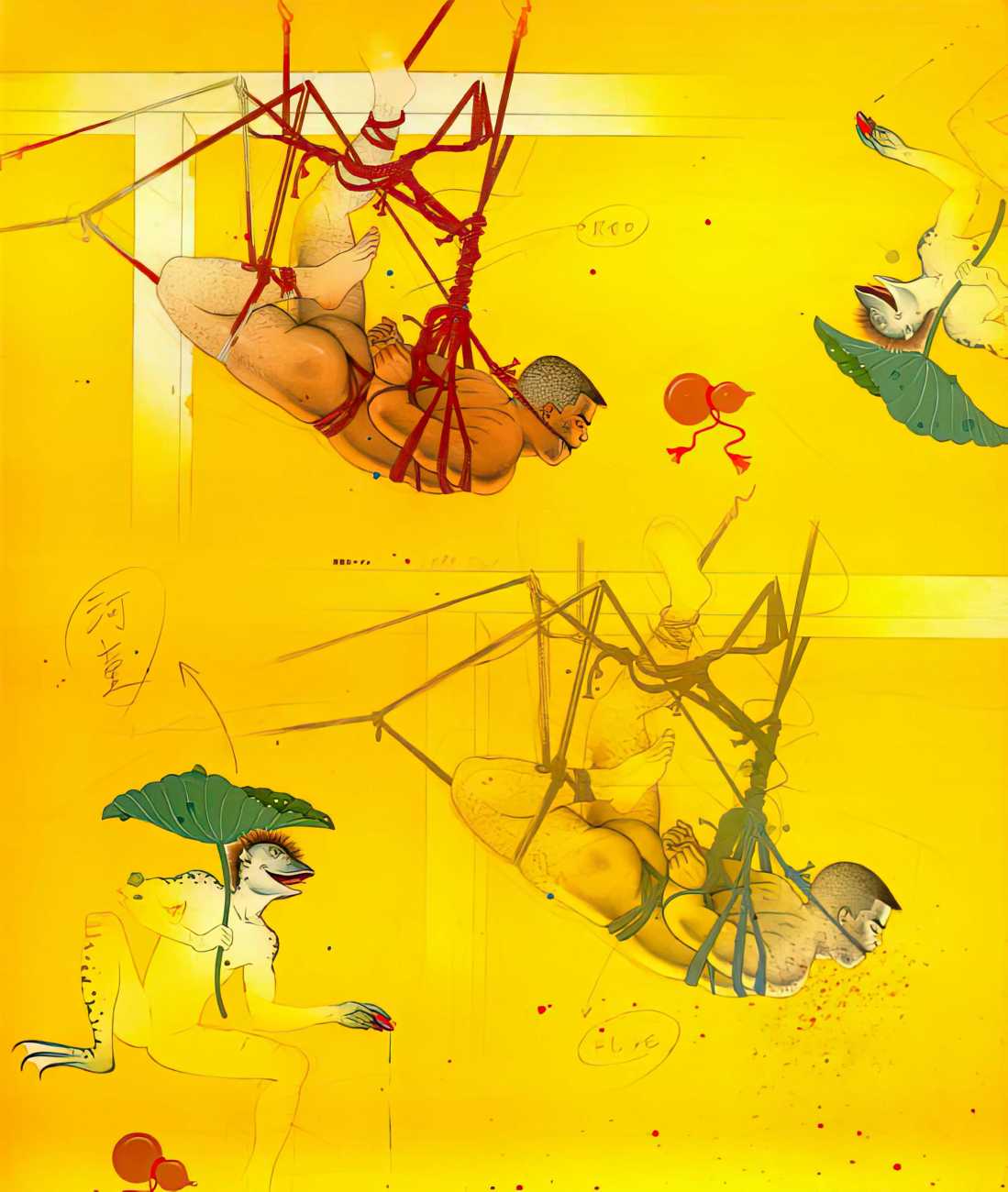
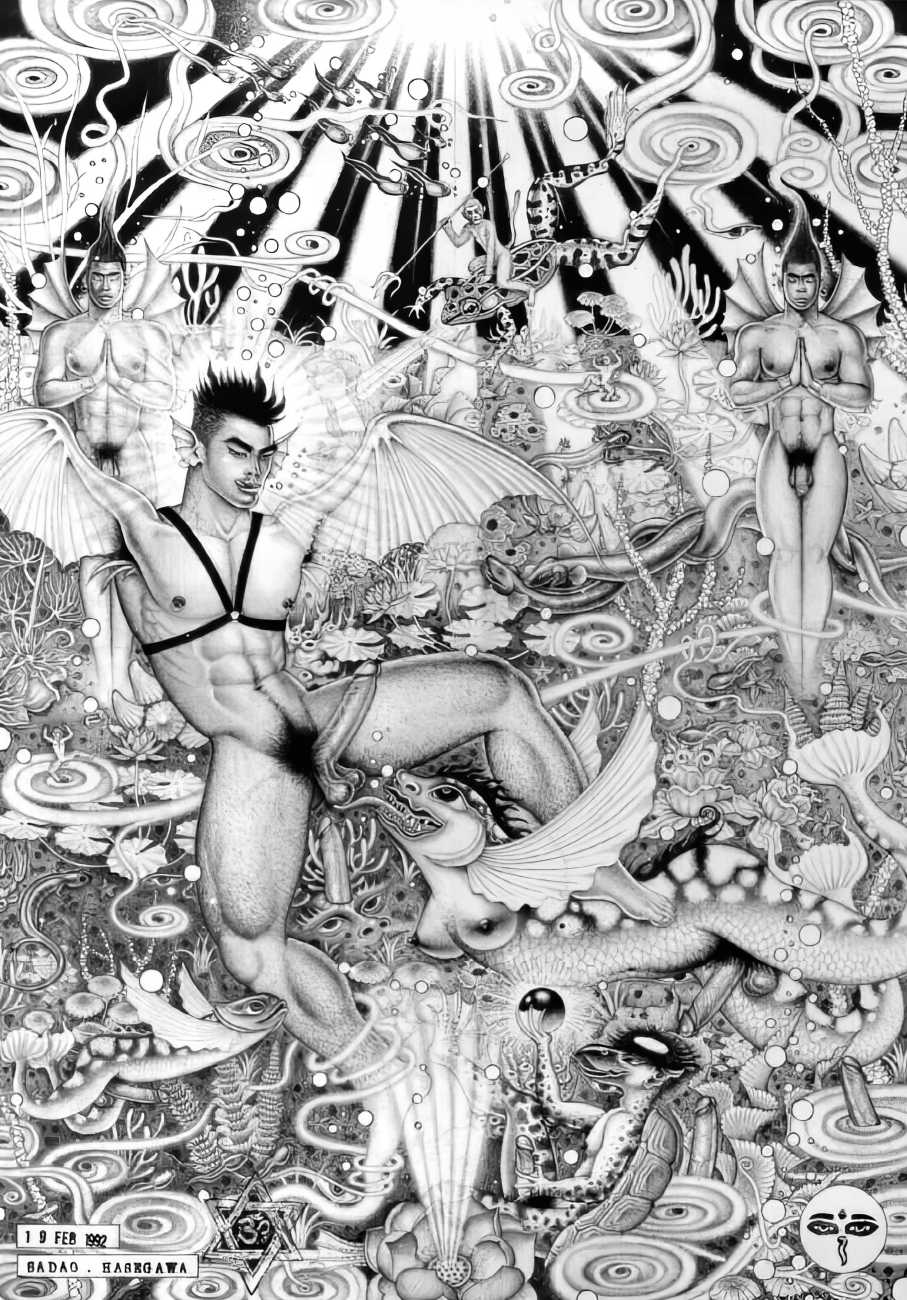
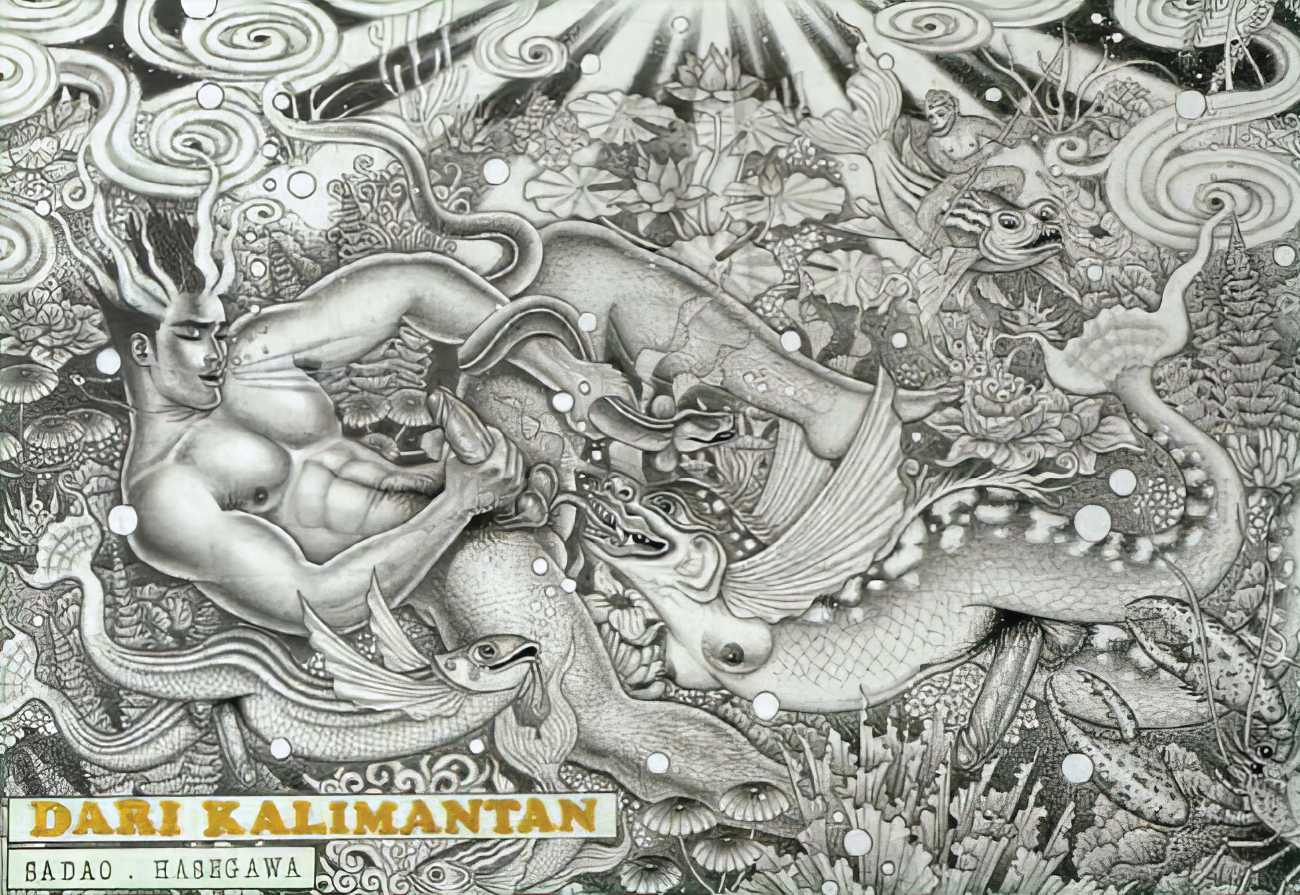
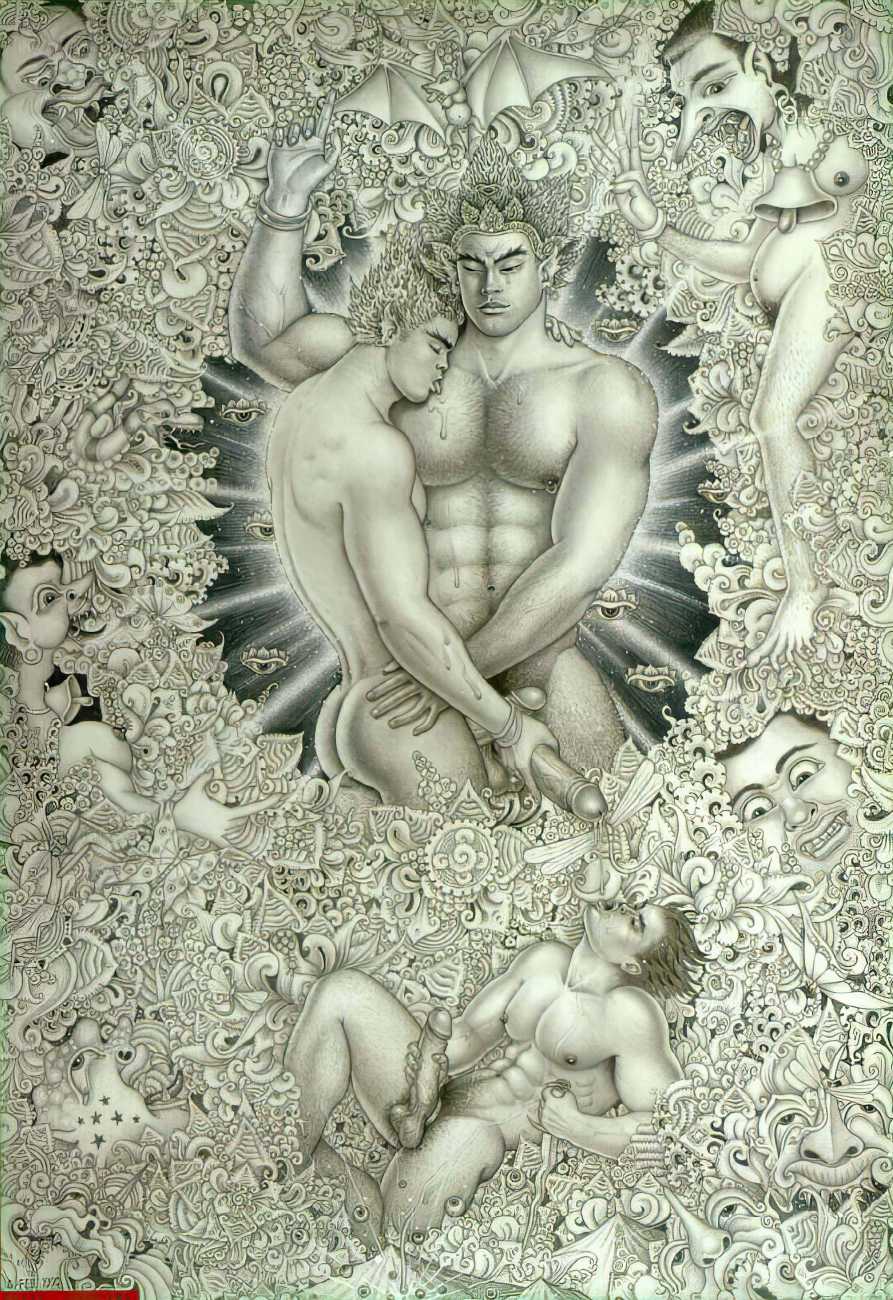
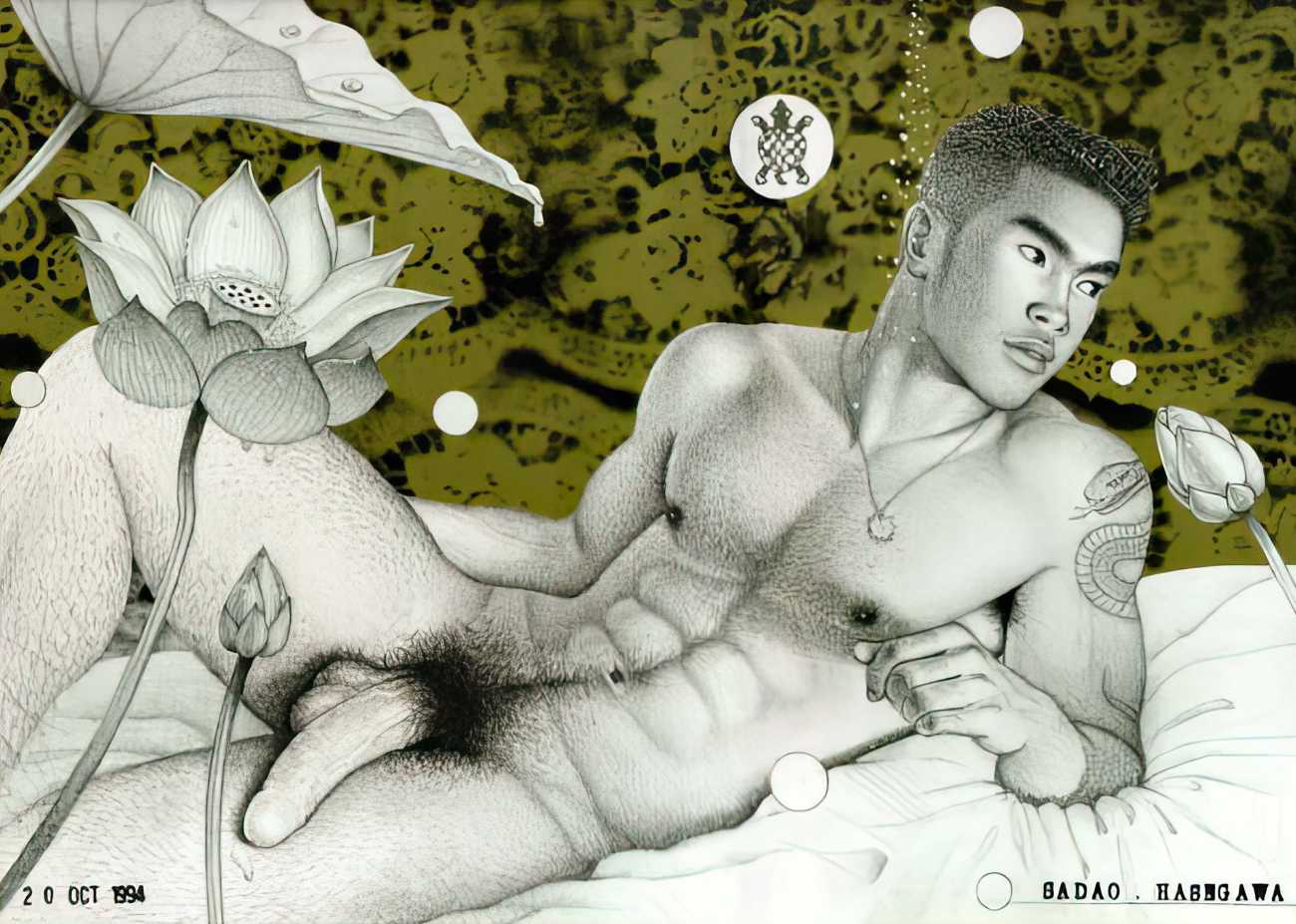
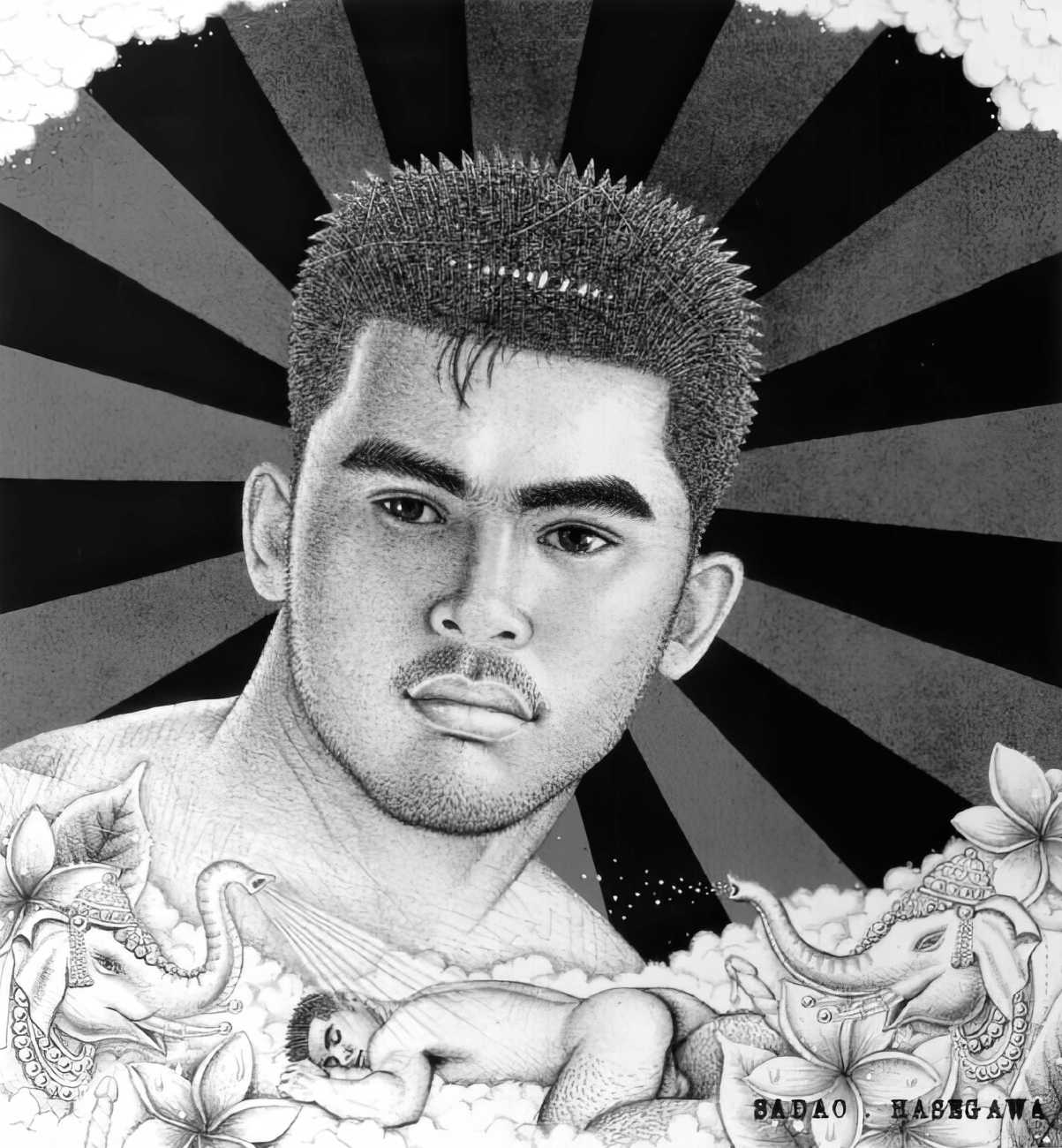
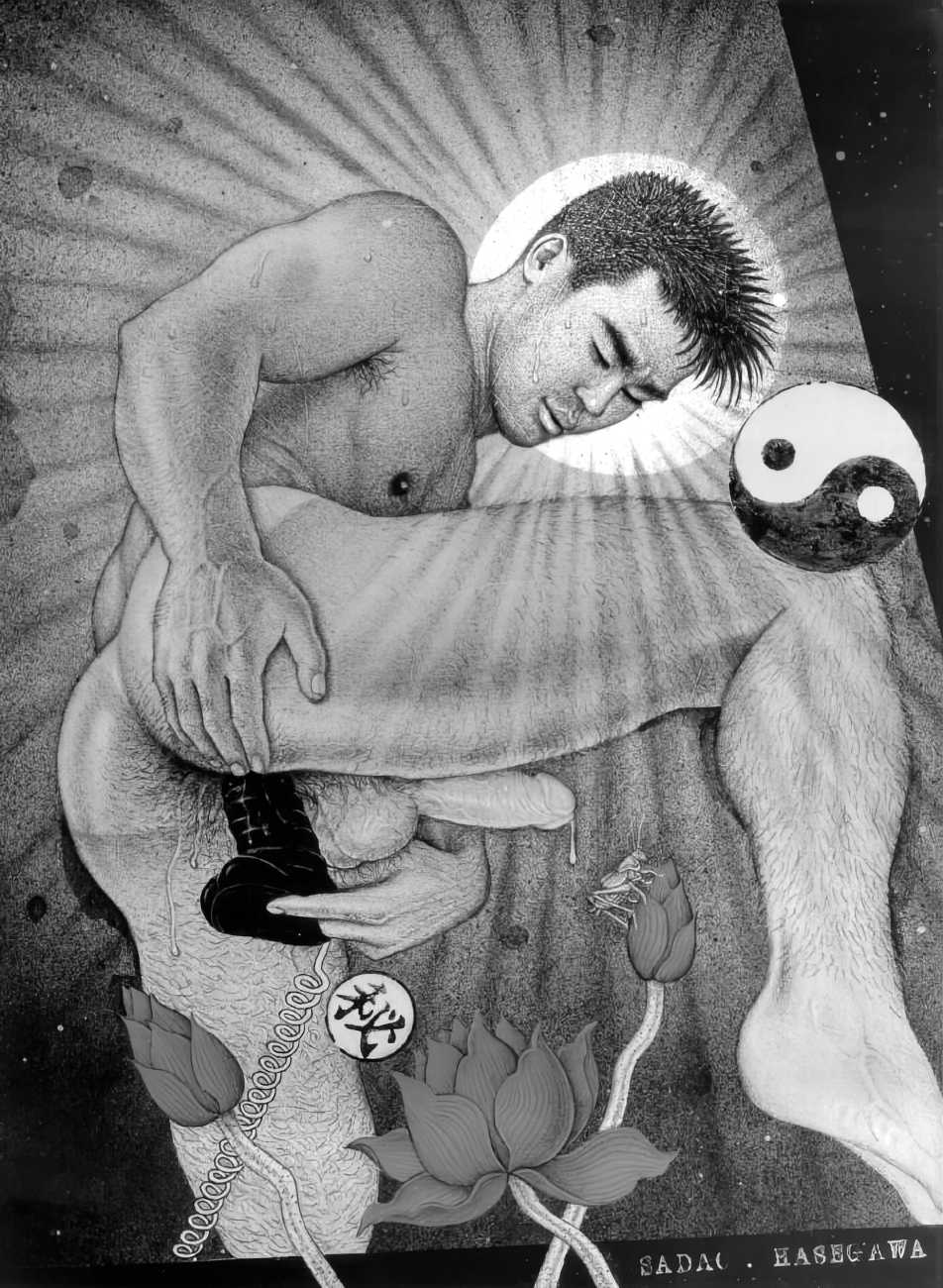
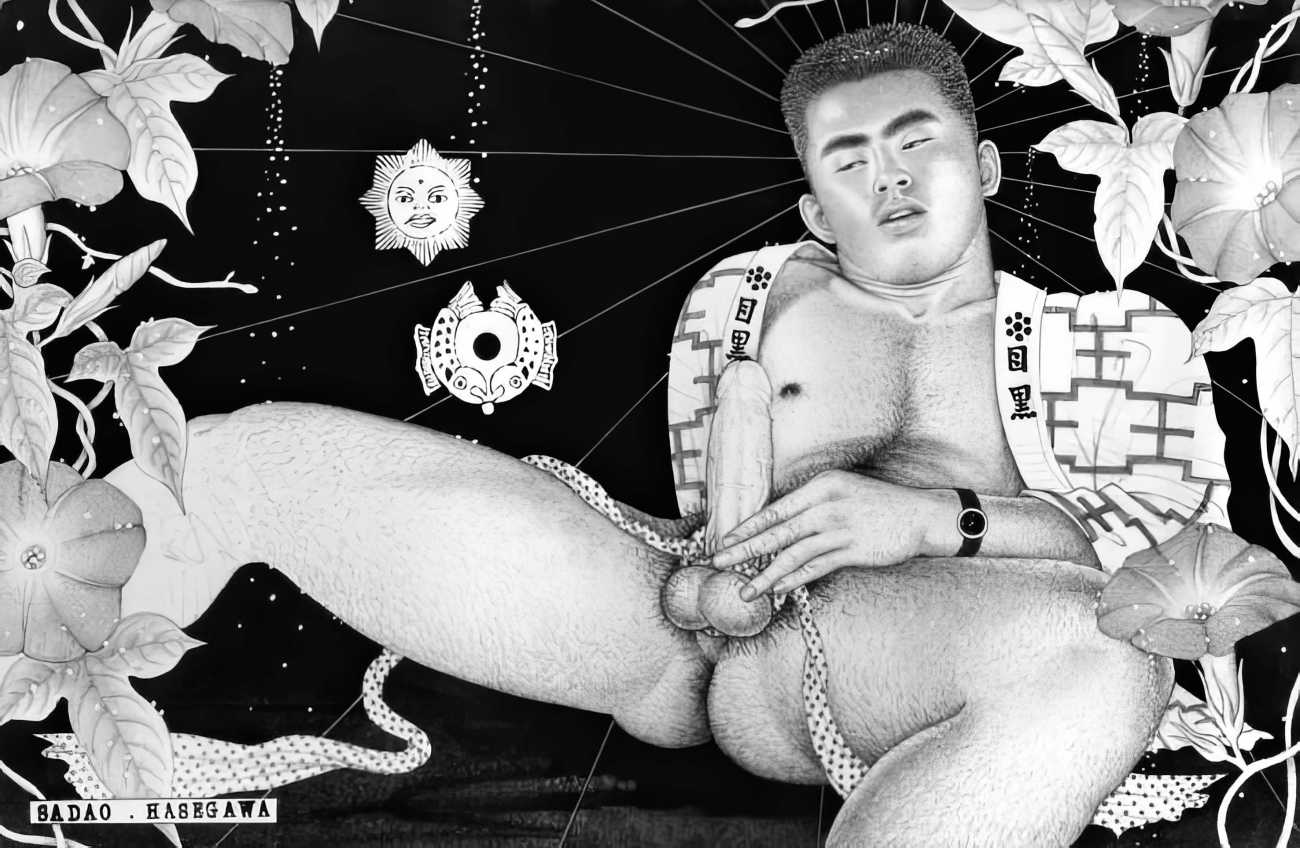
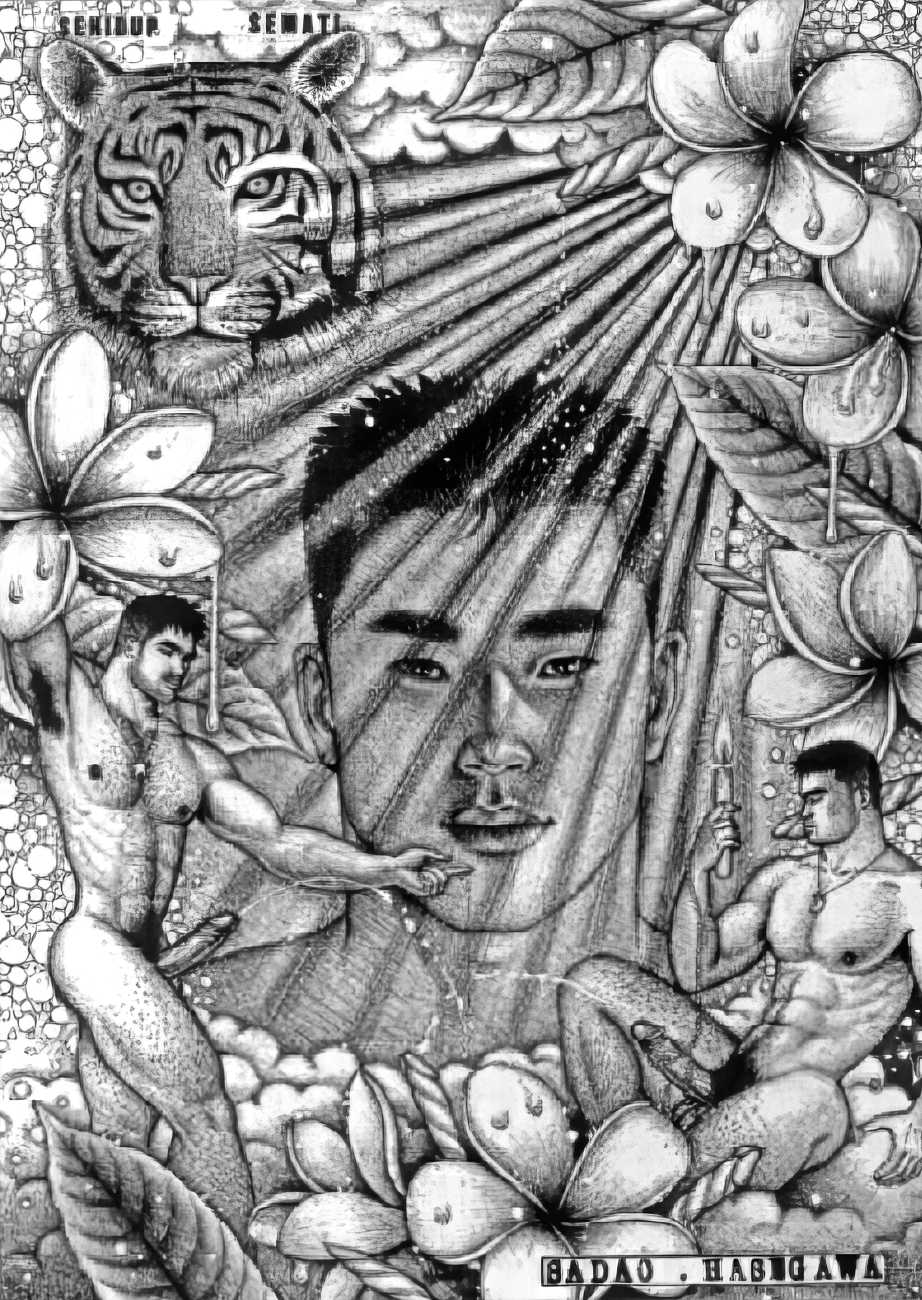
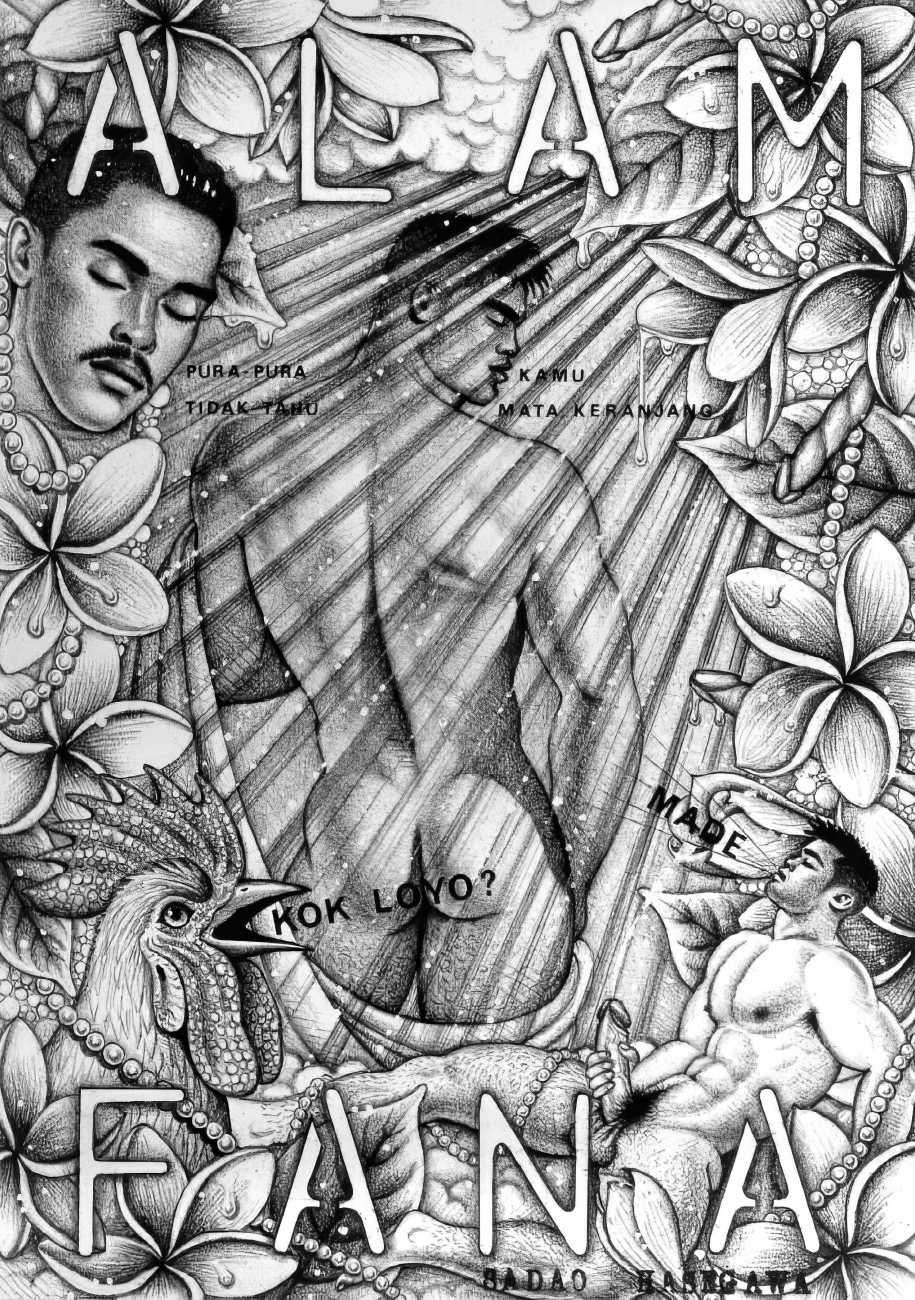
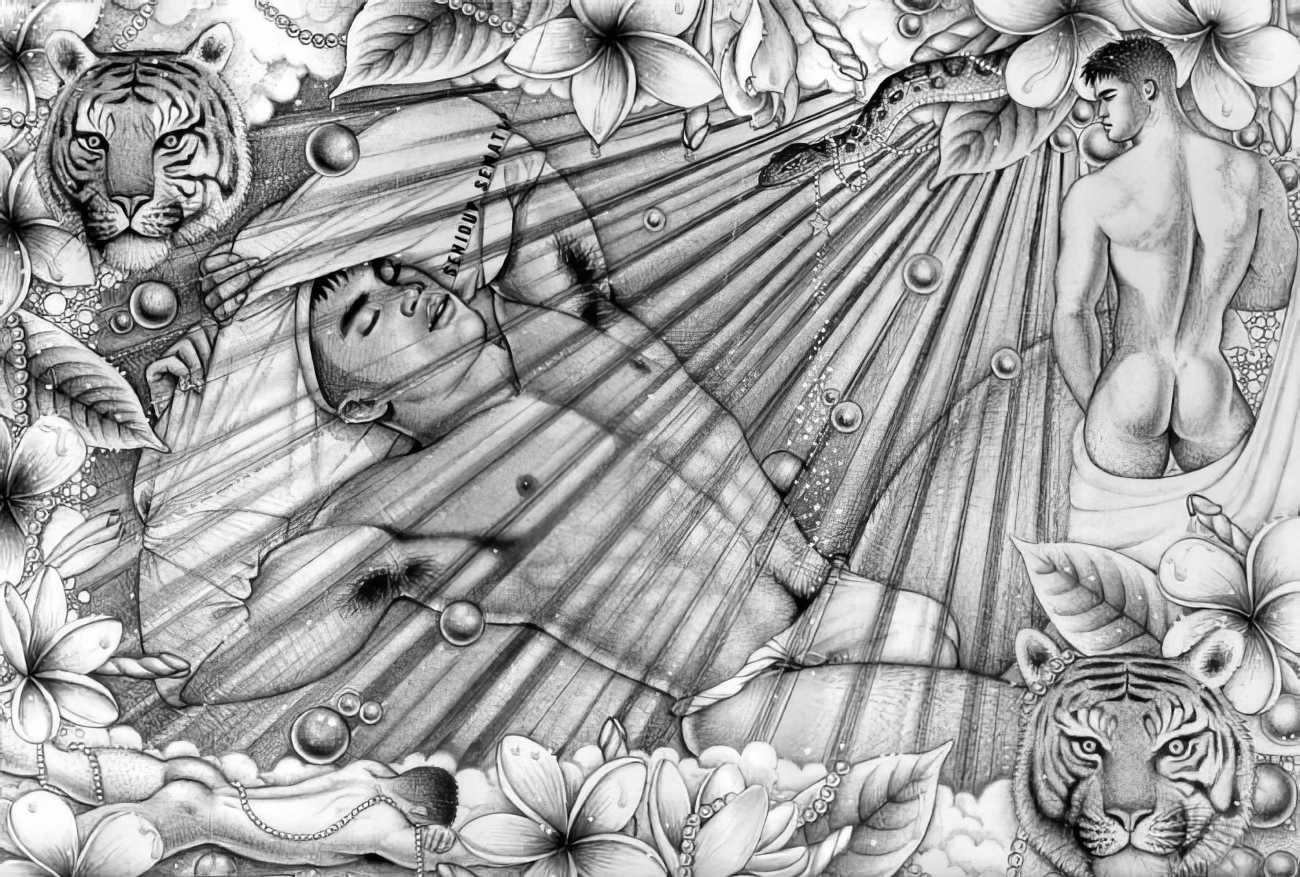
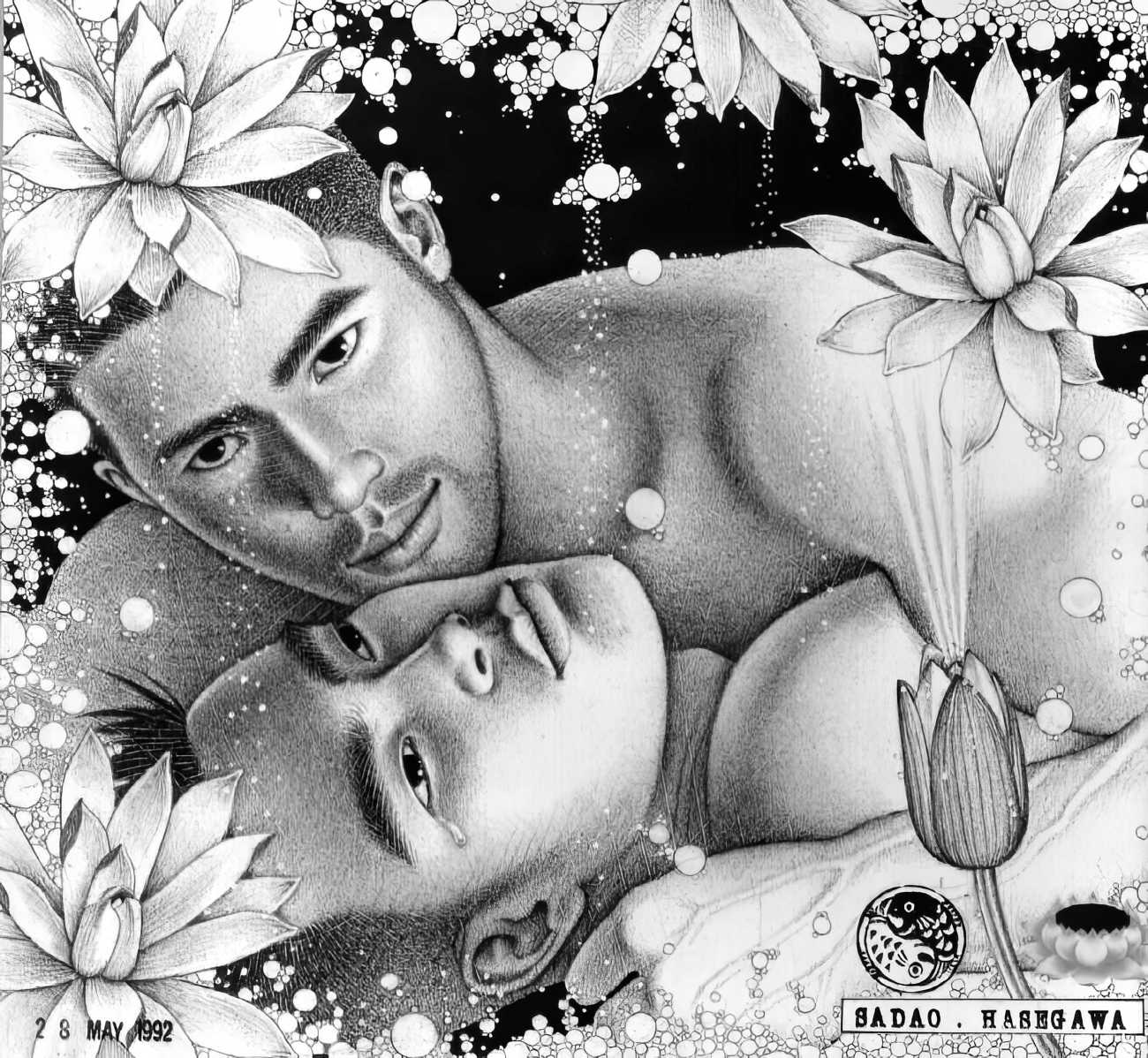
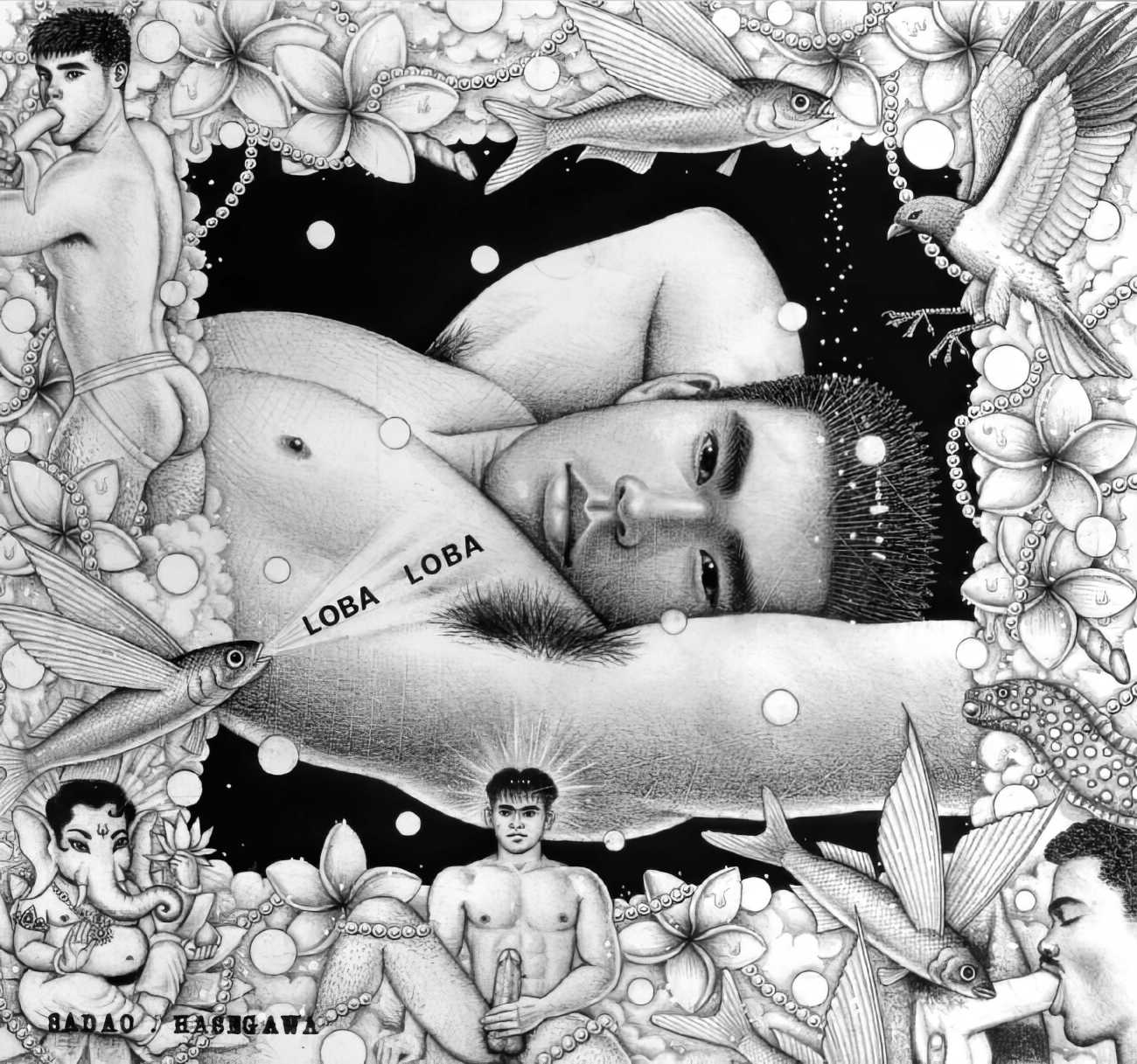
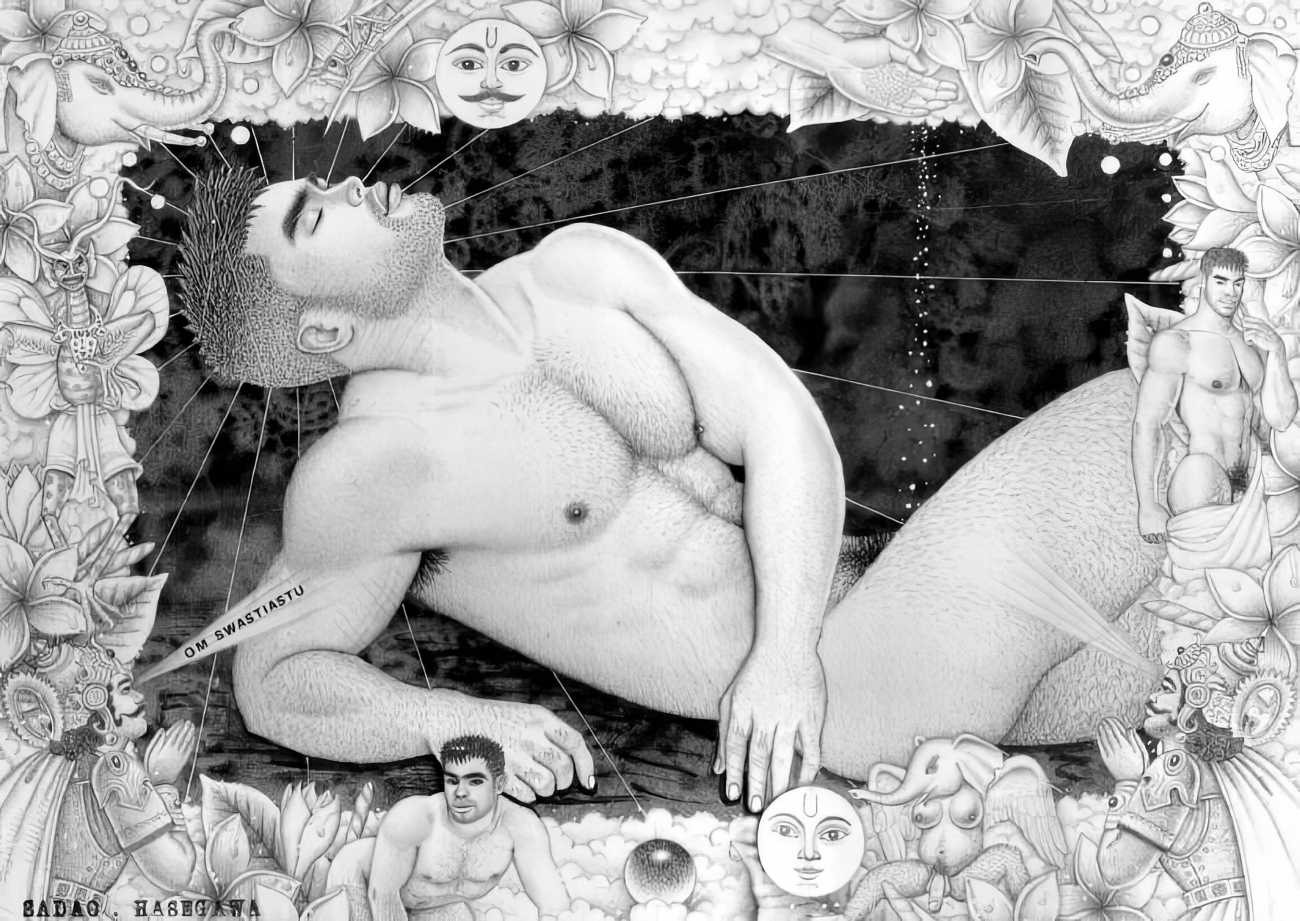
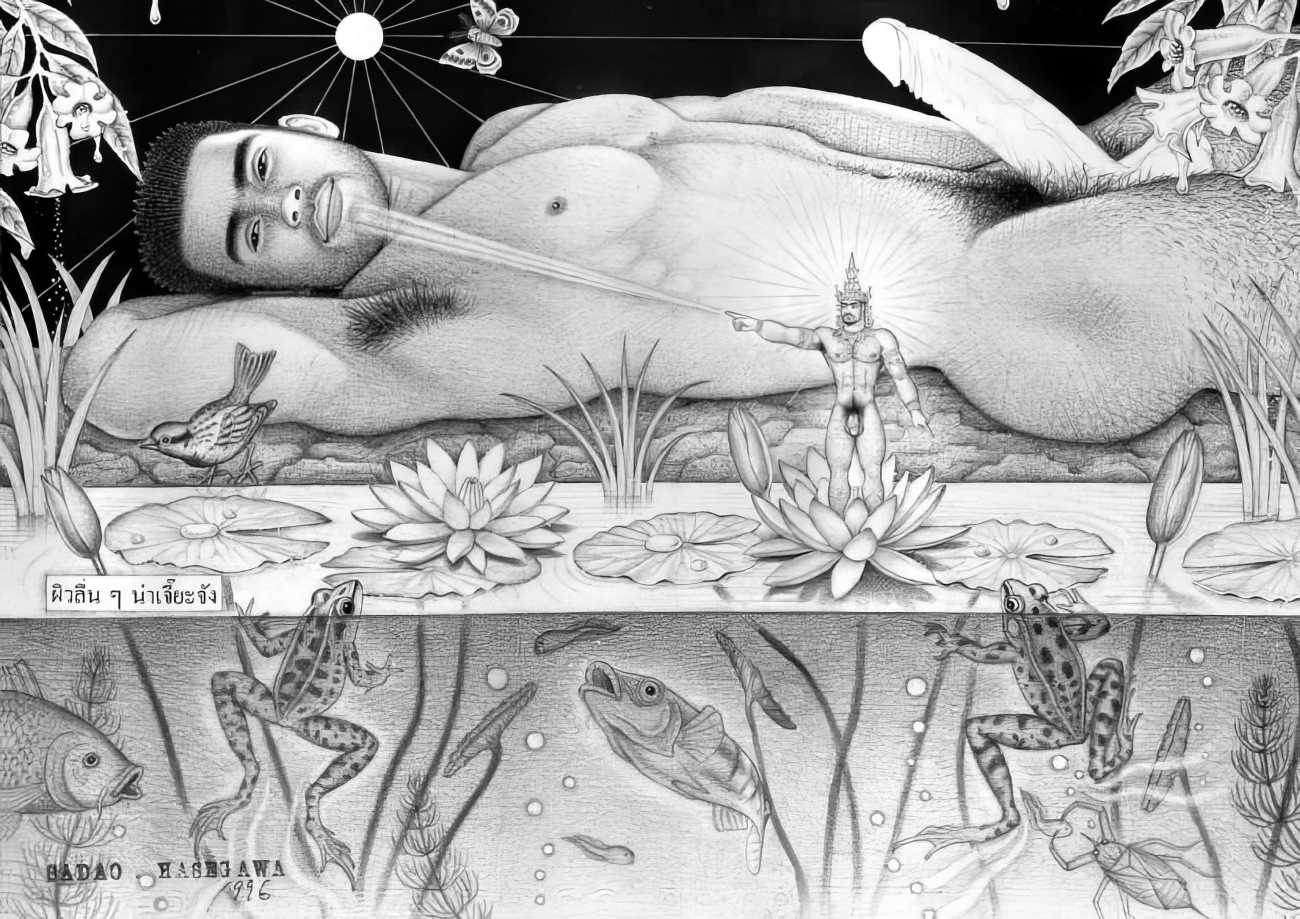
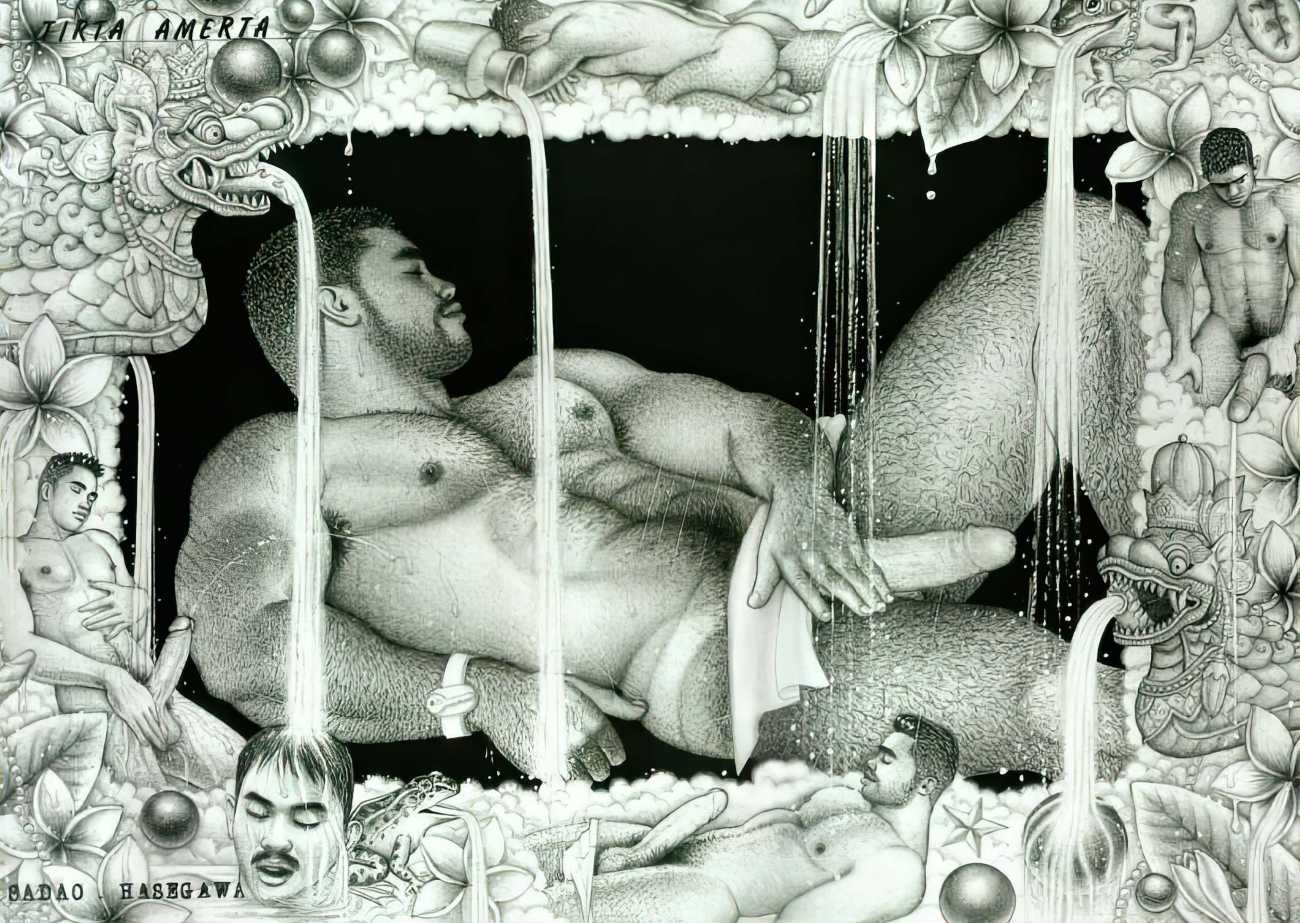
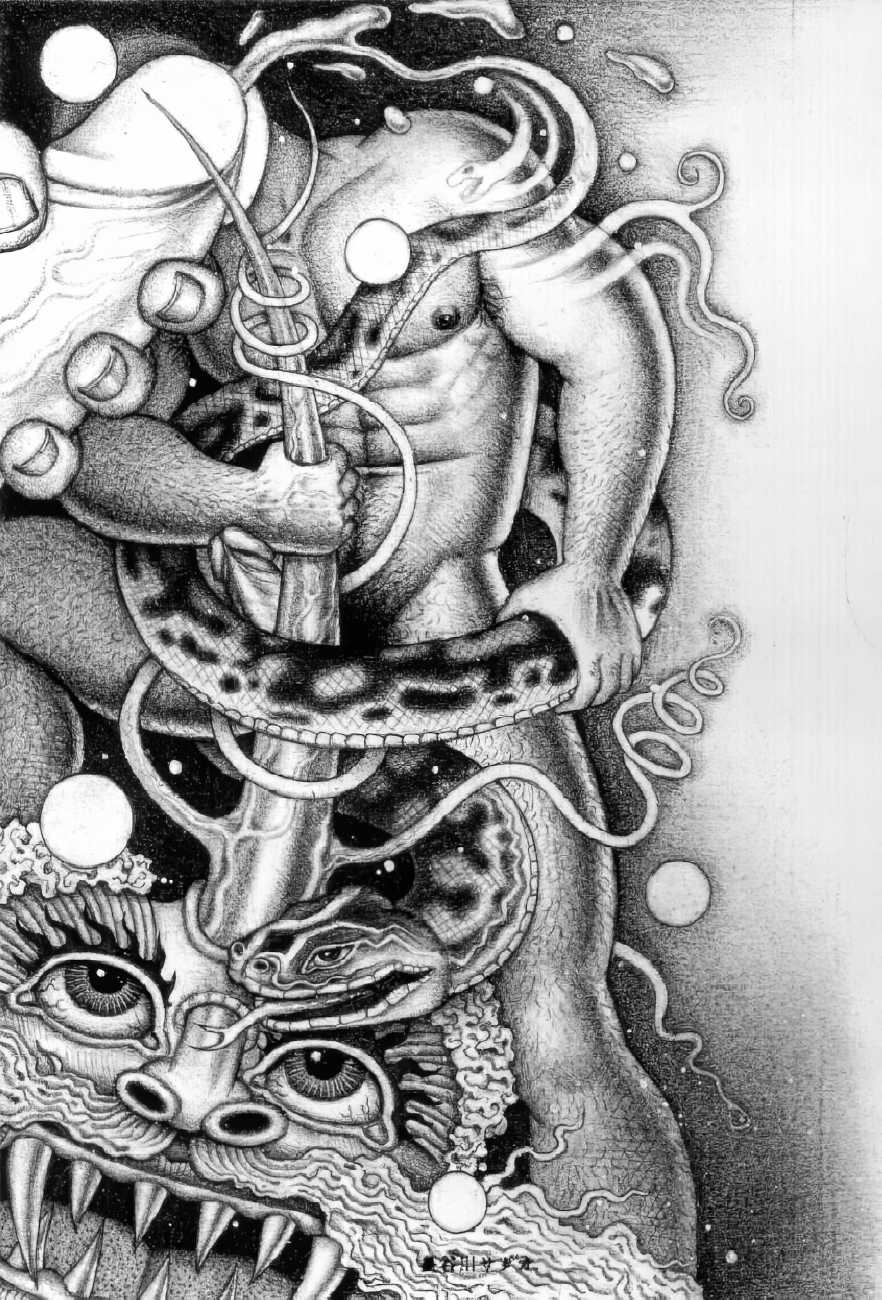
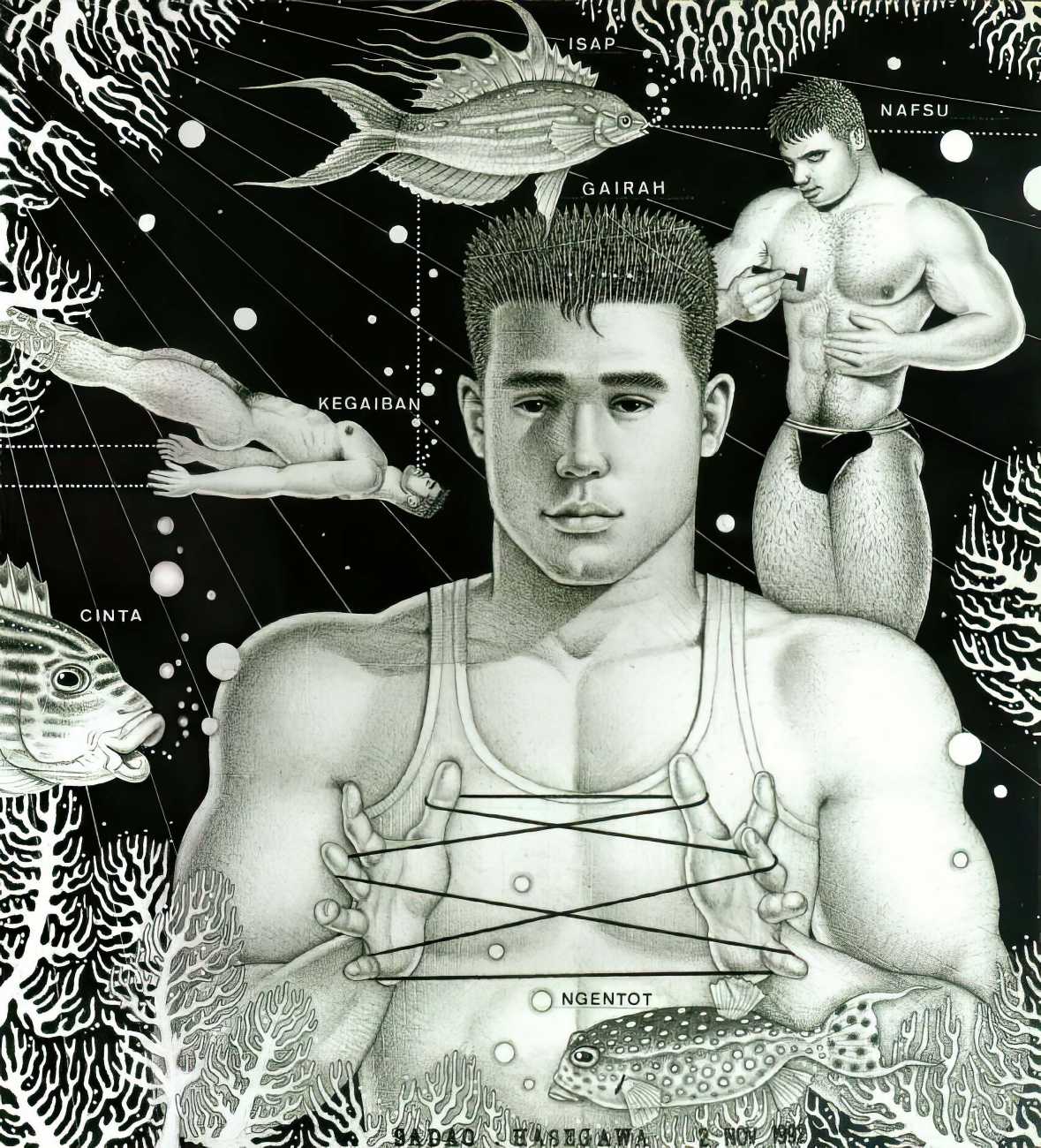
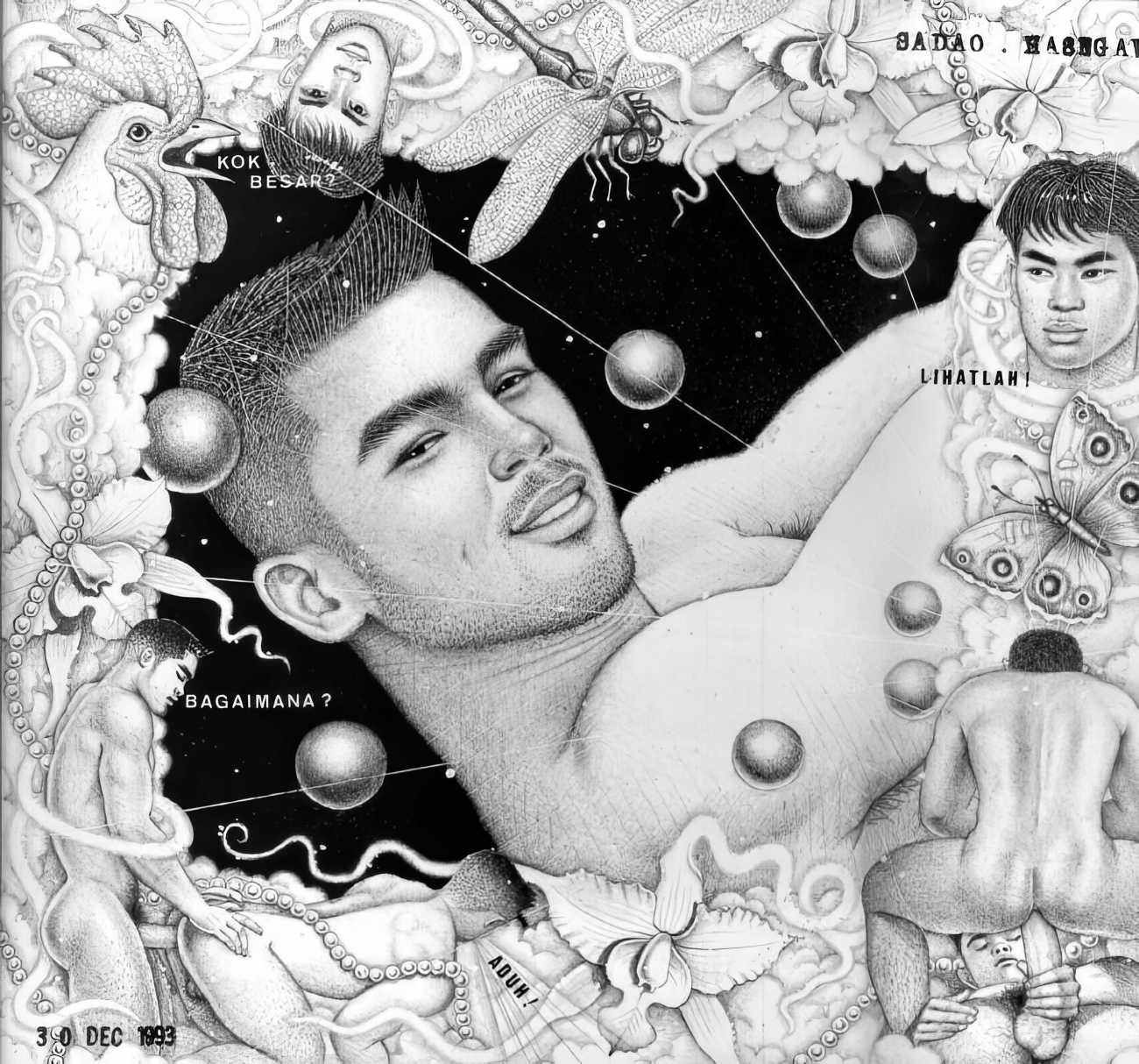
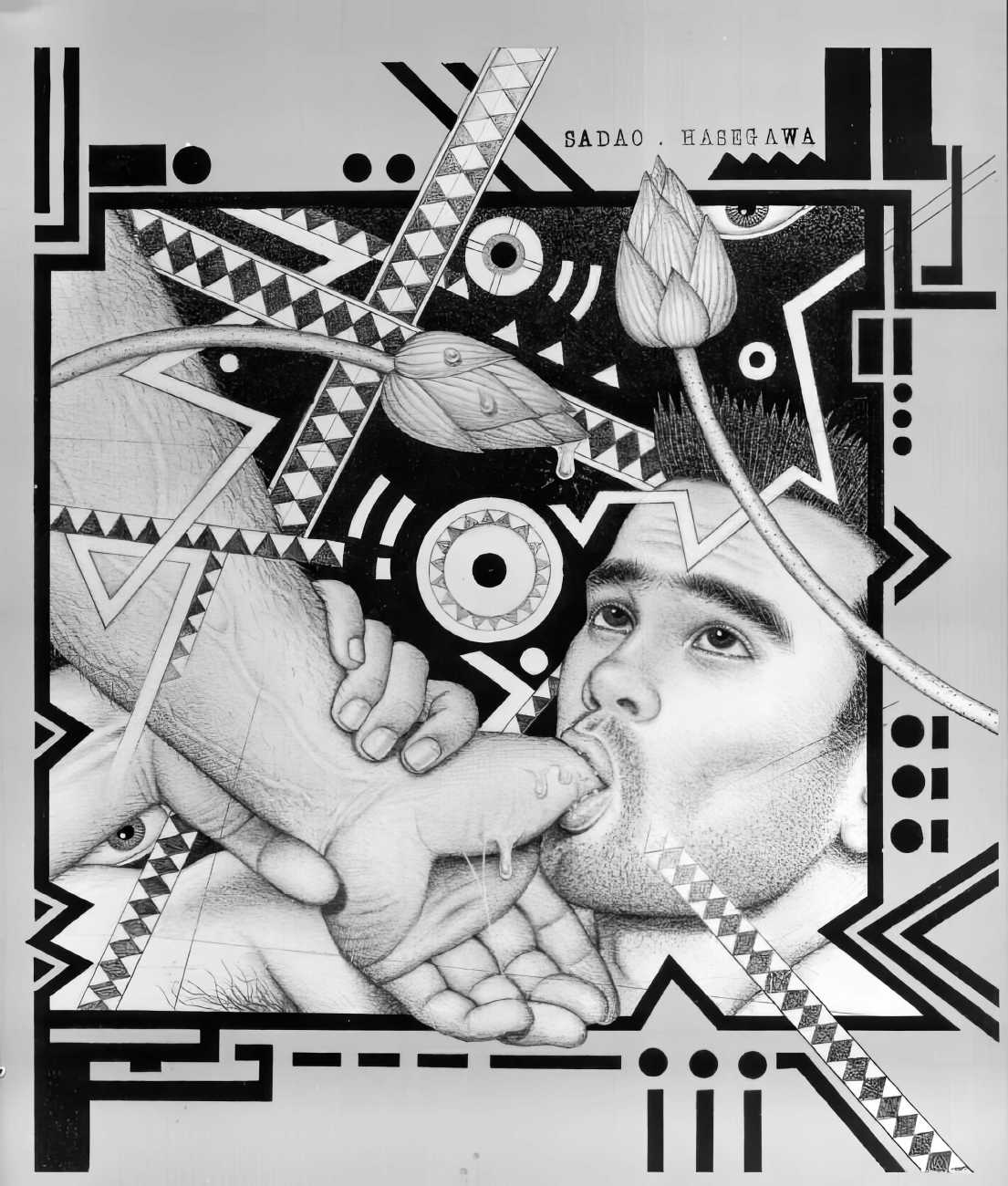
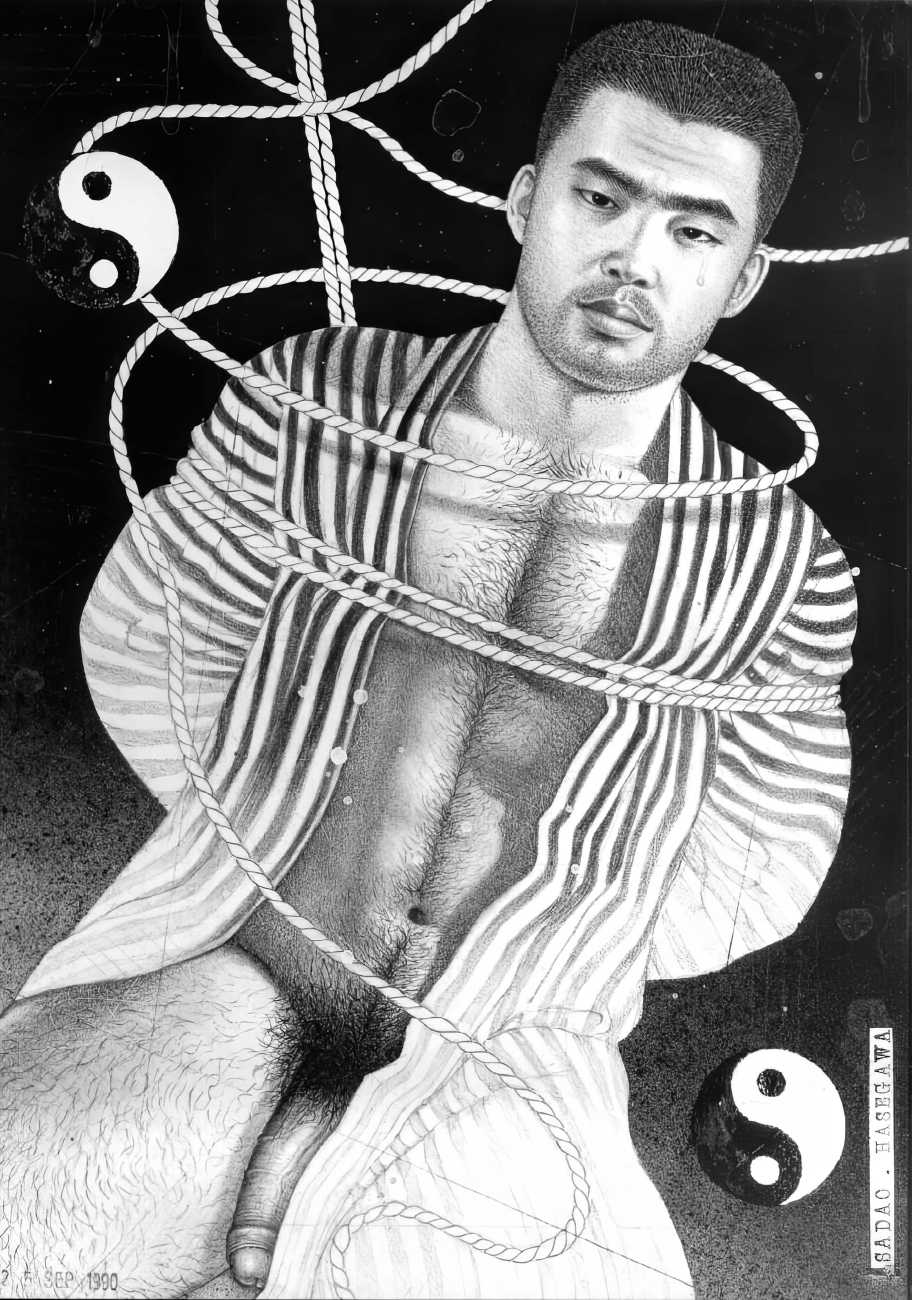
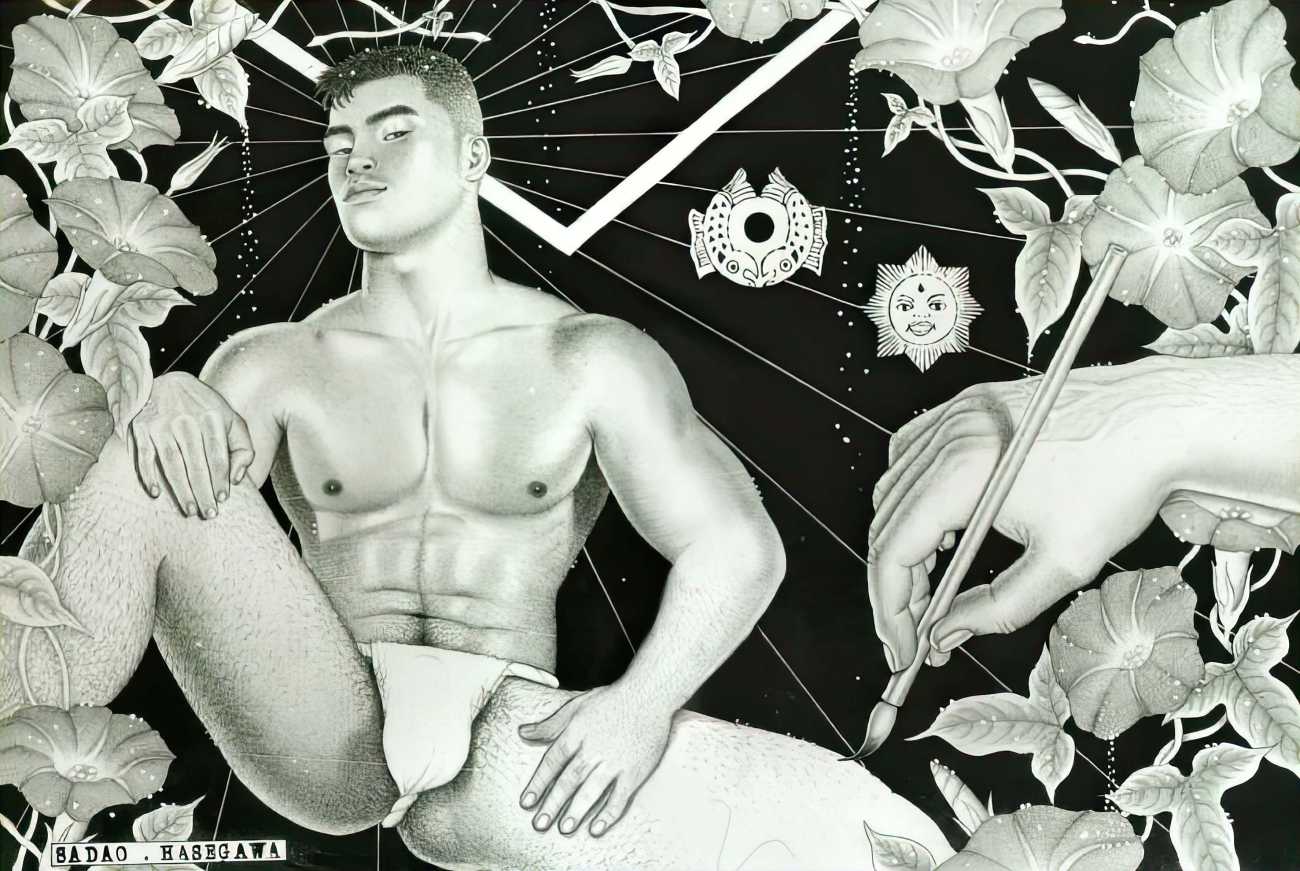
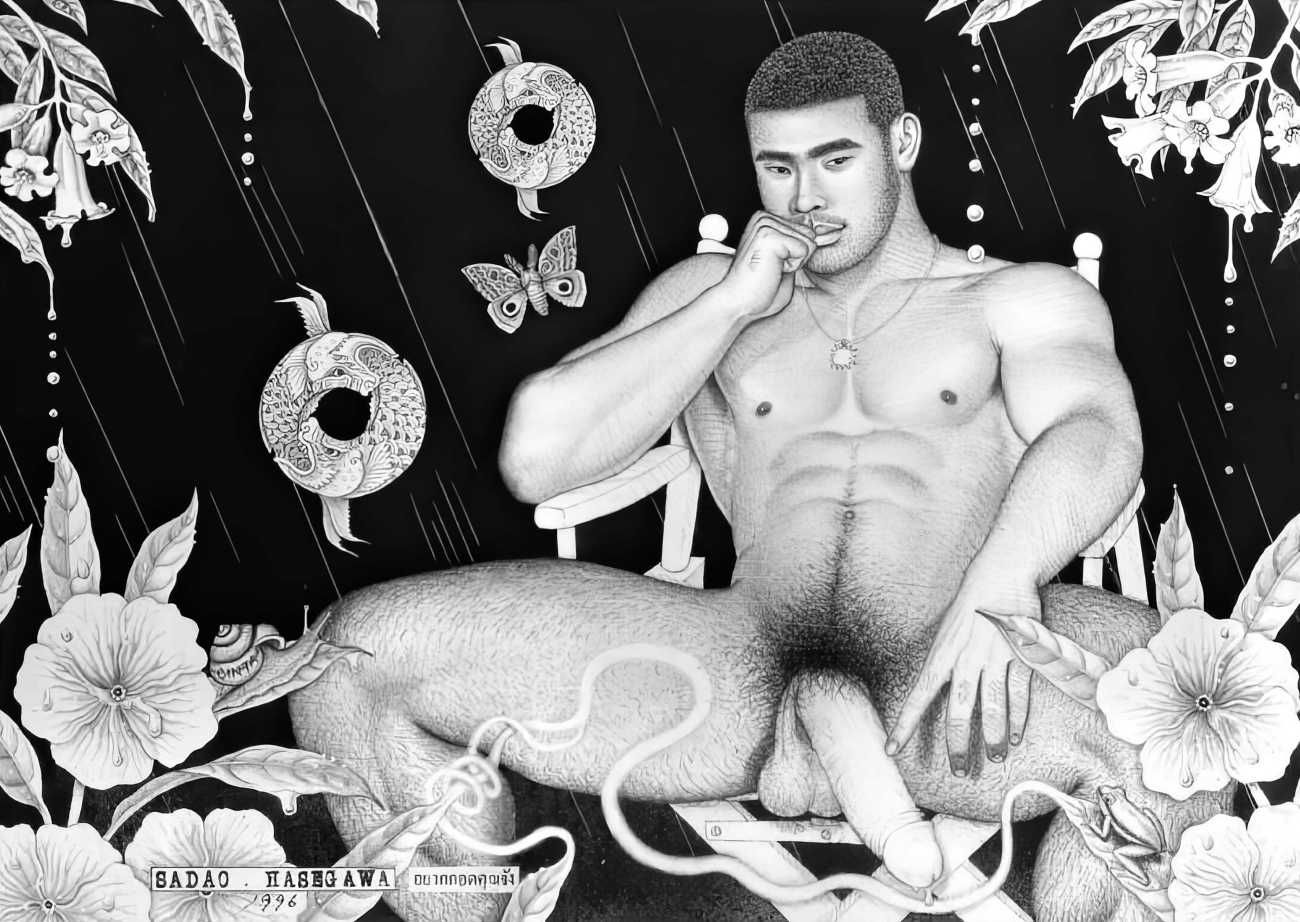
 ‘How to introduce Hasegawa’s dazzling universe for the uninitiated? It is starry-eyed and joyous and tender, richly sensual and brimming with fecundity. A hallucinogenic realm of priapic gods and demi-gods, shibari and romance, it is unfettered in its adoration of Asian men’s bodies, and in its holism and attention to all living beings imparts a Buddhist sensibility. It is supremely skilfully rendered, a dissertation in modulation and day-glo colours.’ So runs the write-up of a 2025 London exhibition of Japanese artist Sadao Hasegawa’s remarkable work.
Sadao Hasegawa (長谷川 サダオ) is considered by many to be Japan’s most important creator of homoerotic art in the late twentieth century. His richly detailed paintings and drawings transformed the conventions of homoerotic and fetish art into something at once erotic, fantastical and deeply mysterious.
Growing up in the Tōkai region of central coastal Japan, Hasegawa was an introspective child with few friends, finding his earliest fascination in the natural world. In his twenties he travelled to India, where he began to draw seriously, and the myths, religions, artefacts and landscapes he encountered on his travels would become central to his developing artistic vocabulary.
He made his first solo exhibition, Sadao Hasegawa’s Alchemism: Meditation for 1973, in Tokyo, presenting paintings, collages and sculptures. His early erotic work was strongly influenced by the Japanese artist Go Mishima and by Tom of Finland, whose muscular male figures provided an important starting point. Hasegawa subsequently developed a style entirely his own, combining powerful male bodies and explicit fetish imagery with an extraordinary profusion of symbolic and decorative detail.
His work began appearing in Japanese gay magazines in the mid-1970s, notably Barazoku (薔薇族), and he subsequently contributed to Sabu (さぶ), The Adon (アドン), and Samson (月刊サムソン) among other publications. He was particularly closely associated with Barazoku, for which he worked for many years. In 1989, following Go Mishima’s death, Hasegawa described him as ‘a master illustrator of the male physique’. It was around this time that his images started to appear in gay publications in the west, among them In Touch for Men and Mach.
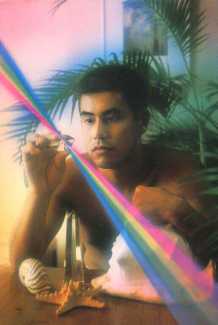 During the 1980s Hasegawa’s repeated journeys to Bali and Thailand brought a profound change in his imagery. Japanese bondage and domination were placed alongside Buddhist statuary, Tantric symbolism, African masks, Indian and Southeast Asian mythology, tropical vegetation and exotic animals. Rather than attempting to construct a coherent religious system, Hasegawa drew freely from this diversity to create a personal universe in which eroticism, spirituality, beauty and mystery were inseparable. As Barazoku editor Bungaku Itō observed, his drawings could seem to transcend conventional eroticism and emulate the visual language of Buddhist art.
With the exception of a group show organised by Brian Scott Carr at New York’s Art Bar at Zippers around 1983, and the sale of his prints through the Tom of Finland Foundation’s co-founder and then-president Durk Dehner, Hasegawa’s works were known to audiences outside Japan only via reproductions. He declined various invitations to exhibit abroad, fearful that his drawings and paintings would never make it back through Japanese customs. His work gradually became better known in the west through books, especially Sadao Hasegawa: Paintings and Drawings published by Gay Men’s Press in Britain in 1990, followed by Paradise Visions from Tokyo-based Kochi Studio in 1996.
In a 1995 letter from Hasegawa to Durk Dehner, Hasegawa articulated his intention of using mainly Asian motifs to create a universe of beauty that differs from the western point of view. As Tom Denman of e-flux magazine puts it, what distinguishes Hasegawa’s work is the limitlessness of his world, where men can fuck each other as much as they want, without societal, national, or even species constraints. While he often explored Japanese tropes – kabuki, shunga – emphasising the perviousness of his view of culture and ethnicity, he abstracted and amalgamated them through a futuristic-mythological lens, layering and merging facial features, at times introducing non-human appendages such as wings or leaves – searching for a pan-Asian, mythological male beauty to be his utopian body politic.
Hasegawa died in Bangkok, killing himself in his hotel room. The circumstances have acquired an almost mythic quality, not least because of the presence among his belongings of a portrait of Yukio Mishima drawn by Hasegawa. Mishima, whose writing and public persona had long been associated with the cultivation of the male body, ritual, beauty and death, had himself died by ritual suicide in 1970. Whether Hasegawa intended a deliberate parallel cannot be conclusively established.
His family initially considered disposing of his remaining work, but a note discovered with a portrait of Yukio Mishima led to the archive being entrusted to Gallery Naruyama in Tokyo. The gallery has since preserved and exhibited his work, including the posthumous Linga exhibition in 2000. A much larger archive was subsequently brought to wider attention through exhibitions and publications, including Baron Books’ 2022 monograph, Gallery Naruyama’s 2023 retrospective volume, Toga Triangle’s 2024 exhibition in Tokyo, and a 2025 exhibition at a.Squire in London.
Similar artists
Peter Flinsch – German-Canadian sculptor devoted to powerful, idealised male bodies.
Go Hirano – Japanese contemporary from the same Barazoku illustrating circle.
Touko Laaksonen – (Tom of Finland) Finnish originator of the muscular men Hasegawa admired.
Go Mishima – Japanese illustrator Hasegawa named as his earliest influence.
Toshio Saeki – Same-generation Japanese artist of taboo, grotesque dreamscapes.
Keith Vaughan – British painter finding artistic freedom in the male form.
Takato Yamamoto – Japanese heir to ukiyo-e, merging gothic beauty and horror.
Example illustration