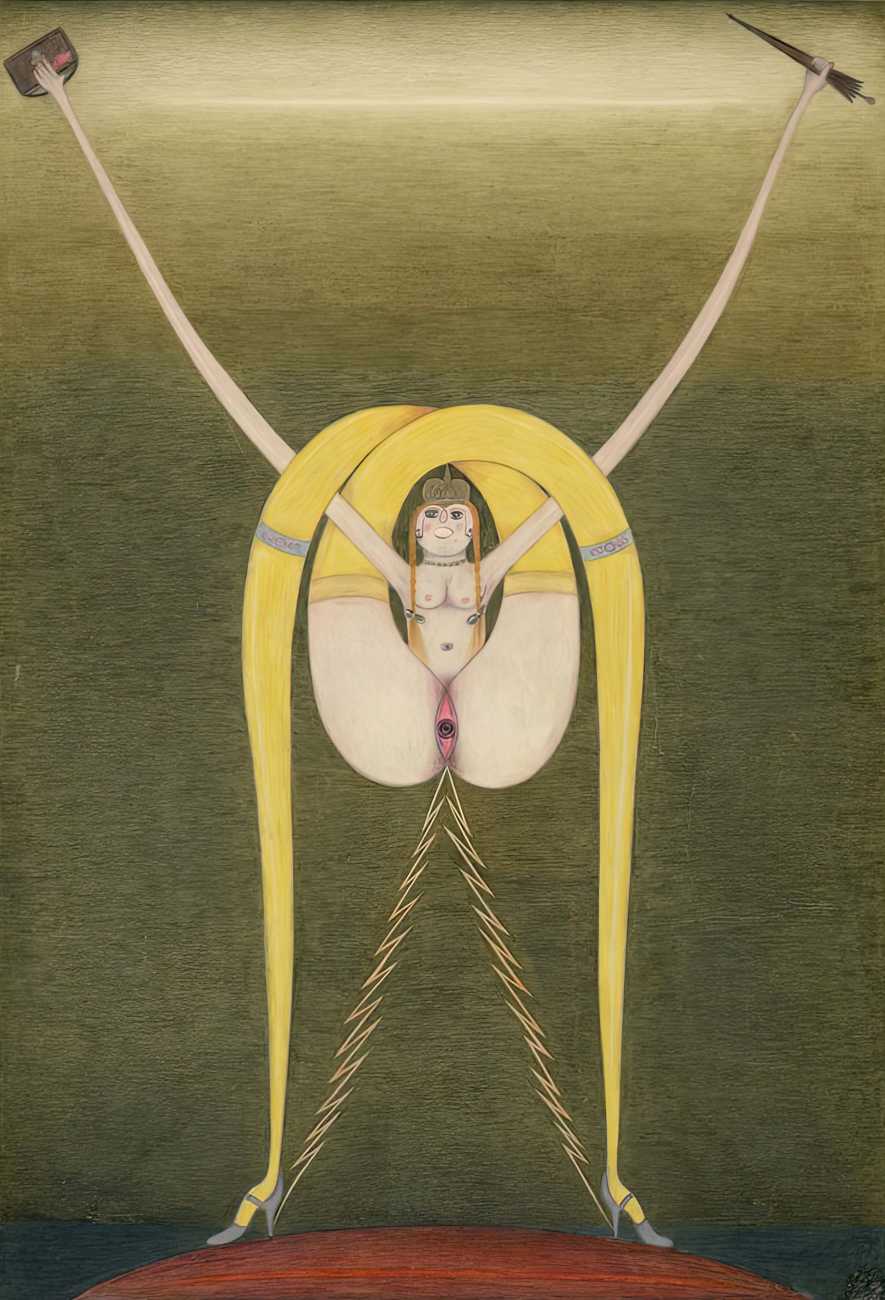
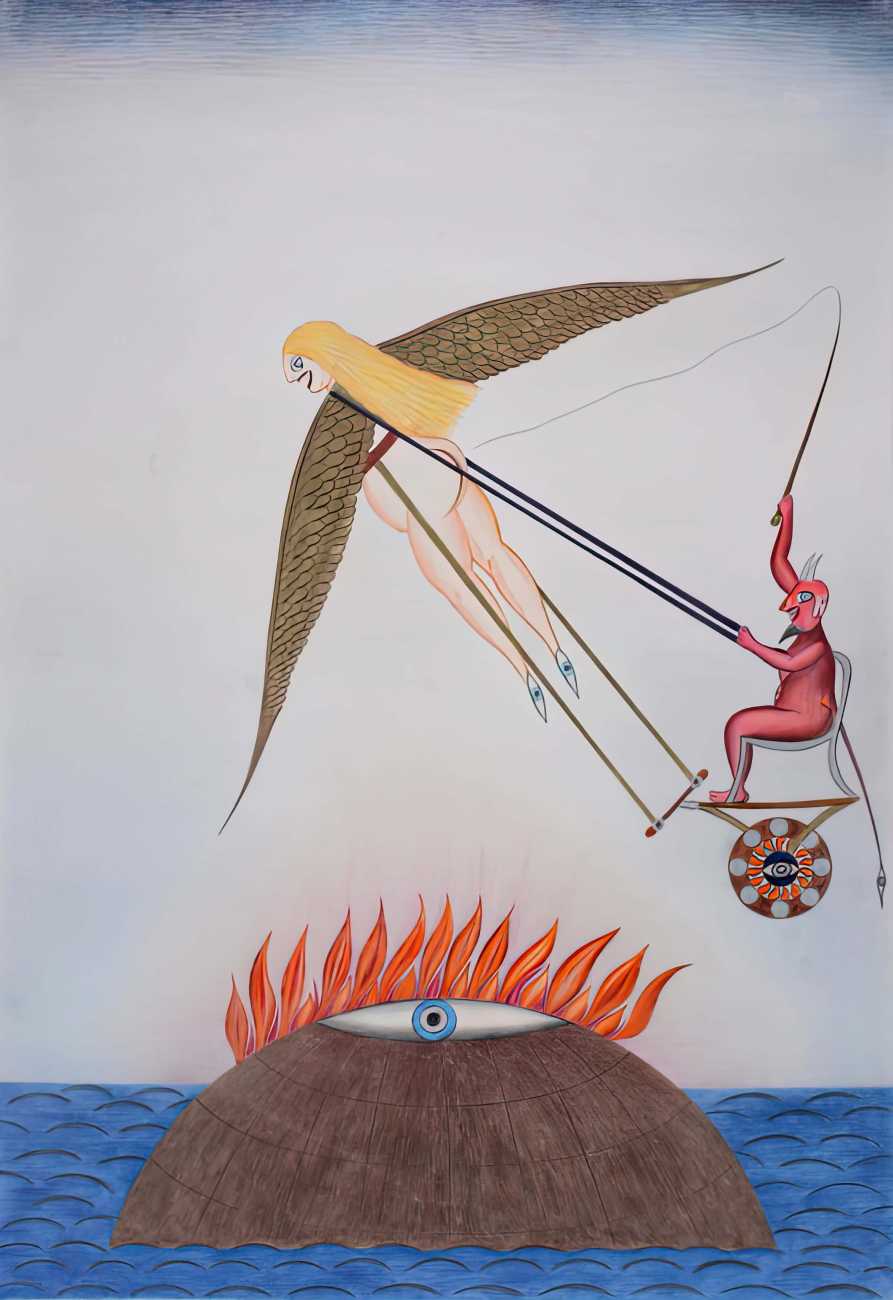
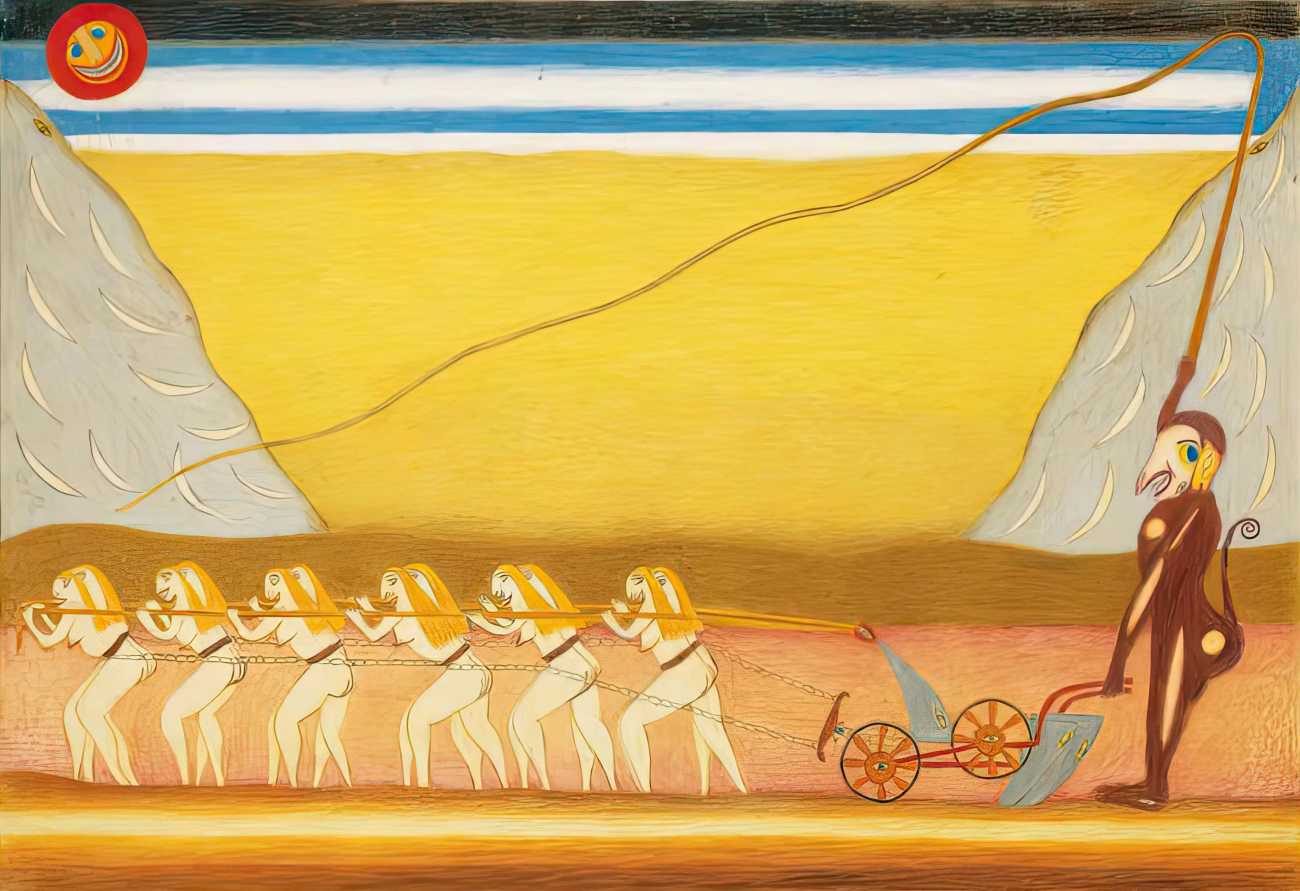
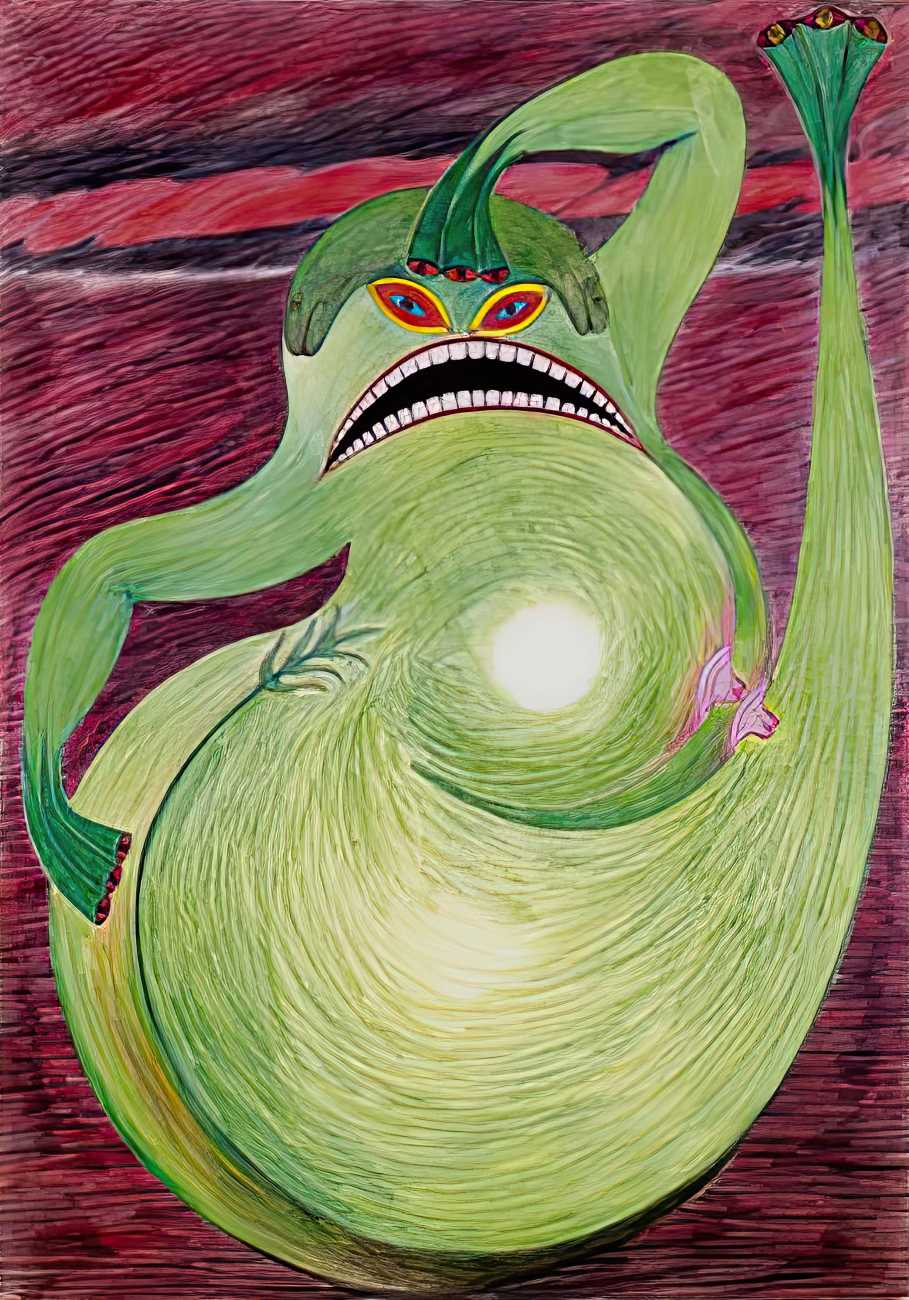
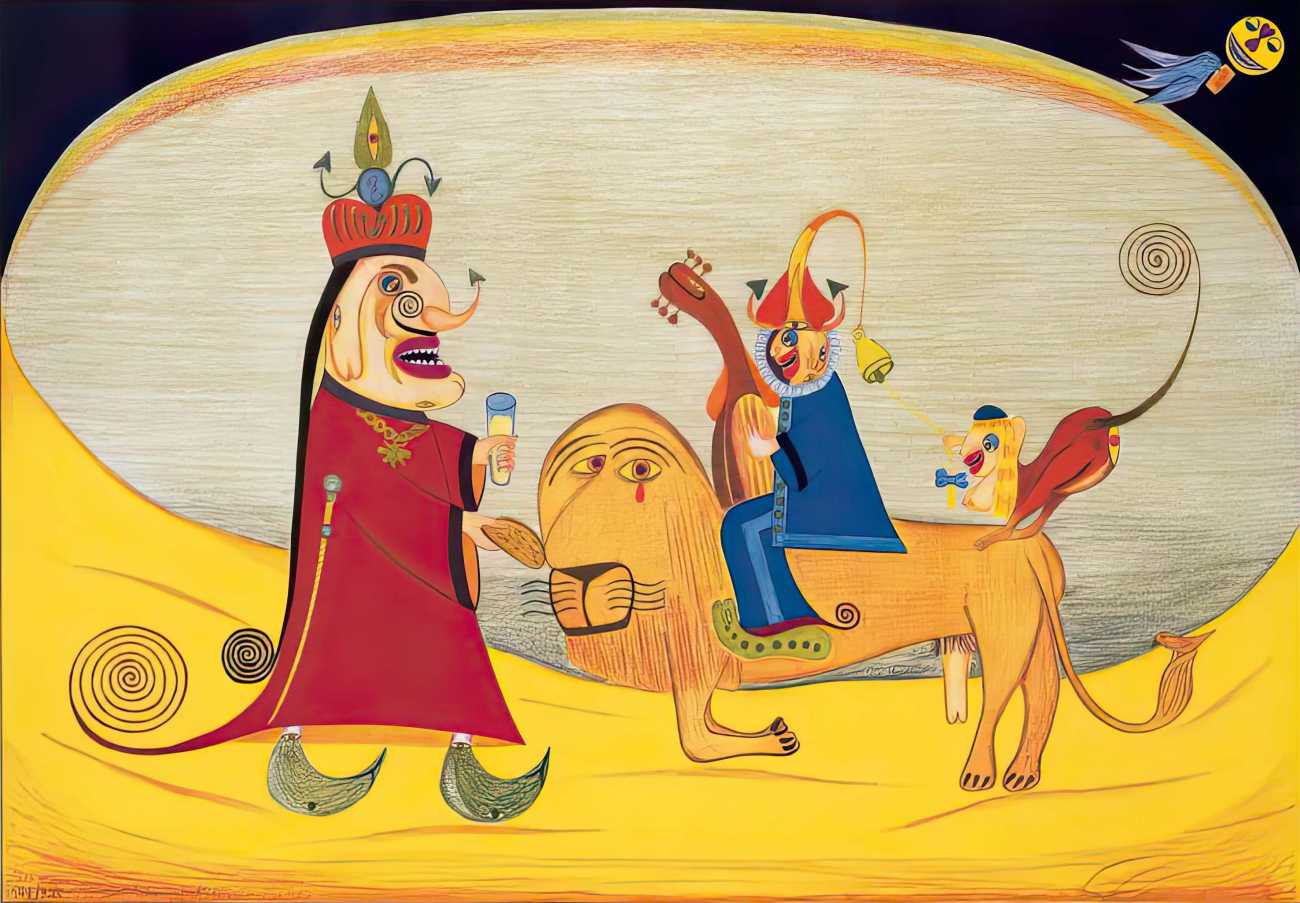
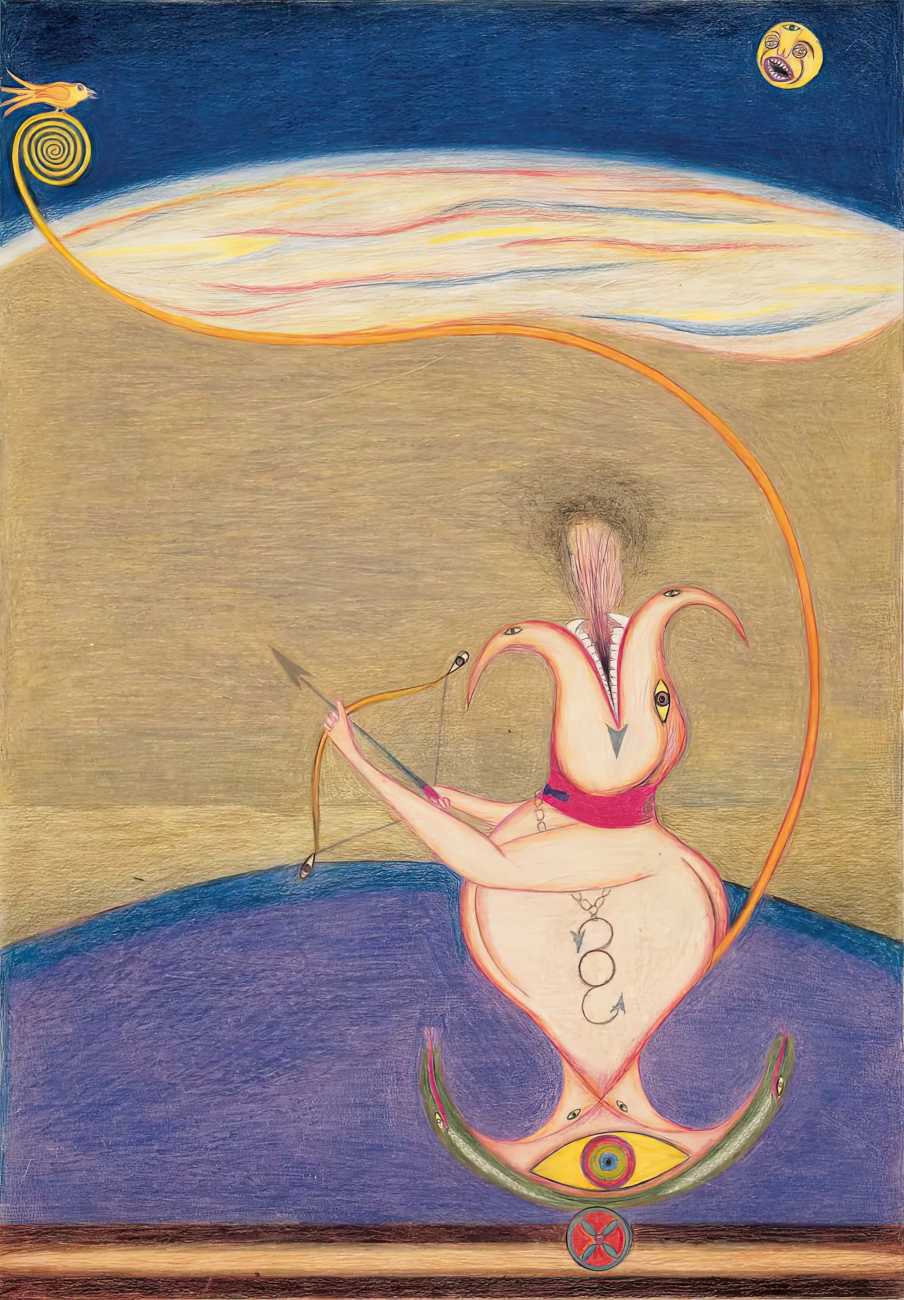
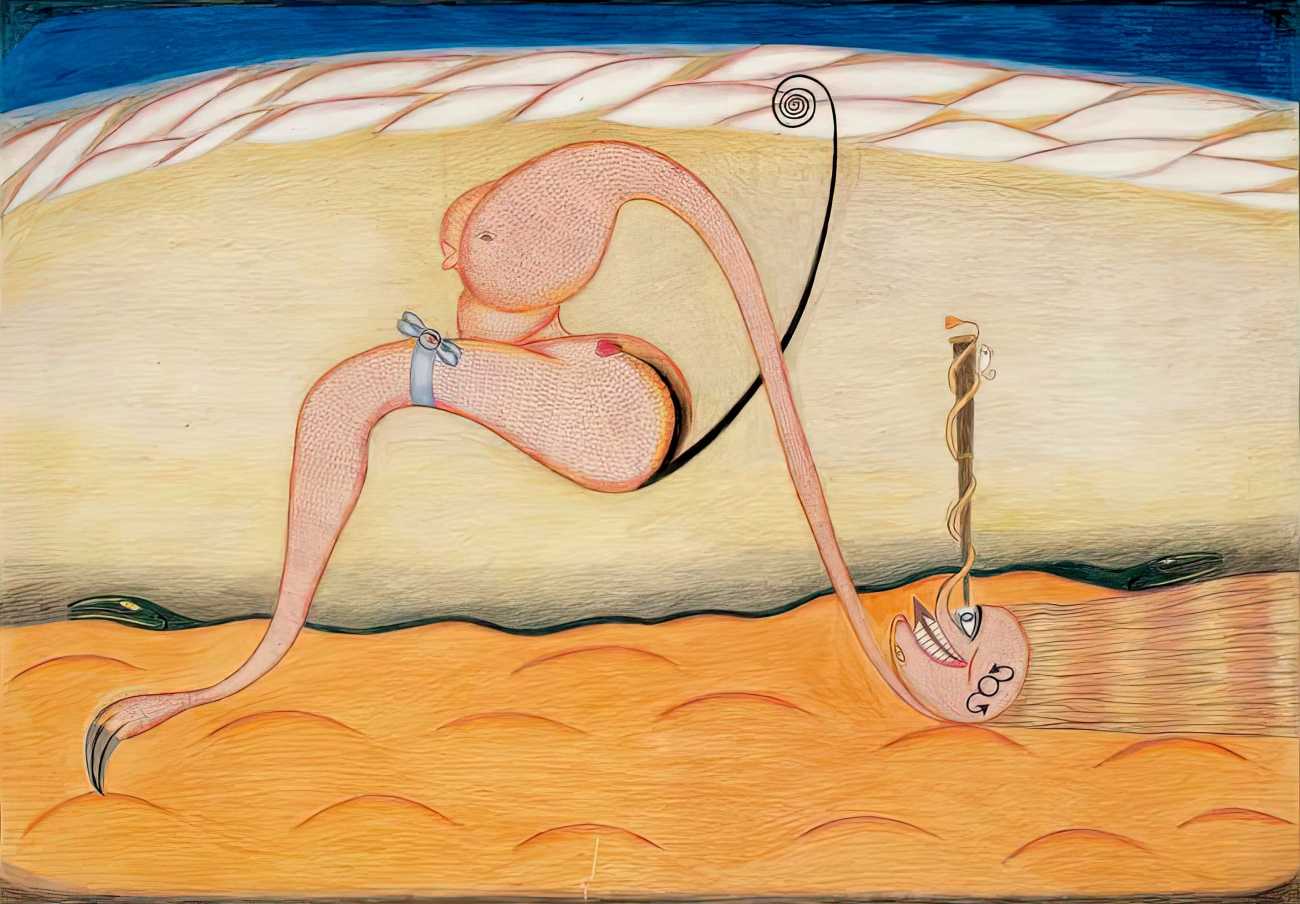
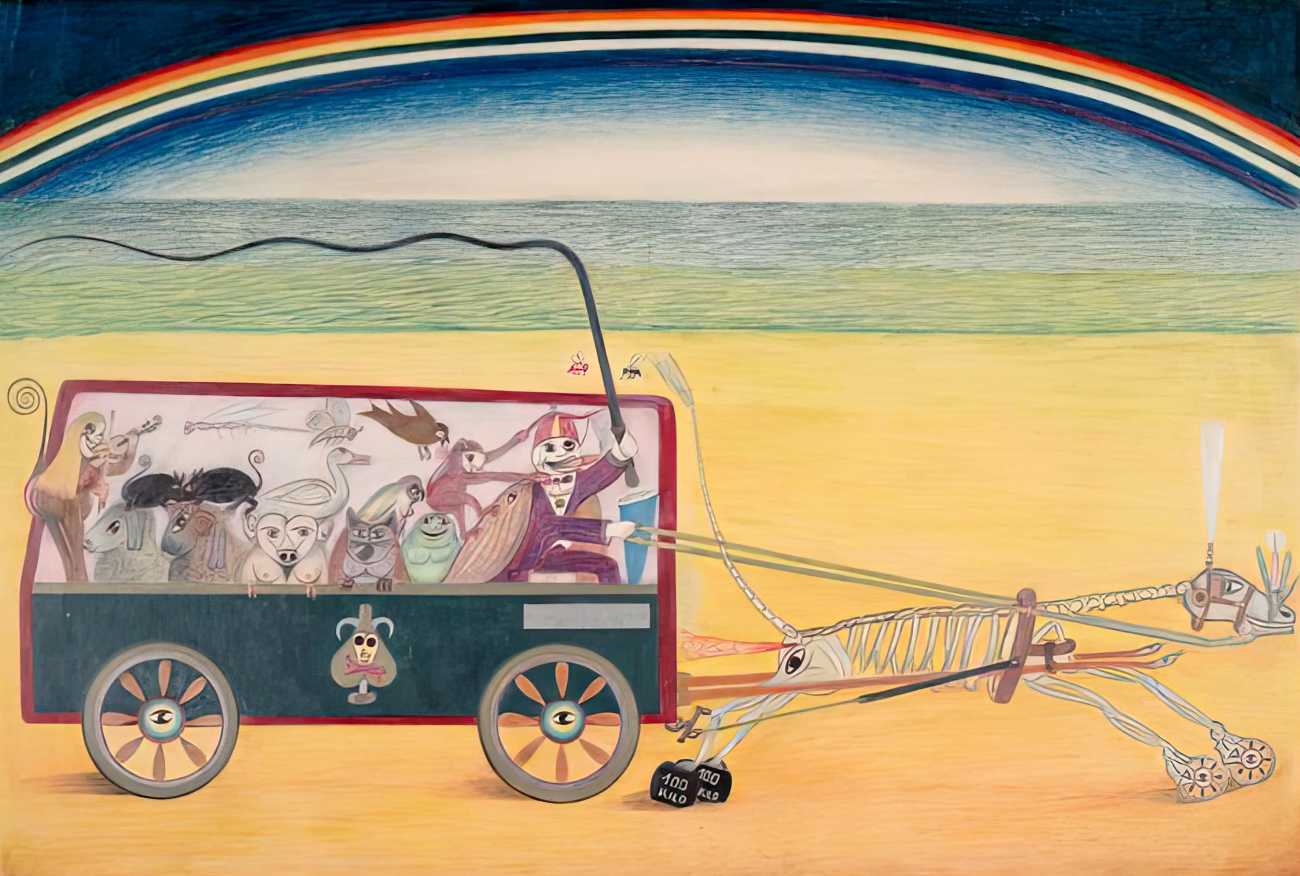
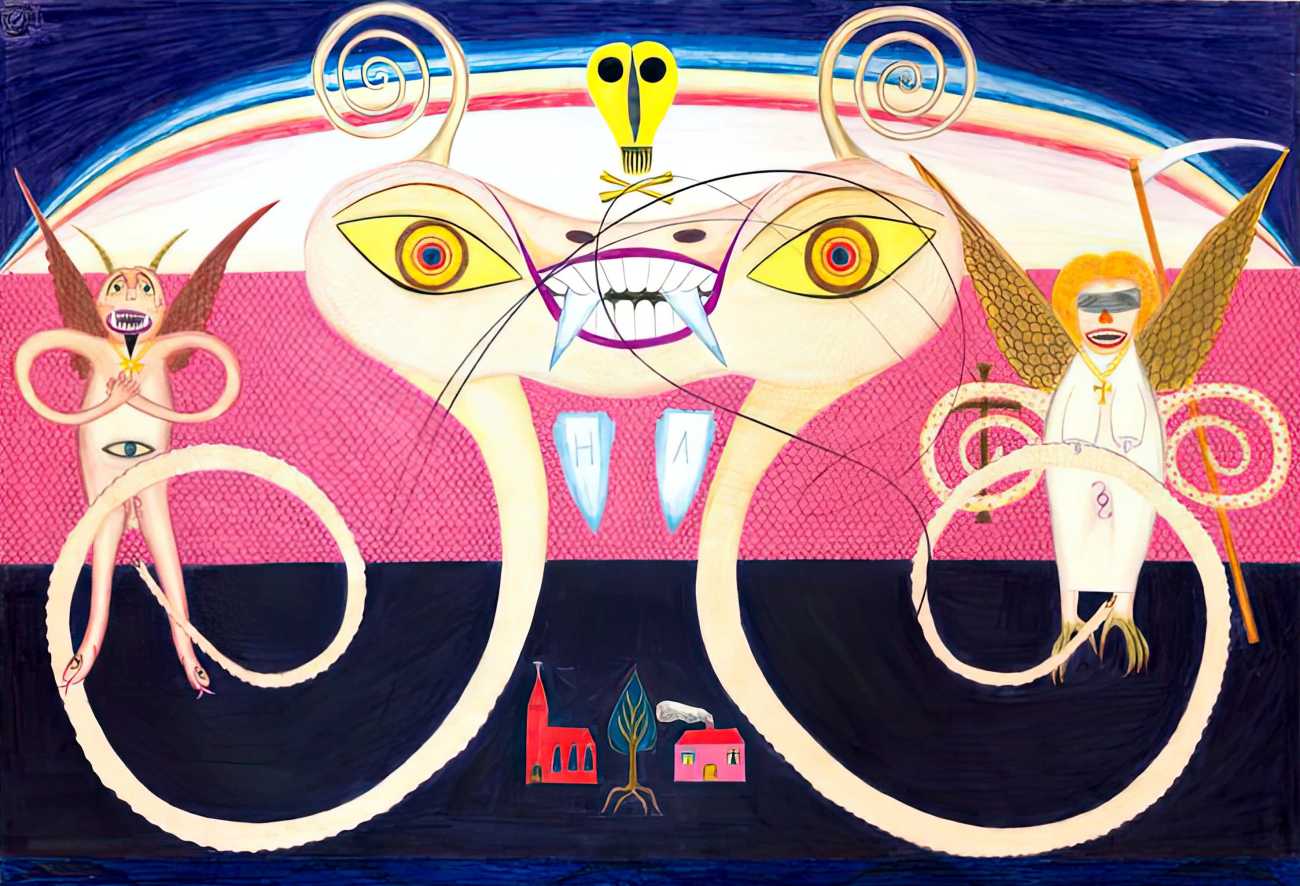
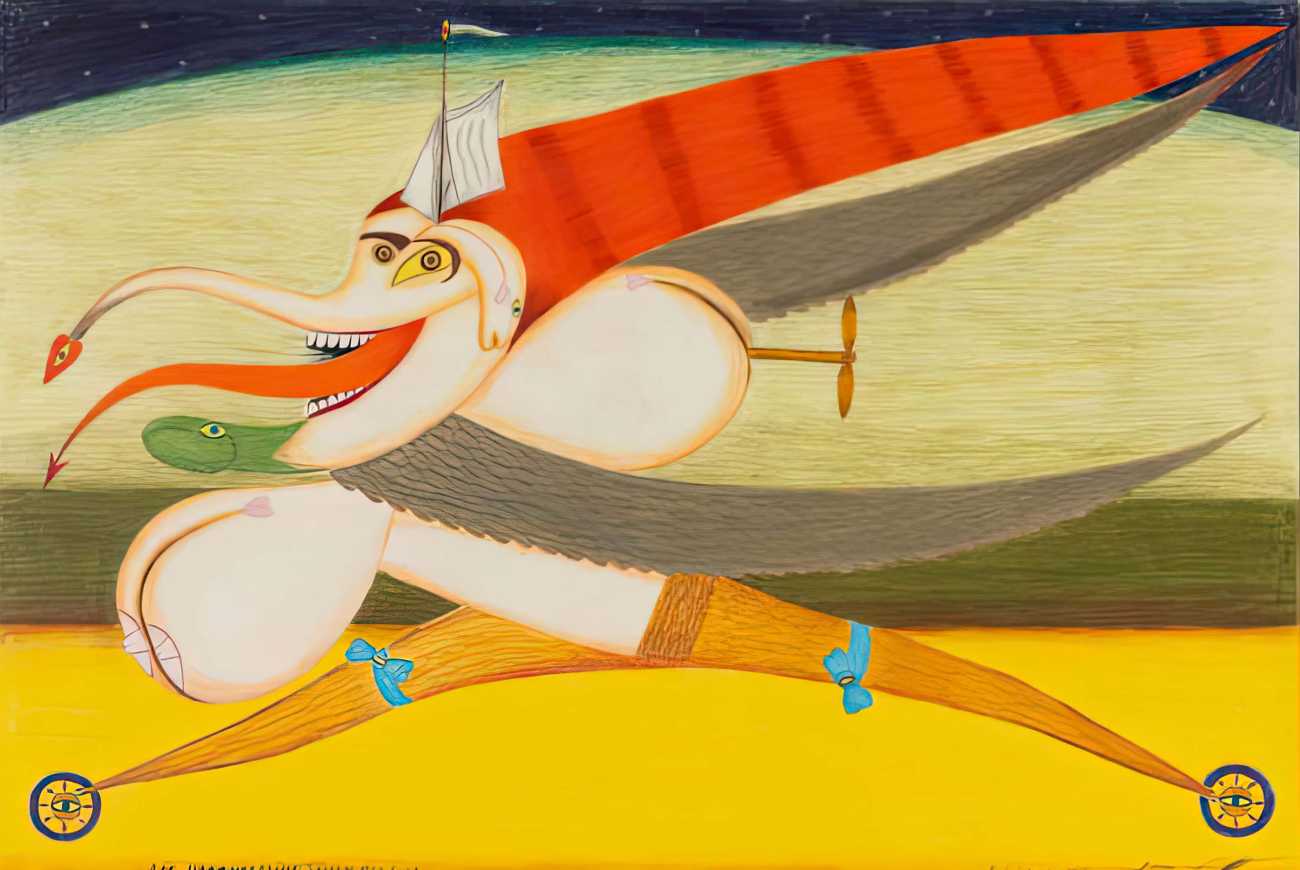
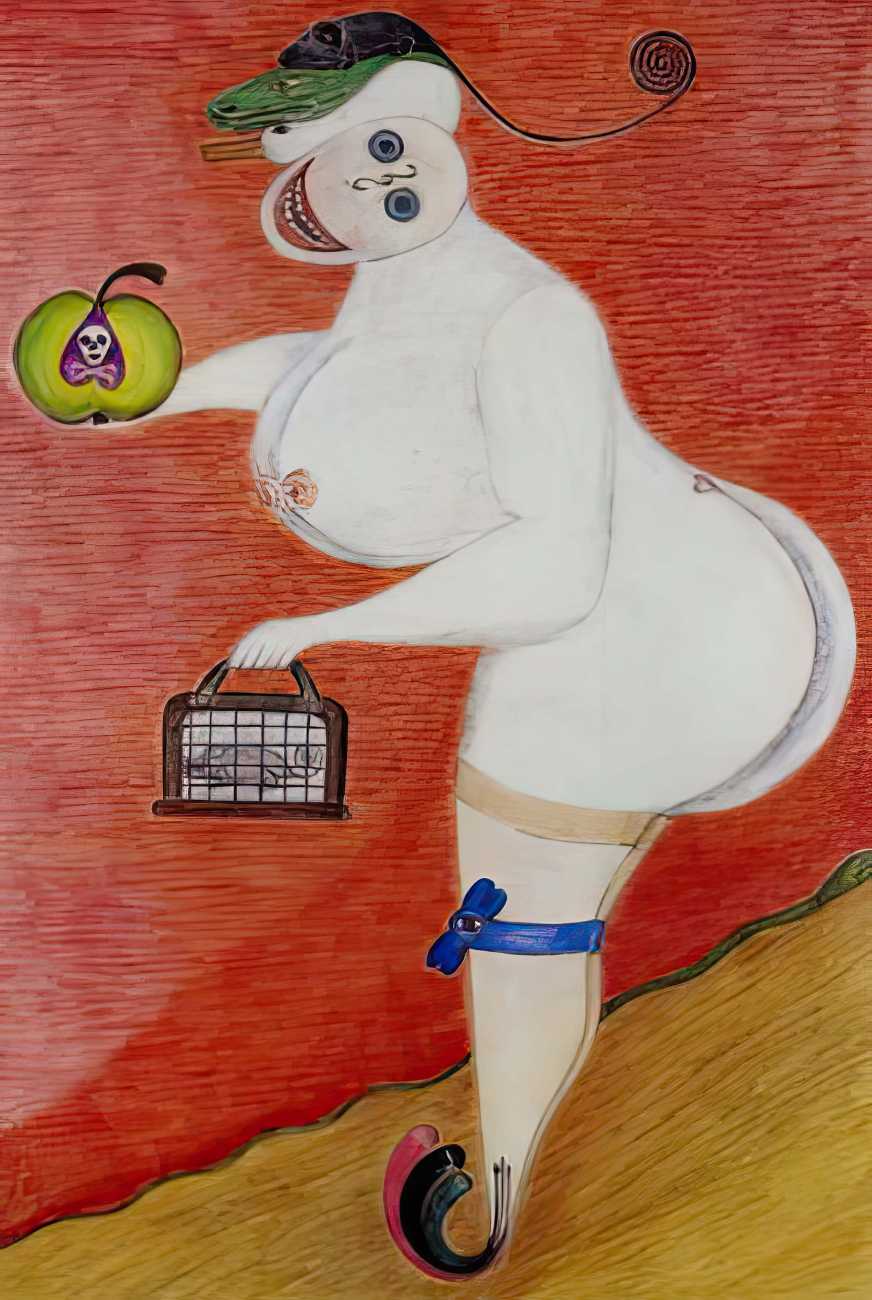
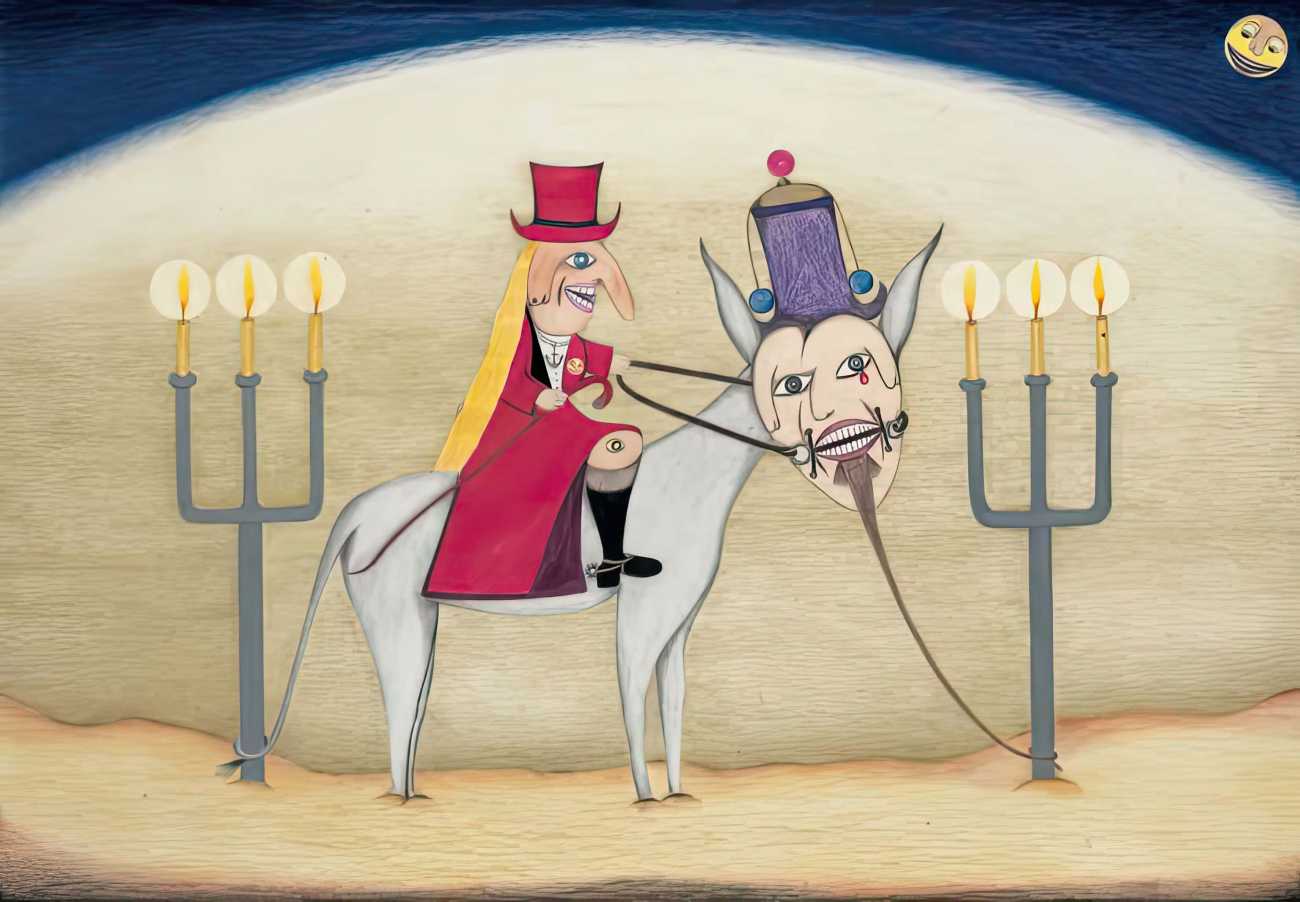
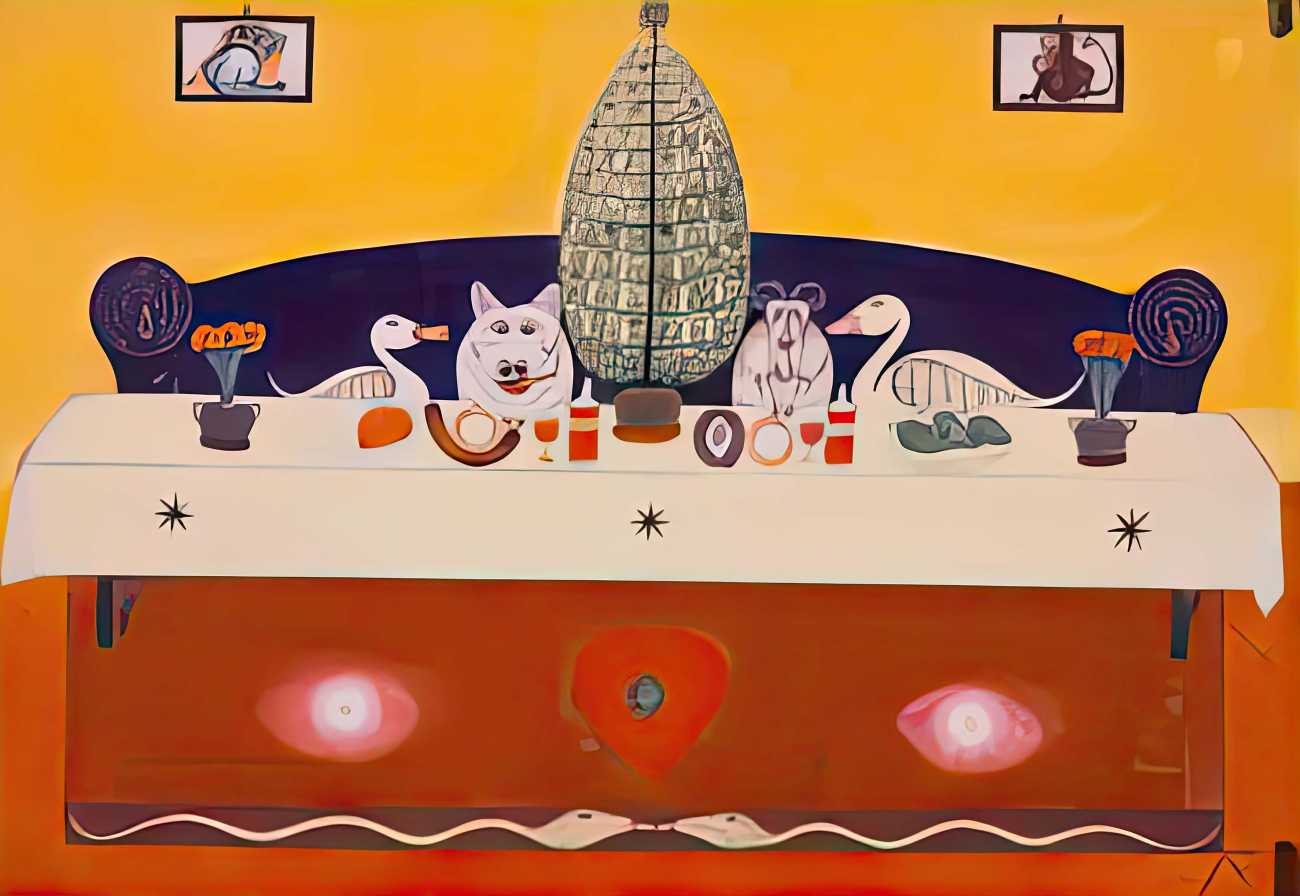
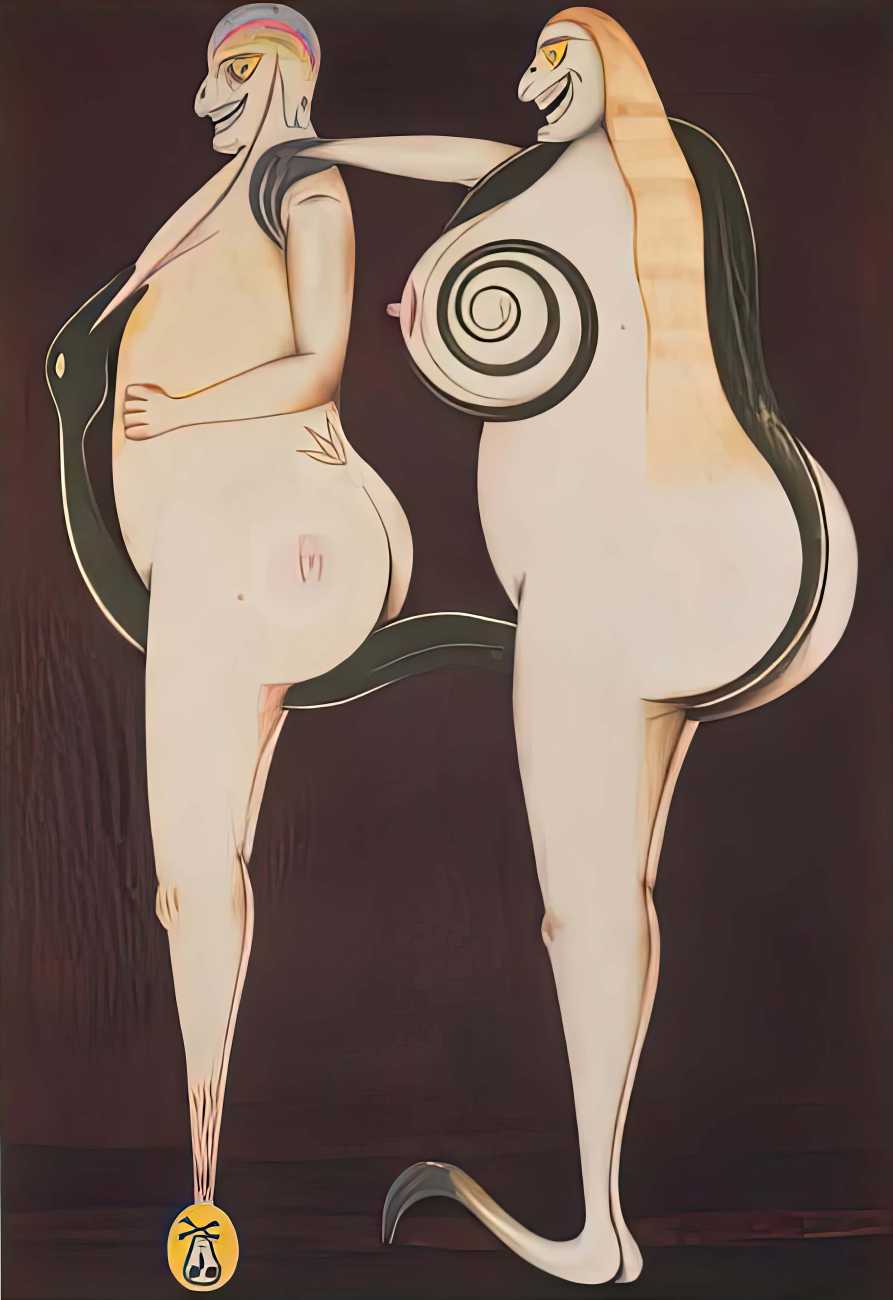
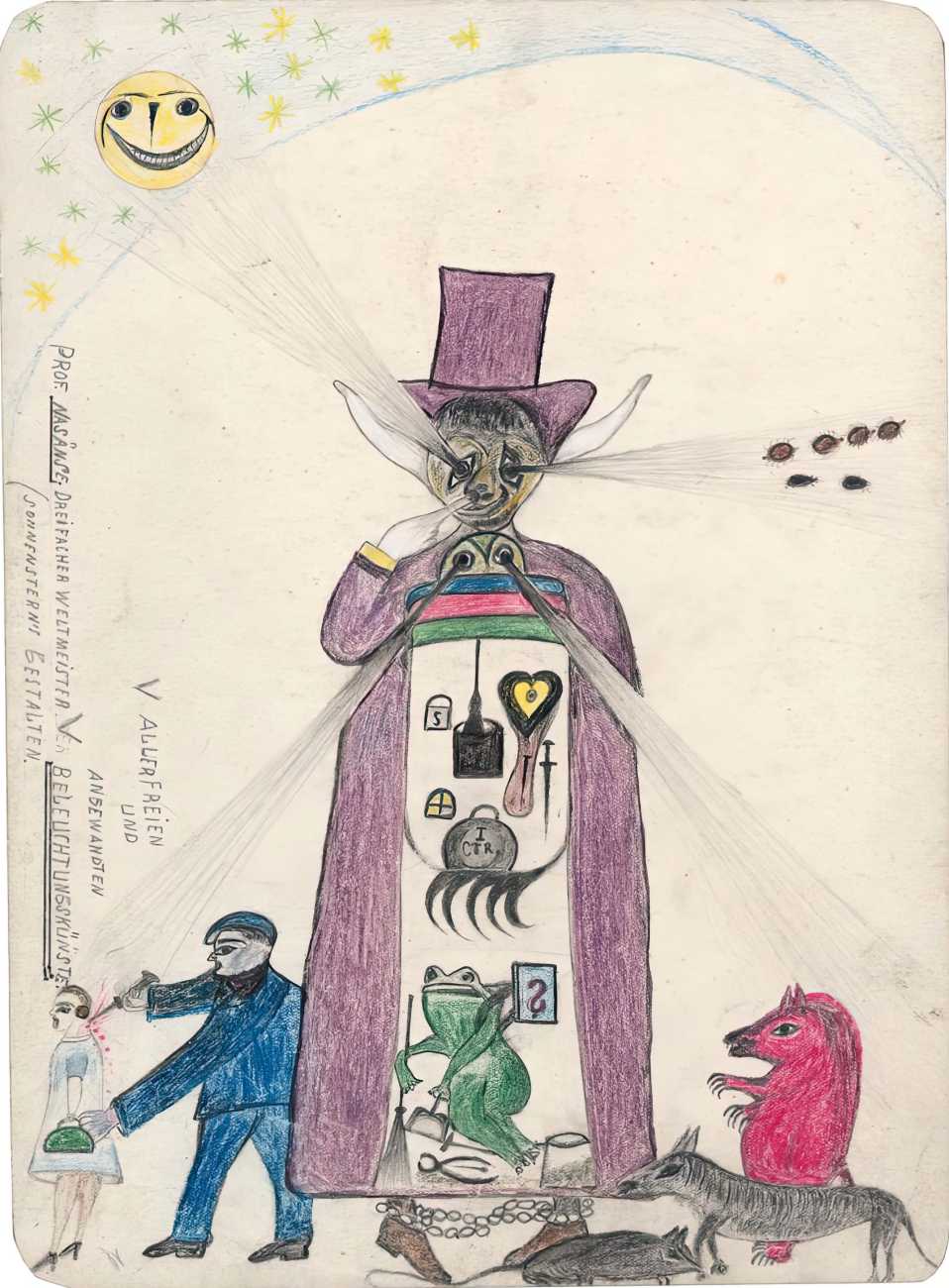
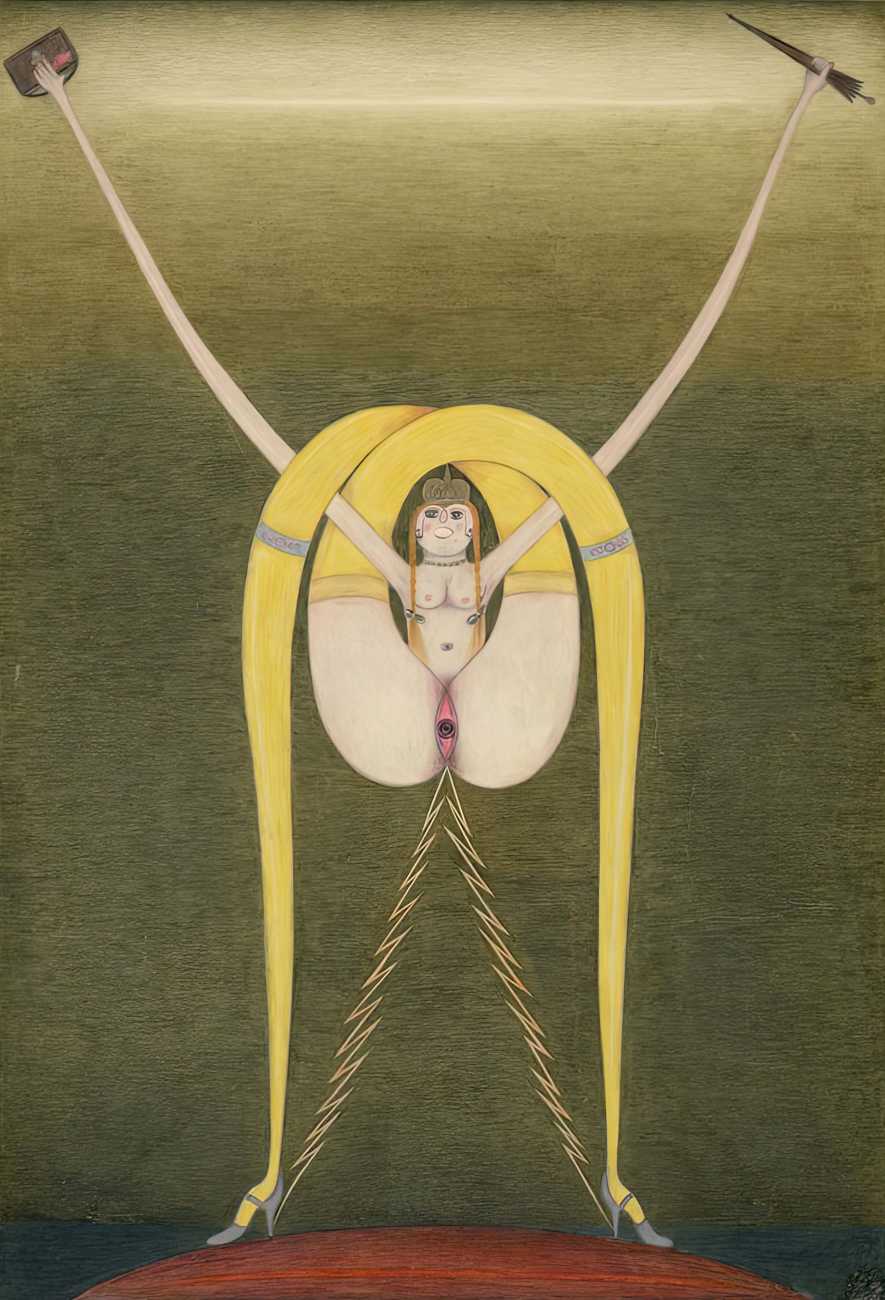
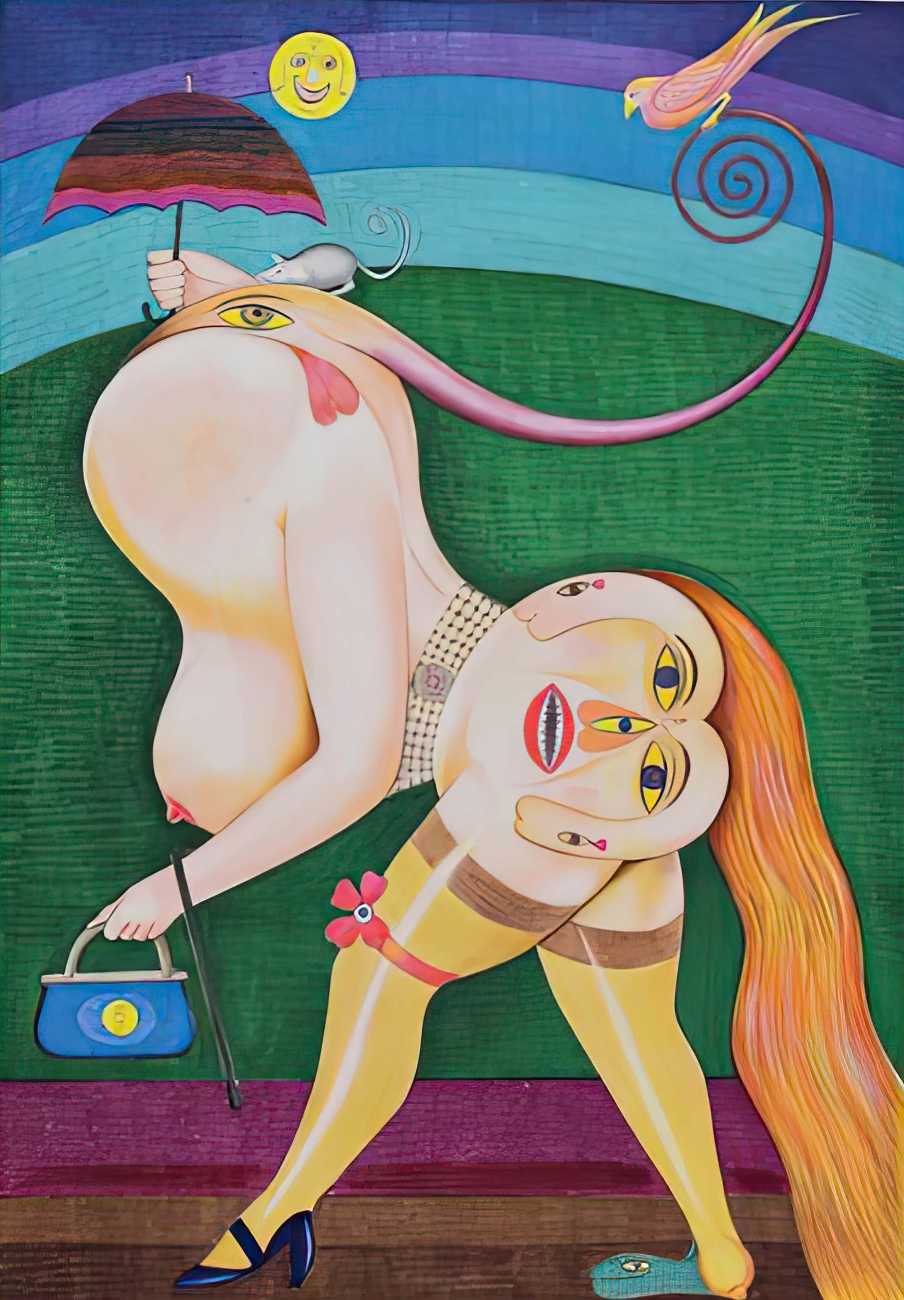
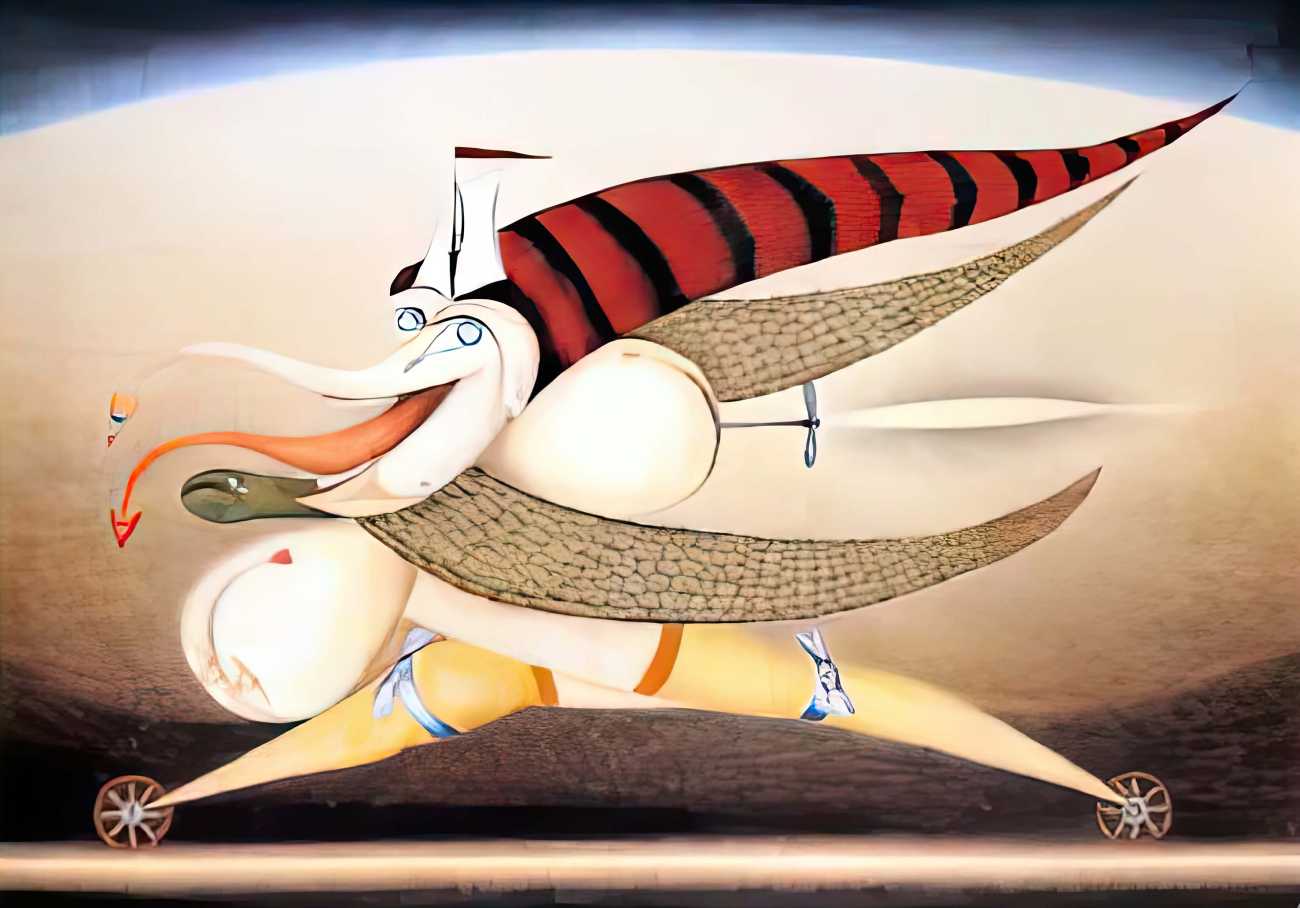
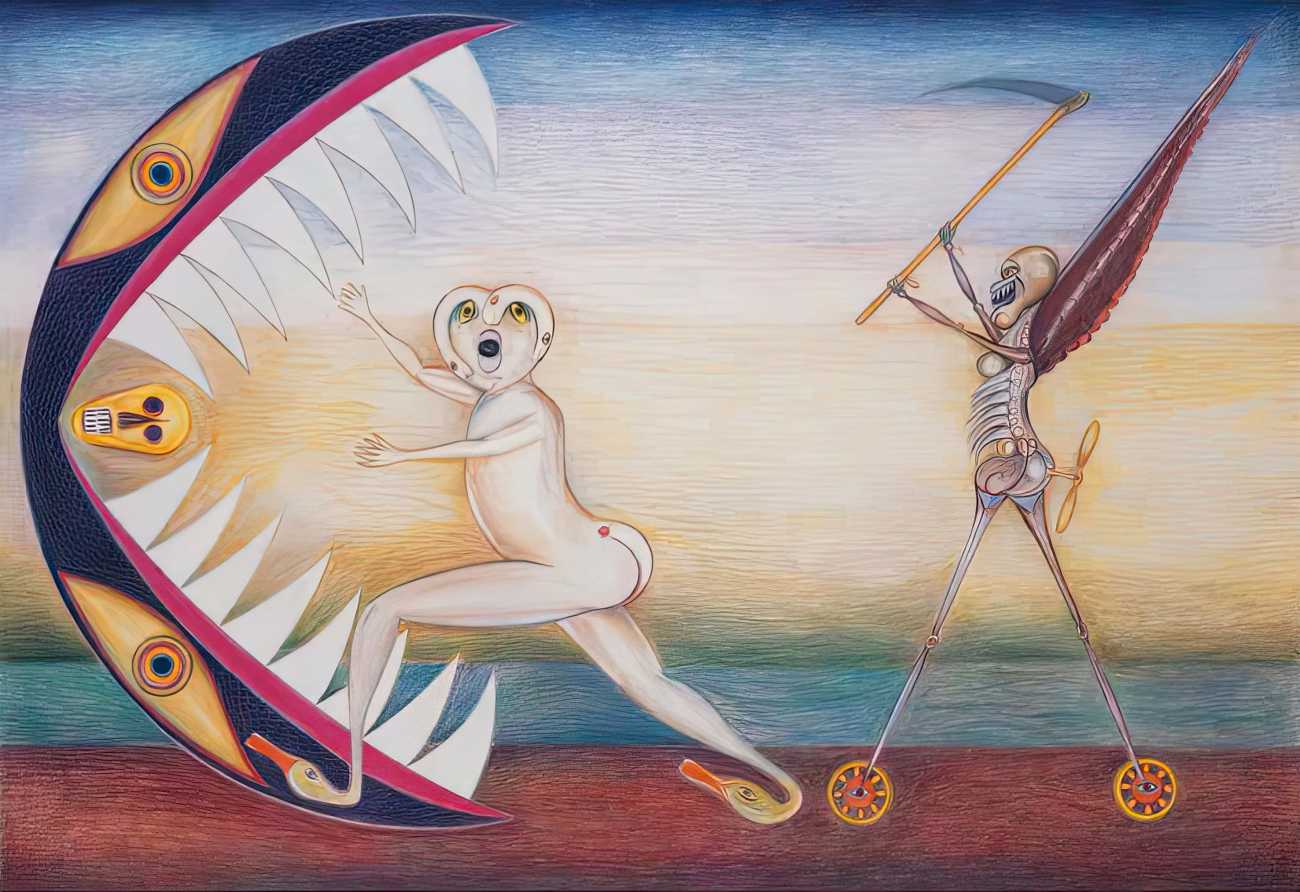
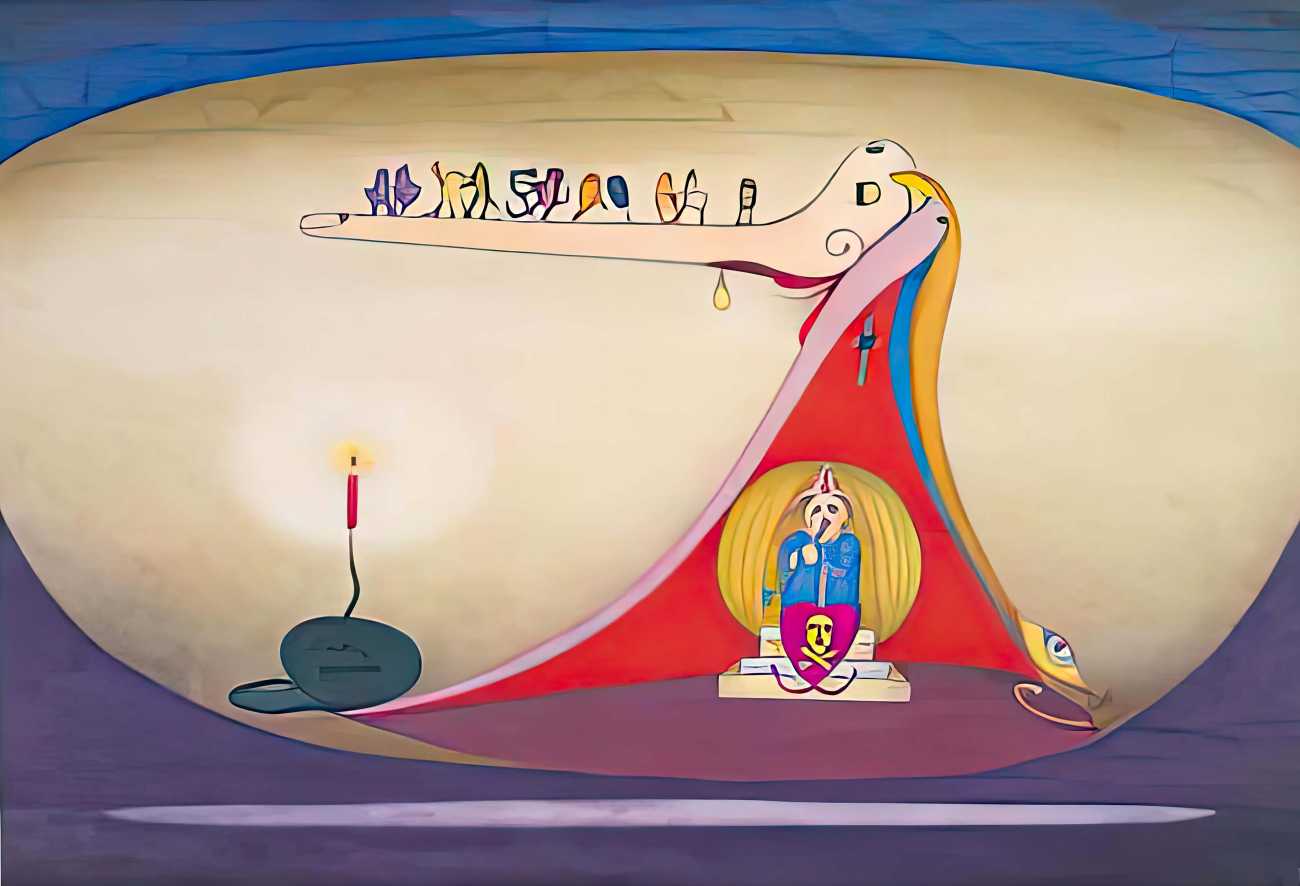
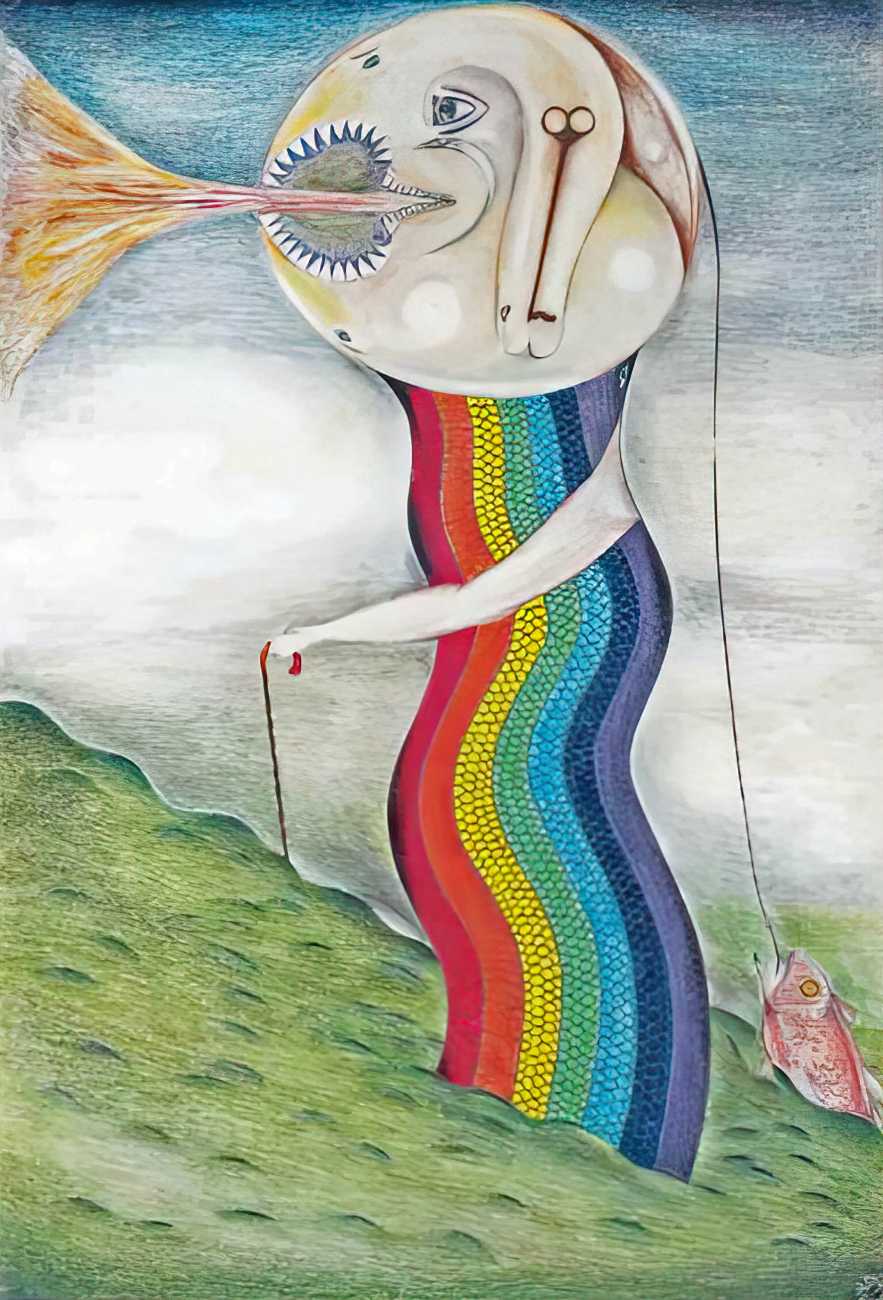
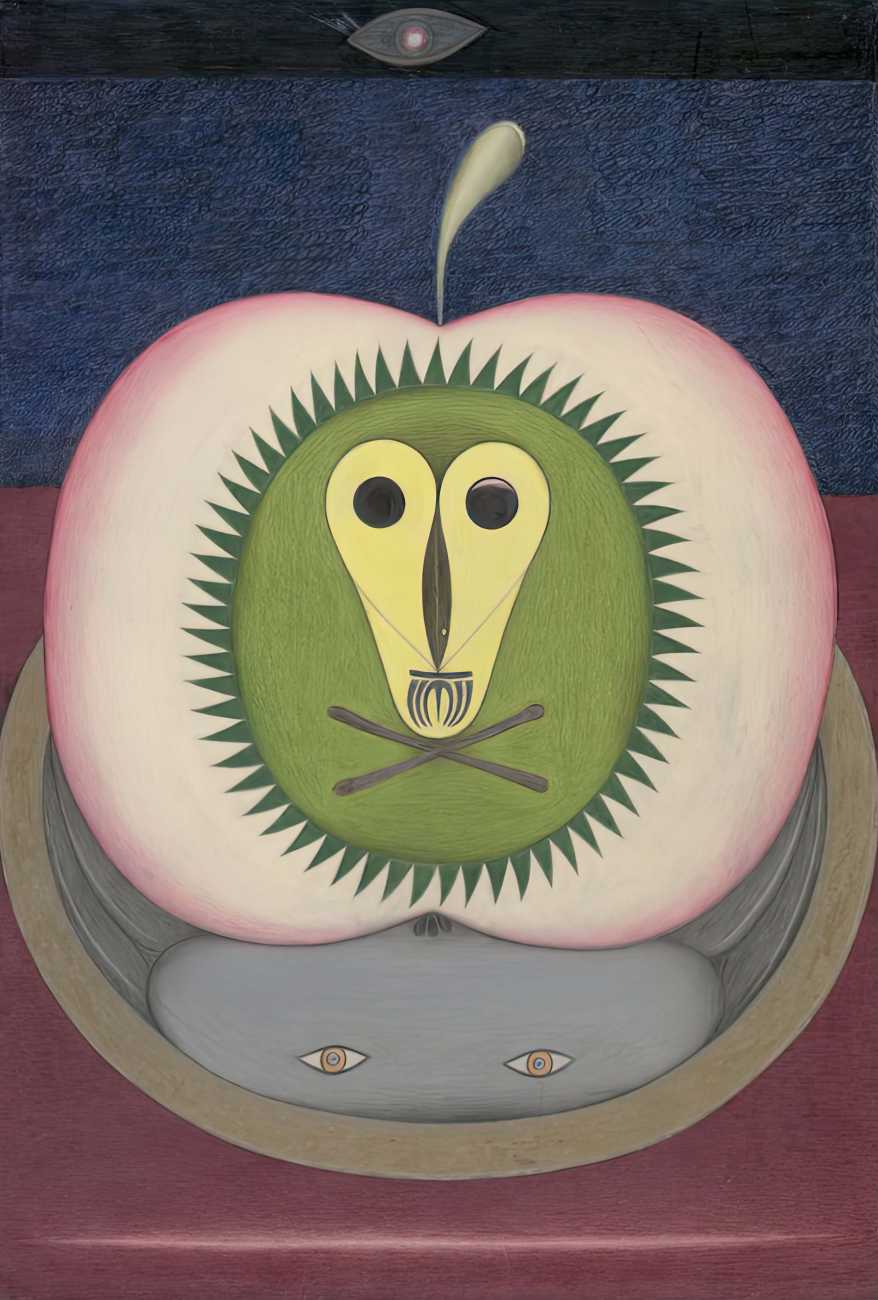
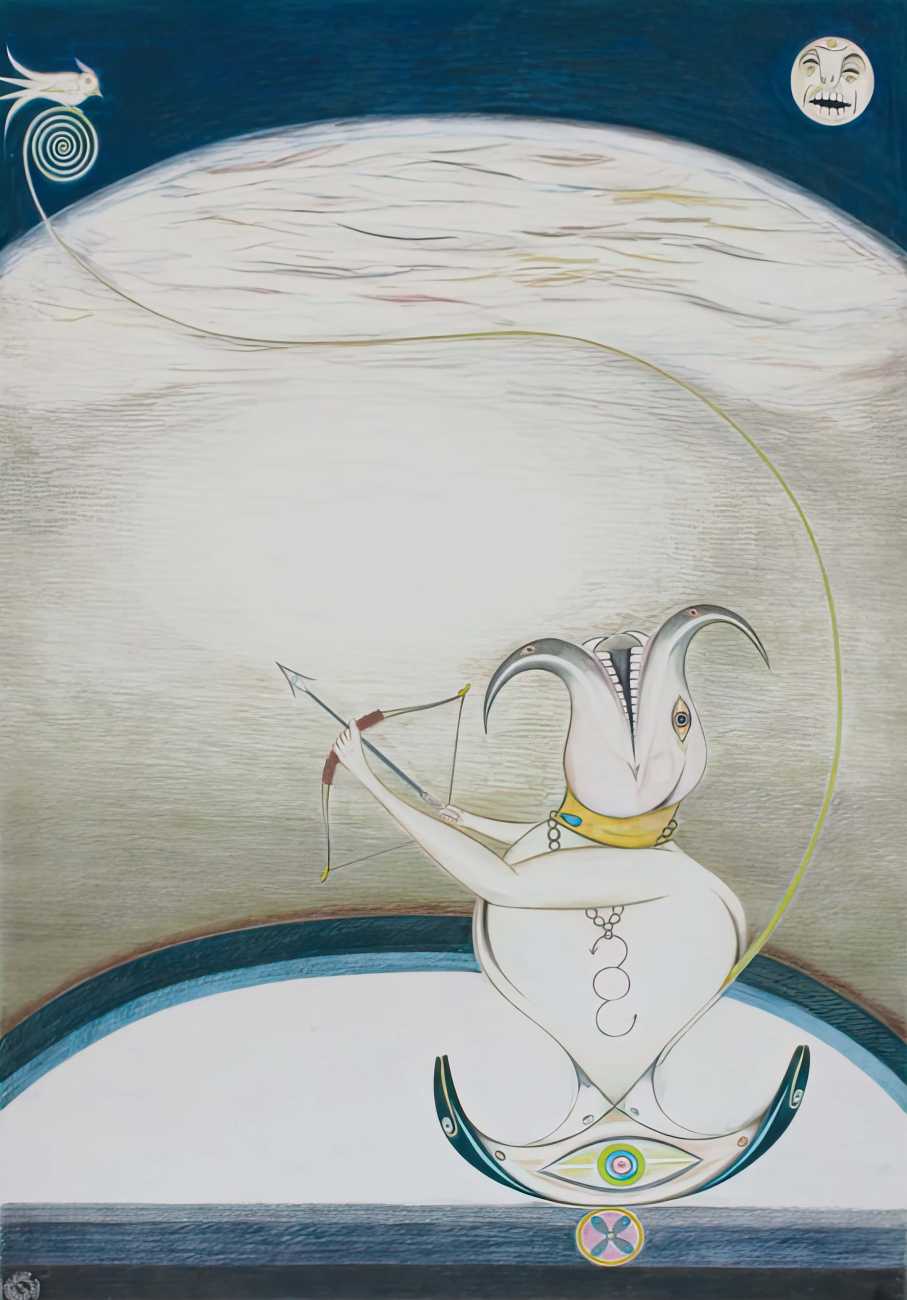
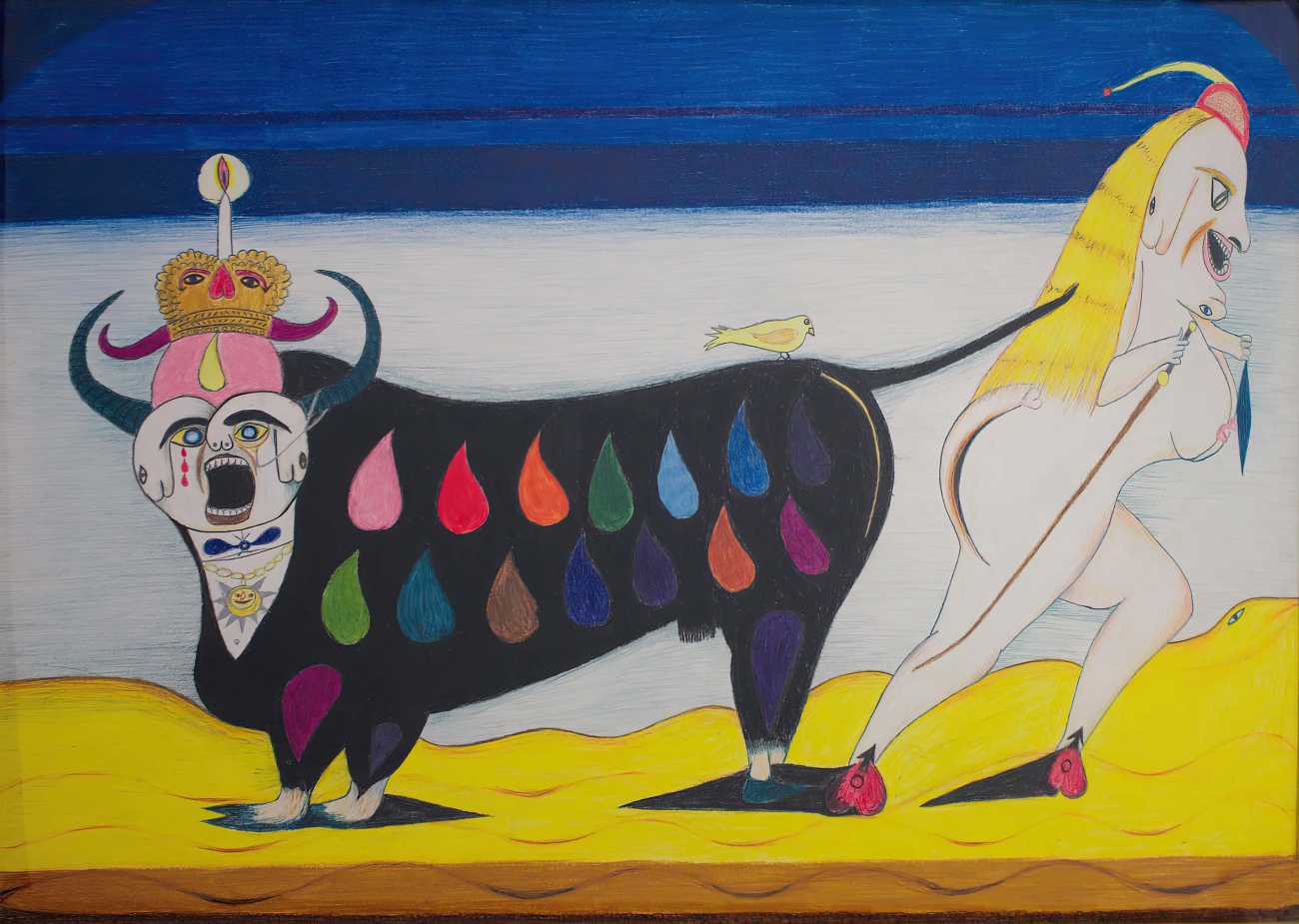
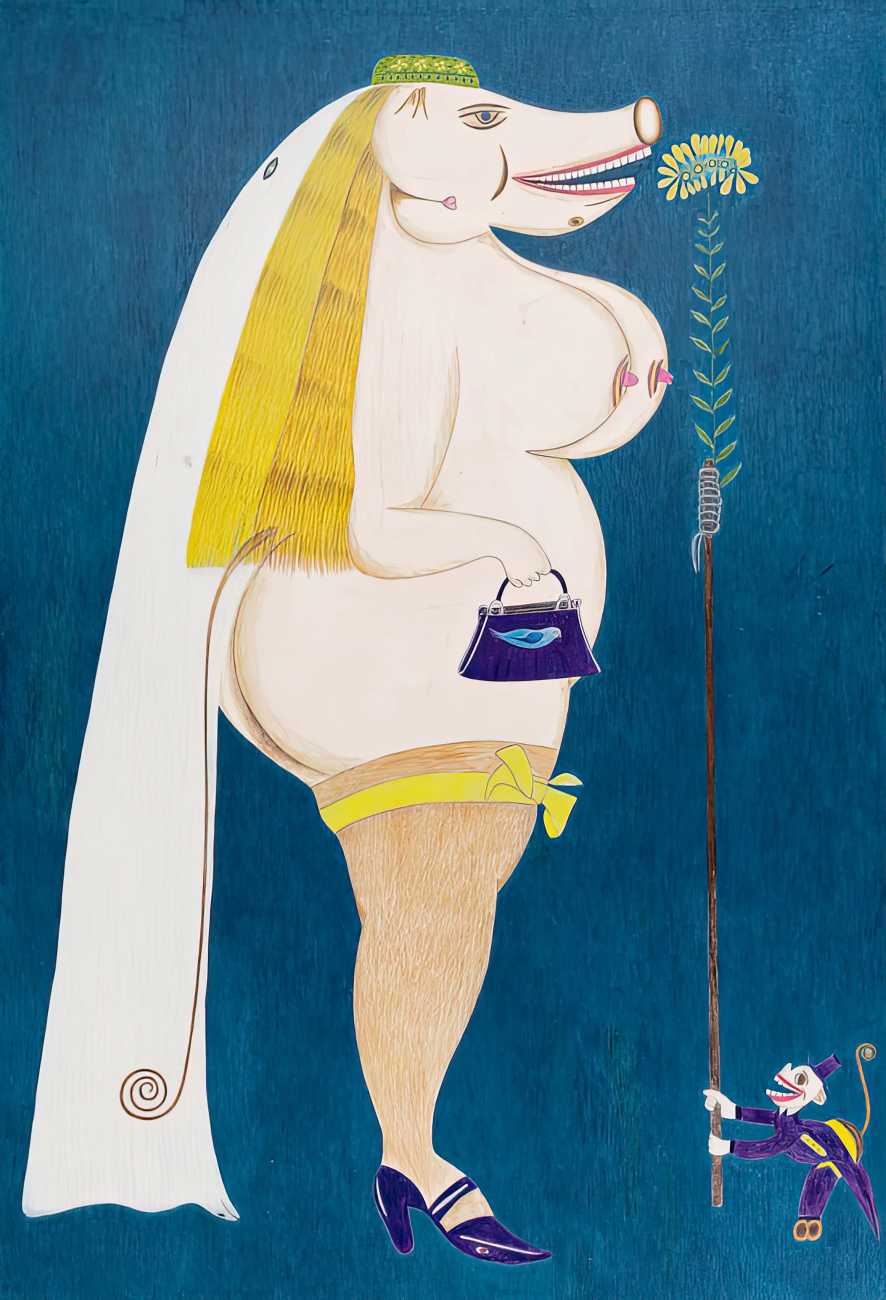
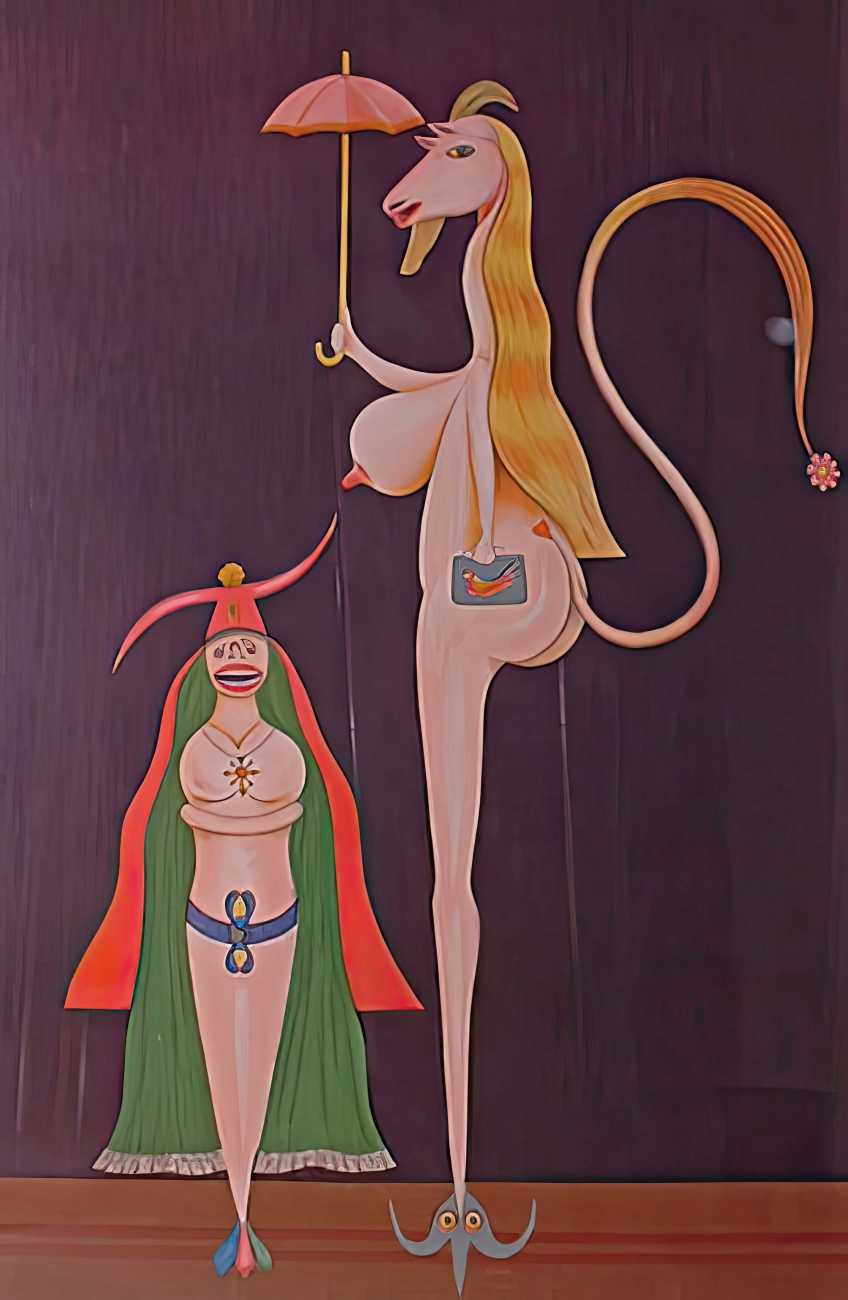
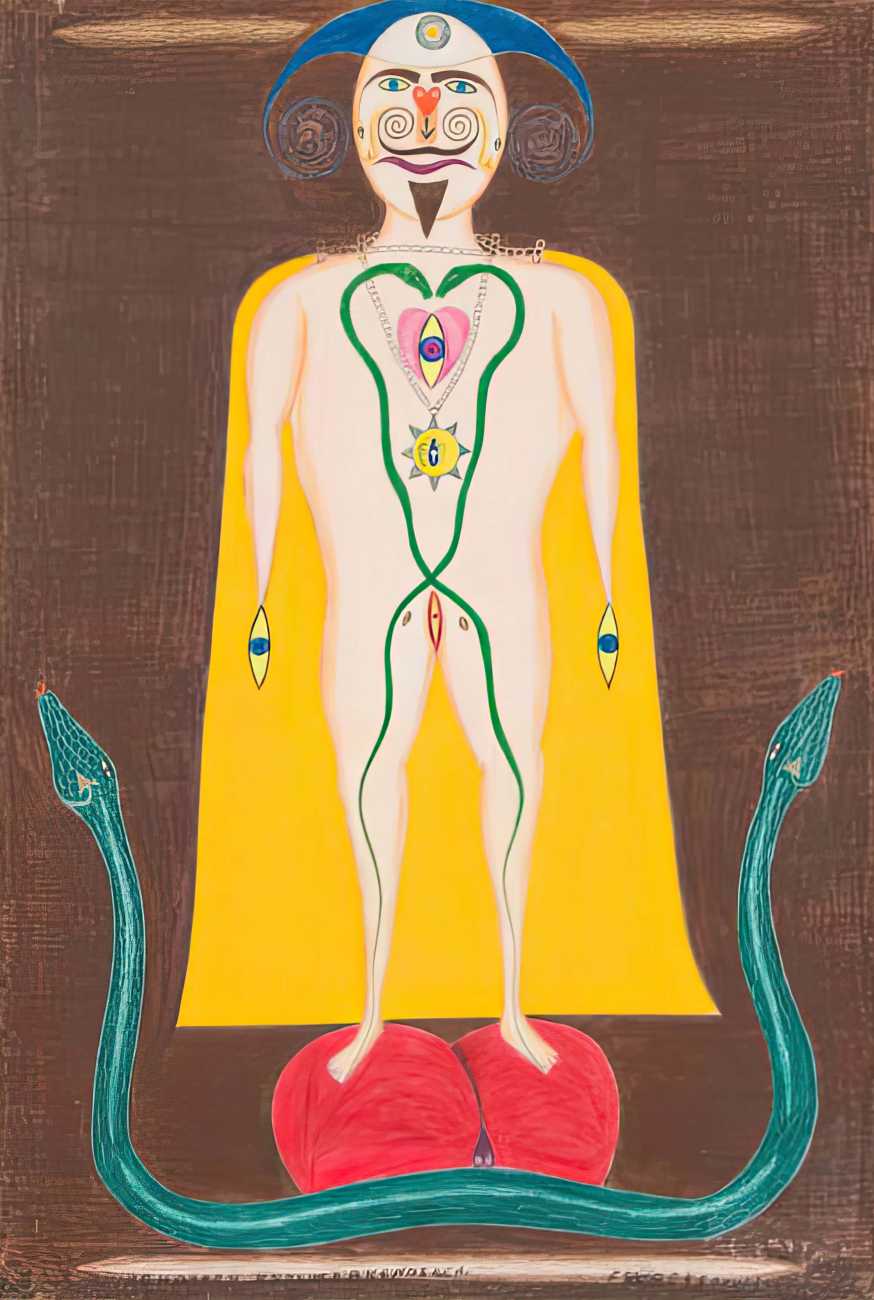
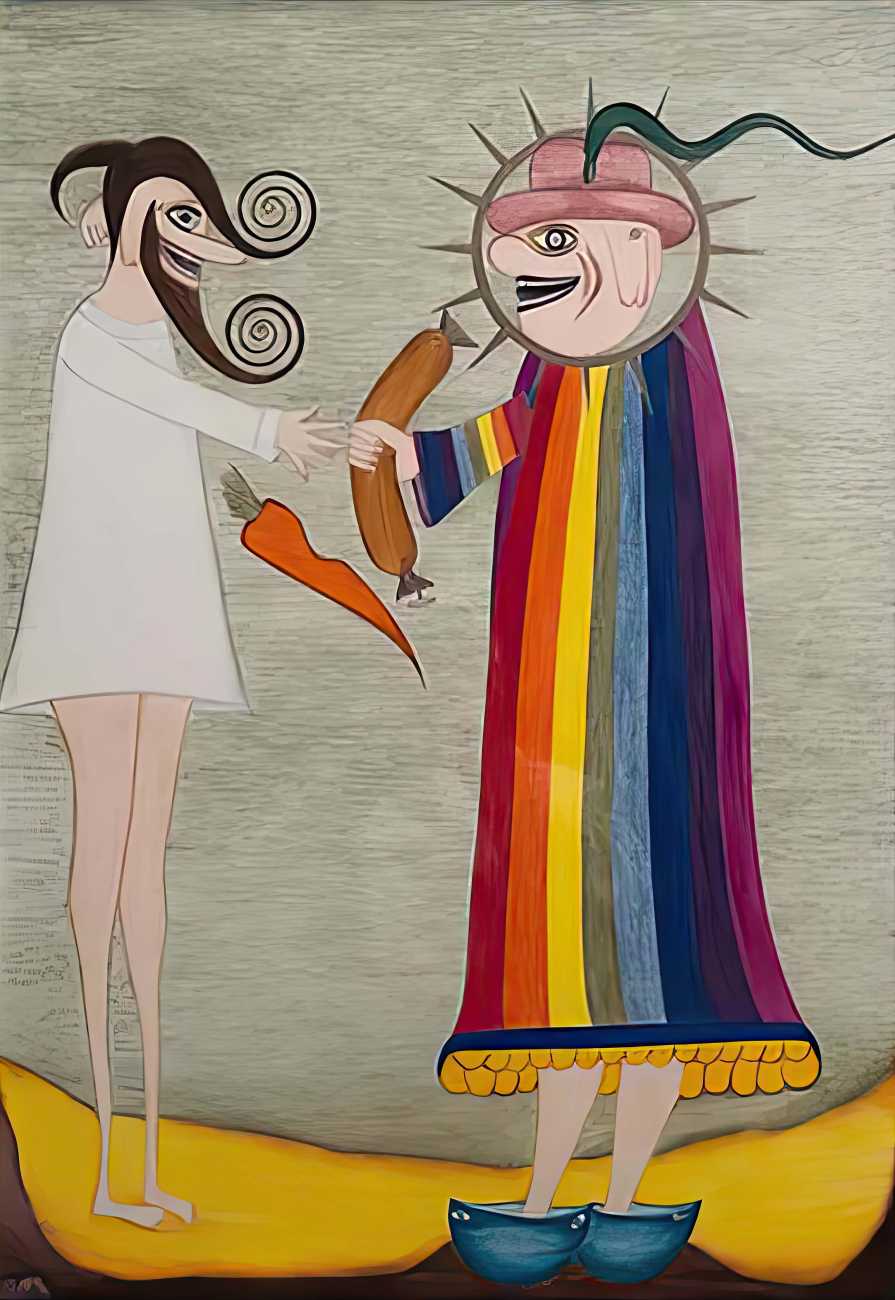
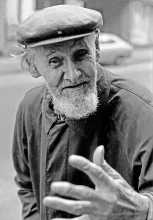
 Friedrich Schröder-Sonnenstern was one of the strangest and most original figures to emerge from post-war German art. Born Emil Friedrich Schröder, he was the second of thirteen children, and grew up in Kaukehmen, then in East Prussia and now Yasnoye in Russia’s Kaliningrad oblast. At the age of fourteen he was put into a reform school for vagrancy and theft, and this was followed by a series of prison sentences, interrupted by an unsuccessful apprenticeship as a gardener. In 1918 he was caught stealing a horse and committed to a psychiatric clinic in Tilsit (now Sovetsk).
By 1919 he was in Berlin, living at first as Gustav Gnass and from about 1928 as Eliot Gnas von Sonnenstern. He worked variously as an astrologer, healer, occultist and itinerant preacher, founding his own mystical sect, styling himself Sun King Eliot I, and distributing much of his income to poor children in the form of bread rolls. In 1933 he was admitted to the Neustadt Provincial Asylum in Schleswig-Holstein, where he met the artist Hans Ralfs, who encouraged him to draw his first pictures.
After his release from Neustadt he served a three-year prison sentence, which was followed by brief service at a Luftwaffe depot and removal to the Himmelmoor labour camp near Quickborn, from which he escaped to Berlin in 1942. It was not until 1949, when he was already 57, that he began to work seriously as an artist. Over the following decade he produced the remarkable body of drawings for which he is remembered.
His breakthrough came when the surrealists included him in the Exposition Internationale du Surréalisme in 1959–60. André Breton and other prominent figures admired his work, and collectors of his pictures included Picasso, Dubuffet, Max Ernst and Georges Pompidou. International exhibitions followed, bringing his work to a wider audience.
After the Paris exhibition Schröder-Sonnenstern stopped accepting commissions and started using assistants to copy his work, carrying out only details and corrections himself. During his decline from the mid-1960s he sometimes signed blank sheets of card and left assistants to supply the motifs. When this became known, his reputation and the market for his work collapsed.
With the death of his partner Martha Möller in 1964, Schröder-Sonnenstern increasingly lost his footing in life. He had to move out of his apartment in Schöneberg. He became an alcoholic and was once again admitted to a psychiatric hospital.
Later reassessment brought renewed attention to his work, which is now represented in collections including the Collection de l’Art Brut in Lausanne, the Centre Pompidou and the Zander Collection.
Similar artists
Hans Bellmer – German-born surrealist embraced by the surrealist avant-garde.
Jean Dubuffet – French champion of art brut who collected Schröder-Sonnenstern’s work.
André Masson – Automatic-drawing surrealist depicting violent, erotic human impulses.
Roberto Matta – Chilean surrealist painting cosmic, biomorphic visionary dreamscapes.
Rudolf Schlichter – German painter fusing Weimar-era fetish with surreal unease.
Toyen – Czech surrealist exploring desire through dreamlike, boundary-crossing imagery.
Example illustration