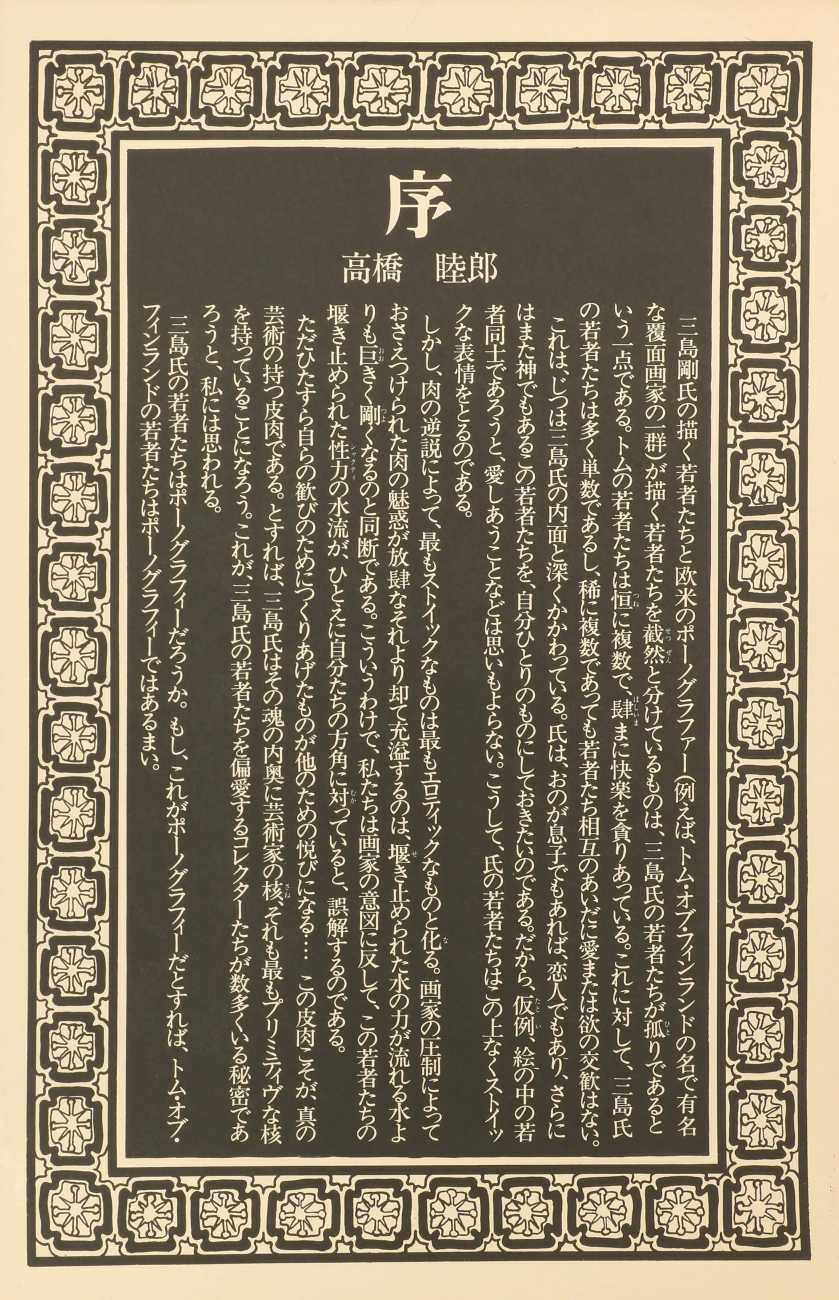
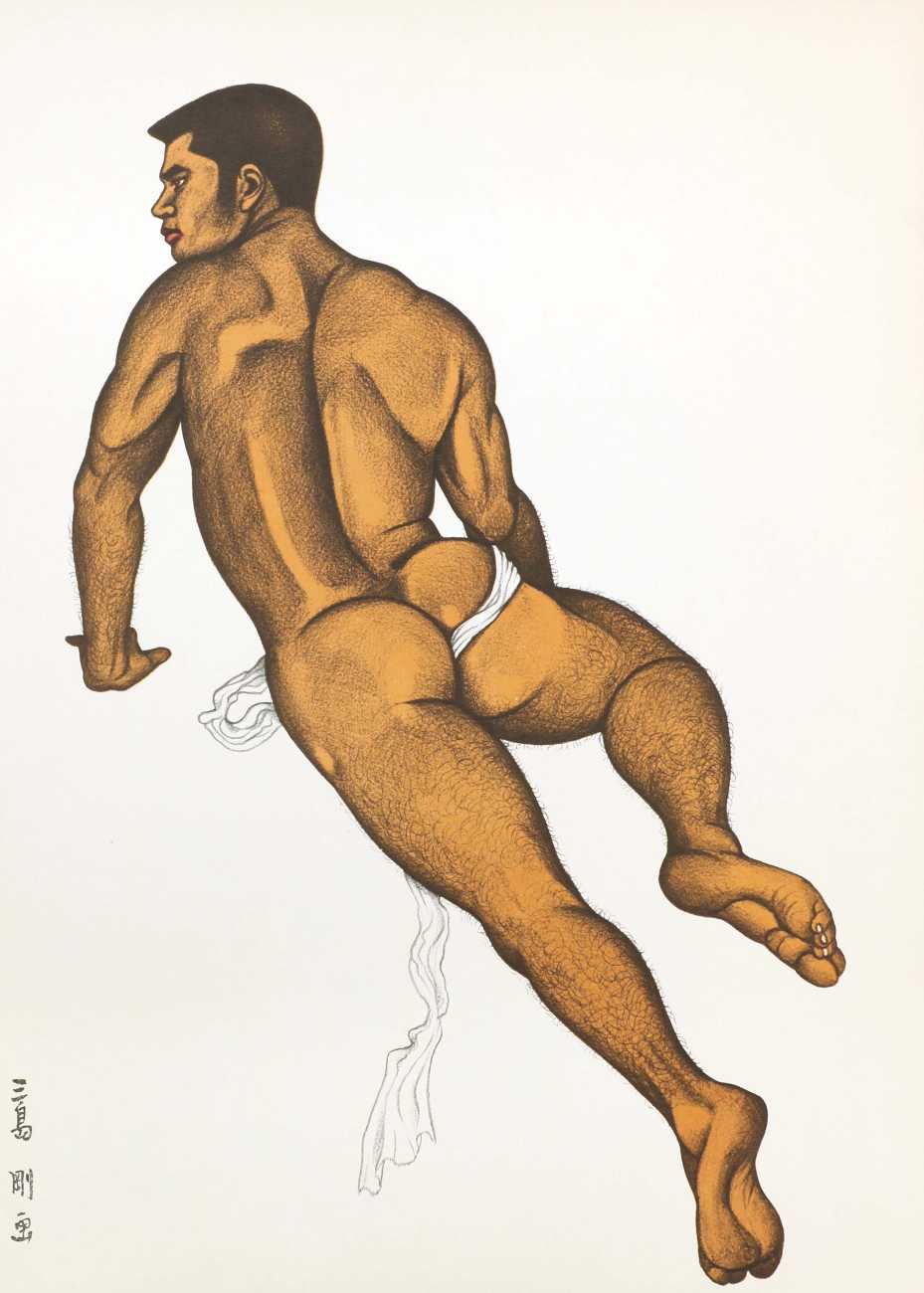
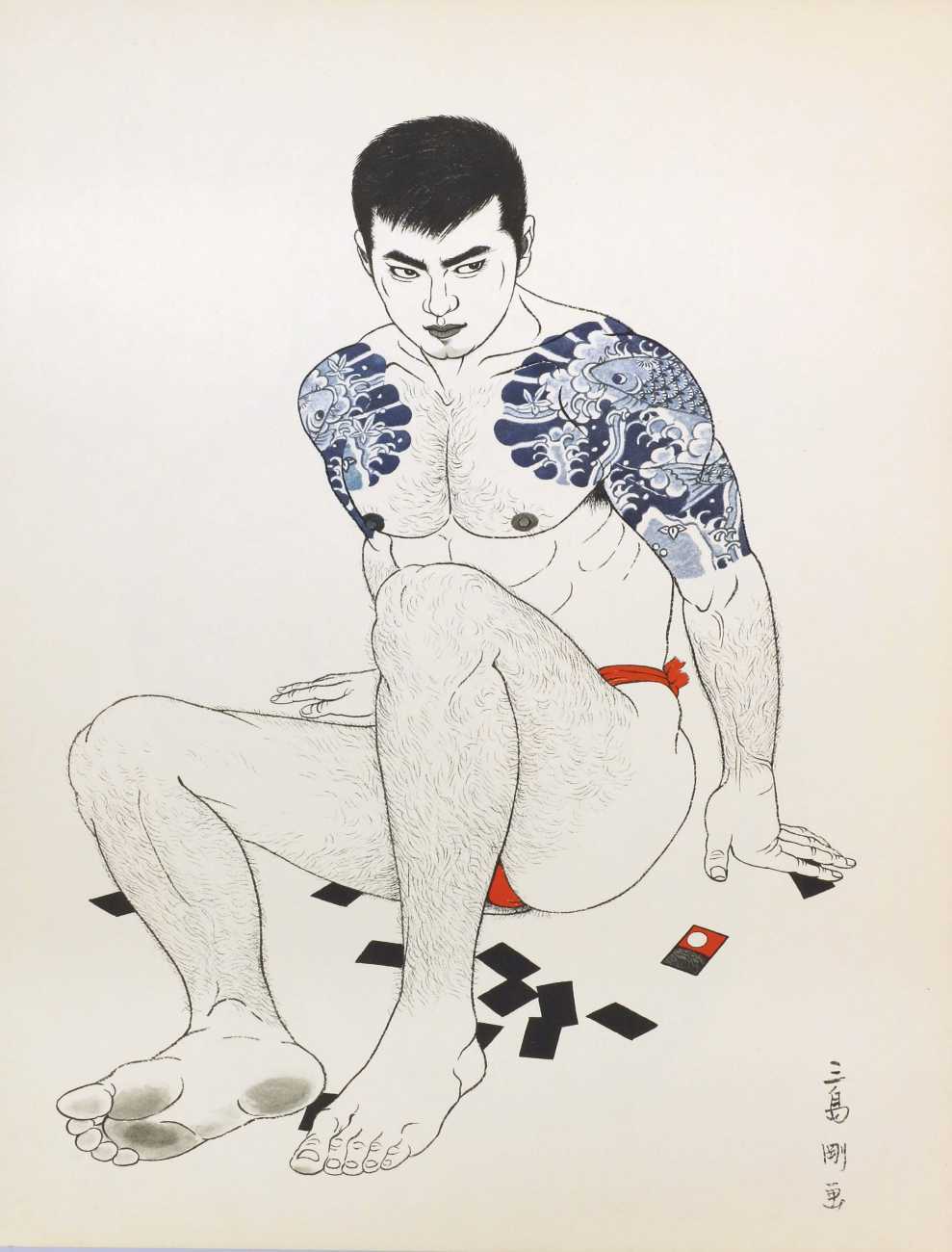
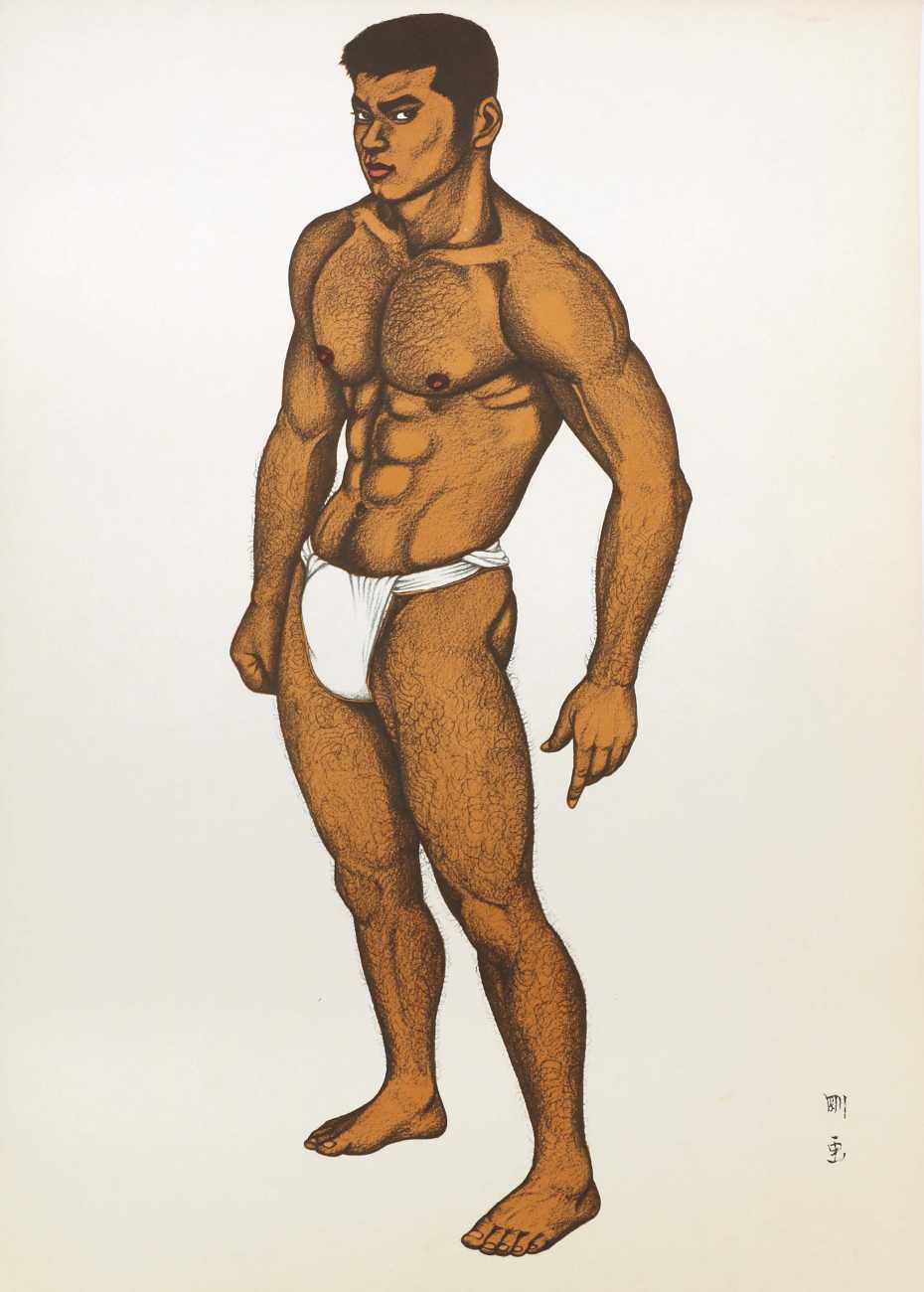
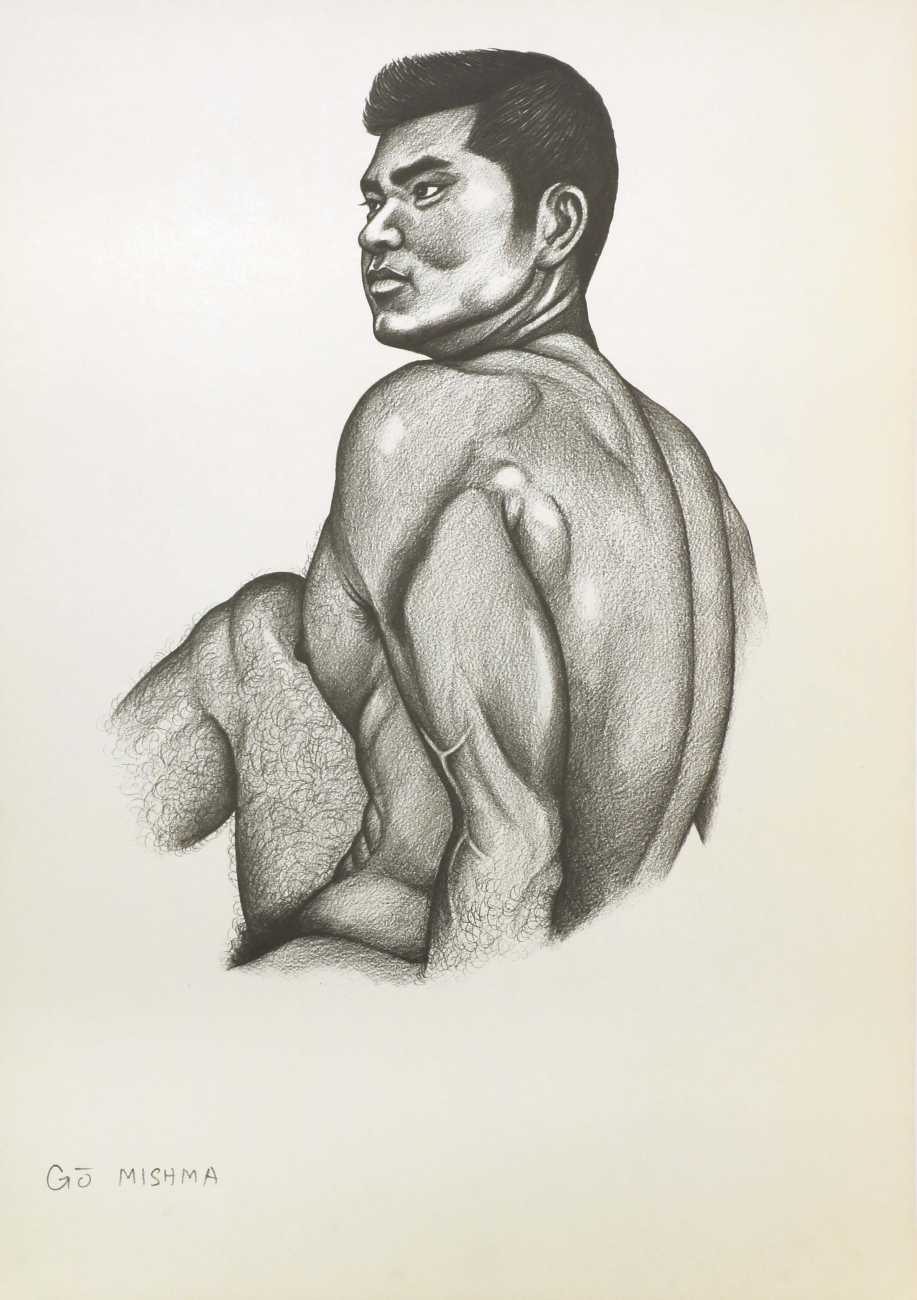
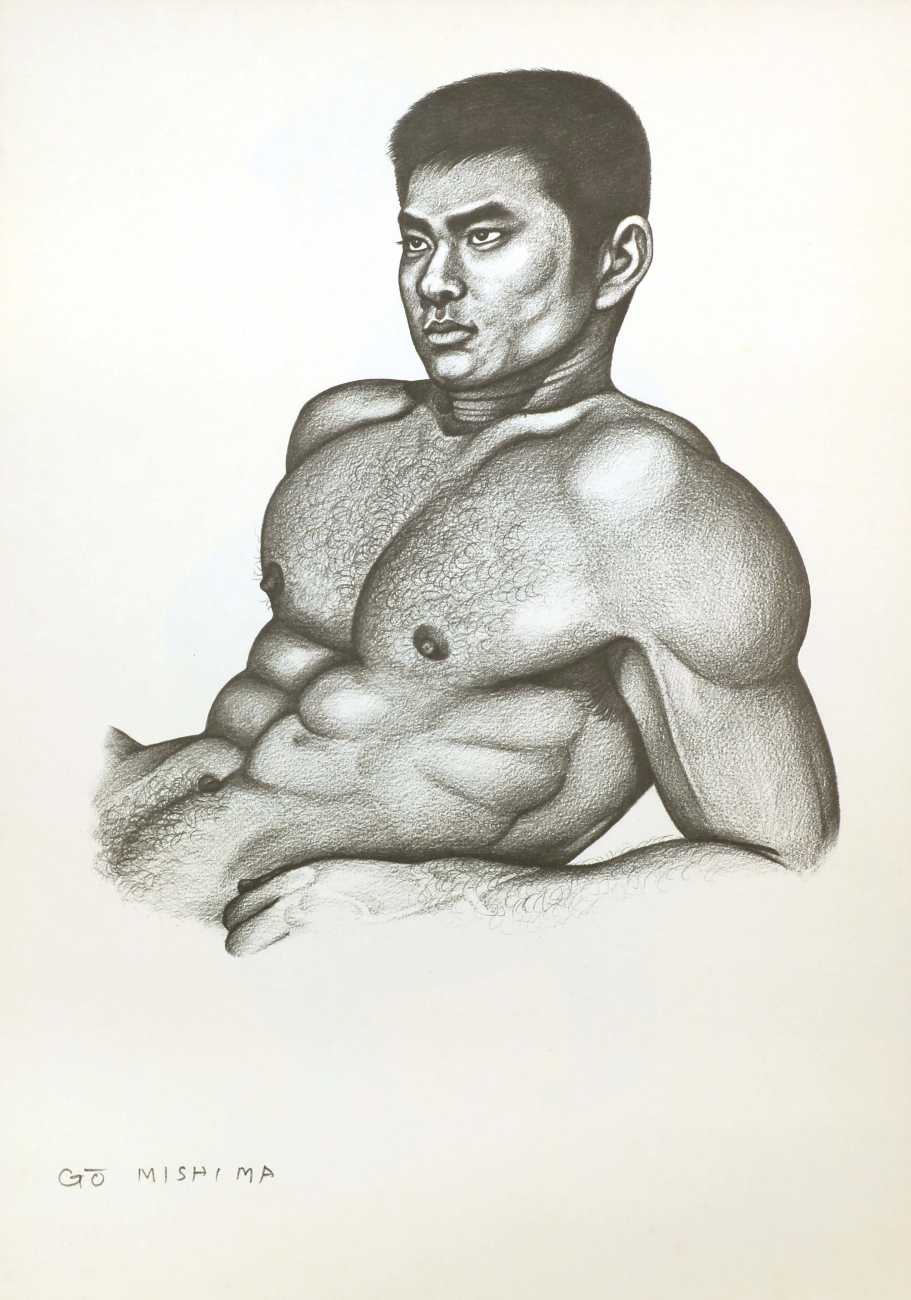
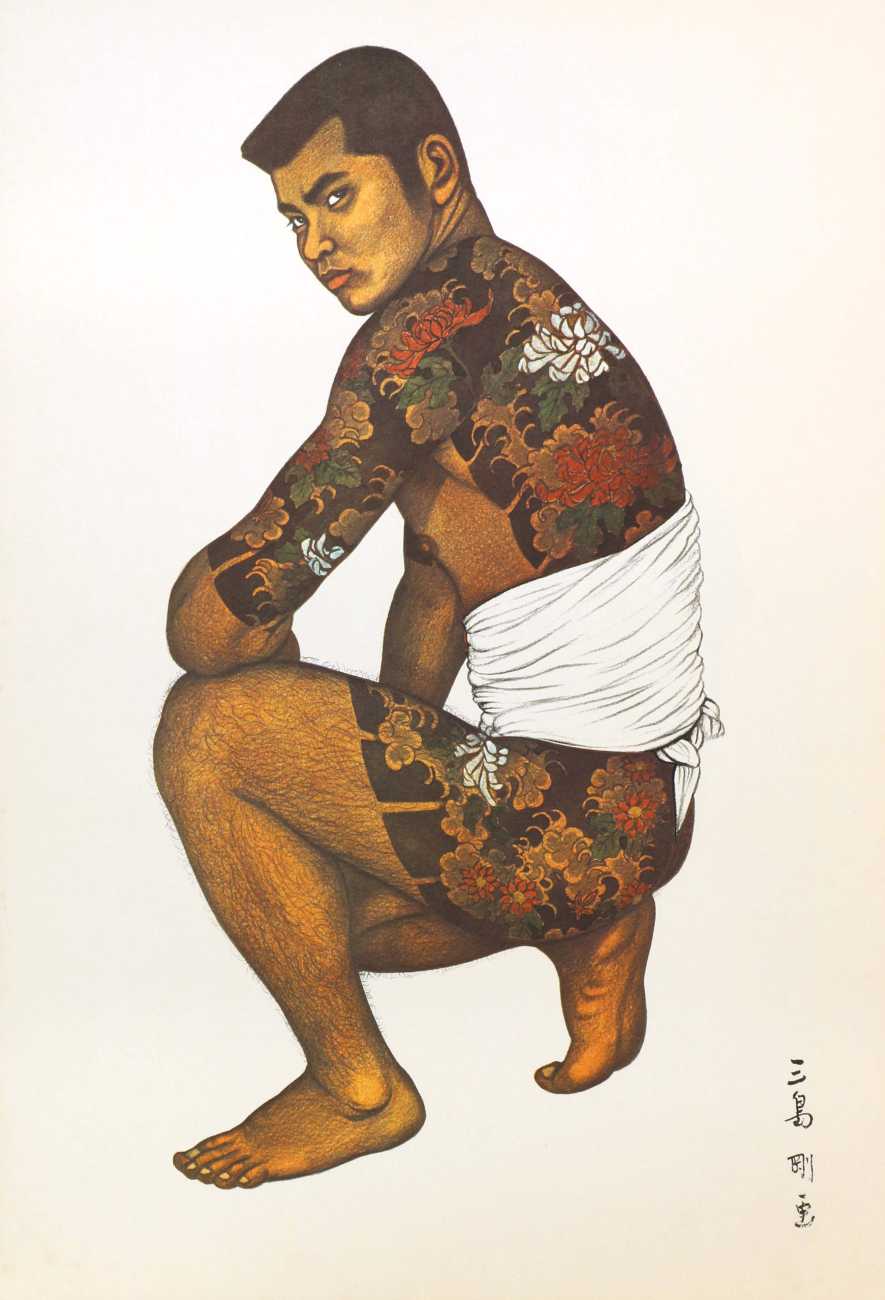
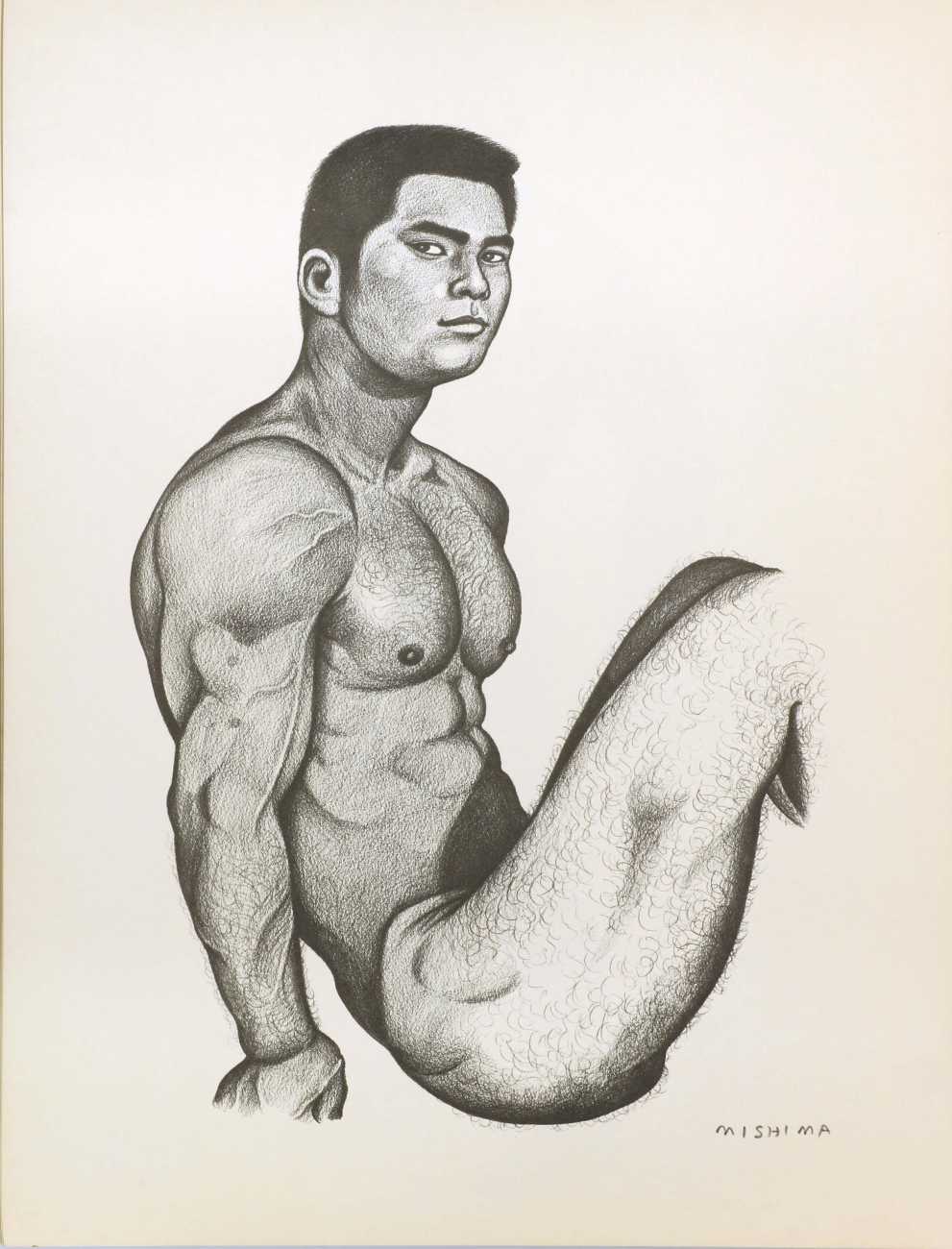
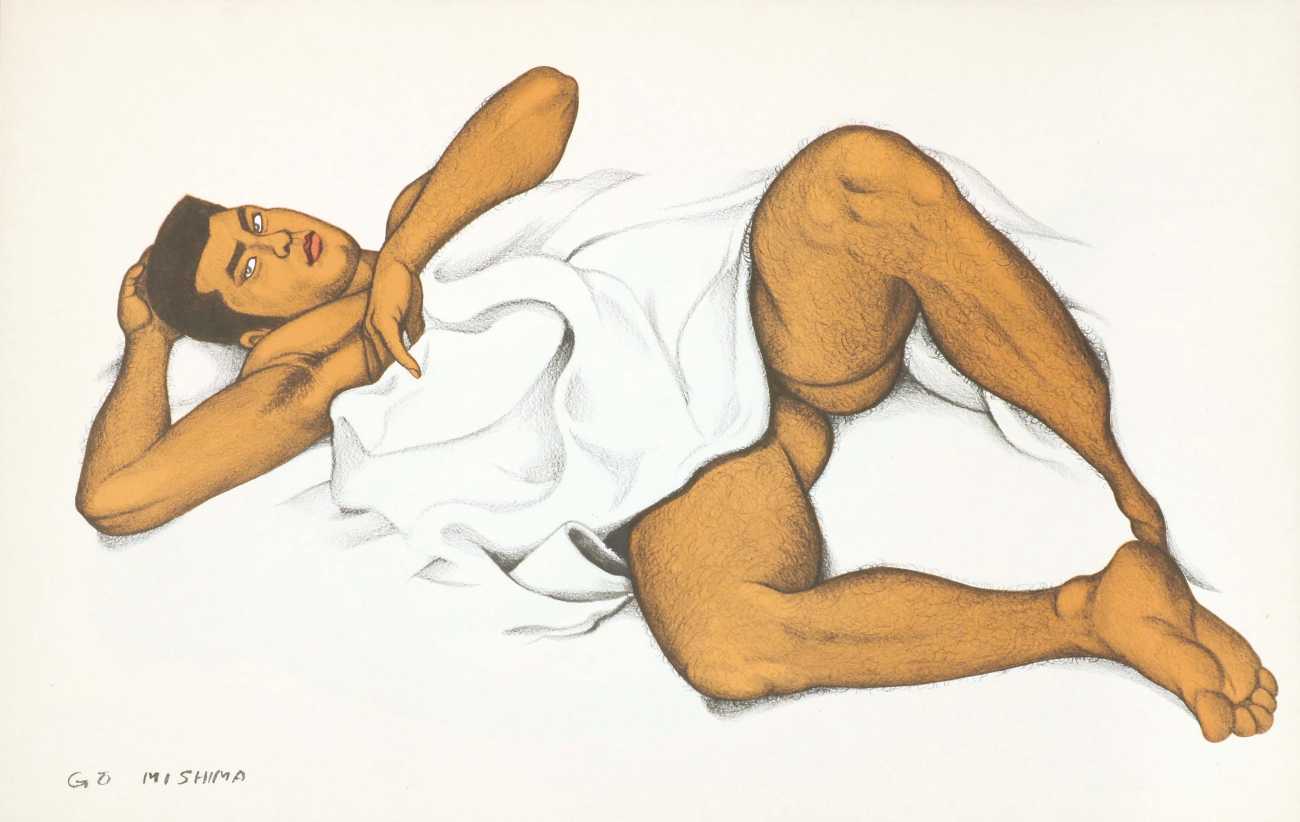
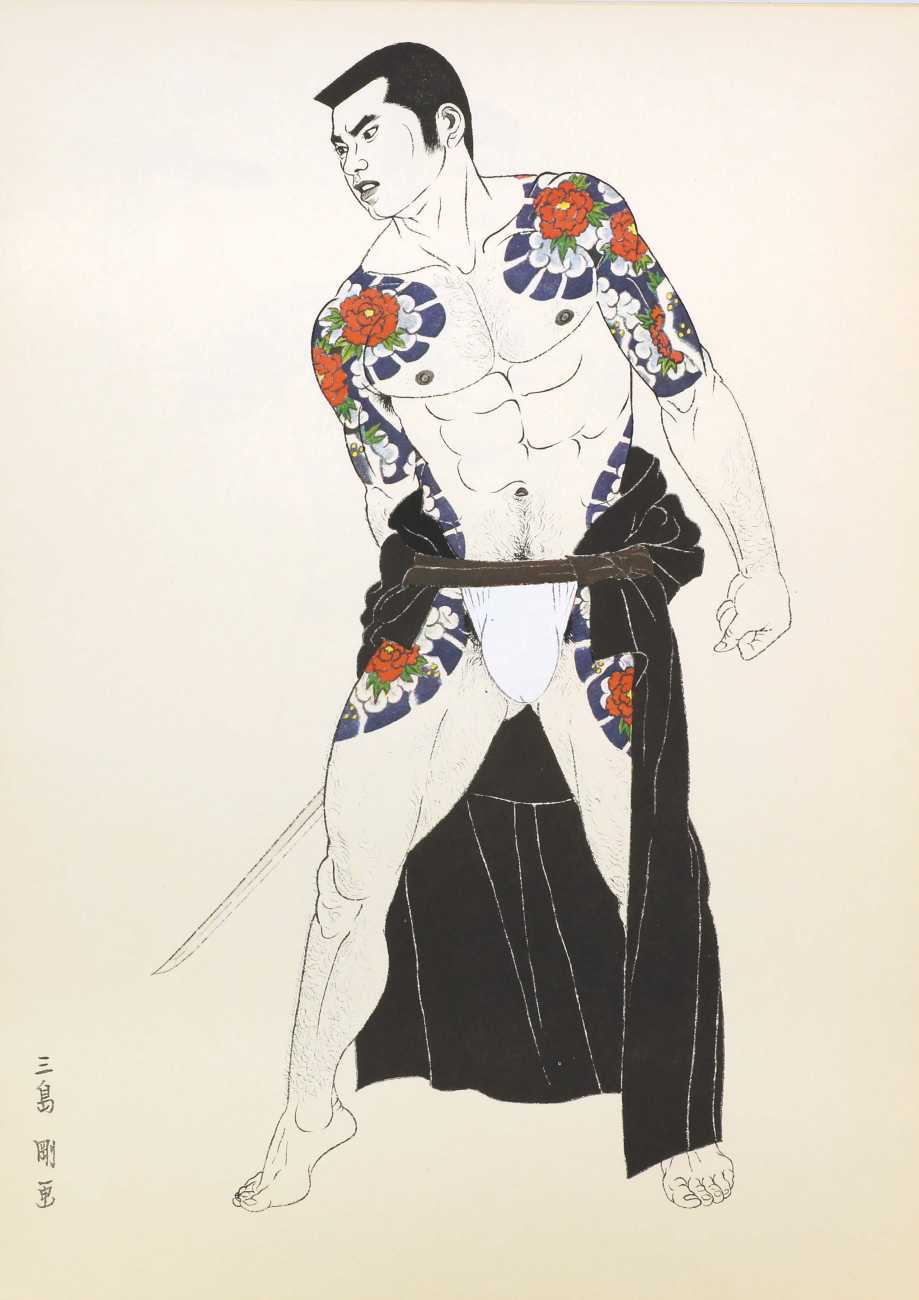
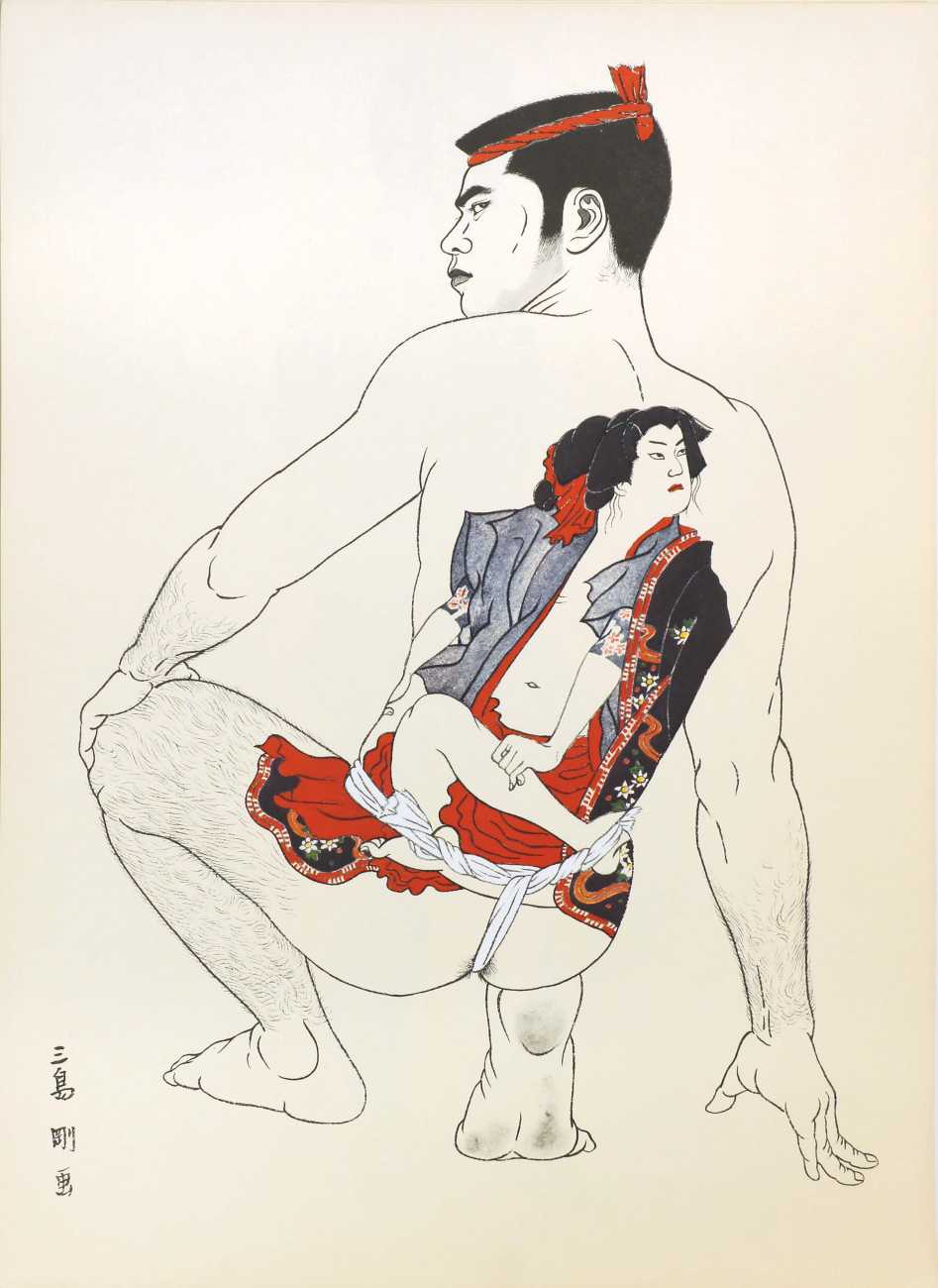
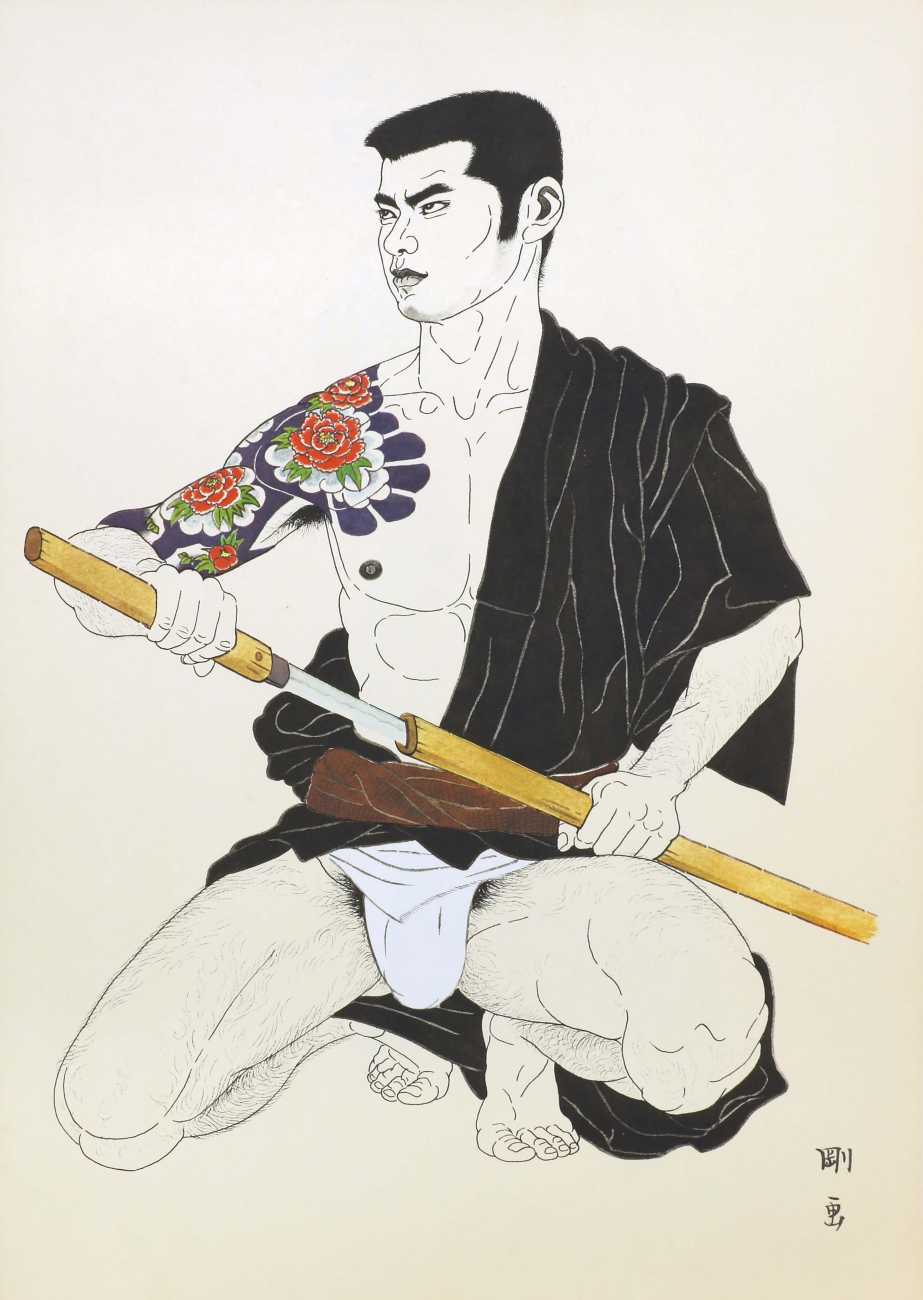
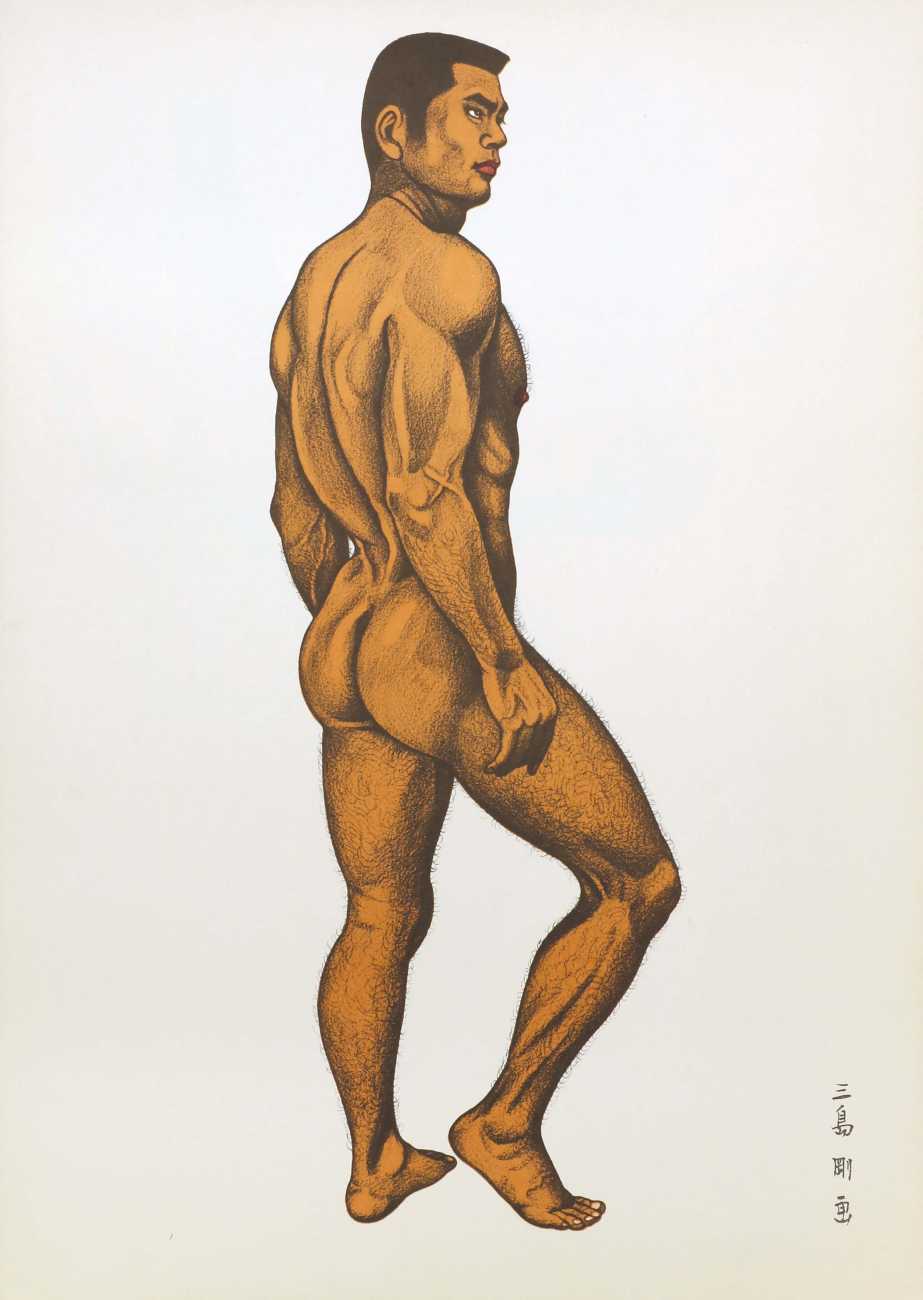
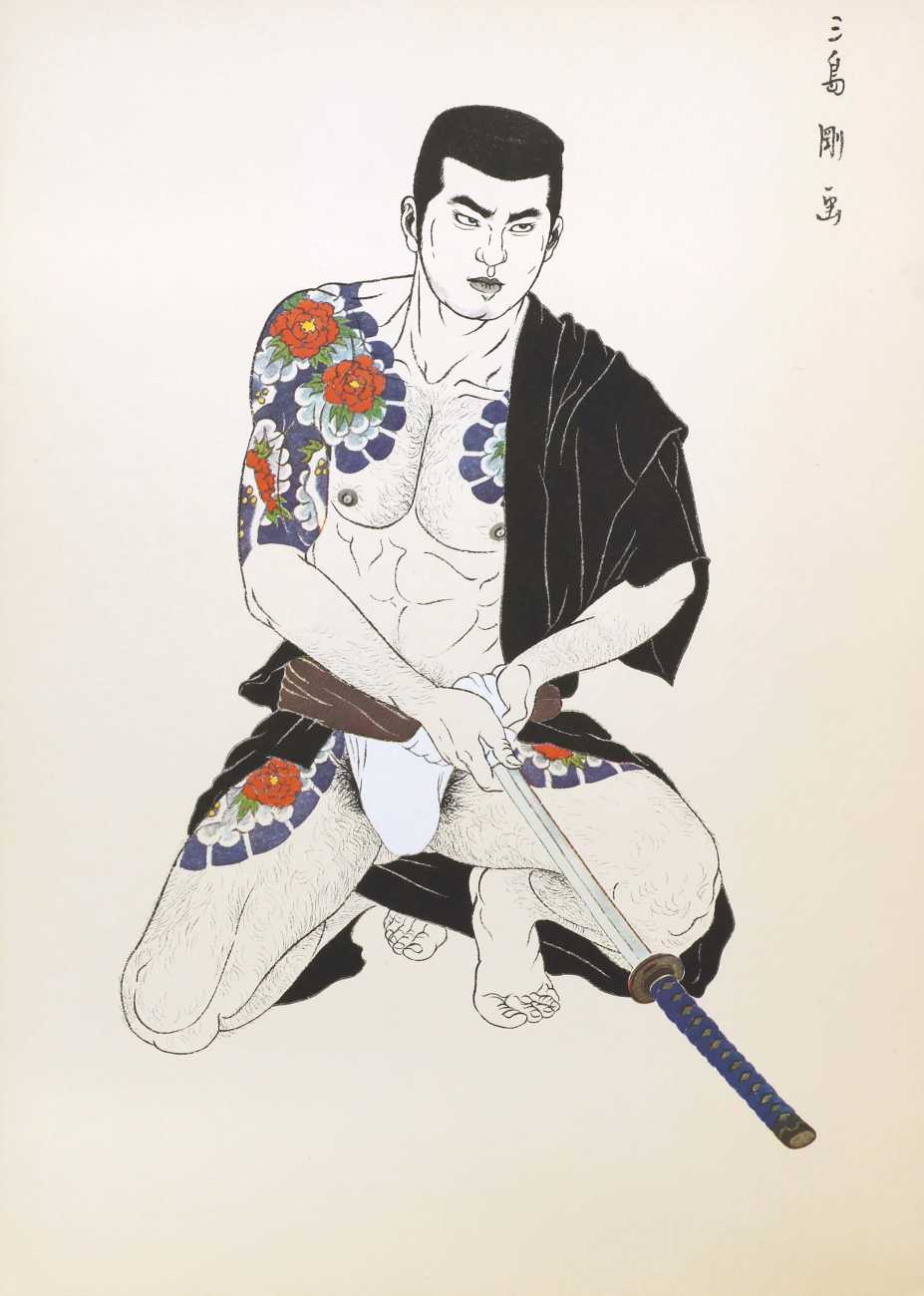
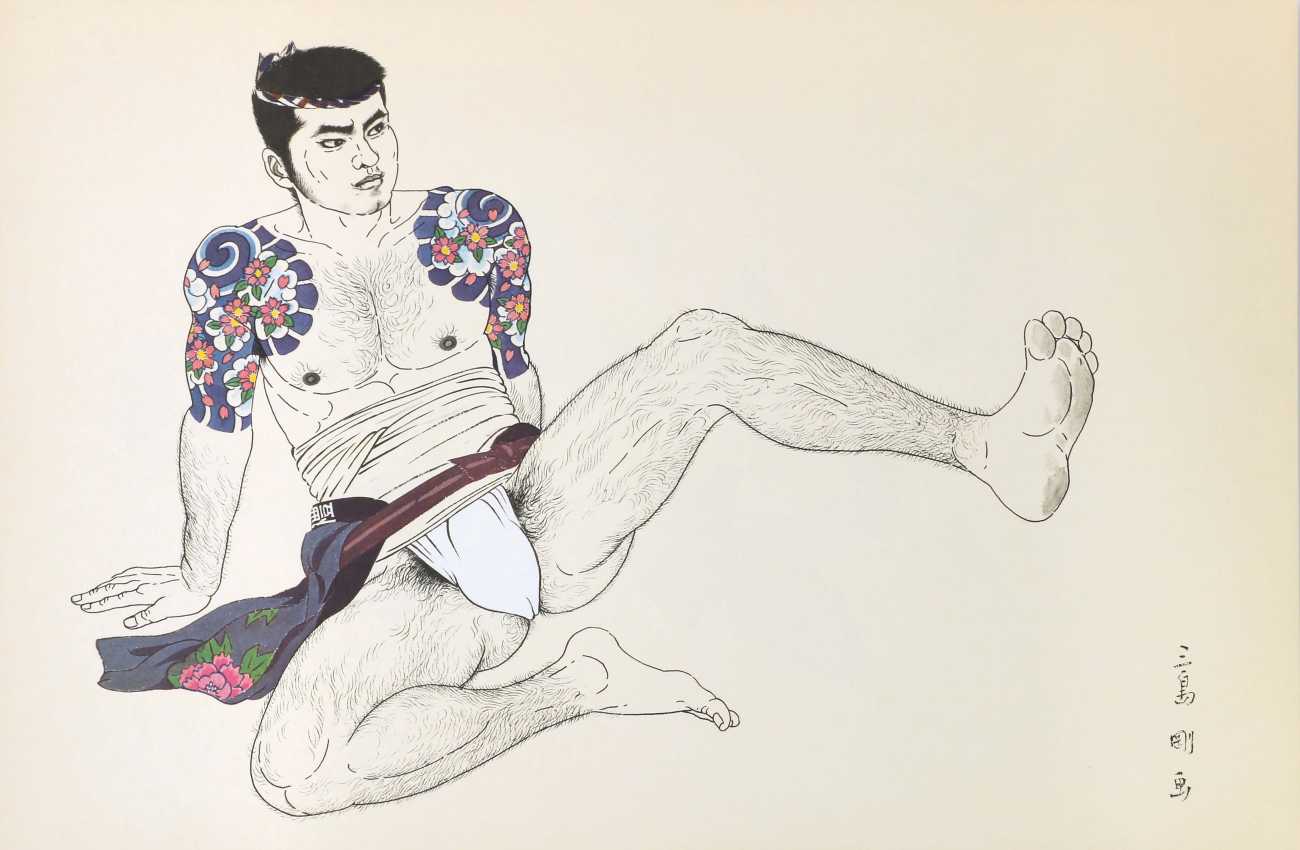
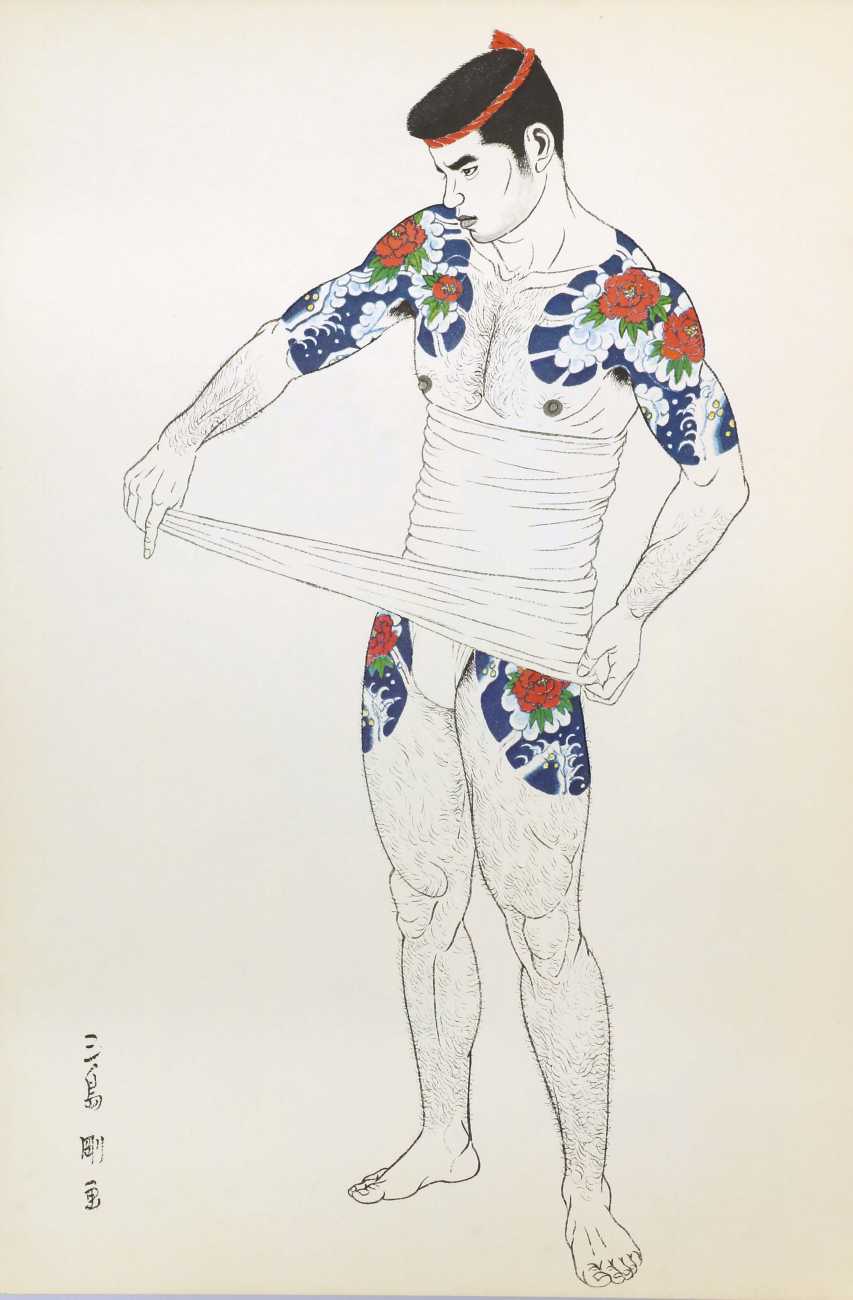
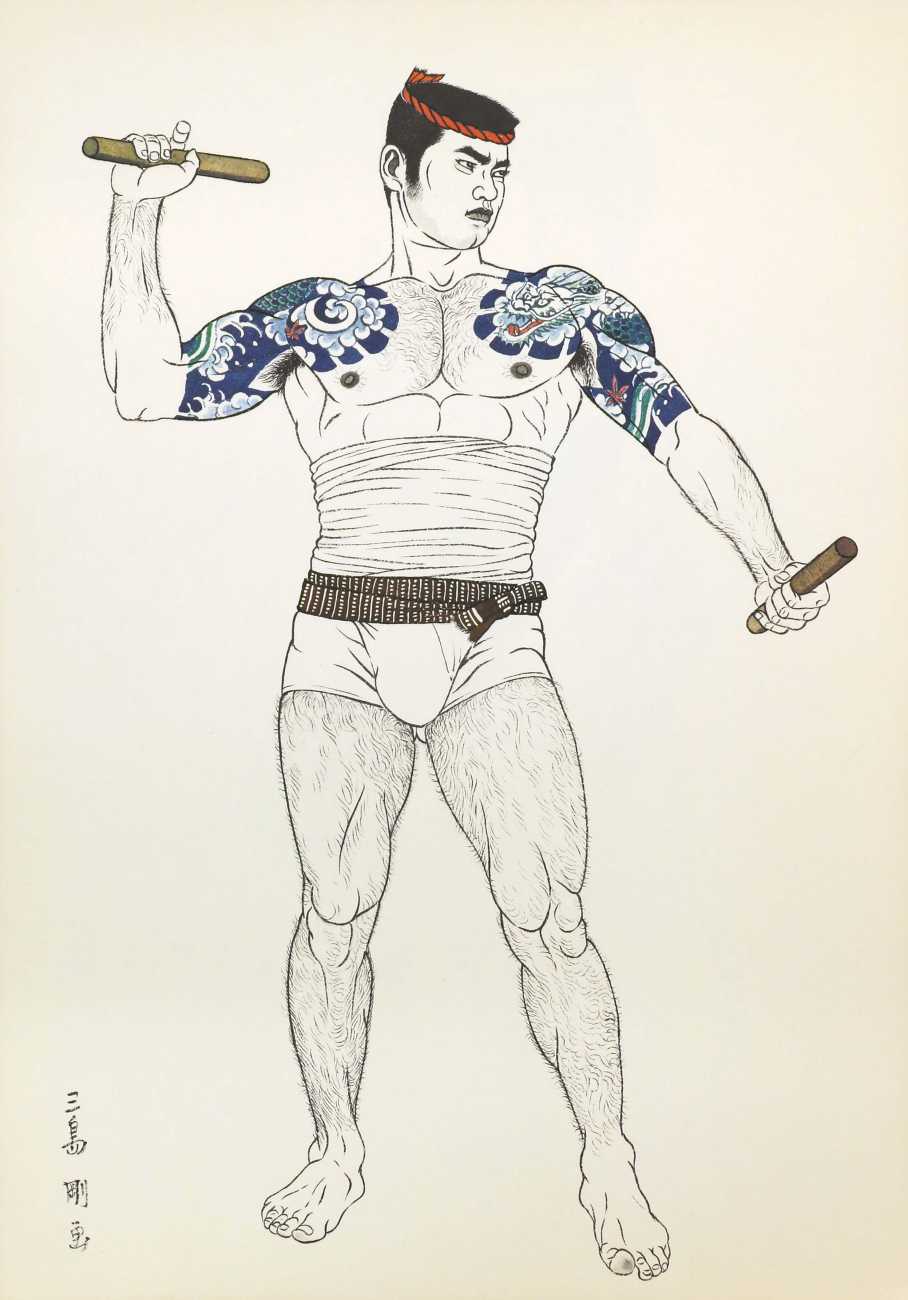
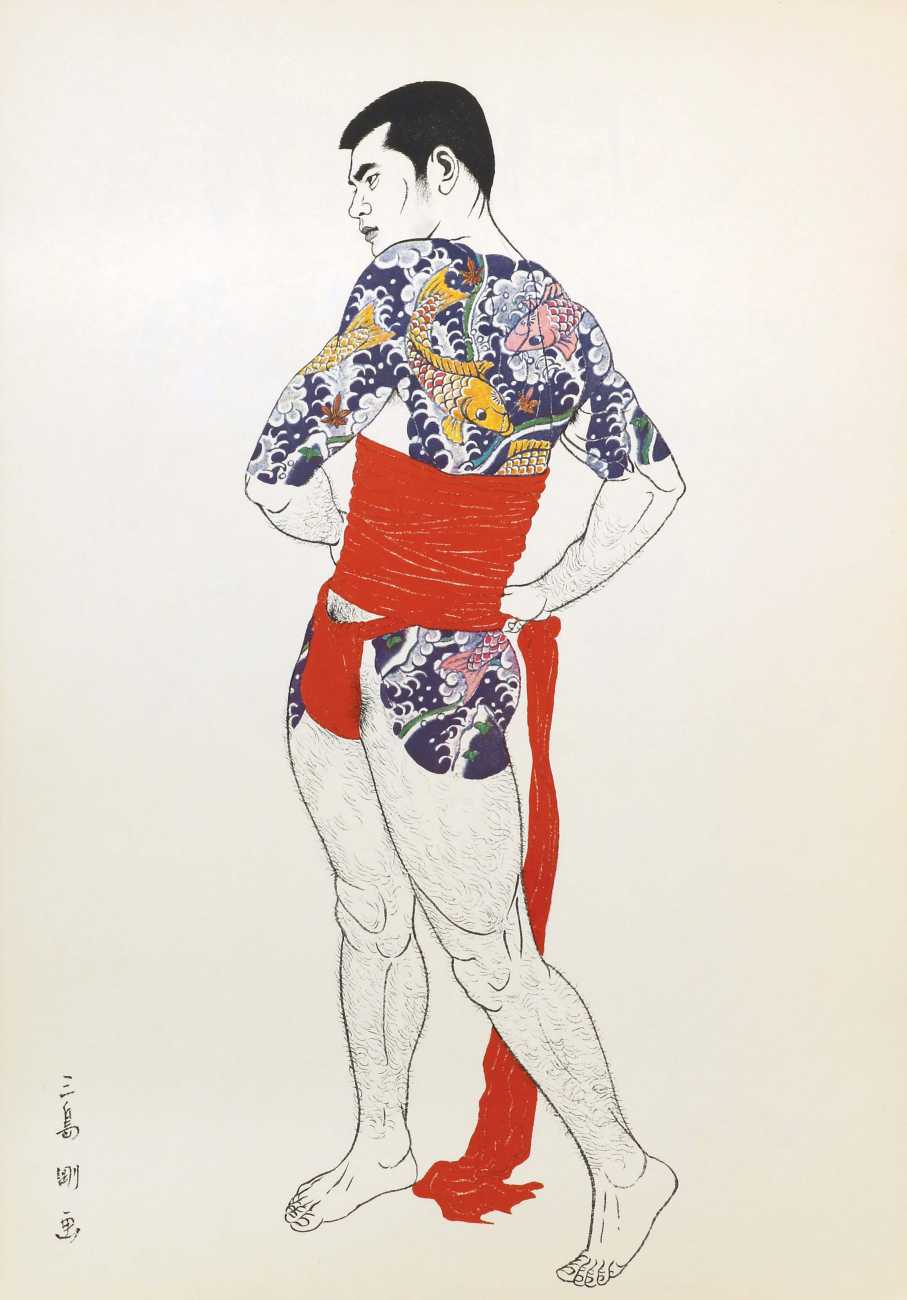
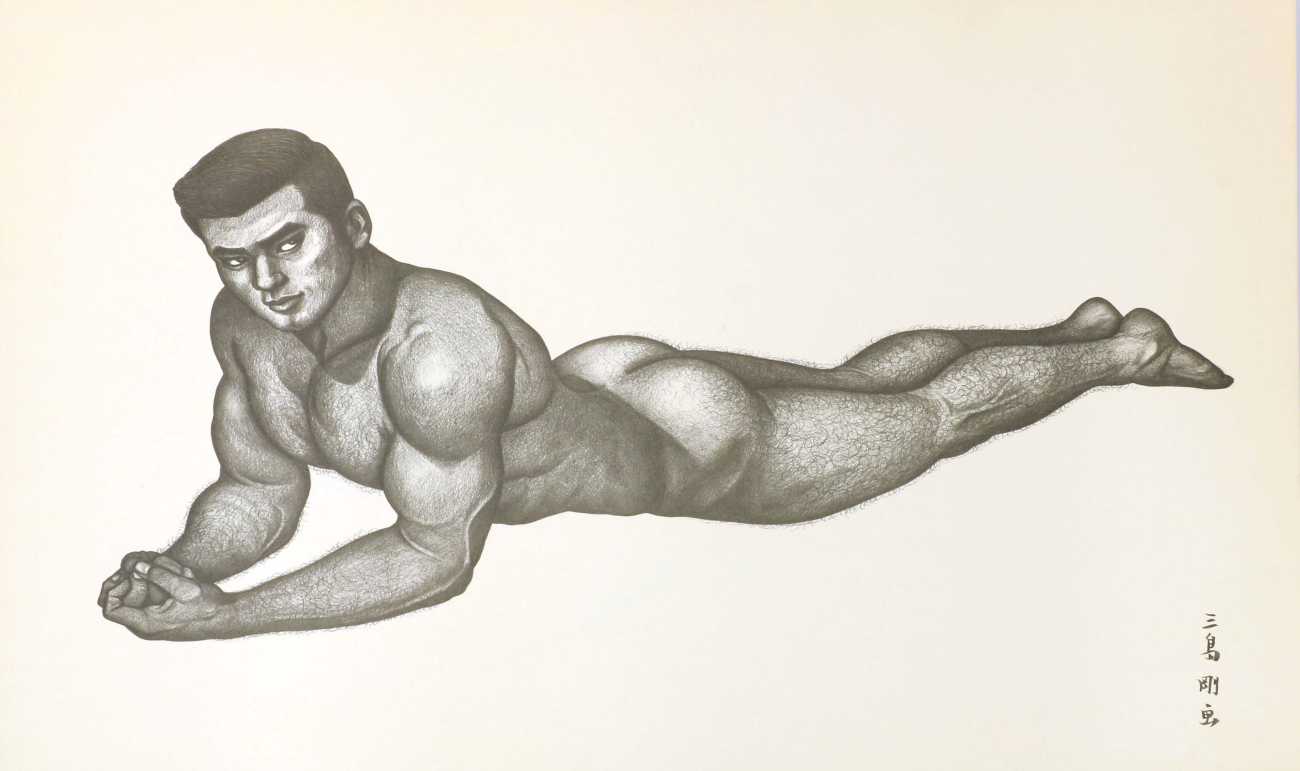
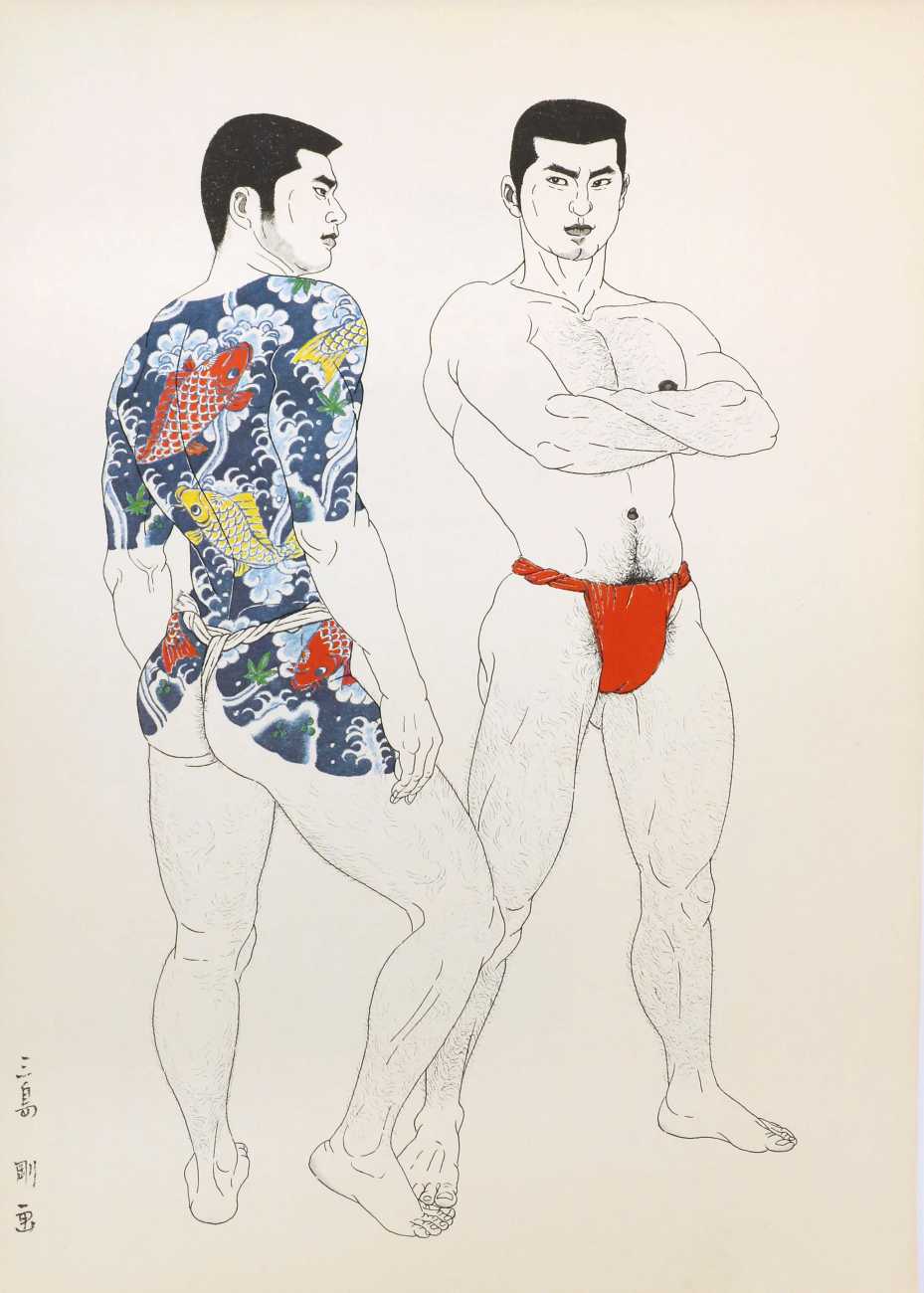
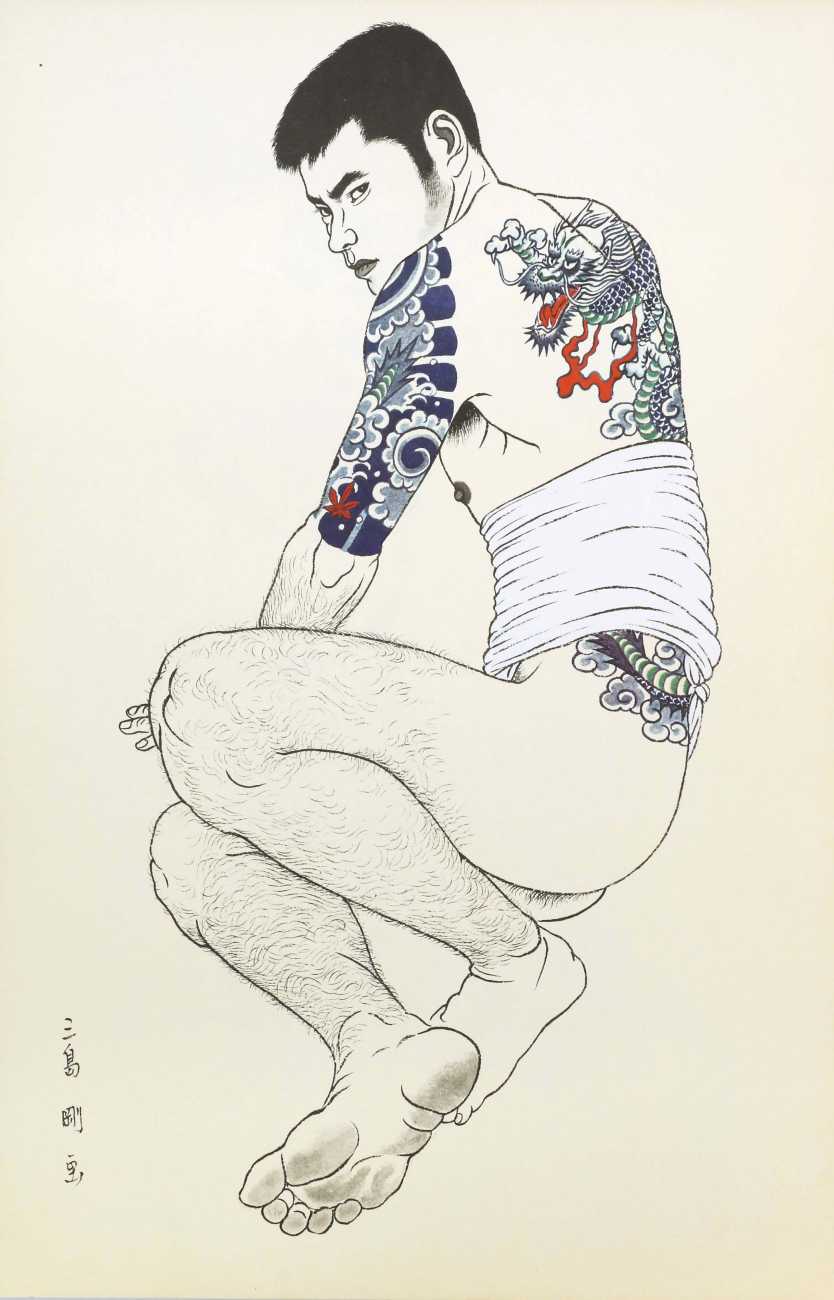
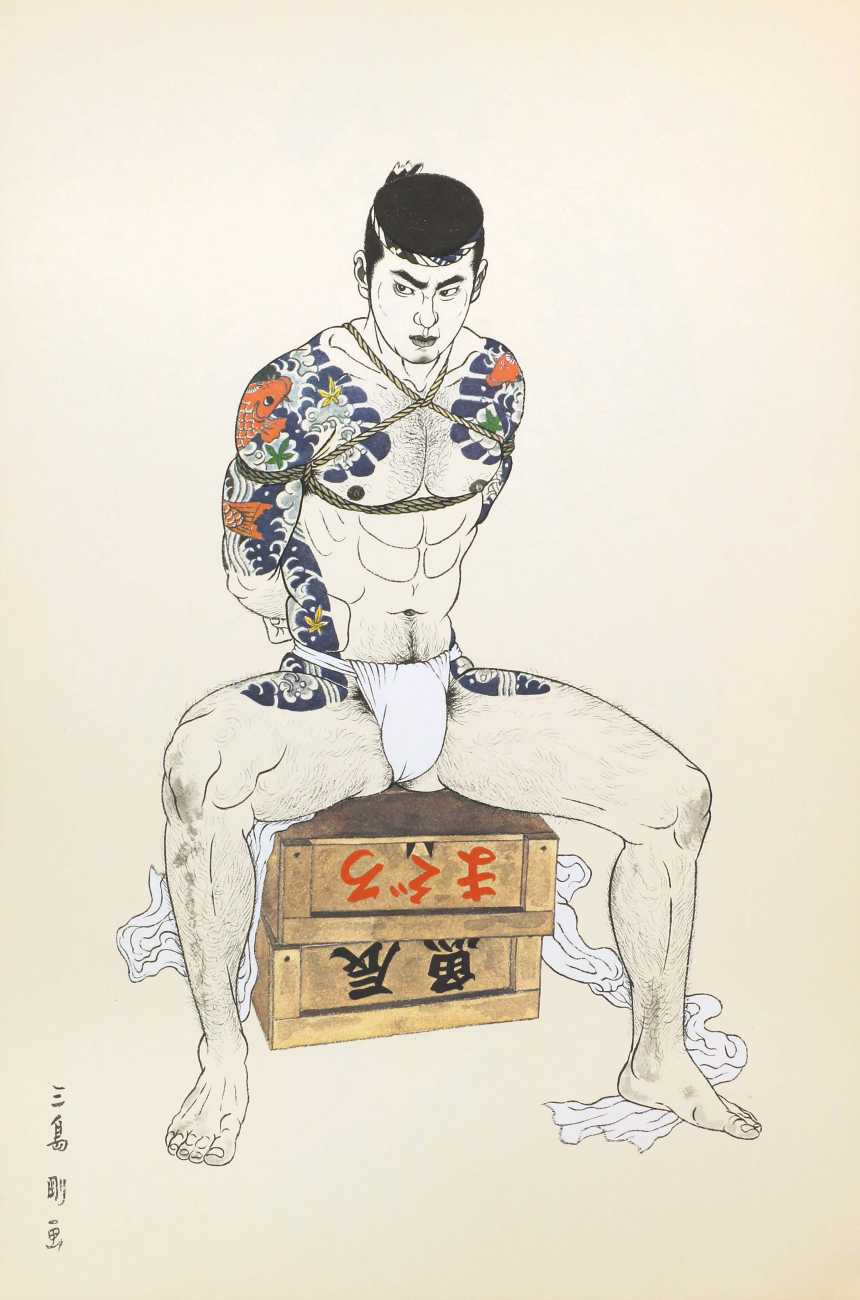
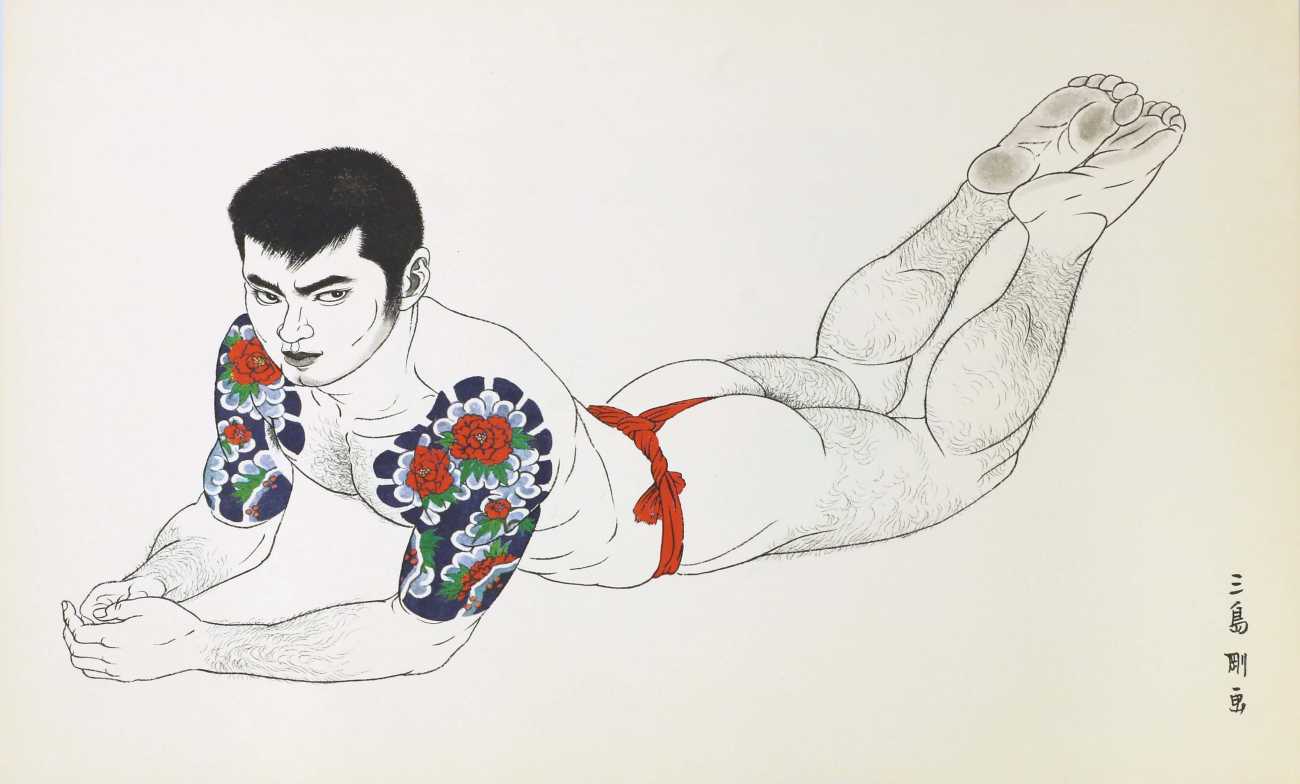
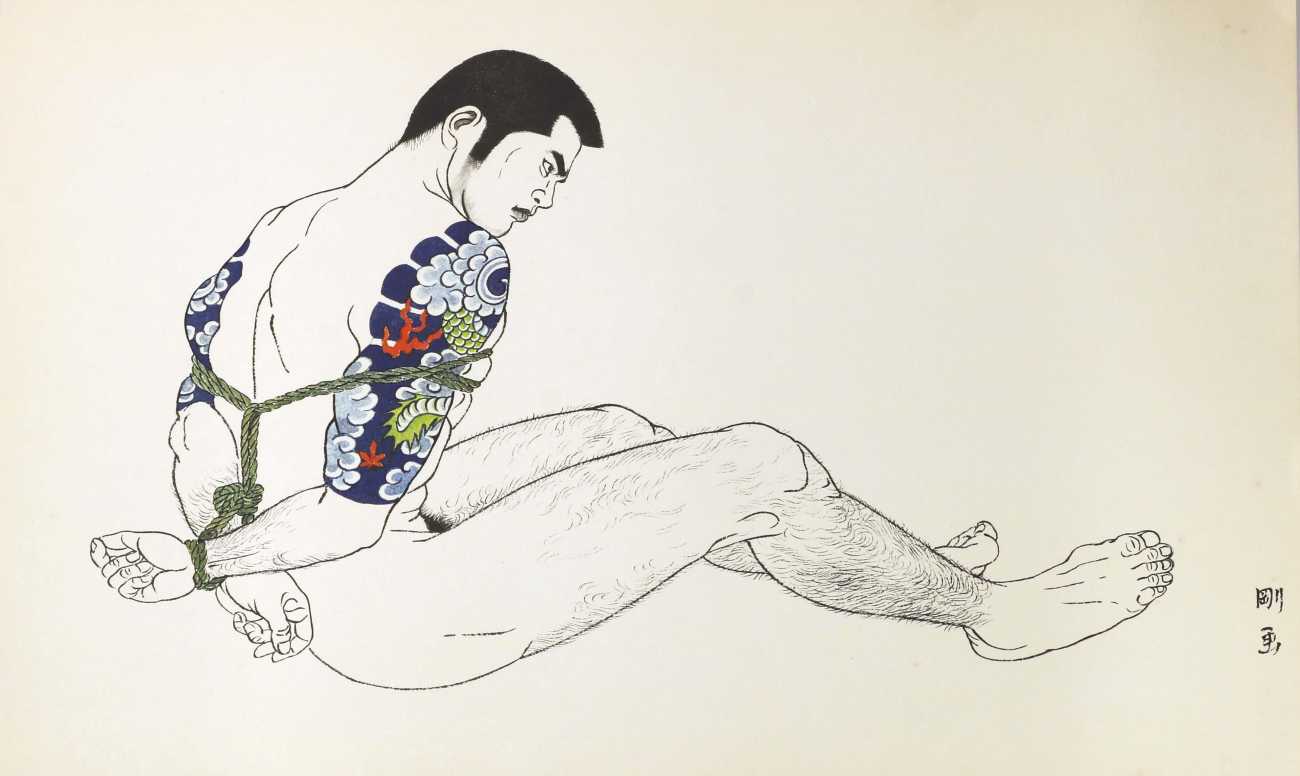
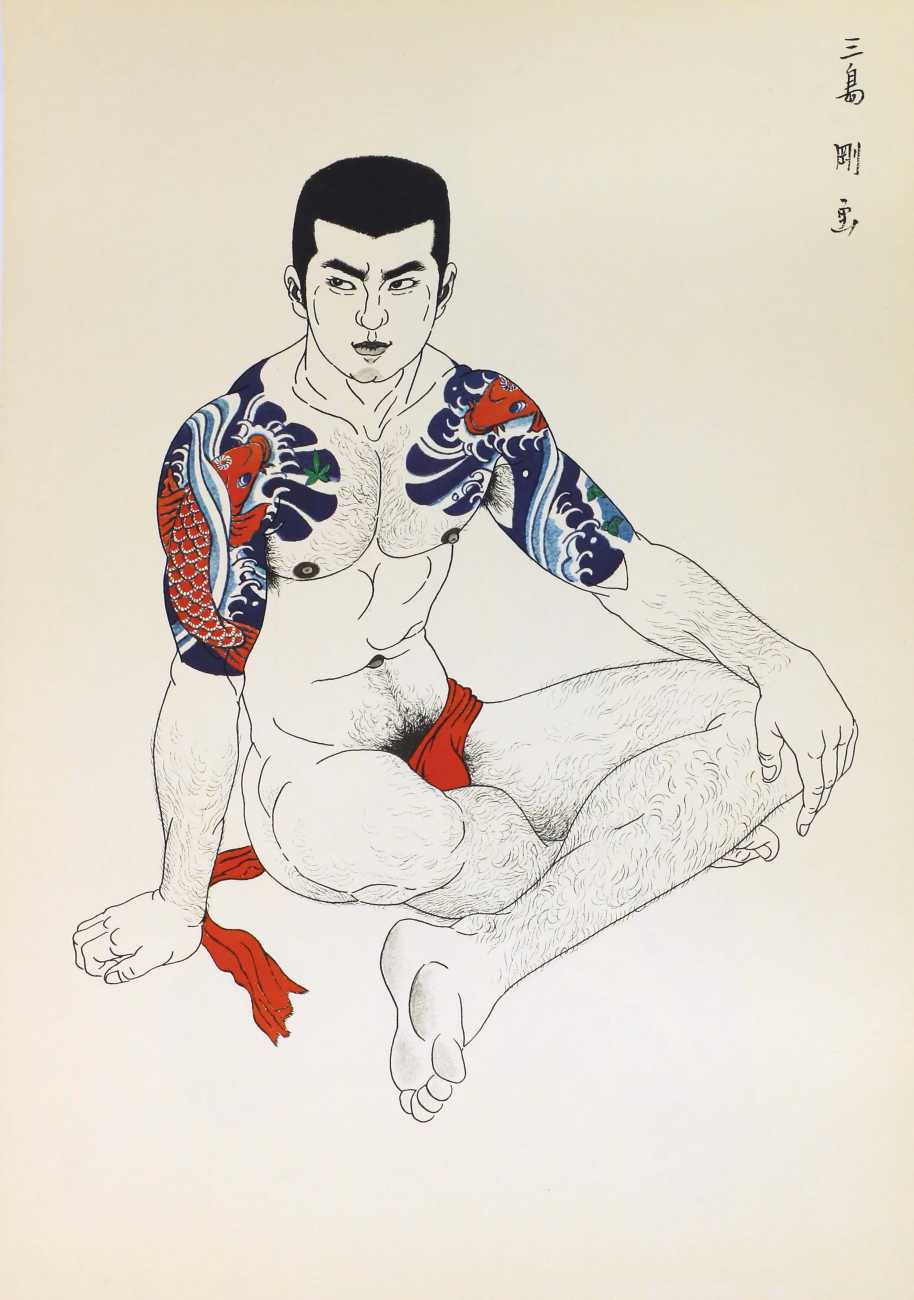
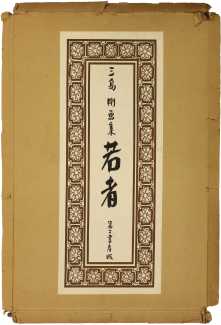
 Gashū Wakamono (Book of Pictures of Young Men) is the only portfolio of Mishima’s art issued separately in his lifetime. It consists of twenty-four lithographs, and was published by Daini Shobō, Tokyo, the publisher of Barazoku.
Each plate is approximately A3 in size, and the prints, together with an introduction by Mutsuo Takahashi, one of Japan’s major post-war poets and writers, are housed in a custom-made box.
The following is a translated extract from Takahashi’s introduction to Gashū Wakamono.
What clearly distinguishes the young men depicted by Go Mishima from those depicted by the European and American eroticists, for example the group of anonymous artists associated with Tom of Finland, is one thing – Mishima’s young men are alone.
Tom’s young men are always in groups, mutually devouring pleasure. By contrast, Mishima’s young men are for the most part solitary, and even when there are young men together in a picture, there is no exchange of love or desire between them.
This is deeply connected with Mishima’s inner life. He wants to keep these young men, who are at once his own sons, his lovers, and furthermore his gods, exclusively for himself. Thus even when there are young men together in a picture, the thought of their loving one another is inconceivable. In this way, Mishima’s young men assume an utterly stoic expression.
Yet through the paradox of the flesh, the most stoic becomes the most erotic. The allure of flesh restrained by the artist’s restraint becomes more abundant, rather than less; it is like the power of water dammed up becoming greater and stronger than that of water flowing freely.
Something created purely and solely for one’s own pleasure becomes a source of pleasure for others. This irony is precisely the irony possessed by true art.