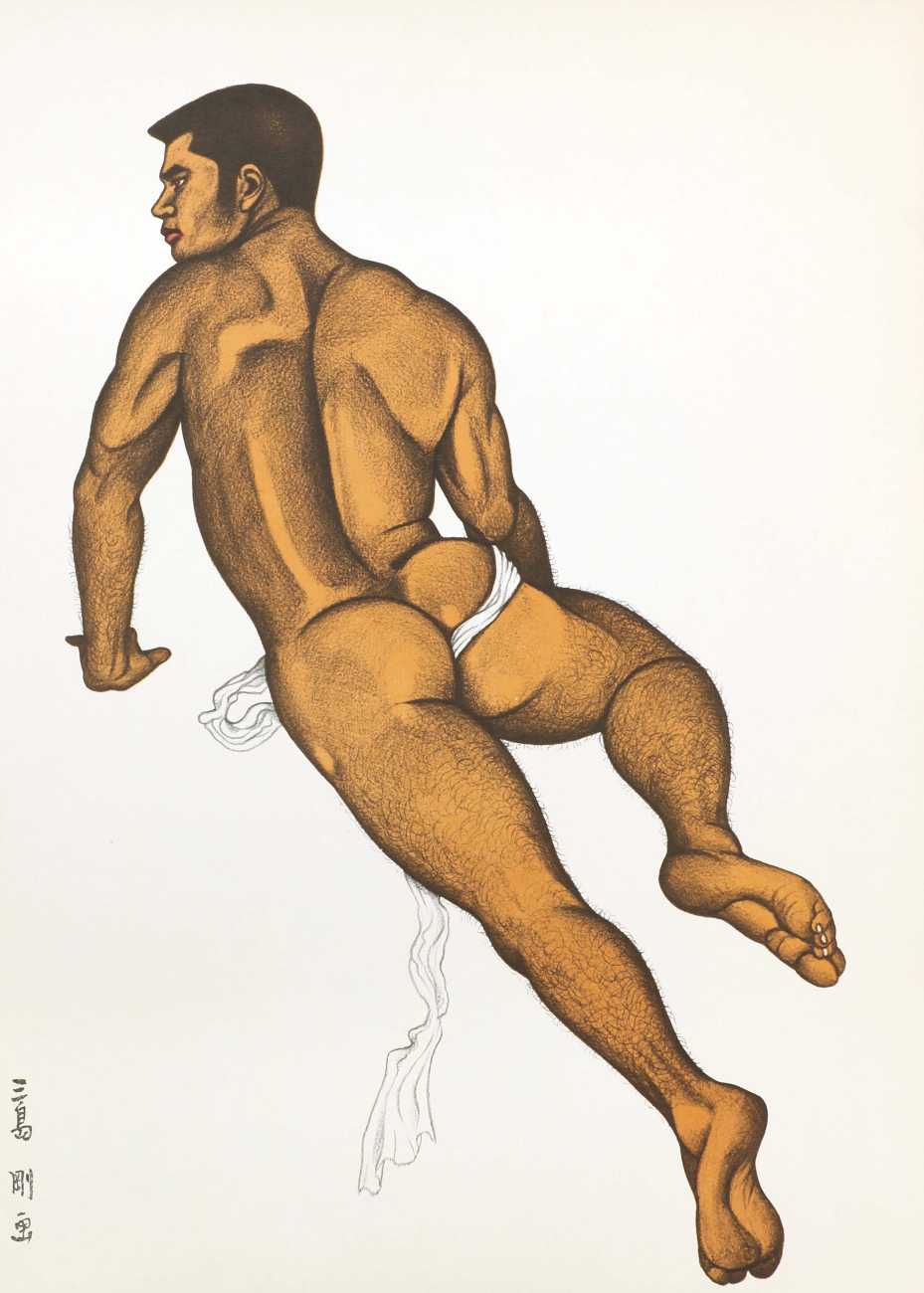
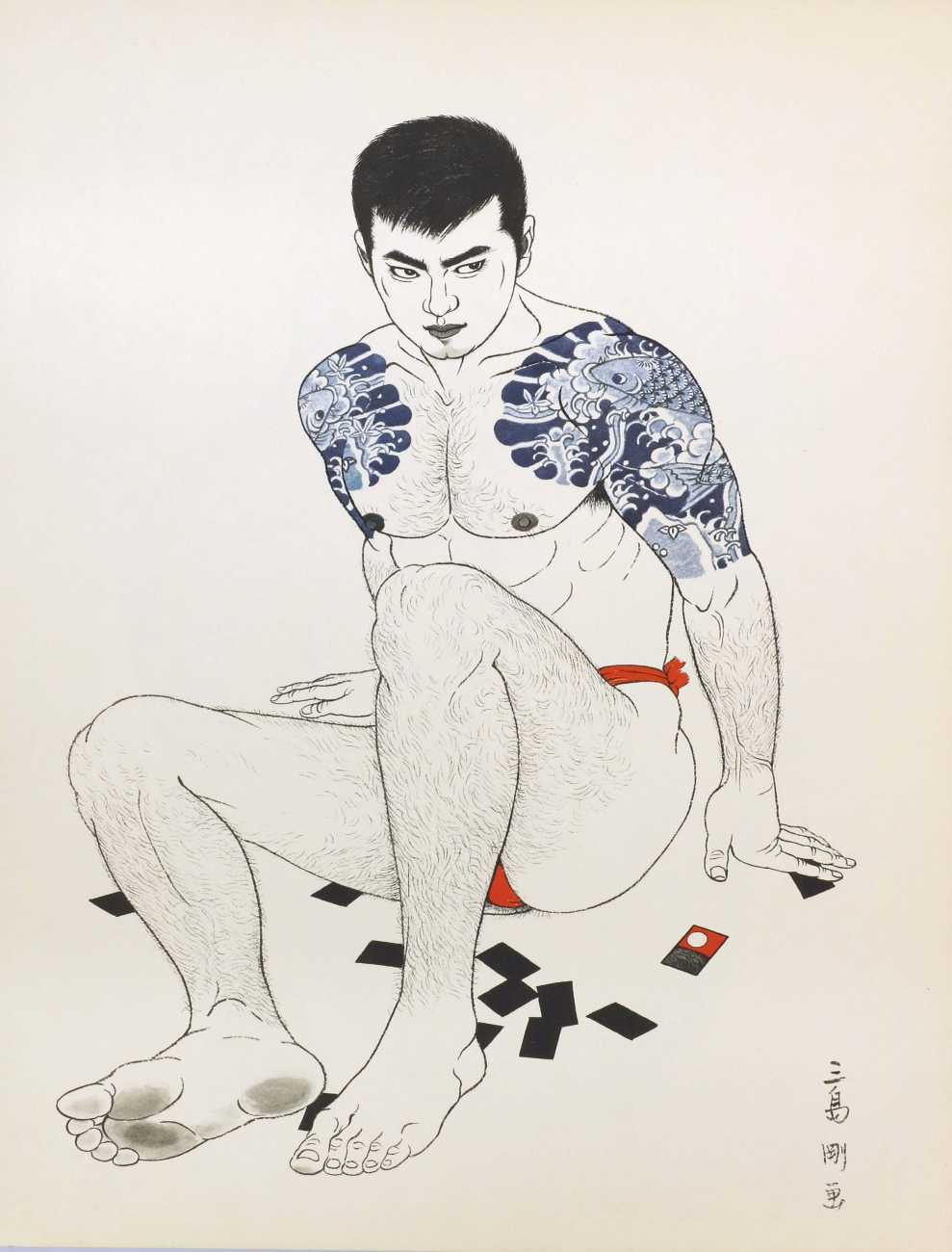
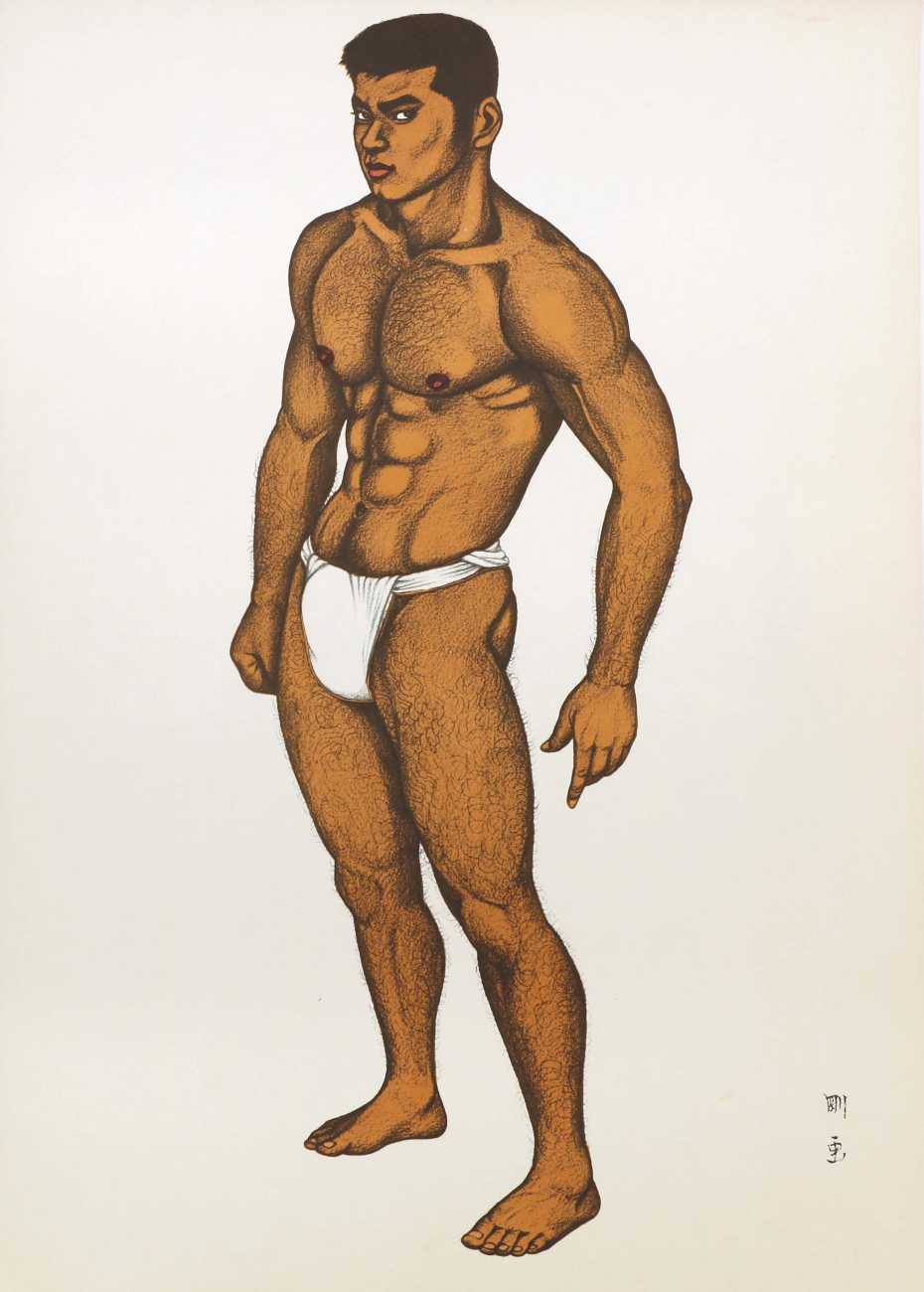
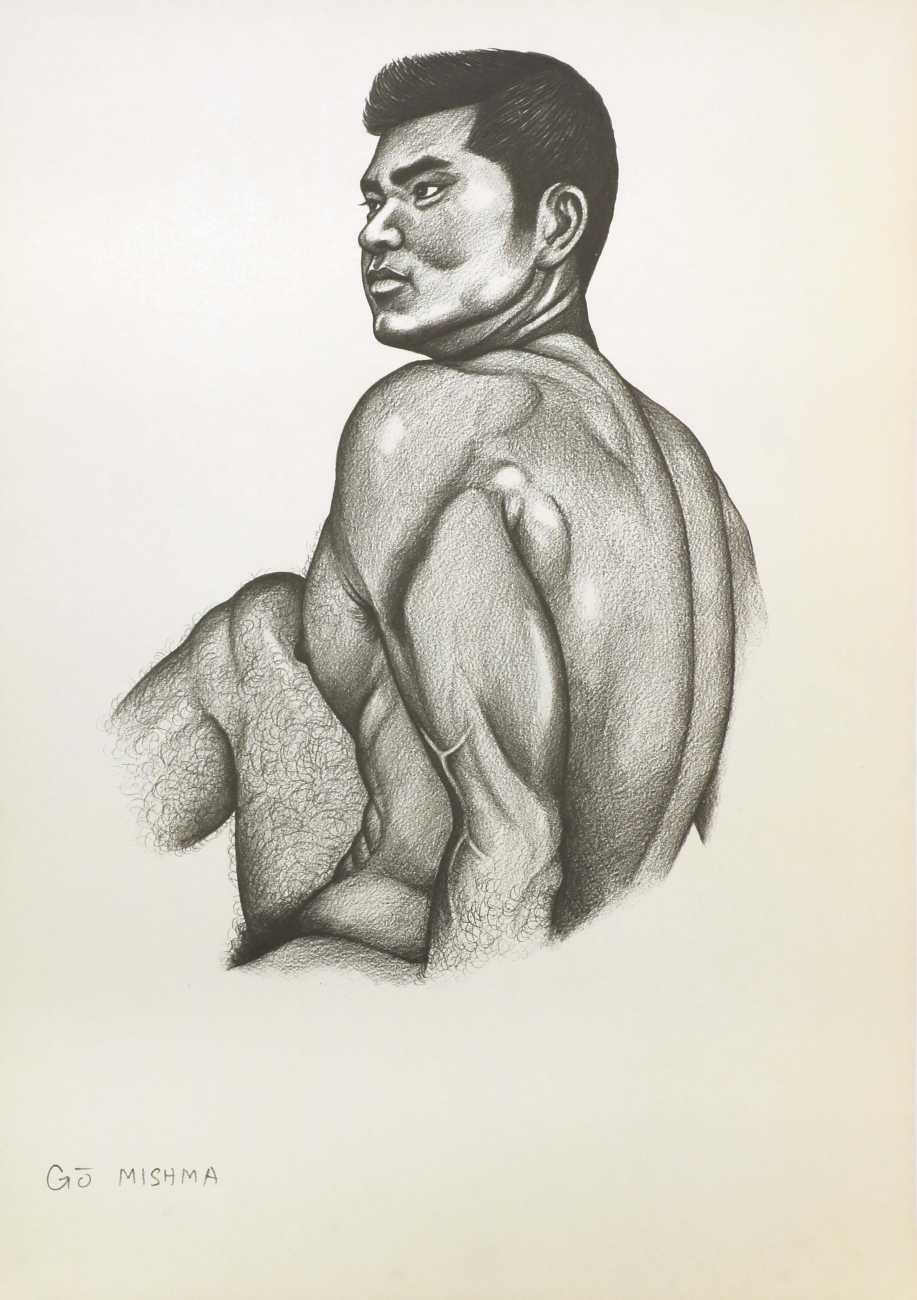
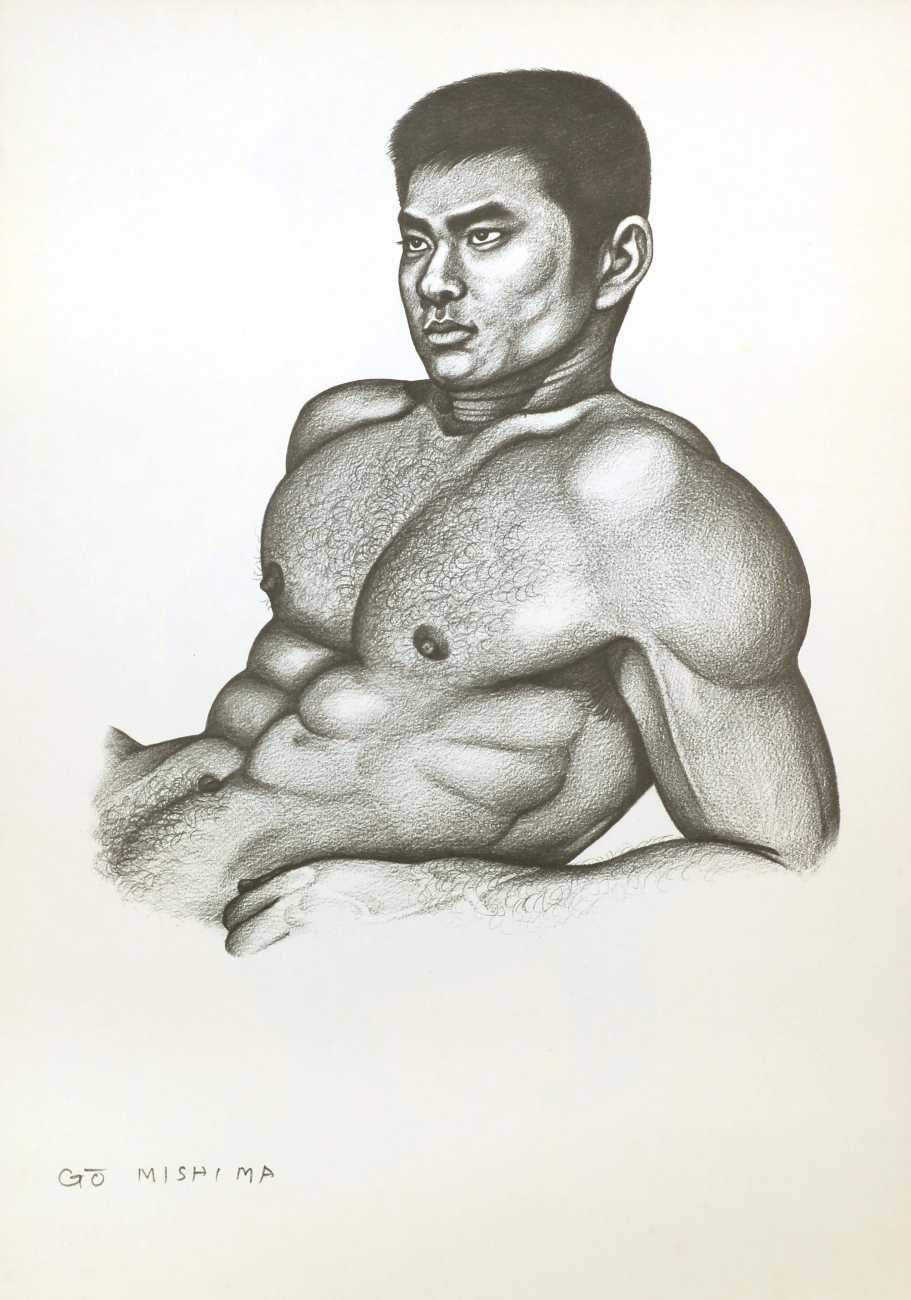
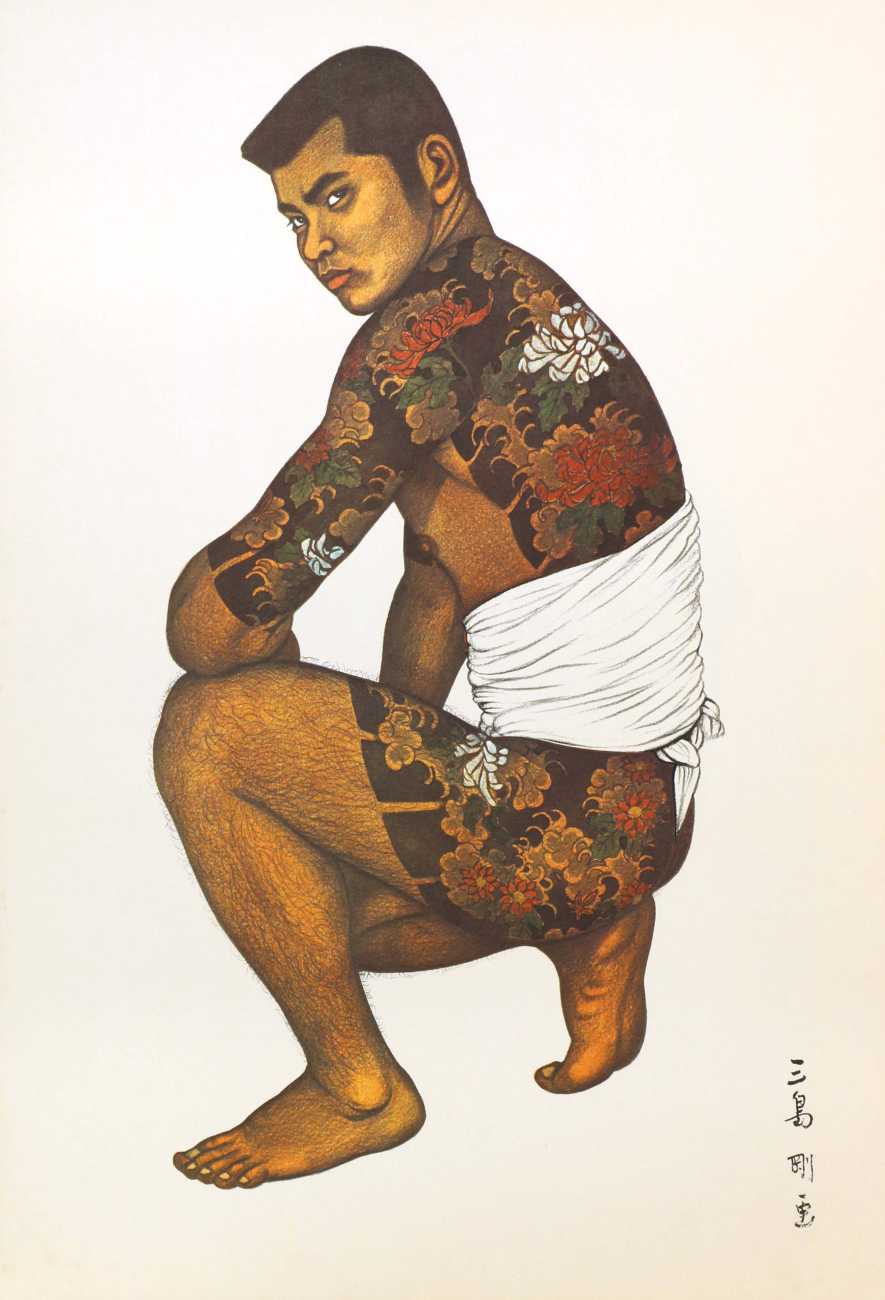
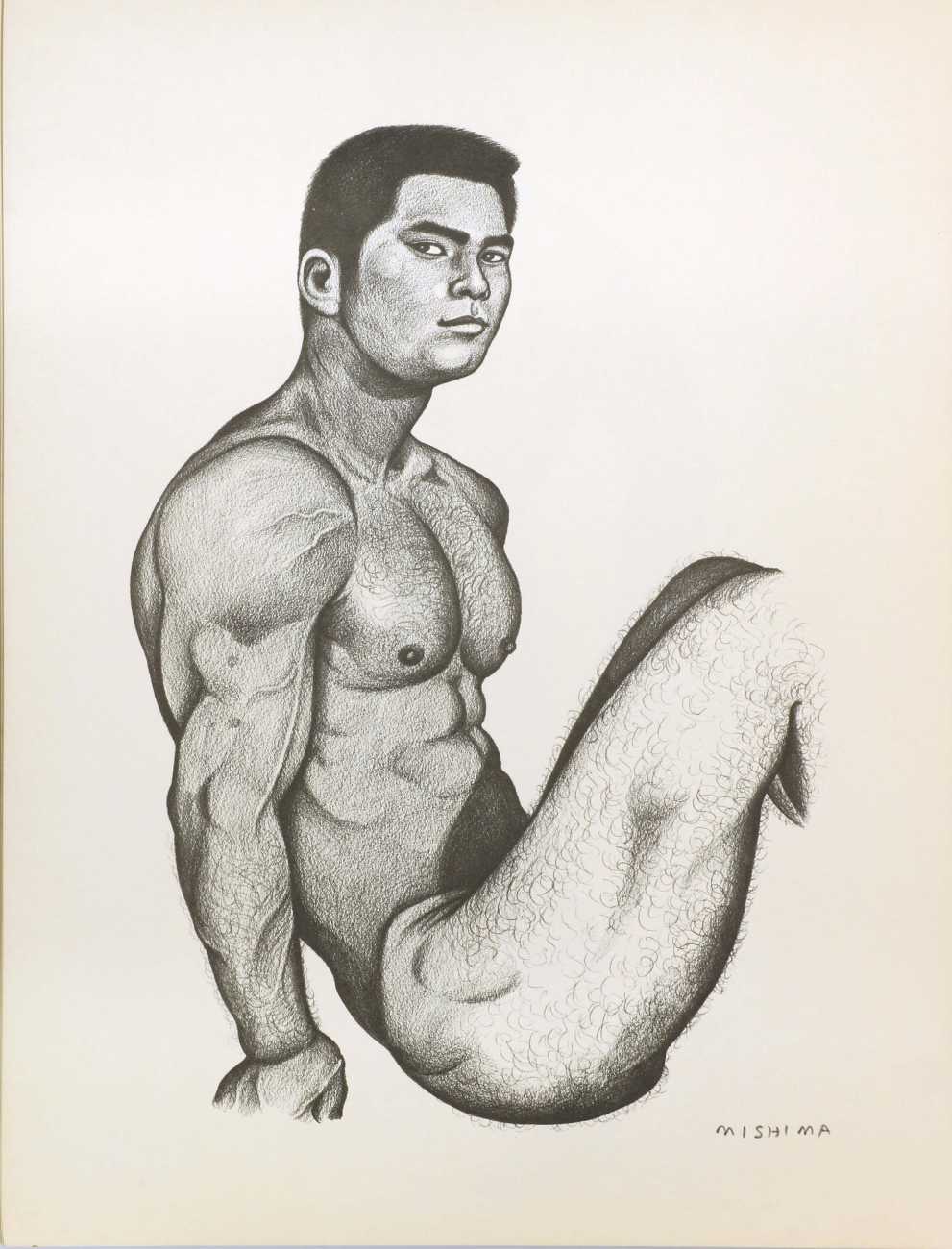
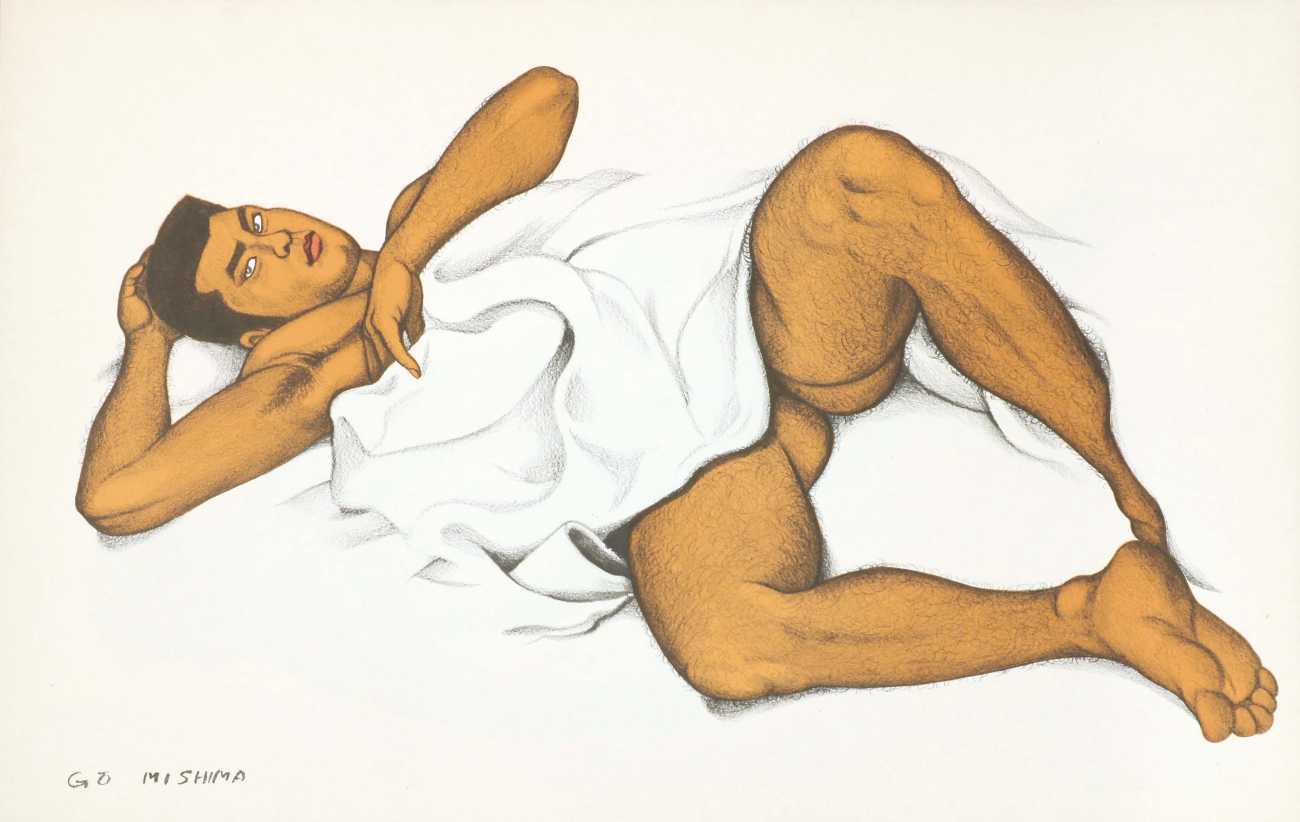
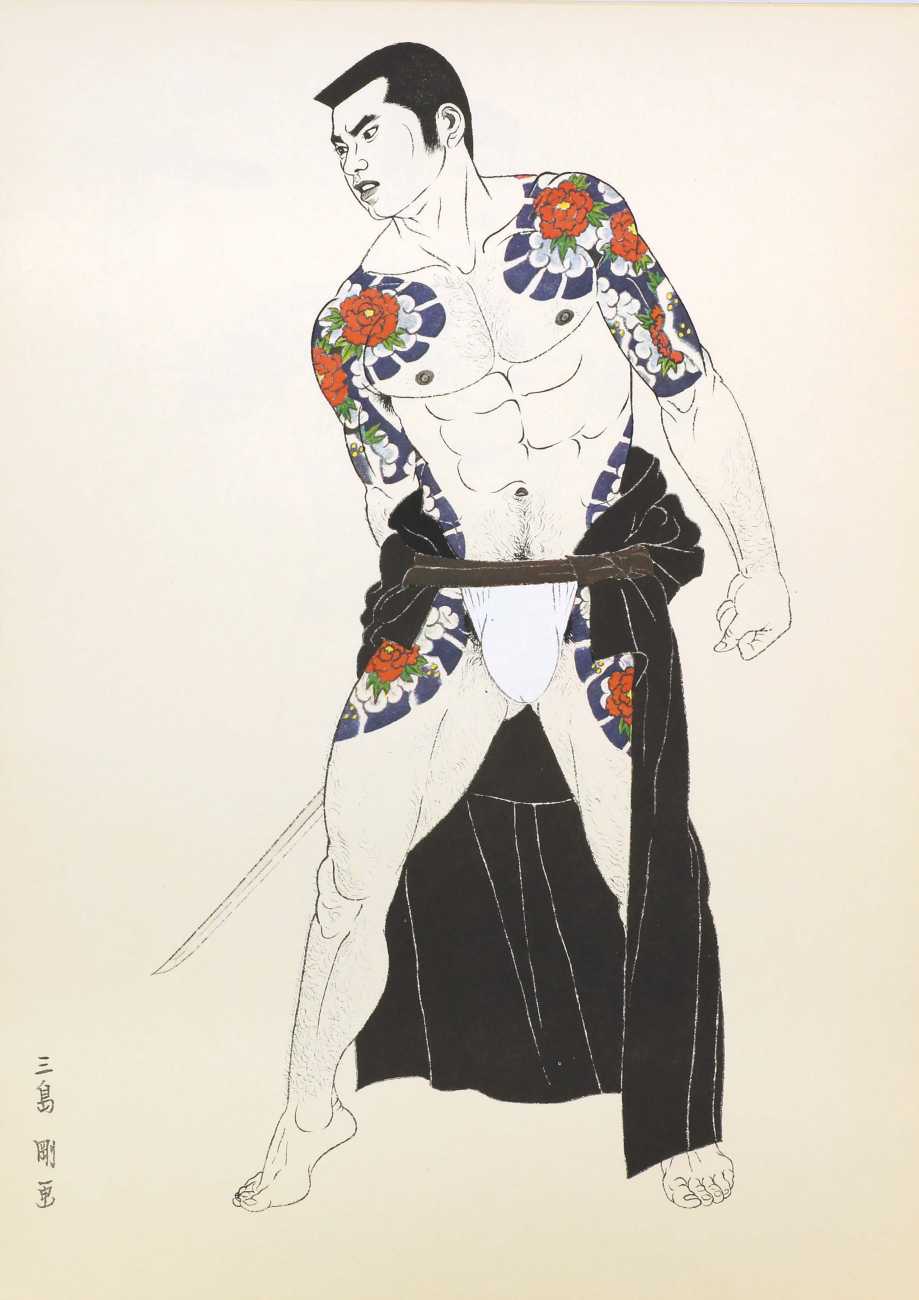
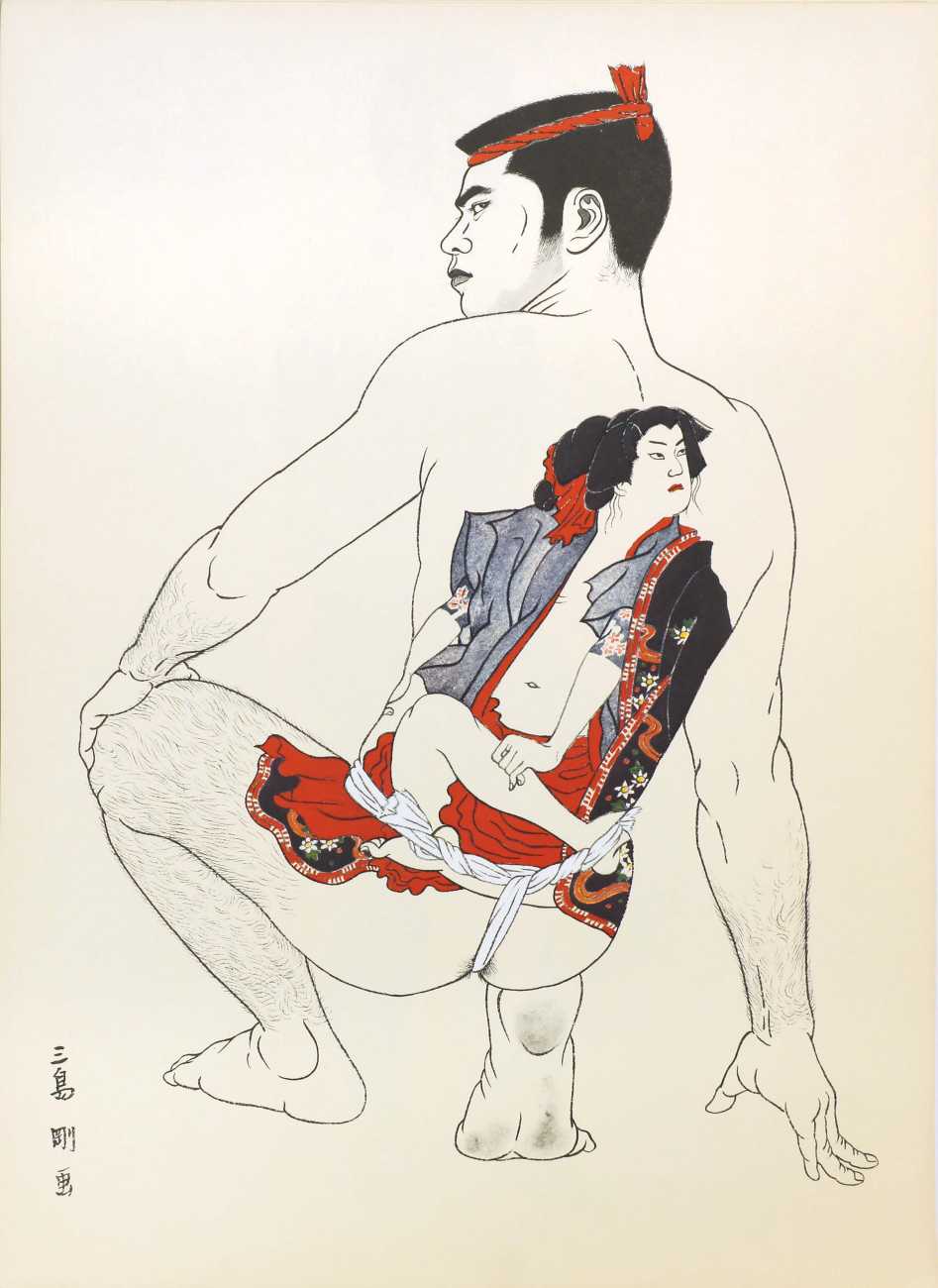
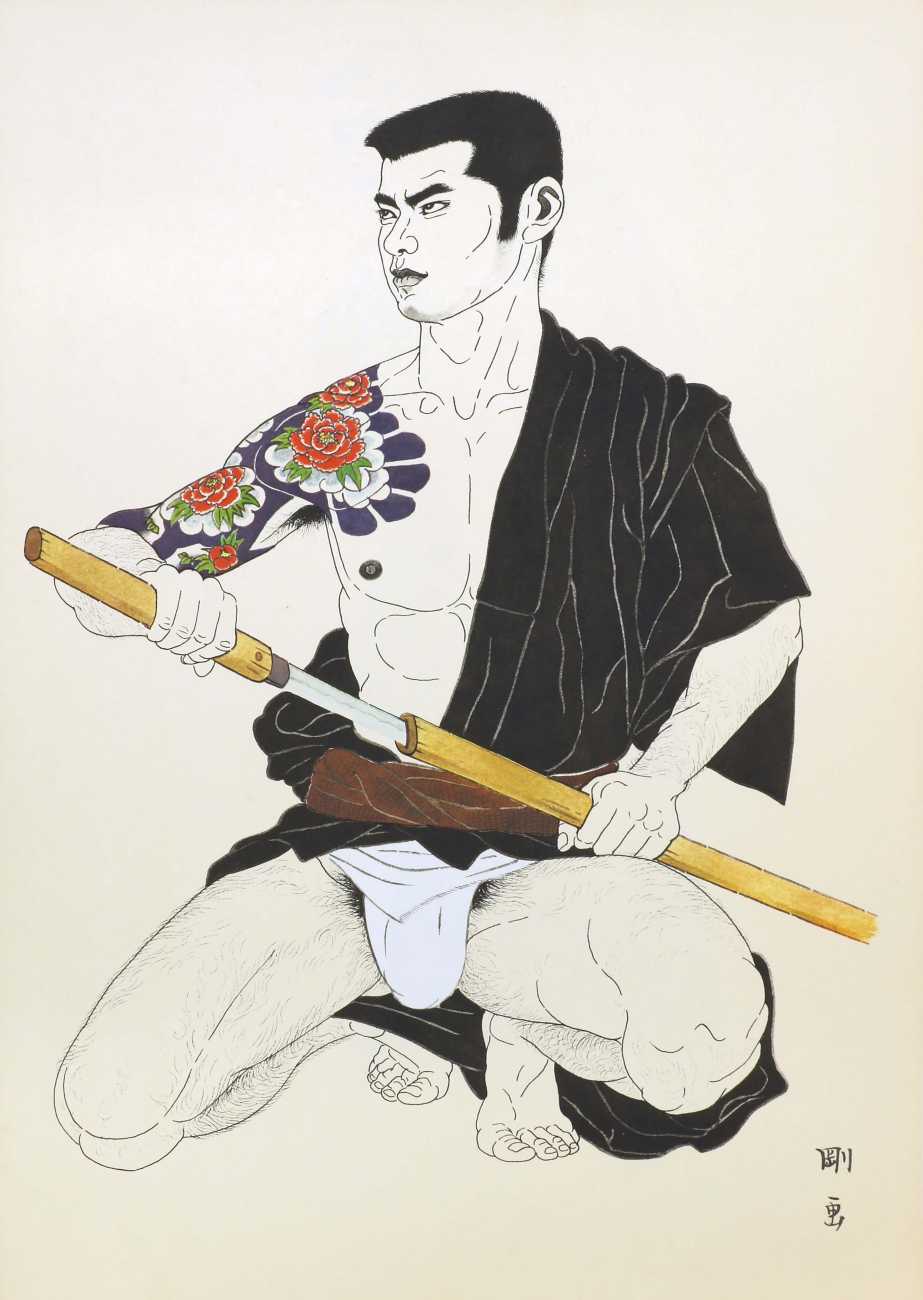
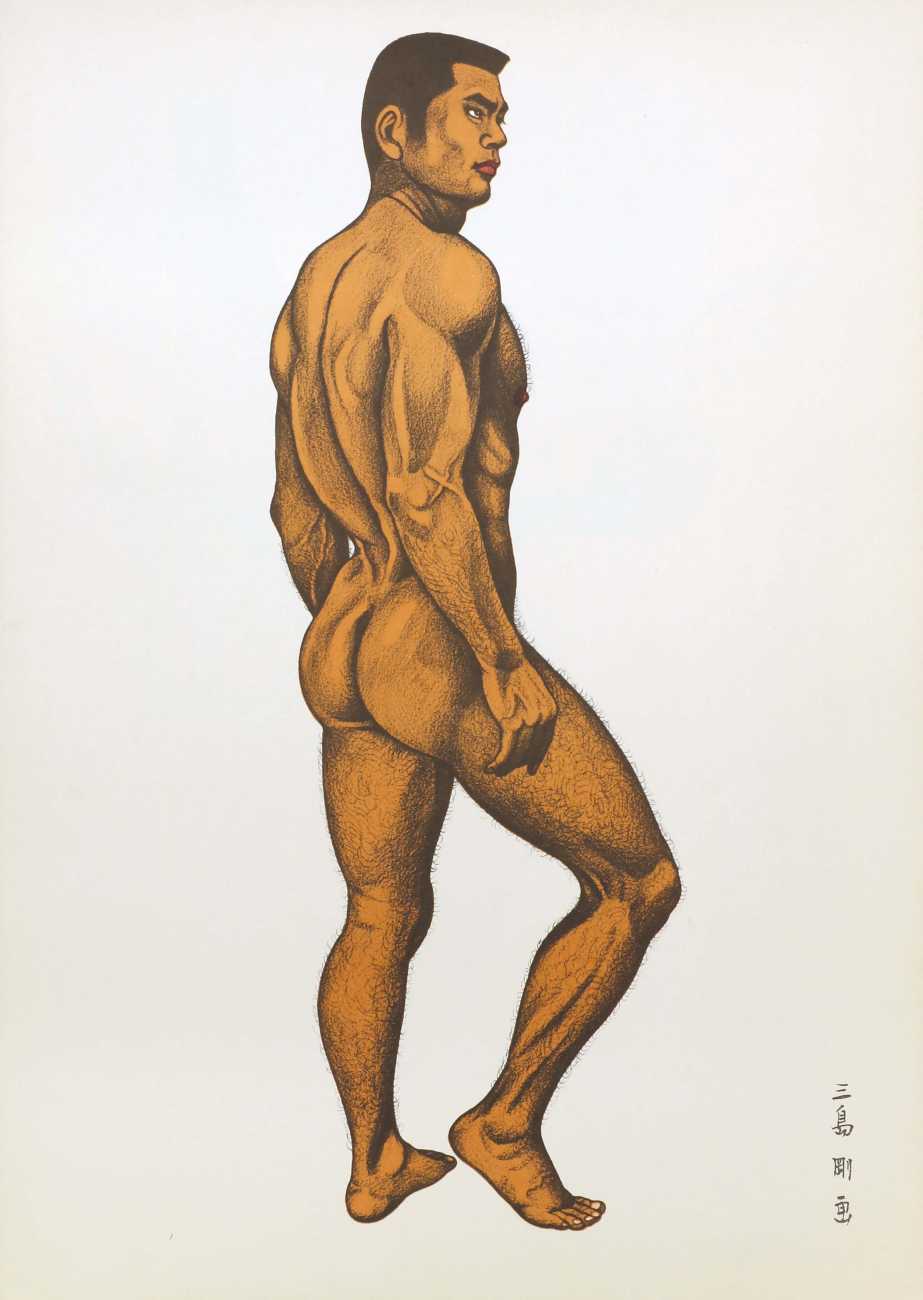
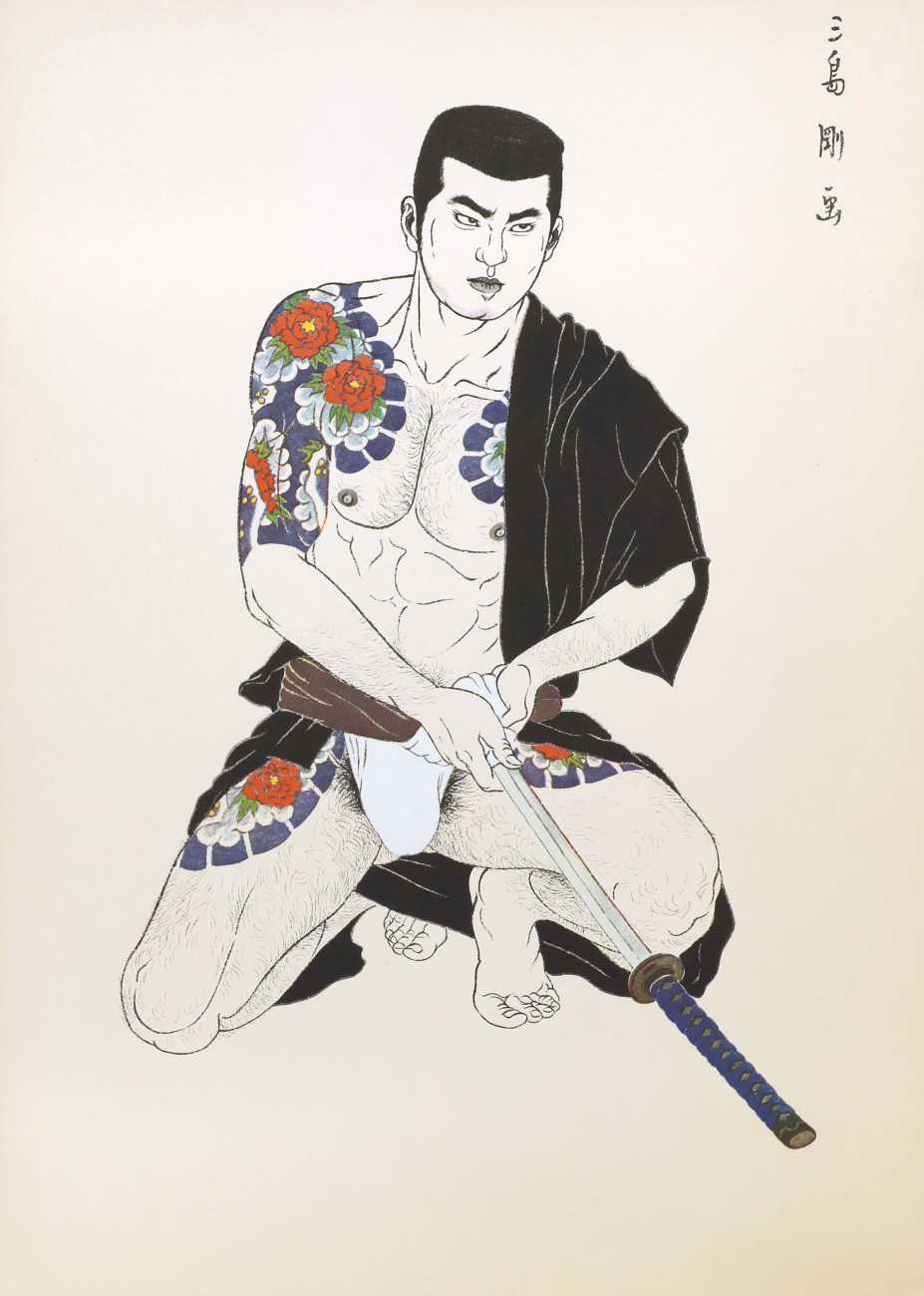
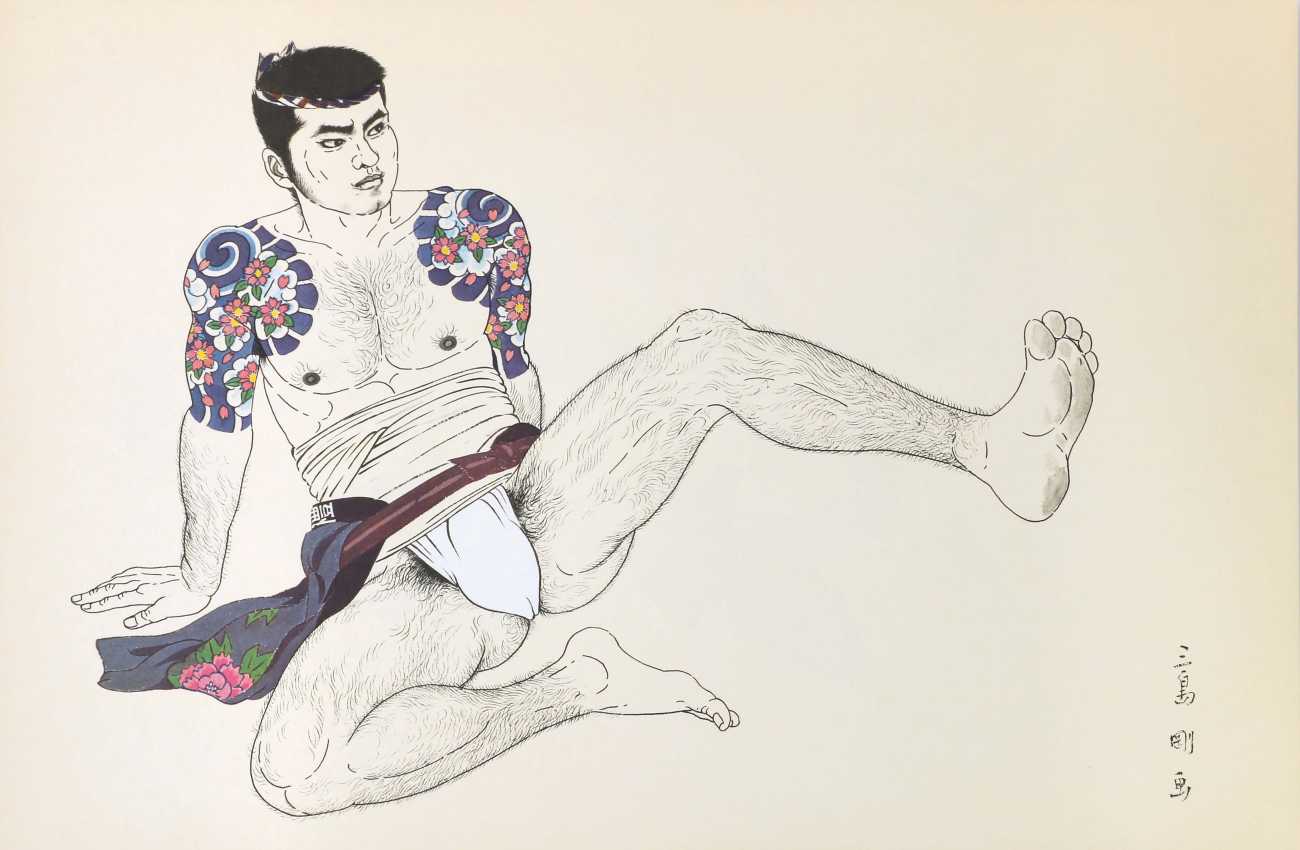
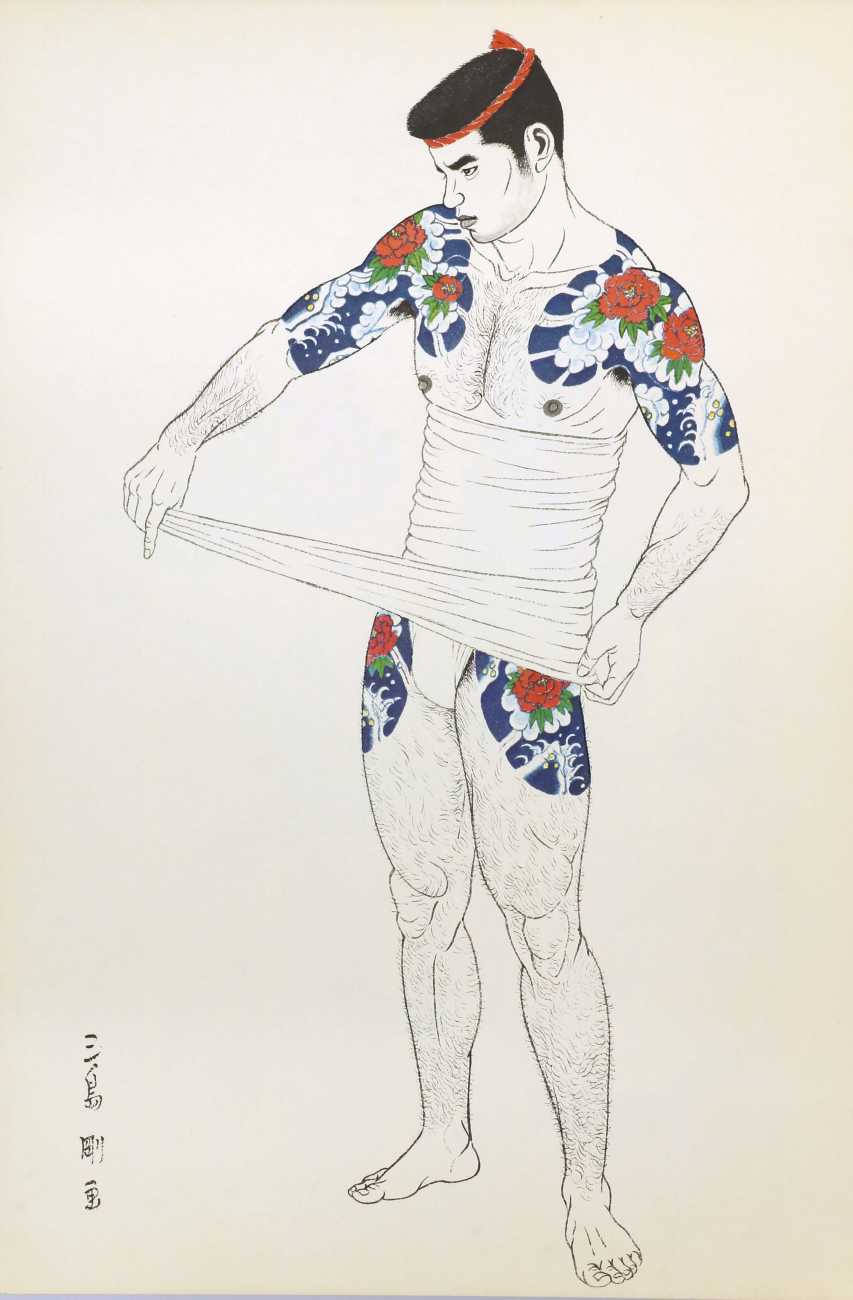
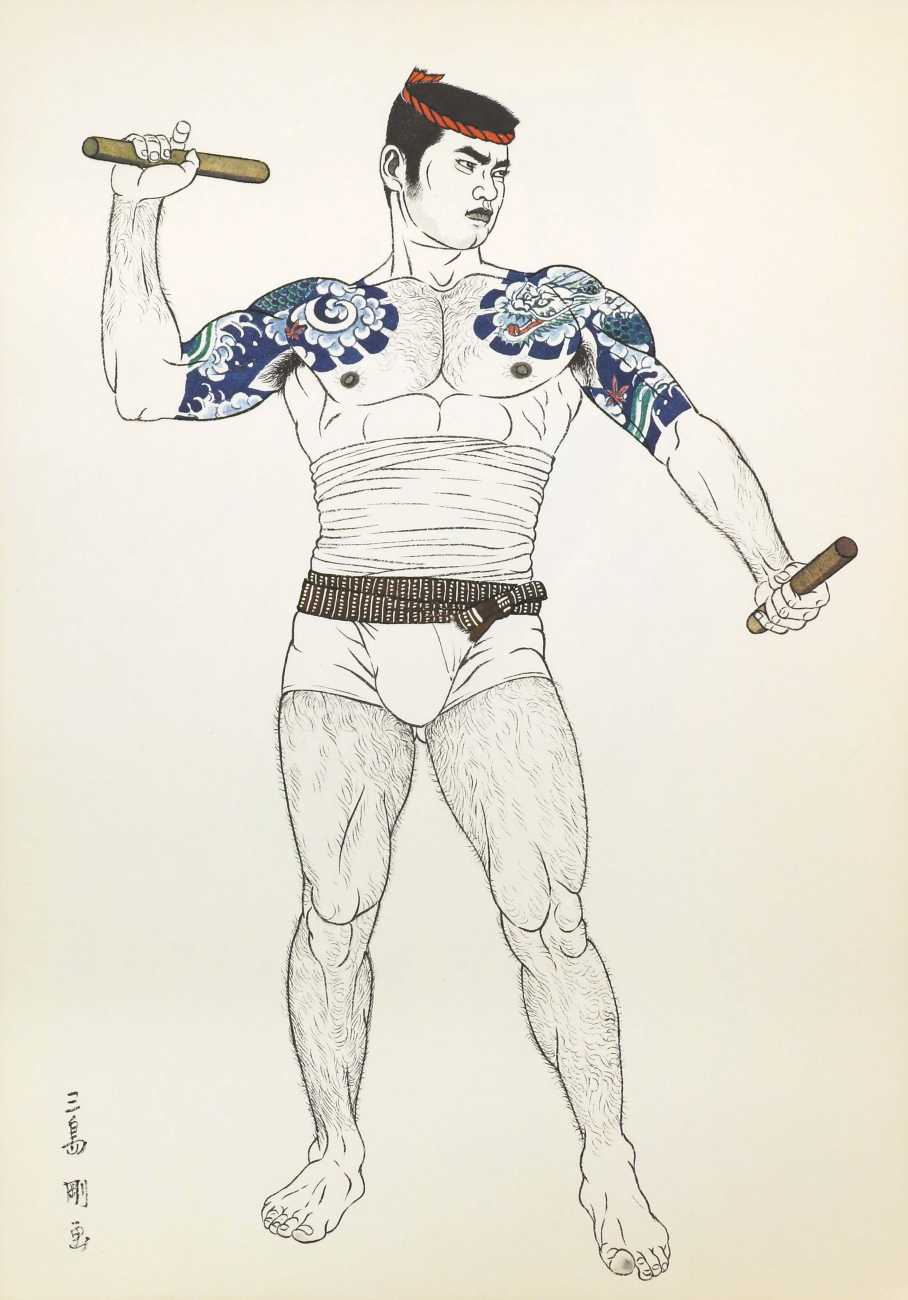
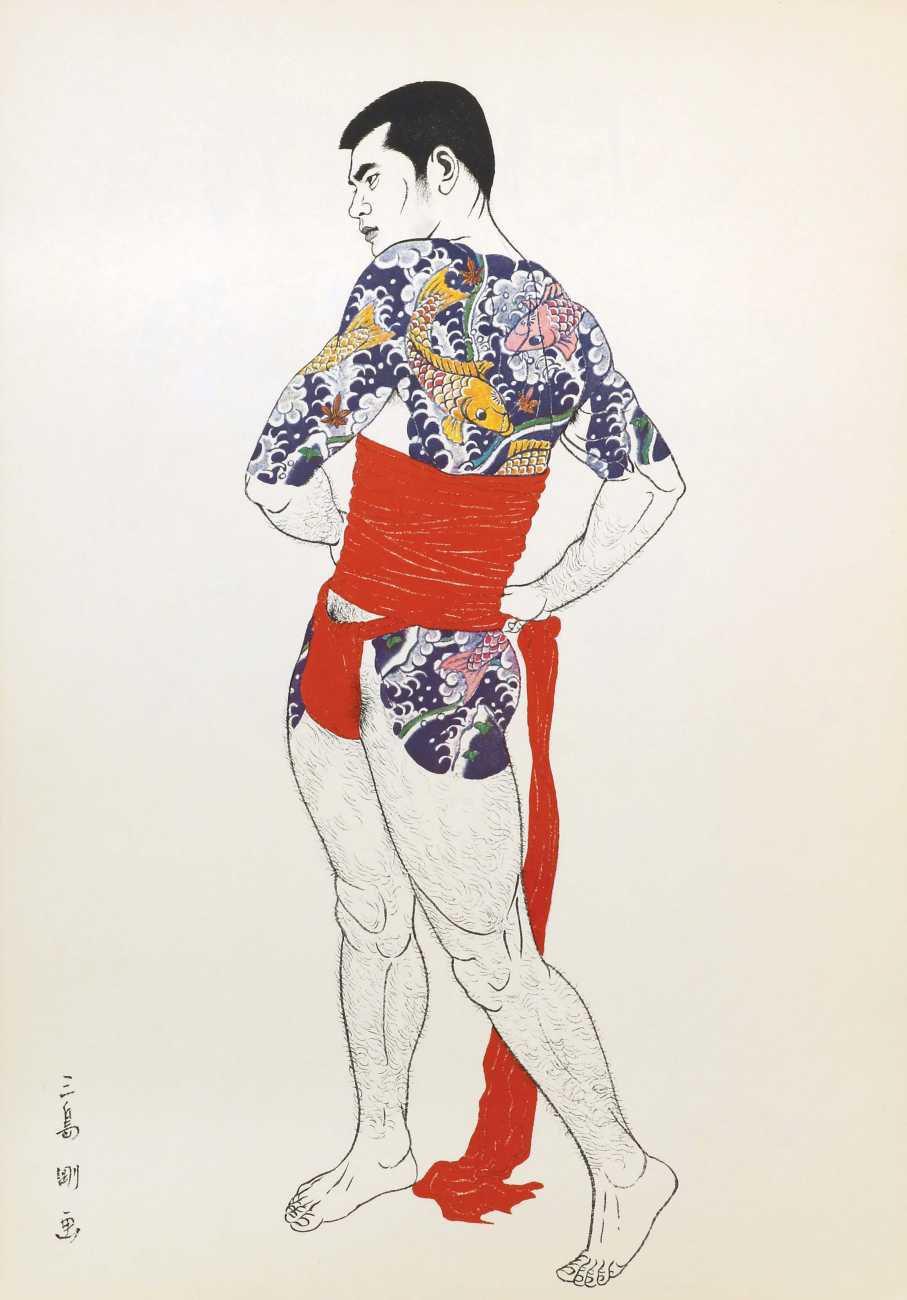
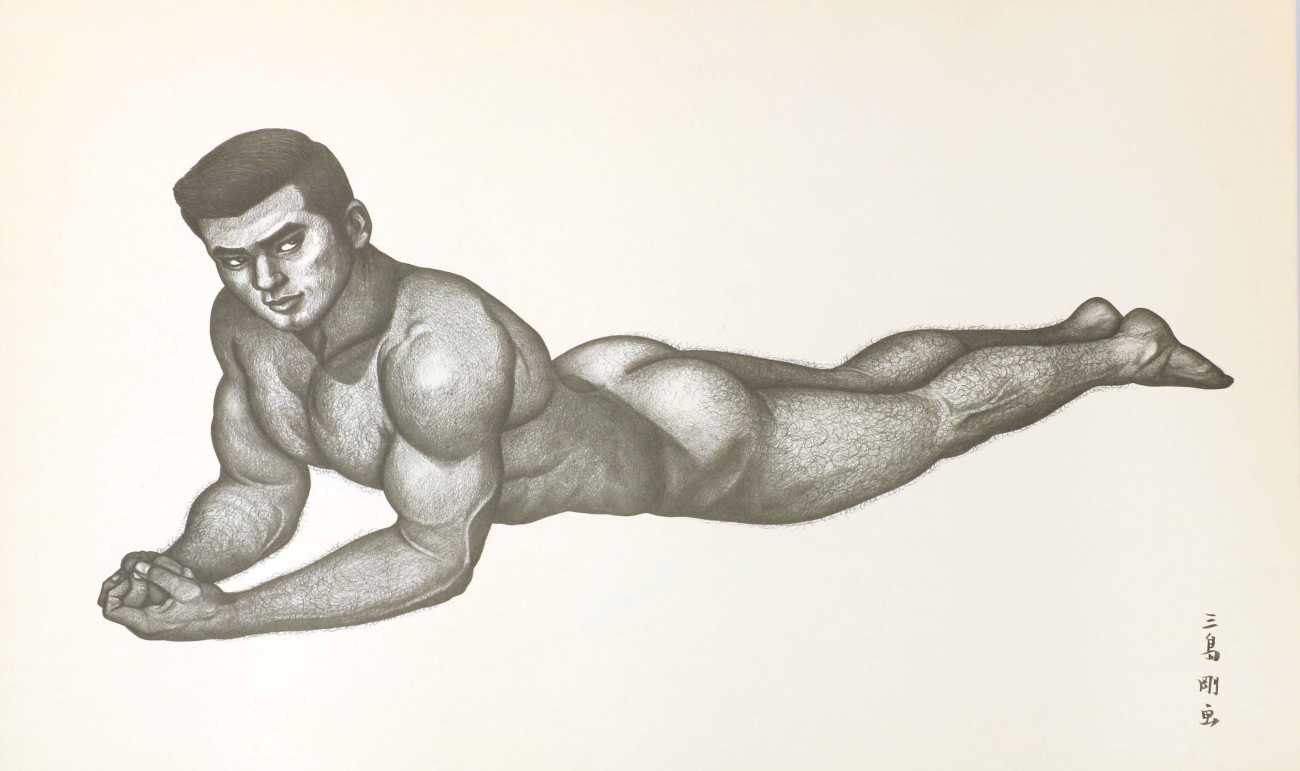
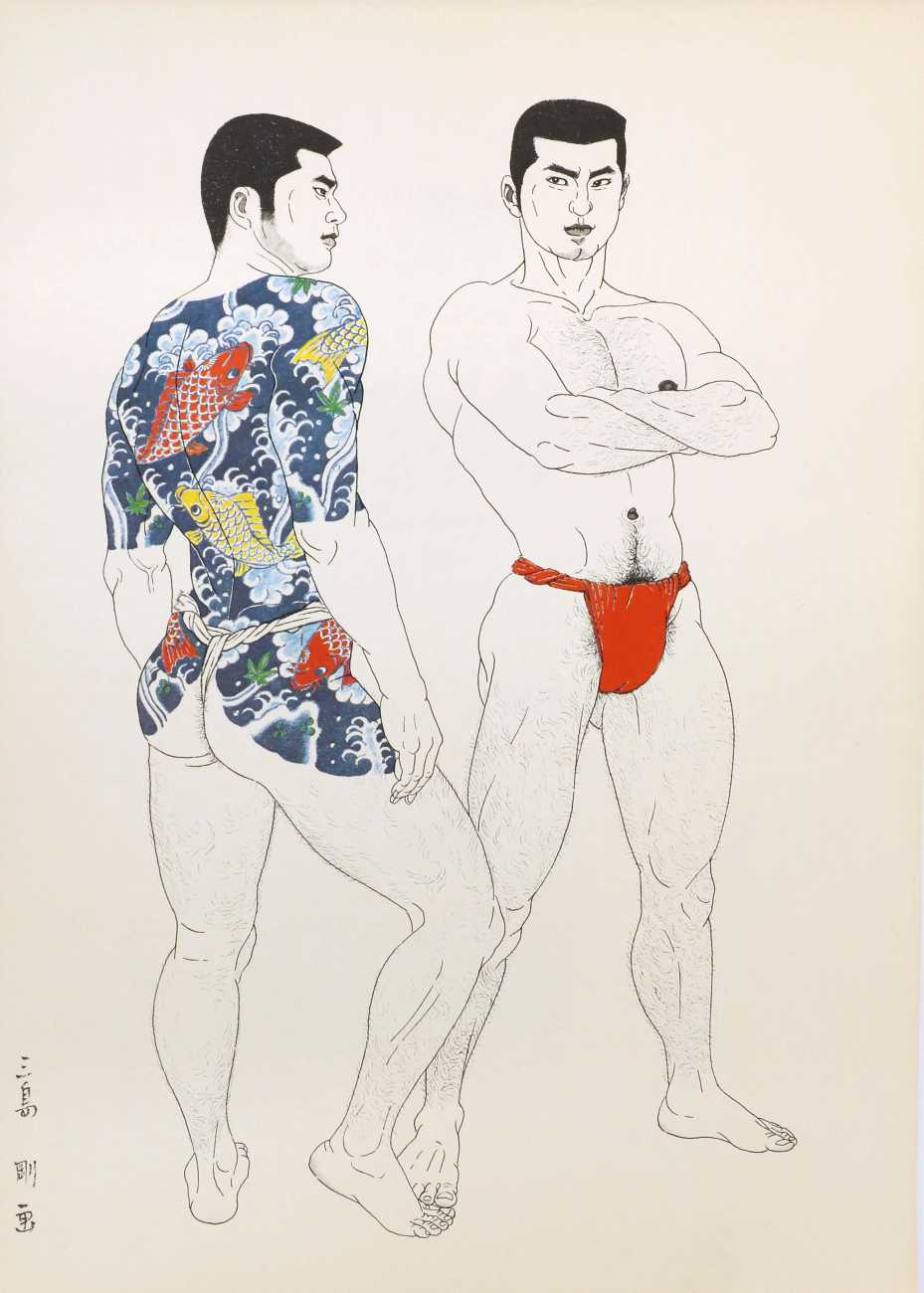
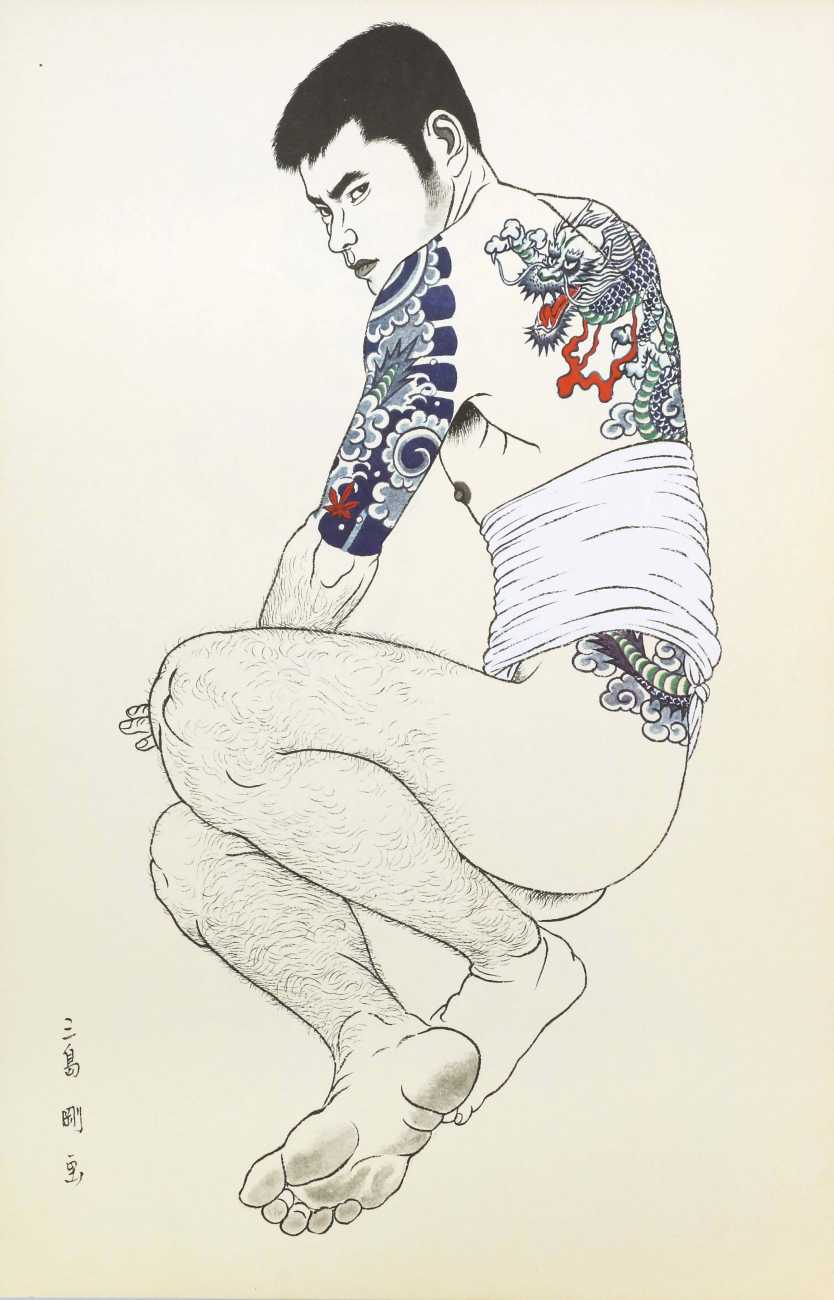
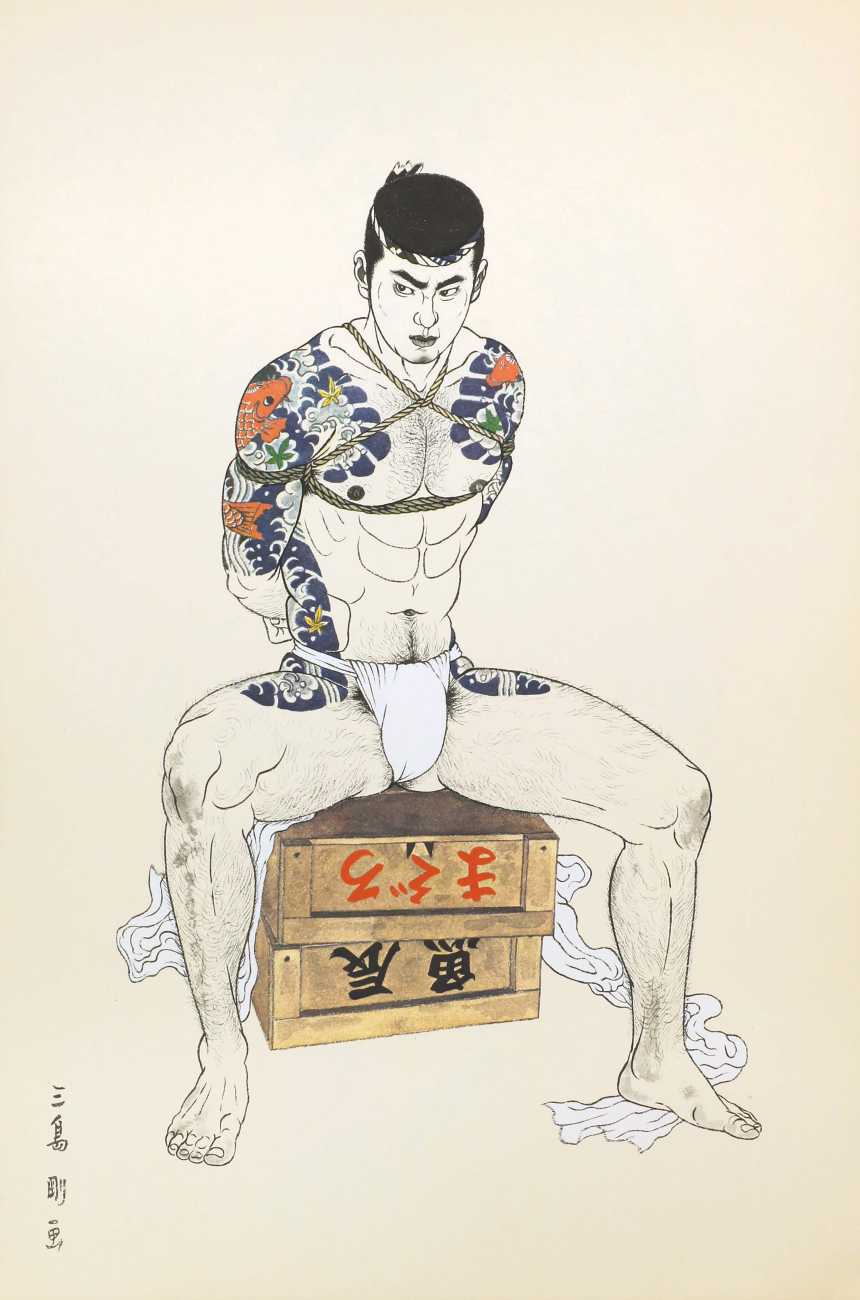
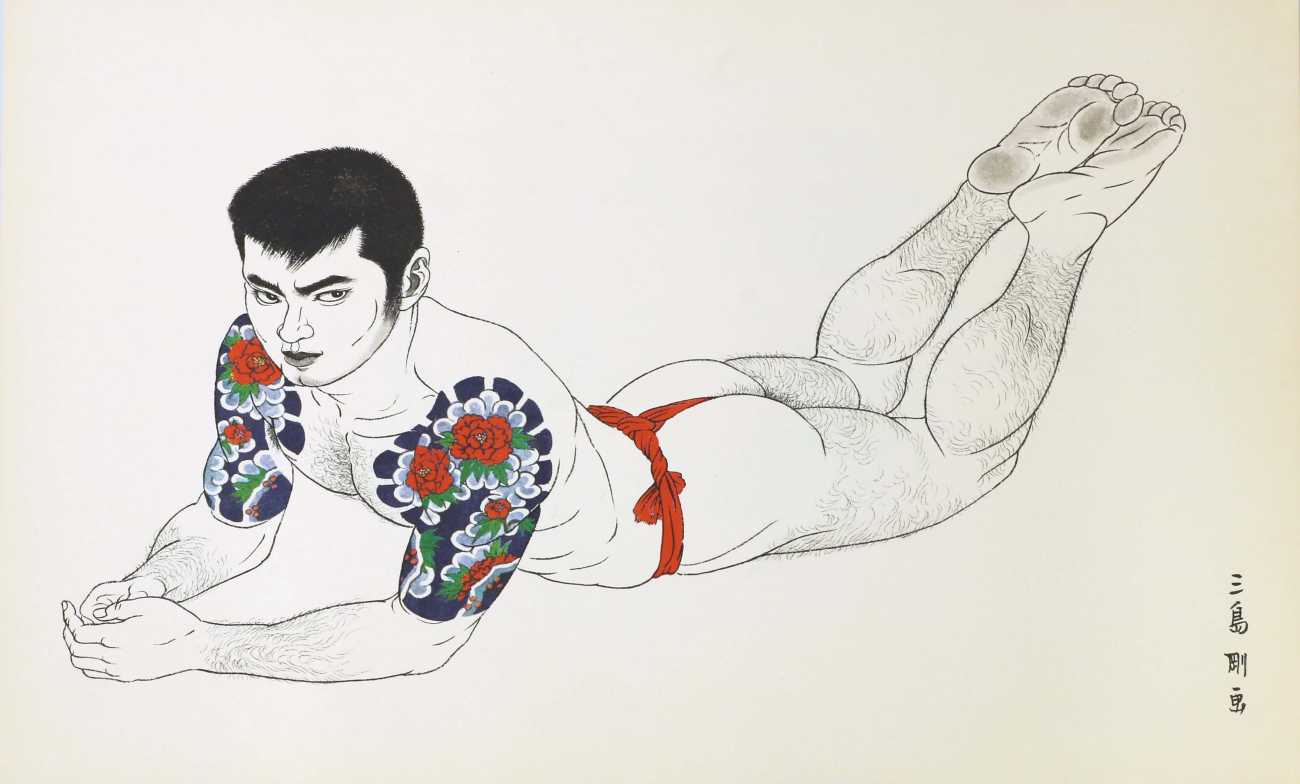
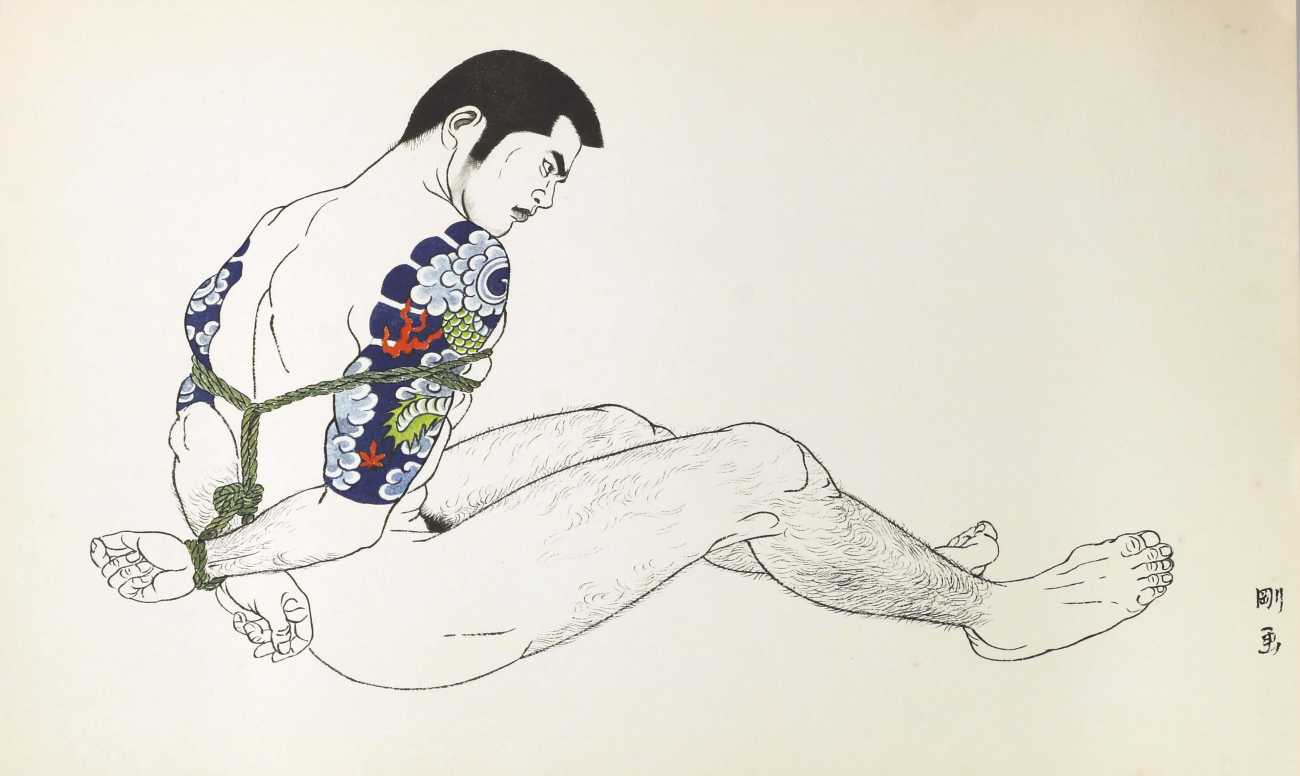
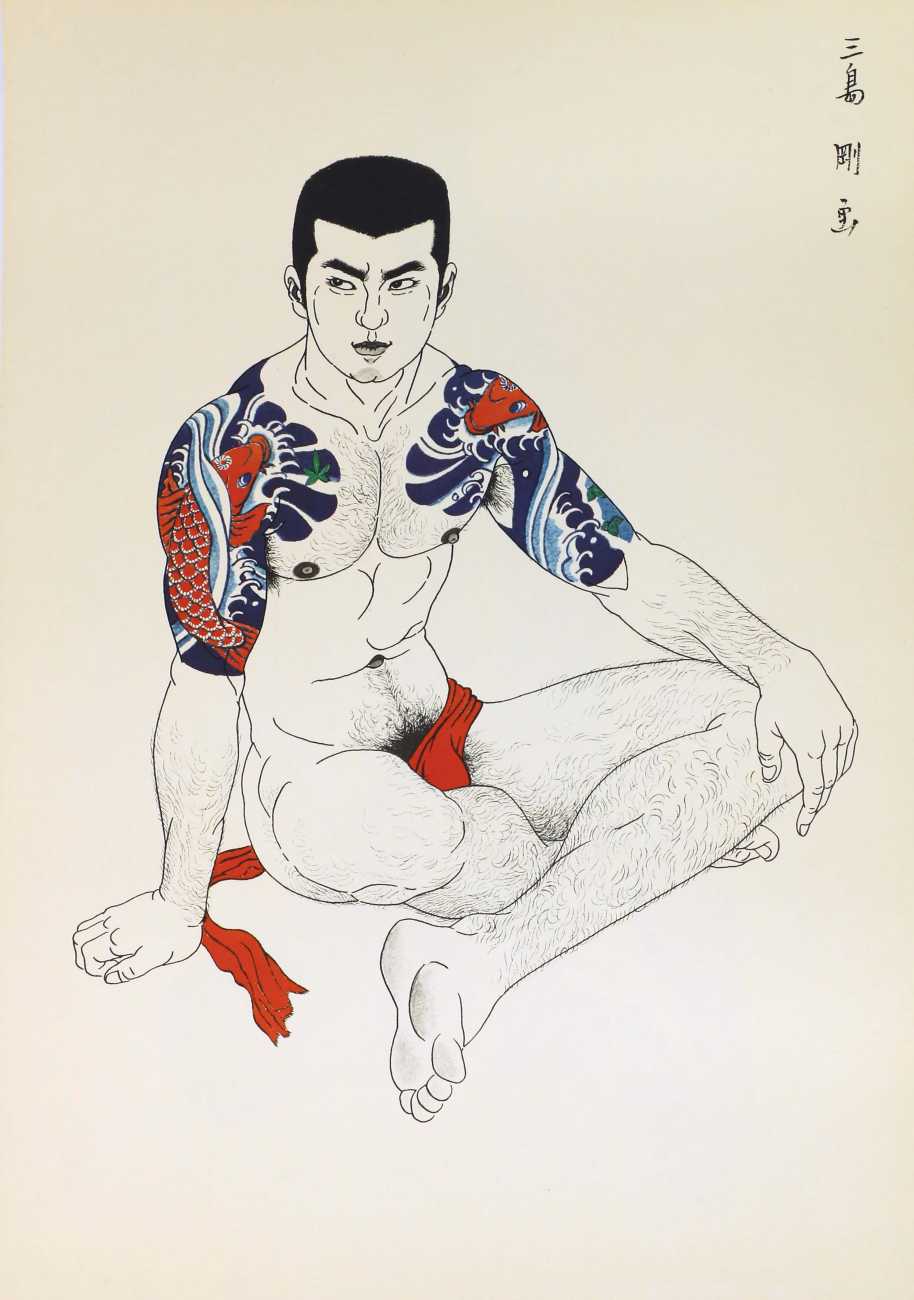
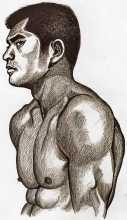
 Tsuyoshi Yoshida, known by the pen name Go Mishima (三島剛), was a Japanese homoerotic fetish artist and regular contributor to the magazine Sabu (さぶ). He is noted for his illustrations of macho-type men, often with yakuza-inspired irezumi tattoos. Mishima, along with Tatsuji Okawa, Sanshi Funayama, and Go Hirano, is regarded as a central figure in the first wave of contemporary gay artists in Japan.
Mishima grew up in Yokosuka, south of Tokyo. At eighteen he was drafted into the Imperial Japanese Army, where he had his first homosexual experience with his commanding officer. After the end of the second world war Mishima moved to Tokyo, where he immersed himself in the nascent gay nightlife of the city. Many bars and nightclubs during this era were operated by organised crime syndicates known as yakuza – Mishima’s fascination with their crew-cut hairstyles and traditional Japanese irezumi tattoos would figure heavily in his art.
In 1955 Mishima met the writer Yukio Mishima at a gym, and formed a friendship based on their shared interest in athletics and bodybuilding. With Yukio Mishima’s encouragement – together they were drawing naked men – Tsuyoshi Yoshida began to pursue a career in homoerotic art in earnest, and adopted Mishima’s last name, as a gift from and tribute to his friend and artistic mentor. During the late 1950s Mishima discovered the art of Tom of Finland, who influenced his own work. Following Yukio Mishima’s ritual suicide in 1970, Go Mishima’s work increasingly incorporated violent themes, including bondage, masochism and torture.
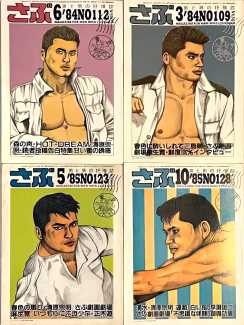
In 1964 Mishima’s work appeared in Fūzoku Kitan (風俗奇譚) and Bara (バラ), two of the first magazines in Japan to publish explicit gay content. He was an early contributor to Barazoku (薔薇族), which launched in 1971 as Japan’s first commercially published gay magazine. Dissatisfied with the dominant ‘beautiful youth’ bishōnen art style of Barazoku, Mishima was instrumental in the founding of Sabu in 1974, which focused on images of masculine men, and was more explicit. For some fifteen years he regularly contributed cover art to Sabu, as well as many internal images.
Mishima died of complications from cirrhosis. A commemorative issue of Barazoku was published in tribute to him in 1989, in which fellow homoerotic artist Sadao Hasegawa referred to him as ‘a master illustrator of the male physique’.
The first solo exhibition of Mishima’s art was held posthumously at Gallery Naruyama in Tokyo in 1999.
Similar artists
Neel Bate – Underground American illustrator whose drawings prefigured Tom of Finland.
Harry Bush – Reclusive mid-century American producing physique studies for gay magazines.
Ed Cervone – Postwar American painter of idealised, muscular gay figures.
Peter Flinsch – German-Canadian sculptor and painter of the male body.
Sadao Hasegawa – Japanese fetish illustrator from the same Barazoku circle.
Go Hirano – Anonymous collaborator grouped with Mishima among Japan's gay pioneers.
Touko Laaksonen – Finnish creator of powerful men, Mishima’s acknowledged influence.
Keith Vaughan – British painter of male figures under mid-century restrictions.
Example illustration
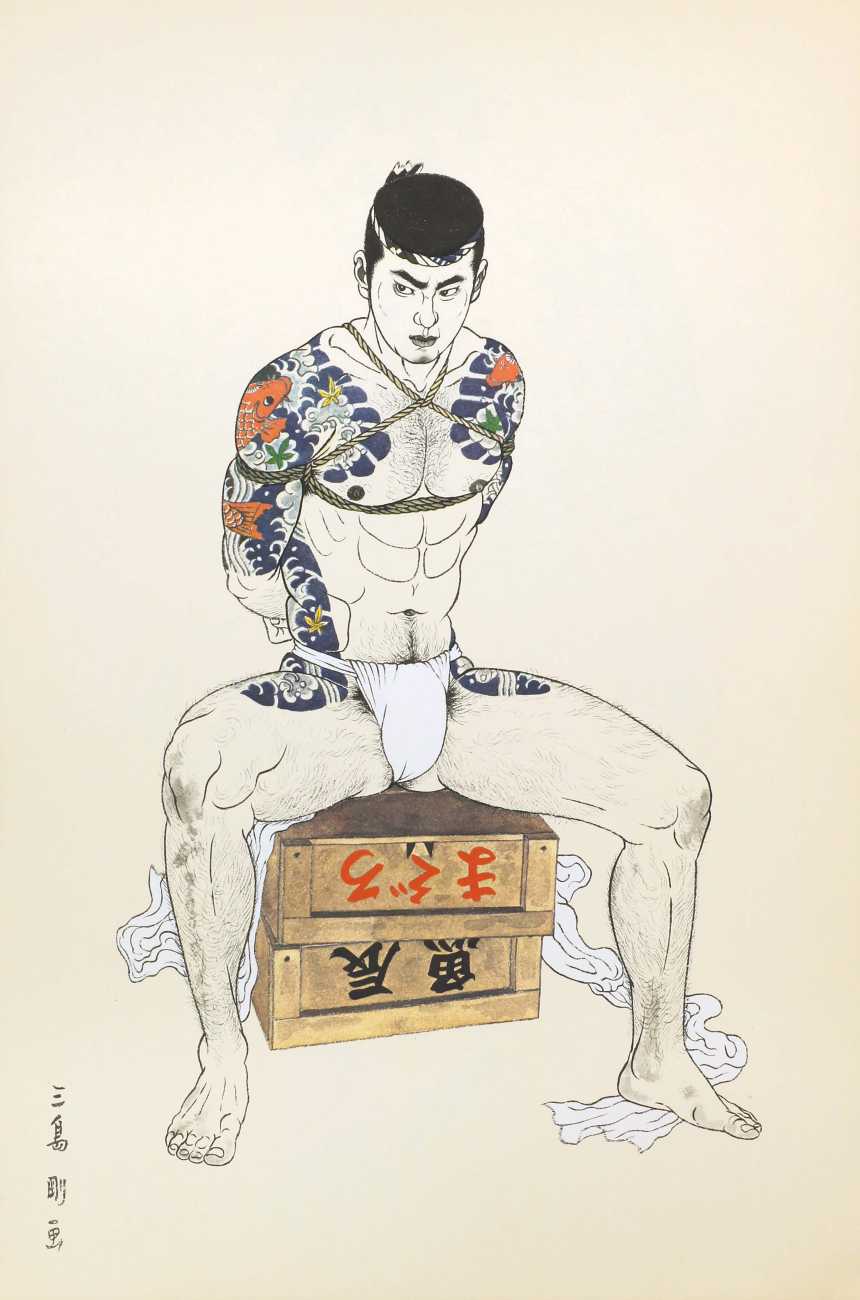
Gashū Wakamono (1972)